
lovethailand home >Northeastern Travel Attractions >Nakhon Ratchasima Travel Attractions >Pak Thong Chai >Nok Ok > Wat Pathum Khongkha (Nok Ok)
TL;DR: Wat Pathum Khongkha (Nok Ok) is located at Ban Nok Ok, Moo 6, Nok Ok Subdistrict, Pak Thong Chai District, Nakhon Ratchasima Province, open Daily, hours 07.30 – 17.30.
Wat Pathum Khongkha (Nok Ok)
Open Days: Daily
Opening Hours: 07.30 – 17.30
Wat Pathum Khongkha (Nok Ok) in Nakhon Ratchasima, also referred to in historical and archaeological sources as Wat Pathum Khongkharam or Wat Nok Ok, is an old Buddhist temple in Nok Ok Subdistrict, Pak Thong Chai District, Nakhon Ratchasima Province. It is one of the most meaningful local heritage temples in the Pak Thong Chai area, known for its more than 200-year-old ordination hall, ceiling murals, water scripture hall, old stupas, and connection with the Mon community of historic Korat. For foreign visitors who want to understand Nakhon Ratchasima beyond the main city temples, this temple offers a compact but highly valuable introduction to local Buddhist art, community memory, and early Rattanakosin-period religious architecture.
Wat Pathum Khongkha (Nok Ok) is not a large commercial temple attraction. Its importance lies in its quiet historical atmosphere, old religious buildings, and delicate artistic details that still survive within an active community temple. Visitors will find an ancient ordination hall, a principal Buddha image, ceiling paintings, a water scripture hall, two old stupas, and a calm temple environment that remains connected with the local community. This makes the temple especially suitable for cultural travelers, art-history enthusiasts, students, and visitors interested in old local temples rather than modern landmark-style attractions.
According to temple records, Wat Nok Ok is located at No. 56, Ban Nok Ok, Moo 6, Nok Ok Subdistrict, Pak Thong Chai District, Nakhon Ratchasima Province. The temple belongs to the Maha Nikaya order and covers approximately 15 rai, 2 ngan, and 80 square wah. It was established in B.E. 2317, or 1774. The name Nok Ok comes from the old local environment, where a nearby water area was once home to many birds known locally as nok ok. The name therefore preserves a memory of the natural landscape that shaped the identity of the village and temple.
The temple is also widely known as Wat Pathum Khongkha or Wat Pathum Khongkharam. These names appear in tourism and archaeological contexts alongside the local name Wat Nok Ok. For foreign visitors, this is useful to know because maps, travel websites, local residents, and cultural sources may use slightly different names for the same temple. Searching for Wat Nok Ok, Wat Pathum Khongkha Nok Ok, or Wat Pathum Khongkharam will usually refer to this historic temple in Nok Ok Subdistrict, Pak Thong Chai District.
The cultural background of the temple is closely connected with the Mon community in the Pak Thong Chai area. Pak Thong Chai has long been one of the historically important districts of Nakhon Ratchasima, and it was once part of the wider frontier landscape south of old Korat. The temple reflects a period when communities of different cultural backgrounds settled in the region and built Buddhist temples as spiritual centers. Wat Pathum Khongkha (Nok Ok) therefore helps visitors understand Korat not only as a provincial city but also as a region of local communities, migration, devotion, and cultural exchange.
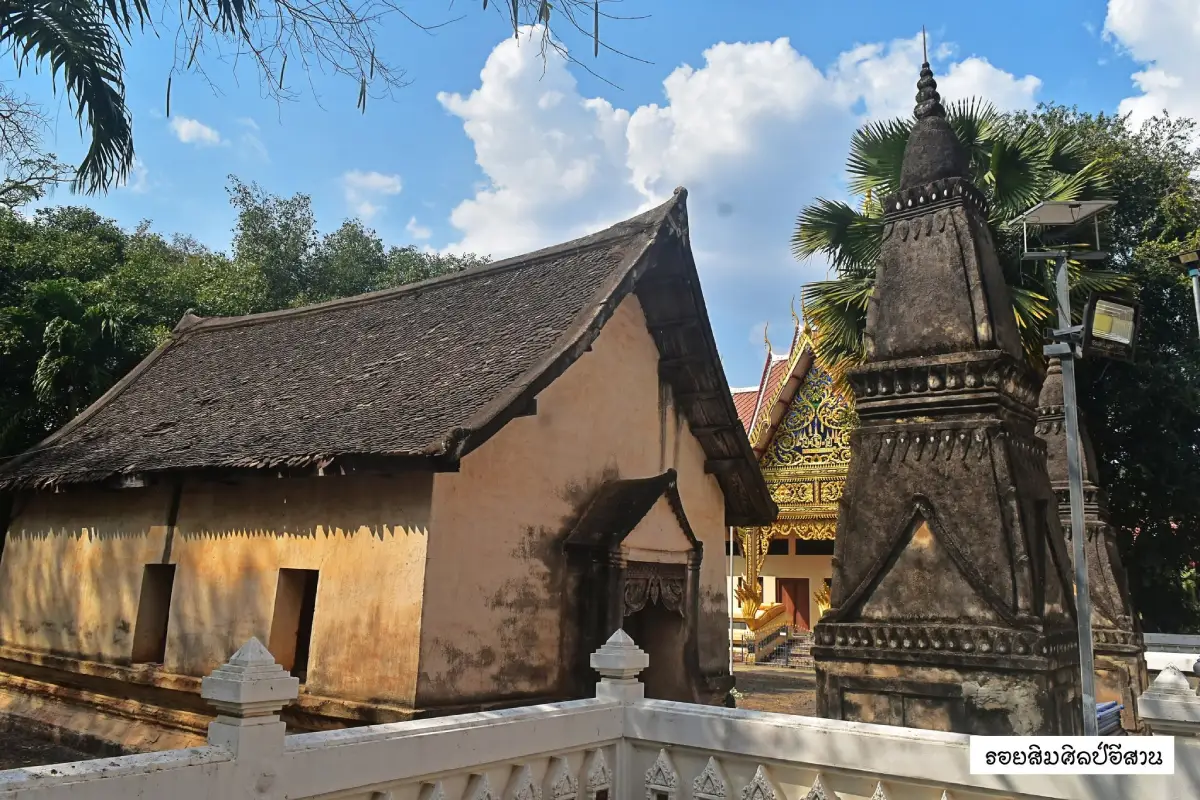
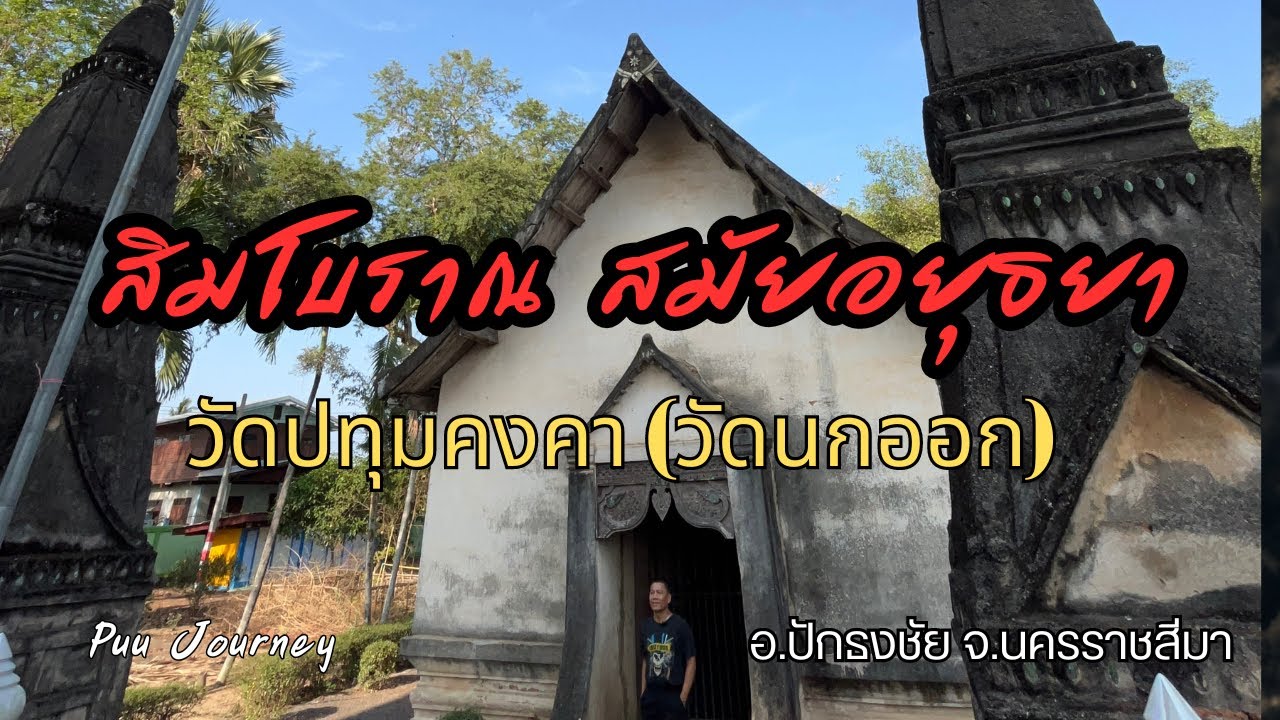
The main highlight of the temple is the old ordination hall, or sim. This ancient building is approximately 6 meters wide and 9 meters long. It is made of brick and mortar, with a slightly curved base and a gabled roof covered with terracotta tiles. The front gable is decorated with stucco human-face motifs. The side walls have two windows on each side, and the building has only one entrance, facing east. Its compact scale, simple form, and surviving craftsmanship give it the strong character of a local Isan-style Buddhist building rather than a grand royal temple structure.
The old ordination hall is believed to have been influenced by the old ubosot of Wat Na Phra That in Taku Subdistrict, another important historic temple in Pak Thong Chai District. This connection is important because it shows that the temples of Pak Thong Chai shared local architectural ideas and craftsmanship. Visitors interested in temple architecture should consider visiting both Wat Pathum Khongkha (Nok Ok) and Wat Na Phra That to compare their old ordination halls, bases, entrances, gables, and decorative elements.
The entrance of the old ordination hall deserves careful attention. The east-facing doorway projects outward as a small porch-like structure. The entrance pillars curve downward and outward. The upper frame is decorated with carved wooden motifs, including a beehive-style pattern associated with Isan craftsmanship. It also includes hanging decorative forms known in Thai as krajung-style motifs. The side areas are decorated with green Ava glass, while the door panels are carved and ornamented with Chinese-influenced glass patterns. These details reveal a rich mixture of local, Chinese, Lao-Lan Xang, and Thai decorative traditions.
Inside the old ordination hall is the principal Buddha image, Phra Phuttha Muni Sri Pathum Khongkha, a brick-and-mortar Buddha image in the posture of subduing Mara. This posture represents the Buddha’s victory over temptation before enlightenment. It symbolizes mental firmness, wisdom, and the triumph of Dhamma over defilement. The image stands within a small and quiet interior space, making the atmosphere inside the old sim calm, intimate, and spiritually focused.
The ceiling murals are among the temple’s most important features. The surviving paintings were made with powder pigments and appear mainly on the ceiling rather than on the wall surfaces. They depict Himmapan forest imagery, stars, botanical motifs, and elements of both the natural and supernatural world. These ceiling paintings transform the space above the Buddha image into a symbolic universe. Visitors should look upward slowly and carefully, because the most important artistic details of the building are above eye level.
The ceiling murals are described as showing inspiration from Ayutthaya and Rattanakosin-period art, especially around the reigns of King Rama IV and King Rama V, combined with local craftsmanship. This combination makes the paintings valuable as evidence of how central Thai artistic styles were adapted by local artisans. The result is not a strict royal style but a living regional expression of Buddhist imagination. The images are especially important because they preserve local ways of visualizing cosmology, nature, sacred space, and heavenly realms.
In front of the old ordination hall stand two old stupas or that structures. They have a bell-shaped form on a square plan and are associated with the Lan Xang cultural tradition, often described architecturally as bua liam-style stupas. Their presence adds another cultural layer to the temple. Together with the Mon community background, Chinese-style door decoration, Isan beehive patterning, and local Buddhist painting, the stupas show that Wat Pathum Khongkha (Nok Ok) belongs to a wider cultural landscape shaped by many influences.
About 100 meters south of the old ordination hall is the water scripture hall, or ho trai klang nam. A ho trai is a building traditionally used for storing Buddhist scriptures, palm-leaf manuscripts, or temple texts. Building it in water served a practical purpose: water helped protect manuscripts from termites and other pests. At the same time, a scripture hall in a pond creates a strong symbolic image of sacred knowledge being separated from ordinary space. It is one of the most photogenic and meaningful features of the temple.
The water scripture hall should not be viewed only as a scenic wooden building in a pond. It represents the temple’s role as a place of knowledge. In the past, palm-leaf manuscripts and handwritten religious texts were among the most important intellectual resources of a Buddhist community. A temple with a scripture hall was not only a worship site but also a place where Dhamma, learning, ritual texts, and local memory were preserved. This makes the ho trai of Wat Pathum Khongkha (Nok Ok) valuable beyond its visual beauty.
The old ordination hall, the two stupas, and the water scripture hall were declared and protected as an archaeological site under the name Wat Khongkharam Archaeological Site in B.E. 2539, or 1996. This registration confirms the temple’s importance as a local heritage site. Visitors should therefore behave with particular care. Do not write on walls, touch murals, climb old structures, lean against fragile architectural surfaces, or place offerings directly on ancient building elements unless clearly allowed by the temple.
The temple remains active and continues to be cared for by monks and the local community. Current Buddhist records identify the abbot as Phra Khru Thawatchayathikan (Prasit Mahawiro). Earlier documents listed him as Phra Samu Prasit Mahawiro of Wat Nok Ok, and later records show that he received the ecclesiastical title Phra Khru Thawatchayathikan. Including the current abbot’s name is important because the temple is not an abandoned site. It is a living Buddhist temple with historical structures inside its grounds.
The role of the abbot and local community is especially important for a temple like this. A heritage temple must balance religious life, local use, tourism, and conservation. Monks continue to perform religious duties and care for worshippers, while also helping maintain ancient buildings and welcome visitors. Public agencies may support heritage protection, but the everyday protection of the site depends heavily on monks, villagers, and respectful visitors. When visitors understand this, they become part of the temple’s long-term preservation rather than a burden on it.
A visit to Wat Pathum Khongkha (Nok Ok) should not be rushed. The temple rewards slow observation. The most important details are not large or spectacular; they appear in small architectural elements such as the curved base, door frame, glass decoration, carved wooden patterns, ceiling murals, Buddha image, old stupas, and water scripture hall. Visitors who simply take a quick photograph may miss the temple’s true value. Allow at least 45 minutes to one hour for a meaningful visit.
The best time to visit is in the morning or late afternoon, when the light is softer and the weather is more comfortable. The temple is open daily from 07.30 to 17.30. Because the main heritage buildings are old, visiting during daylight is strongly recommended. Evening visits are not suitable for detailed viewing of murals, old architectural features, and the water scripture hall. Daylight also helps visitors move around safely and respectfully.
There is no admission fee at Wat Pathum Khongkha (Nok Ok). Visitors may enter, pay respect to the Buddha image, walk around the heritage areas, and make voluntary donations according to personal faith. This is an important distinction for foreign travelers: the temple is a living religious site, not a ticketed commercial attraction. Donations support temple care and merit-making, but they are not compulsory entrance charges.
Getting There is easiest by private car, van, or local hired transport. From Nakhon Ratchasima city, take Highway 304 toward Pak Thong Chai District, then continue to Nok Ok Subdistrict and Ban Nok Ok. Navigation apps should search for Wat Pathum Khongkha Nok Ok, Wat Pathum Khongkharam, or Wat Nok Ok Pak Thong Chai. Travelers should confirm that the destination is in Nok Ok Subdistrict, Pak Thong Chai District, Nakhon Ratchasima Province, because similar temple names may appear elsewhere in Thailand.
From Pak Thong Chai town, the temple can be reached in a relatively short local drive. It can be combined with Wat Na Phra That in Taku Subdistrict, Pak Thong Chai town, local silk areas, and nearby food stops. From Nakhon Ratchasima city, the temple can be part of a half-day or full-day route with Nakhon Ratchasima Zoo, the Petrified Wood Museum, or Jim Thompson Farm during its seasonal opening period. This makes the temple suitable for both cultural trips and wider travel routes in southern Korat.
Visitors should observe Thai temple etiquette and heritage-site etiquette at the same time. Dress modestly, covering shoulders and knees. Remove shoes where required. Speak quietly. Do not touch murals or old surfaces. Do not lean against the old ordination hall. Do not climb the scripture hall or ancient structures. Avoid strong flash photography near old paintings. Respect monks, local worshippers, and villagers using the temple for religious purposes.
For families, the temple is an excellent open-air classroom. Parents can explain why old murals should not be touched, why a scripture hall was built in water, how local communities preserved Buddhist texts, why the temple is connected with Mon heritage, and why a small village temple can be historically important. This helps children see a temple not only as a place to pray but also as cultural memory, architecture, art, and community heritage.
For foreign visitors, Wat Pathum Khongkha (Nok Ok) is a valuable example of a local historic temple in northeastern Thailand. It combines an ancient ordination hall, ceiling murals, a water scripture hall, Lan Xang-style stupas, Mon community heritage, local Buddhist worship, and early Rattanakosin-period artistic memory. It shows that Thai Buddhist heritage is not found only in royal temples or famous national parks. It is also preserved in quiet village temples like this one.
For students, researchers, and cultural travelers, the temple raises important questions about conservation. How should ceiling murals in an old temple be protected? How can a scripture hall in water be maintained? How can a living temple welcome visitors without damaging fragile heritage? How can local communities participate in preserving their own sacred sites? Wat Pathum Khongkha (Nok Ok) is useful for understanding these questions because it is both a living temple and a registered heritage site.
Restaurants near the temple include local food shops in Nok Ok Subdistrict and dining options in Pak Thong Chai town. Publicly listed nearby options include Je Nee Made-To-Order Food in Nok Ok, bubble tea and coffee shops in the Nok Ok roadside area, BRUNCH Pak Thong Chai, Meena Traditional Coffee and Som Tam, Brother and Sister’s Kitchen, and Jungle Cafe Pak Thong Chai-Taku branch. Travelers visiting as a group should call ahead where phone numbers are available because small local restaurants may have flexible opening days and hours.
Accommodation near Wat Pathum Khongkha (Nok Ok) includes small local resorts in Nok Ok and Pak Thong Chai, as well as hotels in the wider district. Options with publicly listed phone numbers include Ura Suk Resort in Nok Ok, Chao@Hotel Pak Thong Chai, Sap Thong Chai Resort, Chepiera in Takhob, Ban Pak Po & Pu, and Permsuk-Cafe in Takhob. Travelers who want more restaurants and transport convenience may stay in Pak Thong Chai town or return to Nakhon Ratchasima city after visiting.
Overall, Wat Pathum Khongkha (Nok Ok) is one of Pak Thong Chai’s most meaningful cultural sites. It preserves the memory of a Mon community, an old ordination hall, ceiling murals, a water scripture hall, two Lan Xang-style stupas, a revered Buddha image, and a living village temple atmosphere. It is not a place that overwhelms visitors with size. Instead, it rewards those who look closely, walk slowly, and respect the quiet beauty of local heritage.
In summary, Wat Pathum Khongkha (Nok Ok) in Nakhon Ratchasima is a historic temple in Nok Ok Subdistrict, Pak Thong Chai District. Established in 1774, it is known for its more than 200-year-old ordination hall, ceiling murals painted with powder pigments, Phra Phuttha Muni Sri Pathum Khongkha, two old stupas, a water scripture hall, and its registration as Wat Khongkharam Archaeological Site. The temple is open daily, has no admission fee, and is highly suitable for Thai and foreign visitors who want to understand Korat through local Buddhist art, Mon community heritage, and the quiet cultural landscape of Pak Thong Chai.
| Name | Wat Pathum Khongkha (Nok Ok), Nakhon Ratchasima |
| Related Names | Wat Pathum Khongkharam, Wat Nok Ok, Wat Khongkharam Archaeological Site, Wat Pathum Khongkha Nok Ok |
| Location | Ban Nok Ok, Moo 6, Nok Ok Subdistrict, Pak Thong Chai District, Nakhon Ratchasima Province |
| Address | No. 56, Ban Nok Ok, Moo 6, Nok Ok, Pak Thong Chai District, Nakhon Ratchasima 30150, Thailand |
| Type | Maha Nikaya Buddhist temple, historic local temple, Mon community heritage site, and registered archaeological site |
| Highlights | More than 200-year-old ordination hall, ceiling murals, water scripture hall, Phra Phuttha Muni Sri Pathum Khongkha, two old bua liam-style stupas, and Mon community heritage in Pak Thong Chai |
| History | Established in B.E. 2317, or 1774. The temple is associated with the Mon community of old Korat and preserves religious architecture from the late Ayutthaya to early Rattanakosin cultural transition. The old ordination hall, stupas, and water scripture hall were registered as Wat Khongkharam Archaeological Site in B.E. 2539 |
| Name Origin | The local name Wat Nok Ok comes from an old water area where many nok ok birds lived. Wat Pathum Khongkha or Wat Pathum Khongkharam is used in tourism and heritage references for the same temple |
| Distinctive Features | The old brick-and-mortar ordination hall is about 6 x 9 meters, with a slightly curved base, terracotta-tiled gable roof, one east-facing entrance, wooden carved details, Isan beehive-style patterns, green Ava glass, and Chinese-influenced door decoration |
| Travel Information | From Nakhon Ratchasima city, take Highway 304 toward Pak Thong Chai District, then continue to Nok Ok Subdistrict and Ban Nok Ok. Private car, van, or local hired transport is the most convenient option. Search for Wat Pathum Khongkha Nok Ok, Wat Pathum Khongkharam, or Wat Nok Ok Pak Thong Chai in navigation apps |
| Current Status | Active community temple and cultural heritage attraction in Pak Thong Chai District |
| Open Days | Daily |
| Opening Hours | 07.30 – 17.30 |
| Fees | No admission fee; voluntary donations may be made according to personal faith |
| Facilities | Old ordination hall, water scripture hall, Buddha worship area, merit-making area, temple hall, shaded temple grounds, and parking depending on local temple conditions |
| Main Areas / Zones | Old Ordination Hall Or Ancient Sim Phra Phuttha Muni Sri Pathum Khongkha Ceiling Murals Two Bua Liam-Style Stupas Water Scripture Hall Wat Khongkharam Archaeological Site Area Temple Hall And Merit-Making Area Shaded Community Temple Grounds |
| Abbot / Caretaker | Phra Khru Thawatchayathikan (Prasit Mahawiro) |
| Main Contact Number | 081-879-3657 |
| Nearby Tourist Attractions | 1. Wat Na Phra That, Taku Subdistrict, about 8 km 2. Pak Thong Chai Town / Pak Thong Chai Market, about 7 km 3. Prasat Sa Hin, Taku Subdistrict, about 10 km 4. Pak Thong Chai Silk Area, about 8 km 5. Nakhon Ratchasima Zoo, about 24 km, Tel. 044-934-538, 083-372-0404, 098-867-7363 6. Petrified Wood Museum, about 27 km 7. Jim Thompson Farm, Takhob Subdistrict, about 34 km, Tel. 02-216-7368, 085-660-7336, 044-373-117 |
| Nearby Restaurants | 1. Je Nee Made-To-Order Food, Nok Ok, about 2 km, Tel. 083-379-5660 2. Bubble Tea & Fresh Coffee Pak Thong Chai, Nok Ok, about 3 km, Tel. 080-196-5916, 080-196-9516 3. BRUNCH Pak Thong Chai, about 8 km, Tel. 083-938-8822 4. Meena Traditional Coffee / Som Tam Pak Thong Chai, about 8 km, Tel. 061-962-4756 5. Brother And Sister’s Kitchen Pak Thong Chai, about 9 km, Tel. 082-536-9215, 090-918-6555 6. Jungle Cafe Pak Thong Chai-Taku Branch, about 10 km, Tel. 085-501-7700 |
| Nearby Accommodations | 1. Ura Suk Resort Pak Thong Chai, Nok Ok, about 3 km, Tel. 081-877-6895 2. Chao@Hotel Pak Thong Chai, about 13 km, Tel. 085-015-1199 3. Sap Thong Chai Resort, about 19 km, Tel. 099-496-2649 4. Chepiera, Takhob Subdistrict, about 25 km, Tel. 081-623-5629 5. Ban Pak Po & Pu Restaurant Accommodation, Takhob Subdistrict, about 26 km, Tel. 086-888-5015 6. Permsuk Resort / Permsuk-Cafe, Takhob Subdistrict, about 46 km, Tel. 087-872-3273 |
Frequently Asked Questions (FAQ)
Q: Where is Wat Pathum Khongkha (Nok Ok) located?
A: Wat Pathum Khongkha (Nok Ok) is located at Ban Nok Ok, Moo 6, Nok Ok Subdistrict, Pak Thong Chai District, Nakhon Ratchasima Province. It is an old community temple and important archaeological site of Pak Thong Chai.
Q: What are the opening days and hours of Wat Pathum Khongkha (Nok Ok)?
A: The temple is open daily from 07.30 to 17.30. Morning and late afternoon are the best times to see the old ordination hall, ceiling murals, and water scripture hall.
Q: Is there an admission fee at Wat Pathum Khongkha (Nok Ok)?
A: There is no admission fee. Visitors may make voluntary donations or support temple activities according to personal faith.
Q: What are the main highlights of Wat Pathum Khongkha (Nok Ok)?
A: The highlights include the more than 200-year-old ordination hall, ceiling murals, Phra Phuttha Muni Sri Pathum Khongkha, two old bua liam-style stupas, and the water scripture hall.
Q: Why are the ceiling murals important?
A: The ceiling murals are painted with powder pigments and depict Himmapan forest imagery, stars, and botanical motifs. They reflect Ayutthaya and Rattanakosin artistic influence combined with local craftsmanship.
Q: What was the water scripture hall used for?
A: The water scripture hall was traditionally used to store Buddhist scriptures, palm-leaf manuscripts, or temple texts. Its location in water helped protect manuscripts from termites and pests while creating a symbolic sacred space for Buddhist knowledge.
Q: How can travelers get to Wat Pathum Khongkha (Nok Ok)?
A: From Nakhon Ratchasima city, take Highway 304 toward Pak Thong Chai District, then continue to Nok Ok Subdistrict and Ban Nok Ok. Private car, van, or local hired transport is the most convenient option.
Q: What should foreign visitors know before visiting Wat Pathum Khongkha (Nok Ok)?
A: Foreign visitors should understand that the temple is both a living Buddhist temple and a registered heritage site connected with Mon community history. Dress modestly, speak quietly, avoid touching murals or old structures, and view the ordination hall and water scripture hall respectfully.
 Category: ●Places of Worship
 Group: ●Temple
Last Update : 3 MonthAgo
 Last Update : 3 MonthAgo
 Click to Access the Navigation Map GPS
Wat Pathum Khongkha (Nok Ok) Map
Recommend

 Art, Culture and Heritage
 Historical Sites and Monuments(20)
 Landmarks and Memorials(5)
 Art, Craft Centres, Tradition(7)
 Museums(6)
 Art Gallery(1)
 Educational Places
 Educational Gardens, Farm(4)
Temple(29)
 Mosque(1)
 Other Sacred Sites(6)
 Research and Development
 Royal Project(3)
 Suburban Living
 Village, Community(6)
 Local Market(4)
 Floating Market(1)
 Nature and Wildlife
 National Parks and Marine Reserves(3)
 Mountain (Doi)(5)
 Dam, Reservoir, Lake(8)
 Waterfalls(9)
 Hot Springs(1)
 Caves(2)
 Flower Field(1)
 River, Canal(8)
 Bays and Beaches(2)
 Other natural attractions(3)
 Entertainment and Agricultural
 Zoos and Aquariums(2)
 Animal camps and shows(1)
 Farms, Parks and Ecotourism(21)
 Waterpark(4)
 Outdoor and Adventure Activities(6)
 Shopping
 Shopping and Night Market(2)
 Travel Articles, Recipes
 Travel Review, Food Review(6)


