
lovethailand home >Northeastern Travel Attractions >Khon Kaen Travel Attractions >Nam Phong >Ban Kham > Phra That Kham Kaen
TL;DR: Phra That Kham Kaen is located at Wat Chetiyaphum, Ban Kham, Ban Kham Subdistrict, Nam Phong District, Khon Kaen Province, open Daily, hours 05.00 – 19.00.
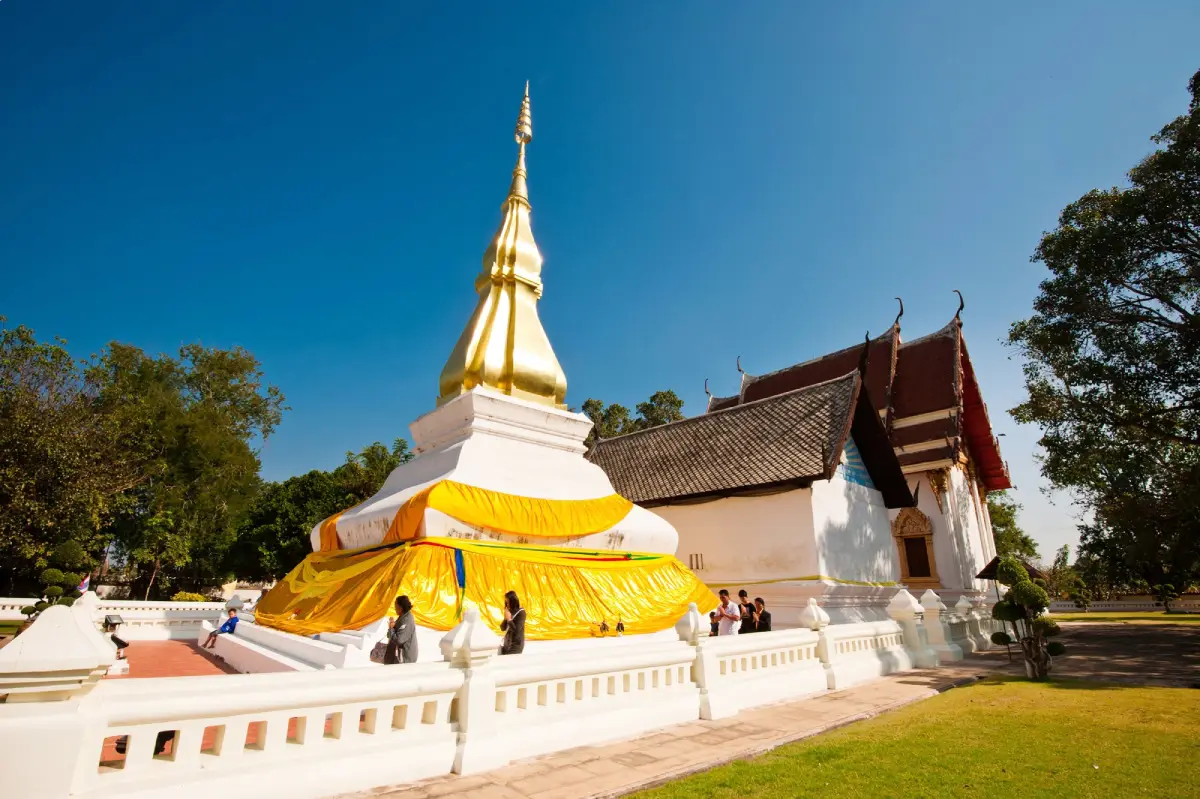
Phra That Kham Kaen
Open Days: Daily
Opening Hours: 05.00 – 19.00
Phra That Kham Kaen, located within Wat Chetiyaphum in Ban Kham, Ban Kham Subdistrict, Nam Phong District, Khon Kaen Province, is one of the most revered sacred landmarks in northeastern Thailand. It is widely regarded as the spiritual symbol of Khon Kaen Province and a major Buddhist pilgrimage site for local residents and visitors. The white chedi with its golden spire stands quietly inside the temple grounds, carrying a legend of the Buddha’s relics, a dead tamarind tree that miraculously came back to life, and the deep faith of the Ban Kham community. For foreign travelers, Phra That Kham Kaen offers a meaningful introduction to Khon Kaen beyond its modern city image, revealing the province’s Buddhist heritage, local identity, and living traditions.
The temple is situated outside the busy city center, in the more peaceful rural setting of Nam Phong District. The journey from downtown Khon Kaen takes visitors through local communities, open roads, and the quieter landscape north of the city. Upon arrival, the first impression is usually the striking simplicity of the chedi: a bright white body, a broad base, and a golden finial rising above the temple courtyard. The site is not overwhelming in scale, but it carries strong symbolic power. Local people come here to make merit, pray for blessings, and pay respect to what they believe to be one of the most sacred relic sites connected with the province.
The legend of Phra That Kham Kaen begins after the passing into Parinirvana of the Buddha, when relics of the Buddha were distributed and enshrined in many places. One of these relics was the Buddha’s ash relic, known in Thai as Phra Angkhan That. According to local tradition, this relic was kept by Phra Ya Lang Khiao, a Moriya ruler associated with an ancient city in the region connected with present-day Cambodia. Later, when he learned that Maha Kassapa Thera and 500 arahants had taken the Buddha’s breastbone relic to be enshrined at Phu Kam Phra, now known as Phra That Phanom, Phra Ya Lang Khiao and 9 other arahants decided to bring the ash relic to be enshrined there as well.
During the journey, the group stopped overnight at a tamarind grove. They placed the Buddha’s ash relic on the stump of a large dead tamarind tree, which had nothing left but its heartwood. The next day, they continued toward Phra That Phanom. When they arrived, however, they found that the construction of Phra That Phanom had already been completed. Unable to enshrine the relic there as originally intended, they returned along the same route. When they reached the same tamarind grove again, they witnessed an extraordinary event. The dead tamarind stump had come back to life, sprouting branches, flowers, fruit, and green leaves. Seeing this as a sacred sign, they built a chedi over the tamarind stump and enshrined the Buddha’s ash relic inside. This sacred monument became known as Phra That Kham Kaen.
The name “Kham Kaen” carries the heart of this legend. “Kham” refers to tamarind, while “kaen” means heartwood or the remaining core of a tree. The miracle of a dead tamarind trunk returning to life after supporting the Buddha’s ash relic gave the site its spiritual identity. The story is more than a tale of a relic. It is a symbolic narrative of renewal, sacred energy, and the power of faith. This is why Phra That Kham Kaen is remembered not only as a chedi containing a relic, but also as a place where life, death, and spiritual rebirth are woven together in local Buddhist imagination.
Another important part of the legend involves the 9 arahants who accompanied the relic-bearing journey. After they passed away, local people enshrined their remains in a smaller chedi near the main one. The larger chedi is traditionally associated with the sacred relic and the group of holy monks, while the smaller chedi preserves the memory of the arahants. This gives the temple grounds a layered sacred meaning. Visitors are not only paying respect to the Buddha’s relic, but also to the memory of enlightened monks who are part of the founding legend of the site.
Historically, there is no single inscription that clearly records the exact date of construction, but local historical accounts and travel sources generally associate the chedi with the early 25th Buddhist century. Over time, Phra That Kham Kaen has been restored and maintained so that it can continue to serve as a major sacred landmark. The chedi’s form reflects northeastern Thai Buddhist aesthetics and local craftsmanship, with a broad base, white exterior, and golden spire. It is a clear visual symbol of Khon Kaen, and for many local people, it represents the protective spiritual center of the province.
Phra That Kham Kaen is deeply connected with the identity of Khon Kaen Province. Khon Kaen today is known as a major center for education, medicine, transport, commerce, and modern urban development in northeastern Thailand. Yet the province’s identity is not defined only by universities, hospitals, roads, and shopping centers. It is also rooted in sacred places such as Phra That Kham Kaen. This chedi links the modern province with its older stories, Buddhist faith, and local memory. Visiting the site helps travelers understand why it appears in the cultural imagination and provincial identity of Khon Kaen.
Wat Chetiyaphum, the temple where Phra That Kham Kaen is located, functions as both a religious place and a cultural attraction. The main chedi stands at the center of the temple grounds, while other important areas include the ordination hall, assembly hall, Dharma courtyard, offering areas, and spaces for Buddhist ceremonies. Visitors usually begin by calming the mind, preparing flowers, incense, candles, or garlands, and then paying respect to the chedi. Some walk around the chedi as an act of devotion. The visit should be made respectfully, with modest clothing, quiet behavior, and care not to disturb worshippers or damage the sacred structure.
The most important focus of worship is the belief that Phra That Kham Kaen enshrines the Buddha’s ash relic. Devotees come to pray for auspiciousness, stability, safe travel, good health, success in work or study, business prosperity, and peace within the family. Many people visit at the beginning of the year, on birthdays, before important journeys, or before starting something meaningful in life. Some return to give thanks after their wishes are fulfilled. In this way, the chedi remains a living sacred place, not merely a historical object.
The most important annual event is the Phra That Kham Kaen worship festival, held every year on the full moon day of the 6th lunar month at Wat Chetiyaphum. This celebration brings together people from Ban Kham, Nam Phong District, Khon Kaen city, and nearby communities. The event includes Buddhist merit-making, worship activities, cultural performances, local food, and community stalls. It is both a religious festival and a community gathering, keeping the devotion to Phra That Kham Kaen alive from generation to generation. Travelers who visit during this period can experience not only the sacred chedi but also the living culture of local Isan communities.
On ordinary days, Phra That Kham Kaen is ideal for a peaceful visit. The temple generally opens to visitors daily from 05.00 to 19.00, and there is no admission fee for general worship. The morning is a good time to visit because the temperature is cooler and the light is suitable for photography. Late afternoon is also pleasant, especially for travelers who want a quieter atmosphere before returning to Khon Kaen city. On Buddhist holy days, weekends, or festival periods, visitors should allow extra time because the temple may be busier than usual.
Getting There from downtown Khon Kaen is straightforward by private car. Take Highway 209 on the Khon Kaen-Kalasin route. After crossing the Nam Phong River, turn left toward Ban Khok Si and continue for about 14 kilometers to Ban Kham and Wat Chetiyaphum. Another route is via Kasikorn Thung Sang Road, passing Khai Sri Patcharin and Ban Khok Tha. After reaching the bridge over the Phong River, turn right and follow the signs to Phra That Kham Kaen for about 10 kilometers. The route is generally suitable for private vehicles and can be arranged as a half-day trip from Khon Kaen city.
From central Khon Kaen, the total driving distance is approximately 25 to 30 kilometers depending on the route, and travel time is usually around 30 to 45 minutes. Travelers without a car can hire a taxi, private transfer, or ride-hailing service from the city, but it is best to arrange the return trip in advance because local public transport around Ban Kham is not as frequent as in the city center. For a more complete itinerary, visitors can combine Phra That Kham Kaen with nearby cafés, restaurants, Bueng Thung Sang, Wat Thung Setthi, or other attractions in Khon Kaen city.
The charm of Phra That Kham Kaen lies not only in the white-and-gold chedi but also in the atmosphere of a local temple rooted in community life. The temple is not as crowded or commercial as many urban attractions, making it suitable for slow and respectful travel. Visitors can walk around the courtyard, observe the chedi from different angles, and reflect on the legend of the tamarind heartwood. Photography is possible, but visitors should avoid blocking worshippers, entering restricted areas, or taking photos in ways that reduce the dignity of the sacred place.
For travelers interested in local history, Phra That Kham Kaen shows how Buddhist legend and provincial identity can become closely connected. The name “Khon Kaen” itself is widely associated with the idea of tamarind heartwood, and the chedi is often mentioned as one of the province’s defining symbols. Although the details of legends may vary across oral traditions, the central theme remains the same: this is a sacred place associated with the Buddha’s relic and a miraculous sign of renewal. Through festivals, worship, and storytelling, the local community continues to keep this meaning alive.
For families, Phra That Kham Kaen can be a valuable cultural learning experience. Children can learn how to behave respectfully in a temple, how local legends are passed down, and why sacred places matter to a community. They can see how one chedi connects many subjects: Buddhism, trees, relics, village history, annual festivals, and the identity of a province. This makes the visit more than a simple sightseeing stop. It becomes an accessible introduction to Isan culture and Buddhist heritage.
Visitors who come during the annual festival should prepare for a busier atmosphere. Parking areas and nearby roads may be crowded, and the temple grounds may host worshippers, vendors, cultural performances, and merit-making activities. It is advisable to dress modestly, bring drinking water, and allow enough time for walking and paying respect. Visiting during the festival offers a deeper view of local life, but it also requires patience and respect for the flow of worshippers.
Respectful behavior is essential when visiting Phra That Kham Kaen. Visitors should dress neatly, speak softly, keep the temple clean, avoid climbing on the chedi base, and place offerings only in designated areas. If walking around the chedi, do so calmly and avoid disturbing others. The chedi is not only a religious structure but also a cultural treasure. Small acts of care help preserve the dignity and peace of the site for future visitors.
As a cultural and spiritual destination, Phra That Kham Kaen is suitable for several types of travelers. Pilgrims and Buddhist visitors come to pay respect to a sacred relic site. History-minded travelers come to learn about local legends and Khon Kaen’s identity. Architecture lovers come to admire the white chedi and its golden spire. Travelers seeking a slower route outside the city come to experience the quieter side of Nam Phong District. A typical visit may take 30 minutes to 1 hour, but those who want to worship, take photographs, and explore the temple grounds slowly may spend longer.
For a half-day trip, visitors can leave Khon Kaen city in the morning, pay respect at Phra That Kham Kaen, stop at a nearby café or restaurant, and return to the city for Bueng Thung Sang, Khon Kaen City Pillar Shrine, or Central Khon Kaen. For a fuller day, the route can be expanded to Wat Thung Setthi, Bueng Kaen Nakhon, and Phra Mahathat Kaen Nakhon at Wat Nong Waeng. The itinerary is flexible and works well for travelers who want to combine faith, local culture, food, and city sightseeing.
For visitors from other provinces or overseas, Phra That Kham Kaen is one of the places that helps explain Khon Kaen beyond its role as a modern regional hub. The province is known for its university, hospitals, transport links, and urban growth, but its spiritual foundation remains visible in places like this. The chedi shows how a modern city can still be connected to ancient stories, sacred symbols, and community devotion. For this reason, Phra That Kham Kaen is not only a tourist attraction but also a cultural key to understanding Khon Kaen.
Phra That Kham Kaen should be visited with a quiet mind and enough time to appreciate its meaning. Standing before the white chedi, visitors encounter more than a beautiful religious monument. They encounter the story of the Buddha’s ash relic, the dead tamarind stump that came back to life, the 9 arahants of the legend, the annual full-moon festival of the 6th lunar month, and the devotion of Ban Kham community. Together, these elements make Phra That Kham Kaen a sacred heart of Khon Kaen Province and one of the most meaningful Buddhist sites in northeastern Thailand.
| Name | Phra That Kham Kaen / Wat Chetiyaphum |
| Location | Wat Chetiyaphum, Ban Kham, Ban Kham Subdistrict, Nam Phong District, Khon Kaen Province |
| Address | Ban Kham, Moo 1, Ban Kham Subdistrict, Nam Phong District, Khon Kaen 40140, Thailand |
| Approximate Coordinates | 16.5889, 102.8279 |
| Type | Buddhist temple, sacred chedi, provincial spiritual landmark, and cultural attraction of Khon Kaen |
| Highlights | White chedi with golden spire, legend of the Buddha’s ash relic, tamarind heartwood miracle, and annual worship festival on the full moon day of the 6th lunar month |
| History | Traditionally dated to the early 25th Buddhist century and connected with the legend of the Buddha’s ash relic and the dead tamarind stump that returned to life |
| Key Evidence | The main Phra That Kham Kaen chedi, the smaller chedi associated with arahant relics, the Buddha’s ash relic legend, and local Isan-Lan Xang chedi style |
| Name Origin | The name comes from the legend of a dead tamarind stump, or heartwood, that miraculously sprouted after supporting the Buddha’s ash relic |
| Distinctive Features | White chedi with a broad base and golden spire, standing prominently within Wat Chetiyaphum as a key symbol of Khon Kaen Province |
| Main Areas / Zones | 1. Main Phra That Kham Kaen chedi 2. Smaller chedi associated with the arahants in the legend 3. Ordination hall and main Buddha image 4. Assembly hall and Dharma courtyard 5. Offering area 6. Courtyard around the chedi 7. Parking and visitor service areas |
| Tradition / Ritual | Annual Phra That Kham Kaen worship festival on the full moon day of the 6th lunar month at Wat Chetiyaphum, with merit-making, worship, local performances, and community stalls |
| Abbot / Caretaker | Phra Khru Sutthammaphani, Asst. Prof. Dr., Abbot of Wat Chetiyaphum, Wat Phra That Kham Kaen |
| Open Days | Daily |
| Opening Hours | 05.00 – 19.00 |
| Fees | No admission fee |
| Facilities | Parking area, worship courtyard, restrooms, seating area, offering area, and religious activity spaces |
| Travel Information | From Khon Kaen city, take Highway 209 on the Khon Kaen-Kalasin route, cross the Nam Phong River, turn left toward Ban Khok Si, and continue to Ban Kham. Another route is via Kasikorn Thung Sang Road, Khai Sri Patcharin, and Ban Khok Tha. |
| Current Status | Open as an active temple and major sacred site of Khon Kaen Province, welcoming worshippers and travelers throughout the year |
| Main Contact Number | 089-575-3873 |
| Official Website / Official Page | Facebook Page: Wat Phra That Kham Kaen |
| Nearby Tourist Attractions | 1. Bann Phae Coffee, about 5 km 2. Bueng Thung Sang, about 18 km 3. Khon Kaen City Pillar Shrine, about 21 km 4. Central Khon Kaen, about 22 km 5. Wat Thung Setthi, about 23 km 6. Bueng Kaen Nakhon, about 24 km 7. Phra Mahathat Kaen Nakhon at Wat Nong Waeng, about 25 km |
| Nearby Restaurants | 1. Bann Phae Coffee, about 5 km, Tel. 086-225-4009 2. Rom Boon Caf'e, about 6 km 3. Ros Zaap Jad Jaan, Ban Chamroen, about 1 km, Tel. 091-127-0617 4. Khun Jaeng Pak Mo Noodles Khon Kaen, about 20 km 5. Prasit Phochana Khon Kaen, about 20 km 6. Kai Yang Preecha Khon Kaen, about 21 km |
| Nearby Accommodations | 1. Charoen Thong Resort, about 2 km, Tel. 087-490-9899 2. Yodthong Lhanwong, about 7 km 3. Himawari Restaurant and Cottage, about 8 km 4. Ban Suan Chom Dao Resort, about 10 km 5. Suan Yai Ka Ta Resort, about 14 km 6. Xotel, about 16 km 7. Avani Khon Kaen Hotel & Convention Center, about 18 km |
Frequently Asked Questions (FAQ)
Q: Where is Phra That Kham Kaen located?
A: Phra That Kham Kaen is located inside Wat Chetiyaphum in Ban Kham, Ban Kham Subdistrict, Nam Phong District, Khon Kaen Province.
Q: What are the opening hours of Phra That Kham Kaen?
A: It is open daily from 05.00 to 19.00. Morning and late afternoon are good times for worship and photography.
Q: Is there an admission fee?
A: No. General visits and worship at Phra That Kham Kaen are free of charge, though visitors may make donations according to their faith.
Q: Why is Phra That Kham Kaen important?
A: It is a sacred provincial landmark of Khon Kaen and is believed to enshrine the Buddha’s ash relic, making it one of the most meaningful Buddhist sites in the province.
Q: What is the tamarind heartwood legend?
A: According to legend, the Buddha’s ash relic was placed on a dead tamarind stump. When the group returned, the stump had miraculously sprouted green leaves, leading to the construction of the chedi and the name Phra That Kham Kaen.
Q: When is the annual worship festival held?
A: The annual Phra That Kham Kaen worship festival is held every year on the full moon day of the 6th lunar month at Wat Chetiyaphum.
Q: How can travelers get there from Khon Kaen city?
A: Travelers can take Highway 209 toward Kalasin, cross the Nam Phong River, turn toward Ban Khok Si, and continue to Ban Kham. Another route passes Kasikorn Thung Sang Road, Khai Sri Patcharin, and Ban Khok Tha.
Q: What nearby places can be visited on the same trip?
A: Nearby places include Bann Phae Coffee, Bueng Thung Sang, Khon Kaen City Pillar Shrine, Wat Thung Setthi, Bueng Kaen Nakhon, and Phra Mahathat Kaen Nakhon at Wat Nong Waeng.
 Category: ●Places of Worship
 Group: ●Other Sacred Sites
Last Update : 3 MonthAgo
 Last Update : 3 MonthAgo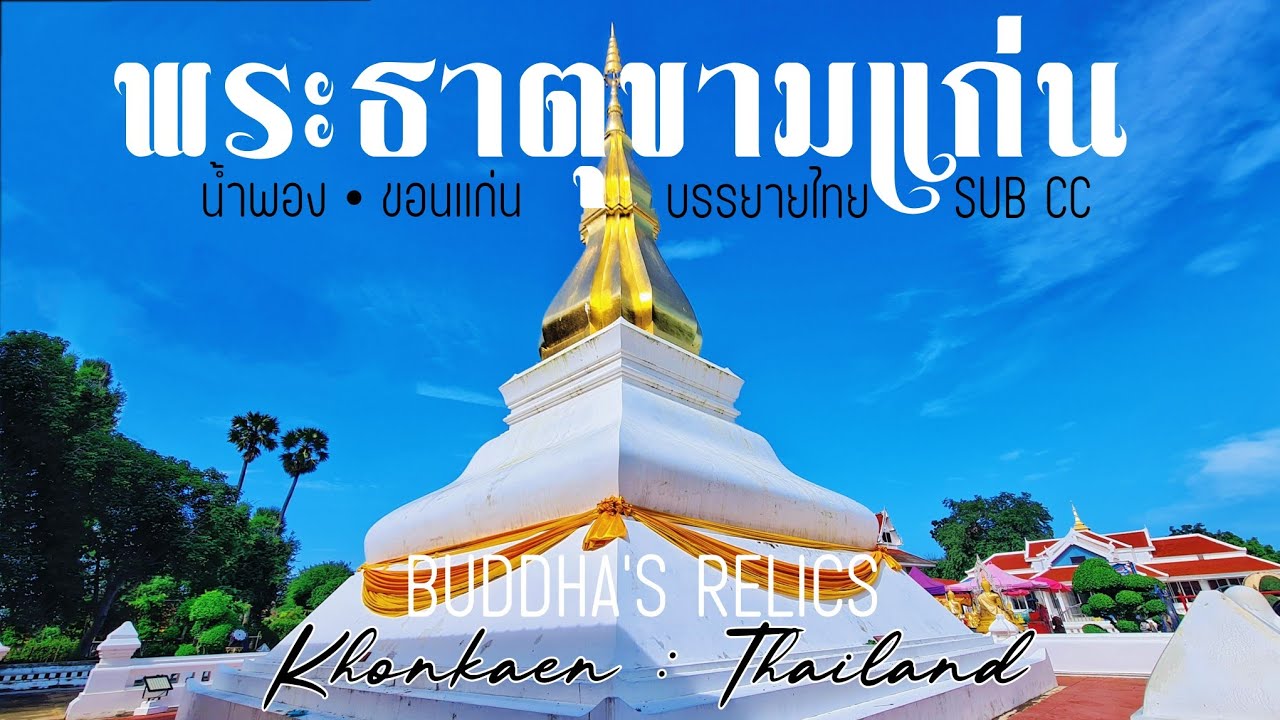
 Click to Access the Navigation Map GPS
Phra That Kham Kaen Map
Recommend

 Art, Culture and Heritage
 Historical Sites and Monuments(7)
 Landmarks and Memorials(3)
 Art, Craft Centres, Tradition(2)
 Museums(4)
 Educational Places
 Museum for Study(2)
 Temple(27)
Other Sacred Sites(5)
Temple(27)
Other Sacred Sites(5)
 Suburban Living
 Village, Community(3)
 Local Market(1)
 Nature and Wildlife
 National Parks and Marine Reserves(5)
 Mountain (Doi)(1)
 Dam, Reservoir, Lake(4)
 Waterfalls(8)
 Caves(9)
 River, Canal(10)
 Bays and Beaches(3)
 Islands(1)
 Other natural attractions(5)
 Entertainment and Agricultural
 Zoos and Aquariums(2)
 Animal camps and shows(2)
 Farms, Parks and Ecotourism(7)
 Waterpark(3)
 Travel Articles, Recipes
 Travel Review, Food Review(1)


