
lovethailand home >Northeastern Travel Attractions >Kalasin Travel Attractions >Sahasakan >Phu Sing > Phu Sing Buddhist Sanctuary
TL;DR: Phu Sing Buddhist Sanctuary is located at Phu Sing Subdistrict, Sahatsakhan District, Kalasin Province, open Daily, hours 06.00 – 18.00.
Phu Sing Buddhist Sanctuary
Open Days: Daily
Opening Hours: 06.00 – 18.00
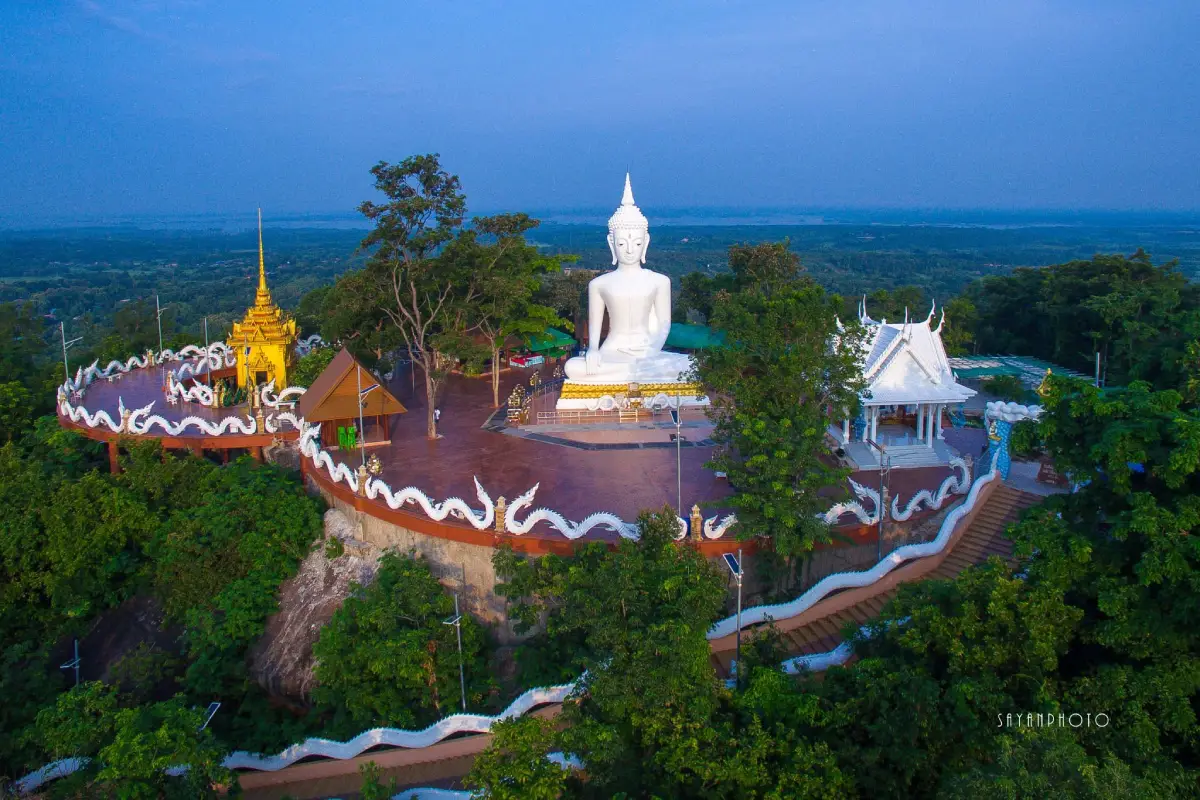
Phu Sing Buddhist Sanctuary in Kalasin, also known as Wat Phutthawat Phu Sing, is one of the most significant hilltop Buddhist destinations in Kalasin Province. Located on the summit of Phu Sing Hill in Phu Sing Subdistrict, Sahatsakhan District, it is about 34 km from Kalasin town via Highway 227. The sanctuary is best known for Phra Phrom Phumipalo, a large white seated Buddha image in the Maravijaya posture. The image has a lap width of 10.5 meters and a height of 17.80 meters, standing gracefully above the surrounding landscape of hills, rice fields, villages, and the waters of Lam Pao Dam.
Phu Sing Buddhist Sanctuary is a place where Buddhist faith, mountain scenery, and local culture meet in one destination. Visitors come here to pay respect to the Buddha image, enjoy the cool hilltop atmosphere, take photographs, and look out over the wide view of Sahatsakhan District. From the summit, the landscape opens toward Lam Pao Dam, Phu Kum Khao, Phu Khao, Phu Po, Phu Peng, and distant mountain ranges. This makes the site suitable not only for Buddhist travelers but also for those interested in nature, photography, and quiet cultural travel.
There are 2 main ways to reach the hilltop. On the western side, visitors can drive up a paved road that winds along the hillside for about 3 km. This route is suitable for private cars and for travelers who prefer a more comfortable ascent. On the eastern side, visitors can climb the stairway of 417 steps, a route often associated with devotion and effort. Many Thai visitors see the climb as a mindful journey before reaching the sacred space at the top of the hill.
Phu Sing Hill rises about 346 meters above sea level. This elevation gives the sanctuary a broad and memorable viewpoint. To the south, visitors can see the water surface of Lam Pao Dam and the settlements of Non Buri. To the east are the scenic forms of Phu Po, Phu Khao, Phu Peng, and Phu Kum Khao. To the west, the distant hills of Tha Khantho District can be seen. In the late afternoon, this direction becomes one of the attractive sunset viewpoints in Kalasin.
Phra Phrom Phumipalo is the spiritual heart of the sanctuary. The large white Buddha image has a calm and dignified expression, with balanced proportions and a peaceful presence. Its white color makes it visible from a distance and creates a strong visual contrast against the green hillside and blue sky. The image was built on 14 April 1968 by craftsmen from Ban Si Than in Kamalasai District, a group associated with traditional Lan Xang-influenced craftsmanship. This background gives the Buddha image both devotional and artistic importance.
Climbing the 417-step stairway is one of the most meaningful experiences at Phu Sing. Step by step, visitors move from the lower area toward the sacred hilltop. The route gives time for reflection and allows travelers to feel the physical effort behind the act of worship. For many people, the stairway is not only a route of access but also a symbolic path of faith, patience, and concentration.
For elderly visitors, families with children, or those who prefer not to climb, the paved road on the western side offers a more convenient option. The road curves through the hillside and reaches the upper area of the sanctuary. Because both walking and driving routes are available, Phu Sing can welcome different types of travelers, from pilgrims who want to climb the stairway to families who want a comfortable visit.
The hilltop area is spacious and peaceful. The main courtyard in front of Phra Phrom Phumipalo is suitable for worship, quiet prayer, photography, and panoramic viewing. Visitors should allow at least 1 hour to explore the upper area slowly. The charm of Phu Sing lies not only in reaching the Buddha image, but in spending time with the wind, the open sky, the surrounding forest, and the changing light over Kalasin’s rural landscape.
Wat Phutthawat Phu Sing also functions as a Buddhist learning and cultural site. It serves as a center for the propagation of Buddhism, ecological-cultural learning, and community cultural activities. This means the site is more than a hilltop viewpoint. It is a place where temple life, forest landscape, local community, and religious traditions are connected.
The most important annual tradition connected with Phu Sing is the Tak Bat Devo ceremony during the end of Buddhist Lent. Each year, large numbers of Buddhist devotees gather as monks walk down from Phu Sing along the stairway to receive alms at the foot of the hill. The scene of monks descending the long stairway reflects the Buddhist story of the Buddha’s descent from Tavatimsa Heaven and has become one of the most memorable religious events in Sahatsakhan District.
The Tak Bat Devo ceremony is significant because it connects Buddhist teaching with the actual geography of the hill. The image of monks descending from the summit gives the ceremony a powerful visual meaning. Visitors who attend during this period can experience both devotion and community participation, while also seeing how local people preserve an important post-Lent Buddhist tradition.
Outside the festival period, Phu Sing remains worth visiting throughout the year. Early morning is suitable for fresh air, soft light, and occasional mist after rain. Late afternoon is good for gentle sunlight and sunset views. Photographers may prefer to visit during these times because the white Buddha image, the hilltop courtyard, and the scenery of Lam Pao Dam look especially beautiful in softer light.
Those who come for worship should begin by paying respect to Phra Phrom Phumipalo, then walk quietly around the viewpoint areas. From the summit, the view of rice fields, villages, hills, and water gives visitors a strong sense of the relationship between Buddhism and the local landscape. This is what makes Phu Sing more than a scenic stop; it is a place where faith and geography reinforce each other.
Nature lovers will appreciate the shaded environment and the calm hilltop setting. Trees, wind, bird sounds, and open viewpoints create a peaceful atmosphere that feels very different from urban tourist destinations. For visitors seeking rest and reflection, Phu Sing offers a simple but meaningful experience of stillness, mountain air, and Buddhist devotion.
Architecturally, Phra Phrom Phumipalo gives Phu Sing its unmistakable identity. The large white seated Buddha image appears above the tree line and can be seen from many points in the district. Its scale and color make the hill a spiritual landmark of Sahatsakhan. The image represents purity, calmness, and stability, while the hilltop position strengthens its symbolic presence.
Phu Sing is also suitable for families. Children can learn about Buddhist etiquette, the meaning of temple visits, the importance of respectful dress, and the value of patience if they choose to climb the stairway. Families who drive up can still enjoy the Buddha image, viewpoints, and open space. The site offers an easy way to introduce younger visitors to Thai Buddhist culture through a real place rather than through explanation alone.
Visitors should follow proper temple etiquette. Dress respectfully, avoid loud behavior, do not climb on restricted structures, do not litter, and do not take disrespectful photographs. Those climbing the stairway should walk carefully, rest when needed, and avoid rushing in hot weather. The hill is a sacred place as well as a natural viewpoint, so respectful behavior is essential.
Useful items to bring include comfortable walking shoes, drinking water, a hat or umbrella, and modest clothing suitable for a temple. Those who plan to climb should start in the morning or late afternoon to avoid strong heat. During the rainy season, visitors should watch for slippery steps and check the weather before traveling. Drivers using the hill road should drive slowly because the route curves along the hillside.
Getting There from Kalasin town is straightforward by private car. Take Highway 227 toward Sahatsakhan District and Phu Sing Subdistrict, about 34 km from town. At Phu Sing, visitors can choose either the paved western road for vehicles or the eastern stairway of 417 steps. A private car is the most convenient option, especially for travelers who want to combine Phu Sing with Sirindhorn Museum, Wat Phuttha Nimit Phu Khao, Thepsuda Bridge, Lam Pao Dam, and other attractions in Sahatsakhan District.
Travelers coming from other provinces can reach Kalasin by car or bus. Kalasin Province does not have its own airport or railway station, so many travelers arrive through nearby provinces such as Khon Kaen, Roi Et, or Maha Sarakham, then continue by road to Kalasin and Sahatsakhan. For a full-day itinerary, a private car or hired vehicle is recommended.
Phu Sing fits well into a Sahatsakhan travel route. A half-day visit can include Phu Sing and Sirindhorn Museum. A full-day route can add Wat Phuttha Nimit Phu Khao, Thepsuda Bridge, Lam Pao Dam, and nearby lakeside attractions. This combination gives visitors a balanced experience of Buddhist faith, hilltop scenery, dinosaur heritage, and water-based landscapes.
Sirindhorn Museum is one of the most important nearby attractions and is widely known for dinosaur fossils and paleontological learning. Visiting it together with Phu Sing gives travelers 2 different dimensions of Kalasin: natural history and Buddhist faith. Wat Phuttha Nimit Phu Khao adds another religious and hill landscape experience, while Thepsuda Bridge and Lam Pao Dam complete the route with open water and scenic views.
For photography, good angles include the front view of Phra Phrom Phumipalo, the stairway from below, the viewpoint overlooking Lam Pao Dam, and the sunset-facing western side. The strongest visual identity of Phu Sing comes from the large white Buddha image set against the green hill and the wide sky of Kalasin.
During the end of Buddhist Lent, the sanctuary becomes especially lively because of the Tak Bat Devo ceremony. Visitors who want to join should plan ahead for travel time, parking, and alms offerings. Those who prefer a quiet visit should come on ordinary weekdays or outside festival periods, when they can spend more time praying, walking, and enjoying the view.
Facilities at the site include parking, restrooms, welfare shops, resting areas, viewpoints, and both vehicle and stairway access. Visitors who plan to climb the stairs should avoid carrying too much and should take care of elderly companions and children. Groups should set meeting points because the hilltop area has several places to walk and view the scenery.
For foreign travelers, Phu Sing can be understood as a hilltop Buddhist sanctuary with a large white seated Buddha image and panoramic views of central Isan. The 417-step stairway helps visitors experience the physical side of Thai Buddhist devotion, while the wide views from the summit reveal the agricultural and natural landscape of Kalasin Province.
Overall, Phu Sing Buddhist Sanctuary is one of Kalasin’s most rewarding cultural and scenic destinations. It offers sacredness, Buddhist art, a meaningful climb, panoramic viewpoints, and an important local tradition. A visit to Phu Sing is not only a visit to a large Buddha image, but a journey into the faith, hills, wind, and open landscapes that define this part of Kalasin.
| Name | Phu Sing Buddhist Sanctuary, or Wat Phutthawat Phu Sing |
| Location | Phu Sing Subdistrict, Sahatsakhan District, Kalasin Province |
| Address | 33 Moo 7, Phu Sing Subdistrict, Sahatsakhan District, Kalasin Province 46140, Thailand |
| Highlights | Phra Phrom Phumipalo, a large white seated Buddha image on Phu Sing Hill, with panoramic views of Lam Pao Dam, rice fields, villages, Phu Kum Khao, Phu Khao, Phu Po, Phu Peng, and distant hills |
| History | Phra Phrom Phumipalo was built on 14 April 1968 by craftsmen from Ban Si Than, Kamalasai District, whose craftsmanship is associated with the Lan Xang tradition |
| Distinctive Features | A Maravijaya-posture Buddha image with a lap width of 10.5 meters and a height of 17.80 meters, located on a hill about 346 meters above sea level |
| Traditions / Rituals | Tak Bat Devo ceremony at the end of Buddhist Lent, when monks walk down the Phu Sing stairway to receive alms at the foot of the hill |
| Main Areas / Zones | Phra Phrom Phumipalo courtyard, 417-step stairway, paved vehicle road on the western side, Lam Pao Dam viewpoint, resting areas, religious areas, and sunset viewpoint |
| Travel Information | From Kalasin town, take Highway 227 toward Sahatsakhan District for about 34 km. Visitors can reach the hilltop by the 3-km paved western road or by the eastern stairway of 417 steps |
| Current Status | Open for worship, sightseeing, and cultural visits; one of the major Buddhist and scenic destinations of Sahatsakhan District |
| Open Days | Daily |
| Opening Hours | 06.00 – 18.00 |
| Fees | No admission fee |
| Facilities | Parking, restrooms, welfare shops, resting areas, viewpoints, vehicle access, and stairway access |
| Abbot / Temple Caretaker | Phra Khru Siriphatthananiwet, Dr., Abbot of Wat Phutthawat Phu Sing and Ecclesiastical District Chief of Sahatsakhan |
| Main Contact Number | Wat Phutthawat Phu Sing, Tel. 082-858-7333 |
| Nearby Tourist Attractions | 1. Sirindhorn Museum, about 7 km 2. Wat Phuttha Nimit Phu Khao, about 8 km 3. Thepsuda Bridge, about 9 km 4. Lam Pao Dam, about 12 km 5. Laem Non Wiset, about 13 km 6. Wat Sakkawan, about 14 km |
| Nearby Restaurants | 1. Khun Det Restaurant, about 2 km, Tel. 085-158-1887 2. Huan Pha Khao, about 6 km, Tel. 097-305-0888 3. Phae Waranphon at Thepsuda Bridge, about 9 km, Tel. 082-110-7977, 081-369-0522, 081-054-2724 4. Poen Traditional Coffee and Five Star Chicken Rice, about 5 km, Tel. 087-294-2537 5. Dino Jok Kajab, about 6 km, Tel. 043-871-043 6. Chansuda Phochana, about 6 km, Tel. 043-815-172 |
| Nearby Accommodations | 1. Sukwan Boutique Home Resort, about 2 km, Tel. 094-540-2607 2. Ban Suan Khwam Hug Resort, about 2 km, Tel. 082-117-9083 3. Miss Love Poolvilla Sahatsakhan Kalasin, about 2 km, Tel. 086-041-6065 4. Iyara Resort Kalasin, about 6 km, Tel. 098-661-4929 5. Huan Sahatsakhan Resort, about 6 km, Tel. 095-196-2629, 096-365-4778 |
Frequently Asked Questions (FAQ)
Q: Where is Phu Sing Buddhist Sanctuary located?
A: Phu Sing Buddhist Sanctuary, or Wat Phutthawat Phu Sing, is located in Phu Sing Subdistrict, Sahatsakhan District, Kalasin Province, about 34 km from Kalasin town via Highway 227.
Q: What is the main highlight of Phu Sing Buddhist Sanctuary?
A: The main highlight is Phra Phrom Phumipalo, a large white seated Buddha image with a lap width of 10.5 meters and a height of 17.80 meters, located on the summit of Phu Sing Hill.
Q: How can visitors reach the top of Phu Sing?
A: Visitors can reach the top by the paved western road for vehicles, about 3 km long, or by climbing the eastern stairway of 417 steps.
Q: Is there an admission fee?
A: No. Visitors can enter, worship, and enjoy the viewpoints without an admission fee during visiting hours.
Q: When is the best time to visit?
A: Morning is best for fresh air and climbing, while late afternoon is suitable for soft light and sunset views. The end of Buddhist Lent is ideal for those who want to experience the Tak Bat Devo ceremony.
Q: What tradition is associated with Phu Sing?
A: The sanctuary is associated with the Tak Bat Devo ceremony at the end of Buddhist Lent, when monks descend the Phu Sing stairway to receive alms at the foot of the hill.
Q: What attractions are near Phu Sing Buddhist Sanctuary?
A: Nearby attractions include Sirindhorn Museum, Wat Phuttha Nimit Phu Khao, Thepsuda Bridge, Lam Pao Dam, Laem Non Wiset, and Wat Sakkawan.
Q: What should visitors prepare before visiting?
A: Visitors should dress respectfully, wear comfortable shoes, bring drinking water, and choose the ascent route that suits their physical condition. Those climbing the stairs should start in the morning or late afternoon to avoid heat.
 Category: ●Places of Worship
 Group: ●Other Sacred Sites
Last Update : 4 MonthAgo
 Last Update : 4 MonthAgo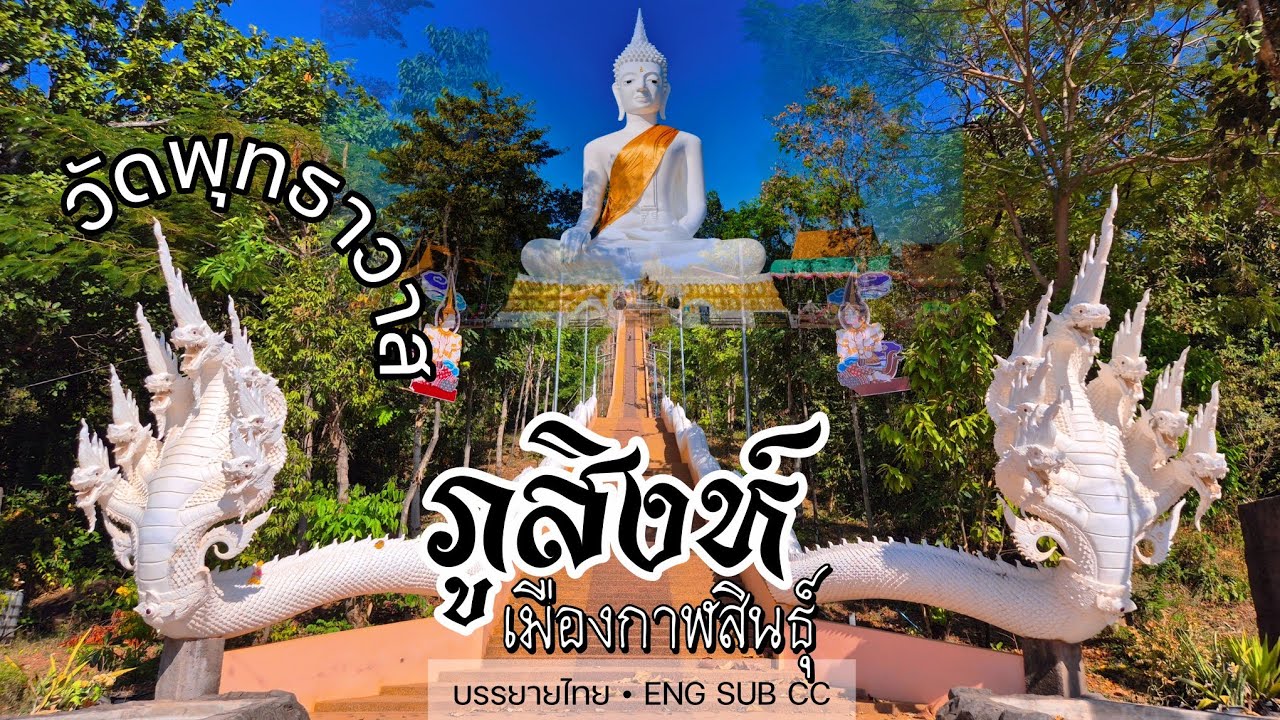
 Click to Access the Navigation Map GPS
Phu Sing Buddhist Sanctuary Map

 Art, Culture and Heritage
 Historical Sites and Monuments(2)
 Landmarks and Memorials(3)
 Art, Craft Centres, Tradition(4)
 Museums(3)
 Art Gallery(1)
 Educational Places
 Educational Gardens, Farm(1)
 Temple(21)
Other Sacred Sites(7)
Temple(21)
Other Sacred Sites(7)
 Suburban Living
 Village, Community(3)
 Nature and Wildlife
 National Parks and Marine Reserves(3)
 Mountain (Doi)(2)
 Dam, Reservoir, Lake(5)
 Waterfalls(4)
 Caves(2)
 River, Canal(3)
 Bays and Beaches(1)
 Other natural attractions(2)
 Entertainment and Agricultural
 Animal camps and shows(1)
 Farms, Parks and Ecotourism(2)
 Travel Articles, Recipes
 Travel Review, Food Review(1)


