
lovethailand home >Central Travel Attractions >Bangkok Travel Attractions >Phra Nakhon >Phra Borommaha Ratchawang > Kanom Ko Thai Dessert
TL;DR: Kanom Ko Thai Dessert. Traditional southern desserts may be delicious and may be difficult to find. The powder can be made in a natural color or can be colored as.

Kanom Ko Thai Dessert
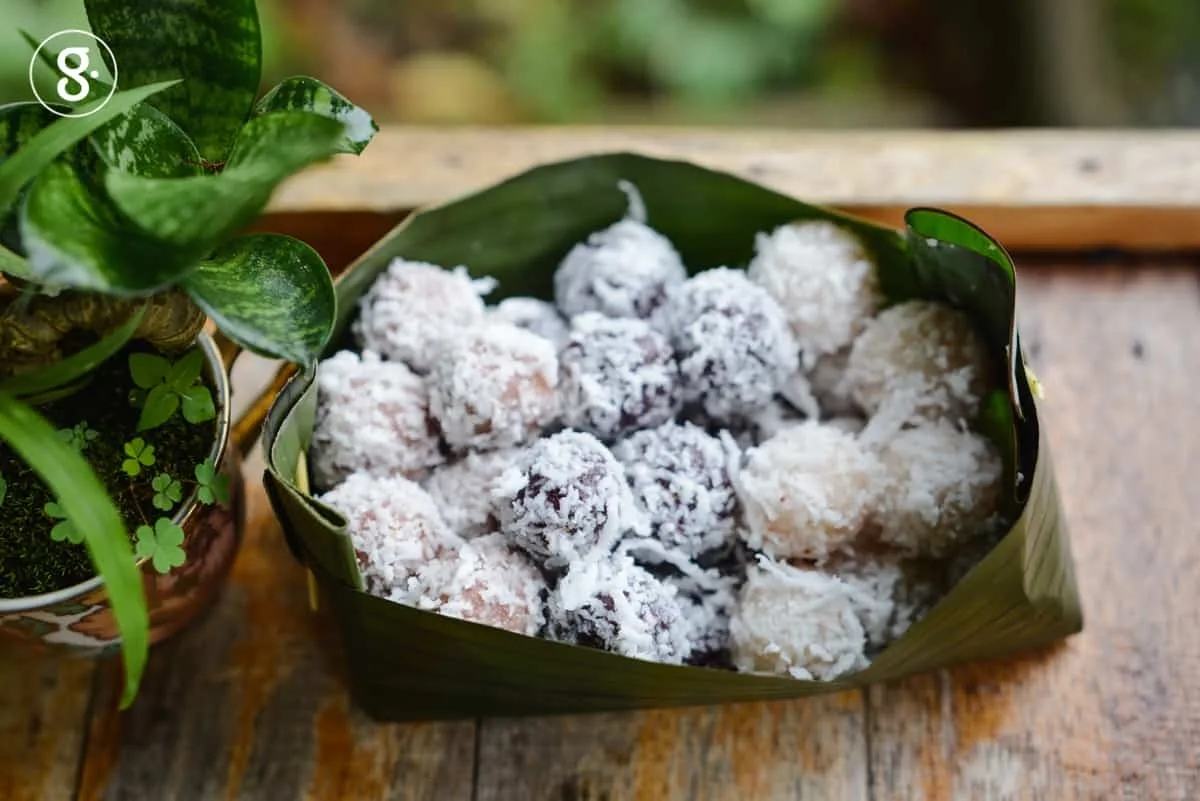
Kanom Ko Thai Dessert Traditional southern desserts may be delicious and may be difficult to find. The powder can be made in a natural color or can be colored as you like. Add coconut sugar filling Tossed with grated coconut for added flavor
We have a variety of glutinous rice in Thailand, not allergic to rice. It is also a grain that can grow in every region. So if anyone has never eaten sticky rice with grilled chicken papaya salad. or grilled pork sticky rice once And it would be a rather strange thing. or for those who do not eat meat Or don't like the sticky granularity of glutinous rice? You might be attracted to Bualoy. An easy-to-eat dessert that is the result of processing from glutinous rice grains to flour.
Until we can say that Sticky rice is associated with the eating culture of the people in this region. no less than other grains at all. cracked glutinous rice Grind the flour out and give it white meat, then red sticky rice. Give the red flour as its name. Finally, it is glutinous rice or black glutinous rice. It has a dark purple color. From the rice we put it into the grinder. Grind it out into flour, ready to use. Or if you don't have a grinder, you can buy glutinous rice flour directly from farmers who produce rice flour.
Our Kanom Kho is made using 3 different varieties of glutinous rice flour. The process is the same for all 3 things. There may be a slight difference in the amount of water used to mix the flour. The first-timers may try it. by using either glutinous rice flour first And it may be a common glutinous rice flour that is easy to find. If you want to add color, you can use flowers such as butterfly peas, bougainvillea, or purple, pumpkins to mix to make them more appetizing as well.
Ingredients
- Glutinous rice flour
- Steamed Taro
- Shredded coconut (I couldn't find any, so I chopped the shredded coconut meat)
- Brown sugar
- Hales Blue Boy Red (other colors or natural vegetable juices) optional
- A pinch of salt (used for mixing with grated coconut)
How to make Thai desserts (Thai dessert recipes)
1. The first step is to use a spoon and fork to grind steamed taro. Then mix it with glutinous rice flour. Then knead the mixture until it forms a lump. If the mixture is too dry, add water. If it's too sticky, you'll need to add more flour. If you want a pink dough, you can mix red nectar with water, pour it in and knead until combined.
2. Next step, divide the dough into round balls. Estimate the amount of flour must be enough to cover the prepared sugar. spread into thin sheets by adjusting the thickness to fit Place the sugar in the middle. roll into a ball Done and set aside.
3. Fill the pot with clean water. Put on medium heat and wait until the water boils. Add Kanom Kol and blanch until cooked. by observing from the floating candy Then scoop it into cold water for a while to keep the snacks from sticking together. (In the recipe, I don't like the snacks to stick together, so I use this method. but the original recipe is not to soak in water).
4. Put the dessert on a plate and mix the grated coconut with a little salt. When finished, it can be mixed with the dessert or can be sprinkled. Ready to eat.
Khanom Kho is a traditional Thai dessert from Southern Thailand, known for its soft, chewy texture and rich coconut aroma. It is made from glutinous rice flour dough shaped into small balls, filled with palm sugar, then boiled until cooked and coated with grated coconut. Despite its simple ingredients, Khanom Kho reflects the depth of Thai culinary culture and the long-standing relationship between rice and daily life.
This dessert is closely tied to Thailand’s agricultural heritage, particularly glutinous rice, which has been cultivated across all regions of the country. Different varieties of glutinous rice, such as white, red, and black (purple), can be processed into flour and used to create various traditional sweets. Khanom Kho is one such example where rice is transformed into a soft, flavorful dessert enjoyed by generations.
The dough is typically made by mixing glutinous rice flour with water or mashed ingredients such as steamed taro, pumpkin, or sweet potato to enhance both color and flavor. Natural coloring from butterfly pea flowers, pandan leaves, or purple sweet potatoes is often used to create visually appealing variations, giving the dessert a vibrant and inviting look.
One of the key highlights of Khanom Kho is its filling. A small piece of palm sugar or coconut sugar is wrapped inside the dough. When boiled, the sugar melts into a sweet, aromatic center, creating a delightful contrast with the chewy outer layer. After cooking, the dessert is coated with freshly grated coconut mixed with a pinch of salt, balancing sweetness with a subtle savory note.
The preparation process requires attention to texture and balance. The dough must be soft but not sticky, firm enough to hold the filling without breaking. Once shaped, the balls are boiled in water until they float, indicating that they are fully cooked. Some methods include briefly soaking the cooked balls in cold water to prevent sticking before coating them with coconut.
Traditionally, Khanom Kho was made at home and served during family gatherings, religious ceremonies, or local festivities. Unlike elaborate royal Thai desserts, this sweet represents simplicity and authenticity, highlighting the natural flavors of local ingredients. Today, it remains a beloved dessert, often found in local markets and traditional food stalls, though it can sometimes be difficult to find outside its regional origins.
| Name | Khanom Kho |
| Category | Traditional Thai Dessert / Southern Thai Dessert |
| History | A traditional dessert from Southern Thailand, reflecting the use of glutinous rice in Thai culinary culture |
| Main Ingredients | Glutinous rice flour, taro (optional), grated coconut, palm sugar, water, and salt |
| Filling | Palm sugar or coconut sugar that melts into a sweet center when cooked |
| Appearance | Small round balls, sometimes colorful, coated with grated coconut |
| Taste & Texture | Soft and chewy with a sweet molten center, balanced by slightly salty coconut |
| Key Technique | Proper dough consistency, sealing the filling completely, and boiling until the balls float |
| Occasions | Family gatherings, local traditions, religious events, and casual dessert consumption |
Frequently Asked Questions (FAQ)
Q: What is Khanom Kho?
A: Khanom Kho is a traditional Thai dessert made from glutinous rice flour balls filled with palm sugar and coated with grated coconut.
Q: What does Khanom Kho taste like?
A: It has a soft and chewy texture with a sweet, melted palm sugar filling and a slightly salty coconut coating, creating a well-balanced flavor.
Q: What type of flour is used in Khanom Kho?
A: Glutinous rice flour is used, giving the dessert its characteristic chewy and elastic texture.
Q: What is the filling inside Khanom Kho?
A: The filling is typically palm sugar or coconut sugar, which melts when cooked to create a sweet, gooey center.
Q: Why is grated coconut used in Khanom Kho?
A: Grated coconut adds richness and aroma, while a small amount of salt enhances the overall flavor balance.
Q: How do you know when Khanom Kho is cooked?
A: The dessert is fully cooked when the balls float to the surface of boiling water.
Q: Can natural colors be used in Khanom Kho?
A: Yes, natural ingredients like butterfly pea, pumpkin, taro, and purple sweet potato can be used to add color.
Q: Is Khanom Kho similar to Bua Loy?
A: While both are made from glutinous rice dough, Khanom Kho has a filling and is coated with coconut, whereas Bua Loy is usually served in coconut milk.
 Category: ●Travel Articles, Recipes
 Group: ●Royal Thai Desserts and Recipes
Last Update : 5 MonthAgo
 Last Update : 5 MonthAgo
Recommend

 Art, Culture and Heritage
 Historical Sites and Monuments(3)
 Landmarks and Memorials(23)
 Royal Palace(13)
 Art, Craft Centres, Tradition(35)
 Museums(59)
 Historic Homes and Cities(3)
 Art Gallery(16)
 Educational Places
 Museum for Study(6)
 Library(4)
 Places of Worship
 Temple(72)
 Church(2)
 Mosque(67)
 Other Sacred Sites(8)
 Research and Development
 Royal Project(1)
 Suburban Living
 Village, Community(5)
 Local Market(9)
 Floating Market(2)
 Nature and Wildlife
 River, Canal(3)
 Bays and Beaches(1)
 Other natural attractions(1)
 Entertainment and Agricultural
 Zoos and Aquariums(4)
 Animal camps and shows(5)
 Stadium(9)
 Farms, Parks and Ecotourism(20)
 Amusement Park(1)
 Waterpark(1)
 Theater(7)
 Cinema(1)
 Shopping
 Shopping and Night Market(20)
 Department Store(7)
 Spas and Wellness
 Spas and Wellness(1)
 Restaurant
 Michelin Star(5)
 Accommodation
 Hotel(3)
 Call Customer Service in Tourism
 Call Customer Service in Tourism(1)
 Travel Review, Food Review(21)
Royal Thai Desserts and Recipes(56)
Travel Review, Food Review(21)
Royal Thai Desserts and Recipes(56)


