
lovethailand home >North Travel Attractions >Chiang Mai Travel Attractions >Mae Wang >Ban Kat > Wat Amparam (Ban Kat)
TL;DR: Wat Amparam (Ban Kat) is located at Ban Amparam, Moo 8, Ban Kat Subdistrict, Mae Wang District, Chiang Mai 50360, Thailand.

Wat Amparam (Ban Kat)
Operating day: Daily
Operating time: 08.00 - 17.00
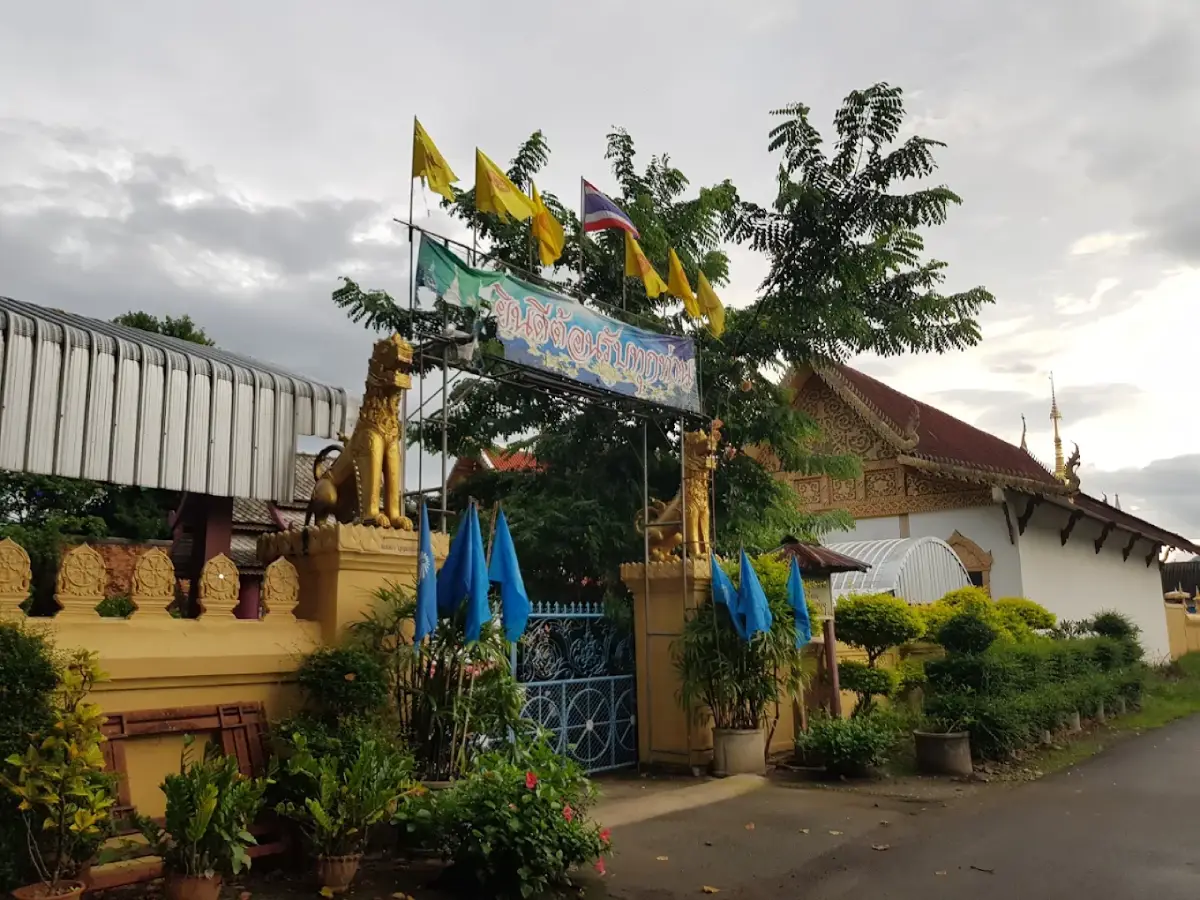
Wat Amparam (Ban Kat) is a historic Buddhist community temple in Ban Amparam, Moo 8, Ban Kat Subdistrict, Mae Wang District, Chiang Mai 50360, Thailand. It is a public non-royal temple of the Mahanikaya order and is registered under temple code 350220106. The monastery was officially established in 1844 and received its royal consecrated boundary in 1994. Today, Wat Amparam remains closely connected with Ban Amparam and continues to serve as a center of Buddhist worship, village merit-making, and local cultural traditions. One of its most important living traditions is the annual sacred-relic bathing ceremony, which continues to receive community and municipal support.
Wat Amparam remains listed in current Buddhist temple directories for Ban Kat Subdistrict, Mae Wang District. It appears within the same local religious network as Wat Chamlong, Wat Ban Mai Pang Toem, Wat Pa Daet, Wat Sirichai Nimit, and Wat Sopharam. Mae Wang Municipality also continues to list Wat Amparam among the religious sites within its administrative area, demonstrating that it remains an active part of the community rather than a temple known only from historical records.
From its official establishment in 1844 to 2026, the temple has a registered history of approximately 182 years. This period spans major changes in Chiang Mai and Lanna society, from an agricultural village economy dependent on local irrigation systems to modern roads, local government, public services, markets, and tourism. Wat Amparam has remained part of this changing landscape and provides an important historical link between older village life and present-day Mae Wang.
The mid-nineteenth century was a period when many rural communities around Chiang Mai were rebuilding, expanding agricultural land, and consolidating permanent settlements. In such communities, the Buddhist temple played a central role. It was not simply a place for prayer, but also the site of ordinations, funerals, merit-making, sermons, moral instruction, and community gatherings. Wat Amparam developed within this traditional village structure.
Ban Amparam is now Moo 8 of Ban Kat Subdistrict and lies within Mae Wang Municipality. The village is connected with Ban Kat, Ban Nam Ton, Ban Kio Lae Pa Pao, and other neighboring settlements. Local roads make it possible to travel easily between the community temples of these villages, revealing a traditional settlement pattern in which each village developed its own Buddhist center.
The relationship between Wat Amparam and Ban Amparam is especially close because the temple and village share the same name. For local families, the monastery functions as both a spiritual center and a geographical reference point. Buddhist holy days, merit-making, offerings, funerary ceremonies, and community activities continue to bring residents into the temple grounds.
An important institutional milestone came in 1994, when Wat Amparam received its royal consecrated boundary. Known in Thai as wisungkhamsima, this formally defined sacred area allows important acts of the Buddhist Sangha, especially ordination, to be carried out in accordance with monastic discipline. The granting of the boundary demonstrates the continued institutional development of the monastery long after its nineteenth-century foundation.
Wat Amparam also has an important connection with traditional Lanna knowledge. Academic research from Chiang Mai University records a traditional medical manuscript associated with Wat Amparam in Ban Kat. The manuscript was written in the Lanna Dhamma script and is connected with local medicinal knowledge, providing evidence that the temple once existed within a wider network of literacy, manuscript culture, Buddhist learning, and traditional medicine.
The Lanna Dhamma script was widely used by monks and learned laypeople across northern Thailand to record Buddhist scriptures, sermons, medical knowledge, astrology, ritual texts, and local literature. The association of Wat Amparam with such a manuscript reveals a dimension of the monastery that is rarely visible in ordinary travel descriptions. The temple was not only a place of ceremonies but also part of the intellectual world of the village.
Traditional rural temples often functioned as repositories of knowledge. Monks and literate members of the community could read, copy, interpret, and transmit manuscripts. Knowledge about religion, herbal medicine, ritual practice, and local custom could therefore pass from one generation to another through the temple environment. Wat Amparam’s manuscript connection places it within this wider Lanna tradition.
Historical Buddhist administrative records also associate Phra Khru Suwat Mongkhonkan Sumangkhalo with Wat Amparam as an abbot during an earlier period. His name appears in official Buddhist documentation and in older temple information, providing another historical reference point in the modern administration of the monastery.
The most clearly documented sacred feature of the temple today is its relic monument. Mae Wang Municipality continues to support an annual sacred-relic bathing ceremony for Moo 8, Ban Amparam, held at Wat Amparam. The project remains included in the municipality’s 2026 cultural and religious program, confirming the continuing importance of the relic within local Buddhist life.
In Lanna Buddhist culture, a sacred relic monument is much more than an architectural structure. It is a focus of worship, circumambulation, offerings, and community merit-making. The annual bathing ceremony demonstrates that the relic at Wat Amparam remains central to the spiritual identity of Ban Amparam.
The sacred-relic bathing tradition is one of the temple’s strongest cultural features. Mae Wang Municipality’s 2026 operational plan identifies a project specifically for Moo 8, Ban Amparam, with the ceremony taking place at Wat Amparam and the village committee acting as the principal local organizer. This arrangement clearly shows that the tradition is shared by the monastery, village leadership, residents, and local government.
The ceremony is held around April, naturally connecting it with the Lanna New Year period. During this season, northern Thai communities traditionally make merit, bathe Buddha images and sacred objects, visit temples, and pay respect to elders. The relic-bathing ceremony therefore brings together Buddhist devotion, seasonal tradition, and community identity.
Bathing the sacred relic has both religious and social meaning. The ritual expresses reverence and the wish to make merit, while the annual gathering allows families and former residents to reconnect with the village. Religious tradition therefore also becomes a mechanism for maintaining relationships across generations.
Wat Amparam participates in the wider annual Buddhist cycle familiar throughout Lanna communities. Buddhist Lent, the end of Buddhist Lent, Kathin, the Lanna New Year, and Yi Peng all shape local religious life. Exact programs may vary from year to year, but the temple continues to function as the place where residents make offerings, listen to sermons, observe precepts, and take part in communal Buddhist ceremonies.
The setting of Ban Amparam helps explain the temple’s continuing role. Ban Kat Subdistrict developed from agricultural communities and a local market center. Today, the Ban Kat area contains markets, restaurants, shops, schools, public services, and accommodation, while surrounding villages remain closely connected with farming and local water systems. Wat Amparam sits within this transitional landscape between rural village life and the district’s modern service center.
The concentration of temples within Ban Kat is a useful way to understand the settlement history of Mae Wang. Wat Amparam serves Moo 8, while Wat Chamlong is associated with Ban Kat, Wat Pa Daet with Ban Nam Ton, Wat Sirichai Nimit with Ban Kio Lae Pa Pao, and Wat Sopharam with Ban Hua Fai. Each village temple represents a distinct local history while forming part of a wider Buddhist network.
For visitors, the main attraction of Wat Amparam is therefore not large-scale tourism infrastructure but the atmosphere of a functioning community monastery. Travelers interested in history can focus on the temple’s 1844 foundation, while those interested in Buddhism can pay respect to the relic monument. Visitors interested in Lanna culture can connect the temple with the sacred-relic bathing ceremony and its documented manuscript heritage.
The temple’s connection with traditional medical knowledge is especially significant. Lanna medical manuscripts represent a world in which Buddhist literacy and local healing traditions were closely connected. Herbal remedies, descriptions of symptoms, ritual elements, and accumulated practical knowledge could be recorded in the same script used for religious literature. The association with Wat Amparam shows how temples participated in preserving knowledge essential to everyday village life.
Although the manuscript documented in academic research is no longer kept in the temple, its recorded provenance preserves Wat Amparam’s place in the history of Lanna manuscript culture. This gives the monastery an intellectual heritage that extends beyond architecture and ceremony.
Wat Amparam is particularly suitable for visitors who prefer quiet community temples and cultural travel. A typical visit can take around 30 to 60 minutes, allowing time to pay respect, visit the relic monument, and observe the temple’s relationship with the surrounding village. During the annual relic-bathing ceremony, the experience becomes much more communal and festive.
A temple route can begin at Wat Amparam and continue to Wat Chamlong, one of the closest neighboring monasteries. Wat Chamlong is notable for its Shan heritage and Poy Sang Long tradition. Wat Pa Daet in Ban Nam Ton is another nearby temple with its own sacred-relic bathing ceremony, while Wat Sirichai Nimit offers a long local history and Lanna architectural character.
Wat Sopharam adds another dimension through its Shan historical roots and contemporary Vipassana center. Wat Ban Mai Pang Toem tells the story of village relocation and collective temple-building. Exploring these monasteries together provides a detailed picture of how Buddhist institutions developed alongside different communities within Mae Wang.
Ban Kat Market is a convenient stop for food and daily-life observation. The wider Ban Kat area has cafés, tea shops, local restaurants, and basic services, making it easy to combine a morning temple route with lunch or coffee before continuing to other attractions.
Current food and café options include Mae Wang Coffee, Lamoon Cha, Milk Tea, King Fried Mussels opposite Big C Ban Kat, Isan Food Kalasin People, and Blessing Camp Cafe. These establishments are located within the Ban Kat and Mae Wang community and are convenient stops during a cultural itinerary.
Accommodation is available throughout the Mae Wang area. Silver Homestay is located in Ban Kat, while Raibumrungphol provides accommodation together with a restaurant and café. Hidden Garden Retreat - Chiang Mai offers a quieter stay in Thung Pi, Chombua MaeWang is another local option, and Namrae Maewang Phairin Resort provides resort accommodation in the wider Mae Wang area.
Staying overnight in Mae Wang makes it possible to divide the journey into two parts. One day can focus on community temples and Ban Kat, while the following day can continue toward Mae Win, Pha Chor, the Mae Wang River, or other natural attractions farther west.
Getting There from Chiang Mai city, take Highway 108 south through Hang Dong toward San Pa Tong. Continue onto Highway 1013 toward Mae Wang and Mae Win. After entering the Ban Kat area, follow the local route to Ban Amparam, Moo 8. A private car or rental vehicle is the most convenient option for combining Wat Amparam with nearby temples and restaurants.
Visitors should dress modestly and remember that Wat Amparam is an active Buddhist community temple. Shoes should be removed where required before entering sacred buildings, and visitors should avoid disturbing monks or villagers during ceremonies. During the annual relic-bathing festival, community religious activities should take priority over sightseeing.
Overall, Wat Amparam is important in at least four interconnected ways. Historically, it has been officially established since 1844. Institutionally, it received its royal consecrated boundary in 1994. Culturally, it remains the setting for Ban Amparam’s annual sacred-relic bathing ceremony. Intellectually, the temple is connected with a Lanna Dhamma-script medical manuscript that reflects the preservation of local knowledge.
These dimensions make Wat Amparam more than simply an old monastery in Mae Wang. It represents the continuity of village faith, community organization, Buddhist tradition, and local knowledge. The relic monument provides a visible focus of devotion, while the manuscript heritage demonstrates that the temple once participated in a much broader culture of learning.
For travelers who want to understand Mae Wang beyond rivers and mountain tourism, Wat Amparam provides a valuable cultural perspective. Its long history, connection with Ban Amparam, living sacred-relic tradition, and links with Lanna knowledge show how religion, community, agriculture, and cultural memory have remained intertwined in this part of Chiang Mai for generations.
| Name | Wat Amparam (Ban Kat) |
| Location | Ban Amparam, Moo 8, Ban Kat Subdistrict, Mae Wang District, Chiang Mai 50360, Thailand |
| Latitude | 18.59437 |
| Longitude | 98.82013 |
| Temple Registration Code | 350220106 |
| Temple Type | Public non-royal Buddhist temple, Mahanikaya order |
| Established | 1844 |
| Royal Consecrated Boundary | Granted in 1994 |
| Open Days | Daily |
| Opening Hours | 08:00 – 17:00 |
| Important Sacred Feature | The temple relic monument, which is the focus of Ban Amparam’s annual sacred-relic bathing ceremony |
| Major Tradition | Annual sacred-relic bathing ceremony, held around April with community and municipal participation |
| Cultural Knowledge Heritage | A Lanna Dhamma-script medical manuscript is historically associated with Wat Amparam |
| Community Role | Spiritual center of Ban Amparam and venue for Buddhist ceremonies, village merit-making, and community traditions |
| Getting There | Take Highway 108 from Chiang Mai through Hang Dong and San Pa Tong, then Highway 1013 toward Mae Wang and continue to Ban Amparam, Moo 8 |
| Current Status | Active temple listed in current Buddhist temple directories; the annual sacred-relic bathing ceremony continues in 2026 |
| Nearby Attractions and Temples | 1. Wat Chamlong, about 1 km 2. Ban Kat Market, about 2 km 3. Wat Pa Daet, Ban Nam Ton, about 2 km 4. Wat Sirichai Nimit, about 2 km 5. Wat Sopharam, about 4 km 6. Wat Ban Mai Pang Toem, about 6 km |
| Nearby Restaurants and Cafes | 1. Mae Wang Coffee, about 1 km 2. Lamoon Cha Ban Kat, about 2 km, Tel. 098-892-5464 3. Milk Tea, about 2 km, Tel. 062-029-9905, 052-010-193 4. King Fried Mussels opposite Big C Ban Kat, about 2 km, Tel. 066-119-1189 5. Isan Food Kalasin People, about 2 km, Tel. 097-030-5407 6. Blessing Camp Cafe, about 3 km, Tel. 098-270-6515 |
| Nearby Accommodation | 1. Silver Homestay, about 2 km, Tel. 089-755-6519 2. Raibumrungphol, about 6 km, Tel. 066-065-8118 3. Hidden Garden Retreat - Chiang Mai, about 6 km, Tel. 080-932-9216 4. Chombua MaeWang, about 7 km, Tel. 081-903-2172 5. Namrae Maewang Phairin Resort, about 9 km, Tel. 052-001-410 |
Frequently Asked Questions (FAQ)
Q: Where is Wat Amparam in Mae Wang located?
A: Wat Amparam is located in Ban Amparam, Moo 8, Ban Kat Subdistrict, Mae Wang District, Chiang Mai 50360, Thailand.
Q: When was Wat Amparam established?
A: Wat Amparam was officially established in 1844 and belongs to the Mahanikaya monastic order.
Q: When did Wat Amparam receive its royal consecrated boundary?
A: The temple received its royal consecrated boundary in 1994, allowing formal acts of the Sangha to be carried out within the designated sacred area.
Q: What is the most important annual tradition at Wat Amparam?
A: The temple is especially associated with Ban Amparam’s annual sacred-relic bathing ceremony, which continues to be organized with community and municipal support.
Q: Why is Wat Amparam important to Lanna cultural knowledge?
A: Academic research records a traditional medical manuscript in the Lanna Dhamma script associated with Wat Amparam, reflecting the historical role of temples in preserving local knowledge.
Q: Is there an admission fee at Wat Amparam?
A: There is no admission fee for normal temple visits and merit-making.
Q: Which nearby temples can be visited with Wat Amparam?
A: Nearby temples include Wat Chamlong, Wat Pa Daet, Wat Sirichai Nimit, Wat Sopharam, and Wat Ban Mai Pang Toem.
Q: How do travelers reach Wat Amparam from Chiang Mai city?
A: Take Highway 108 south through Hang Dong and San Pa Tong, then continue on Highway 1013 toward Mae Wang before entering Ban Amparam, Moo 8. Traveling by private car is the most convenient option.
 Category: ●Places of Worship
 Group: ●Temple
Last Update : 3 WeekAgo
 Last Update : 3 WeekAgo
 Click to Access the Navigation Map GPS
Wat Amparam (Ban Kat) Map
Recommend

 Muang Chiang Mai(121)Chom Thong(47)Mae Chaem(25)Chiang Dao(33)Doi Saket(68)Mae Taeng(85)Mae Rim(69)Samoeng(29)Fang(71)Mae Ai(59)Phrao(70)San Pa Tong(103)San Kamphaeng(66)San Sai(73)Hang Dong(73)Hot(32)Doi Tao(22)Omkoi(11)Saraphi(74)Wiang Haeng(15)Chai Prakan(28)Mae Wang(32)Mae On(22)Doi Lo(33)Galyani Vadhana(1)


