
lovethailand home >South Travel Attractions >Phuket Travel Attractions >Muang Phuket >Talat Yai > Sino-Portuguese historic buildings of Phuket Old T..
TL;DR: Sino-Portuguese historic buildings of Phuket Old Town is located at Phuket Old Town, Talat Yai and Talat Nuea, Mueang Phuket District, Phuket Province, open Daily, hours Open for walking visits throughout the day; Lard Yai Walking Street opens every.
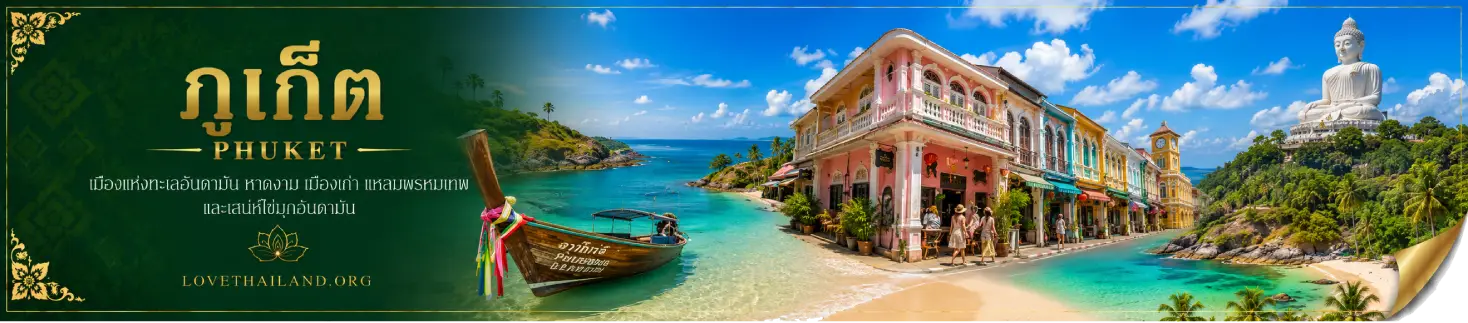
Sino-Portuguese historic buildings of Phuket Old Town
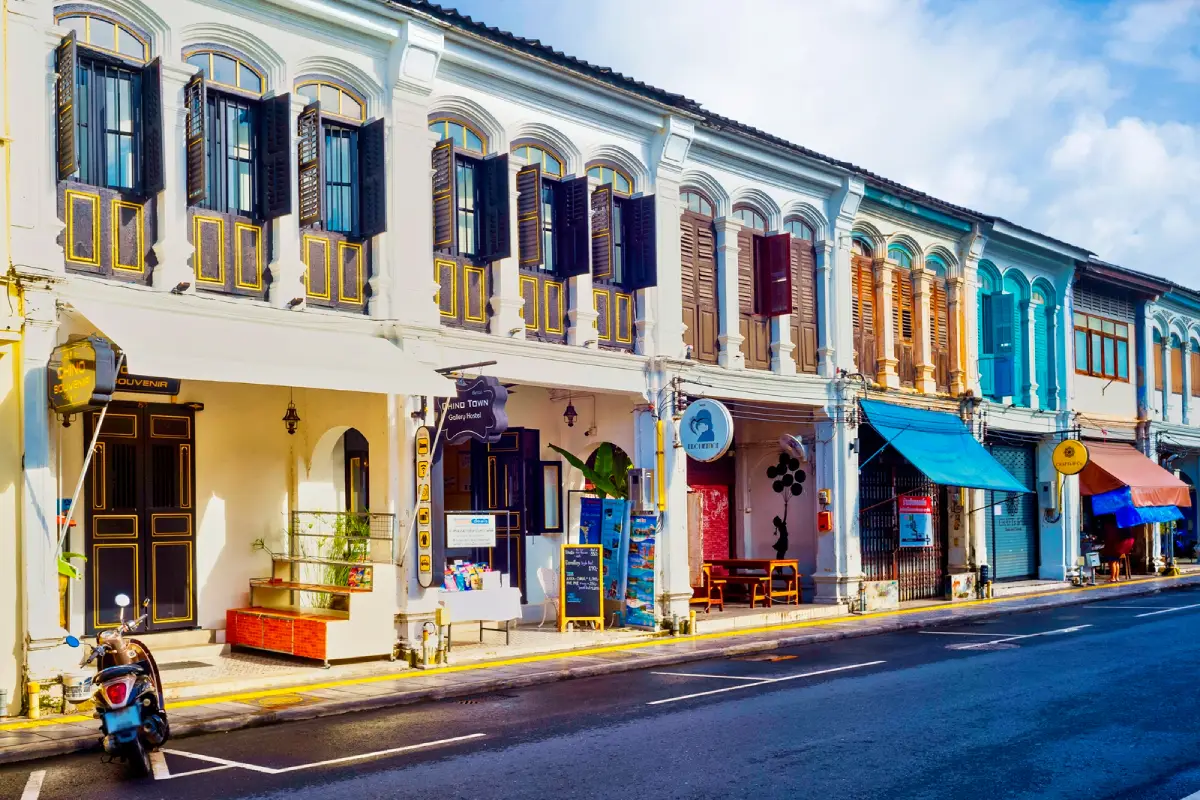
Open Days: Daily
Opening Hours: Open for walking visits throughout the day; Lard Yai Walking Street opens every Sunday from 16.00 – 22.00
The Sino-Portuguese historic buildings of Phuket Old Town form one of the most important cultural landmarks in Phuket City. This historic district is not a single building, but a walkable heritage area filled with old shophouses, former merchant homes, civic buildings, museums, cafés, local restaurants, boutique hotels, street art, and Sunday evening market life. The main walking area covers Thalang Road, Dibuk Road, Phang Nga Road, Yaowarat Road, Krabi Road, Soi Romanee, Phuket Road, Ratsada Road, Ranong Road, Montri Road, Satun Road, and Thepkasattri Road. Visitors can walk around the old town every day without an admission fee, making it one of the easiest and most rewarding cultural experiences in Phuket.
The charm of Phuket Old Town comes from its layered history. Long before Phuket became globally known for beaches and islands, the town was shaped by tin mining, maritime trade, Chinese migration, Hokkien business networks, Baba-Peranakan culture, southern Thai life, and European architectural influences. The old buildings reveal that history through narrow but deep shophouses, covered five-foot walkways known locally as “ngo kha khi,” timber doors, louvered windows, arched façades, decorative stucco, air vents, inner courtyards, and pastel colors. The area is therefore not merely a photo stop. It is a living record of how Phuket grew from a prosperous trading and mining town into one of Thailand’s most distinctive heritage destinations.
The term “Sino-Portuguese” is widely used in travel writing to describe Phuket’s historic architecture. “Sino” refers to Chinese influence, while “Portuguese” points to early European influence in Southeast Asian port towns. In Phuket, however, the style is broader than that single label. The architecture also reflects Penang, Singapore, British, Dutch, Malay, Chinese Hokkien, and local Phuket craftsmanship. For that reason, the term “Sino-European” is also used to explain the wider architectural identity of the district. Still, for most travelers, “Sino-Portuguese Phuket” remains the most familiar name for these elegant old shophouses.
Phuket Old Town became especially important during the tin-mining boom. Tin brought wealth, labor, trade, and migration to the island. Chinese settlers from southern China, Penang, Singapore, and other port communities came to Phuket to work in mining, trade, and business. Indian, Muslim, European, and other trading communities also contributed to the town’s economy and cultural life. Over time, this created a highly mixed urban society, where food, clothing, language, religious practice, architecture, and family traditions developed into a local identity that is different from many other parts of Thailand.
The period from the late 19th century to the early 20th century was especially important for the townscape visitors see today. Wealthy merchants, tin entrepreneurs, and Chinese-Thai families built shophouses, offices, residences, and mansions that reflected their economic success. Many buildings were used for both business and family life. Some have since become museums, restaurants, cafés, galleries, guesthouses, and boutique hotels, while others continue to function as shops or homes. This continued use is one of the reasons Phuket Old Town feels authentic. It is not a recreated heritage theme park, but a real urban district where older buildings still serve modern life.
The typical Sino-Portuguese shophouse in Phuket is narrow at the front and deep inside. Many buildings are two or three storeys high and have a covered walkway in front, allowing pedestrians to move along the street while being protected from sun and rain. This feature is both beautiful and practical. It connects the street with shops and homes, supports commercial life, and responds to Phuket’s hot and humid climate. When visitors walk beneath these arcades, they are experiencing not only an architectural detail but also an old system of urban living.
Another important feature is the inner courtyard, often called “chim chae” in local usage. This open space allows natural light and air to enter the deep interior of the building. Some houses also include a well or central open area that helps keep the house cooler. High ceilings, louvered windows, air vents, and shaded arcades show how older buildings adapted to the tropical climate before modern air-conditioning. These details make Phuket Old Town useful for travelers who enjoy architecture, because the buildings are not only decorative; they are intelligent responses to local weather, daily routines, and urban commerce.
Thalang Road is the heart of most Phuket Old Town walks. The road is lined with colorful shophouses, old family businesses, restaurants, cafés, textile shops, souvenir stores, and the entrance to Soi Romanee. It is a good place to begin because many of the district’s most recognizable façades can be seen within a short distance. During the day, the colors and architectural details are clear and photogenic. In the evening, especially on Sundays, the same road becomes livelier when Lard Yai Walking Street turns the area into a food, shopping, music, and community market.
Lard Yai, also known as Phuket Walking Street, is one of the best ways to experience the old town after dark. Held every Sunday from late afternoon to evening, the market brings food stalls, local snacks, handmade goods, music, and street activity onto Thalang Road. The event connects the historic architecture with present-day community life. Visitors can sample local dishes, buy small souvenirs, listen to music, and see the old façades under evening lights. This makes Sunday the most atmospheric day to visit for travelers who want both culture and street life in a single route.
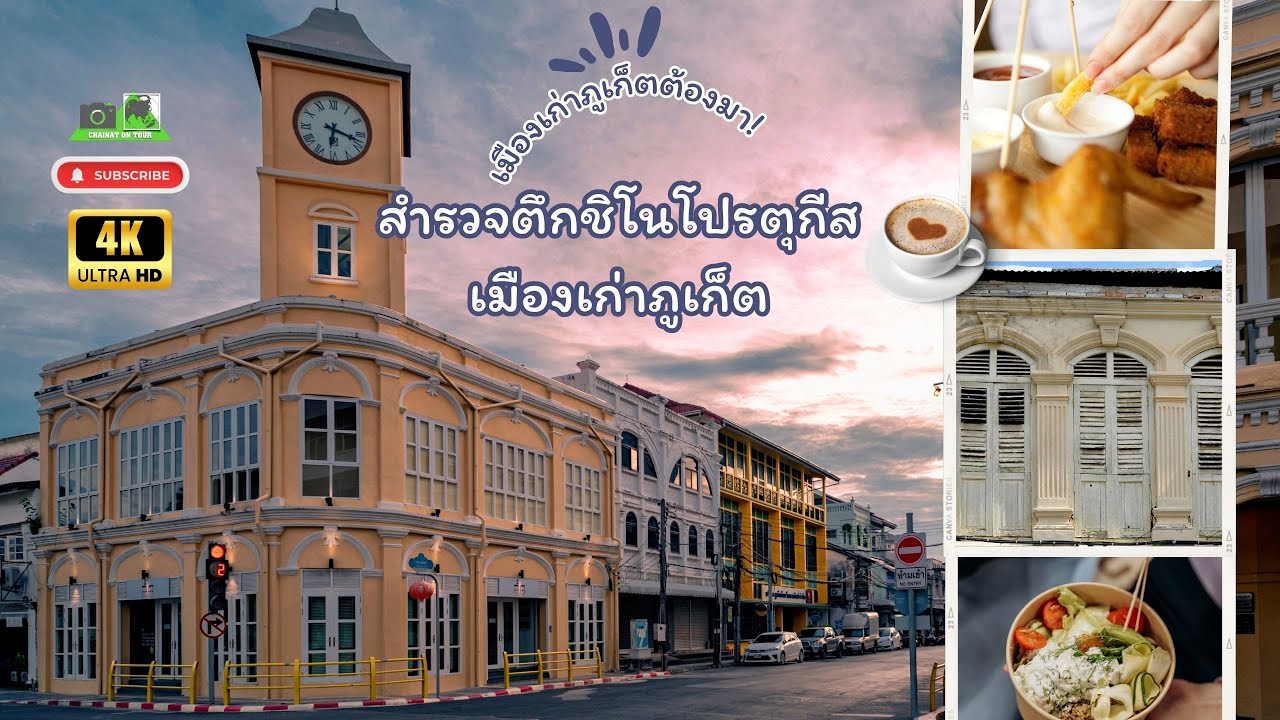
Soi Romanee is another highlight. This small lane connected to Thalang Road is known for pastel-colored shophouses, charming façades, small cafés, and a nostalgic atmosphere. Many travelers come here for photography, but the lane is more than a pretty backdrop. It shows how an old urban street can be restored and reused for modern tourism while keeping its historic appearance. The combination of soft colors, compact scale, and old architectural details makes Soi Romanee one of the most memorable parts of Phuket Old Town.
Dibuk Road and Yaowarat Road show a slightly different side of the district. These streets are less focused on a single postcard image and more connected to everyday local life. Visitors will find old houses, local restaurants, smaller shops, cafés, and routes leading into side streets. Walking beyond Thalang Road helps travelers understand Phuket Old Town as a functioning neighborhood rather than only a tourist attraction. The area is especially rewarding for people who enjoy slow walks, small architectural details, and local food.
Phang Nga Road is also important. It includes historic hotels, shophouses, and links toward the Clock Tower, civic landmarks, and local museums. The Memory at On On Hotel, one of the best-known heritage hotels in the area, reflects the old trading-town atmosphere of Phuket. The street helps travelers imagine a period when merchants, miners, traders, and travelers moved through Phuket Town long before beach tourism became the island’s dominant image.
Krabi Road is useful for travelers who want more historical context. Phuket Thai Hua Museum and Chinpracha House are both associated with this side of town, and they help explain Chinese-Thai education, family life, and merchant culture in Phuket. If Thalang Road introduces visitors to the visual beauty of old shophouses, Krabi Road adds a deeper layer of cultural interpretation. Travelers with enough time should combine both areas to understand the district more fully.
Food is one of the strongest reasons to visit Phuket Old Town. Phuket’s cuisine combines Hokkien Chinese, southern Thai, Malay, and Baba-Peranakan influences. Dishes such as moo hong, Hokkien noodles, crab curry with betel leaves, shrimp-paste relishes, o-tao, o-aew, lo ba, and local sweets turn a simple heritage walk into a culinary journey. Many popular restaurants are located inside or near old buildings, so eating in the old town often feels like tasting history inside the architecture that produced it.
Photography lovers should allow at least half a day in Phuket Old Town. Morning is suitable for quieter streets and clearer building details. Midday is hotter, so it works better for museum visits, cafés, or lunch. Late afternoon gives softer light, and Sunday evening adds the lively atmosphere of Lard Yai Walking Street. Travelers who visit only for a quick photo stop may enjoy the colors, but those who walk slowly will notice deeper details: old signs, carved doors, ventilation patterns, repaired façades, and the different ways each generation has cared for the buildings.
To appreciate the architecture, look closely at one building at a time. Notice the height, depth, arches, columns, timber doors, louvered windows, stucco motifs, air vents, inner courtyards, and shaded walkways. These elements show how Chinese, European, and local design traditions were adapted for tropical life. The buildings were made for trade, family living, climate comfort, and public street activity. This is why Phuket Old Town remains attractive to both casual travelers and people interested in heritage conservation.
The reuse of old buildings is one of the district’s greatest strengths. Many shophouses have become restaurants, cafés, galleries, museums, boutique hotels, and creative spaces. This keeps the old town active instead of turning it into a frozen museum. When travelers eat at a local restaurant, stay in a heritage hotel, visit a museum, or buy from a small shop, they help create an economic reason to care for the old buildings. Phuket Old Town is therefore a good example of living conservation, where heritage survives because it remains useful.
The old town also reflects Baba-Peranakan identity. Clothing, food, houses, ceremonies, language, and family traditions all show how Chinese and local cultures blended over generations. Phuket is not simply a Chinese town, and it is not simply a colonial-style town. It is a local cultural crossroads shaped by trade, migration, adaptation, and community memory. The buildings are beautiful because of their architecture, but they are meaningful because of the people and stories behind them.
Phuket Old Town is best explored on foot. The main streets are close enough for a self-guided walk of 2 to 4 hours. A fuller experience, including museums, lunch, cafés, street photography, and the Sunday market, can easily take half a day or a full day. A good route begins on Thalang Road, continues through Soi Romanee, moves toward Dibuk Road and Yaowarat Road, then loops toward Phang Nga Road and Krabi Road. This route gives a balanced view of architecture, food, local life, and cultural landmarks.
Getting There is straightforward from most major areas of Phuket. From Phuket International Airport, the drive to Phuket Town is around 30 km and usually takes about 40 to 60 minutes depending on traffic. From Patong Beach, the trip normally takes about 30 to 45 minutes. Visitors can use a private car, rental car, taxi, local transport, or app-based ride service. If driving, it is often easier to park outside the busiest part of the old town and continue on foot, especially on Sunday evenings when Lard Yai Walking Street attracts many visitors.
Public local transport can also be used, but travelers should check routes and timing in advance because Phuket’s public transport is less frequent than in major metropolitan cities. For convenience, many visitors set their destination as Thalang Road, Soi Romanee, Phuket Thai Hua Museum, or a hotel in Phuket Old Town, then begin walking from there. Comfortable shoes, sun protection, and drinking water are recommended, especially for daytime visits.
Travelers should also respect that many buildings are still private homes, shops, or active businesses. Taking photos is generally easy in the old town, but visitors should avoid blocking doorways, entering private areas, or using shop fronts for long photo sessions without permission. This respect helps preserve the friendly relationship between tourism and the local community.
For history-focused visitors, it is best to start with Phuket Thai Hua Museum or Chinpracha House, then continue walking through Thalang Road and Soi Romanee. For food-focused visitors, combine the walk with local restaurants around Phang Nga Road, Dibuk Road, Thepkasattri Road, and Thalang Road. Restaurants such as Tu Kab Khao, One Chun, Raya, The Charm Dining Gallery, and Kopitiam by Wilai each offer a different way to experience Phuket’s food culture.
A full-day old town itinerary can begin with a morning walk along Thalang Road and Soi Romanee, followed by a museum visit or Chinpracha House. Lunch can focus on local Phuket cuisine. In the afternoon, continue toward Phang Nga Road, Dibuk Road, and Yaowarat Road, then rest in a café or dessert shop. On Sundays, stay into the evening for Lard Yai Walking Street, where food stalls and lights bring a different rhythm to the historic district.
Compared with many other heritage towns, Phuket Old Town is compact and easy to navigate. Attractions, restaurants, cafés, museums, and accommodations are clustered closely together. This makes the area suitable for solo travelers, couples, families, photography lovers, cultural travelers, students, and international visitors who want to understand Phuket beyond the beaches.
The district also supports more sustainable tourism. Walking through the old town spreads income to small restaurants, local cafés, family businesses, museums, heritage hotels, and community markets. When travelers choose local food, visit small museums, stay in restored buildings, or buy from local shops, they support conservation through everyday spending. This connection between culture and local economy is one reason Phuket Old Town remains vibrant.
In summary, the Sino-Portuguese historic buildings of Phuket Old Town are far more than colorful photo backdrops. They preserve the memory of tin mining, maritime trade, Chinese migration, Baba-Peranakan culture, European influence, local food, and modern community life. Anyone visiting Phuket should spend at least half a day here, because the old town offers one of the clearest ways to understand the island’s deeper cultural identity.
| Name | Sino-Portuguese Historic Buildings in Phuket Old Town |
| Location | Phuket Old Town, Talat Yai and Talat Nuea, Mueang Phuket District, Phuket Province |
| Address | Around Thalang Road, Dibuk Road, Phang Nga Road, Yaowarat Road, Krabi Road, Phuket Road, Ratsada Road, Ranong Road, Montri Road, Satun Road, and Thepkasattri Road, Mueang Phuket District, Phuket 83000 |
| Coordinates | 7.8848470892, 98.3870464676 |
| Highlights | Historic Sino-Portuguese and Sino-European shophouses, Thalang Road, Soi Romanee, Dibuk Road, Phang Nga Road, Phuket Thai Hua Museum, Chinpracha House, Lard Yai Walking Street, and local Phuket restaurants |
| History | Phuket Old Town grew from the prosperity of tin mining and maritime trade from the late 19th century to the early 20th century. Many buildings reflect the wealth of Chinese-Thai merchants and tin-related business families during that period. |
| Name Origin | The term Sino-Portuguese refers to architecture combining Chinese and Western influences. In Phuket, the style also includes Penang, Singapore, British, Dutch, and local craftsmanship, so Sino-European is also used as a broader architectural description. |
| Distinctive Features | Narrow but deep shophouses, arched façades, covered five-foot walkways, timber doors, louvered windows, decorative stucco, air vents, inner courtyards, pastel colors, and adaptive reuse as shops, cafés, museums, restaurants, and boutique hotels |
| Travel Information | From Phuket International Airport, the old town is about 30 km away and usually takes 40 – 60 minutes by car. From Patong Beach, the drive usually takes about 30 – 45 minutes. Visitors can arrive by private car, rental car, taxi, local transport, or app-based ride service, then explore on foot. |
| Current Status | A public cultural tourism district in Phuket City where visitors can walk around historic streets, old buildings, shops, cafés, restaurants, museums, and community areas daily |
| Open Days | Daily |
| Opening Hours | Open for walking visits throughout the day; Lard Yai Walking Street opens every Sunday from 16.00 – 22.00 |
| Fees | No admission fee for walking around Phuket Old Town |
| Facilities | Restaurants, cafés, souvenir shops, hotels, accommodations, museums, photo spots, Sunday walking street, and local transport services in Phuket Town |
| Main Areas / Zones | Thalang Road, Soi Romanee, Dibuk Road, Phang Nga Road, Yaowarat Road, Krabi Road, Phuket Road, Ratsada Road, Ranong Road, Montri Road, Satun Road, Thepkasattri Road, Phuket Thai Hua Museum, Chinpracha House, and Lard Yai Walking Street area |
| Caretaker / Related Organizations | Phuket City Municipality, Phuket Old Town community, and local tourism organizations |
| Main Contact Number | Phuket City Municipality Tel. 0 7621 4325; Tourism Authority of Thailand Phuket Office Tel. 076 211 036 |
| Nearby Tourist Attractions | 1. Soi Romanee, about 0.2 km 2. Shrine of the Serene Light, about 0.3 km 3. Phuket Thai Hua Museum, about 0.5 km 4. Chinpracha House, about 0.8 km 5. Peranakannitat Museum and Phuket Clock Tower, about 0.6 km 6. Jui Tui Shrine, about 1.1 km |
| Nearby Restaurants | 1. Kopitiam by Wilai, about 0 km, Tel. 083-606-9776, 081-895-4278 2. Tu Kab Khao, about 0.3 km, Tel. 076-608-888 3. One Chun, about 0.7 km, Tel. 076-355-909 4. Raya Restaurant, about 0.5 km, Tel. 076-218-155, 092-252-4883 5. The Charm Dining Gallery, about 0.6 km, Tel. 076-530-199 |
| Nearby Accommodations | 1. The Memory at On On Hotel, about 0.2 km, Tel. 076-363-700 2. Casa Blanca Boutique Hotel, about 0.3 km, Tel. 076-219-019 3. Hotel Midtown Ratsada, about 0.4 km, Tel. 091-915-4945-7 4. Pearl Hotel Phuket, about 0.7 km, Tel. 076-211-044 5. Courtyard by Marriott Phuket Town, about 0.9 km, Tel. 076-643-555 6. Novotel Phuket City Phokeethra, about 1.1 km, Tel. 076-397-777 |
Frequently Asked Questions (FAQ)
Q: Where are the Sino-Portuguese buildings in Phuket located?
A: They are located in Phuket Old Town, mainly around Thalang Road, Soi Romanee, Dibuk Road, Phang Nga Road, Yaowarat Road, and Krabi Road in Mueang Phuket District.
Q: Is there an admission fee to visit Phuket Old Town?
A: No. Walking around Phuket Old Town is free. Some museums, heritage houses, or private attractions nearby may charge their own admission fees.
Q: What time does Phuket Old Town open?
A: The public streets can be visited throughout the day. Shops, restaurants, cafés, and museums have their own opening hours. Lard Yai Walking Street opens every Sunday from 16.00 to 22.00.
Q: When is the best time to visit Phuket Old Town?
A: Morning is good for quieter streets and building photography. Late afternoon is more comfortable for walking. Sunday evening is best for visitors who want to experience Lard Yai Walking Street and local food stalls.
Q: How much time should visitors spend in Phuket Old Town?
A: A simple architecture walk takes about 2 to 4 hours. A fuller visit with museums, local food, cafés, photography, and the Sunday market can take half a day to a full day.
Q: What are the best photo spots in Phuket Old Town?
A: Thalang Road, Soi Romanee, Dibuk Road, Phang Nga Road, the Clock Tower area, and rows of Sino-Portuguese shophouses are among the most popular photo spots.
Q: Is Phuket Old Town suitable for families?
A: Yes. It is suitable for families because it offers walking routes, food, cafés, museums, and easy cultural sightseeing. Families with young children should be careful near roads with active traffic.
Q: What local Phuket dishes should travelers try in the old town?
A: Recommended local dishes include Hokkien noodles, moo hong, crab curry with betel leaves, shrimp-paste relishes, o-tao, o-aew, lo ba, a-pong, and Baba-Peranakan dishes.
 Category: ●Art, Culture and Heritage
 Group: ●Landmarks and Memorials
Last Update : 2 MonthAgo
 Last Update : 2 MonthAgo
 Click to Access the Navigation Map GPS
Sino-Portuguese historic buildings of Phuket Old Town Map
Recommend
 Landmarks and Memorials(7)
 Art, Craft Centres, Tradition(5)
 Museums(4)
 Historic Homes and Cities(1)
 Art Gallery(1)
 Educational Places
 Educational Gardens, Farm(2)
 Places of Worship
 Temple(14)
 Mosque(47)
 Other Sacred Sites(15)
 Suburban Living
 Village, Community(2)
 Floating Market(1)
 Nature and Wildlife
 National Parks and Marine Reserves(2)
 Mountain (Doi)(2)
 Dam, Reservoir, Lake(1)
 Waterfalls(4)
 Bays and Beaches(30)
 Islands(12)
 Other natural attractions(10)
 Entertainment and Agricultural
 Zoos and Aquariums(2)
 Stadium(2)
 Farms, Parks and Ecotourism(4)
 Amusement Park(2)
 Waterpark(6)
 Theater(1)
 Outdoor and Adventure Activities(1)
 Shopping
 Shopping and Night Market(1)
 Travel Articles, Recipes
 Travel Review, Food Review(1)
 Southern Food Menu, Southern Food Recipes(5)


