
lovethailand home >Northeastern Travel Attractions >Loei Travel Attractions >Phu Luang >Loei Wang Sai > Phu Luang Wildlife Sanctuary
TL;DR: Phu Luang Wildlife Sanctuary, Loei attractions : Nature and Wildlife, National Parks and Marine Reserves.
Phu Luang Wildlife Sanctuary
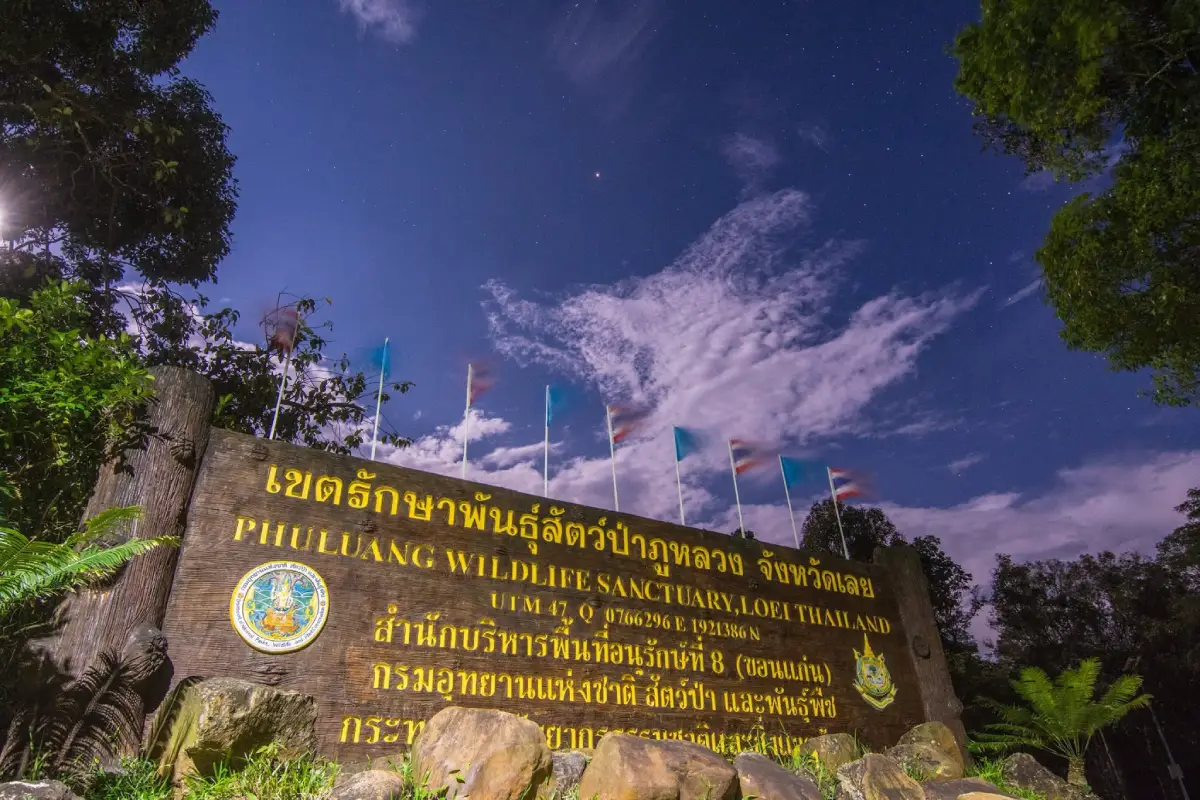
Open Days: Open According To The Wildlife Sanctuary’s Seasonal Announcement / For The 1 November 2025 – 30 April 2026 Season, Nature Study Access Is Open Only At Khok Nok Kraba Ranger Station
Opening Hours: 08.30 – 15.00, With All Visitors Required To Leave The Area By 16.00
Phu Luang Wildlife Sanctuary, Loei Province is one of the most important highland conservation areas in northeastern Thailand. The name Phu Luang means “the great mountain” and can also be understood as “the mountain of the king”. It is a vast mountain sanctuary shaped by geological uplift, erosion, seasonal climate, forest succession, and long-term ecological change. The landscape includes high plateaus, steep slopes, sandstone areas, rocky fields, pine forest, evergreen forest, grassland, rare orchids, rhododendrons, maples, wildlife habitats, and nature study trails. For international travelers, Phu Luang offers a deeper view of Thailand beyond beaches, temples, and cities: it is a cool mountain forest where conservation comes first.
Phu Luang was officially declared a wildlife sanctuary on 18 December 1974. The protected area covers large parts of Wang Saphung, Phu Ruea, Dan Sai, and Phu Luang districts in Loei Province. It is one of the most botanically significant mountain areas in the region and is widely known for its cool climate, highland vegetation, wildflowers, orchids, rhododendrons, and seasonal maples. The terrain rises from lower mountain slopes to high ridges and plateaus, creating many microclimates that support different forest types and plant communities.
The sanctuary is special because its beauty changes strongly with the seasons. During the hot season from February to April, the temperature on the mountain remains relatively cool compared with the lowlands, and many bright flowers bloom, including white orchids, white rhododendrons, red rhododendrons, and other seasonal flowers. During the rainy season from May to October, the forest becomes lush and humid, with small pinkish-purple wildflowers appearing among grasslands and moist areas. During the cool season from November to January, temperatures drop sharply, and the maple leaves known locally as kuam daeng turn red before falling to the forest floor.
Phu Luang is a natural treasure for plant lovers. Its forests and rock fields support rare orchids, mosses, ferns, sphagnum-like plants, highland shrubs, wild rhododendrons, lady’s slipper orchids, ground orchids, and many delicate plants that grow only under specific conditions. Some plants grow on tree trunks, some on rocks, some in moist forest soil, and some in open areas exposed to wind and cool air. These small details are part of what makes Phu Luang feel like a living botanical garden, but unlike a garden, everything here belongs to a wild ecosystem and must remain untouched.
The sanctuary contains several forest types, including mixed deciduous forest, dry evergreen forest, hill evergreen forest, two-needle pine forest, three-needle pine forest, grassland, and open rocky areas. Pine forest and grassland are among the most distinctive landscapes on the high plateau. In the morning, the air is cool and still, with the scent of moist earth and mountain vegetation. As the sun rises higher, the textures of stone, grass, pine needles, moss, and orchids become clearer, making the area highly rewarding for slow and observant nature walks.
Because Phu Luang is a wildlife sanctuary, visitors must understand that this is primarily a protected habitat, not a general tourist park. Wild animals live and move through the area, including elephants and other forest species. The sanctuary’s strict access rules exist for both visitor safety and wildlife protection. Visitors are required to follow time limits, stay on designated trails, avoid loud noise, never feed wildlife, and leave the area before the evening period when animals are more active.
The main visitor access area is currently Khok Nok Kraba Ranger Station, located about 14 kilometers from the main sanctuary office. This ranger station serves as the core nature study point, with a visitor service area, parking area, registration point, food service, coffee service, staff guidance, and accommodation for visitors who have received permission to stay overnight. It is the most practical area for travelers who want to experience Phu Luang without entering remote restricted zones.
Several nature study routes begin from Khok Nok Kraba. The Chalerm Phrakiat Nature Trail is about 1 kilometer long and is suitable for a short introduction to the forest. The Lan Suriyan Nature Trail is about 1.8 kilometers long and is one of the most popular routes, usually taking around 1.5 to 2 hours at a relaxed pace. The Pha Sadet Nature Trail is about 11.8 kilometers long and is suitable for visitors with stronger physical readiness and more time. Trail choice should depend on weather, fitness, available time, and staff advice.
The Lan Suriyan route is especially suitable for visitors who want to see many of Phu Luang’s botanical highlights within a manageable walk. The trail passes open forest, highland vegetation, rock areas, orchids, rhododendrons, mosses, ferns, and seasonal plants. The terrain is not extremely difficult, but proper footwear is still necessary. The beauty of this route is often found in small details: tiny flowers in the grass, orchids on rocks, moss-covered soil, red maple leaves, and cool forest air moving through the trees.
Among the rare plants found in Phu Luang are ground orchids, Otochilus orchids, Cymbidium orchids, Pleione orchids, Bulbophyllum orchids, Agapetes shrubs, sphagnum-like mosses, Gentiana-type flowers, and lady’s slipper orchids. These plants are of great conservation value. Visitors should photograph them without touching, moving, picking, or stepping off the trail. Even a small footprint can damage fragile plants that may take a long time to recover.
Red and white rhododendrons are among the most beloved flowers of Phu Luang. Red rhododendrons usually bloom from late December through March, adding bright red-orange color to the cool highland landscape. White rhododendrons bloom beautifully in the cool and early hot season, creating a softer and more peaceful scene along rocky and forested areas. These flowers are not decorations planted for tourism; they are wild plants that form part of the mountain ecosystem. Their beauty is best appreciated with respect and distance.
The maple season is another special time on Phu Luang. The leaves of kuam daeng, or maple, gradually turn red or orange-red in the cool season before falling to the forest floor. This seasonal change is rare and memorable in the context of Thailand’s tropical climate. The red leaves are not found everywhere in thick layers like in temperate countries, but their presence in a Thai mountain forest makes the scene especially charming.
The dragonfly-winged lady’s slipper orchid is one of the most important botanical highlights associated with Phu Luang. It grows on rocks and in moist highland forest conditions. Its distinctive form attracts botanists, orchid lovers, and nature photographers. Seeing such a plant in the wild is a reminder that Phu Luang is a sanctuary for rare life forms, and that strict protection is necessary to prevent illegal collection and habitat damage.
The eastern side of the Phu Luang range is also known for fossilized dinosaur footprints estimated to be more than 120 million years old. This gives the sanctuary another layer of natural history. Phu Luang is not only a living forest, but also a landscape connected with deep geological time. The rocks, cliffs, and fossil evidence show that the ground beneath today’s forest has carried stories far older than human history.
Older nature study descriptions of Phu Luang mention routes beginning at Lon Mon, passing evergreen forest, streams, three-needle pine forest, wildflowers, and grassland toward Lon Sao Yaeng Khing, then continuing to Lon Hin Aeo Khan and the rock field of Lon Tae. These routes reveal the broader character of Phu Luang as a highland nature study area with forest, grassland, rock terraces, cliffs, and seasonal flowers. Access to each route depends on current sanctuary regulations, safety conditions, and staff permission.
Other named sites associated with Phu Luang include Pha Kop, Pha Chom View, Lon Chang Phueng, Sum Ngu Hao, Sai Thong Waterfall, Pha Sadet, Lan Suriyan, Khok Nok Kraba, and various rock formations. However, visitors should not assume that every site is open at all times. This is a wildlife sanctuary, and access can change according to season, weather, road conditions, wildlife movement, staff capacity, and conservation needs. Visitors should follow the official access zone for the current season.
Visiting Phu Luang is different from visiting a typical national park. The sanctuary emphasizes nature study under staff control. Day visitors can register and pay the required fees at the checkpoint and office before entering the approved area. Overnight visitors must apply for permission in advance, coordinate accommodation and food with sanctuary staff, and receive approval before traveling. These rules protect the forest, reduce wildlife disturbance, and keep visitors safe in an area where elephants and other wildlife may be active.
General camping is not allowed at Khok Nok Kraba for safety reasons. Overnight stays are available only in approved accommodation for visitors who have received permission. This means travelers should not expect an open campsite experience like in many national parks. Instead, Phu Luang should be approached as a controlled conservation area where access is managed carefully. Day trips are the simplest option for most travelers, while overnight stays require advance planning and formal permission.
The daily access schedule is important. For the latest announced season, the sanctuary opens the approved nature study area from 08.30 to 15.00, and visitors must leave by 16.00. This rule is connected with wildlife safety, especially the risk of elephants moving through the area from evening to early morning. Travelers should arrive early, avoid starting trails late, and return to the visitor area within the required time.
Visitors should prepare carefully. Recommended items include sturdy walking shoes, long-sleeved shirt, long trousers, hat, drinking water, personal medicine, insect repellent, camera, and a bag for carrying trash out. Sandals and slippery shoes are not suitable because trails may include rocks, moist soil, roots, and uneven surfaces. Weather can change quickly, so a light rain jacket may be useful during transitional seasons.
Responsible behavior is essential. Visitors must not leave trails, pick flowers, collect orchids, remove moss, write on rocks, feed wildlife, play loud music, or leave trash. Everything in the sanctuary belongs to the ecosystem. Even tiny plants, lichens, mosses, and fungi on rocks have ecological value. Photography should be done without touching plants or rearranging natural objects.
Getting There from Loei city is most convenient by private car, rental car, or arranged local transport. Take Highway 203 on the Loei-Phu Ruea route for about 36 kilometers to Ban San Tom, then turn onto Rural Road LY 2023 beside Ban San Tom School and continue toward the Phu Luang Wildlife Sanctuary office. From the office, continue uphill for about 14 kilometers to Khok Nok Kraba Ranger Station, the main nature study area. Travelers coming from Phu Ruea toward Loei can also turn at Ban San Tom and follow the same route.
The access road includes mountain sections, curves, and forested areas. Although normal vehicles can generally travel during suitable road and weather conditions, drivers should go slowly and watch for wildlife crossing the road. Morning travel is recommended because it allows time for registration, nature study, and return before the closing time. During the rainy season or after heavy rain, visitors should check current announcements before traveling.
Phu Luang can be combined with attractions in Phu Ruea District. Many travelers stay in Phu Ruea town or nearby resorts, then travel to Phu Luang early in the morning. After returning from the sanctuary, they may visit Ban Nong Bong Flower and Ornamental Plant Market, Phu Ruea National Park, Wat Somdet Phu Ruea Ming Mueang, Wat Pa Huai Lat, local cafes, or restaurants in Phu Ruea. This combination creates a trip that includes highland forest, flower markets, temples, and cool-climate mountain scenery.
For international travelers, Phu Luang is especially valuable because it shows a conservation-focused side of Thailand. The sanctuary is not a commercial attraction with unrestricted access. It is a protected mountain habitat where rare plants, orchids, rhododendrons, maples, fossils, and wildlife must be respected. Travelers who enjoy botany, conservation, forest walks, wildlife landscapes, and quiet mountain environments will find Phu Luang meaningful and different from ordinary sightseeing routes.
In summary, Phu Luang Wildlife Sanctuary is a major highland conservation area in Loei Province. Its highlights include cool mountain air, pine forest, hill evergreen forest, grassland, rock fields, red and white rhododendrons, wild orchids, maples, lady’s slipper orchids, dinosaur footprints, and controlled nature study trails at Khok Nok Kraba. Visiting Phu Luang requires advance awareness, respect for rules, careful timing, and an understanding that this is first and foremost a sanctuary for wildlife and rare plants.
| Name | Phu Luang Wildlife Sanctuary |
| Location | Covering areas of Wang Saphung, Phu Ruea, Dan Sai, and Phu Luang districts in Loei Province |
| Address | Phu Luang Wildlife Sanctuary Office, Village No. 3, Ban Na Noi, Tha Sala Subdistrict, Phu Ruea District, Loei 42160, Thailand |
| Coordinates | Search on maps using “Phu Luang Wildlife Sanctuary, Loei” for the main office and “Khok Nok Kraba Ranger Station” for the main nature study area. |
| Highlights | Cool highland forest, two-needle and three-needle pine forest, hill evergreen forest, grasslands, rock fields, wild orchids, red and white rhododendrons, maples, dragonfly-winged lady’s slipper orchid, dinosaur footprints, Lan Suriyan Nature Trail, and Khok Nok Kraba Ranger Station. |
| History | Declared a wildlife sanctuary on 18 December 1974, Phu Luang protects around 530,000 rai of mountain forest and highland ecosystems in Loei Province. |
| Name Origin | Phu Luang means “the great mountain” or “the mountain of the king”, reflecting its high and prominent mountain landscape. |
| Distinctive Features | A cool highland sanctuary with elevations of about 400–1,571 meters above sea level, diverse forest types, rare plants, orchids, wildlife habitats, and strict conservation-based access. |
| Travel Information | From Loei city, take Highway 203 toward Phu Ruea for about 36 km to Ban San Tom, then turn onto Rural Road LY 2023 beside Ban San Tom School toward the sanctuary office. Continue uphill for about 14 km to Khok Nok Kraba Ranger Station. |
| Current Status | Open for controlled nature study according to seasonal announcements. For the 1 November 2025 – 30 April 2026 season, access is open only at Khok Nok Kraba Ranger Station. |
| Open Days | Open according to the wildlife sanctuary’s seasonal announcement. For the 1 November 2025 – 30 April 2026 season, nature study access is open at Khok Nok Kraba Ranger Station. |
| Opening Hours | 08.30 – 15.00, with all visitors required to leave the area by 16.00. |
| Fees | Thai Visitors: Adult 30 Baht, Child 20 Baht Foreign Visitors: Adult 400 Baht, Child 200 Baht Four-Wheel Car: 60 Baht Six-Wheel Vehicle: 100 Baht Motorcycle: 30 Baht |
| Facilities | Khok Nok Kraba visitor service area, parking area, registration point, restaurant, coffee service, toilets, guided nature study, and accommodation for approved overnight visitors. |
| Main Areas / Zones | Phu Luang Wildlife Sanctuary Office Zone Khok Nok Kraba Ranger Station Zone Visitor Service And Parking Zone Chalerm Phrakiat Nature Trail, About 1 km Lan Suriyan Nature Trail, About 1.8 km Pha Sadet Nature Trail, About 11.8 km Red And White Rhododendron Zone Maple / Kuam Daeng Zone Wild Orchid And Rare Plant Zone Dinosaur Footprint And Natural Rock Field Zone |
| Caretaker / Responsible Agency | Phu Luang Wildlife Sanctuary, Department of National Parks, Wildlife and Plant Conservation Head of Phu Luang Wildlife Sanctuary: Mr. Wanchai Simmasian |
| Main Contact Number | 064-0240743 |
| phuluang.it@gmail.com | |
| Overnight Stay | Accommodation at Khok Nok Kraba is available only for approved visitors. General camping is not permitted. Overnight visitors must coordinate and apply for permission in advance. |
| Important Note | Visitors should walk with staff guidance, stay on designated trails, avoid collecting plants, keep noise low, take all trash out, and leave the sanctuary by the required time because it is active wildlife habitat. |
| Recommended Season | November – May. Late December to mid-January is suitable for maple leaves, while January – March is good for red rhododendrons, white rhododendrons, and wild orchids. |
| Nearby Tourist Attractions | 1. Khok Nok Kraba Ranger Station, about 14 km from the sanctuary office, Tel. 064-0240743 2. Lan Suriyan Nature Trail, inside Phu Luang, Tel. 064-0240743 3. Ban Nong Bong Flower And Ornamental Plant Market, about 18 km, Tel. 095-5966411 4. Phu Ruea National Park, about 20 km, Tel. 0-4281-0965, 088-5095299 5. Wat Somdet Phu Ruea Ming Mueang, about 20 km, Tel. 042-812812 6. Wat Pa Huai Lat, about 25 km, Tel. 042-810664 7. Huai Krathing Reservoir, about 22 km |
| Nearby Restaurants | 1. Khok Nok Kraba Ranger Station Restaurant, about 0 km, Tel. 064-0240743 2. Katak Restaurant, about 11 km, Tel. 080-0139900 3. Phu Ruea Resort Restaurant, about 17 km, Tel. 091-0683157, 042-899048 4. Cafe De Meena, about 18 km, Tel. 081-9542915 5. Phu Ruea Phochana, about 18 km, Tel. 042-899159 6. Phu Ruea Kai Yang, about 18 km, Tel. 042-899149, 095-6571444 |
| Nearby Accommodations | 1. Khok Nok Kraba Ranger Station Accommodation, about 0 km, Tel. 064-0240743 2. Phu Ruea Resort, about 17 km, Tel. 091-0683157, 042-899048 3. Phu Ruea Keeree Resort, about 18 km, Tel. 093-2989661 4. Phu Ruea Bussaba Resort & Spa, about 18 km, Tel. 042-899299, 042-899330, 082-3942619 5. Phuruarounmai Resort, about 20 km, Tel. 081-9542915 6. Rayong-Phu Ruea Resort, about 22 km, Tel. 080-4137999 |
Frequently Asked Questions (FAQ)
Q: Where is Phu Luang Wildlife Sanctuary located?
A: Phu Luang Wildlife Sanctuary covers areas of Wang Saphung, Phu Ruea, Dan Sai, and Phu Luang districts in Loei Province. The main sanctuary office is in Tha Sala Subdistrict, Phu Ruea District.
Q: What is Phu Luang known for?
A: It is known for cool mountain forest, pine forest, hill evergreen forest, grasslands, rock fields, red and white rhododendrons, wild orchids, maples, lady’s slipper orchids, dinosaur footprints, and nature study trails at Khok Nok Kraba.
Q: When is Phu Luang open for nature study?
A: Access depends on the sanctuary’s seasonal announcement. For the 1 November 2025 – 30 April 2026 season, nature study access is open only at Khok Nok Kraba Ranger Station.
Q: What are the visiting hours?
A: The approved nature study area opens from 08.30 to 15.00, and all visitors must leave the area by 16.00 for wildlife safety.
Q: What is the entrance fee?
A: Thai visitors pay 30 Baht for adults and 20 Baht for children. Foreign visitors pay 400 Baht for adults and 200 Baht for children. Vehicle fees are 60 Baht for a four-wheel car, 100 Baht for a six-wheel vehicle, and 30 Baht for a motorcycle.
Q: Is staff guidance required?
A: Visitors should walk with sanctuary staff or follow staff instructions, especially on nature trails with rare plants, rock areas, cliffs, and wildlife-sensitive zones.
Q: Can visitors stay overnight at Phu Luang?
A: Overnight stays are available only for approved visitors at Khok Nok Kraba accommodation. General camping is not permitted, and advance permission is required.
Q: What should visitors prepare before going?
A: Visitors should prepare sturdy walking shoes, long-sleeved clothing, long trousers, hat, drinking water, personal medicine, insect repellent, camera, and a trash bag, and should contact staff in advance at 064-0240743.
 Category: ●Nature and Wildlife
 Group: ●National Parks and Marine Reserves
Last Update : 3 MonthAgo
 Last Update : 3 MonthAgo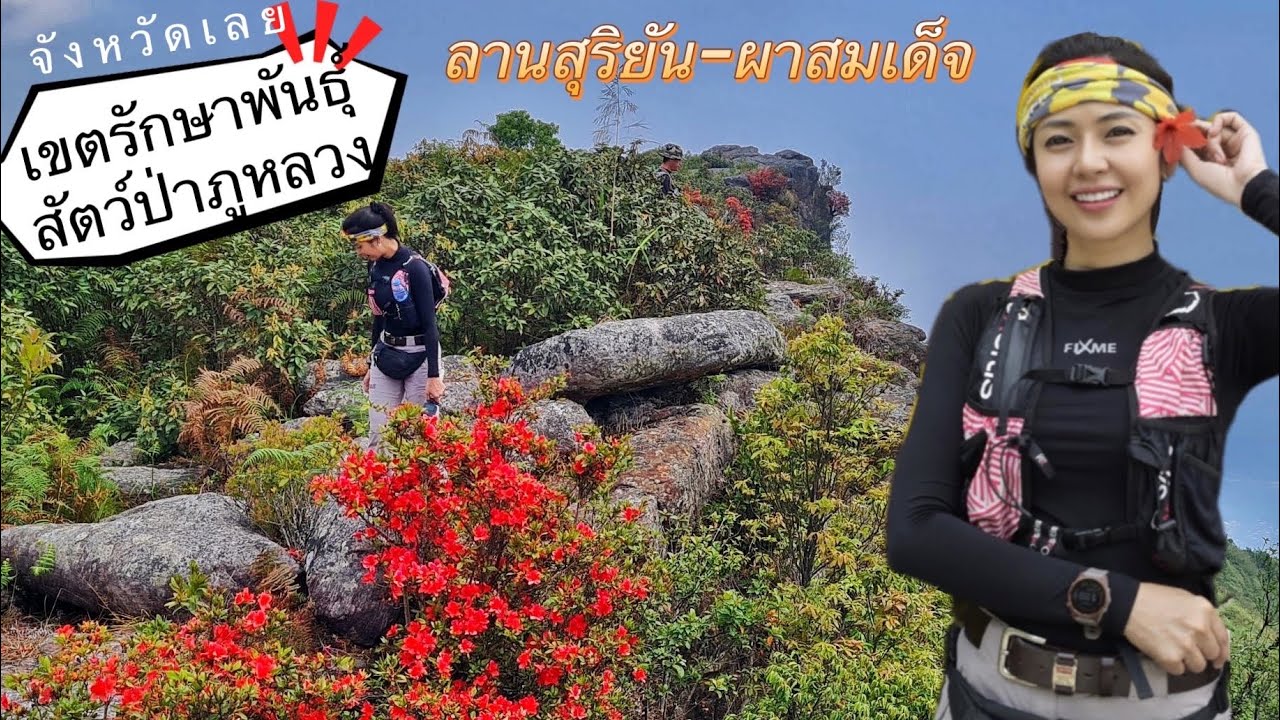
 Click to Access the Navigation Map GPS
Phu Luang Wildlife Sanctuary Map
Gellery
Recommend

 Art, Culture and Heritage
 Historical Sites and Monuments(2)
 Landmarks and Memorials(3)
 Art, Craft Centres, Tradition(2)
 Museums(4)
 Art Gallery(1)
 Educational Places
 Educational Gardens, Farm(2)
 Places of Worship
 Temple(16)
 Other Sacred Sites(8)
 Research and Development
 Royal Project(3)
 Suburban Living
 Village, Community(3)
 Local Market(1)
National Parks and Marine Reserves(5)
Local Market(1)
National Parks and Marine Reserves(5)
 Mountain (Doi)(10)
 Dam, Reservoir, Lake(7)
 Waterfalls(21)
 Caves(3)
 River, Canal(5)
 Bays and Beaches(1)
 Other natural attractions(1)
 Entertainment and Agricultural
 Farms, Parks and Ecotourism(8)
 Waterpark(1)
 Outdoor and Adventure Activities(2)
 Travel Articles, Recipes
 Travel Review, Food Review(1)


