
lovethailand home >Central Travel Attractions >Bangkok Travel Attractions >Bangkok Noi >Arun Amarin > Ansorissunnah Royal Mosque
TL;DR: Ansorissunnah Royal Mosque, Bangkok attractions : Places of Worship, Mosque.
Ansorissunnah Royal Mosque
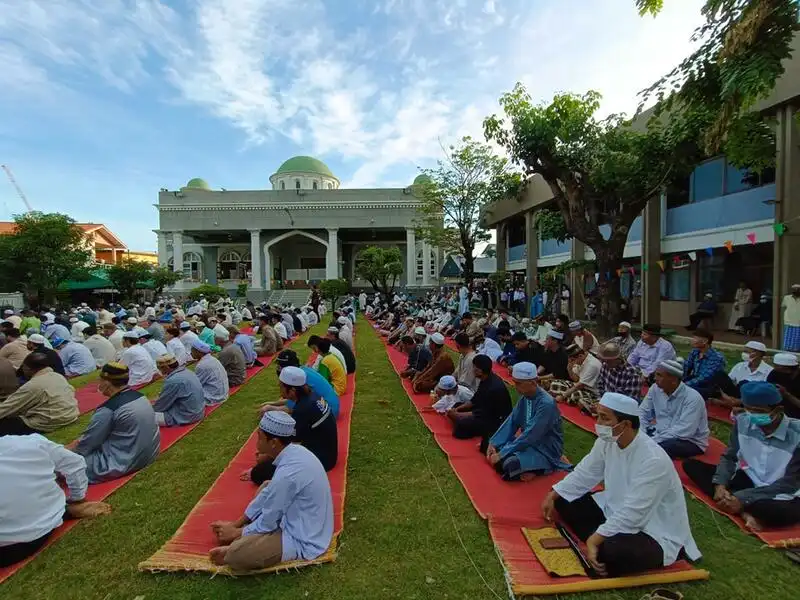
Open Days: Every day (primarily open for community religious activities)
Opening Hours: Accessible according to the community’s prayer times (recommended visiting hours for tourists 08:00–17:00)
Ansorissunnah Royal Mosque (มัสยิดอันซอริซซุนนะห์) is one of the mosques in Bangkok that clearly reflects the history of Muslim migration from Ayutthaya, the way of life along the canals, and the patronage of the Thai monarchy. It is located at 60/1 Rim Khlong Bangkok Noi Village, Soi Ansorissunnah, Arun Ammarin 24 Road, Arun Ammarin Subdistrict, Bangkok Noi District, right on the bank of Khlong Bangkok Noi amid an old canal-side community. If you take a boat past the mouth of the canal or walk along the water, you will see the dome and mosque building standing side by side with the canal-side houses in a calm yet lively atmosphere.
This side of the mouth of Khlong Bangkok Noi is an old area where people have settled since the Ayutthaya period. When the capital fell, many people migrated downstream along the Chao Phraya River and resettled in areas such as Bang O, Bangkok Noi, Bangkok Yai and other canal-side communities. Muslims did the same, with most choosing to build their homes right by the water, earning the nickname “khaek phae” (literally “pier Muslims”), as there used to be floating houses and boats moored along the canals and riverbanks. The community comprised both those descended from Ayutthaya Muslims and those who had been relocated from Malay polities such as Pattani, Saiburi (Kedah), Kelantan, and Terengganu, before gradually forming what is now the Muslim community of Bangkok Noi.
According to the elders of the community, these Muslims did not originally live on the current canal side. They first established their mosque and community on the side that later became the railway alignment. There was a small wooden mosque built purely out of faith when they first migrated there. No photographs of this pioneering mosque exist, as it was before the reign of King Rama V, but stories have been passed down in the community that the mosque was the heart of the village — a place for daily prayers, religious learning, and a social center where people gathered every Friday.
By the reign of King Chulalongkorn (Rama V), Siam had entered a period of serious development of transportation and infrastructure. The Bangkok Noi railway line was planned to cut through the area where the Muslim community originally stood. The original site of the mosque had to be expropriated for the railway, so the authorities proposed taking over that land for the track and finding a new area where the community could relocate their mosque and homes.
At that time, questions arose as to why the Muslim community specifically requested land on the current side of Khlong Bangkok Noi. Some suspected hidden motives, as certain parts of that land were considered prime canal-front property. Officials were therefore sent to investigate in detail, only to discover that the main reason was simply that the Muslims “wanted to live near the mosque.” They were willing to exchange good river- or canal-front plots for land close to their religious center, believing that praying in the mosque, joining religious activities, and helping maintain the mosque were ways to earn blessings for themselves and their families.
Once the community’s intentions were understood, King Rama V graciously approved the land exchange, granting the canal-side area on Khlong Bangkok Noi as the new location for the community and mosque. He also provided royal assistance to build a new mosque and granted additional land for a school for Muslim children, which later became Rajakaruun School. Inscribed markers still record the exact portions of land that were royally granted on both the eastern and western sides.
Because of this history, Ansorissunnah Mosque has been recognized as a “royal mosque” — a mosque rooted in royal faith and royal land grants. The name “Ansorissunnah” comes from Arabic, roughly meaning “those who support and uphold the Sunnah (the way) of the Prophet Muhammad.” It reflects the mosque’s role not only as a place of worship but also as a center that shapes one generation after another to live a life grounded in faith.
During the Greater East Asia War (World War II in Asia), the Bangkok Noi canal area was affected by bombings. Several canal-side locations and parts of the railway surroundings were damaged. According to elders, some community buildings and nearby structures suffered impacts as well. After the war ended, people in the community joined hands to rebuild their neighborhood and strengthen the mosque structure, replacing the old wooden framework with a permanent concrete building and adapting the design to meet modern structural standards while still serving the community’s daily needs.
Today, the Ansorissunnah Royal Mosque building that you see from the canal is a simple reinforced concrete structure with strong horizontal lines that convey stability. Inside, a spacious prayer hall opens out with separate prayer areas for men and women in accordance with Islamic principles. At the front are a courtyard and walkways connecting to the canal-side village houses. On the canal side, there is a balcony and steps leading closer to the water, making the mosque feel as though it embraces both the spiritual world and the everyday life of those who live along the canal.
In terms of administration, Ansorissunnah Royal Mosque is overseen by an imam and a mosque committee responsible for religious affairs and community activities. The latest information from Islamic authorities indicates that Imam Abdulloh Kareemi serves as the imam of the mosque. This information may change over time, but it illustrates the important role of the religious leader as a spiritual anchor for the Muslim community in this area.
Today, Ansorissunnah Royal Mosque continues to fulfill its central role by holding the five daily prayers, Friday prayers, and both Eid prayers (Eid al-Fitr and Eid al-Adha). In parallel, it runs Qur’an and religious classes for children and youth, as well as lectures and study circles for adults. On ordinary evenings, the prayer hall often fills with recitation, memorization of Qur’anic verses, and soft conversations among community members after the prayer is completed.
Like many Muslim canal-side communities, the area around Ansorissunnah Royal Mosque becomes especially lively during Ramadan, particularly in the late afternoon before iftar. The banks of Khlong Bangkok Noi and the alleys around the mosque fill with stalls and vendors selling halal food — savory dishes, desserts, juices, and baked goods. Some family-run stalls open only during Ramadan, turning the narrow canal-side lane into a small but vibrant market full of the aroma of food and the atmosphere of faith.
From a traveler’s perspective, Ansorissunnah Royal Mosque serves as a gateway to understanding everyday life in the canal-side community of Bangkok Noi. Visitors can wander through a village made up of old wooden houses and newer concrete homes, dotted with mom-and-pop grocery shops, small eateries, and Rajakaruun School, which lies not far from the mosque. The sound of trains on the route that once passed through the original settlement mixes with the hum of long-tail boats on the canal, children’s voices from the school, and the call to prayer from the mosque, creating a daily-life scene you won’t find in the city’s newer districts.
Non-Muslims are welcome to visit Ansorissunnah Royal Mosque as long as they dress modestly and show respect for the sacred space. Men should wear clothing that covers the shoulders and knees, such as shirts with sleeves and long trousers. Women are encouraged to wear long-sleeved tops or clothes that cover the shoulders, along with long skirts or trousers, and to cover their hair with a scarf or hijab. If you do not have one, you may politely ask the mosque staff if any spare headscarves are available. When entering the prayer area, shoes must be removed, and visitors should avoid speaking loudly or walking directly in front of people who are praying.
As for photography, taking pictures outside the building and along the canal is generally acceptable, but visitors should respect the privacy of local residents, especially those engaged in worship. Anyone wishing to photograph inside the mosque is strongly advised to seek permission from the imam or mosque committee first, and avoid using flash or loud shutter sounds that might disturb the peaceful atmosphere.
The area around Ansorissunnah Royal Mosque also connects conveniently to several important attractions on the Thonburi side of Bangkok. These include the National Museum of Royal Barges along Khlong Bangkok Noi, Dusidaram Worawihan Temple and Phumarin Ratchapakse Temple, both historic temples in the Bangkok Noi canal area, as well as Siriraj Hospital, Siriraj Bimuksthan Museum, and Bangkok Noi–Wang Lang Market. Visitors can easily plan a one-day trip that combines a canal walk, a visit to the mosque and old temples, and a boat ride on the Chao Phraya River.
Getting There Ansorissunnah Royal Mosque is located in Soi Ansorissunnah, connected to Arun Ammarin 24 Road along Khlong Bangkok Noi. The most convenient option for travelers is to take a taxi or private car along Arun Ammarin Road, following signs toward Siriraj Hospital, then turning onto Arun Ammarin Road on the Bangkok Noi canal side. From there, turn into Arun Ammarin 24 and follow the signs to “Ansorissunnah Mosque” or simply ask local residents for directions. Parking space in the soi is quite limited, so it is advisable to allow extra time and look for parking outside the lane, then walk to the mosque.
Another option is to take the Chao Phraya Express Boat and get off at Wang Lang Pier (Siriraj Pier) or nearby piers, then continue by taxi or motorcycle taxi to Arun Ammarin 24. The ride from the pier is relatively short. For those using BTS or MRT, there is no station directly adjacent to Khlong Bangkok Noi, but you can get off at Bang Wa, Charan, or nearby stations and then continue by taxi to Arun Ammarin Road.
All things considered, Ansorissunnah Royal Mosque is not only a place of worship for the Muslim community along Khlong Bangkok Noi, but also a living testament to the history of Muslim migration from Ayutthaya and the southern Malay towns, the land exchange with the state to build the railway in King Rama V’s reign, the royal land grants and construction of a royal mosque, and the coexistence of people of different faiths in this historic part of Thonburi. For those who want to see a softer, deeper side of Bangkok, a visit to Ansorissunnah Royal Mosque, a walk through the canal-side village, and a conversation with local residents can become a memorable experience very different from the usual visits to grand temples or shopping malls.
| Name | Ansorissunnah Royal Mosque (มัสยิดอันซอริซซุนนะห์) |
| Location | 60/1 Rim Khlong Bangkok Noi Village, Soi Ansorissunnah, Arun Ammarin 24 Road, Arun Ammarin Subdistrict, Bangkok Noi District, Bangkok 10700, on the bank of Khlong Bangkok Noi |
| General Characteristics | A royal mosque on the bank of Khlong Bangkok Noi, serving as a center of religion, education, and community life for Muslims in the Bangkok Noi canal area. It combines the atmosphere of a canal-side village with a modern concrete mosque building that remains simple and dignified. |
| Period of Construction | The original community and mosque were located on the railway side before the reign of King Rama V. The land was later exchanged in King Rama V’s time to build a new mosque on the Khlong Bangkok Noi side, and the building was further developed into a permanent concrete structure after the Greater East Asia War in the 20th century. |
| Key Features and Evidence | A simple reinforced concrete mosque building on the water’s edge, a wide prayer hall with separate male and female areas, architecture aligned with the canal, Rajakaruun School standing on royally granted land near the mosque, and a canal-side community that still maintains its traditional way of life. |
| Highlights of the Mosque | One of Bangkok’s royal mosques whose history is tied to the land exchange in King Rama V’s reign, the migration of Muslims from Ayutthaya and southern Malay towns, and the establishment of a community along Khlong Bangkok Noi. It offers a unique blend of religion, local history, and canal-side community life in one place. |
| Mosque Administration | Imam Abdulloh Kareemi and the Ansorissunnah Royal Mosque committee (officeholders may change over time; for official contact or current information, visitors should reconfirm with relevant authorities). |
| Current Status | A fully functioning mosque for the Muslim community along Khlong Bangkok Noi, holding five daily prayers, Friday prayers, Qur’an and religious classes, youth activities, and religious events throughout the year. The mosque welcomes visitors who dress modestly and respect community guidelines. |
| Facilities | Main indoor prayer hall (with separate male and female sections), front courtyard, multi-purpose space for community and educational activities, restrooms and ablution (wudu) area. Parking in the lane is limited, so public transport or parking outside the soi and walking in is recommended. |
| Entrance Fees | There is no entrance fee for visiting or praying at the mosque. Visitors may make donations to support the upkeep of the mosque according to their faith and are expected to dress modestly and follow the guidance of the imam and mosque committee. |
| Public Transport | Take the Chao Phraya Express Boat to Wang Lang (Siriraj) Pier or nearby piers, then continue by taxi or motorcycle taxi to Arun Ammarin 24 Road and Soi Ansorissunnah (about 2 km). You can also use buses and taxis along Arun Ammarin Road, then walk a short distance down the canal-side lane to reach the mosque. |
| Nearby Attractions (Approx. Distance) | National Museum of Royal Barges – approx. 0.7 km Dusidaram Worawihan Temple – approx. 1.0 km Phumarin Ratchapakse Temple – approx. 1.2 km Siriraj Bimuksthan Museum – approx. 2.0 km Bangkok Noi–Wang Lang Market – approx. 2.0 km |
| Nearby Restaurants (Halal/Local Food) + Distance + Phone | Han-a Halal Foods Bangkoknoi (halal food by Khlong Bangkok Noi) – approx. 0.5 km, Tel. 084-654-6570 Sultana Halal Bangkoknoi (halal food and steaks) – approx. 1.5 km, Tel. 089-301-9332 Islamic Fried Chicken Sala Nam Yen (fried chicken – halal food) – approx. 3.0 km, Tel. 095-145-7020, 088-682-4128 |
| Nearby Accommodation + Distance + Phone | NORN Canalside Bangkok (boutique canal-side stay on Khlong Bangkok Noi) – approx. 2.0 km, Tel. 088-884-5989 Tamrong Inn (near Siriraj Hospital) – approx. 1.8 km, Tel. 02-424-2297 Casa 17 Hotel Bangkok Noi (near Arun Ammarin Road) – approx. 1.5 km, Tel. 02-424-9142, 063-951-6996 Scene Bangkoknoi Hotel – approx. 2.5 km, Tel. 02-434-9855 |
Frequently Asked Questions (FAQ)
Q: Can non-Muslims visit Ansorissunnah Royal Mosque?
A: Yes, non-Muslims are welcome to visit as long as they dress modestly, covering shoulders and knees. Women are encouraged to cover their hair with a scarf or hijab. Shoes must be removed before entering the prayer area, and visitors should follow the guidance of the imam or mosque committee. If you wish to take photos inside, please ask for permission first so as not to disturb those who are worshipping.
Q: When is the best time to visit if I want to experience the lively atmosphere of the community?
A: Late morning to early afternoon on regular days is ideal for a calm walk around the mosque and canal-side village. If you want to see a more vibrant scene, visit in the late afternoon before iftar during Ramadan, when the area in front of the mosque and along Khlong Bangkok Noi fills with halal food and dessert stalls. It is a great time to experience both community life and canal-side food culture at once.
Q: Is it allowed to take photos along the canal and in front of Ansorissunnah Royal Mosque?
A: You may take photos outside the building and along the canal, but please be mindful of safety along the bank and piers, and avoid capturing clear images of worshippers’ faces without consent. If you want to photograph inside the prayer hall, it is best to ask permission from the imam or mosque staff first.
Q: How should I prepare if I want to attend Friday prayers or Eid prayers at Ansorissunnah Royal Mosque?
A: Muslims planning to attend Friday or Eid prayers should arrive early to allow time for parking and preparation, bring personal prayer items such as a prayer mat, and follow the guidance of the imam and mosque committee. Non-Muslims who wish to observe should request permission in advance and avoid walking in front of worshippers or making loud noises during prayer.
Q: What kind of clothing is appropriate when visiting Ansorissunnah Royal Mosque?
A: Modest clothing is essential. T-shirts or shirts that cover the shoulders paired with long trousers or long skirts are appropriate. Women should cover their hair with a scarf or hijab. If you do not have one, you may ask whether the mosque has spare headscarves available. Dressing respectfully helps everyone feel comfortable and preserves the sacred atmosphere of the mosque.
Tel : 024339400
 Tel : 024339400
 Category: ●Places of Worship
 Group: ●Mosque
Last Update : 5 MonthAgo
 Last Update : 5 MonthAgo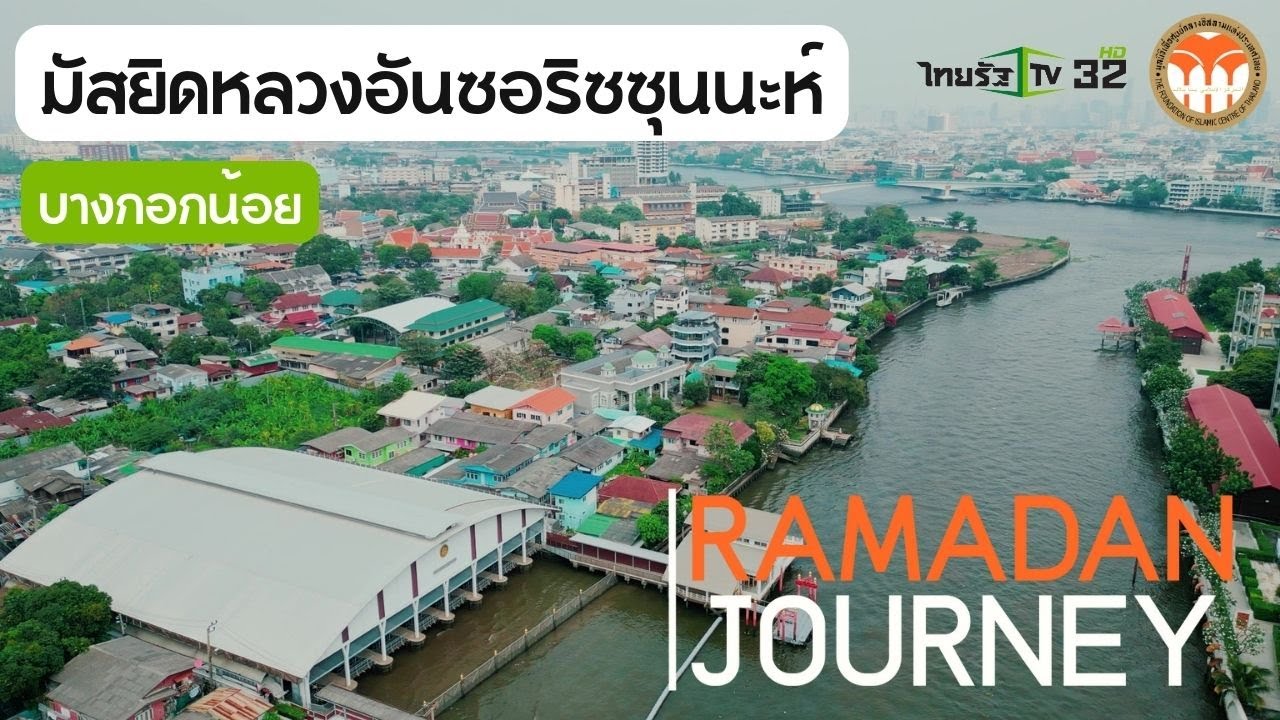
 Click to Access the Navigation Map GPS
Ansorissunnah Royal Mosque Map
Recommend

 Art, Culture and Heritage
 Historical Sites and Monuments(3)
 Landmarks and Memorials(23)
 Royal Palace(13)
 Art, Craft Centres, Tradition(35)
 Museums(59)
 Historic Homes and Cities(3)
 Art Gallery(16)
 Educational Places
 Museum for Study(6)
 Library(4)
 Temple(72)
 Church(2)
Mosque(67)
Church(2)
Mosque(67)
 Other Sacred Sites(8)
 Research and Development
 Royal Project(1)
 Suburban Living
 Village, Community(5)
 Local Market(9)
 Floating Market(2)
 Nature and Wildlife
 River, Canal(3)
 Bays and Beaches(1)
 Other natural attractions(1)
 Entertainment and Agricultural
 Zoos and Aquariums(4)
 Animal camps and shows(5)
 Stadium(9)
 Farms, Parks and Ecotourism(20)
 Amusement Park(1)
 Waterpark(1)
 Theater(7)
 Cinema(1)
 Shopping
 Shopping and Night Market(20)
 Department Store(7)
 Spas and Wellness
 Spas and Wellness(1)
 Restaurant
 Michelin Star(5)
 Accommodation
 Hotel(3)
 Call Customer Service in Tourism
 Call Customer Service in Tourism(1)
 Travel Articles, Recipes
 Travel Review, Food Review(21)
 Royal Thai Desserts and Recipes(56)


