
lovethailand home >Northeastern Travel Attractions >Surin Travel Attractions >Muang Surin >Muang Thi > Ban Butom Basketry Village
TL;DR: Ban Butom Basketry Village is located at Ban Butom, Moo 4, Mueang Thi Subdistrict, Mueang Surin District, Surin Province 32000, open Daily, hours 09.00 – 17.00.

Ban Butom Basketry Village
Open Days: Daily
Opening Hours: 09.00 – 17.00
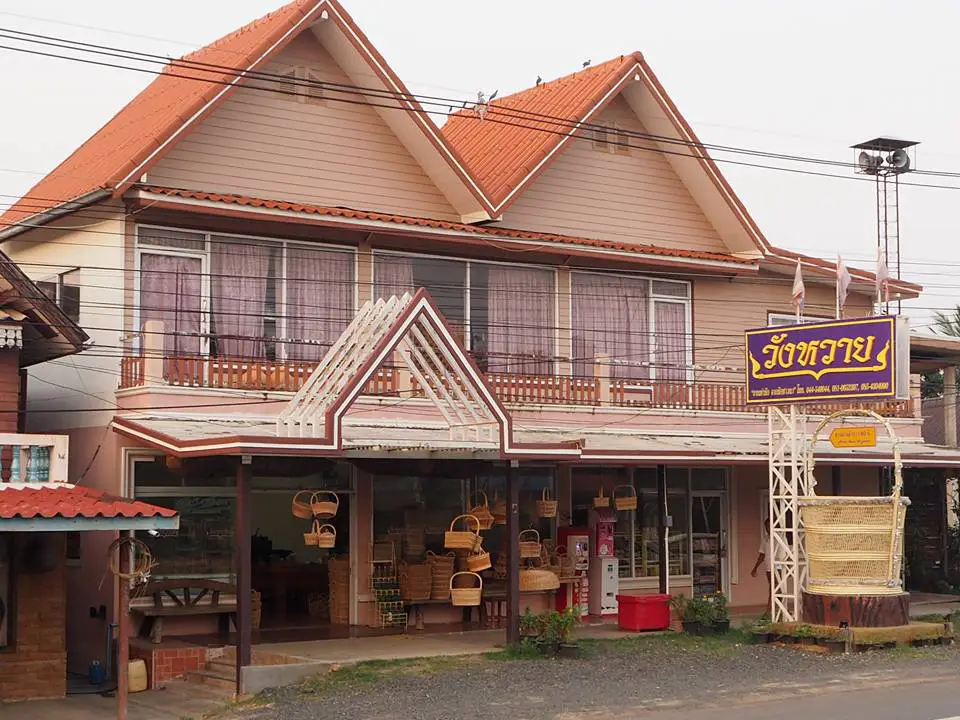
Ban Butom Basketry Village Surin, also known as Ban Butom Rattan Handicraft Village, is an important community craft destination in Ban Butom, Moo 4, Mueang Thi Subdistrict, Mueang Surin District, Surin Province. The village is located about 12 km from Surin city along Highway 226 toward Sikhoraphum District. It is best known for handmade rattan basketry, especially baskets and household containers made from fine rattan strips locally called “wai hang nu.” The craft reflects local wisdom, hand skill, patience, and community-based knowledge that has been passed down through families for generations.
Ban Butom is not only a place to buy handicrafts. It is a living craft community that shows how rural Surin people combine agriculture, family labor, seasonal work, and local materials into a sustainable village economy. Most villagers traditionally farm rice as their main occupation. Outside the main rice-farming season, many households produce rattan basketry as supplementary work. This means the craft is closely linked with the rhythm of agricultural life. When the rice fields are less busy, homes in the village become small craft workshops where family members prepare rattan, shape frames, weave patterns, finish edges, and bring their work to the community group for sale.
The charm of Ban Butom lies in its authenticity. Visitors can see rattan baskets, trays, containers, boxes, market baskets, decorative objects, and household items that are made by hand. Each piece has a natural rattan color, light weight, smooth texture, and carefully arranged weave. These products are not mass-produced factory items. They are the result of eye-hand coordination, long practice, and careful control of shape, tension, structure, and finishing. The beauty of Ban Butom basketry comes from both function and craftsmanship.
The name “Butom,” also written locally as “Bo Thom,” is connected with Khmer-influenced local language in lower northeastern Thailand. The word “bo” is associated with upland or cleared forest land, while “thom” means large. The name therefore evokes an older landscape of forest, upland settlement, farming, and village formation. This background helps explain why Ban Butom craft culture is deeply connected with nature, agriculture, and local identity.
The recorded history of Ban Butom rattan basketry began clearly in 1930. Nai Ling Loetlam, together with Nai Liam Phasawatdi and Nai Phan Kla Ying, learned rattan weaving from Surin Provincial Prison. After returning to the community, they used this skill to make rattan baskets and support their families. From the knowledge of only a few people, the craft was gradually passed on to children, relatives, neighbors, and other households. Over time, rattan basketry became a distinctive occupation of Ban Butom.
In 1984, the Community Development Office of Mueang Surin District promoted Ban Butom rattan weaving as a household industry. This helped villagers develop the craft as a source of supplementary income after the farming season. The support also encouraged more organized production, group formation, product development, and market expansion. Although earlier attempts at group management faced challenges, those experiences became useful lessons for building a stronger and more sustainable community craft group later on.
Teacher Suthep Srilanuch of Ban Butom School later played an important role in gathering information about local occupations and community learning. He encouraged villagers to come together again and form a rattan handicraft group. The group structure allowed villagers to coordinate production, collect products, manage raw materials, receive orders, improve designs, and connect with wider markets. Ban Butom Rattan Handicraft Group therefore became the main mechanism that helped the craft survive and grow.
Today, Ban Butom rattan handicrafts are connected with a wider network beyond the village itself. Members and related craft households extend to neighboring communities in Surin Province. The work remains home-based: many members weave rattan in their free time after farming or household duties, then bring the completed items to the group for sale. This system keeps the craft close to family life while giving the community a shared marketing structure.
The main material used in Ban Butom basketry is rattan, especially the fine and flexible type known locally as wai hang nu. This rattan is valued for its strength, small size, natural gloss, and ability to bend into many forms. It is suitable for baskets, containers, trays, home-decor items, and household products that require both beauty and durability. Rattan can be shaped, bent, split, and woven while maintaining a natural appearance. This makes it ideal for handcrafted products that remain practical in daily life.
The key identity of Ban Butom rattan products is the traditional “look krong” pattern. This pattern gives the products a light, open, orderly, and strong structure. Weaving it requires even hand pressure. If the rattan is pulled too tightly, the product may twist; if too loose, it may lose shape. Experienced artisans must control the rhythm of weaving throughout the piece. This hand skill is one reason Ban Butom products are admired by people who appreciate natural craftwork.
Ban Butom products include market baskets, carrying baskets, offering containers for temple use, gift baskets, boxes, rattan bags, food covers, home-decor objects, and customized products. The group keeps traditional forms while also developing more modern shapes for contemporary use. A rattan basket that once served a purely local household function can now become a souvenir, home accessory, café decoration, hotel item, or eco-friendly alternative to plastic bags.
Traditional Ban Butom rattan products are not lacquered. This allows the natural surface of the rattan to remain visible and tactile. Users can see the fiber, color, and weave clearly. Care methods are also part of the local wisdom. If mold appears after exposure to moisture, the product can be rubbed with sour ripe star fruit, lime, or kaffir lime. It should then be washed clean and dried thoroughly in the sun. Once completely dry, the rattan surface regains its natural shine.
The basic rules for caring for rattan are simple: avoid moisture, do not store products on damp concrete floors, keep them in a ventilated area, and dry them thoroughly if they become wet. The weight placed inside a basket should match its size and structure. These care methods show that local craft knowledge does not end with production. It also includes proper use, maintenance, and respect for natural materials.
Ban Butom basketry also reflects an environmentally conscious way of living. Using rattan baskets instead of plastic bags reduces disposable waste and brings traditional objects back into modern daily life. Rattan products are not outdated. They are practical, reusable, beautiful, and connected with community income. Buying directly from the village helps income return to local artisans and supports the continuation of the craft.
For visitors, Ban Butom Basketry Village is suitable for cultural and lifestyle travel. A visit gives travelers the opportunity to learn about local materials, weaving techniques, community economy, and the relationship between rice farming and handicraft production. Buying a basket here is different from buying a souvenir in a general shop because visitors understand the story, labor, and knowledge behind each piece.
The village and craft group include several important learning areas: the Ban Butom Rattan Handicraft Group office, product display and sales area, demonstration area when arranged in advance, household craft areas, rattan preparation spaces, learning points for the look krong pattern, product collection points, and community connections with Ban Butom School and Mueang Thi Subdistrict. Visitors should see the village as a living learning area, not only as a shopping stop.
The main community caretaker of the craft destination is Ban Butom Rattan Handicraft Group. The group coordinates production, product sales, member products, and community learning visits. Local public services are connected with Mueang Thi Subdistrict Municipality. Visitors who plan to come as a group, request a study visit, order many products, or arrange a craft demonstration should contact the group or local authority in advance so that the visit can be properly prepared.
The usual visiting time is during the day. The village is open for visits and product purchases daily from 09.00 to 17.00. Travelers who want to see craft activity should visit in the late morning or early afternoon, when the village normally has a practical working rhythm. Morning visits are good for photography and shopping before continuing to nearby attractions, while afternoon visits are suitable for conversation, product selection, and learning about the craft.
There is no admission fee for ordinary visits to Ban Butom Basketry Village. Costs depend on product purchases or pre-arranged group activities. Product prices vary according to size, pattern difficulty, shape, and craftsmanship. Buying directly from the community allows visitors to receive products with real origin while supporting local artisans and their families.
Getting to Ban Butom is most convenient by private car, rental car, or chartered vehicle. From Surin city, take Highway 226 toward Sikhoraphum District for about 12 km, then continue into Mueang Thi Subdistrict and Ban Butom. The road is an important route connecting Surin city with the eastern part of the province. Visitors should navigate to “Ban Butom Basketry Village” or “Ban Butom Rattan Handicraft Group, Mueang Thi Subdistrict, Mueang Surin District” to reach the correct community.
Getting There from central Surin is straightforward. Follow the Surin – Sikhoraphum road or Highway 226 through the Mueang Thi area. The village is close enough to the city for a half-day trip and can be combined with Prasat Mueang Thi, Ban Tha Sawang silk-weaving village, Surin City Pillar Shrine, Wat Burapharam, or Surin National Museum. This makes Ban Butom an easy cultural stop for travelers who want to understand Surin through craft, history, and local life.
Nearby Prasat Mueang Thi, located at Wat Chom Sutthawat in Mueang Thi Subdistrict, adds a historical dimension to the craft route. Ban Tha Sawang ancient gold-brocade silk-weaving village adds another important craft dimension. Visiting Ban Butom together with these places gives travelers a rich view of Surin handicrafts, from rattan basketry to refined silk weaving and historical architecture.
Ban Butom also connects conveniently with attractions in Surin city, including Surin City Pillar Shrine, Wat Burapharam Royal Temple, Phraya Surin Phakdi Si Narong Changwang Monument, Huai Saneng Reservoir, and Surin National Museum. A full-day route can begin with Ban Butom in the morning, lunch in Surin city, and a museum or shrine visit in the afternoon. This route combines craft, community, history, and faith in one day.
Restaurants near Ban Butom are found along the Surin – Sikhoraphum road and in Surin city. Travelers can eat before or after visiting the village. For food close to the route, Som Tam T.B. Ubon Surin Branch on the Surin – Sikhoraphum road is a practical option. Those who want more choices can return to Surin city, where Thai, Isan, Vietnamese, café, and hotel-restaurant options are available.
Accommodation for visiting Ban Butom is best found in Surin city. The village is close enough for an easy drive, while the city offers hotels at different levels, restaurants, markets, railway access, and transport services. Staying in central Surin also makes it easier to continue to Ban Butom, Prasat Mueang Thi, Ban Tha Sawang, Sikhoraphum Sanctuary, and other provincial attractions.
For international visitors, Ban Butom Basketry Village offers a clear introduction to Thai community craft culture. It shows that handicrafts are not only souvenirs, but systems of knowledge connected with agriculture, family life, natural materials, local organization, and community economy. A single rattan basket carries the history of the village, the patience of the artisan, and the wisdom of natural material use.
Visitors should respect the community by dressing modestly, speaking politely, asking permission before photographing people, avoiding private household areas, and not bargaining in a way that devalues handmade work. Direct purchase from artisans should recognize the time and hand skill behind each piece. Ban Butom is a real community, so respectful behavior helps preserve both the craft and the dignity of local residents.
Overall, Ban Butom Basketry Village is valuable as a cultural, economic, and environmental learning destination. Its identity comes from wai hang nu rattan, the look krong pattern, handmade production, natural non-lacquered surfaces, traditional care methods using sour fruit, and strong community organization. It is suitable for travelers, students, designers, craft lovers, entrepreneurs, and international visitors who want to understand Thai local wisdom through a living community.
In summary, Ban Butom Basketry Village Surin is an important rattan handicraft village in Mueang Thi Subdistrict, Mueang Surin District. Located about 12 km from Surin city along Highway 226, the village has preserved rattan basketry for more than 60 years. Using fine wai hang nu rattan and the traditional look krong pattern, local artisans produce handmade baskets and containers that are beautiful, strong, practical, and environmentally friendly. Visitors can buy local products, learn about craft wisdom, and combine the visit with Prasat Mueang Thi, Ban Tha Sawang, and central Surin attractions.
| Name | Ban Butom Basketry Village Surin / Ban Butom Rattan Handicraft Group |
| Location | Ban Butom, Moo 4, Mueang Thi Subdistrict, Mueang Surin District, Surin Province 32000 |
| Address | Ban Butom Rattan Handicraft Group, No. 8/3, Moo 4, Ban Butom, Mueang Thi Subdistrict, Mueang Surin District, Surin Province 32000 |
| Coordinates | 14.883482, 103.640932 |
| Highlights | Traditional Surin rattan craft village, wai hang nu rattan, look krong pattern, handmade baskets, seasonal craft work after rice farming, natural non-lacquered products, and local wisdom learning destination |
| History | Ban Butom rattan craft began clearly in 1930 through Nai Ling Loetlam, Nai Liam Phasawatdi, and Nai Phan Kla Ying. In 1984, the craft was promoted as a household industry, and the community later organized Ban Butom Rattan Handicraft Group to strengthen production and marketing |
| Name Origin | The name Butom or Bo Thom is linked with local Khmer-influenced language and refers to an older upland or large cleared-forest settlement landscape |
| Distinctive Features | Villagers weave rattan as supplementary work alongside rice farming. Products use fine, strong, naturally glossy wai hang nu rattan and are woven by hand using the look krong pattern |
| Travel Information | From Surin city, take Highway 226 toward Sikhoraphum District for about 12 km, then continue into Ban Butom in Mueang Thi Subdistrict. Private cars, rental cars, and chartered vans are the most convenient options |
| Current Status | Open for cultural visits, local craft learning, and product purchases. The village remains an active local wisdom and handicraft destination in Mueang Thi Subdistrict |
| Open Days | Daily |
| Opening Hours | 09.00 – 17.00 |
| Fees | No Admission Fee For Ordinary Visits. Costs Depend On Product Purchases Or Pre-Arranged Group Activities |
| Facilities | Community craft group office, product display area, product sales area, demonstration area when arranged in advance, local parking according to village conditions, and basic services in Mueang Thi Subdistrict |
| Main Areas / Zones | 1. Ban Butom Rattan Handicraft Group Office 2. Rattan Product Display And Sales Area 3. Craft Demonstration Area When Arranged In Advance 4. Household Craft Areas Of Group Members 5. Rattan Preparation And Sorting Area 6. Look Krong Pattern Learning Area 7. Member Product Collection Area 8. Community And Ban Butom School Connection Area 9. Ban Butom And Mueang Thi Community Route |
| Important Products | Rattan baskets, market baskets, temple-offering containers, gift baskets, boxes, rattan bags, food covers, home-decor items, and customized wai hang nu rattan products |
| Rattan Product Care | Avoid moisture and dry the product thoroughly if wet. If mold appears, rub the rattan with sour ripe star fruit, lime, or kaffir lime, then wash clean and dry in the sun |
| Community Traditions / Lifestyle | Rice farming combined with post-harvest rattan weaving, family-based craft transmission, community handicraft group organization, daily use of rattan baskets, and use of rattan containers in temple and community life |
| Caretaker / Community Group | Ban Butom Rattan Handicraft Group coordinates products, sales, member items, and community learning visits |
| Group / Local Wisdom Contact | 0-4454-9044, 081-065-2397, 089-282-8173, 085-023-4464 |
| Local Information Contact | Mueang Thi Subdistrict Municipality, Tel. 0-4451-4328 |
| Nearby Tourist Attractions | 1. Prasat Mueang Thi / Wat Chom Sutthawat, Mueang Thi Subdistrict, about 4 km 2. Ban Tha Sawang Ancient Gold-Brocade Silk-Weaving Village, about 8 km 3. Surin City Pillar Shrine, about 13 km 4. Wat Burapharam Royal Temple, about 13 km 5. Phraya Surin Phakdi Si Narong Changwang Monument, about 14 km 6. Huai Saneng Reservoir, about 18 km 7. Surin National Museum, about 17 km, Tel. 044-513-272, 044-513-274 8. Sikhoraphum Sanctuary, Sikhoraphum District, about 24 km |
| Nearby Restaurants | 1. Som Tam T.B. Ubon Surin Branch 1, Surin – Sikhoraphum Road, about 7 km, Tel. 081-977-4086 2. Just a Little Surin, about 12 km, Tel. 044-060-359 3. Starbeam Restaurant, about 13 km, Tel. 044-519-629, 062-824-2893 4. Kon Khmer Namnueng Surin, about 13 km, Tel. 083-385-5599, 086-497-7958 5. Sawasdee Surin On Sirirat Road, about 13 km, Tel. 085-637-7707 6. Big Bite Restaurant At Thong Tarin Hotel, about 14 km, Tel. 088-103-2383 |
| Nearby Accommodations | 1. HOP INN Surin, about 12 km, Tel. 065-518-9784 2. The Lion Residence Surin, about 12 km, Tel. 044-062-502 3. Sorin Boutique Hotel, about 12 km, Tel. 044-060-188 4. The Wood Surin, about 13 km, Tel. 063-023-7999 5. Maneerote Hotel Surin, about 13 km, Tel. 044-514-569 6. Slive Hotel Surin, about 14 km, Tel. 044-060-322, 044-060-323 7. Thong Tarin Hotel, about 14 km, Tel. 044-514-281, 085-300-8858 |
Frequently Asked Questions (FAQ)
Q: Where Is Ban Butom Basketry Village Located?
A: Ban Butom Basketry Village is located in Ban Butom, Moo 4, Mueang Thi Subdistrict, Mueang Surin District, Surin Province 32000, about 12 km from Surin city along Highway 226 toward Sikhoraphum District.
Q: When Is Ban Butom Basketry Village Open?
A: The village is open daily from 09.00 to 17.00 for visits and product purchases.
Q: Is There An Admission Fee?
A: No. There is no admission fee for ordinary visits. Costs depend on product purchases or pre-arranged group activities.
Q: What Is The Main Highlight Of Ban Butom Basketry Village?
A: The main highlight is handmade rattan basketry using fine wai hang nu rattan and the traditional look krong pattern. The products are strong, refined, naturally finished, and closely connected with the village’s rice-farming lifestyle.
Q: Who Oversees Ban Butom Basketry Village?
A: Ban Butom Rattan Handicraft Group is the main community group responsible for products, sales, member products, and community learning visits.
Q: How Should Ban Butom Rattan Products Be Maintained?
A: Avoid moisture and dry the product thoroughly if wet. If mold appears, rub the rattan with sour ripe star fruit, lime, or kaffir lime, then wash clean and dry in the sun.
Q: What Nearby Places Can Be Visited With Ban Butom Basketry Village?
A: Nearby places include Prasat Mueang Thi, Ban Tha Sawang ancient silk-weaving village, Surin City Pillar Shrine, Wat Burapharam, Huai Saneng Reservoir, Surin National Museum, and Sikhoraphum Sanctuary.
Q: How Should Visitors Prepare For A Visit?
A: Visitors should dress modestly, ask permission before photographing people, avoid private household areas, prepare cash for product purchases, and contact the group in advance for study visits or group demonstrations.
 Category: ●Suburban Living
 Group: ●Village, Community
Last Update : 2 MonthAgo
 Last Update : 2 MonthAgo
 Click to Access the Navigation Map GPS
Ban Butom Basketry Village Map
Recommend

 Art, Culture and Heritage
 Historical Sites and Monuments(11)
 Landmarks and Memorials(2)
 Art, Craft Centres, Tradition(5)
 Museums(1)
 Places of Worship
 Temple(15)
 Other Sacred Sites(1)
Village, Community(9)
Other Sacred Sites(1)
Village, Community(9)
 Local Market(1)
 Nature and Wildlife
 National Parks and Marine Reserves(2)
 Mountain (Doi)(2)
 Dam, Reservoir, Lake(6)
 Waterfalls(1)
 River, Canal(2)
 Other natural attractions(4)
 Entertainment and Agricultural
 Farms, Parks and Ecotourism(2)


