
lovethailand home >Northeastern Travel Attractions >Buri Ram Travel Attractions >Ban Kruat >Bueng Charoen > Prehistoric Museum
TL;DR: Prehistoric Museum is located at Ban Bueng Noi, Bueng Charoen Subdistrict, Ban Kruat District, Buriram Province, open Daily, hours 08.00 – 17.00.

Prehistoric Museum
Open Days: Daily
Opening Hours: 08.00 – 17.00
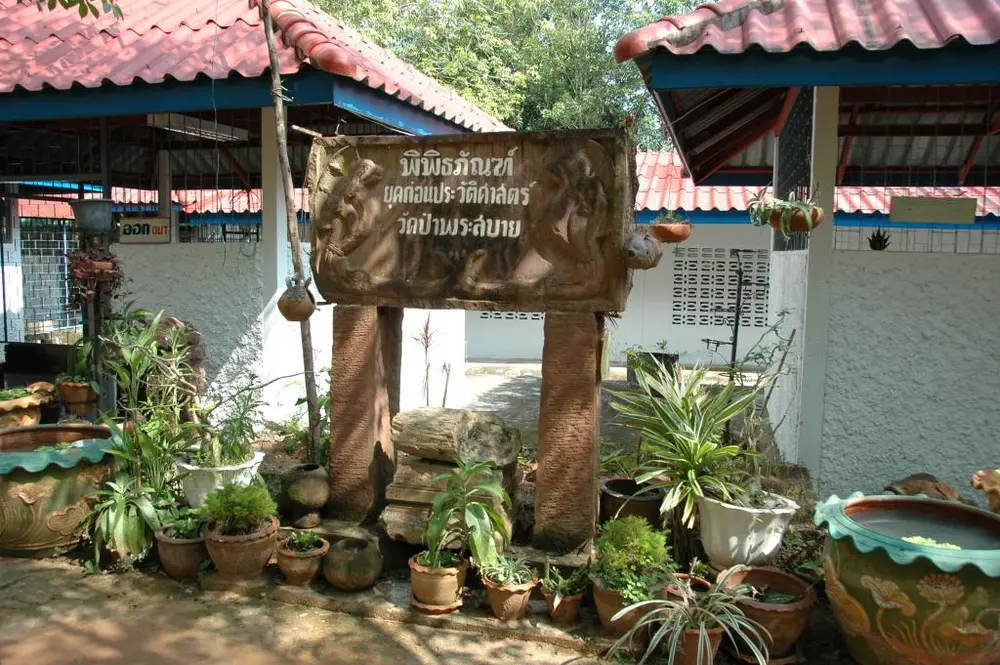
The Prehistoric Museum at Wat Pa Phra Sabai in Ban Bueng Noi, Bueng Charoen Subdistrict, Ban Kruat District, Buriram Province, is a community-based museum preserving archaeological objects from the local area. The museum displays human skeletal remains, ancient pottery, colored stone ornaments, green stone bangles, bronze objects, metal tools, and other artifacts associated with prehistoric communities in the southern part of Northeastern Thailand. It is a meaningful destination for travelers interested in archaeology, local heritage, community museums, and the deeper historical roots of Buriram beyond its famous Khmer temples.
This museum is not simply a room full of old objects. It represents the collective memory of Ban Bueng Noi and the effort of a local temple and community to protect archaeological heritage found in their own fields and village landscape. Many of the artifacts were discovered by local residents during daily agricultural work. Instead of allowing the objects to become scattered, lost, or removed from the community, the villagers and the temple gathered them at Wat Pa Phra Sabai. This process transformed ordinary discoveries into a shared educational resource for the community and visitors.
Ban Bueng Noi and Bueng Charoen Subdistrict are archaeologically important because the area connects settlement patterns, water sources, agricultural land, and ancient cultural routes in the lower Northeast. A visit to the Prehistoric Museum at Wat Pa Phra Sabai helps travelers understand that Ban Kruat has historical layers older than the well-known Khmer monuments and Buriram ceramics. The museum brings attention to prehistoric occupation, early pottery traditions, stone ornaments, bronze technology, iron tools, and the long development of human life in this region.
The origin of the museum is closely connected with local discoveries. In 1973, villagers reportedly found ancient pottery while digging a well, although the discovery did not immediately receive much attention. Around 1997, villagers digging about one meter into the ground for cassava cultivation found a large number of pottery fragments and other artifacts. Phra Achan Thongchai Chatapanyo, the abbot of Wat Pa Phra Sabai at that time, asked those who found the objects to bring them to the temple. His intention was to create a place where local people, students, researchers, and interested visitors could study the ancient past of their own community.
The Prehistoric Museum was established on December 28, 1999, to collect and preserve archaeological materials found in the local area. Wat Pa Phra Sabai became the center for safeguarding the artifacts, while villagers supported the museum by reporting discoveries, donating objects, and sharing memories about the places where they were found. The museum therefore reflects cooperation among the temple, the local community, and archaeological authorities. It is an example of how a small rural community can preserve heritage that might otherwise disappear from its place of origin.
Inside the museum, visitors can see a wide range of archaeological objects. These include ancient human skeletal remains, grey-black unglazed pottery fragments, pottery vessels, colored stone beads, green stone bangles, bronze objects, iron tools, knives, spearheads, bells, bronze rings, bronze necklaces, earrings, clay pellets, spindle whorls, clay bells, red earthenware pots, bowl-like vessels, gourd-shaped or tray-like vessels, and black pottery with a pedestal base. Together, these artifacts help visitors imagine how prehistoric people lived, made tools, decorated their bodies, used vessels, and expressed beliefs through material culture.
The pottery from Ban Bueng Noi is particularly interesting. Many vessels are grey-black and unglazed. Their forms resemble some prehistoric pottery traditions known elsewhere in Thailand, but they do not feature painted designs. Instead, the decoration often appears as cord-marked impressions or incised lines made by pressing a pointed tool into the clay before firing. These marks show how prehistoric potters used simple but effective techniques to decorate functional objects. The details on the pottery also help archaeologists understand production methods, vessel forms, and cultural preferences in the community.
The colored stone ornaments and green stone bangles show that the prehistoric people of Ban Bueng Noi did not create objects only for practical use. They also produced and wore ornaments connected with personal identity, beauty, social status, and possibly ritual meaning. These objects expand our understanding of the community from basic subsistence to social life and symbolic expression. For foreign visitors, these small artifacts are important because they reveal the human side of prehistory: people who lived here thousands of years ago had skills, preferences, values, and relationships just as communities do today.
Metal objects are another major part of the museum’s significance. Bronze vessels, bronze rings, bronze ornaments, and iron tools point to technological development in the region. The transition from stone and pottery to bronze and iron was one of the most important stages in human history. Metal tools were more durable, more efficient, and more adaptable than earlier materials. Their presence at Ban Bueng Noi shows that the local community participated in broader technological changes in prehistoric Southeast Asia.
The Fine Arts Department has examined archaeological objects found in land plots at Moo 4, Ban Bueng Noi, Bueng Charoen Subdistrict, Ban Kruat District, Buriram Province. Some of the objects are kept at the Prehistoric Museum at Wat Pa Phra Sabai. The examined evidence includes a bronze vessel, pottery fragments, and materials related to the Ban Bueng Noi archaeological site. This official archaeological attention confirms that the area is not merely a place of local curiosity but a site with historical and academic importance.
What makes the museum different from large national museums is its closeness to the place where the objects were found. Visitors are not looking at artifacts removed from their landscape without context. They are seeing objects preserved within the same community where they were discovered. The surrounding environment of rubber plantations, cassava fields, village roads, and local temple grounds helps visitors understand how archaeology can emerge from ordinary rural landscapes. The museum makes the ancient past feel close, local, and tangible.
Within the display area, complete and valuable artifacts are kept in glass cases, while many broken pottery fragments are displayed together to show the quantity and variety of materials found in the area. This presentation helps visitors understand that archaeology is not only about beautiful or complete objects. Even small fragments can provide valuable information about pottery forms, clay texture, firing techniques, decorative patterns, use marks, and the daily life of ancient communities.
For travelers interested in the history of the lower Northeast, the museum is a useful starting point. Ban Kruat has several historical layers. The oldest layer is represented by prehistoric evidence at Ban Bueng Noi. Later periods are represented by bronze and iron objects, ancient ceramic kilns, and sandstone quarrying sites connected with Khmer culture. By visiting the museum together with Ban Kruat Stone Quarry, ancient kiln sites, Huai Mekha Dam, and other local attractions, travelers can see how the landscape of Ban Kruat has supported human communities for thousands of years.
The museum is especially valuable for students, teachers, cultural travelers, and anyone who wants to understand archaeology through real objects rather than textbook descriptions. Seeing actual pottery, ornaments, metal tools, and skeletal evidence helps make prehistoric history easier to understand. Visitors can ask practical questions: How did people make pottery? Why were ornaments made from colored stones? What tools did they use? What did burial practices mean? Such questions make the museum an active learning space rather than a passive display room.
Wat Pa Phra Sabai played a crucial role in the museum’s development. As a trusted community space, the temple became a suitable place to collect objects found by villagers. Phra Achan Thongchai Chatapanyo was an important figure because he encouraged the preservation of artifacts within the temple instead of allowing them to be lost. His initiative turned scattered finds into a community museum and created a foundation for local heritage education.
The local community also plays an essential role in keeping the museum alive. Somnuan Lomnak appears in museum and archaeological records as a caretaker associated with the museum. A community caretaker gives the museum a human voice. Visitors may encounter not only objects in cases but also stories about where objects were found, how the museum was formed, and why the people of Ban Bueng Noi value these artifacts. This local involvement is one of the most important qualities of the museum.
The museum has also been connected with community cultural activities, including a publicized event known as the Merit-Making Ceremony for 3,000-Year Prehistoric Ancestors held at the Prehistoric Museum at Wat Pa Phra Sabai in 2025. Such activities show that the artifacts are not treated only as academic objects. They are also linked to memory, ancestry, respect, and local identity. For the community, the ancient objects represent people who once lived in the same landscape.
Visitors should take time to look carefully at the displays. Many of the objects are small, and their significance lies in subtle details such as cord-marked patterns, incised lines, surface texture, clay color, metal shape, or wear marks. A slow visit allows travelers to understand why a pottery fragment, a stone bangle, or a bronze ring can be as meaningful as a large monument. Each artifact is evidence of human action, skill, and belief.
Because this is a community museum, visitors should follow respectful museum etiquette. Do not touch artifacts without permission, do not move display objects, do not open display cases, and ask the caretaker before taking photos in restricted areas. Some objects are fragile and irreplaceable. Once damaged, they cannot be recreated with the same historical value. Responsible travel helps preserve the museum for local students, future visitors, and the community itself.
The museum also broadens the image of Buriram Province. Many travelers know Buriram for Phanom Rung Historical Park, Muang Tam Sanctuary, motorsport, football, and Khmer monuments. The Prehistoric Museum at Wat Pa Phra Sabai reveals a much older story. It shows that Buriram was home to human communities thousands of years before the construction of Khmer stone temples. This makes the museum an important destination for travelers who want a deeper understanding of the province.
Bueng Charoen Subdistrict also has nearby places that can be combined with a visit to the museum. These include Huai Mekha Dam, the Hundred Beehives natural attraction at Ban Saitree Phatthana 3, Ban Kruat Stone Quarry, ancient kiln sites, and other local cultural landscapes. A carefully planned route can combine archaeology, nature, village life, and local history in a single day.
Ban Kruat Stone Quarry is one of the most meaningful nearby attractions. It was a major sandstone source used for building temples and monuments in the Khmer cultural sphere. Traces of cutting, grooving, and extracting sandstone blocks are still visible. Visiting the quarry after the museum helps travelers see how Ban Kruat’s landscape provided different raw materials through different periods: clay for pottery, stone for architecture, and metal for tools and ornaments.
The ancient kiln sites of Ban Kruat are another valuable addition to the route. Ban Kruat is known for ancient ceramic production associated with Khmer culture. When viewed together with the prehistoric pottery at Wat Pa Phra Sabai, these kiln sites help visitors understand the long development of ceramic technology in the area. The route shows a transition from unglazed prehistoric pottery to more advanced ceramic production in later historical periods.
The atmosphere of the museum is modest, quiet, and local. It does not have the scale or technology of a large national museum, but its value lies in authenticity and community connection. Travelers should approach the place with patience and respect. The museum rewards visitors who are willing to slow down, observe carefully, and listen to the story of a small community protecting a very old past.
Families can use the museum as an outdoor classroom. Children and young learners can see real archaeological objects that connect directly with history lessons. They can observe pottery shapes, stone ornaments, and metal tools while asking questions about ancient life. This direct encounter with material evidence makes history more memorable than reading about prehistory only in books.
For serious cultural travelers, the Prehistoric Museum at Wat Pa Phra Sabai offers a different kind of Buriram experience. It is not about grand architecture or dramatic scenery. It is about ordinary human life in the distant past. Small objects such as broken pots, stone bangles, bronze rings, and clay bells reveal that history was also made in households, fields, rituals, and everyday activities.
Getting There is most convenient by private car, rental car, or local transport. From Prakhon Chai District, travel toward Ban Kruat District, then continue to Bueng Charoen Subdistrict and Ban Bueng Noi. Travelers using public transport can take the Prakhon Chai – Ban Kruat – Lahan Sai route and continue by local transport to Ban Bueng Noi, Moo 4. The access distance from the main route into Ban Bueng Noi is about 1.5 km. Using a navigation map together with local directions is recommended because some access roads are village roads.
If starting from Buriram city, the most practical route is to travel toward Prakhon Chai and then continue to Ban Kruat before entering Bueng Charoen Subdistrict. Private transport is the best option for visitors who want to combine the museum with other nearby attractions such as Ban Kruat Stone Quarry, ancient kiln sites, and Huai Mekha Dam. Travelers relying on public transport should allow extra time for local connections and contact the museum or local authority before visiting.
The best time to visit is in the morning or late afternoon when the weather is more comfortable. A half-day trip can start with the museum and continue to one or two nearby attractions. A full-day itinerary can include the museum, Ban Kruat Stone Quarry, ancient kiln sites, Huai Mekha Dam, and other local sites in Ban Kruat District.
Overall, the Prehistoric Museum at Wat Pa Phra Sabai is one of Buriram’s most meaningful community heritage sites. Every object inside the museum is more than an old artifact. It is evidence of people who lived, worked, made tools, decorated their bodies, performed rituals, and built relationships with the landscape of Ban Bueng Noi thousands of years ago. A visit to this museum is a way to understand Ban Kruat and Buriram from the roots upward.
| Name | Prehistoric Museum at Wat Pa Phra Sabai |
| Alternative Name | 3,000-Year Prehistoric Museum at Wat Pa Phra Sabai |
| Location | Ban Bueng Noi, Bueng Charoen Subdistrict, Ban Kruat District, Buriram Province |
| Address | Wat Pa Phra Sabai, Ban Bueng Noi, Bueng Charoen Subdistrict, Ban Kruat District, Buriram Province 31180, Thailand |
| Coordinates Of Ban Bueng Noi Archaeological Area | Approximately 14.392996, 103.035862 |
| Highlights | Community museum preserving prehistoric artifacts about 3,000 years old, including ancient human skeletal remains, pottery, colored stone ornaments, green stone bangles, and metal objects |
| History / Period | Early pottery discoveries were reported in 1973, with a major discovery around 1997. The museum was established on December 28, 1999. Key artifacts are associated with prehistoric occupation, the Bronze Age, and the Iron Age, with some objects estimated to be about 3,000 years old |
| Founder / Caretaker | Phra Achan Thongchai Chatapanyo initiated the preservation of artifacts at Wat Pa Phra Sabai during the museum’s formation. Somnuan Lomnak is listed as a museum caretaker in available records |
| Distinctive Features | A local museum displaying objects found within the surrounding community, closely linking the temple, villagers, and archaeological landscape |
| Key Evidence | Ancient human skeletal remains, grey-black unglazed pottery, green stone bangles, colored stone beads, bronze vessels, iron tools, bronze rings, spindle whorls, clay bells, and other archaeological objects |
| Name Origin | The name reflects the museum’s role in collecting and displaying prehistoric artifacts discovered in Ban Bueng Noi and Bueng Charoen Subdistrict |
| Main Areas / Zones | Artifact display building, glass cases for complete objects, pottery fragment display areas, stone ornament displays, metal object displays, and the Wat Pa Phra Sabai temple grounds serving as the museum’s community center |
| Travel Information | From Prakhon Chai, take the Ban Kruat – Lahan Sai public route and continue to Ban Bueng Noi, Moo 4, Bueng Charoen Subdistrict. The access distance from the main route into Ban Bueng Noi is about 1.5 km. By private car, travel via Ban Kruat District and continue to Bueng Charoen Subdistrict |
| Current Status | Open and operating as a local archaeological learning center for the Bueng Charoen community |
| Open Days | Daily |
| Opening Hours | 08.00 – 17.00 |
| Fees | No Admission Fee |
| Facilities | Display building within the temple grounds, parking area at the temple, and community learning space for visitors |
| Main Contact Number | 08-9585-0467 Contact Somnuan Lomnak / 08-9850-3656 |
| Related Local Authority | Bueng Charoen Subdistrict Municipality Tel. 0-4466-6733 Ext. 11, Office of the Municipal Clerk |
| Related Community Activity | Merit-Making Ceremony for 3,000-Year Prehistoric Ancestors, publicized as being held at the Prehistoric Museum at Wat Pa Phra Sabai in 2025 |
| Nearby Tourist Attractions | 1. Huai Mekha Dam, about 8 km 2. Hundred Beehives at Ban Saitree Phatthana 3, about 9 km 3. Ban Kruat Stone Quarry, about 10 km 4. Ban Kruat Ancient Kiln Sites, about 12 km 5. Ban Kruat District Cultural Center, about 13 km 6. Phanom Rung Historical Park, about 34 km |
| Nearby Restaurants | 1. RINTR Plus Cafe Bar Restaurant, about 13 km, Tel. 081-966-1766 2. Coco Cool Cafe’, about 13 km, Tel. 064-778-7799 3. PunThai Coffee Road 2445 Ban Kruat, about 13 km, Tel. 098-282-1651 4. Mini Style Ban Kruat, about 13 km, Tel. 083-381-4332 5. SMiNi Cafe Ban Kruat, about 12 km 6. Khanom Jeen Saifa, about 18 km |
| Nearby Accommodations | 1. Mekha Resort, about 6 km 2. Ban Kruat Garden Resort, about 13 km, Tel. 044-679-263, 086-250-4186 3. Wanasin Resort, about 13 km, Tel. 080-354-6956, 044-115-225, 095-612-2565, 064-739-1434 4. Ban Kruat Home Hug, about 13 km, Tel. 063-253-9179, 084-828-9224 5. Sakchai Resort Fishing Park, about 15 km 6. Khum Sukh Resort, about 22 km, Tel. 086-166-6988 |
Frequently Asked Questions (FAQ)
Q: Where is the Prehistoric Museum at Wat Pa Phra Sabai located?
A: It is located at Wat Pa Phra Sabai in Ban Bueng Noi, Bueng Charoen Subdistrict, Ban Kruat District, Buriram Province, Thailand.
Q: What can visitors see at the Prehistoric Museum at Wat Pa Phra Sabai?
A: Visitors can see prehistoric artifacts about 3,000 years old, including ancient human skeletal remains, grey-black pottery, stone ornaments, green stone bangles, bronze objects, and metal tools from the Ban Bueng Noi area.
Q: What are the opening days and hours of the museum?
A: The museum is open daily from 08.00 to 17.00.
Q: Is there an admission fee?
A: No. The museum does not charge an admission fee.
Q: Who initiated the museum?
A: Phra Achan Thongchai Chatapanyo, the abbot of Wat Pa Phra Sabai at that time, initiated the collection of artifacts found by villagers and helped establish the museum as a local learning center.
Q: How can travelers get to the museum?
A: Travelers can go from Prakhon Chai toward Ban Kruat, then continue to Bueng Charoen Subdistrict and Ban Bueng Noi. Public transport on the Ban Kruat – Lahan Sai route can be used, followed by local transport into the village.
Q: What nearby attractions can be combined with the museum?
A: Nearby places include Huai Mekha Dam, the Hundred Beehives at Ban Saitree Phatthana 3, Ban Kruat Stone Quarry, Ban Kruat Ancient Kiln Sites, Ban Kruat District Cultural Center, and Phanom Rung Historical Park.
Q: Who should visit this museum?
A: The museum is suitable for students, teachers, cultural travelers, archaeology enthusiasts, and visitors who want to understand Buriram’s history before the Khmer temple period.
 Category: ●Art, Culture and Heritage
 Group: ●Museums
Last Update : 4 MonthAgo
 Last Update : 4 MonthAgo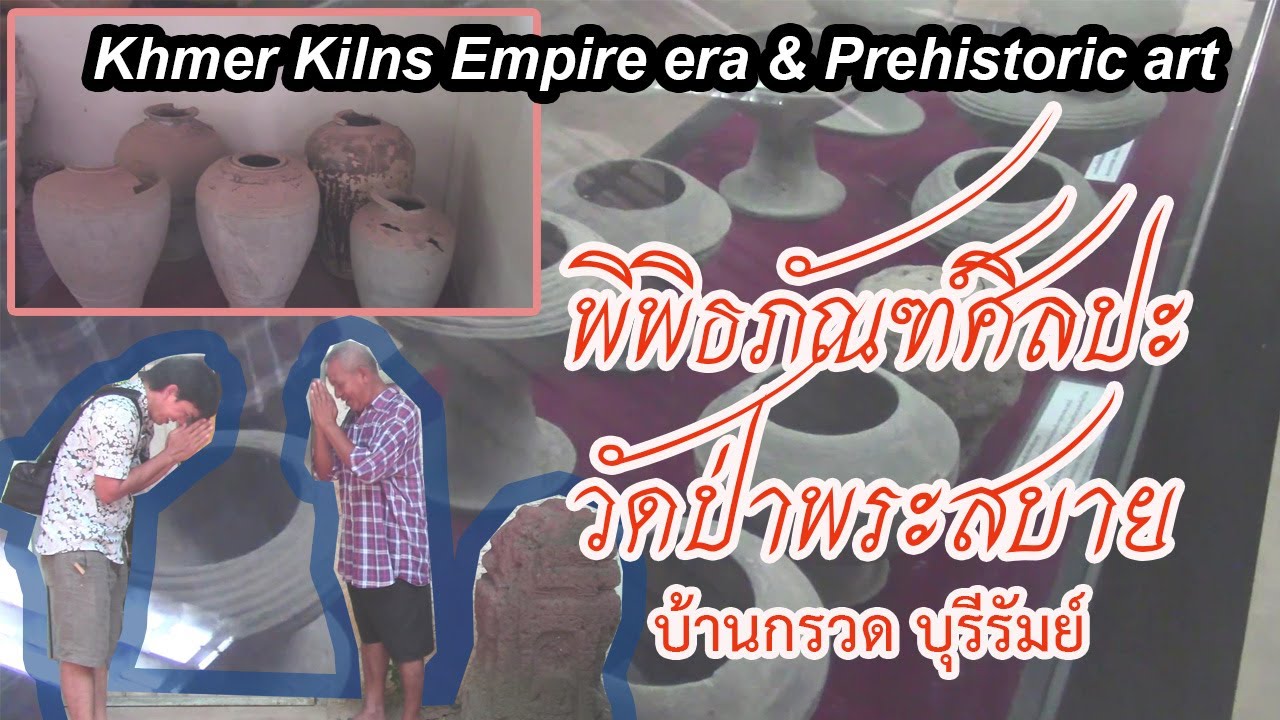
 Click to Access the Navigation Map GPS
Prehistoric Museum Map
Recommend

 Historical Sites and Monuments(14)
 Landmarks and Memorials(2)
 Art, Craft Centres, Tradition(6)
Museums(3)
Art, Craft Centres, Tradition(6)
Museums(3)
 Educational Places
 Museum for Study(1)
 University
 Rajabhat University(1)
 Private University(1)
 Places of Worship
 Temple(74)
 Other Sacred Sites(5)
 Research and Development
 Royal Project(1)
 Suburban Living
 Village, Community(3)
 Nature and Wildlife
 National Parks and Marine Reserves(2)
 Mountain (Doi)(1)
 Dam, Reservoir, Lake(14)
 River, Canal(1)
 Bays and Beaches(1)
 Other natural attractions(2)
 Entertainment and Agricultural
 Animal camps and shows(1)
 Stadium(2)
 Farms, Parks and Ecotourism(2)
 Waterpark(2)
 Travel Articles, Recipes
 Travel Review, Food Review(1)


