
lovethailand home >North Travel Attractions >Lampang Travel Attractions >Muang Pan >Thung Kwao > Ban Thung Chi Royal Initiative Project
TL;DR: Ban Thung Chi Royal Initiative Project is located at Ban Thung Chi, Village No. 8, Thung Kwao Subdistrict, Mueang Pan District, Lampang Province, open Daily, hours 08.00 – 16.00.

Ban Thung Chi Royal Initiative Project
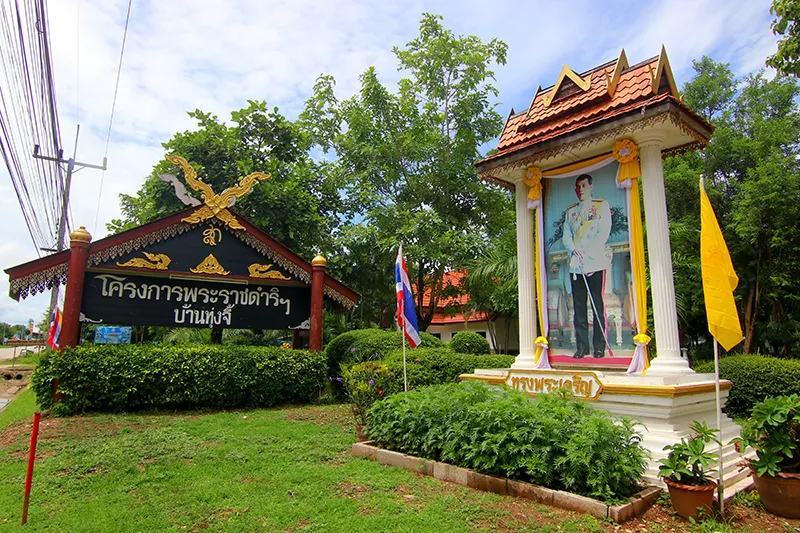
Open Days: Daily
Opening Hours: 08.00 – 16.00
Ban Thung Chi Royal Initiative Project, formally known as the Development Project for the Border Area of Mueang Lampang, Mueang Pan, and Chae Hom Districts in Lampang Province under Royal Initiative, is located at Ban Thung Chi, Village No. 8, Thung Kwao Subdistrict, Mueang Pan District, Lampang Province. The project serves as a development and occupational promotion center for local people in the target area where three districts meet: Mueang Lampang, Chae Hom, and Mueang Pan. It also functions as a coordination center for the conservation of the Mae Wang headwater forest, one of the important natural resource systems of Lampang.
Ban Thung Chi is a rural community in Thung Kwao Subdistrict, Mueang Pan District. The area is connected with mountain forests, watershed landscapes, and routes linking several districts. Its importance comes not only from being a local village, but from its role in addressing long-term problems such as illegal logging, forest encroachment, and community dependence on forest resources. When households lacked stable income and occupational options, the forest became a source of survival. The royal initiative project was therefore created to provide people with better livelihood alternatives while reducing pressure on natural resources.
The origin of the project dates to 13 April 1996, when Her Majesty Queen Sirikit The Queen Mother visited Ban Mai Phatthana in Chae Son Subdistrict, Mueang Pan District, Lampang Province. During that visit, villagers from Ban Thung Chi reported the problem of illegal logging in the border area of Mueang Lampang, Mueang Pan, and Chae Hom Districts. They also requested royal support for occupational promotion to increase local income. This led to the development of both urgent and long-term measures by the Third Army Region, Lampang Province, and relevant government agencies.
The central idea of the Ban Thung Chi project is to solve environmental problems by addressing the human causes behind them. Forest protection cannot be sustainable if people have no income, no skills, and no practical alternatives. The project therefore focuses on occupation development, especially ceramics and handicrafts. The construction of a ceramics vocational training workshop is significant because Lampang is already well known for its ceramic identity. By linking local people with ceramic skills, the project creates a livelihood path that fits both the province’s strengths and the needs of the community.
Ban Thung Chi ceramics have become one of the project’s most recognizable features. Products include molded animal figures, wheel-thrown ceramics, decorative items, and community craft pieces. One of the noted product styles is a large, colorful crab-shaped ceramic work, which reflects the creativity and distinctive identity of the local workshop. Through training, villagers learn shaping, molding, decorating, firing, coloring, and product development. These skills gradually turn local labor into craft-based income.
Ceramics training is socially important because it allows many members of the community to participate. Women, elderly people, youth, and household members who want supplementary income can learn craft skills and contribute to production. Ceramic work requires patience, precision, practice, and creativity. As villagers improve their skills, households gain a wider income base and become less dependent on forest extraction or uncertain agricultural income alone.
In addition to ceramics, the project is connected with other craft promotion activities in Mueang Pan District, including local weaving groups in several villages such as Ban Thung Chi, Ban Rai Muser, Ban Kluai, Ban Si Don Mun, and Ban Pa Kha Santisuk. Supporting weaving and handicrafts helps local knowledge become economic value. Villagers are not only laborers but producers of meaningful handmade products with cultural identity and community stories.
The project also plays an important role as a coordination center for conserving the Mae Wang headwater forest. The three-district border area contains forest landscapes that are vital to water systems in Lampang. A headwater forest is not only a green area. It supports streams, moisture, agriculture, biodiversity, and downstream communities. If the forest is degraded, the impact extends far beyond Ban Thung Chi. Protecting the Mae Wang headwater forest is therefore a long-term environmental responsibility for the entire region.
The project works through two connected paths. The first path is creating livelihood and income. The second path is building awareness and community participation in forest conservation. When villagers can earn income from ceramics, weaving, and handicrafts, the economic need to cut timber or exploit forest resources decreases. At the same time, when people understand that the forest provides water and security for their own families, conservation becomes a shared local interest rather than an external order.
Ban Thung Chi is therefore a strong example of participatory development. The project does not treat local residents only as recipients of assistance. It helps them become craft producers, forest stewards, community participants, and knowledge holders. This form of development is more sustainable than short-term aid because it builds skills, pride, and practical capacity within the community.
For educational travel, Ban Thung Chi Royal Initiative Project is suitable for visitors who want to understand real community development rather than only sightseeing. Visitors can learn about the background of the project, illegal logging issues, ceramic occupational training, craft development, and community participation in watershed conservation. A visit here helps explain that a royal initiative project is not merely a named place, but a practical development process designed around real local problems.
Travelers interested in ceramics will find Ban Thung Chi especially meaningful. Lampang is famous for ceramics, but Ban Thung Chi shows how ceramic work can also emerge from rural occupation development, not only from large factories or urban workshops. A ceramic product made here carries more than decorative value. Behind it is a story of livelihood creation, forest conservation, local skill-building, and community transformation.
The rural atmosphere of Ban Thung Chi makes the visit slow and reflective. The route through Thung Kwao Subdistrict reveals community landscapes, greenery, and the surrounding watershed environment. Visitors should approach the project as a learning site and working community rather than a commercial tourist attraction. Respectful behavior is important because local people and staff continue to use the area for real occupational and conservation activities.
For students, researchers, government groups, and people interested in community development, the project is a valuable case study. It brings together environmental problems, household economics, occupational training, product development, and forest conservation. Studying this area shows that successful development requires time, coordination between agencies, and a deep understanding of how people actually live in the landscape.
The ceramics workshop functions as a practical learning space. Villagers can train, experiment, make mistakes, improve techniques, and continue developing their products. This is different from a one-time training session. A workshop gives the community a shared space where knowledge can be practiced and passed on, allowing skills to grow over time.
The impact of new occupations is not limited to income. It also creates confidence. When villagers produce ceramics or handicrafts that others value, they gain pride in their own skills. Supplementary income gives families more choices. Younger people can see that working within the community can create value. The community also gains a stronger reason to protect the land and resources that support its future.
Conserving the Mae Wang headwater forest in Ban Thung Chi is about more than trees. It is about water security, livelihoods, and the future of the community. Healthy headwater forests support water supply and agriculture. Stable community income reduces pressure on forest land. When both sides support each other, the destructive cycle of forest exploitation can gradually shift toward restoration and shared care.
The project also broadens the tourism image of Mueang Pan District. Mueang Pan is often known for Chae Son National Park, hot springs, Wat Phra Bat Pu Pha Daeng, Ban Pa Miang, and mountain nature. Ban Thung Chi adds another dimension: occupation development, royal initiative work, craft training, and watershed conservation. Combining Ban Thung Chi with natural and cultural attractions allows visitors to understand the relationship between people, forests, water, and local culture more clearly.
Getting There is most convenient by private car or organized group transport. From Lampang city, travel toward Mueang Pan District, then continue to Thung Kwao Subdistrict and Ban Thung Chi, Village No. 8. Some parts of the route pass through rural community roads, so visitors should drive at moderate speed and check directions in advance. Groups planning a study visit should contact the project in advance so the visit can be arranged appropriately.
Visitors should dress comfortably and respectfully, wear shoes suitable for walking, and bring drinking water and sun protection if walking around outdoor areas. They should not enter production areas, training rooms, or conservation zones without permission. Ceramic products should not be touched or moved without asking. Littering and disruptive behavior should be avoided. Responsible visiting helps ensure that educational tourism benefits both guests and the local community.
A half-day visit can focus on the ceramics vocational workshop, community craft learning, and the role of the project in Mae Wang headwater forest conservation. A full-day route can continue to Mueang Pan town, Chae Son National Park, Chae Son Hot Spring, Chae Son Waterfall, or Wat Phra Bat Pu Pha Daeng. Travelers who wish to stay overnight can choose accommodation in Mueang Pan, Chae Son, or Ban Pa Miang.
Ban Thung Chi Royal Initiative Project is worth visiting for anyone interested in royal development principles, community ceramics, occupational training, forest conservation, and watershed management. It shows that sustainable conservation must begin by making local lives more secure. When people have skills, income, and a sense of ownership, forest protection becomes a community responsibility rather than an outside command.
Overall, Ban Thung Chi Royal Initiative Project is more than a ceramic production site or vocational center. It is a living example of integrated development. From the problems of illegal logging and rural poverty in a three-district border area, the project created new livelihood options through craftsmanship, coordination, conservation, and participation. Ban Thung Chi stands as an important lesson from Lampang: people and forests can live together when development respects both human dignity and the value of nature.
| Name | Ban Thung Chi Royal Initiative Project |
| Official Name | Development Project For The Border Area Of Mueang Lampang, Mueang Pan, And Chae Hom Districts, Lampang Province, Under Royal Initiative |
| Location | Ban Thung Chi, Village No. 8, Thung Kwao Subdistrict, Mueang Pan District, Lampang Province |
| Address | Ban Thung Chi, Village No. 8, Thung Kwao Subdistrict, Mueang Pan District, Lampang 52240 |
| Highlights | Occupational development center for residents in the three-district border area and a coordination center for Mae Wang headwater forest conservation |
| History | Originated from a royal initiative on 13 April 1996 after villagers from Ban Thung Chi reported illegal logging in the border area of Mueang Lampang, Mueang Pan, and Chae Hom Districts and requested occupational support to increase local income. |
| Name Origin | Named after Ban Thung Chi, the key community in Thung Kwao Subdistrict where the occupation development and forest conservation activities are located. |
| Distinctive Features | Ceramics vocational workshop, molded animal ceramics, wheel-thrown ceramics, community ceramic products, and its role as a coordination center for Mae Wang headwater forest conservation |
| Travel Information | Travel from Lampang city toward Mueang Pan District, then continue to Thung Kwao Subdistrict and Ban Thung Chi. Private car or organized group transport is recommended, and study groups should contact the project in advance. |
| Current Status | Open as a learning center for arts and crafts, community ceramics, occupational development, and Mae Wang headwater forest conservation under royal initiative |
| Open Days | Daily |
| Opening Hours | 08.00 – 16.00 |
| Fees | No Admission Fee |
| Facilities | Ceramics vocational workshop, handicraft learning area, project coordination area, parking where available, and Ban Thung Chi community surroundings |
| Main Areas / Zones | Ceramics workshop, molded ceramics production area, wheel-thrown ceramics area, handicraft learning area, Mae Wang headwater forest conservation coordination area, and Ban Thung Chi community |
| Caretaker | Ban Thung Chi Border Area Development Project, relevant government agencies, Lampang Province, and Ban Thung Chi community |
| Main Contact Number | Ban Thung Chi Border Area Development Project, Tel. 054-823-138 |
| Nearby Tourist Attractions | 1. Sufficiency Economy Demonstration Center, Ban Thung Chi Royal Initiative Project, about 0 km 2. Ban Thung Chi Community, Thung Kwao Subdistrict, about 0 km 3. Mueang Pan Town Center, about 18 km 4. Phra That Duang Ta, Ban Nam Cham, about 25 km 5. Chae Son National Park, about 35 km 6. Chae Son Hot Spring, about 35 km 7. Wat Phra Bat Pu Pha Daeng, about 40 km |
| Nearby Restaurants | 1. Local Food Shops In Ban Thung Chi, about 0 – 3 km 2. Local Restaurants In Thung Kwao Subdistrict, about 5 – 10 km 3. Touy Ma Lae, about 18 km, Tel. 086-403-1721 4. Trai Khun Mueang Pan, about 18 km, Tel. 054-276-023, 098-097-5015 5. Window View Cafe’&Bistro, about 18 km, Tel. 095-135-3335 6. Chae Son National Park Food Shop, about 35 km |
| Nearby Accommodations | 1. Him Doy Mueang Pan Resort, about 18 km, Tel. 088-443-5266 2. Pimpisa Garden Accommodation, Mueang Pan District, about 18 km 3. Mon Ruam Suk Homestay Cafe & Bistro, about 35 km 4. Sherpa Chae Son, about 35 km, Tel. 081-984-1767 5. Chae Son Vintage, about 35 km 6. The Little Earth Farm View, about 37 km |
Frequently Asked Questions (FAQ)
Q: Where is Ban Thung Chi Royal Initiative Project located?
A: It is located at Ban Thung Chi, Village No. 8, Thung Kwao Subdistrict, Mueang Pan District, Lampang Province.
Q: Why is Ban Thung Chi Royal Initiative Project important?
A: It is an occupational development center for local people in the three-district border area and a coordination center for Mae Wang headwater forest conservation.
Q: How did the project begin?
A: It began from a royal initiative on 13 April 1996 after villagers reported illegal logging problems and requested occupational support to increase local income.
Q: What can visitors see at Ban Thung Chi?
A: Visitors can learn about the ceramics vocational workshop, community ceramic products, molded animal ceramics, wheel-thrown ceramics, occupational development, and headwater forest conservation.
Q: What are the opening hours?
A: The project is open daily from 08.00 to 16.00.
Q: Is there an admission fee?
A: No. Visitors can enter without an admission fee. Study groups should contact the project in advance.
Q: How can travelers get to Ban Thung Chi Royal Initiative Project?
A: Travel from Lampang city toward Mueang Pan District, then continue to Thung Kwao Subdistrict and Ban Thung Chi. Private car or organized group transport is recommended.
Q: What nearby attractions can be visited after Ban Thung Chi?
A: Nearby places include Mueang Pan town center, Phra That Duang Ta, Chae Son National Park, Chae Son Hot Spring, and Wat Phra Bat Pu Pha Daeng.
 Category: ●Research and Development
 Group: ●Royal Project
Last Update : 3 MonthAgo
 Last Update : 3 MonthAgo
 Click to Access the Navigation Map GPS
Ban Thung Chi Royal Initiative Project Map
Recommend

 Art, Culture and Heritage
 Historical Sites and Monuments(2)
 Landmarks and Memorials(5)
 Art, Craft Centres, Tradition(10)
 Museums(4)
 Historic Homes and Cities(1)
 Places of Worship
 Temple(86)
 Other Sacred Sites(9)
Royal Project(2)
Other Sacred Sites(9)
Royal Project(2)
 Suburban Living
 Village, Community(3)
 Local Market(2)
 Nature and Wildlife
 National Parks and Marine Reserves(5)
 Mountain (Doi)(4)
 Dam, Reservoir, Lake(11)
 Waterfalls(15)
 Hot Springs(1)
 Caves(12)
 Flower Field(1)
 River, Canal(1)
 Bays and Beaches(1)
 Other natural attractions(4)
 Entertainment and Agricultural
 Animal camps and shows(1)
 Farms, Parks and Ecotourism(2)
 Outdoor and Adventure Activities(2)
 Shopping
 Shopping and Night Market(2)
 Spas and Wellness
 Spas and Wellness(1)


