
lovethailand home >Central Travel Attractions >Bangkok Travel Attractions >Phra Nakhon >Phra Borommaha Ratchawang > Land Department Museum
TL;DR: Land Department Museum, Bangkok attractions : Art, Culture and Heritage, Museums.
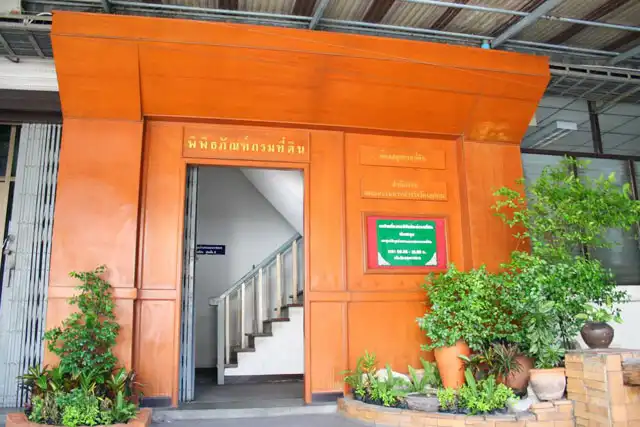
Land Department Museum
Open Days: (recommended to call and confirm before visiting)
Opening Hours: (recommended to call and confirm before visiting)
Land Department Museum is a niche Bangkok museum for people who like state history, documents, and the quiet power of paperwork. It reminds you that “maps” and “title deeds” aren’t just administrative tools or real-estate transactions—they are key evidence of Siam’s move toward a modern state during King Chulalongkorn (Rama V). In that era, Siam needed its systems of governance and territorial boundaries to be “clear and internationally legible,” especially in the eyes of Western powers, in order to safeguard sovereignty and hold the country together.
Before Rama V, Thailand did not yet have land allocation and division in the standardized form we recognize today. In many places, land relationships were tied to older social structures and context-specific customs. But as Western influence expanded across the region—and pressure from major powers such as Britain and France intensified—making “boundaries” and “land rights” systematic became more than an internal matter. It became a shared language for communicating to the outside world exactly what territory the state governed, how it governed it, and what evidence supported those claims.
That is why the Land Department Museum exists as a space that collects and exhibits objects and archival materials of historical value connected to Thailand’s land administration—especially from the period surrounding the establishment of land registration under Rama V. This moment is widely regarded as a milestone in Thai land affairs, and as one starting point of building a more coherent nation through formal land documents, surveying practice, and standardized mapping.
Among the most frequently mentioned highlights is “Thailand’s first land title deed,” valued as tangible proof of the country’s transition into a new era of land administration. It reflects the idea of ownership, the move toward systematic legal documentation, and the use of maps to define land boundaries with clarity. As you study the documents and the evolution of surveying, you begin to see that lines on a map are not just lines—they are “state order,” gradually creating certainty within society.
Inside, the exhibition is commonly described as being divided into 4 sections so the narrative unfolds step by step. Section 1 often begins with a portrait display of King Chulalongkorn (Rama V), an overview of the Land Department’s development from past to present, and key historical figures connected to land affairs. Section 2 presents symbolic objects and period furnishings—such as Phra Khanthararat, a ministerial desk from the Ministry of Agriculture, and antique cabinets used to display land documents. Section 3 is where detail-lovers tend to linger: it explains the “evolution” of title documents, surveying, mapping, and the registration of rights and juristic acts—while also reframing the first title deed as evidence of social transition. Section 4 is described as a museum store/archive area for conserving items not currently on display, alongside a learning/meeting space with related reading materials for anyone who wants to go deeper.
A specialized document-museum like this becomes more enjoyable when you visit with guiding questions—what elements did early title deeds require, how did survey work operate in the past, how did mapping help the state organize space and people’s rights, and why was Rama V’s era such a turning point in Thai land administration. If you like reading labels and examining primary materials, you’ll see that statehood is not built by proclamations alone, but by evidence systems assembled in real everyday practice.
In general, allow about 45–90 minutes for a comfortable visit. If you plan to come as a group, it’s best to reserve in advance so staff can coordinate entry smoothly. Based on visitor experience, many people prefer coming during times when museum staff or a curator is available to welcome and guide—because it can turn “heavy documents” into a clear, visual story.
Getting There To avoid traffic in Bangkok’s Old Town, a practical option is taking the MRT to Sanam Chai Station, then continuing by a short walk/ride toward Phra Phithak Road and the district land office area. Another option is using public buses that pass through the area, such as routes 3, 6, 9, 12, 47, and 60. If you drive, plan extra time for parking, as spaces around Rattanakosin are limited and traffic can be heavy on both weekdays and peak travel days.
After visiting, it’s easy to continue exploring nearby areas. You can stay around Tha Tien–Sanam Chai for learning-oriented museums and major temples, or shift toward Phra Athit Road, Phra Sumen Fort, and Khao San Road within the same day. The upside of this neighborhood is that you don’t need to cross the city—walk slowly, and you still get Old Town history plus riverside Bangkok atmosphere in one loop.
| Place Name | Land Department Museum |
| Location | District Land Office (Phra Nakhon area), Phra Phithak Road, Phra Borom Maha Ratchawang Subdistrict, Phra Nakhon District, Bangkok |
| Key Characteristics | A specialized museum on the history of Thai land administration, featuring documents, objects, and the evolution of surveying, mapping, and land title documentation |
| Key Exhibits | Thailand’s first land title deed (a landmark artifact signaling the transition into modern land administration) The evolution of title documentation, surveying, and mapping Historical archival materials related to land administration from the Rama V period onward |
| Exhibition Sections | Section 1: Portrait of Rama V + Land Department timeline + key historical figures Section 2: Symbolic objects + ministerial desk + antique document cabinets Section 3: Evolution of title deeds/surveying/mapping + the first title deed + registration of rights and juristic acts Section 4: Museum storage/archive (conservation) + meeting/reading space |
| Group Visits | For group visits, it is recommended to reserve/coordinate in advance to arrange a smooth visit and possible guided viewing |
| Current Status | Recommended to call and confirm opening days/hours before visiting |
| Contact Number | 064-232-4515 02-225-5758 ext. 22 081-916-3366 |
| Travel | MRT: Sanam Chai Station, then continue on foot/by a short ride to Phra Phithak Road area Bus: Routes 3, 6, 9, 12, 47, 60 Car: Allow extra time for traffic and limited parking in the Old Town |
| Nearby Tourist Attractions (Approx. Distance by Real Routes) | Museum Siam – 1.2 km Wat Pho (Wat Phra Chetuphon) – 1.4 km Wat Phra Kaew (Temple of the Emerald Buddha) – 1.8 km Tha Maharaj – 3.0 km Bangkok National Museum – 3.5 km |
| Popular Restaurants Nearby (Approx. Distance by Real Routes + Phone) | Supanniga Eating Room (Tha Tien) – 1.6 km – 092-253-9251 Ha Tien Cafe – 1.7 km – 081-302-0651 sala rattanakosin eatery and bar – 2.0 km – 02-622-1388 Eat Sight Story Deck – 2.1 km – 02-622-2163 The Deck by Arun Residence – 2.3 km – 02-221-9158 |
| Popular Accommodations Nearby (Approx. Distance by Real Routes + Phone) | Royal Rattanakosin Hotel – 2.7 km – 02-222-9111 Chakrabongse Villas – 2.1 km – 02-222-1290 sala rattanakosin bangkok – 2.0 km – 02-622-1388 Riva Arun Bangkok – 2.2 km – 02-221-1188 Arun Residence – 2.3 km – 02-221-9158 |
Frequently Asked Questions (FAQ)
Q: What days is the Land Department Museum open, and what are the opening hours?
A: It is recommended to call and confirm before visiting, as information from different sources may vary and the museum has had closure notices in some periods.
Q: What should I do if I’m visiting as a group?
A: You should coordinate and reserve in advance so the visit and any guided viewing can be arranged smoothly.
Q: What should I pay extra attention to inside?
A: The first land title deed of Thailand, and the section explaining the evolution of surveying and mapping—these best illustrate the transition into a modern land-title system.
Q: Is it convenient to visit without a private car?
A: Yes. Many visitors use the MRT to Sanam Chai Station and continue on foot/by a short ride, or take buses that pass through the Phra Nakhon area.
Q: How much time should I plan for the visit?
A: About 45–90 minutes is a good baseline. If you like reading documents and studying surveying/mapping details, you may want longer.
Tel : 022227382
 Tel : 022227382
Mobile : 0819163366
 Mobile : 0819163366
Fax : 022255734
 Fax : 022255734
 Category: ●Art, Culture and Heritage
 Group: ●Museums
Last Update : 7 MonthAgo
 Last Update : 7 MonthAgo
 Click to Access the Navigation Map GPS
Land Department Museum Map
Recommend

 Historical Sites and Monuments(3)
 Landmarks and Memorials(23)
 Royal Palace(13)
 Art, Craft Centres, Tradition(35)
Museums(59)
Art, Craft Centres, Tradition(35)
Museums(59)
 Historic Homes and Cities(3)
 Art Gallery(16)
 Educational Places
 Museum for Study(6)
 Library(4)
 Places of Worship
 Temple(72)
 Church(2)
 Mosque(67)
 Other Sacred Sites(8)
 Research and Development
 Royal Project(1)
 Suburban Living
 Village, Community(5)
 Local Market(9)
 Floating Market(2)
 Nature and Wildlife
 River, Canal(3)
 Bays and Beaches(1)
 Other natural attractions(1)
 Entertainment and Agricultural
 Zoos and Aquariums(4)
 Animal camps and shows(5)
 Stadium(9)
 Farms, Parks and Ecotourism(20)
 Amusement Park(1)
 Waterpark(1)
 Theater(7)
 Cinema(1)
 Shopping
 Shopping and Night Market(20)
 Department Store(7)
 Spas and Wellness
 Spas and Wellness(1)
 Restaurant
 Michelin Star(5)
 Accommodation
 Hotel(3)
 Call Customer Service in Tourism
 Call Customer Service in Tourism(1)
 Travel Articles, Recipes
 Travel Review, Food Review(21)
 Royal Thai Desserts and Recipes(56)


