
lovethailand home >Central Travel Attractions >Bangkok Travel Attractions >Phra Nakhon >Phra Borommaha Ratchawang > Kanom Chor Pakakrong Thai Dessert
TL;DR: Kanom Chor Pakakrong Thai Dessert. An ancient Thai dessert with a beautiful name such as Khanom Cho Phaka Krong. or candy bouquet It is a modern Thai dessert. Fresh Alua-like.
Kanom Chor Pakakrong Thai Dessert
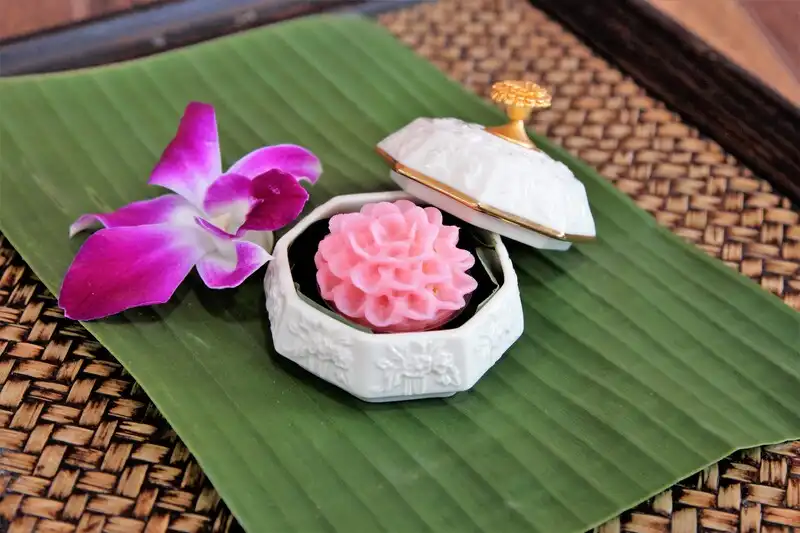
Kanom Chor Pakakrong Thai Dessert An ancient Thai dessert with a beautiful name such as Khanom Cho Phaka Krong. or candy bouquet It is a modern Thai dessert. Fresh Alua-like ingredients are light wheat flour, sugar and candle-smoked coconut milk. Improved from the recipe of Khanom Chor Kaew, Khanom Chao Wang.
Ingredient
- Shelled mung beans (part of filling) 250 g.
- Thai real coconut milk (part of filling) 250 g.
- pinch of salt (part of the filling)
- 250 g of cake flour
- 50 g of granulated sugar
- Sugar (part of filling) 100 g.
- Coconut milk (candle smoked) 250 g.
How to make bean paste
1. The first step, blend all the ingredients together until smooth and fine.
2. Stir the bean filling with low heat until the bean paste is smooth. It's dry and doesn't stick to the spatula. then set aside when it starts to cool Shape the bean paste into round balls, waiting for the dough to cover.
Tip: The shelled mung beans are washed thoroughly until the water is clear and soaked overnight.
How to make dough (How to make Thai dessert, Thai dessert recipe)
1. First, mix coconut milk, sugar, salt by stirring to dissolve together. Then sift the flour into it and stir until smooth. and then filtered to make the dough smoother.
2. Stir the flour over low heat for about 10 minutes or notice that the flour sifts out of the pan. Not sticking to the spatula is usable.
3. Rest the dough to cool or warm enough to knead. Knead the dough until it is soft and smooth.. Divide the white flour into cubes, mix with other colors as you like. When finished, mold the dough into round balls of bite size and spread. Take out and place the bean paste filling in the middle and cover the filling completely. and pleats with leaf brass tweezers If you like multiple colors, pick up the powder of each color and mold them together to get beautiful colors and ready to eat.
| Name | Chor Phaka Krong (Chor Kaew) |
| Category | Traditional Thai Royal Dessert (Modern Adaptation) |
| History | A modern adaptation of the traditional Chor Kaew dessert, influenced by royal Thai cuisine and inspired by the texture of fresh Alua desserts |
| Distinctive Features | Flower-shaped dumplings with delicate pleats, soft texture, colorful appearance, and fragrant coconut aroma |
| Main Dough Ingredients | Cake flour, sugar, coconut milk (candle-smoked), and a pinch of salt |
| Filling | Mung bean paste cooked with coconut milk, sugar, and salt |
| Key Technique | Smooth dough preparation, precise hand pleating using brass tweezers, and shaping into layered flower petals |
| Taste & Texture | Soft, smooth, mildly sweet with a rich coconut aroma and creamy mung bean filling |
| Occasions | Weddings, formal events, cultural exhibitions, and traditional Thai dessert presentations |
Frequently Asked Questions (FAQ)
Q: What is Chor Phaka Krong?
A: It is a modern Thai royal-style dessert made from soft dough filled with mung bean paste and shaped into a delicate flower.
Q: How is it different from Chor Kaew?
A: Chor Phaka Krong has a softer texture similar to fresh Alua, while traditional Chor Kaew tends to be firmer and more translucent.
Q: What is the filling made of?
A: The filling is made from mung beans cooked with coconut milk, sugar, and salt until smooth and creamy.
Q: Why is candle-smoked coconut milk used?
A: It enhances the dessert with a traditional Thai aroma, adding depth and authenticity to the flavor.
Q: Is Chor Phaka Krong difficult to make?
A: The basic process is manageable, but shaping the flower requires patience, precision, and practice.
Q: Can natural colors be used?
A: Yes, natural colors from ingredients like butterfly pea, pandan, or pumpkin can be used to create vibrant variations.
Q: What is the key to making the dough soft?
A: The dough must be cooked gently and kneaded while warm to achieve a smooth and elastic texture.
Q: When is this dessert usually served?
A: It is typically served at formal events, weddings, and traditional Thai dessert displays.
 Category: ●Travel Articles, Recipes
 Group: ●Royal Thai Desserts and Recipes
Last Update : 5 MonthAgo
 Last Update : 5 MonthAgo
Recommend

 Art, Culture and Heritage
 Historical Sites and Monuments(3)
 Landmarks and Memorials(23)
 Royal Palace(13)
 Art, Craft Centres, Tradition(35)
 Museums(59)
 Historic Homes and Cities(3)
 Art Gallery(16)
 Educational Places
 Museum for Study(6)
 Library(4)
 Places of Worship
 Temple(72)
 Church(2)
 Mosque(67)
 Other Sacred Sites(8)
 Research and Development
 Royal Project(1)
 Suburban Living
 Village, Community(5)
 Local Market(9)
 Floating Market(2)
 Nature and Wildlife
 River, Canal(3)
 Bays and Beaches(1)
 Other natural attractions(1)
 Entertainment and Agricultural
 Zoos and Aquariums(4)
 Animal camps and shows(5)
 Stadium(9)
 Farms, Parks and Ecotourism(20)
 Amusement Park(1)
 Waterpark(1)
 Theater(7)
 Cinema(1)
 Shopping
 Shopping and Night Market(20)
 Department Store(7)
 Spas and Wellness
 Spas and Wellness(1)
 Restaurant
 Michelin Star(5)
 Accommodation
 Hotel(3)
 Call Customer Service in Tourism
 Call Customer Service in Tourism(1)
 Travel Review, Food Review(21)
Royal Thai Desserts and Recipes(56)
Travel Review, Food Review(21)
Royal Thai Desserts and Recipes(56)


