
lovethailand home >Northeastern Travel Attractions >Surin Travel Attractions >Muang Surin >Na Bua > Wat Phanom Sawai
TL;DR: Wat Phanom Sawai is located at Na Bua Subdistrict, Mueang Surin District, Surin Province 32000, open Daily, hours 08.30 – 16.30.
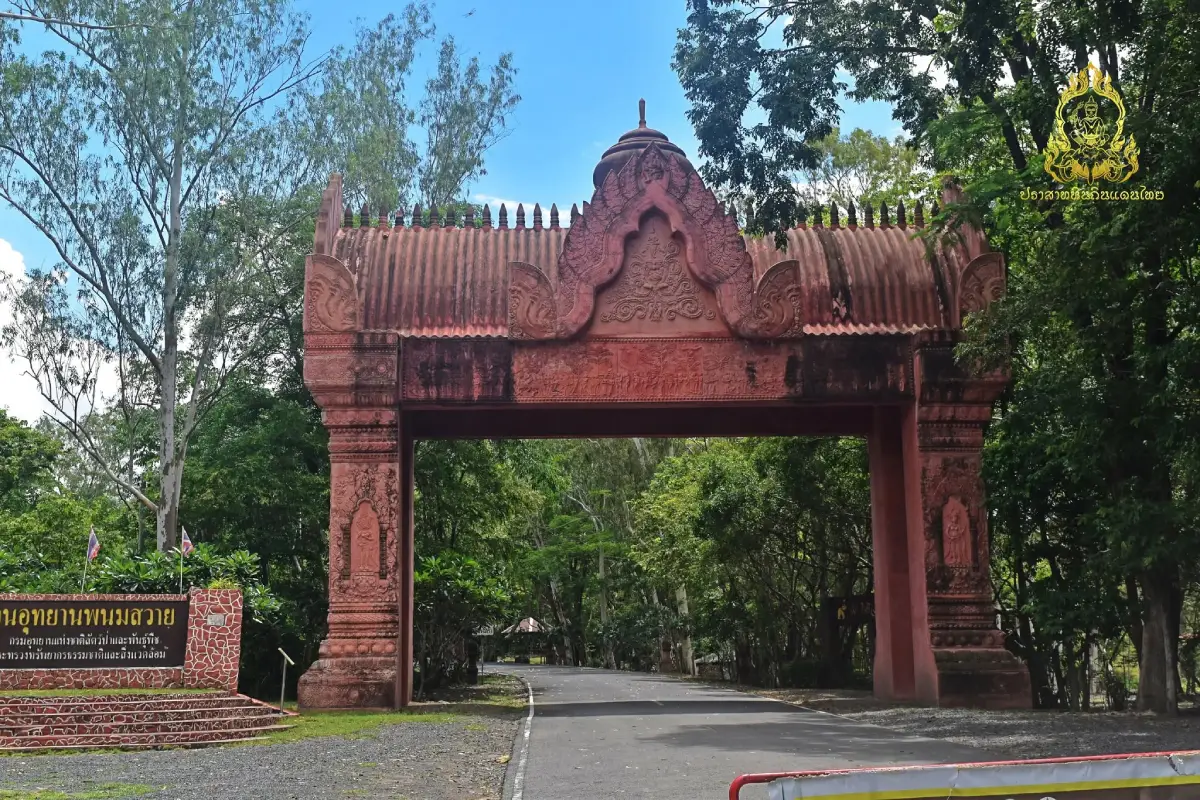
Wat Phanom Sawai
Open Days: Daily
Opening Hours: 08.30 – 16.30
Wat Phanom Sawai Surin and Phanom Sawai Forest Park form one of the most important religious, natural, and cultural destinations in Surin Province. Located in Na Bua Subdistrict, Mueang Surin District, about 20 – 22 km from Surin city, the area consists of a group of low hills rising from the surrounding plains. It combines forest scenery, stone platforms, ancient ponds, stairways, Buddhist monuments, local shrines, and pilgrimage traditions. For the people of Surin, Phanom Sawai is not only a sightseeing location, but also a sacred mountain deeply connected with local faith and provincial identity.
The name “Phanom Sawai” reflects the local cultural language of Surin. “Phanom” means mountain, while “Sawai” means mango. The name therefore refers to a mango mountain, or Khao Sawai as it is locally known. The hill complex contains 3 connected peaks with traditional local names: Phanom Proh, or the male hill; Phanom Srai, or the female hill; and Phanom Krol, or Khao Khok. Together, these 3 peaks create a sacred landscape that combines temples, Buddha images, a replica Buddha footprint, sacred ponds, a stupa, shrines, natural forest, and pilgrimage routes.
The distinctive character of Wat Phanom Sawai and Phanom Sawai Forest Park lies in the way faith and landscape are interwoven. Visitors do not come only for the scenery. They come to climb the hill, ring the bells along the stairway, pay respect to sacred sites, and take part in the living religious memory of Surin. The area is especially important during the annual Khao Sawai Climbing Tradition, held on the 1st waxing moon day of the 5th lunar month, when local people climb the hill to pay respect to the sacred places before the Songkran season.
The best-known peak is the male hill, or Phanom Proh, where Wat Phanom Sawai and Phra Phuttha Surin Mongkhon are located. Phra Phuttha Surin Mongkhon is a large white Buddha image in the blessing posture, associated with the royal initials Bhor Por Ror. The image measures 15 meters across the lap and 21.50 meters in height, with Buddha relics enshrined at the navel area. This majestic Buddha image is the spiritual center of the hill and one of the most recognizable symbols of Phanom Sawai.
The way up to Phra Phuttha Surin Mongkhon is marked by a brick-and-mortar stairway lined with many bells. Visitors traditionally ring the bells while walking up the hill as an act of auspiciousness. The sound of bells echoing through the forest is one of the most memorable experiences at Phanom Sawai. It symbolizes good fortune, a clear reputation, and blessings spreading outward like the sound of a bell. The climb therefore becomes both a physical walk and a spiritual approach to the sacred peak.
At the summit of the male hill, visitors find a calm worship area surrounded by trees and open space. The large white Buddha image rises prominently above the landscape, creating a strong sense of peace and reverence. On clear days, the view from the hill allows visitors to see across the plains of Surin. This high and tranquil setting helps explain why earlier generations of Surin residents regarded Phanom Sawai as a pilgrimage site and returned to it year after year.
The female hill, or Phanom Srai, rises to about 228 meters and is associated with Wat Phanom Silaram. A medium-sized Buddha image is enshrined on the hill, and the area also contains 2 ancient ponds connected with local beliefs about sacred turtles. This peak has a quieter atmosphere and is suitable for visitors who want to experience both Buddhist worship and local beliefs related to water, animals, and sacred nature.
Wat Phanom Silaram on Khao Sawai is connected with Luang Pu Dun Atulo, an important meditation master who once discovered an abandoned temple in this hill area and helped develop it into a place for Buddhist practice. The temple is now a local monastery in Na Bua Subdistrict, Mueang Surin District. The latest temple information identifies Phra Athikan Sanit Kusolajitto as the abbot of Wat Phanom Silaram.
The third peak, known as Khao Khok or Phanom Krol, is another important sacred area. The Buddhist Association of Surin Province built the Atthamuk Pavilion here as a memorial celebrating the 200th anniversary of the founding of Bangkok in the Rattanakosin period. The pavilion was built to house the replica Buddha footprint moved from the male hill. Construction began on 15 December 1981 and was completed on 15 July 1982. The pavilion is both a historical memorial and a religious landmark of Phanom Sawai.
Near the Atthamuk Pavilion stands the stupa containing the relics of Phra Ratchawutthachan, better known as Luang Pu Dun Atulo. He is one of the most respected meditation masters associated with Surin and the Thai forest meditation tradition. Paying respect at his stupa gives the visit a deeper spiritual dimension, connecting the mountain not only with Buddha images and sacred footprints, but also with the living memory of revered Buddhist teachers.
Phanom Sawai is also known for the route of 9 sacred places. These include Phra Phuttha Surin Mongkhon, the replica Buddha footprint, the relics of Luang Pu Dun Atulo, the black Buddha image, Luang Pu Suan, Prasat Hin Phanom Sawai, the Guan Yin Shrine, the sacred turtle, and the sacred pond. Paying respect at all 9 sacred places is believed by local people to bring auspiciousness and blessings. This route brings together Buddhism, local belief, nature, memory, and community identity in one landscape.
The black Buddha image, or Phra Samanakhodom in local reference, is another significant point of worship. Its appearance contrasts with the large white Buddha image on the male hill, giving the sacred route more diversity and depth. It reminds visitors that Phanom Sawai is not a single-monument destination. It is a network of sacred sites, each holding a different layer of memory and meaning.
Luang Pu Suan, also known as Phra Khru Phanom Silakhun, is another revered figure connected with the development of sacred spaces on Khao Sawai. His memory remains part of the religious identity of the hill. The presence of respected local monks in the history of the area shows that Phanom Sawai is not only a natural landmark, but also a place shaped by generations of Buddhist teachers, local devotees, and community caretakers.
Prasat Hin Phanom Sawai adds an archaeological dimension to the area. Although Phanom Sawai is widely known as a Buddhist and pilgrimage destination, the presence of a stone sanctuary reflects Surin’s deeper connection with ancient Khmer cultural heritage. This makes the site especially interesting for travelers who want to understand lower northeastern Thailand as a region where Buddhist devotion, local belief, and older cultural layers coexist.
The Guan Yin Shrine represents another layer of devotion within the same sacred landscape. Many visitors stop to pay respect and ask for blessings related to compassion, peace, and protection. The presence of the Guan Yin Shrine alongside Buddha images, a replica footprint, a stupa, a sacred turtle, and a sacred pond shows how Phanom Sawai welcomes multiple forms of faith within one respected mountain environment.
The sacred turtle and sacred pond connect the mountain with local beliefs about water, long life, stability, and abundance. The turtle symbolizes longevity, steadiness, and endurance, while sacred water is linked with fertility, purity, and spiritual power. These beliefs show how deeply local people connect faith with the natural environment. At Phanom Sawai, water, stone, animals, trees, and religious monuments are all part of a single cultural landscape.
In terms of nature, Phanom Sawai Forest Park is a dry forest hill area with stone surfaces and geological features associated with an extinct volcanic landscape. The forest is mostly dry dipterocarp forest, with shallow soil, laterite, and exposed rock. Tree species include teng, rang, hiang, phluang, daeng, makha mong, phayung, and other local forest plants. The valleys between the male hill, female hill, and Khao Khok contain larger trees and offer shaded areas for walking and resting.
From February to April, seasonal wild plants and flowers appear in the forest, including the local plant known in Khmer as “at chrut.” This makes the late dry season a rewarding time to visit for those interested in both worship and nature. The forest may not be dense like a high mountain national park, but it has the distinct character of lower-Isan dry forest, open sky, stone ground, and cultural landmarks integrated into the woodland.
Wildlife in the forest park includes small animals such as squirrels, tree shrews, lizards, geckos, and many bird species. Visitors should keep the area clean, avoid feeding animals, and never remove plants, flowers, stones, or religious objects from the site. The natural setting is part of the sacred value of Phanom Sawai, and respectful travel helps preserve both the environment and the cultural atmosphere.
The Khao Sawai Climbing Tradition is the most important annual event at Phanom Sawai. It is held on the 1st waxing moon day of the 5th lunar month every year. Older generations of Surin people regarded this day as a traditional day of rest and a lunar New Year observance. Families and communities climb the hill to worship the sacred places, ask for blessings, and begin the period before Songkran with a sense of spiritual renewal.
During the annual event, activities include rituals to honor Phanom Sawai, cultural processions, traditional performances, ceremonial dances, worship of the 9 sacred places, and public cultural events. The atmosphere is lively and deeply meaningful. Local residents, government agencies, Buddhist devotees, cultural groups, and visitors gather at the forest park, making the mountain a visible center of Surin’s living tradition.
A complete visit to Phanom Sawai should allow at least half a day. Visitors who only want to see the large Buddha image and the main worship area may spend 1 – 2 hours. Those who want to visit all 9 sacred places, explore the 3 peaks, take photographs, and rest in the forest atmosphere should allow 3 – 4 hours. Morning or early afternoon visits are best because the weather is more comfortable and there is enough time to descend before closing hours.
A practical route begins at the parking and service area, then continues up the bell stairway to Phra Phuttha Surin Mongkhon on the male hill. From there, visitors can continue to the replica Buddha footprint, Atthamuk Pavilion, Luang Pu Dun Stupa, and the other sacred points. If time allows, the route can extend to the female hill and Wat Phanom Silaram. This sequence helps visitors experience the site in a meaningful order without too much backtracking.
Visitors should wear comfortable walking shoes and bring drinking water, a hat, or an umbrella. The route includes stairs, slopes, stone areas, and open sections exposed to sun. Elderly visitors and children should walk slowly and rest when needed. The climb is not extremely difficult, but the terrain requires care, especially during hot weather or after rain.
Proper etiquette is important because Phanom Sawai is both a forest park and a sacred religious area. Visitors should dress modestly, speak quietly near temples and shrines, avoid climbing on sacred structures, refrain from touching Buddha images or ritual objects inappropriately, and dispose of waste only in proper places. During the annual Khao Sawai event, visitors should follow staff instructions regarding traffic, parking, procession areas, and ritual zones.
Getting There from Surin city is straightforward. Take Highway 214 on the Surin – Prasat route for about 14 km to Ban Kanop, then turn into the Ban Kanop – Ban Sawai road for about 6 km. The total distance from the city is about 20 – 22 km, and the journey usually takes around 25 – 35 minutes by car. The site is most convenient by private car, rental car, or chartered van.
Phanom Sawai can be combined with several nearby attractions, including Huai Saneng Reservoir, Surin National Museum, Ban Tha Sawang Silk Weaving Village, Wat Burapharam, Surin City Pillar Shrine, and the Phraya Surin Phakdi Si Narong Changwang Monument. A full-day itinerary can begin with Phanom Sawai in the morning, then return to the city for lunch and continue to temples, museums, or local craft villages in the afternoon.
Restaurants near Phanom Sawai are mostly located in Surin city, about 16 – 18 km away, because the forest park itself is primarily a natural and religious area. Travelers should plan meals before or after the hill visit. Surin city offers a wide range of choices, from Thai and Isan restaurants to cafés, fusion food, and local dining spots.
Accommodation is also most convenient in Surin city. Staying in the city gives travelers easy access to restaurants, the railway station, markets, hotels, temples, museums, and other attractions. Visitors can stay overnight in the city and travel to Phanom Sawai in the morning or afternoon. This is the most practical arrangement for both Thai and international visitors.
Admission fees for Phanom Sawai Forest Park are charged according to visitor and vehicle categories. Thai children are 10 baht, Thai adults are 20 baht, foreign children are 50 baht, and foreign adults are 100 baht. Vehicle fees include 20 baht for motorcycles, 30 baht for 4-wheel cars, 100 baht for 6-wheel vehicles, and 200 baht for vehicles larger than 6 wheels up to 10 wheels. Visitors should prepare small cash for convenience.
Wat Phanom Sawai and Phanom Sawai Forest Park are suitable for many types of visitors: Buddhist pilgrims, cultural travelers, families, students, elderly visitors, nature lovers, and international travelers interested in lower-Isan culture. The site is close to Surin city, rich in stories, and contains multiple sacred and natural points within one area.
For international visitors, Phanom Sawai explains an important side of Surin that goes beyond elephants, silk, and Khmer ruins. It reveals a sacred mountain tradition where Buddhist worship, local belief, forest landscape, and provincial identity come together. Walking up the bell stairway, seeing the large Buddha image, and visiting the 9 sacred places help visitors understand how deeply faith is rooted in the geography and community life of Surin.
Wat Phanom Sawai Surin is therefore an essential destination for anyone who wants to experience religion, nature, history, and local tradition in one place. The site is centered on Phra Phuttha Surin Mongkhon, remembered through the sound of the bell stairway, enriched by the replica Buddha footprint and Luang Pu Dun Stupa, surrounded by sacred ponds and local belief, and brought to life every year through the Khao Sawai Climbing Tradition. It remains one of the most meaningful cultural landscapes in Surin Province.
| Name | Wat Phanom Sawai Surin / Phanom Sawai Forest Park / Khao Sawai |
| Location | Na Bua Subdistrict, Mueang Surin District, Surin Province 32000 |
| Address | Phanom Sawai Forest Park, Na Bua Subdistrict, Mueang Surin District, Surin Province 32000, about 20 – 22 km from Surin city |
| Highlights | Phra Phuttha Surin Mongkhon, the bell stairway, the replica Buddha footprint, Luang Pu Dun Atulo Stupa, Atthamuk Pavilion, 9 sacred places, and the annual Khao Sawai Climbing Tradition |
| History | A sacred mountain of Surin long used as a pilgrimage site. The Royal Forest Department declared it a forest park on 22 June 1984, and religious monuments on the 3 peaks have continued to develop over time |
| Name Origin | “Phanom” means mountain and “Sawai” means mango, giving the meaning of mango mountain or Khao Sawai in local Surin usage |
| Distinctive Features | A low hill complex with 3 peaks: Phanom Proh or male hill, Phanom Srai or female hill, and Phanom Krol or Khao Khok, combining temples, sacred ponds, dry dipterocarp forest, stone platforms, and pilgrimage sites |
| Travel Information | From Surin city, take Highway 214 on the Surin – Prasat route for about 14 km to Ban Kanop, then turn into the Ban Kanop – Ban Sawai road for about 6 km; total distance is about 20 – 22 km |
| Current Status | Open for tourism, worship, sacred-site visits, and nature walks from 1 January 2026 onward |
| Open Days | Daily |
| Opening Hours | 08.30 – 16.30 |
| Fees | Thai Children 10 Baht, Thai Adults 20 Baht, Foreign Children 50 Baht, Foreign Adults 100 Baht Motorcycle 20 Baht, 4-Wheel Car 30 Baht, 6-Wheel Vehicle 100 Baht, Larger Vehicle Up To 10 Wheels 200 Baht |
| Facilities | Parking area, stairway to the hill, worship points, pavilions, viewpoints, toilets, forest walking areas, and staff service points according to the site condition |
| Main Areas / Zones | 1. Phanom Proh Or Male Hill, Home To Wat Phanom Sawai And Phra Phuttha Surin Mongkhon 2. Bell Stairway And Route To The Large Buddha Image 3. Phanom Srai Or Female Hill, Home To Wat Phanom Silaram And Ancient Ponds 4. Khao Khok Or Phanom Krol, Home To Atthamuk Pavilion And The Replica Buddha Footprint 5. Luang Pu Dun Atulo Relic Stupa 6. Guan Yin Shrine 7. Prasat Hin Phanom Sawai 8. Sacred Turtle And Sacred Pond Area 9. Dry Dipterocarp Forest, Stone Platforms, And Nature Walk Areas |
| Important Rituals / Traditions | The Khao Sawai Climbing Tradition, held every year on the 1st waxing moon day of the 5th lunar month, includes rituals honoring Phanom Sawai, cultural processions, ceremonial dance, and worship of the 9 sacred places |
| Caretaker / Abbot | The forest park area is managed by Phanom Sawai Forest Park under local natural-resource authorities Wat Phanom Silaram in the Khao Sawai area is led by Phra Athikan Sanit Kusolajitto |
| Main Contact Number | Phanom Sawai Forest Park, Tel. 088-357-5699 Tourism Authority of Thailand, Surin Office, Tel. 044-514-447 to 8 |
| Nearby Tourist Attractions | 1. Huai Saneng Reservoir, about 15 km 2. Surin National Museum, about 17 km, Tel. 044-513-272, 044-513-274 3. Ban Tha Sawang Silk Weaving Village, about 18 km 4. Wat Burapharam Royal Temple, about 21 km 5. Surin City Pillar Shrine, about 22 km 6. Phraya Surin Phakdi Si Narong Changwang Monument, about 22 km |
| Nearby Restaurants | 1. Craft Cafe Surin, about 17 km, Tel. 095-605-4281 2. Just A Little Surin, about 17 km, Tel. 064-789-8864 3. Mozern Restaurant Surin, about 17 km, Tel. 084-995-6492 4. Sawasdee Surin, about 18 km, Tel. 085-637-7707 5. Seoul Bar - Cafe & Bistro Surin, about 18 km, Tel. 080-959-7942 6. Chertom Surin, about 18 km, Tel. 098-997-7916 |
| Nearby Accommodations | 1. Martina Hotel Surin, about 16 km, Tel. 044-713-555, 044-713-655, 086-469-6545 2. Thong Tarin Hotel, about 18 km, Tel. 044-514-281, 085-300-8858 3. The Wood Surin, about 18 km, Tel. 063-023-7999 4. KT Knight Hotel, about 18 km, Tel. 093-454-7007 5. Maneerote Hotel Surin, about 19 km, Tel. 044-514-569 6. HOP INN Surin, about 20 km, Tel. 02-080-2222 |
Frequently Asked Questions (FAQ)
Q: Where Is Wat Phanom Sawai Surin Located?
A: Wat Phanom Sawai and Phanom Sawai Forest Park are located in Na Bua Subdistrict, Mueang Surin District, Surin Province, about 20 – 22 km from Surin city.
Q: When Is Phanom Sawai Forest Park Open?
A: The forest park is open daily from 08.30 to 16.30.
Q: How Much Is The Admission Fee?
A: Thai children are 10 baht, Thai adults are 20 baht, foreign children are 50 baht, and foreign adults are 100 baht. Vehicle fees are charged separately according to vehicle type.
Q: What Is The Main Highlight Of Wat Phanom Sawai?
A: The main highlight is Phra Phuttha Surin Mongkhon, a large white Buddha image in the blessing posture, together with the bell stairway and the route of 9 sacred places.
Q: How Many Peaks Does Phanom Sawai Have?
A: Phanom Sawai has 3 peaks: Phanom Proh or male hill, Phanom Srai or female hill, and Phanom Krol or Khao Khok.
Q: When Is The Khao Sawai Climbing Tradition Held?
A: It is held every year on the 1st waxing moon day of the 5th lunar month. Local people climb the hill to pay respect to the sacred sites for auspiciousness.
Q: What Are The 9 Sacred Places At Phanom Sawai?
A: They are Phra Phuttha Surin Mongkhon, the replica Buddha footprint, the relics of Luang Pu Dun Atulo, the black Buddha image, Luang Pu Suan, Prasat Hin Phanom Sawai, the Guan Yin Shrine, the sacred turtle, and the sacred pond.
Q: What Should Visitors Prepare Before Going?
A: Visitors should dress modestly, wear comfortable walking shoes, bring drinking water, a hat or umbrella, and visit in the morning or early afternoon to allow enough time for the climb and worship route.
 Category: ●Places of Worship
 Group: ●Temple
Last Update : 2 MonthAgo
 Last Update : 2 MonthAgo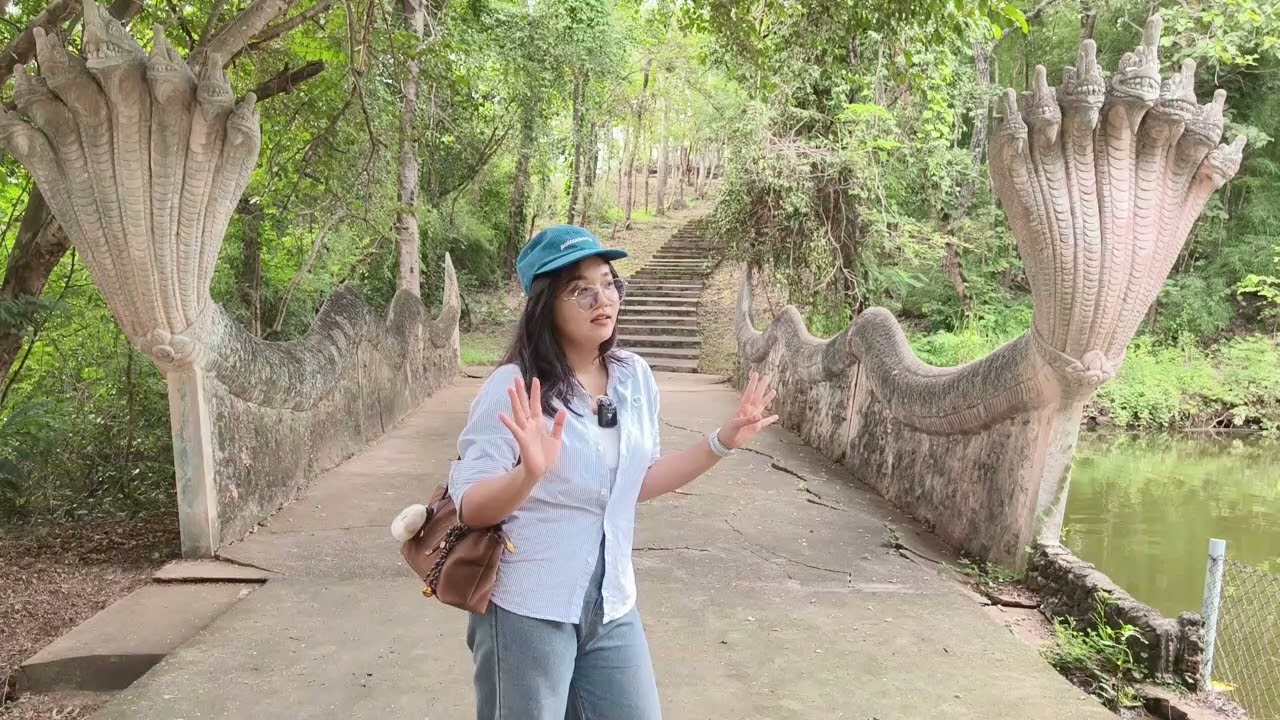
 Click to Access the Navigation Map GPS
Wat Phanom Sawai Map
Recommend

 Art, Culture and Heritage
 Historical Sites and Monuments(11)
 Landmarks and Memorials(2)
 Art, Craft Centres, Tradition(5)
 Museums(1)
Temple(15)
Museums(1)
Temple(15)
 Other Sacred Sites(1)
 Suburban Living
 Village, Community(9)
 Local Market(1)
 Nature and Wildlife
 National Parks and Marine Reserves(2)
 Mountain (Doi)(2)
 Dam, Reservoir, Lake(6)
 Waterfalls(1)
 River, Canal(2)
 Other natural attractions(4)
 Entertainment and Agricultural
 Farms, Parks and Ecotourism(2)


