
lovethailand home >Northeastern Travel Attractions >Surin Travel Attractions >Samrong Thap >Samrong Thap > Wat Takhian Phositaram
TL;DR: Wat Takhian Phositaram is located at No. 109, Moo 9, Ban Takhian, Samrong Thap Subdistrict, Samrong Thap District, Surin Province 32170, open Daily, hours 08.00 – 17.00.
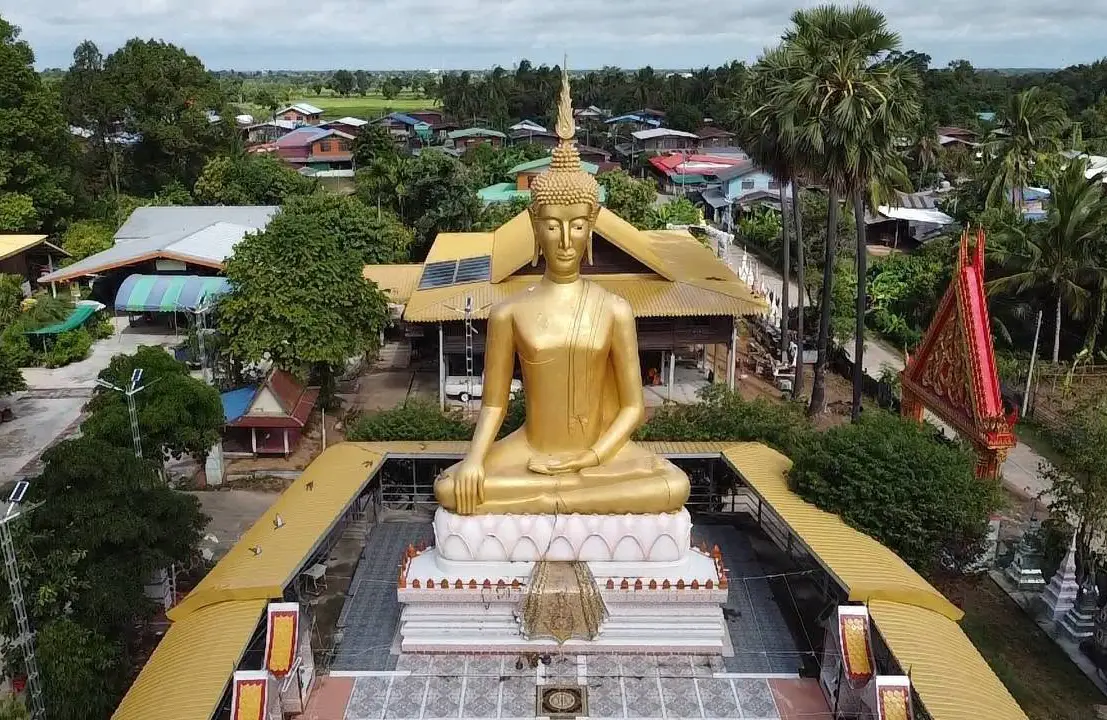
Wat Takhian Phositaram
Open Days: Daily
Opening Hours: 08.00 – 17.00
Wat Takhian Phositaram Surin, also known as Wat Takhian (Phothisitaram), is an important community Buddhist temple in Ban Takhian, Samrong Thap Subdistrict, Samrong Thap District, Surin Province. The temple is located at No. 109, Moo 9, Ban Takhian, and belongs to the Mahā Nikāya monastic order. It covers about 7 rai and 3 ngan of land and serves as one of the most significant cultural and spiritual centers of the ancient Kui community in Samrong Thap. This temple is not only a place for worship and merit-making, but also a living cultural center where Buddhism, local identity, community memory, and Kui heritage continue to exist together.
The importance of Wat Takhian Phositaram lies in its deep connection with the Kui people of Ban Takhian. The temple has developed through the cooperation of the village, the temple, the school, and the community. Within the temple grounds, visitors can find the Kui Museum, Luang Pho Thong Kham Nam Chok, a learning area for different kinds of stones, the ordination hall, the Buraphachan Chedi, Phra Sivali, an ancient wooden chedi, the Pu Ta Shrine, a stone gateway, and cultural activities connected with the Glamor ritual. Together, these elements make the temple a meaningful place for understanding local faith and ethnic heritage in Surin Province.
The name “Takhian” is connected with an ancient takhian tree inside the temple. For local people, the tree is not only part of the natural landscape. It carries spiritual meaning and community memory. This connection between a sacred tree, local belief, and the temple name gives Wat Takhian Phositaram a distinctive identity. Visitors can understand from the name itself that the temple is rooted in the relationship between people, land, nature, and faith.
Ban Takhian and Samrong Thap District are closely connected with the Kui or Kuay people, an important ethnic group of Surin Province. The Kui community has its own cultural identity, including language, dress, textile knowledge, ritual practice, and local wisdom. Wat Takhian Phositaram helps preserve these traditions in a visible and organized way. The temple is therefore more than a religious site; it is a cultural archive of the community.
The development of the temple is strongly associated with Phra Khru Uppatham Worakhun, the fourth abbot, who worked with Ban Takhian community to preserve Kui culture. The community has promoted traditional Kui dress, learning of Kui letters, local curriculum, and cultural learning bases. This has allowed children, students, villagers, and visitors to understand the identity of the community through direct experience rather than only through written descriptions.
The Kui Museum inside the temple is one of the most important areas for visitors. It is a two-story wooden building built in 1967 and contains cultural materials related to Kui life, tools, clothing, textile knowledge, and community heritage. A museum of this kind is valuable because it keeps local memory alive. It allows younger generations to see the objects, skills, and stories of their ancestors, and it gives outside visitors a clear introduction to the cultural depth of Ban Takhian.
The temple also has a learning area for different kinds of stones, adding another educational dimension to the temple grounds. This shows that Wat Takhian Phositaram functions not only as a place for religious ceremonies, but also as a community learning space. When combined with the Kui Museum, textile learning bases, and school-community activities, the temple becomes a practical cultural classroom for local people and visitors.
Luang Pho Thong Kham Nam Chok is one of the most respected sacred images in the temple. The name “Nam Chok” suggests auspiciousness and good fortune, making this Buddha image a central point of devotion for worshippers. Many visitors begin their visit by paying respect to Luang Pho Thong Kham Nam Chok before walking to the museum and other important areas of the temple.
The large outdoor Buddha image is another symbolic point mentioned in the temple’s traditional motto. Outdoor Buddha images are important in Thai community temples because they make Buddhist faith visible in everyday space. They are easily accessible to villagers and visitors, and they create a sense of calm and protection over the temple grounds. At Wat Takhian Phositaram, this image helps define the temple as a place of open and living devotion.
The Buraphachan Chedi and the ancient wooden chedi connect the present temple with the memory of former teachers and earlier generations. The Buraphachan Chedi preserves reverence for past monastic leaders, while the ancient wooden chedi, more than 100 years old, reflects local craftsmanship and long-standing faith. These sacred structures help visitors understand that the temple has been cared for across generations by monks and villagers.
The Pu Ta Shrine inside the temple reflects the coexistence of Buddhism and local belief in lower northeastern Thailand. For Kui communities, respect for ancestors, guardian spirits, and sacred places remains an important part of village life. The shrine does not stand apart from Buddhism; instead, it shows how local communities naturally combine Buddhist practice with respect for ancestral and territorial spirits.
The Glamor ritual is one of the cultural elements that gives Wat Takhian Phositaram its special identity. This ritual is associated with healing, belief, sacred communication, and Kui cultural memory. Preserving the Glamor ritual in the temple and community context helps prevent it from becoming only a story of the past. It remains a living expression of local identity and spiritual practice.
Traditional Kui clothing is another strong visual expression of Ban Takhian identity. When local people wear Kui dress during cultural activities, they communicate pride, memory, and belonging. Clothing becomes a cultural language. Within the temple setting, traditional dress helps visitors see that the temple is a space where local identity is honored and displayed with dignity.
Textile knowledge is one of the major forms of local wisdom preserved by the Ban Takhian community. Silk weaving, decorative stitching, and dyeing with ebony require skill, patience, and transmission from generation to generation. By supporting learning bases related to weaving, silk decoration, and natural dyeing, Wat Takhian Phositaram helps keep this knowledge within the community and makes it accessible to students and visitors.
The ordination hall of Wat Takhian Phositaram measures about 6.50 meters wide and 16 meters long. The temple received its royal boundary on 31 August 1943. In Thai Buddhism, the ordination hall is one of the most sacred buildings because it is used for formal Sangha acts such as ordination. Visitors should enter this area respectfully, dress modestly, remove shoes before entering, and keep a quiet manner.
Other important structures include monks’ residences, a bell tower, and a stone gateway. The bell tower has meaning in temple life because the sound of the bell marks Buddhist time and temple activities. The stone gateway creates a clear sense of entering a sacred space. These elements give the temple both religious and visual identity.
Wat Takhian Phositaram was recognized as a national model temple in 2017 and as a provincial model temple in 2021. These recognitions reflect not only the physical development of the temple, but also the strength of community participation, cultural preservation, and the ability of the temple to function as a center of learning. The temple shows how local heritage can be preserved when the village, temple, school, and community work together.
The current abbot of Wat Takhian is Phra Maha Somsak Thanissaro. The temple history also records a line of former abbots, including Phra Achan Si, Phra Uppachaya Phio Punyasiri, Phra Khru Wirot Thammasunthon, Phra Khru Uppatham Worakhun, and Phra Maha Somsak Thanissaro. This continuity of monastic leadership shows that the temple has been sustained over time through the care of monks and laypeople.
The annual activities of Wat Takhian Phositaram reveal the temple’s living role in the community. These include New Year merit-making, Buddhist holy day activities, the Pu Ta offering ritual, Songkran merit-making, Bun Bang Fai, group ordination before Buddhist Lent, candle offerings, Buddhist Lent and end-of-Lent merit-making, Sat merit-making, Kathin, royal tribute activities, and New Year chanting. These events bring people back to the temple throughout the year.
New Year merit-making allows villagers to begin the year with blessings, gratitude, and moral reflection. People gather at the temple to offer food to monks, listen to Dhamma, and dedicate merit to ancestors. Starting the year at the temple helps connect daily life with Buddhist values and gives the community a shared moment of peace and intention.
The Pu Ta offering ritual reflects the Kui community’s respect for ancestral and guardian spirits. This ritual preserves village memory and helps younger people understand the sacred roots of their community. Its presence in the temple’s annual calendar shows how Buddhism and local belief are woven together in Ban Takhian.
Songkran merit-making is another important annual event. Local people return to the temple to make merit, pay respect to elders, and renew family and community bonds. The temple gives Songkran a spiritual and cultural meaning, turning it into more than a holiday. It becomes a time of gratitude, cleansing, and reconnection with home.
Bun Bang Fai reflects the agricultural rhythm of northeastern Thailand. The tradition is connected with hopes for rain, fertility, and a successful farming season. At Wat Takhian Phositaram, this tradition links the temple with the agricultural life of the community and shows that religious and seasonal customs remain connected in rural Isan.
Group ordination before Buddhist Lent is one of the most meaningful events in village life. Ordination is an act of gratitude to parents and a way of continuing Buddhism in the community. When organized as a group, it becomes a shared merit-making event that brings families, relatives, monks, and villagers together in a strong expression of faith.
Candle offering and Buddhist Lent activities are important because they support monks during the rainy-season retreat. The candle symbolizes the light of wisdom, while Buddhist Lent encourages discipline, restraint, and moral reflection. These ceremonies allow laypeople to support the Sangha and renew their own commitment to Buddhist values.
Kathin is one of the most important annual merit-making events at the temple. After Buddhist Lent, villagers and devotees come together to offer robes and donations to the monks. Kathin helps maintain the temple, supports monastic life, and reconnects villagers who may have moved away for work. It is both a religious ceremony and a community reunion.
New Year chanting shows how the temple continues to remain relevant in modern life. Many people choose to end the old year and begin the new one with chanting, prayer, and reflection. This practice gives families and community members a calm and meaningful way to begin a new cycle of life.
A respectful visit to Wat Takhian Phositaram should begin at the main worship area. Visitors can then continue to the Kui Museum, Luang Pho Thong Kham Nam Chok, the Buraphachan Chedi, the ancient wooden chedi, the Pu Ta Shrine, and other learning areas. Those interested in Kui culture should spend time reading displays and, when appropriate, speaking politely with local people who can share community knowledge.
Visitors should dress modestly, speak quietly, avoid disturbing monks or worshippers, and not touch museum objects without permission. Because the temple is both a Buddhist site and a cultural learning space, visitors should respect religious etiquette and community heritage at the same time. This helps preserve the temple atmosphere and the dignity of local traditions.
Getting There to Wat Takhian Phositaram is most convenient by private car, rental car, or chartered vehicle. From Surin city, travel toward Samrong Thap District, then continue to Samrong Thap Subdistrict and Ban Takhian. The distance from Surin city is about 58 km depending on the route. Visitors should navigate to “Wat Takhian (Phothisitaram)” or “Wat Takhian, Ban Takhian, Samrong Thap Subdistrict” to reach the correct temple.
There is no admission fee for ordinary temple visits, worship, and merit-making. Visitors may donate according to their faith through proper temple donation points. Those who wish to visit the Kui Museum as a group, organize a study visit, or use the temple area for cultural activities should contact the temple or local caretakers in advance.
Restaurants near the temple are mainly located around Samrong Thap town and nearby roads. Visitors can find cafés, grilled pork restaurants, noodle shops, seafood restaurants, and local eateries before or after visiting the temple. Those who want more options may continue to Sikhoraphum District or return to Surin city.
Accommodation near Wat Takhian Phositaram includes small resorts in Samrong Thap and nearby districts. Travelers who want to stay close to the temple can choose accommodation in Samrong Thap. Those who prefer more restaurants, transport, medical services, markets, and hotel choices may stay in Surin city and visit the temple as part of a day trip.
For international visitors, Wat Takhian Phositaram offers a valuable view of Surin beyond elephants, silk, and Khmer ruins. The temple shows how the Kui community preserves language, clothing, textile wisdom, ritual practice, and Buddhist devotion in one place. It is a living cultural temple where visitors can understand the relationship between religion, local identity, and community education.
Wat Takhian Phositaram is suitable for travelers interested in old temples, Kui culture, community museums, local rituals, textile heritage, and cultural learning in Samrong Thap District. Its strength lies in the cooperation of the village, temple, school, and community. The temple preserves both tangible and intangible heritage, making it one of the meaningful local cultural destinations in Surin Province.
In summary, Wat Takhian Phositaram Surin, or Wat Takhian (Phothisitaram), is an important community temple of Ban Takhian. It is home to Luang Pho Thong Kham Nam Chok, the Kui Museum, the stone learning area, the ordination hall, the Buraphachan Chedi, Phra Sivali, the ancient wooden chedi, the Pu Ta Shrine, the stone gateway, and the Glamor ritual. More than a place for worship, it is a living center of Kui culture, Buddhist faith, and community learning in Samrong Thap District.
| Name | Wat Takhian Phositaram Surin / Wat Takhian (Phothisitaram) |
| Location | No. 109, Moo 9, Ban Takhian, Samrong Thap Subdistrict, Samrong Thap District, Surin Province 32170 |
| Address | Wat Takhian (Phothisitaram), Ban Takhian, Moo 9, Samrong Thap Subdistrict, Samrong Thap District, Surin Province 32170 |
| Highlights | Ancient Kui community temple, Kui Museum, Luang Pho Thong Kham Nam Chok, ancient takhian tree, stone learning area, Buraphachan Chedi, ancient wooden chedi, Pu Ta Shrine, stone gateway, and Glamor ritual |
| History | A Mahā Nikāya community temple covering about 7 rai and 3 ngan. The temple received its royal boundary on 31 August 1943 and was recognized as a national model temple in 2017 and a provincial model temple in 2021 |
| Name Origin | The name comes from an ancient takhian tree inside the temple, which the Ban Takhian community respects as part of local belief and community memory |
| Distinctive Features | A Kui community temple that uses the cooperation of village, temple, school, and community to preserve local culture, including the Kui Museum, textile learning, silk decoration, weaving, ebony dyeing, Kui letters, and local rituals |
| Travel Information | From Surin city, travel toward Samrong Thap District, then continue to Samrong Thap Subdistrict and Ban Takhian. The distance is about 58 km and is suitable for private cars, rental cars, or chartered vehicles |
| Current Status | Open for worship, merit-making, and ordinary visits. The temple remains active with resident monks and continues to serve as a cultural center of Ban Takhian |
| Open Days | Daily |
| Opening Hours | 08.00 – 17.00 |
| Fees | No Admission Fee For General Worship And Ordinary Visits. Donations May Be Made According To Faith |
| Facilities | Ordination hall, Kui Museum, monks’ residence, bell tower, stone gateway, temple courtyard, merit-making area, cultural activity space, toilets, and parking according to local temple conditions |
| Main Areas / Zones | 1. Ordination Hall, about 6.50 meters wide and 16 meters long 2. Kui Museum, a two-story wooden building built in 1967 3. Luang Pho Thong Kham Nam Chok 4. Stone Learning Area 5. Buraphachan Chedi 6. Phra Sivali 7. Ancient Wooden Chedi 8. Pu Ta Shrine 9. Stone Gateway 10. Glamor Ritual And Kui Cultural Activity Area 11. Silk, Weaving, Decorative Stitching, And Ebony Dyeing Learning Bases |
| Important Sacred Objects | Luang Pho Thong Kham Nam Chok, large outdoor Buddha image, ordination hall, Buraphachan Chedi, ancient wooden chedi, Phra Sivali, Pu Ta Shrine, and ancient takhian tree |
| Important Rituals / Traditions | New Year merit-making, Buddhist holy day activities, Pu Ta offering, Songkran merit-making, Bun Bang Fai, group ordination before Buddhist Lent, candle offering, Buddhist Lent and end-of-Lent merit-making, Sat merit-making, Kathin, royal tribute activities, New Year chanting, and Glamor ritual |
| Abbot / Caretaker | Phra Maha Somsak Thanissaro, Abbot of Wat Takhian; an important former abbot in cultural development was Phra Khru Uppatham Worakhun |
| Temple Contact Number | 098-124-2832 |
| Local Information Contact | Samrong Thap Subdistrict Administrative Organization, Tel. 044-569-279 |
| Nearby Tourist Attractions | 1. Four Ethnic Groups Market, Samrong Thap Municipality, about 4 km 2. Wat Ket Worararam, Ban Dod, Samrong Thap District, about 4 km 3. Wat Muen Si Yai, Muen Si Subdistrict, Samrong Thap District, about 9 km 4. Wat Bun Sano, Sano Subdistrict, Samrong Thap District, about 12 km 5. Sikhoraphum Sanctuary, Sikhoraphum District, about 30 km 6. Surin National Museum, about 55 km, Tel. 044-513-272, 044-513-274 7. Wat Burapharam Royal Temple, Mueang Surin District, about 58 km |
| Nearby Restaurants | 1. Kaokan Cafe, Samrong Thap District, about 4 km, Tel. 093-487-6290 2. Phet Lamphu Mookata, Samrong Thap Branch, about 4 km, Tel. 044-569-470 3. N’Joy Coffee Thu, Samrong Thap District, about 4 km, Tel. 082-449-5254 4. Kuay Tiew Ruea Mor Din Nai Kon 341 Surin – Samrong Thap, about 5 km, Tel. 080-073-1956 5. Fresh Seafood Restaurant, Samrong Thap District, about 5 km, Tel. 082-488-9383 6. Prathumphon Restaurant, Samrong Thap District, about 4 km, Tel. 082-368-8971 |
| Nearby Accommodations | 1. Huai Saeng Chan Resort, Samrong Thap District, about 6 km, Tel. 044-569-375 2. Jamjuree Resort, Sikhoraphum District, about 30 km, Tel. 044-560-289, 089-190-5156 3. The Wood Surin, Mueang Surin District, about 58 km, Tel. 063-023-7999 4. Thong Tarin Hotel, Mueang Surin District, about 58 km, Tel. 044-514-281, 085-300-8858 5. Maneerote Hotel Surin, Mueang Surin District, about 59 km, Tel. 044-514-569 6. Slive Hotel Surin, Mueang Surin District, about 60 km, Tel. 044-060-322, 044-060-323 |
Frequently Asked Questions (FAQ)
Q: Where Is Wat Takhian Phositaram Located?
A: Wat Takhian Phositaram, also known as Wat Takhian (Phothisitaram), is located at No. 109, Moo 9, Ban Takhian, Samrong Thap Subdistrict, Samrong Thap District, Surin Province 32170.
Q: When Is Wat Takhian Phositaram Open?
A: The temple is open daily from 08.00 to 17.00.
Q: Is There An Admission Fee?
A: No. There is no admission fee for general worship and ordinary visits. Visitors may donate according to their faith.
Q: What Is The Main Highlight Of Wat Takhian Phositaram?
A: The main highlights are its Kui Museum, Luang Pho Thong Kham Nam Chok, ancient takhian tree, stone learning area, Buraphachan Chedi, ancient wooden chedi, Pu Ta Shrine, stone gateway, and Glamor ritual.
Q: Who Is The Current Abbot Of Wat Takhian?
A: Phra Maha Somsak Thanissaro is the current abbot of Wat Takhian.
Q: How Is The Temple Connected With Kui Culture?
A: The temple is a cultural center of Ban Takhian’s Kui community, preserving the Kui Museum, textile learning, silk decoration, weaving, ebony dyeing, Kui letters, and the Glamor ritual.
Q: What Nearby Places Can Be Visited With Wat Takhian Phositaram?
A: Nearby places include the Four Ethnic Groups Market, Wat Ket Worararam, Wat Muen Si Yai, Wat Bun Sano, Sikhoraphum Sanctuary, Surin National Museum, and Wat Burapharam Royal Temple.
Q: What Should Visitors Wear To Wat Takhian Phositaram?
A: Visitors should dress modestly, wear appropriate trousers or skirts, speak quietly, avoid disturbing monks, avoid touching museum objects without permission, and keep the temple area clean.
 Category: ●Places of Worship
 Group: ●Temple
Last Update : 2 MonthAgo
 Last Update : 2 MonthAgo
 Click to Access the Navigation Map GPS
Wat Takhian Phositaram Map
Recommend

 Art, Culture and Heritage
 Historical Sites and Monuments(11)
 Landmarks and Memorials(2)
 Art, Craft Centres, Tradition(5)
 Museums(1)
Temple(15)
Museums(1)
Temple(15)
 Other Sacred Sites(1)
 Suburban Living
 Village, Community(9)
 Local Market(1)
 Nature and Wildlife
 National Parks and Marine Reserves(2)
 Mountain (Doi)(2)
 Dam, Reservoir, Lake(6)
 Waterfalls(1)
 River, Canal(2)
 Other natural attractions(4)
 Entertainment and Agricultural
 Farms, Parks and Ecotourism(2)


