
lovethailand home >Northeastern Travel Attractions >Surin Travel Attractions >Prasat >Ta Bao > Surin Native Buffalo Conservation Village
TL;DR: Surin Native Buffalo Conservation Village is located at Ban Panrua, Moo 5, Ta Bao Subdistrict, Prasat District, Surin Province 32140, open Daily, hours 08.00 – 17.00.
Surin Native Buffalo Conservation Village
Open Days: Daily
Opening Hours: 08.00 – 17.00
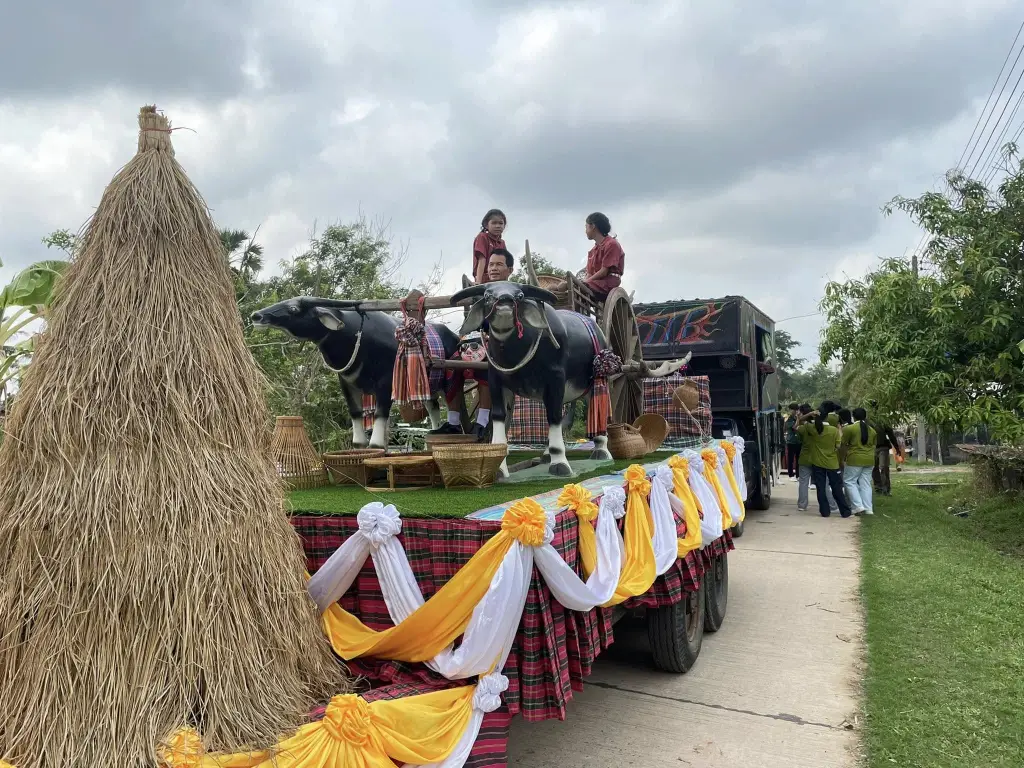
Surin Native Buffalo Conservation Village, locally known as Ban Panrua, is a community-based agricultural conservation village in Ban Panrua, Moo 5, Ta Bao Subdistrict, Prasat District, Surin Province. The village preserves the role of native Thai buffalo in rural farming life and introduces visitors to a way of agriculture that once depended heavily on buffalo power. In the past, buffaloes helped farmers plough rice fields, pull carts, transport agricultural products, and support household livelihoods. Today, as agricultural machinery has replaced much of this work, Ban Panrua has transformed buffalo conservation into a living cultural and educational experience.
The village is important because it does not present buffaloes only as animals for display. It shows the full relationship between buffaloes, farmers, rice fields, family economy, rituals, and local belief. Ban Panrua is a rural community where agriculture remains central to daily life. Visitors can learn how buffaloes were once essential to rice farming, why they were regarded as valuable family assets, and how the community is working to keep native buffalo breeds and traditional farming knowledge alive for younger generations.
Ban Panrua is located in a rural landscape of fields, low hills, and local water sources. The community has long depended on rice farming, field crops, and livestock. Its soil, water, and village environment support traditional agriculture. This is why buffaloes became so closely connected with local life. Before the wide use of tractors and modern farm equipment, buffaloes were the main source of strength for preparing fields and moving produce. Their role was practical, economic, and emotional at the same time.
The history of Ban Panrua is linked with an older place known as “Kuk Panrua,” a fertile upland area with forest, water, and farming potential. Early settlers came to the area to build simple shelters, farm, and raise animals, including buffaloes for ploughing. Around 1935 to 1937, more families moved into the area and the village became formally established under the name Ban Panrua. The name therefore carries the memory of settlement, land, agriculture, and community formation.
Ban Panrua later became known nationally as a native buffalo conservation village. The community was recognized for its work in conserving and developing Thai buffaloes, while also turning conservation into community-based tourism. Its strength is that buffaloes are not separated from the farming context. The village preserves them through real agricultural knowledge: natural raising, buffalo ploughing, farm demonstrations, local rituals, and community learning. This makes Ban Panrua a living model of rural conservation rather than a passive animal display.
In traditional farming life, buffaloes functioned almost like a “living bank.” A buffalo was a valuable asset that could provide labor, reproduce, be sold, be exchanged, and support household security in difficult times. It was also a companion of the farmer. When mechanized farming expanded, the economic role of buffaloes declined rapidly. Ban Panrua responded by giving buffaloes new value as part of education, culture, tourism, and local pride.
Visitors to Ban Panrua can learn about native buffalo raising, buffalo care, buffalo training, ploughing demonstrations, rice planting, rice harvesting, and the movement of agricultural products in a traditional rural system. These activities help visitors understand that rice farming in the past required patience, coordination between humans and animals, and deep familiarity with season, soil, water, and field conditions. Seeing buffalo ploughing gives visitors a more direct understanding of traditional Thai agriculture than reading about it alone.
The village also introduces knowledge related to buffalo-based community products and resource use. Buffalo manure can be used as organic fertilizer, while buffalo-related materials and community processing activities can be part of local learning programs. These aspects show that buffalo conservation can contribute to education, household economy, and sustainable resource use. In Ban Panrua, buffaloes continue to have value not only as heritage animals, but also as part of a wider community knowledge system.
The most important ritual of the village is Haw Plueng Krabae, also known as the buffalo blessing or buffalo spirit-calling ceremony. It is held in May before the rice-farming season. The ceremony gives moral support and auspiciousness to both buffaloes and their owners before the work of the farming year begins. Activities include offerings to sacred forces and ancestors, tying auspicious threads for buffaloes, feeding buffaloes, buffalo beauty contests, buffalo ploughing competitions, and local cultural performances. The ritual shows clearly that buffaloes are treated as living beings with spirit, dignity, and social value.
Another important ritual is Chap Chong Krabae, held on the first waxing-moon day of the sixth lunar month. Community leaders and villagers gather at the Pu Ta shrine, locally known as Saen Ta Nuang, to ask permission and blessing before buffaloes are used in the new farming season. This ceremony reflects the belief that the beginning of agricultural work is not merely technical. It involves nature, sacred guardians, farmers, buffaloes, and the hope for a productive year.
After the harvest season, the village has another ritual called Ploi Krabae, held on the first waxing-moon day of the second lunar month. This ceremony expresses gratitude and apology to the local shrine and the rice spirit after buffaloes have worked through the farming season. It symbolizes rest, release, and compassion toward animals that have served the farmer. Together, these rituals form a complete cultural cycle of work, blessing, gratitude, and renewal.
Ban Panrua also preserves Rueam Trot, a local performance and festive tradition usually held in the fifth lunar month. Villagers sing and dance from house to house, and households welcome them with offerings or necessities that are later donated to the temple. This tradition shows that Ban Panrua is not only a buffalo-conservation village, but also a community with Khmer-influenced local culture, household relations, temple-centered life, and seasonal celebration.
Local language is part of the village identity. Thai is used widely, while local Khmer is also spoken within the community. Terms such as krabae, meaning buffalo, and Haw Plueng Krabae reflect the cultural language of the area. Preserving buffalo-related rituals therefore also helps preserve local words, meanings, and worldview. The conservation of buffaloes in Ban Panrua is connected with the conservation of language, belief, ritual, and agricultural memory.
The village is managed and coordinated by Ban Panrua community together with Ta Bao Subdistrict Administrative Organization, village leaders, community groups, and local experts in buffalo care and training. Group visitors, study groups, researchers, and tourists who want demonstrations should contact the community or the subdistrict authority in advance. Advance coordination allows the village to prepare guides, buffalo-related activities, learning areas, and explanations properly.
Important areas within the village include buffalo-raising areas, demonstration rice fields, buffalo-ploughing fields, the community hall, the Pu Ta shrine area, the Haw Plueng Krabae ceremony area, buffalo learning displays, community product areas, village walking routes, and surrounding rice-field landscapes. Each zone explains a different part of the relationship between buffaloes, farming, belief, and community economy.
There is no general admission fee for ordinary visits. Costs depend on arranged activities such as study visits, ploughing demonstrations, cart rides, local meals, farm-learning programs, or community product purchases. Visitors should understand these costs as direct support for the community and its conservation work. Income from community tourism helps local people keep buffaloes, maintain cultural activities, and teach younger generations.
Getting There from Surin city is most convenient by private car, rental car, or chartered van. Travel toward Prasat District, then continue to Ta Bao Subdistrict and Ban Panrua, Moo 5. The distance from Surin city is about 40 to 45 km. From Prasat town, Ta Bao Subdistrict is about 9 to 10 km away. For navigation, search for “Ban Panrua, Ta Bao Subdistrict, Prasat District, Surin” or “Native Buffalo Conservation Village Ban Panrua.”
Visitors using public transport can travel to Prasat Bus Station and continue by local transport or arranged community transport to Ban Panrua. Private transport is best for travelers who want to combine the village with nearby attractions such as Prasat Ban Phluang, Prasat Ban Phlai, Chong Chom border market, Surin city attractions, or other craft villages in the province.
The best visiting time is from morning to early afternoon, when the village atmosphere is active and outdoor activities are more comfortable. Visitors interested in rice-field activities should travel during the farming season. Those interested in Haw Plueng Krabae should plan for May, before the main rice-growing season. This is the time when the relationship between buffaloes, ritual, and agriculture is most clearly expressed.
Visitors should behave respectfully. Dress modestly, ask permission before photographing people or buffaloes near private homes, avoid loud behavior, do not tease buffaloes, do not approach buffaloes from behind, and do not allow children to go near buffaloes without supervision. Buffaloes are large animals with individual behavior. Following community instructions ensures safety and shows respect for both the animals and the local residents.
Nearby attractions can be combined into a cultural route. Prasat Ban Phluang and Prasat Ban Phlai provide Khmer archaeological interest. Chong Chom border market offers a border-trade experience. Surin City Pillar Shrine, Wat Burapharam, and Surin National Museum connect the route with the city’s history and cultural identity. Travelers interested in crafts can also continue to Khwao Sinarin Handicraft Village or Ban Tha Sawang gold brocade silk weaving village.
Restaurants near the village are mostly in Prasat town and along the main road. Travelers should plan meals before entering the village, especially when traveling as a group. Prasat District has Thai-Chinese restaurants, Isan food, pad thai shops, shabu restaurants, cafés, and accommodation-based restaurants. Planning meals in advance helps make the visit smoother.
Accommodation is available in Prasat District and Surin city. Travelers who want to stay close to Ban Panrua can choose accommodation in Prasat or Ta Bao areas. Those who want more restaurants, city services, railway access, and hotel choices can stay in Surin city and visit Ban Panrua as a day trip. Travelers planning to visit Prasat Ban Phluang, Chong Chom border market, or the Thai-Cambodian border route may prefer staying in Prasat District.
For international visitors, Ban Panrua clearly explains traditional Thai rural agriculture. The village shows how buffaloes supported families, rice production, transport, local economy, and seasonal ceremonies. A buffalo here should not be seen only as a farm animal. It represents labor, wealth, gratitude, belief, and memory in Thai farming society.
Overall, Surin Native Buffalo Conservation Village is more than an animal-related attraction. It is a living community where buffalo conservation, farming knowledge, local language, Khmer-influenced rituals, rice-field life, and sustainable community tourism are connected. Ban Panrua shows that meaningful conservation must keep heritage relevant to people today, whether through education, local pride, supplementary income, or cultural continuity.
In summary, Surin Native Buffalo Conservation Village, or Ban Panrua, is a community-based conservation village in Ta Bao Subdistrict, Prasat District, Surin Province. It is open daily from 08.00 to 17.00 and offers learning about native Thai buffaloes, traditional rice farming, buffalo ploughing, Haw Plueng Krabae buffalo blessing ceremony, Chap Chong Krabae ritual, Ploi Krabae ritual, and rural agricultural culture. It is suitable for families, students, cultural travelers, researchers, and international visitors who want to understand Surin through traditional farming life.
| Name | Surin Native Buffalo Conservation Village / Ban Panrua |
| Location | Ban Panrua, Moo 5, Ta Bao Subdistrict, Prasat District, Surin Province 32140 |
| Address | Native Buffalo Conservation Village, Ban Panrua, Moo 5, Ta Bao Subdistrict, Prasat District, Surin Province 32140 |
| Coordinates | 14.653488, 103.480110 |
| Highlights | Native Thai buffalo conservation village, nationally recognized buffalo conservation and development community, traditional rice farming, buffalo ploughing demonstrations, Haw Plueng Krabae ceremony, Chap Chong Krabae ritual, Rueam Trot tradition, and community-based agricultural conservation tourism |
| History | The area was formerly known as “Kuk Panrua,” a fertile rural settlement landscape. Around 1935 – 1937, families settled permanently and established Ban Panrua. The community has preserved buffalo raising for agricultural labor and later developed into a native buffalo conservation village and conservation tourism destination |
| Name Origin | The name Ban Panrua derives from the older local place name “Kuk Panrua,” linked with the settlement landscape and agricultural life of Ta Bao Subdistrict |
| Distinctive Features | A rural community that preserves native buffaloes within agricultural life, with natural buffalo raising, buffalo ploughing demonstrations, rice-field learning activities, and ritual revival for younger generations |
| Travel Information | From Surin city, travel toward Prasat District and continue to Ta Bao Subdistrict and Ban Panrua. The distance is about 40 – 45 km from Surin city and about 9 – 10 km from Prasat town to Ta Bao Subdistrict |
| Current Status | Open for community visits, agricultural learning, native buffalo conservation learning, and rural cultural activities. Group visitors should coordinate with Ta Bao Subdistrict Administrative Organization or Ban Panrua community in advance |
| Open Days | Daily |
| Opening Hours | 08.00 – 17.00 |
| Fees | No Admission Fee For Ordinary Visits. Additional Costs Depend On Study Visits, Demonstrations, Cart Rides, Local Meals, Or Pre-Arranged Group Activities |
| Facilities | Community hall, activity areas, buffalo-ploughing demonstration fields, buffalo-raising areas, rice-field learning area, community shops, village parking according to local conditions, and basic services from Ban Panrua and Ta Bao Subdistrict |
| Main Areas / Zones | 1. Native Buffalo-Raising Area 2. Demonstration Rice Field And Buffalo Ploughing Area 3. Ban Panrua Community Hall 4. Pu Ta Shrine / Saen Ta Nuang Area 5. Haw Plueng Krabae Ceremony Area 6. Chap Chong Krabae And Ploi Krabae Ritual Area 7. Buffalo And Farmer Lifestyle Exhibition Area 8. Ban Panrua Community Walking Route 9. Community Product And Local Produce Area 10. Local Language, Culture, And Khmer-Influenced Tradition Learning Area |
| Important Activities | Buffalo ploughing demonstrations, rice planting, rice harvesting, native buffalo care learning, cart-riding activities in selected programs, buffalo exhibitions, buffalo-related product learning, and agricultural conservation study visits |
| Important Rituals / Traditions | Haw Plueng Krabae buffalo blessing ceremony, Chap Chong Krabae ritual on the first waxing-moon day of the sixth lunar month, Ploi Krabae ritual on the first waxing-moon day of the second lunar month, Pu Ta shrine offerings, buffalo wrist-tying ceremony, buffalo contest, buffalo ploughing competition, and Rueam Trot tradition in the fifth lunar month |
| Caretaker / Community Groups | Ban Panrua community, Ta Bao Subdistrict Administrative Organization, village leaders, community groups, and local experts in buffalo care and training |
| Local Information Contact | Ta Bao Subdistrict Administrative Organization, Tel. 044-558-931, Fax 044-558-932 |
| Nearby Tourist Attractions | 1. Pu Ta Shrine / Saen Ta Nuang, Ban Panrua, about 1 km 2. Wat Sila Thammaram, Ban Laboek, Ta Bao Subdistrict, about 6 km 3. Ban Takro School And Community Learning Area, Ban Panrua, about 1 km 4. Prasat District Town And Market Area, about 12 km 5. Prasat Ban Phluang, Ban Phluang Subdistrict, about 14 km 6. Prasat Ban Phlai, Chuea Phloeng Subdistrict, about 20 km 7. Phanom Sawai Forest Park, about 35 km 8. Chong Chom Border Market, Kap Choeng District, about 45 km, Tel. 0-4414-7037 9. Surin City Pillar Shrine, about 42 km 10. Surin National Museum, about 46 km, Tel. 044-513-272, 044-513-274 |
| Nearby Restaurants | 1. Ryans Resort & Guesthouse Restaurant, Ta Bao Subdistrict, about 8 km, Tel. 084-320-0279 2. Phet Prasat Restaurant, Prasat District, about 13 km, Tel. 044-551-166 3. Wararat Pad Thai – Hoi Tod, Prasat District, about 13 km, Tel. 080-083-8670 4. Shabu Samran Prasat, about 13 km, Tel. 086-333-0143 5. The Pizza Company Prasat Surin, about 13 km, Tel. 1112 6. Restaurants And Cafés Around Prasat Market, about 12 km |
| Nearby Accommodations | 1. Ryans Resort & Guesthouse, Ta Bao Subdistrict, about 8 km, Tel. 084-320-0279 2. The One Place Prasat, Prasat District, about 12 km, Tel. 044-532-600 3. Thong Paeka Hotel, Prasat District, about 13 km, Tel. 044-532-555, 093-432-0862 4. Baan Thung Home Stay, Ban Phluang, Prasat District, about 15 km, Tel. 085-114-2175 5. Slive Hotel Surin, Mueang Surin District, about 43 km, Tel. 044-060-322, 044-060-323 6. Maneerote Hotel Surin, Mueang Surin District, about 43 km, Tel. 044-514-569 7. HOP INN Surin, Mueang Surin District, about 43 km, Tel. 065-518-9784 8. The Wood Surin, Mueang Surin District, about 43 km, Tel. 063-023-7999 |
Frequently Asked Questions (FAQ)
Q: Where Is Surin Native Buffalo Conservation Village Located?
A: Surin Native Buffalo Conservation Village is located in Ban Panrua, Moo 5, Ta Bao Subdistrict, Prasat District, Surin Province 32140. The coordinates are 14.653488, 103.480110.
Q: When Is The Village Open?
A: The village is open daily from 08.00 to 17.00. Group visitors or those who want demonstrations should coordinate with the community or Ta Bao Subdistrict Administrative Organization in advance.
Q: Is There An Admission Fee?
A: No. There is no admission fee for ordinary visits. Additional costs depend on arranged study visits, demonstrations, cart rides, local meals, or pre-arranged group activities.
Q: What Is The Main Highlight Of The Village?
A: The main highlights are native Thai buffalo conservation, traditional rice farming, buffalo ploughing demonstrations, Haw Plueng Krabae buffalo blessing ceremony, Chap Chong Krabae ritual, and learning about the relationship between farmers, buffaloes, and rural lower-Isan communities.
Q: What Is Haw Plueng Krabae?
A: Haw Plueng Krabae is Ban Panrua’s buffalo blessing ceremony, held in May before the rice-farming season. It includes offerings, buffalo wrist-tying, buffalo feeding, buffalo contests, ploughing competitions, and local cultural performances.
Q: Who Oversees Surin Native Buffalo Conservation Village?
A: The village is overseen by Ban Panrua community together with Ta Bao Subdistrict Administrative Organization, village leaders, local community groups, and experts in buffalo care and training.
Q: What Nearby Places Can Be Visited With The Village?
A: Nearby places include Wat Sila Thammaram, Prasat town, Prasat Ban Phluang, Prasat Ban Phlai, Chong Chom Border Market, Surin City Pillar Shrine, and Surin National Museum.
Q: How Should Visitors Prepare For A Visit?
A: Visitors should dress modestly, wear comfortable walking shoes, bring drinking water, ask permission before photographing people or buffaloes, avoid approaching buffaloes without permission, avoid loud behavior, and follow the instructions of buffalo owners or local guides.
 Category: ●Suburban Living
 Group: ●Village, Community
Last Update : 3 WeekAgo
 Last Update : 3 WeekAgo
 Click to Access the Navigation Map GPS
Surin Native Buffalo Conservation Village Map
Recommend

 Art, Culture and Heritage
 Historical Sites and Monuments(11)
 Landmarks and Memorials(2)
 Art, Craft Centres, Tradition(5)
 Museums(1)
 Places of Worship
 Temple(15)
 Other Sacred Sites(1)
Village, Community(9)
Other Sacred Sites(1)
Village, Community(9)
 Local Market(1)
 Nature and Wildlife
 National Parks and Marine Reserves(2)
 Mountain (Doi)(2)
 Dam, Reservoir, Lake(6)
 Waterfalls(1)
 River, Canal(2)
 Other natural attractions(4)
 Entertainment and Agricultural
 Farms, Parks and Ecotourism(2)


