
lovethailand home >North Travel Attractions
>Mae Hong Son Travel Attractions >Pang Mapha
>Sop Pong
> Wat Sop Pong
TL;DR: Wat Sop Pong is located at Ban Sop Pong, Moo 1, Sop Pong Subdistrict, Pang Mapha District, Mae Hong Son, open Daily, hours 08.00 – 17.00.

Wat Sop Pong
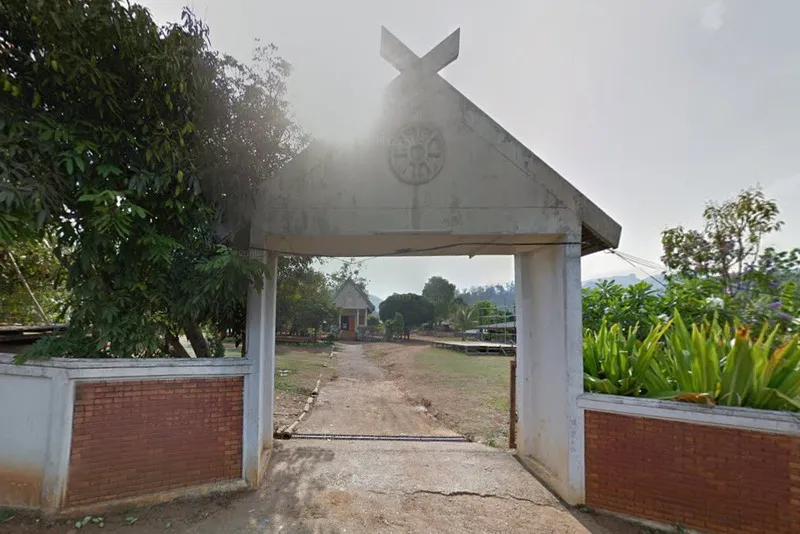
Open Days: Daily
Opening Hours: 08.00 – 17.00
Wat Sop Pong (Mina Nan) is one of the most meaningful local temples in Sop Pong, Pang Mapha District, Mae Hong Son. More than just a place of worship, it reflects the historical development of the community itself, especially the period when government facilities were relocated and the temple was rebuilt in its present area. For travelers exploring Pang Mapha, this temple offers a quiet cultural stop where local history, religion, and community life still meet in a very tangible way.
Wat Sop Pong (Mina Nan) is a worthwhile stop for visitors who want more than a quick photo stop in Mae Hong Son. The temple was originally established in 1936 under the name Wat Pang Mapha, and it later took on its current name after being relocated to Ban Sop Pong. Within the temple grounds are a viharn, an assembly hall, monks’ quarters, a chanting hall, a merit-making pavilion, a kitchen, and a bell tower. The sacred object recorded for the temple is a Buddha image, which remains at the heart of local devotion.
The appeal of the temple lies in its simplicity. This is not a grand urban monastery built for crowds, but a living community temple in the mountain district of Pang Mapha. Visitors who step into the compound will notice a calm, grounded atmosphere shaped by everyday local faith rather than large-scale tourism. Because the temple stands in Ban Sop Pong, near the main travel route between Pai, Pang Mapha, and Mae Hong Son town, it fits naturally into a scenic road trip through northern Thailand.
The temple’s history is closely linked to the development of Pang Mapha itself. It was first built in 1936 by officers from the Pang Mapha police station. Around 1944, when the police station was moved and the land was adjusted for new police housing, a new temple structure was also created and Phra Muling from Wat Mae La Na was invited to stay there. This makes Wat Sop Pong especially interesting for readers who enjoy sites where local administrative history and religious life intersect.
A second major turning point came in 1969. The police station was moved again to Ban Sop Pong because the former location was affected by annual flooding. Structures from Wat Pang Mapha were dismantled and rebuilt at the current site, and Police Sub-Lieutenant Phin Naknoi donated a plot of land for the temple. From that point onward, the temple became known as Wat Sop Pong (Mina Nan). This relocation is not just a detail in the timeline; it explains why the temple is so deeply tied to the identity of Ban Sop Pong today.
The temple occupies an area of 7 rai, 3 ngan, and 2 square wah. Its buildings support the practical functions of a local monastery, including spaces for worship, teaching, residence, chanting, and merit-making ceremonies. While it is not known for monumental architecture, it carries strong documentary value as a temple that grew directly from community faith and everyday use. That quality gives it a quiet authenticity that many cultural travelers appreciate.
Wat Sop Pong also stands out for its educational role. The temple has supported a Dhamma studies school since 1987, and it has been used as a field location connected with religious education in Pang Mapha District. This means the temple is not only spiritually important, but also active in the transmission of Buddhist learning within the local monastic network. For readers interested in religious culture rather than surface-level sightseeing, this makes the temple especially rewarding.
The succession of abbots and caretakers recorded in the temple’s history shows the continuity of local monastic leadership over several decades. The list includes Phra Ching, Phra Uppala, Phra Ai, Phra Mi, Phra Chai Yi, Phra Sujin Yatiko, Phra Kamol, Phra Boonyen, Phra Boonlert, Phra Sujinta Yatiko, Phra Niroj Suthiyano, Phra Boonmee, and the current caretaker, Phra Khru Anurak Bun Khet. This long line of leadership reinforces the temple’s role as a stable religious center for the surrounding community.
From a travel perspective, the temple works well as part of a broader Pang Mapha itinerary. It can be combined with Pang Mapha Viewpoint, Tham Mae Lana, Tham Nam Lod, Ban Jabo, and Nam Bo Phi Cave, all of which help round out a day trip with a mix of religion, nature, local culture, and mountain scenery. Travelers who prefer slower, more meaningful routes often find that places like this add depth to a Mae Hong Son journey.
The atmosphere is best suited to respectful visits. Modest clothing, calm behavior, and sensitivity to local worship practices are appropriate. Early morning is especially pleasant if you want to experience the temple at its quietest. Even a short stop can be meaningful, whether you come to pay respects, make merit, or simply pause between cave visits and scenic drives through Pang Mapha.
Getting There is straightforward by road. Wat Sop Pong is located in Ban Sop Pong along Highway 1095, the well-known mountain route linking Pai, Pang Mapha, and Mae Hong Son. Travelers with private cars or motorbikes can reach it easily, while those using public transport typically get off in the Sop Pong or Pang Mapha area and continue by local transport. Because many attractions in the district are relatively close to one another, the temple is easy to include in a practical day route.
Wat Sop Pong may not be the most famous temple in Mae Hong Son, but that is exactly where its strength lies. It preserves a local story, remains active in community life, and offers a grounded cultural experience that feels real rather than staged. For visitors who value history, living tradition, and the quieter side of travel in northern Thailand, this temple is a meaningful stop in Pang Mapha.
| Name | Wat Sop Pong (Mina Nan) |
| Location | Ban Sop Pong, Moo 1, Sop Pong Subdistrict, Pang Mapha District, Mae Hong Son |
| Address | Moo 1, Ban Sop Pong, Sop Pong Subdistrict, Pang Mapha District, Mae Hong Son 58150, Thailand |
| Highlights | A historic community temple tied to the relocation of Pang Mapha police facilities and still active in local religious and educational life |
| History | Established in 1936 as Wat Pang Mapha; relocated to Ban Sop Pong and renamed Wat Sop Pong (Mina Nan) in 1969 |
| Name Origin | The temple took its current name from Ban Sop Pong after the relocation to its present site |
| Distinctive Features | Community-based temple atmosphere with a viharn, assembly hall, monks’ quarters, chanting hall, merit pavilion, kitchen, and bell tower |
| Travel Information | Accessible via Highway 1095 on the Pai – Pang Mapha – Mae Hong Son route; easy to combine with nearby caves and viewpoints |
| Current Status | Active community temple with continuing religious and educational functions |
| Open Days | Daily |
| Opening Hours | 08.00 – 17.00 |
| Facilities | Worship spaces, monastery buildings, open temple grounds, and areas for local merit-making activities |
| Main Areas / Zones | Viharn, Assembly Hall, Monks’ Quarters, Chanting Hall, Merit Pavilion, Kitchen, Bell Tower |
| Abbot / Caretaker | Phra Khru Anurak Bun Khet |
| Main Contact Number | 094-1422480 |
| Nearby Tourist Attractions | 1. Pang Mapha Viewpoint 2 km 2. Tham Mae Lana 7 km 3. Tham Nam Lod 10 km 4. Ban Jabo 15 km 5. Nam Bo Phi Cave 18 km |
| Nearby Restaurants | 1. Northern Hill 1 km, Tel. 053-617136 2. Soppong River Inn 2 km, Tel. 053-617107 3. Bar 124 Café & Accommodation 3 km, Tel. 092-5275995 4. Nongluk Restaurant 2 km 5. Sai Than Seafood 2 km |
| Nearby Accommodations | 1. Northern Hill Guest House 1 km, Tel. 053-617136 2. Soppong River Inn 2 km, Tel. 053-617107 3. Little Eden Guesthouse 2 km, Tel. 089-952-8870 4. Baan Cafe Nature Resort 2 km, Tel. 053-617081 5. Cave Lodge 10 km, Tel. 053-617203 |
Frequently Asked Questions (FAQ)
Q: Where is Wat Sop Pong located?
A: It is located in Ban Sop Pong, Moo 1, Sop Pong Subdistrict, Pang Mapha District, Mae Hong Son, along the well-known Highway 1095 route.
Q: Is Wat Sop Pong open every day?
A: General visitor information indicates daily access, typically around 08.00 – 17.00.
Q: What makes Wat Sop Pong special?
A: Its importance comes from its close connection to local history, its role as a living community temple, and its continuing function in religious education in Pang Mapha.
Q: Who is the current caretaker of the temple?
A: The current caretaker is Phra Khru Anurak Bun Khet.
Q: What can travelers visit after stopping at the temple?
A: Nearby options include Pang Mapha Viewpoint, Tham Mae Lana, Tham Nam Lod, Ban Jabo, and Nam Bo Phi Cave.
Q: What kind of traveler would enjoy Wat Sop Pong?
A: It is ideal for travelers interested in quiet cultural sites, local history, community temples, and meaningful stops during a Mae Hong Son road trip.
 Category: ●Places of Worship
 Group: ●Temple
 Last Update : 4 WeekAgo
 Click to Access the Navigation Map GPS
 Art, Culture and Heritage
 Historical Sites and Monuments(
 Landmarks and Memorials(
 Art, Craft Centres, Tradition(
 Museums(
 Educational Places
 Educational Gardens, Farm(
 Other religious and spiritural sites(
 Research and Development
 Royal Project(
 Suburban Living
 Village, Community(
 Local Market(
 Nature and Wildlife
 National Parks and Marine Reserves(
 Mountain (Doi)(
 Dam, Reservoir, Lake(
 Waterfalls(
 Hot Springs(
 Caves(
 Flower Field(
 River, Canal(
 Other natural attractions(
 Entertainment and Agricultural
 Farm, Parks, Gardens and Ecotourism(
 Shopping
 Shopping and Night Market(
 Travel Articles, Recipes
 Travel Review, Food Review(


