
lovethailand home >North Travel Attractions >Mae Hong Son Travel Attractions >Muang Mae Hong Son >Chong Kham > Tang Som Tor
TL;DR: Tang Som Tor, open According to the annual religious calendar during Buddhist Lent, with the older, hours According to each temple’s ritual schedule, usually beginning with preparation.
Tang Som Tor
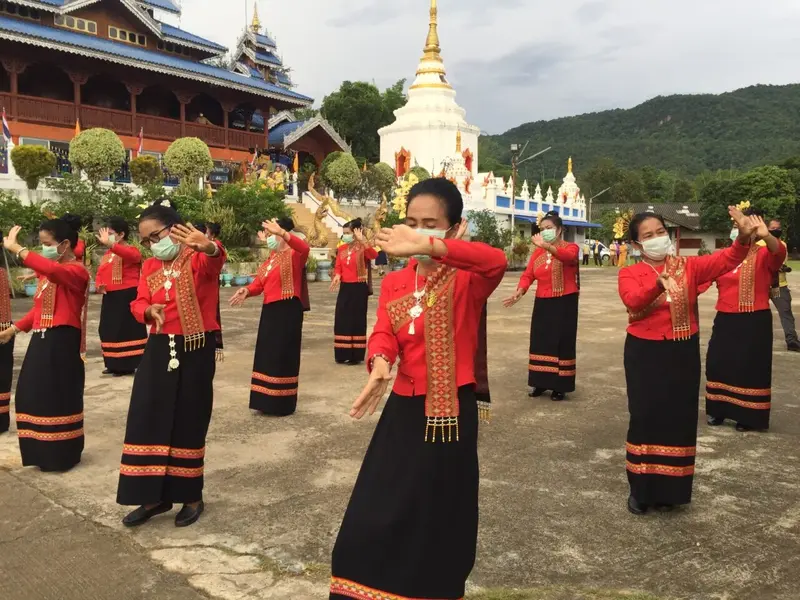
Open Days: According to the annual religious calendar during Buddhist Lent, with the older core tradition linked to the full moon of the 10th lunar month and some communities rotating the ceremony on Buddhist holy days during Lent
Opening Hours: According to each temple’s ritual schedule, usually beginning with preparation in the daytime and continuing over 2 days
Tang Som Tor, often referred to in Mae Hong Son as Tang Som Tor Luang, is a Shan Buddhist merit-making tradition centered on the offering of Madhu Payasa, or sweet sacred rice, to the Buddha. It is one of the meaningful northern Thai traditions still preserved within Shan communities in Mae Hong Son Province. More than a simple temple ceremony, this tradition reflects Buddhist devotion, communal cooperation, and a local understanding of merit-making that has been passed down across generations.
At the heart of the ceremony is the offering of sweet foods, rice balls, fruit, flowers, and ritual items to the Buddha. In Shan belief, participating in this offering brings great merit. The meaning of the ritual is closely connected to the Buddhist story of Sujata, who offered Madhu Payasa to the future Buddha before his enlightenment. Because of that sacred association, the offering is not treated as ordinary food. It is regarded as a highly auspicious act of devotion linked to one of the most important moments in Buddhist history.
In everyday Shan practice, offerings to the Buddha are already part of daily life. Food may be prepared in the morning and respectfully offered before ordinary household life begins. When this devotional act expands into a major temple-based communal ceremony, it becomes known as Tang Som Tor Luang. The larger festival form includes more elaborate preparation, greater community participation, and a stronger ceremonial structure, making it one of the significant religious traditions of Mae Hong Son’s Shan cultural world.
Traditionally, the major form of the ceremony was linked to the full moon day of the 10th lunar month during Buddhist Lent. Over time, however, community life changed. In Mueang Mae Hong Son and nearby Shan communities, temples adapted the schedule so that different temples could hold the ceremony in rotation on Buddhist holy days throughout the Lent season. This adjustment helped local faith communities support one another more effectively while preserving the original religious meaning of the offering.
The importance of Tang Som Tor therefore goes far beyond the act of presenting sweet rice or desserts. It is an expression of reverence toward the Buddha and a shared act of merit by the entire community. Villagers prepare offerings such as rice balls, sweets, fruit, flowers, incense, candles, honey, sugarcane syrup, and other items according to their faith and ability. Every item carries both ritual and emotional meaning, because the offering represents sincerity, gratitude, and a wish to accumulate wholesome merit.
The ceremony is generally held over 2 days. The first day is devoted to preparation. In the morning, villagers and temple supporters arrange the venue and prepare food for the monks as well as meals for those attending the event. This stage reveals the social strength of the tradition. Families do not participate as isolated donors. Instead, they contribute together, each household bringing what it can, whether rice, fruit, sweets, ingredients, flowers, or practical support for the temple.
By the evening of the first day, villagers bring sweets, uncooked rice, fruit, honey, sugarcane syrup, flowers, incense, candles, and monetary offerings to the temple. Temple supporters then help arrange these offerings with care and beauty so they will be ready for the main ceremony the following morning. This decorative preparation is one of the distinctive features of the tradition. The offerings are not placed casually. They are arranged in a way that reflects both Shan aesthetic sensibility and deep reverence toward the Buddha.
The second day is the principal ritual day. Before sunrise or in the early morning, devotees arrange sweets, flowers, fruit, and rice balls on offering tables before the Buddha image. The atmosphere at this time is calm, respectful, and spiritually focused. Monks then chant blessings, morning food is offered to the Sangha, and later in the morning more people gather at the temple to observe precepts, listen to sermons, and participate in communal offering and merit-making.
When the ceremony reaches its concluding stage, the monks offer blessings and words of rejoicing in merit. Although the outward structure may seem simple, Tang Som Tor brings together several important layers of Buddhist and community life at once: devotion to the Buddha, support for the monastic community, listening to Dhamma, and active cooperation among the faithful. This is why the tradition remains culturally important. It is both a religious act and a social expression of Shan identity.
The Buddhist narrative associated with the ceremony plays a crucial role in sustaining its meaning. Shan communities connect the offering with the episode in which Sujata presented Madhu Payasa before enlightenment. In this understanding, the sacred food helped provide strength for the final effort leading to awakening. As a result, the offering of sweet rice, desserts, and rice balls is understood not only as generosity, but also as a symbolic continuation of a profoundly meaningful act within the Buddhist tradition.
From a cultural perspective, Tang Som Tor also reveals the identity of Mae Hong Son’s Shan communities in a subtle yet powerful way. The ritual language, the specific form of offerings, the use of locally meaningful ingredients, and the temple-centered cooperation of villagers all show how religion and daily life remain closely connected. To an outside observer, the event may appear modest compared with larger northern Thai festivals. Yet that quiet dignity is exactly where its power lies.
Another reason this tradition deserves attention is the balance it maintains between sacred devotion and communal warmth. Tang Som Tor is not built around spectacle. It is built around faith. People do not come primarily for entertainment. They come to make merit, prepare offerings, support the temple, and continue an inherited spiritual practice. That gives the ceremony an atmosphere that is sincere, intimate, and deeply rooted in local culture.
For those interested in northern Thai traditions beyond the better-known festivals, Tang Som Tor offers valuable insight. It is especially meaningful for travelers, researchers, and readers who want to understand how Shan Buddhist life is lived at the community level. The beauty of the ceremony lies in detail: the arrangement of offerings, the presence of rice balls and sweets, the floral decoration, the collective work of temple supporters, and the respectful way the entire ritual is carried out.
Getting There usually begins from Mae Hong Son town, where several important Shan temple communities are located. Since the ceremony may rotate between temples during Buddhist Lent, it is best to check the annual schedule of each temple or local religious community in advance. From the town center, visitors can continue by car, rental motorbike, or local transport to the temple hosting the event. Advance planning is especially helpful if you want to attend the early morning ritual stage.
If you plan to attend in person, respectful behavior is essential. Dress modestly, remain calm during chanting and offering periods, and avoid interrupting the arrangement of ritual items. Tang Som Tor is not staged for tourism. It is a living sacred tradition. The more respectfully one enters the space, the more clearly the meaning of the ceremony can be understood.
Overall, Tang Som Tor is one of the meaningful Buddhist traditions of Mae Hong Son and an important expression of Shan cultural heritage in northern Thailand. Through the offering of Madhu Payasa, rice balls, sweets, fruit, and flowers, the community renews its faith, honors the Buddha, and strengthens social bonds. It is a tradition of quiet depth, and that depth is precisely what makes it enduring.
| Name | Tang Som Tor / Tang Som Tor Luang / Madhu Payasa Offering Tradition |
| Province | Mae Hong Son |
| Main Cultural Community | Shan / Tai Yai community |
| Significance | Offering Madhu Payasa, rice balls, sweets, fruit, and ritual items to the Buddha as an act of devotion and merit-making |
| Festival Period | During Buddhist Lent, with the older core observance on the full moon of the 10th lunar month and later rotation on Buddhist holy days in some communities |
| Festival Type | A 2-day merit-making temple tradition focused on preparing and offering sacred sweet foods to the Buddha and food to monks |
| Belief Origin | Connected to the Buddhist story of Sujata offering Madhu Payasa before the Buddha’s enlightenment |
| Day 1 Ritual | Preparing the venue, food for monks and participants, and bringing sweets, rice, fruit, honey, flowers, incense, candles, and offerings to the temple |
| Day 2 Ritual | Arranging rice balls, sweets, flowers, and fruit before the Buddha image, chanting blessings, offering morning food to monks, observing precepts, listening to sermons, and receiving merit blessings |
| Distinctive Features | A quiet but meaningful Shan merit-making tradition centered on sacred food offerings arranged with care and beauty |
| Main Festival Locations | Shan temples in Mae Hong Son Province, especially in Mueang Mae Hong Son and nearby communities |
| Open Days | According to each temple’s annual religious calendar |
| Opening Hours | According to the ritual schedule of each day |
| Travel Information | Begin from Mae Hong Son town and continue to the hosting temple by car, rental motorbike, or local transport after checking the annual schedule |
| Current Status | Still actively preserved in Shan communities of Mae Hong Son through temple-based annual observances |
| Official / Research Sources | Tourism Authority of Thailand, Shan cultural research, provincial sources, and local temples |
Frequently Asked Questions (FAQ)
Q: What is Tang Som Tor?
A: It is a Shan merit-making tradition in Mae Hong Son centered on offering Madhu Payasa, rice balls, sweets, and ritual items to the Buddha.
Q: When is Tang Som Tor held?
A: It is associated with Buddhist Lent, traditionally linked to the full moon of the 10th lunar month, while some communities now rotate it on Buddhist holy days during Lent.
Q: How many days does the ceremony usually last?
A: It is generally held over 2 days.
Q: Why is the offering of Madhu Payasa important?
A: It is connected to the Buddhist story of Sujata’s offering before enlightenment, which gives the ritual deep spiritual significance.
Q: What items are commonly offered during the ceremony?
A: Rice balls, sweets, fruit, flowers, incense, candles, honey, sugarcane syrup, and other offerings according to faith and local custom.
Q: Where is this tradition commonly observed?
A: It is observed in Shan temple communities in Mae Hong Son, especially in Mueang Mae Hong Son and nearby areas.
Q: How should visitors behave if attending the ceremony?
A: Visitors should dress modestly, stay respectful during chanting and offerings, and remember that it is a living sacred tradition rather than a staged performance.
 Category: ●Art, Culture and Heritage
 Group: ●Art, Craft Centres, Tradition
Last Update : 5 MonthAgo
 Last Update : 5 MonthAgo
Recommend

 Historical Sites and Monuments(1)
 Landmarks and Memorials(1)
Art, Craft Centres, Tradition(10)
Landmarks and Memorials(1)
Art, Craft Centres, Tradition(10)
 Museums(3)
 Educational Places
 Educational Gardens, Farm(1)
 Places of Worship
 Temple(81)
 Other Sacred Sites(1)
 Research and Development
 Royal Project(4)
 Suburban Living
 Village, Community(19)
 Local Market(4)
 Nature and Wildlife
 National Parks and Marine Reserves(5)
 Mountain (Doi)(5)
 Dam, Reservoir, Lake(2)
 Waterfalls(12)
 Hot Springs(6)
 Caves(13)
 Flower Field(2)
 River, Canal(3)
 Other natural attractions(1)
 Entertainment and Agricultural
 Farms, Parks and Ecotourism(2)
 Shopping
 Shopping and Night Market(1)
 Travel Articles, Recipes
 Travel Review, Food Review(1)


