
lovethailand home >North Travel Attractions
>Mae Hong Son Travel Attractions >Mae Sariang
>Ban Kat
> Wat Ban Phae
TL;DR: Wat Ban Phae is located at Ban Phae, Moo 3, Ban Kat Subdistrict, Mae Sariang District, Mae Hong Son Province, open Daily, hours 06:00–18:00.
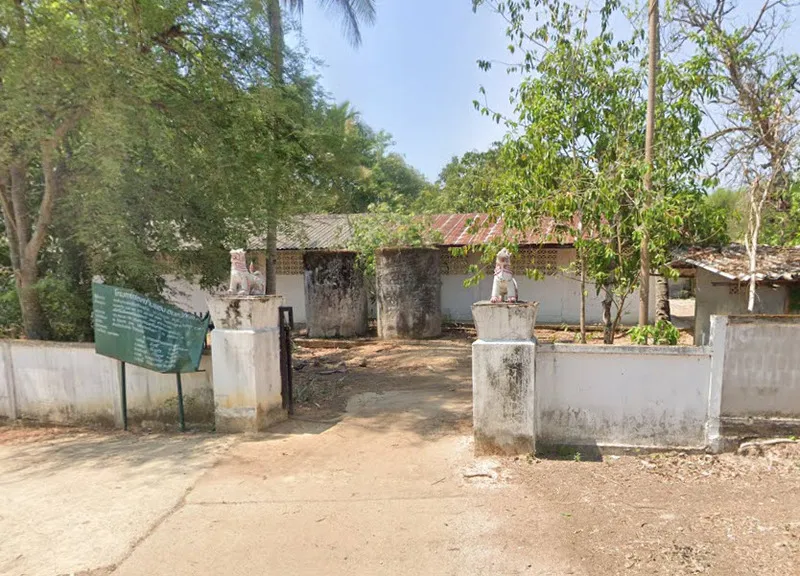
Wat Ban Phae
Open Days: Daily
Opening Hours: 06:00–18:00
Wat Ban Phae is a local Buddhist temple under the Maha Nikaya sect, located in Moo 3, Ban Phae, Ban Kat Subdistrict, Mae Sariang District, Mae Hong Son Province. This temple has long served as the spiritual center of the community and remains important as a place for Buddhist ceremonies, religious practice, and local gatherings. It also reflects the way of life, culture, and faith of the people in the area in a very clear and meaningful way. In summary, Wat Ban Phae is an old temple that has developed continuously from the past to the present, with notable significance in terms of community history, belief, and its religious role at the local level.
Wat Ban Phae has a history dating back to 1931, a period when the local community was becoming more firmly established. In its earliest phase, the temple was built on the site of a sacred stupa, which was regarded as a spiritually important place for the people in the area. The first structures used traditional local materials such as tong tueng leaves for roofing, reflecting the simple way of life and the careful use of natural resources in harmony with the surrounding environment.
Later, in 1970, the temple was relocated to the village area so that local residents could access it more conveniently. This move marked an important turning point in the history of Wat Ban Phae. What had once been a temple located in a more symbolic and secluded setting became a temple with a stronger social and community-centered role. During the early period after the relocation, it remained a temporary temple before gradually being developed further.
In 1974, permanent monastic buildings were constructed in a more concrete and organized manner through cooperation between local residents and community leaders, especially Mr. Jamnong Phongwana, who was the village headman at the time. He played a major role in driving the construction and development of the temple, helping create stability in both its physical structure and administration. As a result, Wat Ban Phae became a true center of religious and cultural activities for the community.
The temple compound includes important monastic structures such as monks’ residences and a multipurpose pavilion. These buildings are used for religious activities including merit-making ceremonies, Dhamma sermons, and traditional community events. In addition, the temple houses a principal Buddha image that serves as the spiritual focus of devotees, as well as a sacred stupa that is regarded as an important religious object of the temple. Together, these sacred features reflect the beliefs and sense of holiness that have been passed down through generations.
Wat Ban Phae also has an educational role in Buddhism. A Sunday Buddhist Study Center was established in 1990, providing children and young people in the community with an opportunity to learn the teachings of Buddhism, build moral values, and develop good character for the long term. The existence of this educational center shows that the temple is not limited to religious ceremonies alone, but also serves as a place of learning and community development.
In terms of administration and governance, Wat Ban Phae has had a continuous line of abbots. The recorded names include Phra Lao, Phra Po, Phra Prara, Phra Chai, Phra Thaworn Janisusaro, Phra Damrong Kanutviro, and Phra Chatri Thammiko, who has served since 1987 onward. The continuity of religious leadership has helped the temple maintain stability in its activities and preserve its identity and close connection with the local community.
Wat Ban Phae is not only a place for religious rites, but also a space that strengthens relationships among people in the community through various activities such as merit-making festivals, kathin ceremonies, pha pa offerings, and other religious events held throughout the year. The atmosphere of the temple is therefore peaceful, simple, and deeply filled with faith.
Getting There is convenient from Mae Sariang District town. Travelers can follow the main road toward Ban Kat Subdistrict and then continue into Ban Phae Village. The temple is easily accessible by both private car and motorcycle. The distance from Mae Sariang town is approximately 10–15 kilometers, and the journey usually takes around 15–20 minutes. Most of the route is paved and can be used throughout the year.
| Name | Wat Ban Phae |
| Location | Ban Phae, Moo 3, Ban Kat Subdistrict, Mae Sariang District, Mae Hong Son Province |
| Highlights | A historic community temple with a sacred stupa and a principal Buddha image, serving as the spiritual heart of the village |
| History | Established in 1931, relocated in 1970, and developed into a permanent temple in 1974 |
| Distinctive Features | Features a sacred stupa and a Sunday Buddhist Study Center |
| Travel Information | Approximately 10–15 km from Mae Sariang District, about 15–20 minutes by road |
| Current Status | Open and active |
| Entrance Fee | Free of charge |
| Abbot | Phra Chatri Thammiko |
| Nearby Tourist Attractions | 1. Wat Chong Sung – 12 km 2. Wat Chong Kham – 12 km 3. Yuam River – 10 km 4. Mae Sariang Market – 11 km 5. Yuam River Bridge – 11 km |
| Nearby Restaurants | 1. Krua Saichon Restaurant – 11 km, Tel. 053-681123 2. Rim Yuam Restaurant – 12 km 3. Ban Suan Mae Sariang Restaurant – 10 km 4. Larb Mueang Restaurant – 9 km 5. Ban Kat Noodle Shop – 5 km |
| Nearby Accommodations | 1. Riverhouse Hotel – 12 km, Tel. 053-681234 2. Above The Sea Maesariang – 13 km 3. River Bank Resort – 12 km 4. Maesariang Guesthouse – 11 km 5. Ban Suan Resort – 10 km |
Frequently Asked Questions (FAQ)
Q: When was Wat Ban Phae established?
A: Wat Ban Phae was established in 1931.
Q: What important sacred objects are found at the temple?
A: The temple houses a principal Buddha image and a sacred stupa, both of which are important religious objects of the temple.
Q: Is it easy to reach the temple?
A: Yes. It is easily accessible by car from Mae Sariang town, and the trip takes around 15–20 minutes.
Q: Is there an entrance fee?
A: No. Visitors can enter, visit, and make merit free of charge.
Q: What role does the temple play in the community?
A: It serves as a center for religion, education, and community activities in the area.
 Mobile : 0892631503
 Category: ●Places of Worship
 Group: ●Temple
 Last Update : 2 WeekAgo
 Click to Access the Navigation Map GPS
 Art, Culture and Heritage
 Historical Sites and Monuments(
 Landmarks and Memorials(
 Art, Craft Centres, Tradition(
 Museums(
 Educational Places
 Educational Gardens, Farm(
 Other religious and spiritural sites(
 Research and Development
 Royal Project(
 Suburban Living
 Village, Community(
 Local Market(
 Nature and Wildlife
 National Parks and Marine Reserves(
 Mountain (Doi)(
 Dam, Reservoir, Lake(
 Waterfalls(
 Hot Springs(
 Caves(
 Flower Field(
 River, Canal(
 Other natural attractions(
 Entertainment and Agricultural
 Farm, Parks, Gardens and Ecotourism(
 Shopping
 Shopping and Night Market(
 Travel Articles, Recipes
 Travel Review, Food Review(


