
lovethailand home >North Travel Attractions >Lamphun Travel Attractions >Ban Hong >Ban Hong > Wat Dong Ruesi
TL;DR: Wat Dong Ruesi is located at Ban Dong Ruesi, Moo 8, Ban Hong Subdistrict, Ban Hong District, Lamphun Province. Highlights include Historic scripture hall (Hor Trai) and the legend of two hermits.
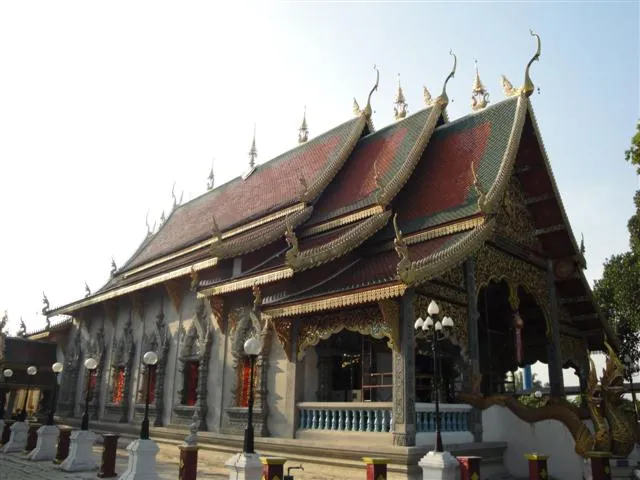
Wat Dong Ruesi
Operating day: Daily
Operating time: 08.00 - 17.00
Wat Dong Ruesi in Lamphun is an important historic temple located in Ban Hong Subdistrict, Ban Hong District, Lamphun Province. The temple is well known for its distinctive identity that combines history, religion, ancient architecture, and a local legend associated with two hermits, which ultimately gave rise to the temple’s name. It is located at 140 Ban Dong Ruesi, Moo 8, and belongs to the Maha Nikaya Buddhist order. The temple occupies an area of approximately 9 rai, 2 ngan, and 40 square wah, with its northern boundary adjacent to the Li River. This riverside setting contributes to a tranquil, shaded environment and reflects the geographical and cultural connection of the Ban Hong community.
Wat Dong Ruesi is particularly suitable for visitors interested in cultural tourism in Lamphun Province, especially those who wish to explore historic temples in Ban Hong District. The temple is not limited to standard monastic structures but also features an important historical site: the Hor Trai, or scripture hall of Wat Dong Ruesi. This structure is both ancient and aesthetically remarkable and has been officially registered as a historical monument by the Fine Arts Department. It represents the wisdom of Lanna craftsmanship and the traditional system used to preserve sacred Buddhist scriptures in the past.
The Hor Trai was built specifically to store palm-leaf manuscripts and sacred texts, protecting them from humidity, insects, and improper use. This reflects the deep respect that ancient communities had for religious knowledge and teachings. As such, the Hor Trai is not merely an architectural structure but also a symbol of cultural preservation and religious devotion.
The temple complex consists of several important structures, including a viharn, ubosot, chedi, monks’ residences, a sermon hall, and the scripture hall. These elements represent the traditional composition of a Thai temple. The viharn and ubosot are used for religious ceremonies, the chedi symbolizes Buddhist faith, the monks’ quarters serve as living spaces, and the sermon hall is used for communal religious activities. Altogether, Wat Dong Ruesi serves as a complete religious center, combining ritual, education, community engagement, and cultural preservation.
Wat Dong Ruesi was established in 1781. Initially, the area was a deserted and unused piece of land. Later, settlers arrived and discovered several ancient Buddha images along with two hermit statues in the area. These discoveries inspired strong faith among the villagers, who then collaborated to restore the site and construct temple buildings. Monks were invited to reside at the temple, and it was granted its official consecrated boundary in 1882. The first abbot was Phra Pho, and the current abbot is Phra Kru Palad Chainarin Chayawatthamedhi.
The significance of Wat Dong Ruesi lies in its combination of historical evidence and local legend. The discovery of ancient Buddha images and the hermit statues was not only the origin of the temple’s establishment but also the foundation of its identity and name. The legend of the two hermits has been passed down through generations and reflects moral values, religious beliefs, and the cultural identity of the local community. As a result, the temple is more than just a place of worship; it is also a center for learning and understanding the spiritual philosophy embedded in local traditions.
The name “Wat Dong Ruesi” originates from the discovery of two hermit statues within the temple grounds. According to the legend, these hermits were connected to the origin of local place names in Ban Hong District. The story begins with a wealthy merchant who lived in Ban Khun Pae, located along the Ping River in Chom Thong District, Chiang Mai Province. At that time, Ban Khun Pae was a large and prosperous community. The merchant possessed great wealth, which he had accumulated through his skill in trade. However, his methods often involved taking advantage of others, including cheating, price manipulation, and exploitation.
The merchant had two sons. After his wife passed away, he devoted all his love and resources to raising them. The two sons grew up surrounded by wealth, but that wealth was largely obtained through unfair means. When they reached an appropriate age, the merchant sent them to study at a temple, hoping they would gain knowledge to support the family’s business in the future.
However, instead of focusing on worldly knowledge, both sons became deeply interested in Buddhist teachings. They developed a strong faith in the Dharma and decided to ordain as monks. They showed no intention of leaving the monkhood, which caused great distress to their father. He was worried that once he passed away, there would be no one to inherit and manage the wealth he had accumulated throughout his life.
The merchant then attempted to persuade his sons to leave the monkhood through various means, including emotional appeals and pressure. Eventually, he even threatened to take his own life. Fearing the sin that would arise if their father harmed himself, the two sons reluctantly agreed to disrobe. However, the merchant imposed a strict condition that they must never return to monkhood again. As a result, the two brothers had no choice but to return home and live as laymen, even though their hearts remained devoted to spiritual practice.
After returning home, the two brothers could not live like ordinary young men. They remained deeply interested in the Dharma and felt uncomfortable with the way their father accumulated wealth. The riches that their father valued became a source of discomfort for them, as those possessions were obtained through exploitation. Eventually, they discussed their situation and decided to secretly escape from home in order to free themselves from a worldly life filled with attachment and moral conflict.
The two brothers then began their journey by traveling along the Ping River. They continued downstream until they reached the confluence with the Li River. From there, they followed the Li River upstream, moving deeper into a remote forested area filled with rattan palms. This location corresponds to the present-day site of Wat Dong Ruesi. The area was far removed from their original home in Ban Khun Pae, making it difficult for their father to track them down. The natural surroundings were also well suited for solitude and spiritual practice, providing an ideal environment for their new path in life.
Upon arriving at this secluded forest, the two brothers made a firm decision to dedicate themselves to the practice of Dharma. However, because they had promised their father that they would never ordain as monks again, they could not return to the monastic life in the traditional sense. Instead, they chose to become hermits, which allowed them to continue their spiritual practice without breaking their vow. This decision reflects both their deep commitment to the Dharma and their sense of responsibility toward their father.
As hermits, they lived a life of simplicity and detachment. They practiced meditation and focused entirely on spiritual cultivation. Their daily lives were minimalistic, and they showed little concern for material needs. Food was not a priority; sometimes they ate, and sometimes they did not. On certain occasions, they would only eat once every two or three days, consuming just enough to sustain their physical bodies. Their way of life demonstrated a profound level of discipline and renunciation.
The forest in which they lived provided both physical isolation and spiritual refuge. Away from society, wealth, and social expectations, they were able to devote themselves entirely to inner development. Their commitment to this path illustrates the contrast between worldly life and spiritual liberation. While their father represented attachment to wealth and material success, the two brothers embodied the pursuit of enlightenment and inner peace.
Over time, their physical bodies weakened due to the austere lifestyle they had chosen. However, their dedication to spiritual practice remained unwavering. They continued their meditation and simple way of living until eventually, both of them passed away at the same time in that very forest. Their deaths marked the end of their earthly journey but also symbolized the completion of a life devoted entirely to the pursuit of truth and detachment from worldly desires.
The story of their journey—from wealthy heirs to spiritual hermits—became a powerful narrative within the local community. It reflects the values of self-awareness, moral awakening, and the courage to choose a different path in life. Their transformation highlights the idea that true fulfillment does not come from material wealth but from inner understanding and peace.
After several days had passed, the nearby villagers began to notice that the two hermits had not appeared for alms as they occasionally did before. Growing concerned, they decided to enter the forest to check on them. When they arrived, they discovered that both hermits had already passed away. The atmosphere at the scene was filled with sorrow, respect, and deep reverence for their unwavering commitment to the spiritual path.
Around the same time, the servants of the wealthy merchant, who had been sent to search for the two sons, arrived in the same area. Upon witnessing the situation, they immediately returned to report the news to the merchant. When the father heard what had happened, he was overwhelmed with grief and regret. He realized the consequences of his attachment and the suffering it had caused his sons.
The merchant then traveled to the site with a large amount of wealth to organize a proper funeral for his sons. The funeral ceremony was conducted with great respect and solemnity. After the cremation and related rites were completed, the remaining wealth was used to construct a temple at that very location. In addition, statues of the two hermits were built as a memorial, honoring their lives, their sacrifice, and their dedication to spiritual practice.
The original hermit statues were created on a large scale, standing approximately 10 sok in height and positioned about 6 sok apart from each other. These dimensions symbolized the importance and reverence attributed to the two hermits by those who built them. Over time, however, the heads of the statues became damaged. Later, they were restored, with new heads sculpted in a form resembling Buddhist disciples, which is the appearance that can be seen today.
These hermit statues became a defining symbol of the temple and played a crucial role in the naming of the site. From that point onward, the temple came to be known as “Wat Dong Ruesi,” meaning the forest temple of the hermits. The name preserves the memory of the two brothers and their spiritual journey, ensuring that their story continues to be passed down through generations.
The legend of the two hermits is more than just a historical narrative; it serves as a moral teaching that reflects the contrast between worldly attachment and spiritual liberation. It emphasizes the consequences of greed, the burden of unjust wealth, and the peace that comes from letting go. This philosophical depth gives Wat Dong Ruesi a unique character, allowing visitors to experience not only a physical place but also a deeper layer of meaning.
Another significant feature of the temple is its scripture hall, or Hor Trai. In Lanna Buddhist tradition, the Hor Trai is an essential structure used to store sacred scriptures, palm-leaf manuscripts, and religious texts. These buildings were often constructed separately from the main temple structures to protect the contents from environmental damage such as moisture and insects. This architectural practice demonstrates the careful attention given to preserving knowledge in ancient times.
The Hor Trai at Wat Dong Ruesi stands as a valuable example of this tradition. Its structure reflects both functional design and artistic expression, combining practical preservation methods with aesthetic elements characteristic of Lanna architecture. Even though the building may not be large, it carries significant historical and cultural value, making it an important site for study and appreciation.
Today, Wat Dong Ruesi continues to serve as an active religious center for the Ban Hong community. Monks reside at the temple, and religious activities are carried out regularly. Local residents continue to visit for merit-making, listening to sermons, and participating in traditional ceremonies. This ongoing interaction ensures that the temple remains a living cultural space rather than merely a historical monument.
The atmosphere of the temple is calm and natural, enhanced by its proximity to the Li River. Visitors can experience a sense of peace as they walk through the temple grounds, surrounded by greenery and the gentle sounds of nature. This environment is ideal for meditation, reflection, and spiritual relaxation, making the temple suitable for both religious visitors and cultural travelers.
From a tourism perspective, Wat Dong Ruesi can be included as part of a cultural travel route in Ban Hong District. Visitors can combine their trip with nearby sites such as Wat Phra Chao Saliam Wan, Wat Phra Chao Ton Luang, and Hor Tham Wat Pa Pua. This route allows travelers to gain a comprehensive understanding of Lanna culture, including its temples, architecture, and local traditions within a single journey.
Overall, Wat Dong Ruesi represents a meaningful intersection of religion, history, and community life. It is not merely a place for worship but also a site of learning, reflection, and cultural preservation. The temple offers visitors the opportunity to explore the past, understand moral teachings, and experience the enduring spiritual heritage of Lamphun Province.
| Name | Wat Dong Ruesi |
| Location | Ban Dong Ruesi, Moo 8, Ban Hong Subdistrict, Ban Hong District, Lamphun Province |
| Address | 140 Ban Dong Ruesi, Moo 8, Ban Hong, Lamphun, Thailand |
| Highlights | Historic scripture hall (Hor Trai) and the legend of two hermits |
| History | Established in 1781 / Consecrated boundary granted in 1882 |
| Name Origin | Derived from the discovery of two hermit statues and the local legend |
| Distinctive Features | Ancient riverside temple with viharn, ubosot, chedi, monks’ residences, sermon hall, and historic scripture hall |
| Travel Information | Take Highway 106 toward Ban Hong District, then continue to Ban Dong Ruesi |
| Current Status | Active Maha Nikaya temple and cultural heritage site |
| Abbot | Phra Kru Palad Chainarin Chayawatthamedhi |
| Nearby Tourist Attractions | 1. Wat Phra Chao Saliam Wan – 5 km 2. Wat Phra Chao Ton Luang – 6 km 3. Hor Tham Wat Pa Pua – 7 km 4. Tham Luang Pha Wiang – 12 km 5. Wat Ban Pang (Kruba Srivichai) – 25 km |
| Nearby Restaurants | 1. 89 Coffee Ban Hong – 5 km – Tel: 089-556-7890 2. Ban Hong Phochana – 6 km 3. Sam Saeb Tom Yum Noodle – 6 km – Tel: 081-234-5678 4. Thung Thong Restaurant – 7 km – Tel: 085-998-1122 5. MA’R Long Bar – 8 km – Tel: 081-884-1234 |
| Nearby Accommodations | 1. Ban Hong Resort – 6 km – Tel: 089-777-1111 2. Ban Hong Homestay – 8 km – Tel: 082-333-2222 3. Pasang Resort – 28 km – Tel: 053-456-789 4. Lamphun Hotel – 45 km – Tel: 053-987-654 5. Chiang Mai South Resort – 50 km – Tel: 081-666-9999 |
Frequently Asked Questions (FAQ)
Q: Where is Wat Dong Ruesi located?
A: It is located at 140 Ban Dong Ruesi, Moo 8, Ban Hong Subdistrict, Ban Hong District, Lamphun Province.
Q: What is the main highlight of Wat Dong Ruesi?
A: The historic scripture hall (Hor Trai) and the legend of the two hermits.
Q: When was Wat Dong Ruesi established?
A: It was established in 1781 and received its consecrated boundary in 1882.
Q: Why is it called Wat Dong Ruesi?
A: The name comes from the discovery of two hermit statues and a local legend associated with them.
Q: Is Wat Dong Ruesi suitable for cultural tourism?
A: Yes, it is ideal for visitors interested in history, Lanna culture, and Buddhist heritage.
 Category: ●Places of Worship
 Group: ●Temple
Last Update : 4 MonthAgo
 Last Update : 4 MonthAgo
 Click to Access the Navigation Map GPS
 Art, Culture and Heritage
 Historical Sites and Monuments(2)
 Landmarks and Memorials(8)
 Art, Craft Centres, Tradition(9)
 Museums(3)
 Historic Homes and Cities(1)
Temple(91)
Historic Homes and Cities(1)
Temple(91)
 Mosque(1)
 Other Sacred Sites(7)
 Research and Development
 Royal Project(1)
 Suburban Living
 Village, Community(13)
 Local Market(3)
 Nature and Wildlife
 National Parks and Marine Reserves(2)
 Mountain (Doi)(1)
 Dam, Reservoir, Lake(13)
 Waterfalls(3)
 Caves(4)
 River, Canal(1)
 Other natural attractions(1)
 Entertainment and Agricultural
 Farms, Parks and Ecotourism(2)


