
lovethailand home >Central Travel Attractions >Bangkok Travel Attractions >Phra Nakhon >Phra Borommaha Ratchawang > Kanom Hantra Thai Dessert
TL;DR: Kanom Hantra Thai Dessert. It is an ancient dessert made with bean paste to decorate it to look more appetizing. It can be used for both black bean and red bean, but.
Kanom Hantra Thai Dessert
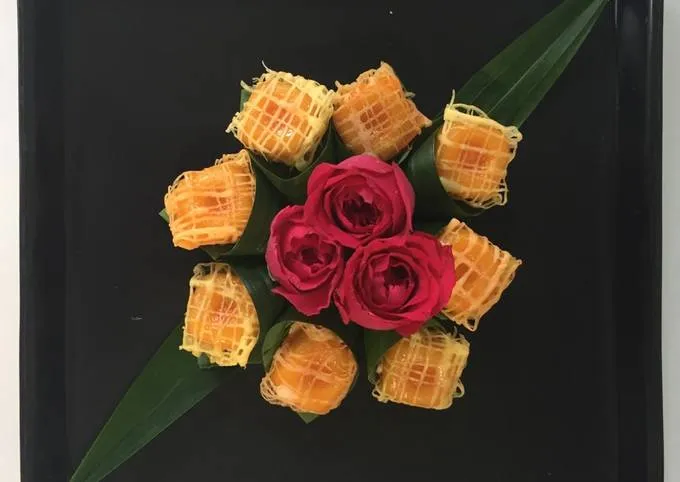
Kanom Hantra Thai Dessert It is an ancient dessert made with bean paste to decorate it to look more appetizing. It can be used for both black bean and red bean, but the popular one is mung bean by wrapping an egg to make a beautiful table. The taste of the dessert is oily, the smell of eggs and the smell of bean paste.
Hantra dessert is an auspicious dessert of Thailand that has been around since ancient times. Used for auspicious events, such as Khanom Thong Yib, Thong Yod, Foi Thong, Khanom Knut Jackfruit and Khanom Chan, etc. The name of the dessert is the same as the name of Tambon Hantra. which is in the district of Phra Nakhon Si Ayutthaya Phra Nakhon Si Ayutthaya Province.
Ingredient
- 300 g steamed cooked mung bean
- 10 duck eggs
- Duck eggs for making 5 square eggs
- 160 g of granulated sugar
- 220 g of coconut milk
Syrup mixture
- 1 kg of granulated sugar
- 4-5 pandan leaves, torn into pieces
- 3 duck eggshells
- 750 g. jasmine water
Clear Syrup
- 4 - 5 pandan leaves, torn into pieces
- 2 duck eggshells
- 400 g of granulated sugar
- 400 g of jasmine water
How to prepare beans Put the peeled mung beans, coconut milk, and sugar into the blender bowl. Blend until fine. then put in the gold pan Bring to a boil over medium heat, stirring until it slips into the pan. Scoop up and set aside to cool. then form a ball When finished 7, then shape it into a square. by pressing the center to dent.
Plating method The first step is to break 10 duck eggs into a container, separate the egg yolks and filter with a colander. Then use a toothpick to insert the bean paste that has been molded. then dip into the egg yolk by putting it in the syrup Turn the heat to a boil. When cooked, scoop up, then soak in clear syrup. When it cools, scoop it up. Set aside to drain the syrup.
How to make square eggs (How to make Thai desserts, Thai dessert recipes)
1. First step, crack 5 duck eggs into a container, beat them together, filter with a sieve. take a teflon pan Heat over low heat, grease a thin layer of vegetable oil, when it is hot, put the filtered egg yolks in a foi-thong cone, sprinkle it into the pan to form a grid, then when the eggs are cooked, scoop up and set aside to cool.
2. Use scissors to cut the edges neatly. and looks like a square piece Then place the candy on the egg table. then fold the top And below, close the candy pieces. Then fold the left and right sides. to look like a square piece.
How to make syrup
1. The first step, put the sugar in a golden pan. with eggshell Then add water to float jasmine flowers and pandan leaves.
2. The next step is to raise the heat to boil and simmer for about 15 minutes.
3. Lift the filter with a thin white cloth. pour into the gold pan Raise the heat and simmer until it boils.
| Name | Khanom Hantra |
| Category | Traditional Thai Royal Dessert |
| Main Ingredients | Mung bean paste, duck eggs, sugar, coconut milk |
| Distinctive Features | Square-shaped dessert wrapped with a delicate egg lattice pattern |
| Shape | Square form with decorative egg wrapping |
| Color | Golden yellow from egg coating |
| Taste | Sweet, creamy, and aromatic with egg and bean fragrance |
| Texture | Soft and smooth bean paste inside, lightly coated with tender egg layer |
| History | Originating from the Ayutthaya period, Khanom Hantra is believed to be a royal court dessert due to its intricate preparation. The name is associated with Hantra Subdistrict in Phra Nakhon Si Ayutthaya. |
| Cultural Significance | Represents the refinement and craftsmanship of Thai royal cuisine |
| Auspicious Meaning | Symbolizes prosperity, beauty, and good fortune, often used in ceremonies |
| Common Beans Used | Peeled mung beans (most popular), but red or black beans can also be used |
| Preparation Difficulty | High – requires skill and precision in multiple steps |
| Occasions | Weddings, merit-making ceremonies, traditional celebrations, and special events |
| Storage | Best consumed within 1–2 days, stored in a sealed container |
| Key Techniques | Smooth bean paste preparation, proper egg coating, and precise lattice wrapping |
Frequently Asked Questions (FAQ)
Q: What is Khanom Hantra?
A: Khanom Hantra is a traditional Thai royal dessert made from mung bean paste wrapped with an intricate egg lattice, known for its delicate craftsmanship and elegant appearance.
Q: Where does Khanom Hantra originate from?
A: It dates back to the Ayutthaya period and is associated with Hantra Subdistrict in Phra Nakhon Si Ayutthaya Province, Thailand.
Q: What type of beans are used in Khanom Hantra?
A: Mung beans are most commonly used due to their smooth texture and mild flavor, although red beans or black beans can also be used.
Q: What is the cultural meaning of Khanom Hantra?
A: It is considered an auspicious dessert symbolizing prosperity, elegance, and good fortune, often served during important ceremonies.
Q: Is Khanom Hantra difficult to make?
A: Yes, it requires multiple steps and precision, especially in preparing the bean paste, coating it with egg, and creating the decorative egg lattice.
Q: How is Khanom Hantra different from Thong Yip or Thong Yod?
A: Khanom Hantra features a bean paste filling wrapped in egg, while Thong Yip and Thong Yod are primarily egg-based desserts with different shapes and textures.
Q: When is Khanom Hantra typically served?
A: It is commonly served during auspicious events such as weddings, merit-making ceremonies, and special celebrations.
Q: How long can Khanom Hantra be stored?
A: It is best consumed within 1–2 days and should be stored in a sealed container to maintain freshness and flavor.
 Category: ●Travel Articles, Recipes
 Group: ●Royal Thai Desserts and Recipes
Last Update : 5 MonthAgo
 Last Update : 5 MonthAgo
Recommend

 Art, Culture and Heritage
 Historical Sites and Monuments(3)
 Landmarks and Memorials(23)
 Royal Palace(13)
 Art, Craft Centres, Tradition(35)
 Museums(59)
 Historic Homes and Cities(3)
 Art Gallery(16)
 Educational Places
 Museum for Study(6)
 Library(4)
 Places of Worship
 Temple(72)
 Church(2)
 Mosque(67)
 Other Sacred Sites(8)
 Research and Development
 Royal Project(1)
 Suburban Living
 Village, Community(5)
 Local Market(9)
 Floating Market(2)
 Nature and Wildlife
 River, Canal(3)
 Bays and Beaches(1)
 Other natural attractions(1)
 Entertainment and Agricultural
 Zoos and Aquariums(4)
 Animal camps and shows(5)
 Stadium(9)
 Farms, Parks and Ecotourism(20)
 Amusement Park(1)
 Waterpark(1)
 Theater(7)
 Cinema(1)
 Shopping
 Shopping and Night Market(20)
 Department Store(7)
 Spas and Wellness
 Spas and Wellness(1)
 Restaurant
 Michelin Star(5)
 Accommodation
 Hotel(3)
 Call Customer Service in Tourism
 Call Customer Service in Tourism(1)
 Travel Review, Food Review(21)
Royal Thai Desserts and Recipes(56)
Travel Review, Food Review(21)
Royal Thai Desserts and Recipes(56)


