
lovethailand home >North Travel Attractions >Uttaradit Travel Attractions >Phichai >Na In > Khao Bandai Ma
TL;DR: Khao Bandai Ma is located at Moo 4, Ban Fak Bueng, Na In Subdistrict, Phichai District, Uttaradit Province, open Daily, hours Outdoor Site; Visit During Safe Weather And Suitable Daylight Conditions.

Khao Bandai Ma
Open Days: Daily
Opening Hours: Outdoor Site; Visit During Safe Weather And Suitable Daylight Conditions
Khao Bandai Ma, also known as Khao Phi Thon, is one of the most intriguing historical and archaeological attractions in Phichai District, Uttaradit Province. Located at Ban Fak Bueng, Moo 4, Na In Subdistrict, the site is best known for its ancient laterite staircase of 426 steps leading from the foot of the hill to the summit. Although the hill rises only about 60 meters above sea level, the climb is meaningful because every step connects visitors with a centuries-old religious and cultural landscape.
Khao Bandai Ma is ideal for travelers who want to explore Uttaradit beyond the usual sightseeing routes. The site combines ancient architecture, Buddhist archaeological remains, a moderately challenging walk, dry forest scenery, and panoramic views over the rice fields of Phichai District. It is not a heavily commercialized attraction, but rather a quiet outdoor heritage site where the traces of the past remain embedded in the landscape.
The name “Khao Bandai Ma” refers directly to the hill and its distinctive staircase, while “Khao Phi Thon” is another local name used for the same place. For the local community, the hill is more than a geographical feature. It is a place associated with old pathways, religious remains, and collective memory. The laterite staircase suggests that the summit was once important enough to require a formal approach route, most likely connected with Buddhist religious activity.
The 426-step laterite staircase is the main highlight of the site. Some sections still show the shape and alignment of the ancient steps clearly, while other parts have been worn by time, weather, vegetation, and natural erosion. Walking up the staircase requires care and patience, especially during the rainy season. The climb is not extremely long, but it is steep enough to make visitors feel the effort of reaching the summit, much like pilgrims or local worshippers may have done in the past.
Laterite was a common construction material in many historical sites in Thailand, especially in regions associated with the Sukhothai and Ayutthaya periods. Its strength and durability made it suitable for foundations, walls, stairways, and religious structures. The presence of a long laterite staircase at Khao Bandai Ma shows that the site was constructed with considerable planning and labor. Carrying and arranging laterite blocks on a hillside would have required community effort and technical knowledge.
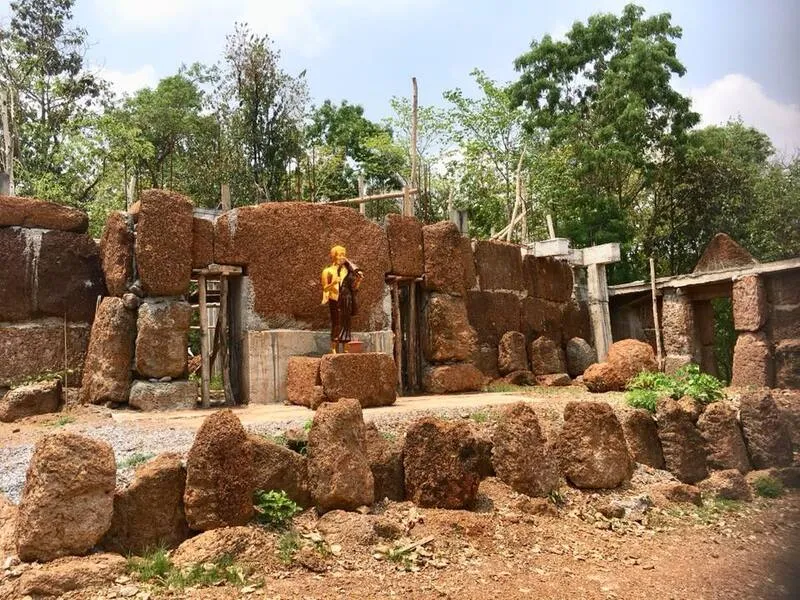
At the summit, visitors can see archaeological remains including the base of an old stupa and the remains of a viharn or Buddhist assembly hall. Although the structures are no longer complete, the surviving foundations are important evidence of the site’s former religious function. These remains indicate that the summit was once a Buddhist sacred area, possibly used for worship, ceremonies, or monastic activity.
Archaeological information from past surveys connects Khao Bandai Ma with Buddhist religious architecture from around the 20th to 21st Buddhist centuries, or more than 500 years ago. The site has yielded fragments of stoneware vessels, including glazed and unglazed jars and containers associated with production centers such as the Mae Nam Noi kilns in Sing Buri and the Si Satchanalai kilns in Sukhothai. These finds suggest that the site was linked to broader cultural and trade networks in the lower northern region of Thailand.
Another significant find from the area is a fragment of a sandstone inscription written in Thai using Sukhothai script. Even though the inscription is fragmentary, its presence greatly increases the historical value of Khao Bandai Ma. Inscriptions are important because they help reveal language, belief systems, social organization, and cultural activity in the past. The discovery of such a fragment suggests that this hilltop site was once part of a literate and religiously active community.
Khao Bandai Ma should be understood within the broader historical context of Phichai District. Phichai is an important historical area in Uttaradit Province and is widely associated with Phraya Phichai Dap Hak, one of Thailand’s celebrated historical heroes. The district also lies within a cultural landscape connected to old settlements, temples, waterways, and regional routes between Uttaradit, Sukhothai, and the lower northern plains. Khao Bandai Ma adds another layer to this historical landscape by preserving evidence of a hilltop Buddhist site.
The staircase itself carries symbolic meaning. In many Buddhist and Southeast Asian cultural contexts, walking upward toward a hilltop sacred space represents more than physical movement. It can also suggest spiritual preparation, effort, and transition from ordinary ground to a place of reverence. Today, visitors may climb the steps for exercise, photography, and sightseeing, but the act of walking step by step still preserves something of the old ritual experience.
Along the route, visitors pass through natural vegetation and sections of dry mixed forest. Some parts of the path are shaded, while others are exposed to sunlight. Because the steps are made of laterite and may be uneven, visitors should wear shoes with good grip and avoid climbing during heavy rain. Bringing drinking water, a hat, and light sun protection is recommended, especially for those visiting during the warmer part of the day.
The reward at the top is a wide view over Phichai District. Depending on the season, the surrounding rice fields may appear fresh green during the growing period or golden during the harvest season. The view is not only scenic but also culturally meaningful, because it reveals the agricultural landscape that has supported local communities for generations. From this vantage point, visitors can better understand how temples, fields, villages, and hills formed part of the same living environment.
Khao Bandai Ma is also a peaceful place for reflection. The remains of the old stupa and viharn, combined with the open view from the summit, create a quiet atmosphere suitable for slow travel. Visitors can spend time observing the laterite blocks, the foundations, the surrounding vegetation, and the rural scenery. It is a destination for those who appreciate real historical traces rather than highly polished tourist settings.
Responsible travel is essential at this site. Visitors should not climb on the ancient foundations, move laterite blocks, scratch or write on stones, or remove any fragments from the area. Even small pieces of brick, stone, or pottery may be archaeologically meaningful. Preserving the site allows future travelers, students, and researchers to continue learning from the real remains in their original setting.
Khao Bandai Ma is especially suitable for students, history enthusiasts, cultural travelers, and visitors who enjoy outdoor archaeological sites. It offers a clear opportunity to learn about ancient construction materials, Buddhist hilltop architecture, regional ceramic connections, Sukhothai-period writing, and the importance of community-based heritage conservation. The site functions almost like an open-air classroom, where history can be understood through walking, observing, and imagining.
Getting There is most convenient by private car or rental car. From Uttaradit town, travel toward Phichai District, then continue to Na In Subdistrict and Ban Fak Bueng. The journey from Uttaradit town to Phichai generally takes about 30–40 minutes depending on road and traffic conditions. Visitors should use a navigation map together with local signs and ask local residents if needed.
The best time to visit is in the morning or late afternoon, when the temperature is more comfortable and the light is better for viewing the rice fields. The cool season is particularly pleasant for walking, while the rainy season requires more caution due to slippery laterite surfaces. Visitors who want to photograph rural scenery may enjoy the rice-growing season or the harvest season, when the surrounding fields show strong seasonal colors.
A visit to Khao Bandai Ma can be combined with other attractions in Phichai District, such as the Phraya Phichai Dap Hak Monument, Wat Na Phra That, and the town area of Phichai. Travelers interested in history can plan a half-day or full-day route that includes local temples, historical landmarks, and the climb to Khao Bandai Ma for the final viewpoint experience.
What makes Khao Bandai Ma memorable is the fact that it remains partly ruined and partly mysterious. The staircase, stupa base, viharn foundation, pottery fragments, and inscription evidence do not tell the entire story in a simple way. Instead, they invite visitors to imagine the people who once climbed these steps: monks, villagers, builders, worshippers, and travelers who gave meaning to this hill long before it became a tourist attraction.
For travelers looking for a destination in Uttaradit that combines history, nature, local identity, and a moderate physical challenge, Khao Bandai Ma is a highly worthwhile stop. The climb may be tiring, but the summit rewards visitors with archaeological remains, open rural views, and the feeling of having followed an old path shaped by faith and community effort over many generations.
| Name | Khao Bandai Ma Or Khao Phi Thon |
| Location | Moo 4, Ban Fak Bueng, Na In Subdistrict, Phichai District, Uttaradit Province |
| Address | Ban Fak Bueng, Moo 4, Na In Subdistrict, Phichai District, Uttaradit Province 53120, Thailand |
| Highlights | Ancient laterite staircase with 426 steps, stupa remains, viharn foundation, and panoramic views over Phichai’s rice fields |
| History | An archaeological site dated to around the 20th–21st Buddhist centuries, more than 500 years old, associated with Buddhist religious activity and ancient communities in Phichai |
| Key Evidence | Laterite staircase, stupa remains, viharn foundation, stoneware fragments from Mae Nam Noi and Si Satchanalai kiln traditions, and a sandstone inscription fragment in Sukhothai Thai script |
| Name Origin | The name Khao Bandai Ma refers to the hill with a long laterite staircase, while Khao Phi Thon is another local name for the same site |
| Distinctive Features | A low hill about 60 meters above sea level with ancient laterite steps leading to archaeological remains and a scenic viewpoint |
| Travel Information | From Uttaradit town, drive toward Phichai District, then continue to Na In Subdistrict and Ban Fak Bueng. Private car or rental car is recommended |
| Current Status | A local historical attraction and archaeological site in Na In Subdistrict, Phichai District, Uttaradit Province |
| Open Days | Daily |
| Opening Hours | Outdoor Site; Visit During Safe Weather And Suitable Daylight Conditions |
| Facilities | Hill access route and foot-of-hill area; visitors should bring drinking water, sun protection, and suitable walking shoes |
| Main Areas / Zones | 1. 426-Step Laterite Staircase 2. Resting Area Along The Route 3. Summit And Stupa Remains 4. Ancient Viharn Foundation 5. Viewpoint Over Phichai Rice Fields |
| Caretaker | Na In Subdistrict Administrative Organization, Phichai District, Uttaradit Province |
| Main Contact Number | Na In Subdistrict Administrative Organization, Tel. 055-823-069 |
| Official Website / Official Page | Na In Subdistrict Administrative Organization: www.nain.go.th |
| Nearby Tourist Attractions | 1. Phraya Phichai Dap Hak Monument, about 12 km 2. Wat Na Phra That, Phichai District, about 12 km 3. Phichai District Town, about 12 km 4. Phichai Local Museum Area, about 13 km 5. Wat Phra Borommathat Thung Yang, about 35 km |
| Nearby Restaurants | 1. CAFE DE FIELD, Phichai District, about 12 km 2. Fellas Cafe, Phichai District, about 12 km 3. Nam Ngiao Chiang Rai, Phichai District, about 12 km 4. Moo Tun Ya Jeen Kru Keng, Phichai District, about 12 km 5. Noen Thong Restaurant, Phichai District, about 13 km |
| Nearby Accommodations | 1. Phet Siam Resort Hotel, Phichai District, about 12 km, Tel. 082-4916659 2. Phet Siam Resort Hotel, Phichai District, about 12 km, Tel. 061-9829455 3. 99 Park & Resort, Uttaradit Province, about 35 km, Tel. 080-8483848 4. Hotels In Uttaradit Town, about 35 km 5. Daily Rental Rooms In Phichai District Town, about 12 km |
Frequently Asked Questions (FAQ)
Q: Where is Khao Bandai Ma located?
A: Khao Bandai Ma, also known as Khao Phi Thon, is located at Moo 4, Ban Fak Bueng, Na In Subdistrict, Phichai District, Uttaradit Province.
Q: How many steps does Khao Bandai Ma have?
A: The site has an ancient laterite staircase with 426 steps leading from the foot of the hill to the summit.
Q: Why is Khao Bandai Ma historically important?
A: It contains a laterite staircase, stupa remains, viharn foundations, pottery fragments, and a sandstone inscription fragment in Sukhothai Thai script, reflecting its importance around the 20th–21st Buddhist centuries.
Q: What can visitors see at the summit?
A: Visitors can see the remains of an old stupa, an ancient viharn foundation, laterite traces, and panoramic views over the rice fields and rural landscape of Phichai District.
Q: How should visitors prepare for the climb?
A: Visitors should wear comfortable shoes with good grip, bring drinking water and sun protection, and avoid climbing during or immediately after rain because the laterite steps may become slippery.
Q: Who is Khao Bandai Ma suitable for?
A: It is suitable for history lovers, archaeology enthusiasts, cultural travelers, nature walkers, and visitors looking for a quiet viewpoint in Phichai District.
Q: What nearby attractions can be combined with this trip?
A: Travelers can combine the visit with Phraya Phichai Dap Hak Monument, Wat Na Phra That, Phichai District town, and Wat Phra Borommathat Thung Yang.
 Category: ●Art, Culture and Heritage
 Group: ●Historical Sites and Monuments
Last Update : 4 MonthAgo
 Last Update : 4 MonthAgo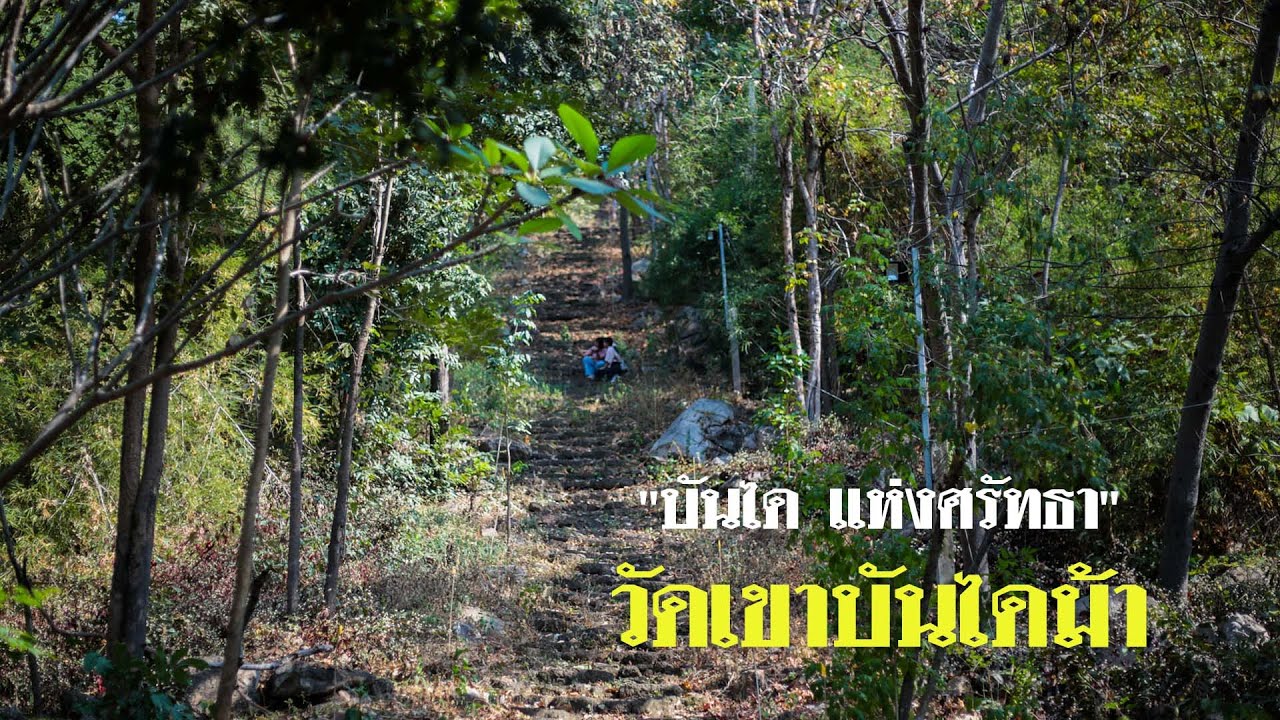
 Click to Access the Navigation Map GPS
Khao Bandai Ma Map
Recommend
 Historical Sites and Monuments(2)
 Landmarks and Memorials(8)
 Art, Craft Centres, Tradition(3)
 Museums(1)
 Historic Homes and Cities(1)
 Places of Worship
 Temple(42)
 Other Sacred Sites(5)
 Suburban Living
 Village, Community(4)
 Nature and Wildlife
 National Parks and Marine Reserves(4)
 Mountain (Doi)(3)
 Dam, Reservoir, Lake(3)
 Waterfalls(11)
 Caves(3)
 River, Canal(3)
 Other natural attractions(3)
 Entertainment and Agricultural
 Farms, Parks and Ecotourism(1)


