
lovethailand home >North Travel Attractions >Uttaradit Travel Attractions >Lap Lae >Fai Luang > Wat Thong Laplae (Wat Lap Lae)
TL;DR: Wat Thong Laplae (Wat Lap Lae) is located at Fai Luang Subdistrict, Laplae District, Uttaradit Province, open Open According To Temple Activities, hours Daytime Visits Are Recommended; Permission Should Be Requested Before Viewing.

Wat Thong Laplae (Wat Lap Lae)
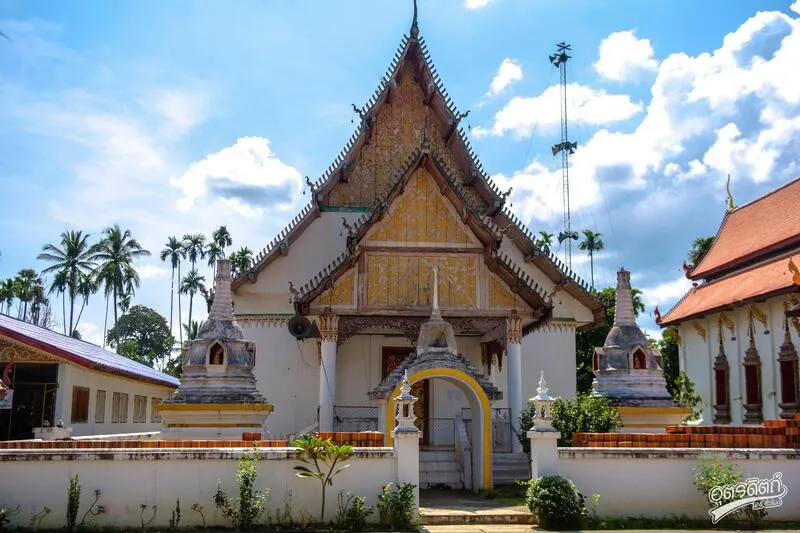
Open Days: Open According To Temple Activities
Opening Hours: Daytime Visits Are Recommended; Permission Should Be Requested Before Viewing The Inverted Image Inside The Ordination Hall
Wat Thong Laplae is located in Fai Luang Subdistrict, Laplae District, Uttaradit Province. It is a local Buddhist temple under the Maha Nikaya order and one of the most distinctive cultural temples in Laplae. The temple was formerly known as “Wat Lap Laeng.” In the local language, the word “laeng” means evening. Later, the temple became known as Wat Thong Laplae, reflecting its connection with the local community of Ban Thong Laplae. Today, the temple is especially known for the remarkable “inverted image” phenomenon inside its ordination hall, where light passing through a small window opening creates an upside-down reflection on the inner wall.
Wat Thong Laplae is a meaningful destination for travelers interested in old temples, local legends, optical phenomena, mural paintings, and the cultural identity of Laplae. It is not only a Buddhist temple for worship and community merit-making, but also a place where science, faith, and local storytelling meet. The inverted image inside the hall is formed by the same basic principle as a pinhole camera. Light enters through a small opening in a dark room and projects an upside-down image onto a surface inside. At Wat Thong Laplae, this natural optical effect appears within a sacred temple space, giving it both scientific and spiritual meaning.
The old name “Wat Lap Laeng” reveals an important linguistic and cultural layer of the temple. The word “laeng” means evening in the local dialect. This name preserves a trace of local speech and shows how the temple is rooted in the everyday language of the people of Laplae. The later name, Wat Thong Laplae, connects the temple more directly with the community of Ban Thong Laplae. In this sense, the temple name itself is a cultural record, linking language, place, and community identity.
The exact founding period of Wat Thong Laplae is not clearly documented, but an important historical record states that the temple underwent a major restoration in 1877. During this restoration, Kru Insom, a craftsman from Ban Tha Sala, gathered local people from Ban Thong Laplae to repair and restore the temple. A new ordination hall was also built during this period. This restoration was not simply a construction project; it was a collective act of faith by the community. It shows that the temple had already held great meaning for local people by that time.
The restoration in 1877 is a key moment in the temple’s history because it reflects the relationship between Buddhism and village life in Laplae. In many Thai communities, temples were built, restored, and maintained through the devotion of villagers. Wat Thong Laplae is an example of this tradition. The temple survived and developed because local people saw it as a spiritual center, a place for merit-making, a gathering space, and a cultural anchor for the community.
The most famous feature of Wat Thong Laplae is the inverted image phenomenon inside the ordination hall. The story became widely known after the image was discovered around mid-2011. A monk named Phra Somchai, who was ordained at the temple at that time, reportedly noticed the phenomenon while resting inside the closed ordination hall. Although the doors and windows were closed, one window did not shut completely. A narrow gap allowed light to pass through, projecting the image of the sermon hall opposite the window onto the inner wall in an upside-down form.
Scientifically, the phenomenon is explained by the same principle as a pinhole camera. When light from an outside object passes through a small opening into a dark enclosed space, the light rays cross and form an inverted image on the opposite surface. The resulting image is usually dim and not sharply defined, but it can be clearly recognizable under the right conditions. At Wat Thong Laplae, the darkness of the ordination hall, the small window gap, and the wall surface work together to create the unusual visual effect.
The phenomenon is also connected with the local legend of Chao Fa Ham Kumarn, regarded in local tradition as the first king of Nakhon Laplae. According to the story, Phumin, a dentist from Chiang Mai, told the abbot that he had dreamed of Chao Fa Ham Kumarn, who informed him that a wondrous inverted image had been discovered inside the temple’s ordination hall. At first, Phumin did not know whether this legendary figure truly existed in local tradition. After learning more, he traveled to the temple and informed the abbot. This story helped connect the optical phenomenon with the deeper legendary world of Laplae.
Moved by faith, Phumin later built a glass chedi opposite the window of the ordination hall so that the reflected image would appear as a beautiful inverted chedi on the wall inside. This transformed the phenomenon from an accidental reflection into a more deliberate sacred visual experience. The glass chedi became part of the temple’s identity, linking faith, local legend, and the science of light into one unique attraction.
Inside the ordination hall, mural paintings were later created to tell stories of Laplae legends and local ways of life. A white area was left on the wall where the inverted image appears, allowing the reflection to remain visible. These murals turn the interior of the hall into a visual narrative of the community. Visitors can learn about local legends, the life of Laplae people, and the story of Chao Fa Ham Kumarn while also observing the optical phenomenon that made the temple famous.
Another important feature of Wat Thong Laplae is the old scripture hall standing in the water in front of the ordination hall. A water-surrounded scripture hall was traditionally used to protect Buddhist manuscripts from insects and animals, while also symbolizing the careful preservation of sacred teachings. This old structure adds historical and architectural value to the temple. Together with the ordination hall, mural paintings, glass chedi, and inverted image, it makes Wat Thong Laplae a layered cultural site.
Visitors who wish to view the inverted image should request permission from the abbot or temple caretaker before entering the ordination hall. The hall is a sacred space, and the image depends on specific light conditions. Visitors should not open or close windows, adjust the light, or enter restricted areas without guidance. Respectful behavior is especially important because the temple is still an active place of worship for the local community.
There are also local beliefs and temple practices that visitors should respect. In particular, the community has traditional restrictions related to entering the ordination hall and the sacred boundary area. Travelers should follow the temple’s guidance and respect local customs, even when they differ from ordinary tourist expectations. Visiting a community temple means entering a living sacred space, not simply a sightseeing location.
Wat Thong Laplae remains active during Buddhist holy days and merit-making occasions. Local people use the temple for activities such as Makha Bucha, Visakha Bucha, Asalha Bucha, the beginning and end of Buddhist Lent, Kathin, robe offering ceremonies, and other community merit-making events. These activities keep the temple closely connected to local life and help preserve Buddhist traditions in Laplae.
Getting There is easiest by private car. From Uttaradit city, travel toward Laplae District, then continue to Fai Luang Subdistrict. The temple is close to several important cultural attractions, including Laplae Town Gate, Laplae Museum, Wat Don Sak, and Wat Phra Thaen Sila At. Local roads pass through community areas, so careful driving is recommended, especially during festivals or weekends.
Travelers without a private car can start from Uttaradit city or Laplae town and arrange local transport to visit Wat Thong Laplae and nearby attractions in one route. A half-day itinerary may include Laplae Town Gate, Laplae Museum, Wat Thong Laplae, and a local restaurant. A full-day route can add Wat Don Sak, Wat Pho Thong, Wat Phra Yuen Phutthabat Yukhon, and Wat Phra Thaen Sila At.
The best time to visit is during the daytime, because the inverted image depends on natural light. However, visitors should ask the temple caretaker before entering the ordination hall, as the visibility of the image may depend on light conditions and temple arrangements. Morning and late afternoon are also pleasant times to explore the temple grounds and nearby cultural sites.
Laplae is also known for local food, including khao pun phak, mi phan, noodles, northern-style dishes, and community restaurants. After visiting Wat Thong Laplae, travelers can stop at nearby restaurants such as Huan Khao Pun Phak Rim Khlong, Kuai Tiao Hoi Kha Him Khlong Laplae, Lum Lum Laplae Baan 100 Pi, Som Tam Mae Daeng Wat Don Sak 1, and Pai Laplae. These food stops help complete the cultural travel experience.
Accommodation is available in both Laplae and Uttaradit city. Travelers who want to focus on temples and local culture may choose accommodations in or near Laplae, while those who prefer convenient access to shops, transport, and city services may stay in Uttaradit city. Since Wat Thong Laplae is close to several cultural attractions, it is easy to include in a short or full-day itinerary.
Overall, Wat Thong Laplae is one of the most fascinating temples in Uttaradit Province. Its old name, restoration history, inverted image phenomenon, mural paintings, glass chedi, scripture hall in the water, and connection with the legend of Chao Fa Ham Kumarn make it a temple of layered cultural meaning. For travelers interested in history, local belief, Buddhist art, and the science of light inside a sacred space, Wat Thong Laplae offers a rare and memorable experience.
| Name | Wat Thong Laplae |
| Location | Fai Luang Subdistrict, Laplae District, Uttaradit Province |
| Address | Fai Luang Subdistrict, Laplae District, Uttaradit Province 53130, Thailand |
| Coordinates | 17.670734, 100.027909 |
| Highlights | An old Laplae temple known for the inverted image phenomenon inside the ordination hall, mural paintings about Laplae legends and local life, and an old scripture hall in the water |
| History | Formerly known as Wat Lap Laeng. The founding period is unknown, but a major restoration took place in 1877 under Kru Insom from Ban Tha Sala and local villagers from Ban Thong Laplae. |
| Name Origin | The former name “Wat Lap Laeng” includes the local word “laeng,” meaning evening. The temple later became known as Wat Thong Laplae after the local community. |
| Distinctive Features | Ordination hall with an inverted image phenomenon, glass chedi opposite the window, mural paintings, sermon hall, and old scripture hall in the water |
| Travel Information | Travel by private car from Uttaradit city to Laplae District, then continue to Fai Luang Subdistrict. The temple can be combined with Laplae Town Gate, Laplae Museum, Wat Don Sak, and Wat Phra Thaen Sila At. |
| Current Status | An active local Buddhist temple in Fai Luang Subdistrict. Permission should be requested before viewing the inverted image inside the ordination hall. |
| Open Days | Open According To Temple Activities |
| Opening Hours | Daytime Visits Are Recommended; Permission Should Be Requested Before Viewing The Inverted Image Inside The Ordination Hall |
| Main Areas / Zones | Ordination hall with inverted image, glass chedi, mural paintings, sermon hall, scripture hall in the water, and community religious activity areas |
| Abbot / Caretaker | Phra Khru Khositthamphinit |
| Nearby Tourist Attractions | 1. Laplae Town Gate – About 2 km 2. Laplae Museum – About 2 km 3. Wat Don Sak – About 2 km 4. Wat Pho Thong – About 4 km 5. Wat Phra Yuen Phutthabat Yukhon – About 5 km 6. Wat Phra Thaen Sila At – About 7 km |
| Nearby Restaurants | 1. Huan Khao Pun Phak Rim Khlong – About 2 km, Tel. 085-273-9344 2. Kuai Tiao Hoi Kha Him Khlong Laplae – About 2 km 3. Lum Lum Laplae Baan 100 Pi – About 3 km, Tel. 095-628-3125 4. Som Tam Mae Daeng Wat Don Sak 1 – About 3 km, Tel. 084-425-8615 5. Pai Laplae – About 7 km, Tel. 081-888-8772, 062-239-4795 |
| Nearby Accommodations | 1. Na Laplae – About 2 km, Tel. 082-661-0881, 055-431-137 2. Thaimit Resort – About 6 km 3. Hua Dum Resort – About 7 km 4. Nawatt Inn – About 9 km, Tel. 055-830-481, 093-959-8287 5. Sunee Boutique Hotel – About 10 km |
Frequently Asked Questions (FAQ)
Q: Where Is Wat Thong Laplae Located?
A: Wat Thong Laplae is located in Fai Luang Subdistrict, Laplae District, Uttaradit Province, Thailand.
Q: What Was The Former Name Of Wat Thong Laplae?
A: The temple was formerly known as Wat Lap Laeng. In the local language, “laeng” means evening. It was later renamed Wat Thong Laplae.
Q: How Does The Inverted Image At Wat Thong Laplae Occur?
A: The inverted image occurs when light passes through a small window gap into the dark ordination hall and projects an upside-down image onto the inner wall, using the same principle as a pinhole camera.
Q: How Is Wat Thong Laplae Connected To Chao Fa Ham Kumarn?
A: Local stories connect the inverted image phenomenon with a dream involving Chao Fa Ham Kumarn, a legendary first king of Nakhon Laplae, which led to further devotion and the construction of the glass chedi.
Q: Can Visitors View The Inverted Image Inside The Ordination Hall?
A: Visitors should request permission from the abbot or temple caretaker before entering the ordination hall, as it is a sacred space and the image depends on specific light conditions.
Q: What Are The Main Attractions Inside Wat Thong Laplae?
A: The main attractions include the inverted image ordination hall, glass chedi, mural paintings about Laplae legends and local life, the sermon hall, and the old scripture hall in the water.
Q: What Attractions Are Near Wat Thong Laplae?
A: Nearby attractions include Laplae Town Gate, Laplae Museum, Wat Don Sak, Wat Pho Thong, Wat Phra Yuen Phutthabat Yukhon, and Wat Phra Thaen Sila At.
 Category: ●Places of Worship
 Group: ●Temple
Last Update : 5 MonthAgo
 Last Update : 5 MonthAgo
 Click to Access the Navigation Map GPS
Wat Thong Laplae (Wat Lap Lae) Map
Gellery
Recommend

 Art, Culture and Heritage
 Historical Sites and Monuments(2)
 Landmarks and Memorials(8)
 Art, Craft Centres, Tradition(3)
 Museums(1)
 Historic Homes and Cities(1)
Temple(42)
Historic Homes and Cities(1)
Temple(42)
 Other Sacred Sites(6)
 Suburban Living
 Village, Community(4)
 Nature and Wildlife
 National Parks and Marine Reserves(5)
 Mountain (Doi)(3)
 Dam, Reservoir, Lake(3)
 Waterfalls(11)
 Caves(3)
 River, Canal(3)
 Other natural attractions(3)
 Entertainment and Agricultural
 Farms, Parks and Ecotourism(1)
 Travel Articles, Recipes
 Travel Review, Food Review(1)


