
lovethailand home >North Travel Attractions >Phrae Travel Attractions >Muang Phrae >Nai Wiang > Phrae City Wall
TL;DR: Phrae City Wall is located at Nai Wiang Subdistrict, Mueang Phrae District, Phrae Province, open Open Daily, hours 24 Hours.

Phrae City Wall
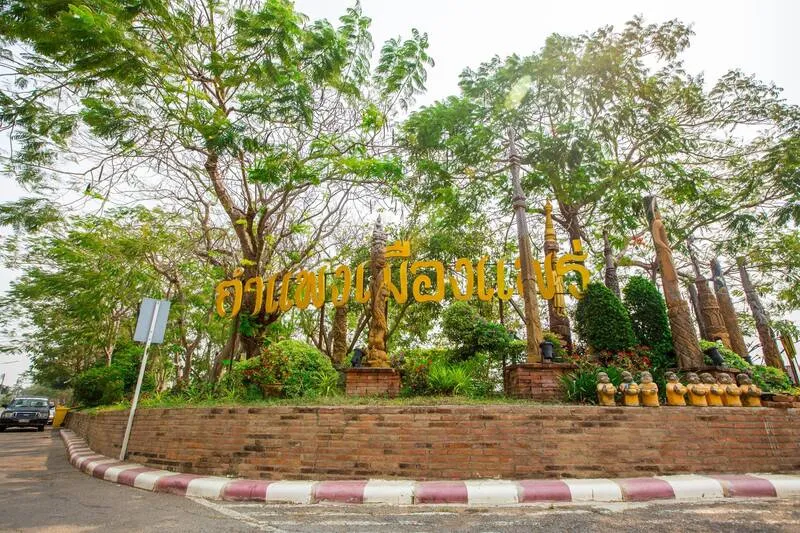
Open Days: Open Daily
Opening Hours: 24 Hours
Phrae City Wall is one of the most important historical landmarks in Phrae Province. More than a simple old embankment, it is a surviving boundary of the ancient city, a flood-control system, and a visible reminder of Phrae’s long urban history. Located within Nai Wiang Subdistrict in Mueang Phrae District, the wall and moat still help visitors understand the layout of old Phrae far better than many cities where the original defensive line has already disappeared.
The poetic lines often associated with the site describe the wall as a protective boundary of earth, brick, and wisdom, built by ancestors to defend the city from danger. That description is remarkably accurate. Phrae City Wall was not only a military defense line. It was also designed to protect the city from seasonal flooding caused by the Yom River. This dual purpose is one of the reasons the site is so historically valuable.
Although no exact founding date survives, historical evidence indicates that the wall is more than 1,100 years old. Records related to Wat Luang mention that in 1374 BE, during the reign of Thao Pahusingh, the wall was already in existence and was strengthened with higher brickwork to prevent floodwater from entering the city. This clearly shows that the wall had been built even earlier and was significant enough to be improved rather than newly created at that time.
Phrae City Wall is a single-tier defensive wall about 7 meters high and around 15 meters wide at the base. It stretches roughly 4,000 meters around the old city. Unlike many walled cities that follow a square layout, old Phrae has an oval outline often compared to a conch shell. This distinctive shape makes the city wall especially interesting for travelers who enjoy ancient urban planning and historical landscape studies.
The interior of the wall contains large ancient bricks and stones, while the exterior appears as a long earthen embankment. Outside the wall is a moat that once strengthened both defense and drainage. Inside the wall, roads circle the old city, and in some parts the road still follows the crest of the embankment. This makes the site easy to explore while also helping visitors visualize the outline of the ancient settlement.
Old Phrae had four main gates: Pratu Mai in the north, Pratu Chai in the east, Pratu Man in the south, and Pratu Si Chum in the west. There was also a smaller gate known as Pratu Liang Ma, or the Horse Gate, used for taking animals outside the city. Each gate had its own practical and symbolic role. Together they formed a carefully organized access system rather than random entry points through the wall.
One of the most impressive aspects of the wall is its long relationship with local life. Residents still use traditional terms for the landscape, calling the moat “Kue Mueang” or “Nam Kue,” while the wall itself is often called “Mek.” These local names show that the wall and moat are not detached archaeological remains. They remain part of living memory and local identity in Phrae.
The wall is also valuable as a cultural landscape. It connects with historic temples, noble residences, museums, and old neighborhoods inside and around the former city boundary. Visiting the wall together with places such as Wat Phra Bat Ming Mueang Worawihan, Khum Chao Luang, Wat Luang, Khum Wichai Racha, and Baanthep Museum gives a much richer understanding of how the city once functioned as a protected urban center.
For travelers, Phrae City Wall is best appreciated slowly. Instead of treating it as a single monument, it is better understood as a route, a boundary, and a system. Walking or driving along different sections reveals changing perspectives of the old moat, elevated earth embankments, community areas, trees, gates, and nearby heritage sites. The site is especially rewarding for visitors who enjoy history, city landscapes, and quiet local atmosphere more than formal museum-style sightseeing.
Getting There Phrae City Wall is easy to access from several directions. You can enter the old-city zone through Pratu Chai from Charoen Mueang Road, through Pratu Mai from Ban Mai Road, through the Ban Nai Wiang intersection toward Pratu Man, or from the Ban Suphan and Maha Pho side toward Pratu Si Chum. From Phrae Airport, the area is around 10-15 minutes away by car, and from Phrae Bus Terminal it is about 10 minutes. Because the wall is spread around the old town, many travelers choose to stop at one section first and then continue to other nearby historical attractions.
| Name | Phrae City Wall |
| Summary | An ancient city wall and moat system over 1,100 years old, representing Phrae’s old urban boundary, flood protection wisdom, and cultural identity |
| Location | Nai Wiang Subdistrict, Mueang Phrae District, Phrae Province |
| Coordinates | 18.1362523826, 100.139114713 |
| Highlights | Ancient earthen wall, old moat, four historic city gates, oval city plan, and a strong connection to flood protection and old-town identity |
| History | Exact construction date is unknown, but the wall existed before 1374 BE and is considered more than 1,100 years old |
| Name Origin | It is the ancient city wall of Phrae; local people call the wall “Mek” and the moat “Kue Mueang” or “Nam Kue” |
| Distinctive Features | Single-layer wall about 7 meters high and 15 meters wide at the base, enclosing the old city for around 4,000 meters |
| Main Areas / Zones | Pratu Mai, Pratu Chai, Pratu Man, Pratu Si Chum, the Horse Gate, moat sections, and the ring-road stretches along the old city |
| Current Status | Large sections of the wall and moat are still visible, though some parts have been altered by roads and later urban development |
| Open Days | Open Daily |
| Opening Hours | 24 Hours |
| Travel Information | Accessible from multiple entry roads into Phrae old town, especially from Pratu Chai, Pratu Mai, Pratu Man, and Pratu Si Chum |
| Facilities | Roadside access, walking areas along some sections, nearby cafés, restaurants, and heritage attractions in the old city |
| Nearby Tourist Attractions | 1. Baanthep Museum – 0.2 km 2. Wat Phra Bat Ming Mueang Worawihan – 0.3 km 3. Khum Chao Luang – 0.5 km 4. Wat Luang – 0.6 km 5. Khum Wichai Racha – 0.7 km |
| Nearby Restaurants | 1. 164 Cafe Pratu Chai Branch – 0.2 km Tel. 094-594-2963 2. Pun Jai – 0.3 km Tel. 054-620-727 3. Khanom Jeen Pa Da Pratu Chai – 0.4 km Tel. 093-147-9326 4. Khanom Jeen Pa Da Original Branch – 0.4 km Tel. 088-252-9155 5. Khao Soi Je Lek Pratu Chai – 0.5 km Tel. 064-196-4428 |
| Nearby Accommodations | 1. Huern Na Na Boutique Hotel – 0.9 km Tel. 054-524-800 2. Phrae Nakara Hotel – 1.0 km Tel. 054-521-321 3. Amonruk Hotel – 1.1 km Tel. 054-511-111 4. Taris Art Hotel – 1.7 km Tel. 054-511-122 5. Come Moon Loft Hotel – 2.0 km Tel. 096-698-2294 |
Frequently Asked Questions (FAQ)
Q: Where is Phrae City Wall located?
A: It is located within Nai Wiang Subdistrict in Mueang Phrae District, surrounding the old-city area of Phrae.
Q: How old is Phrae City Wall?
A: Historical evidence indicates that it is more than 1,100 years old and already existed before 1374 BE.
Q: What makes Phrae City Wall special?
A: It is an ancient earthen wall and moat system that protected the city from both enemies and flooding from the Yom River.
Q: Can visitors access the site at any time?
A: Yes. The wall is an open historical landscape that can be visited every day, 24 hours a day.
Q: Which gate is a good place to start exploring?
A: Pratu Chai is a convenient starting point if you want nearby cafés and easy old-town access, while Pratu Si Chum is ideal for a quieter historical atmosphere.
Q: Is Phrae City Wall good for general tourists?
A: Yes. It is especially rewarding for travelers who enjoy old-town walks, historical landscapes, and cultural heritage rather than only indoor museum visits.
Q: What can I combine with a visit to the city wall?
A: You can easily combine it with Baanthep Museum, Wat Phra Bat Ming Mueang Worawihan, Khum Chao Luang, Wat Luang, and Khum Wichai Racha in the same day.
 Category: ●Art, Culture and Heritage
 Group: ●Historical Sites and Monuments
Last Update : 6 MonthAgo
 Last Update : 6 MonthAgo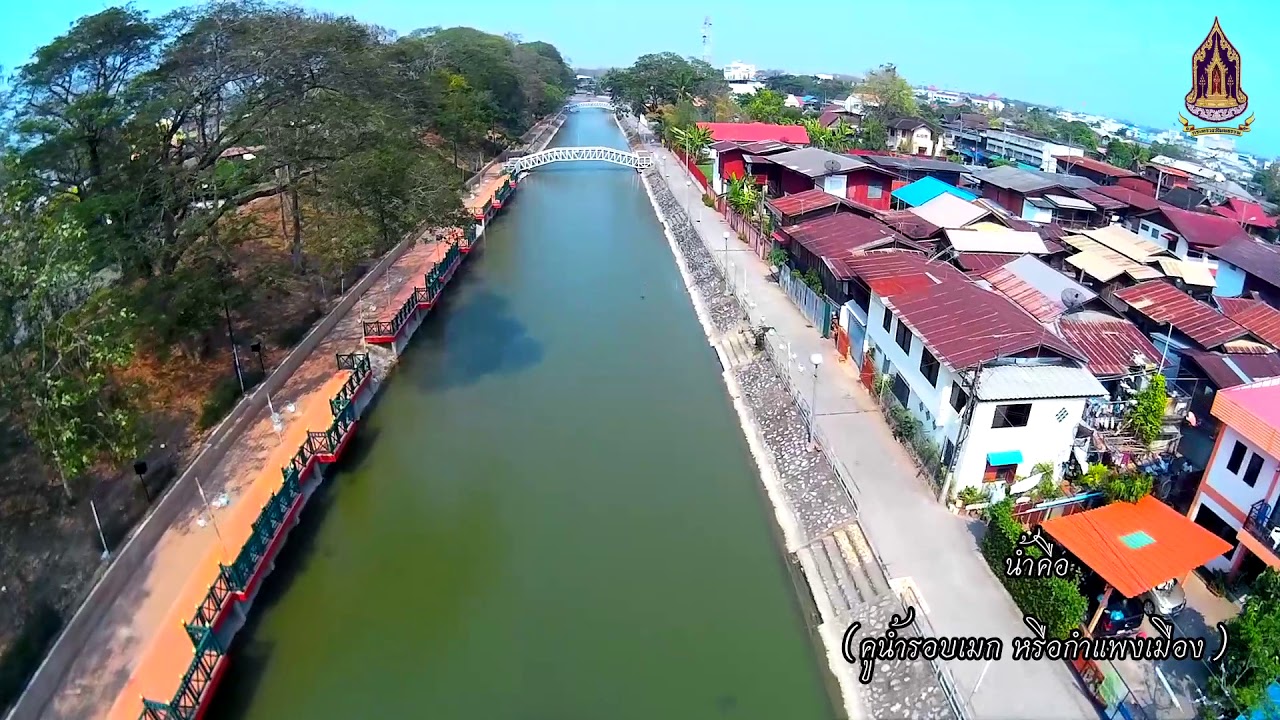
 Click to Access the Navigation Map GPS
Phrae City Wall Map
Recommend
 Historical Sites and Monuments(4)
 Landmarks and Memorials(5)
 Art, Craft Centres, Tradition(3)
 Museums(6)
 Historic Homes and Cities(2)
 Educational Places
 Museum for Study(1)
 Educational Gardens, Farm(2)
 Places of Worship
 Temple(31)
 Other Sacred Sites(8)
 Suburban Living
 Village, Community(6)
 Local Market(1)
 Nature and Wildlife
 National Parks and Marine Reserves(4)
 Dam, Reservoir, Lake(14)
 Waterfalls(6)
 Hot Springs(1)
 Caves(5)
 River, Canal(3)
 Islands(1)
 Other natural attractions(5)
 Entertainment and Agricultural
 Farms, Parks and Ecotourism(5)
 Outdoor and Adventure Activities(1)
 Travel Articles, Recipes
 Travel Review, Food Review(2)


