
lovethailand home >Northeastern Travel Attractions >Bueng Kan Travel Attractions >Mueang Bueng Kan >Ho Kham > Kaeng Ahong
TL;DR: Kaeng Ahong is located at Ban Ahong, Moo 3, Khai Si Subdistrict, Mueang Bueng Kan District, Bueng Kan Province, Thailand, open Daily, hours 06.00 – 18.00.

Kaeng Ahong
Open Days: Daily
Opening Hours: 06.00 – 18.00
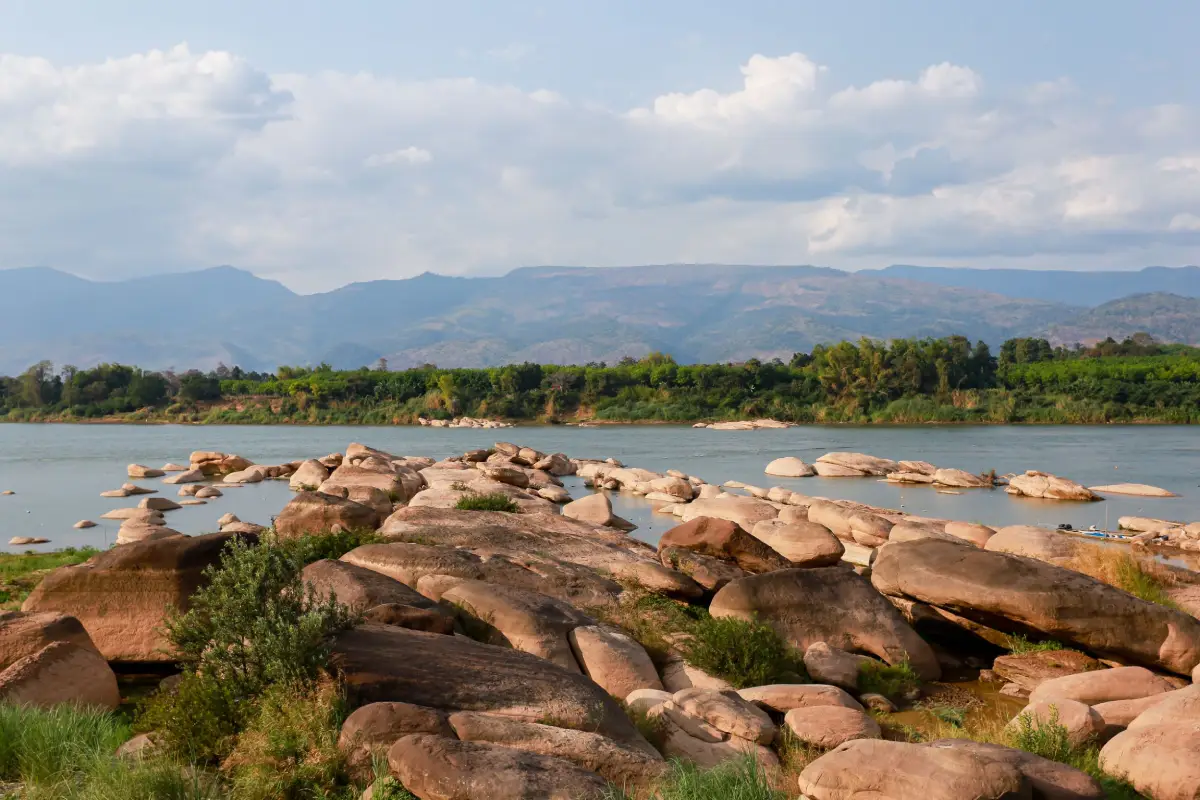
Kaeng Ahong in Bueng Kan Province is a natural rock rapid in the Mekong River, located in front of Wat Ahong Silawat at Ban Ahong, Moo 3, Khai Si Subdistrict, Mueang Bueng Kan District, Bueng Kan Province. The site is about 20 to 21 kilometers from Bueng Kan town and is one of the province’s most meaningful riverside landmarks. It combines the natural power of the Mekong River, Buddhist faith, local Naga beliefs, riverside fishing culture, and the annual Naga Fireball phenomenon in one place. Local people widely know Kaeng Ahong as the “navel of the Mekong River,” a name connected with the belief that this area is one of the deepest points of the river.
Kaeng Ahong is not just a scenic viewpoint. Its character comes from natural rock formations in the middle of the Mekong River. During the dry season, especially from March to May, the water level drops and the rocks become clearly visible. During the high-water season, the same area becomes a powerful whirlpool zone where the current moves strongly and forms a cone-shaped vortex. This seasonal transformation makes Kaeng Ahong a place that changes dramatically throughout the year. Visitors in different months may see either exposed rock formations or the impressive force of deep, swirling water.
The Mekong River in front of Kaeng Ahong is about 300 meters wide during the low-water season and about 400 meters wide during the high-water season. The combination of the wide river, visible rock formations, deep current, and the riverside temple creates a distinctive landscape. The beauty of this place is not only visual; it is also connected with sound, movement, local belief, and the sense of standing beside one of Southeast Asia’s most important rivers.
The rock formations at Kaeng Ahong have local names based on their shapes and stories, such as Hin Lin Nak, Hin Pla Khe, and Tham Pla Sawai. These names show how local people have interpreted the river through imagination, observation, and long experience. Each rock formation is part of the community’s memory. It is not simply a geological feature, but part of a living cultural landscape along the Mekong.
The belief in the “navel of the Mekong River” is central to the identity of Kaeng Ahong. Local tradition says that the river in front of Wat Ahong Silawat is extremely deep and is connected with underwater caves and Naga legends. Some stories say that the Lao side opposite the temple contains large submerged rocks and underwater caves where Nagas gather, especially during the end of Buddhist Lent. These beliefs have made Kaeng Ahong one of Bueng Kan’s important spiritual riverside destinations.
Kaeng Ahong is also closely associated with the Naga Fireball phenomenon. During the full-moon night of the eleventh lunar month, especially when the Thai and Lao calendars align, many visitors come to the Ahong riverside area to observe the event. The atmosphere during the Buddhist Lent festival period is lively and deeply spiritual. People come to make merit, pay respect at the temple, watch the Mekong River, and experience one of the most famous cultural-natural phenomena connected with the river.
Wat Ahong Silawat is the temple that stands directly beside Kaeng Ahong. The temple has a spacious and peaceful riverside setting. Its main architectural highlight is the marble ordination hall built in an applied Thai style. Inside the hall is Phra Phuttha Khuwananthasatsada, a brass Buddha image with a form resembling Phra Phuttha Chinnarat. Many visitors begin their visit by paying respect inside the hall before walking to the riverside viewpoint and the sign marking the navel of the Mekong River.
The history of Wat Ahong Silawat is connected with the revival and development of a forest temple by the Mekong River. The area was once a quiet monastic site surrounded by trees. It was later restored and developed into a complete temple. Phra Nithet Satsanakhun, also known as Luang Por Saman Siripanyo, played a major role in the restoration and development of Wat Ahong Silawat. The temple now serves both as a place of worship and as an important cultural and natural destination in Bueng Kan.
The riverside walkway inside the temple allows visitors to enjoy wide views of the Mekong River. From this area, visitors can look across toward the Lao side and observe the changing landscape of the river. On clear days, the opposite bank can be seen clearly. The viewpoint is suitable for photography, quiet reflection, and understanding why this place has become so deeply connected with both geography and belief.
The Ahong rock garden inside the temple is another interesting area. Large natural rocks are arranged across the temple grounds, creating an unusual landscape that complements the rock formations in the river. These stones give the temple a distinctive natural character. Visitors can experience both the riverside rock rapid and the land-based rock garden in one visit, making the temple grounds feel strongly connected with the natural geology of the area.
Kaeng Ahong is also important for local fishing culture. Communities along this part of the Mekong River have long relied on the river for food, livelihood, and local knowledge. The currents, rocks, underwater caves, and fertile river environment are associated with many Mekong fish species. Local stories about giant catfish and other river fish show the relationship between the community and the river. Even as tourism has grown, Kaeng Ahong remains a living river landscape for local people.
The best time to visit depends on the experience a traveler wants. From March to May, the water level is lower and the rock formations are easier to see. During the high-water season, the whirlpool effect becomes more powerful and the river feels more dramatic. Visitors interested in the Naga Fireball phenomenon should plan for the end of Buddhist Lent, especially the full-moon night of the eleventh lunar month. Each season gives Kaeng Ahong a different character.
Kaeng Ahong is suitable for several types of travelers. Nature lovers can observe the Mekong River, rock formations, and seasonal water movement. Buddhist visitors can pay respect at Wat Ahong Silawat and its important Buddha image. Travelers interested in local beliefs can learn about the Naga legends and the Naga Fireball tradition. Families and older travelers can enjoy the site because it is relatively easy to reach and does not require a difficult hike.
Getting There from Bueng Kan town is convenient. Take Highway 212 toward Nong Khai. The distance is about 20 to 21 kilometers, and the drive usually takes around 20 to 30 minutes depending on road conditions. The destination is Wat Ahong Silawat at Ban Ahong, Khai Si Subdistrict. Private cars, rental cars, motorcycles, and hired local transport are practical options. Visitors without private transport should arrange the return trip in advance.
After arriving at the temple, visitors can park in the temple area and walk through the main points in sequence: the marble ordination hall, Phra Phuttha Khuwananthasatsada, Phra Chedi Si Ahong, the Naga worship area, the Mekong riverside walkway, the navel of the Mekong viewpoint, and the Ahong rock garden. A normal visit takes about 1 to 2 hours, depending on the time spent worshipping, walking, taking photos, and resting by the river.
There is no admission fee for Kaeng Ahong or Wat Ahong Silawat. Visitors may enter the temple, pay respect, and enjoy the riverside viewpoint without buying an entrance ticket. Donations can be made according to personal faith. Main expenses are transport, food, drinks, souvenirs, or other personal costs. This makes Kaeng Ahong an accessible destination for local residents, Thai travelers, and international visitors.
Because the site is both a temple and a riverside natural attraction, visitors should behave respectfully. Modest clothing is appropriate. Loud behavior should be avoided in religious areas. Visitors should not climb unsafe rocks, go into strong currents, litter, or disturb the temple environment. During the high-water season, the river should be viewed only from safe points because this section of the Mekong is deep and powerful.
During the end of Buddhist Lent and the Naga Fireball period, visitors should allow extra travel time because many people come to Ban Ahong and Wat Ahong Silawat. Parking areas, roads, and viewing spots can become crowded. Even during busy festival periods, visitors should maintain respectful behavior within the temple and avoid disturbing local residents.
Kaeng Ahong can be combined with other attractions in Bueng Kan. A half-day route can begin in Bueng Kan town, continue to Chao Mae Song Nang Shrine, Thai-Lao Market on market days, or the Mekong Walking Street area, and then go to Kaeng Ahong in the afternoon. With more time, visitors can continue to Nong Kut Ting, Wat Photharam, Hin Sam Wan, Phu Sing, or other nature destinations in the province.
Food options are available near the temple and in Bueng Kan town. The closest riverside restaurants serve Mekong fish, Thai food, and made-to-order dishes. Visitors can pay respect at the temple, view the rapid, and have a riverside meal in one trip. More restaurant choices are available in Bueng Kan town, including riverside restaurants, cafés, Isan food shops, and family restaurants.
For accommodation, Bueng Kan town is the most convenient base. It is close enough to reach Kaeng Ahong in about half an hour and offers hotels, restaurants, riverside areas, and transport connections. Travelers who want a quieter atmosphere may also consider resort-style accommodation along the route toward Pak Khat or Nong Khai, depending on the wider itinerary.
For international travelers, Kaeng Ahong can be understood as a natural Mekong River rapid and a sacred riverside site known locally as the navel of the Mekong River. It stands directly beside Wat Ahong Silawat, a Buddhist temple connected with Naga beliefs and local river legends. A visit here offers a clear view of how nature, Buddhism, local mythology, and community life are linked along the Mekong River.
The special charm of Kaeng Ahong is the balance between the power of the river and the stillness of the temple. In front, the Mekong moves with depth, current, and seasonal force. Behind, the temple offers Buddha images, sacred structures, shaded grounds, and quiet space. This contrast makes the place memorable. It is a viewpoint, a temple, a cultural landscape, and a riverside community space at the same time.
In summary, Kaeng Ahong is one of the essential places to visit in Bueng Kan. It brings together a natural rock rapid in the Mekong River, the navel of the Mekong viewpoint, Wat Ahong Silawat, Phra Phuttha Khuwananthasatsada, Phra Chedi Si Ahong, the Ahong rock garden, Naga beliefs, the Naga Fireball tradition, and local fishing life. For travelers who want to understand Bueng Kan through nature, faith, culture, and the Mekong River, Kaeng Ahong is a complete and meaningful destination.
| Name | Kaeng Ahong / Wat Ahong Silawat |
| Location | Ban Ahong, Moo 3, Khai Si Subdistrict, Mueang Bueng Kan District, Bueng Kan Province, Thailand |
| Address | Wat Ahong Silawat, Ban Ahong, Moo 3, Khai Si Subdistrict, Mueang Bueng Kan District, Bueng Kan 38000 |
| Highlights | A natural rock rapid in the Mekong River, the navel of the Mekong viewpoint, marble ordination hall, Phra Phuttha Khuwananthasatsada, Phra Chedi Si Ahong, Ahong rock garden, and Naga Fireball viewing area during Buddhist Lent festival period |
| History / Importance | A natural Mekong rock rapid in front of Wat Ahong Silawat, believed to be the deepest point of the Mekong River and a sacred place connected with Naga legends and the Naga Fireball phenomenon |
| Name Origin | Kaeng Ahong refers to the natural river rapid around Ban Ahong. Wat Ahong Silawat was named in relation to the Ahong rapid and the riverside stone landscape |
| Distinctive Features | During the high-water season, the current forms a strong cone-shaped whirlpool. During the low-water season from March to May, the rock formations are clearly visible. Rock groups have local names such as Hin Lin Nak, Hin Pla Khe, and Tham Pla Sawai |
| Travel Information | From Bueng Kan town, take Highway 212 toward Nong Khai. The distance is about 20 – 21 km and the drive takes about 20 – 30 minutes |
| Current Status | Open as a Mekong riverside attraction and an important Buddhist temple site in Mueang Bueng Kan District |
| Open Days | Daily |
| Opening Hours | 06.00 – 18.00 |
| Fees | No admission fee; donations may be made according to personal faith |
| Facilities | Parking area, worship area, Mekong riverside walkway, viewpoint, navel of the Mekong sign, toilets, nearby restaurants, and resting areas inside the temple grounds |
| Main Areas / Zones | 1. Marble Ordination Hall 2. Phra Phuttha Khuwananthasatsada 3. Phra Chedi Si Ahong 4. Navel Of The Mekong Viewpoint 5. Mekong Riverside Walkway 6. Ahong Rock Garden 7. Naga And Mekong Navel Worship Area 8. Naga Fireball Viewing Area During The Buddhist Lent Festival Period |
| Abbot / Religious Caretaker | Phra Nithet Satsanakhun (Saman Siripanyo, Pali Grade 5), Wat Ahong Silawat |
| Main Contact Number | Wat Ahong Silawat, Tel. 043-873-480 |
| Official Website / Information Sources | Thailand Tourism Directory, Tourism Authority of Thailand, DASTA, and Thai Monastic Directory |
| Nearby Tourist Attractions | 1. Wat Ahong Silawat, About 0 Km 2. Ahong Rock Garden, About 0 Km 3. Chao Mae Song Nang Shrine, About 21 Km 4. Thai-Lao Market Bueng Kan, About 21 Km 5. Bueng Kan Mekong Walking Street, About 21 Km 6. Nong Kut Ting, About 25 Km 7. Wat Photharam Or Wat Luang Pho Phra Yai, About 28 Km 8. Hin Sam Wan / Phu Sing, About 60 Km |
| Nearby Restaurants | 1. Lung Somphan Restaurant (Mekong Fish), About 0.3 Km, Tel. 086-021-7745 2. Krua Mae Phim Rim Khong, About 0.3 Km, Tel. 081-184-2418, 090-945-4485 3. Mushroom Cafe & Co-Working Space, About 19 Km, Tel. 084-030-0110 4. Riverside Restaurant & Bar Bungkan, About 20 Km, Tel. 087-222-9899 5. Tam Yum Yua By Miki, Rim Khong Bueng Kan Branch, About 20 Km, Tel. 082-689-1316 6. Noi Som Tum In Front Of Bueng Kan Hospital, About 21 Km, Tel. 081-546-7734 |
| Nearby Accommodations | 1. Kwang Khoon Yao Cafe & Resort Bueng Kan, About 22 Km 2. The One Hotel Bueng Kan, About 21 Km, Tel. 042-492-234 3. B2 Bueng Kan Boutique And Budget Hotel, About 20 Km, Tel. 052-009-161, 088-263-2897 4. The Wisdom Residence, About 22 Km, Tel. 042-086-977 5. BK Place Hotel, About 24 Km, Tel. 085-005-0589, 099-638-0988, 042-491-805, 042-491-027 6. M Grand Hotel, About 28 Km, Tel. 095-146-5363 |
Frequently Asked Questions (FAQ)
Q: Where is Kaeng Ahong located?
A: Kaeng Ahong is located in front of Wat Ahong Silawat at Ban Ahong, Moo 3, Khai Si Subdistrict, Mueang Bueng Kan District, Bueng Kan Province, about 20 to 21 kilometers from Bueng Kan town.
Q: Is Kaeng Ahong open every day?
A: Yes. It is open daily as a Buddhist temple site and Mekong riverside viewpoint.
Q: What are the opening hours of Kaeng Ahong?
A: The general visiting hours are 06.00 to 18.00.
Q: Is there an entrance fee?
A: No. There is no admission fee. Visitors may make donations according to personal faith.
Q: Why is Kaeng Ahong called the navel of the Mekong River?
A: Local people believe the area in front of Kaeng Ahong is one of the deepest points of the Mekong River. During the high-water season, the current forms a strong cone-shaped whirlpool, and the site is linked with Naga legends.
Q: When is the best time to see the rock formations at Kaeng Ahong?
A: The best time to see the rock formations is from March to May, when the water level is lower. The Naga Fireball period is during the end of Buddhist Lent, on the full-moon night of the eleventh lunar month.
Q: What can visitors see inside Wat Ahong Silawat?
A: Visitors can see the marble ordination hall, Phra Phuttha Khuwananthasatsada, Phra Chedi Si Ahong, Ahong rock garden, Naga worship area, and the navel of the Mekong viewpoint.
Q: Which nearby attractions can be visited after Kaeng Ahong?
A: Nearby attractions include Chao Mae Song Nang Shrine, Thai-Lao Market, Bueng Kan Mekong Walking Street, Nong Kut Ting, Wat Photharam, Hin Sam Wan, and Phu Sing.
 Category: ●Nature and Wildlife
 Group: ●River, Canal
Last Update : 3 WeekAgo
 Last Update : 3 WeekAgo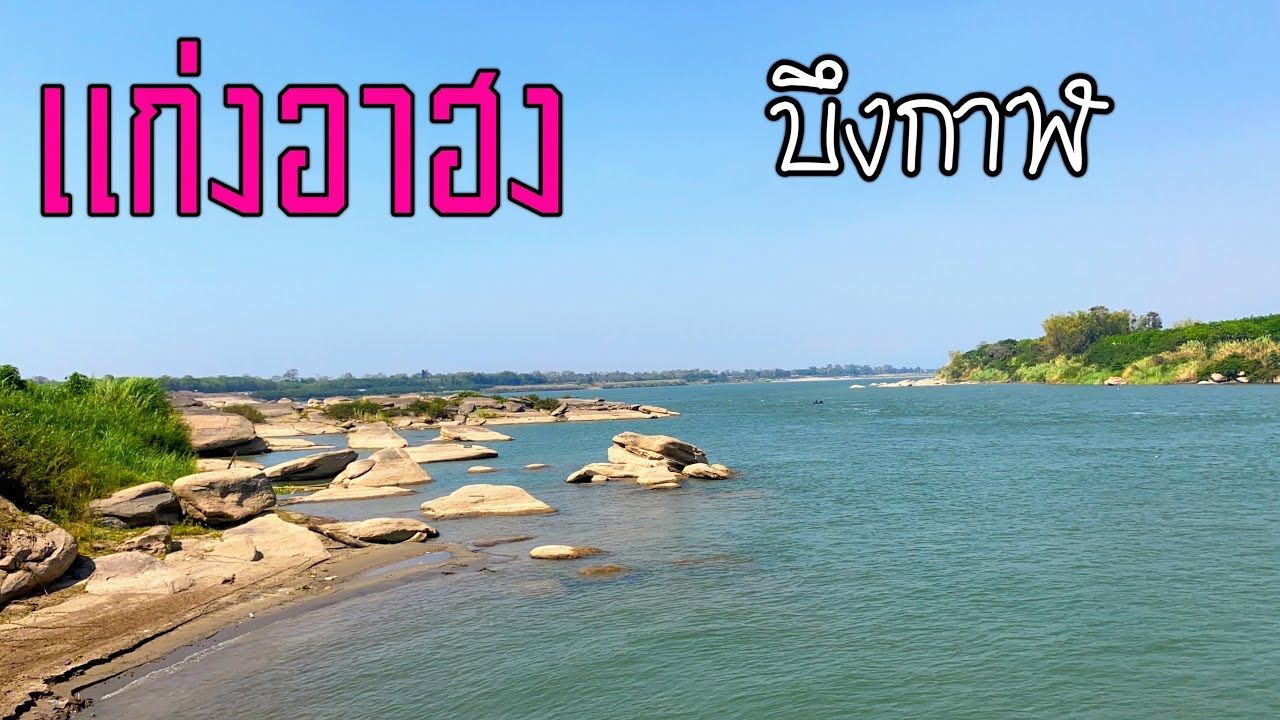
 Click to Access the Navigation Map GPS
Kaeng Ahong Map
Recommend

 Art, Culture and Heritage
 Museums(1)
 Places of Worship
 Temple(12)
 Other Sacred Sites(1)
 Suburban Living
 Local Market(1)
 National Parks and Marine Reserves(1)
 Mountain (Doi)(1)
 Waterfalls(1)
River, Canal(4)
Waterfalls(1)
River, Canal(4)
 Entertainment and Agricultural
 Waterpark(1)


