
lovethailand home >South Travel Attractions >Satun Travel Attractions >Khuan Don >Khuan Sato > Darul Huday Mosque
TL;DR: Darul Huday Mosque, Satun attractions : Places of Worship, Mosque.

Darul Huday Mosque
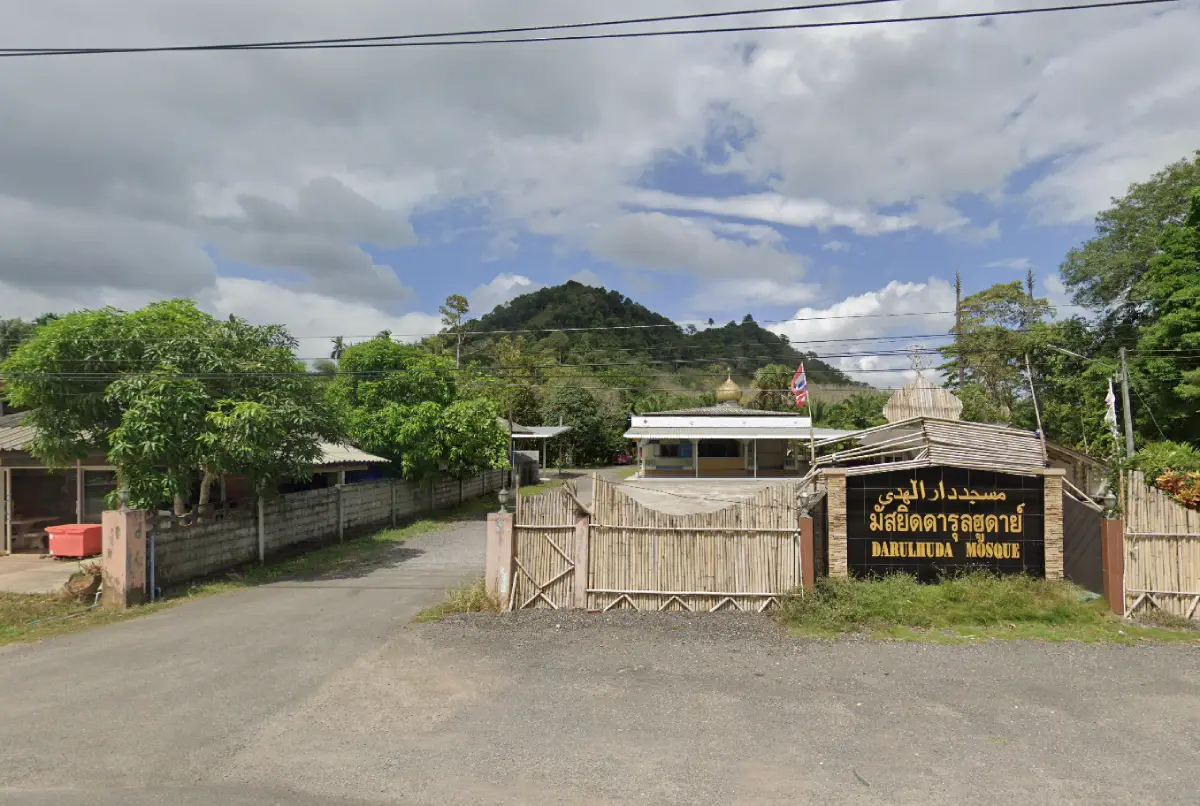
Open Days: Contact The Mosque Before Entering Interior Areas
Opening Hours: Contact The Mosque Before Entering Interior Areas; Visitors Should Avoid Prayer Times
Darul Huday Mosque is an important Islamic religious site in Moo 7, Ban Khuan Sato Tai, Khuan Sato Subdistrict, Khuan Don District, Satun Province. It stands within a local Muslim community in Khuan Sato, one of the key subdistricts of Khuan Don. The mosque functions as a place of prayer, a center of faith, a gathering point for local worshippers, a venue for Islamic community activities, and a mosque-based Islamic education center known as TADIKA Darul Huday.
The name “Darul Huday” carries a religious meaning connected with guidance. It suggests a place where faith, moral direction, and religious learning are cultivated. This meaning fits the mosque’s role in the community. For local Muslims, the mosque is a place where daily life is connected with prayer, discipline, learning, ethical conduct, and responsibility toward the wider village community.
Darul Huday Mosque was registered as mosque number 153 on 30 November 1995. It is located in Moo 7, Ban Khuan Sato Tai, Khuan Sato Subdistrict, Khuan Don District, Satun Province 91160. Its mosque registration gives the site a clear place within the Islamic religious administration system of Satun and supports its role as a formal center for worship, education, and community activities.
Khuan Sato Subdistrict is part of Khuan Don District, an inland area of Satun linked with Muslim community life, agriculture, water systems, and routes toward Wang Prachan and Thale Ban National Park. The district is connected by Highway 406, also known as Yontarakarn Kamthorn Road, and the Khuan Sato–Wang Prachan route leading toward the Thai–Malaysian border. Darul Huday Mosque therefore stands within a landscape shaped by religion, farming communities, local roads, waterfalls, forests, and border-area movement.
Khuan Don District has a predominantly Muslim population, and mosques are essential community institutions at village and subdistrict levels. A mosque in this setting is not simply a building used occasionally for ceremonies. It is a social structure that connects homes, families, religious leaders, children, youth, and local residents through daily worship, religious learning, community meetings, and public activities.
The primary role of Darul Huday Mosque is to serve as a place of worship for Muslims in Ban Khuan Sato Tai. It supports regular prayer, Friday prayer, Qur’an learning, religious talks, community gatherings, and Islamic occasions. Its importance comes from continuous use in everyday life. The mosque’s value is therefore not limited to festivals or major public events, but is built through the ordinary rhythm of faith and community participation.
In a Muslim community, a mosque is a spiritual and social anchor. People gather for prayer, listen to religious guidance, exchange community news, support shared activities, and pass knowledge to younger generations. Darul Huday Mosque helps maintain this connection in Ban Khuan Sato Tai by linking worship with learning, family life, and village cooperation.
One of the mosque’s most important functions is its connection with the Islamic Education Center Attached To The Mosque, known as TADIKA Darul Huday. The original information for this article states that the center has 6 teachers and 121 students. TADIKA plays a foundational role in local religious education. Children and young people learn Islamic knowledge, manners, discipline, responsibility, respect for elders, and ethical conduct within the mosque environment.
In southern Thailand, TADIKA education connects homes, families, teachers, religious leaders, and mosques. Children who attend mosque-based Islamic education do not only learn religious content. They also learn how to behave in daily life through a living community setting. The number of students at TADIKA Darul Huday reflects the trust local families place in the mosque as a foundation for the next generation.
Public education information from the Office of the Private Education Commission in Satun shows that TADIKA Darul Huday was included in monitoring and supervision activities in the 2024 academic year, together with other TADIKA centers in Khuan Sato Subdistrict. This confirms that the mosque’s educational role is active and connected with the wider system of Islamic education oversight in Satun Province.
Darul Huday Mosque is also associated with a child development center attached to the mosque. Public local health fund information mentions projects related to nutrition and age-appropriate development for children at the child development center of Darul Huday Mosque in Khuan Sato. This gives the mosque a broader community role. It is not only a worship space for adults, but also connected with early childhood development, nutrition, learning readiness, and child welfare.
In 2026, Darul Huday Mosque appeared in government news as the venue for an activity on health awareness for informal workers in response to climate change. The activity was held at Darul Huday Mosque, Moo 7, Khuan Sato Subdistrict, Khuan Don District, Satun Province. This recent public reference confirms that the mosque remains an active community venue and continues to support public activities involving local residents and government agencies.
The use of the mosque for public health and labor-related awareness reflects the wider role of mosques in Muslim communities. A local mosque may function as a place of worship, meeting space, education center, public information point, and community coordination venue. When government agencies need to reach residents, a mosque is often a practical and trusted place because it is familiar, accessible, and respected by the community.
For cultural travelers, Darul Huday Mosque is valuable as a living community mosque rather than a large tourist landmark. Its importance lies in worship, TADIKA education, child development activities, and its role as a community space in Ban Khuan Sato Tai. Visitors who want to understand Satun more deeply should approach the mosque through its social and cultural role, not only through its exterior appearance.
This kind of community mosque is important for understanding Satun. The province is known for islands, the Andaman Sea, and natural attractions, but it is also home to many Muslim communities where mosques form the center of daily life. Darul Huday Mosque helps visitors see Satun through religion, education, family life, local leadership, and community development.
Geographically, Ban Khuan Sato Tai lies in Khuan Sato Subdistrict, Khuan Don District, an area that connects Satun town with routes toward Wang Prachan and Thale Ban National Park. Travelers passing through Khuan Don can see another side of Satun: inland communities, agricultural land, mosques, schools, local markets, waterfalls, and forested border landscapes within a connected travel route.
A cultural route in Khuan Sato can begin at Darul Huday Mosque to understand the Muslim community of Ban Khuan Sato Tai. Travelers can then continue toward Khuan Don, Duson, and Wang Prachan, where local markets, irrigation sites, waterfalls, and Thale Ban National Park add natural and community dimensions to the journey. This route is suitable for visitors interested in faith, education, agriculture, and nature in the same district.
Nearby places that can be connected with Darul Huday Mosque include Duson Market, Duson Irrigation Weir, Pa To Ro Rock Shelter archaeological site, Ton Plio Waterfall, Yaroi Waterfall, Thale Ban National Park, and Wang Prachan Border Checkpoint. Together, these places make the Khuan Sato and Khuan Don route more diverse, combining a local mosque, community life, natural attractions, local markets, and border-area history.
Ton Plio Waterfall is one of the notable natural attractions in Khuan Don District. It is located in Wang Prachan Subdistrict and can be reached through the Khuan Sato–Wang Prachan route. It is suitable for travelers who want to enjoy water, forest, and the natural atmosphere of southern Thailand’s inland border area.
Yaroi Waterfall is another important stop in the Wang Prachan area. The waterfall has several levels and natural pools, making it a worthwhile addition to a Khuan Don travel route. Visitors should plan their timing and check weather conditions before going, especially during periods of heavy rain or strong water flow.
Thale Ban National Park is one of the most important natural areas in Khuan Don. It lies near the Thai–Malaysian border and is known for forest, freshwater wetland scenery, wildlife habitat, and a quiet inland atmosphere. Connecting Darul Huday Mosque with Thale Ban allows travelers to experience both village community life and protected natural landscapes in the same district.
Duson Market adds a local lifestyle element to the route. The market is associated with local trading, fresh produce, fruit, traditional snacks, and community products. Visiting a local market after a mosque or waterfall stop helps travelers understand the everyday life of Khuan Don through food, agriculture, and village commerce.
From an educational and community perspective, Darul Huday Mosque is useful for students, local researchers, and travelers interested in Muslim communities in Satun. It offers a case study of a village mosque with mosque registration, TADIKA education, child development activity, health-related public projects, and a continuing role in local community structure. Understanding these roles shows that a mosque is not only a ritual building, but also a community institution.
Traveling to Darul Huday Mosque from Satun town is straightforward. Take Highway 406, or Yontarakarn Kamthorn Road, toward Khuan Don District and Khuan Sato Subdistrict, then continue to Moo 7, Ban Khuan Sato Tai. Private car, rental car, motorcycle, or local hired transport is recommended. Visitors should clearly identify the destination as Darul Huday Mosque, Moo 7, Khuan Sato Subdistrict, Khuan Don District, because several mosques in Satun have similar names.
Travelers arriving from Hat Yai or the Wang Prachan border area can also connect to Khuan Don through the main road network. The mosque can be included in a community route before continuing to Satun town, waterfalls, local markets, or Thale Ban National Park. This makes the site suitable for visitors who want to understand inland Satun rather than only coastal or island destinations.
Visitors should contact the mosque before entering interior areas. Darul Huday Mosque is an active place of worship, with prayer, TADIKA classes, and community activities taking place according to local schedules. Advance contact helps ensure that a visit is respectful, properly timed, and does not disturb worshippers or students.
Mosque etiquette is essential. Men and women should dress modestly, covering shoulders and knees. Tight or transparent clothing should be avoided. Visitors should keep quiet, should not photograph people without permission, and should not walk through prayer areas during worship. If interior access is permitted, shoes should be removed where required and all caretaker guidance should be followed.
The best time for a cultural visit is outside prayer times, especially in the morning or afternoon when no major religious activity is taking place. Friday prayer periods should be avoided by general visitors because many worshippers gather at the mosque at that time. Groups, students, photographers, and researchers should contact the mosque in advance.
The appeal of Darul Huday Mosque is not based on being a major tourist landmark. Its value is its authenticity as a working community mosque. The mosque building, prayer area, TADIKA, child development role, and community activity space all form part of a living social structure. A respectful visit allows travelers to understand the place as a center of faith, learning, and village life.
Overall, Darul Huday Mosque in Ban Khuan Sato Tai is an important place in Khuan Sato Subdistrict and Khuan Don District. It brings together official mosque registration, community worship, TADIKA Darul Huday, child development functions, public health activities, and a location connected with the natural attractions of Khuan Don. A respectful visit helps travelers understand Satun through faith, education, local community life, and peaceful multicultural coexistence.
| Name | Darul Huday Mosque |
| Thai Name | มัสยิดดารุลฮูดาย์ |
| Place Type | Mosque, Islamic Religious Site, Community Center, And Mosque-Based Islamic Education Center |
| Location | Moo 7, Ban Khuan Sato Tai, Khuan Sato Subdistrict, Khuan Don District, Satun Province |
| Address | Moo 7, Khuan Sato Subdistrict, Khuan Don District, Satun 91160, Thailand |
| Mosque Registration | Registration Number 153, Registered On 30 November 1995 |
| Highlights | A Community Mosque In Ban Khuan Sato Tai, A Center Of Worship For Moo 7, And The Site Of TADIKA Darul Huday |
| Local Context | Located In Khuan Sato Subdistrict, Khuan Don District, An Area Connected With Muslim Communities, Agriculture, The Wang Prachan Route, And Thale Ban National Park |
| Name Meaning | Darul Huday Is Associated With A Place Of Guidance, Matching The Mosque’s Role In Faith, Learning, And Moral Direction |
| Distinctive Features | A Community Mosque Supporting Prayer, TADIKA Islamic Education, Child Development Activities, Health Projects, And Local Community Activities |
| Main Areas / Zones | Prayer Area, Mosque Activity Area, TADIKA Darul Huday, Child Development Center Attached To The Mosque, And Community Activity Space Used On Scheduled Occasions |
| TADIKA Education Center | TADIKA Darul Huday Is Reported To Have 6 Teachers And 121 Students |
| Facilities | Prayer Space, TADIKA Learning Area, Child Development Area, Community Activity Area, Mosque Committee Contact Point, And Religious Or Public Activity Areas Used When Scheduled |
| Travel Information | From Satun Town, Take Highway 406 Or Yontarakarn Kamthorn Road Toward Khuan Don District And Khuan Sato Subdistrict, Then Continue To Moo 7, Ban Khuan Sato Tai |
| Current Status | Still Listed In The Mosque Directory Of The Central Islamic Council Of Thailand And Online Mosque Databases, With A 2026 Government Activity Held At The Mosque |
| Open Days | Contact The Mosque Before Entering Interior Areas |
| Opening Hours | Contact The Mosque Before Entering Interior Areas; Visitors Should Avoid Prayer Times |
| Caretaker / Committee | Darul Huday Mosque Committee |
| Main Contact Number | 089-598-5171 |
| Nearby Tourist Attractions | 1. Duson Market, About 6 km 2. Duson Irrigation Weir, About 8 km 3. Pa To Ro Rock Shelter Archaeological Site, About 8 km 4. Ton Plio Waterfall, About 12 km 5. Yaroi Waterfall, About 15 km 6. Thale Ban National Park, About 20 km 7. Wang Prachan Border Checkpoint, About 20 km |
| Nearby Restaurants | 1. Stor Cafe, About 3 km, Tel. 097-231-7874 2. Kin Tam Pak Zaap Tam Jai Khuan Don, About 5 km, Tel. 098-308-9047, 092-452-2784 3. Jungle Cafe Khuan Don Satun Branch, About 5 km, Tel. 087-473-3319 4. Bergu Burger Khuan Don Branch, About 6 km, Tel. 065-608-8985 5. All About Eat Kin Kan Halal Shabu, About 7 km, Tel. 080-671-6715 6. D' Andaman Thaifood Restaurant, About 12 km |
| Nearby Accommodations | 1. Satun Premium Resort, About 8 km, Tel. 081-896-7902 2. Narit Phu View Resort, About 8 km, Tel. 074-795-428 3. Ban Thai Homestay And Resort, About 14 km, Tel. 083-519-9240 4. MEESUK Hotel, About 15 km, Tel. 081-907-3355 5. Navakiri Boutique Resort Satun, About 16 km, Tel. 097-354-1642 6. Sinkiat Thani Hotel, About 20 km, Tel. 074-711-336 |
Frequently Asked Questions (FAQ)
Q: Where is Darul Huday Mosque located?
A: Darul Huday Mosque is located in Moo 7, Ban Khuan Sato Tai, Khuan Sato Subdistrict, Khuan Don District, Satun Province 91160.
Q: When was Darul Huday Mosque registered?
A: Darul Huday Mosque was registered as mosque number 153 on 30 November 1995.
Q: Why is Darul Huday Mosque important?
A: It is a community mosque for Muslims in Ban Khuan Sato Tai, supporting worship, TADIKA education, child development activities, health projects, and local community gatherings.
Q: How many teachers and students are at TADIKA Darul Huday?
A: TADIKA Darul Huday is reported to have 6 teachers and 121 students. It teaches Islamic knowledge, manners, discipline, and community values to local children and youth.
Q: Is Darul Huday Mosque still active?
A: Yes. It remains listed in public mosque directories and online mosque databases, and public government information from 2026 refers to an activity held at the mosque.
Q: Can non-Muslim visitors visit Darul Huday Mosque?
A: Non-Muslim visitors may respectfully view the exterior and learn about the mosque. Interior access should be requested from the mosque committee or caretakers, and visitors should dress modestly and avoid prayer times.
Q: How do travelers get to Darul Huday Mosque?
A: From Satun town, take Highway 406 or Yontarakarn Kamthorn Road toward Khuan Don District and Khuan Sato Subdistrict, then continue to Moo 7, Ban Khuan Sato Tai.
Q: What nearby places can visitors see after Darul Huday Mosque?
A: Nearby places include Duson Market, Duson Irrigation Weir, Pa To Ro Rock Shelter Archaeological Site, Ton Plio Waterfall, Yaroi Waterfall, Thale Ban National Park, and Wang Prachan Border Checkpoint.
 Category: ●Places of Worship
 Group: ●Mosque
Last Update : 5 HourAgo
 Last Update : 5 HourAgo
 Click to Access the Navigation Map GPS
 Art, Culture and Heritage
 Historical Sites and Monuments(1)
 Landmarks and Memorials(1)
 Art, Craft Centres, Tradition(5)
 Museums(3)
 Temple(3)
Mosque(27)
Temple(3)
Mosque(27)
 Suburban Living
 Village, Community(1)
 Local Market(2)
 Nature and Wildlife
 National Parks and Marine Reserves(7)
 Mountain (Doi)(1)
 Dam, Reservoir, Lake(2)
 Waterfalls(10)
 Hot Springs(1)
 Caves(9)
 Bays and Beaches(10)
 Islands(16)
 Other natural attractions(5)
 Entertainment and Agricultural
 Zoos and Aquariums(1)
 Farms, Parks and Ecotourism(4)
 Outdoor and Adventure Activities(1)


