
lovethailand home >South Travel Attractions >Satun Travel Attractions >Muang Satun >Khuan Pho > Nong Plak Phaya Non-Hunting Area
TL;DR: Nong Plak Phaya Non-Hunting Area is located at Moo 3, Khuan Pho Subdistrict, Mueang Satun District, Satun Province, within the wider conservation area connected with Khao Raya Bangsa, open Daily, hours 06.00 – 18.00.
Nong Plak Phaya Non-Hunting Area
Open Days: Daily
Opening Hours: 06.00 – 18.00
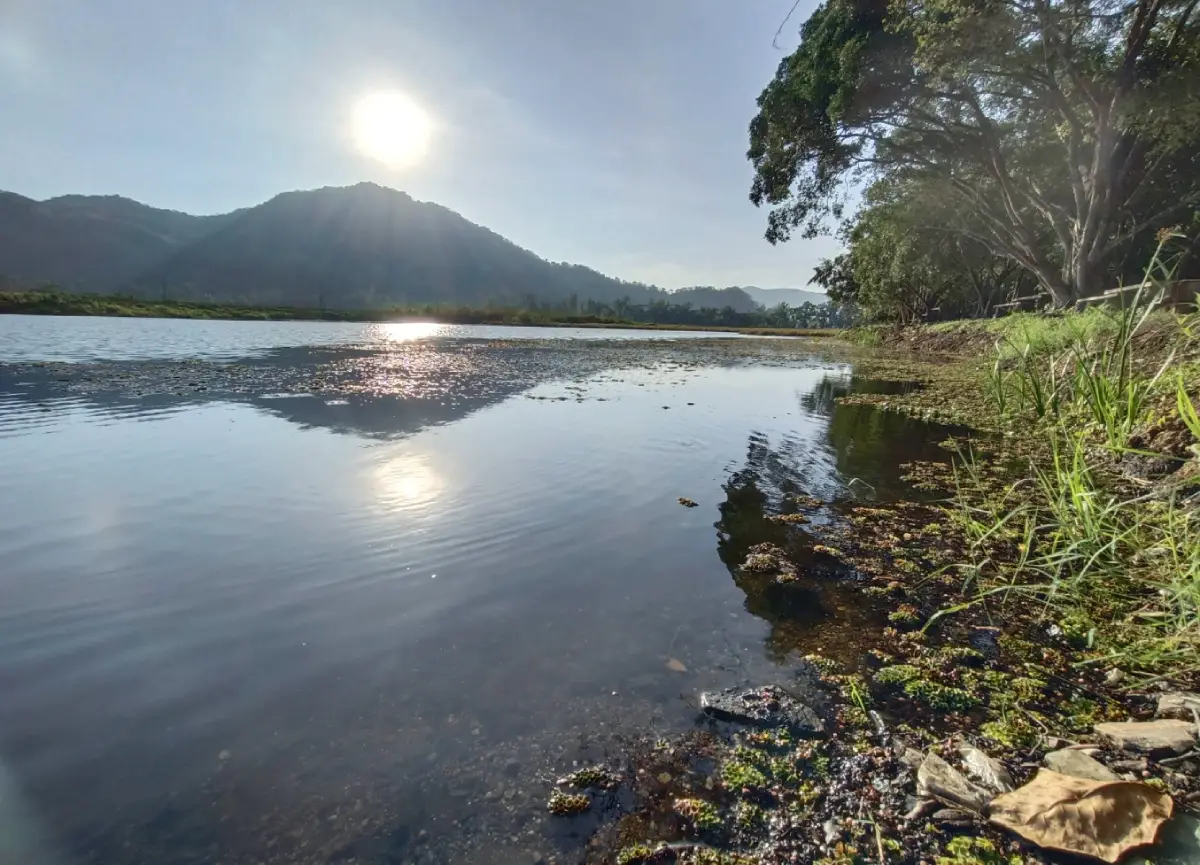
Nong Plak Phaya Non-Hunting Area in Satun Province is an accessible nature destination near Satun town, valued for recreation, birdwatching, wetland scenery, and conservation learning. Located around Moo 3 in Khuan Pho Subdistrict, Mueang Satun District, the area sits beside the Chalung-La-ngu road, making it easy to visit on a half-day nature route. Its main appeal is the quiet wetland landscape: a large pond shaded by tropical vegetation, lotus flowers opening in the sun, muted blue hills in the background, and waterbirds that can be observed throughout the seasons.
Nong Plak Phaya is part of the wider conservation setting known as Nong Plak Phraya and Khao Raya Bangsa Non-Hunting Area. The landscape consists of two main ecological zones: a mountain zone and a wetland zone. The Nong Plak Phaya wetland covers about 400 rai, while the wider non-hunting area covers about 12,770 rai. This combination of pond, wetland, forest, limestone hills, and wildlife habitat gives the area more depth than an ordinary public park. It functions both as a local recreation space and as a protected natural area where people can learn about wildlife and wetland ecology.
The most memorable view at Nong Plak Phaya is the calm water surface, aquatic plants, lotus flowers, and mountain backdrop. The scenery is simple but layered. Water, light, hills, trees, and wildlife come together naturally without heavy tourist development. Visitors can walk quietly, rest by the water, take nature photos, and watch birds feeding around the wetland. The beauty of the site lies in its stillness and ecological character rather than built attractions.
Nong Plak Phaya is one of Satun’s easy-to-reach birdwatching areas. Visitors may see wetland and forest birds in different seasons, including lesser whistling ducks, waterhens, purple swamphens, egrets, and other species that use wetlands for feeding or resting. The wetland is important because it provides food, shelter, and habitat for birds and other wildlife. This makes the site suitable for beginners, nature photographers, families, students, and travellers who prefer slow, quiet nature experiences.
The best times to visit are early morning and late afternoon. In the morning, the air is cooler, the light on the water is softer, and birds are often more active. In the late afternoon, the mountain shadows and wetland atmosphere become especially pleasant. Visitors who want to photograph birds should bring a zoom lens or binoculars and move quietly. Good bird photos usually come from patience and distance, not from approaching wildlife too closely.
The wetland also plays an ecological role as a habitat for aquatic plants, small animals, fish, insects, and birds that depend on water-based food chains. Plants around the pond help stabilize the wetland environment and provide cover for wildlife. When the wetland remains healthy, birds and other animals have suitable feeding and resting areas. This makes Nong Plak Phaya a clear example of how a relatively compact wetland can support biodiversity close to a town.
Wildlife associated with Nong Plak Phraya and Khao Raya Bangsa Non-Hunting Area includes serows, monkeys, civets, giant squirrels, forest birds, waterbirds, bats, and large numbers of large flying foxes. The serow is one of Thailand’s reserved wild animals and is associated with limestone hills, cliffs, and quiet forested terrain. Its presence in the wider area highlights the importance of Khao Raya Bangsa as a wildlife habitat that should be treated with care and respect.
Large flying foxes add another ecological dimension to the area. These bats help support forest systems through seed dispersal and natural ecological processes. Their presence reflects the availability of feeding and roosting conditions in the wider landscape. Visitors should observe bats from a distance, avoid throwing objects, avoid loud noise, and never disturb roosting sites. Bats are more important to the ecosystem than many casual visitors may realize.
The area is known by several related names, including Nong Plak Phaya, Nong Plak Phraya, Khao Phaya Bangsa, Khao Phraya Bangsa, and Khao Raya Bangsa. These names appear differently across local sources and maps, but they refer to the same broader conservation context in Satun. For navigation, travellers should search for Nong Plak Phaya, Khuan Pho, Satun, or Nong Plak Phraya and Khao Raya Bangsa Non-Hunting Area.
Local stories connected with Khao Phaya Bangsa add cultural depth to the natural landscape. One story tells of a ruler who sailed from the Andaman side through an area believed to have once been connected with the sea. When the boat reached the hill, it was struck by a storm and broke apart. Parts of the boat and the people aboard were carried to different hills and locations, giving rise to place names such as Khao Phaya Bangsa, Khao Noi, Khao Ketri, Khao Bang Bai, Khao Luk Rok, and Ko Samphao. These stories show how local people connect landforms, names, memory, and community identity.
When the wetland landscape is read together with local place-name stories, Nong Plak Phaya becomes more than a roadside pond. The wetland supports wildlife, the mountain provides scenery and habitat, and the local legend gives cultural meaning to the surrounding hills. A visit here offers both relaxation and a better understanding of Satun’s inland landscape.
Main activities at Nong Plak Phaya include walking by the wetland, watching waterbirds, photographing lotus flowers, observing plants, resting by the pond, and learning about wetland ecology. A short visit is enough to enjoy the scenery, but serious birdwatchers should allow more time. Birdwatching depends on silence, patience, and the natural rhythm of wildlife.
For families, the site is a useful outdoor learning space. Children can see a real wetland, aquatic plants, birds, hills, and a protected area in one place. The visit can help explain why wetlands matter, why feeding wildlife is harmful, why litter should never enter waterways, and why quiet behaviour helps animals use the habitat safely. This kind of learning is practical and memorable because it happens in the real landscape.
Photographers will find several attractive angles: lotus flowers near the water surface, waterbirds, reflections of the hills, walking areas along the pond, and the calm green atmosphere of the wetland. Early morning and late afternoon are the best periods for depth and soft light. Visitors should stay on safe ground, avoid stepping into aquatic vegetation, and avoid disturbing birds or other animals.
Phaya Bangsa Cave is another natural point of interest in the same local context. The cave is associated with limestone terrain and is known for its spacious interior and formations. Visitors interested in caves should bring a flashlight, wear shoes with good grip, avoid touching stalactites and stalagmites, and keep the cave clean. Cave environments are fragile and recover very slowly from damage.
Important rules for visitors are simple: do not hunt, catch, harm, feed, or disturb wildlife; do not collect plants; do not leave rubbish; and do not disturb natural habitats. Because this is a non-hunting area, its main purpose is wildlife protection. Visitors should stay in appropriate areas, keep noise low, avoid drone use without permission, avoid bird-call playback, and never approach wildlife too closely for photographs. These actions protect both animals and the quality of the conservation area.
Getting There from Satun town is straightforward. Take the Chalung-La-ngu road or Highway 416 toward Khuan Pho Subdistrict. The site is beside the main road and is suitable for private cars, motorcycles, and local transport from town. Useful navigation keywords are Nong Plak Phaya or Nong Plak Phraya and Khao Raya Bangsa Non-Hunting Area. The coordinates 6.74663, 100.03393 can also be used as a map reference.
A practical itinerary can place Nong Plak Phaya at the beginning of a half-day nature route near Satun town. Visitors can start with lotus flowers and birdwatching at the wetland, continue to Phaya Bangsa Cave, and then return to Satun town for Satun National Museum, the old town area, or local restaurants. With more time, the route can include Wat Chanathip Chaloem, Kuden Mansion, and central Satun food stops, creating a balanced trip of nature, history, and local culture.
Useful items to bring include drinking water, a hat, an umbrella or rain jacket depending on the season, a camera, binoculars, and comfortable walking shoes. During rainy periods, visitors should watch for slippery ground and standing water. During hot weather, avoid staying in exposed areas too long. Birdwatchers should wear muted colours to reduce disturbance and increase the chance of observing wildlife naturally.
The strength of Nong Plak Phaya lies in its simplicity and authenticity. It is not a heavily developed attraction. It remains a wetland, a bird habitat, a local recreation space, and a protected natural area close to town. Travellers who visit with the right expectations will see the quiet charm of the pond, the importance of small wetlands for wildlife, and the inland natural value of Satun beyond its famous islands and coast.
Nong Plak Phaya Non-Hunting Area is suitable for birdwatchers, nature photographers, families, students, conservation learners, and travellers seeking a quieter side of Satun. It may not offer the dramatic scenery of the Andaman Sea or the famous island routes, but it has ecological value through its wetland, hills, wildlife, and conservation role. Visiting with respect is the best way to keep this place meaningful as both a wildlife refuge and a learning space for people.
| Name | Nong Plak Phaya Non-Hunting Area / Nong Plak Phraya And Khao Raya Bangsa Non-Hunting Area |
| Location | Moo 3, Khuan Pho Subdistrict, Mueang Satun District, Satun Province, within the wider conservation area connected with Khao Raya Bangsa |
| Address | Chalung-La-ngu Road / Highway 416, Khuan Pho Subdistrict, Mueang Satun District, Satun 91140, Thailand |
| Coordinates | 6.74663, 100.03393 |
| Highlights | Natural wetland, birdwatching area, lotus flowers, mountain backdrop, local recreation space, and wildlife conservation area with serows, waterbirds, forest birds, and large flying foxes |
| Area | Nong Plak Phaya wetland covers about 400 rai, while Nong Plak Phraya and Khao Raya Bangsa Non-Hunting Area covers about 12,770 rai |
| Distinctive Features | Wetland, aquatic plants, lotus flowers, natural forest, limestone hills, and habitats for many kinds of wildlife |
| Travel Information | From Satun town, take the Chalung-La-ngu road or Highway 416 toward Khuan Pho Subdistrict. Use the map keyword Nong Plak Phaya or Nong Plak Phraya and Khao Raya Bangsa Non-Hunting Area |
| Current Status | Open as a nature recreation, birdwatching, and conservation learning area in Satun Province |
| Open Days | Daily |
| Opening Hours | 06.00 – 18.00 |
| Fees | No Admission Fee For General Visits |
| Facilities | Nature walking area, birdwatching spots, wetland rest area, road access, and ecology learning space |
| Main Areas / Zones | Nong Plak Phaya wetland, waterbird viewing area, lotus area, wetland zone, forest around the pond, Khao Raya Bangsa, Khao Phaya Bangsa, Phaya Bangsa Cave, and the non-hunting area office zone |
| Caretaker / Local Authority | Department Of National Parks, Wildlife And Plant Conservation, under Protected Area Regional Office 5 (Nakhon Si Thammarat) |
| Nearby Tourist Attractions | 1. Nong Plak Phaya, about 0 km 2. Nong Plak Phraya Birdwatching Area, about 0 km 3. Phaya Bangsa Cave, about 1 km 4. Khao Phaya Bangsa / Khao Raya Bangsa, about 2 km 5. Satun National Museum / Kuden Mansion, about 19 km 6. Wat Chanathip Chaloem Royal Temple, about 19 km |
| Nearby Restaurants | 1. Nok Nam Restaurant, about 0.3 km, Tel. 074-724-888 2. Ton Fern Restaurant, about 0.5 km 3. Krua Hassuna, about 5 km, Tel. 086-298-1121 4. Je Daeng Restaurant, about 18 km, Tel. 074-732-225 5. Keith Homemade Bakery since 2008, about 19 km, Tel. 074-832369 6. On's Restaurant, about 19 km, Tel. 081-097-9783, 074-724133 7. Fahat Coffee & Restaurant, about 19 km, Tel. 086-498-2642 |
| Nearby Accommodations | 1. Nok Nam Resort, about 0.3 km, Tel. 074-724-888 2. Ton Fern Resort Satun, about 0.5 km 3. The Gleam Resort, about 18 km, Tel. 074-711-909 4. Satun Boutique Resort, about 18 km, Tel. 074-740-188 5. SinKiat Buri Hotel, about 19 km, Tel. 074-721-055 6. The One Boutique Hotel, about 20 km, Tel. 095-536-5622 |
Frequently Asked Questions (FAQ)
Q: Where is Nong Plak Phaya Non-Hunting Area located?
A: It is located around Moo 3, Khuan Pho Subdistrict, Mueang Satun District, Satun Province, beside the Chalung-La-ngu road and within the wider Nong Plak Phraya and Khao Raya Bangsa Non-Hunting Area.
Q: When is Nong Plak Phaya Non-Hunting Area open?
A: It is open daily from 06.00 to 18.00. Early morning and late afternoon are the best times for birdwatching and nature photography.
Q: Is there an admission fee?
A: No admission fee is charged for general visits to the nature area.
Q: What makes Nong Plak Phaya special?
A: The area is known for its natural wetland, lotus flowers, mountain backdrop, birdwatching opportunities, and wildlife conservation value, including habitats for serows, waterbirds, forest birds, and large flying foxes.
Q: What activities are suitable here?
A: Suitable activities include birdwatching, wetland walking, lotus photography, nature observation, ecology learning, and quiet outdoor recreation.
Q: How can travellers get there from Satun town?
A: From Satun town, take the Chalung-La-ngu road or Highway 416 toward Khuan Pho Subdistrict. Use the map keyword Nong Plak Phaya or the coordinates 6.74663, 100.03393.
Q: Can visitors easily see serows?
A: Serows live in quieter mountain habitats within the wider non-hunting area. Sightings depend on natural conditions, time, and the level of disturbance, so visitors should observe wildlife from a safe distance and avoid disturbing habitats.
Q: What nearby places can travellers visit after Nong Plak Phaya?
A: Nearby options include Phaya Bangsa Cave, Khao Phaya Bangsa, Satun National Museum at Kuden Mansion, Wat Chanathip Chaloem, and Satun Old Town.
 Category: ●Nature and Wildlife
 Group: ●National Parks and Marine Reserves
Last Update : 1 MonthAgo
 Last Update : 1 MonthAgo
 Click to Access the Navigation Map GPS
Nong Plak Phaya Non-Hunting Area Map
Recommend

 Art, Culture and Heritage
 Historical Sites and Monuments(1)
 Landmarks and Memorials(1)
 Art, Craft Centres, Tradition(5)
 Museums(3)
 Places of Worship
 Temple(3)
 Mosque(27)
 Suburban Living
 Village, Community(1)
 Local Market(2)
National Parks and Marine Reserves(7)
Local Market(2)
National Parks and Marine Reserves(7)
 Mountain (Doi)(1)
 Dam, Reservoir, Lake(2)
 Waterfalls(9)
 Hot Springs(1)
 Caves(9)
 Bays and Beaches(10)
 Islands(16)
 Other natural attractions(5)
 Entertainment and Agricultural
 Zoos and Aquariums(1)
 Farms, Parks and Ecotourism(4)
 Outdoor and Adventure Activities(1)
 Travel Articles, Recipes
 Travel Review, Food Review(1)


