
lovethailand home >North Travel Attractions >Phayao Travel Attractions >Chiang Kham >Yuan > Wat Nantaram
TL;DR: Wat Nantaram is located at Ban Don Chai, Yuan Subdistrict, Chiang Kham District, Phayao Province, open Daily, hours 08.00 – 18.00.

Wat Nantaram
Open Days: Daily
Opening Hours: 08.00 – 18.00
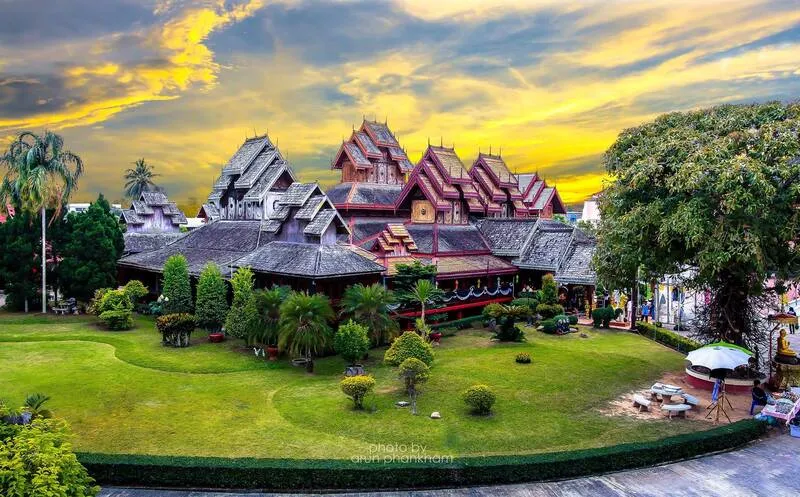
Wat Nantaram is located near Chiang Kham Municipal Market in Ban Don Chai, Yuan Subdistrict, Chiang Kham District, Phayao Province. It is one of the most culturally distinctive temples in northern Thailand, known for its impressive Tai Yai-style teakwood viharn, layered wooden roof, elaborate carved details, gilded pillars, colored-glass ceiling decoration, and deep connection with the local Shan or Tai Yai community.
For travelers visiting Chiang Kham, Wat Nantaram is more than a beautiful temple. It is a living cultural landmark where Buddhist faith, Shan identity, local craftsmanship, and community history come together. The temple is especially suitable for visitors who want to see rare wooden religious architecture, pay respect to the main Buddha image, explore a local museum, and understand the cultural diversity of Phayao beyond the better-known attractions around Phayao Lake.
The temple’s exact founding period is not clearly recorded, but it has long been associated with the Tai Yai community of Chiang Kham. In the past, it was called “Wat Chong Kha” because the original structure was roofed with thatch. In the Tai Yai language, the word “chong” means temple, so the old name preserves both the memory of the early building material and the ethnic language of the community. Local people also called it “Wat Chong Nuea” because it stood to the north of Chiang Kham Municipality.
The early development of Wat Nantaram was driven by the devotion of Tai Yai Buddhists. Pho Mong Pho Khin donated more than 3 rai of land for the temple, while Pho Thao Ubon served as the main leader of the construction. In its early stage, the temple functioned as a monastery or small religious residence before gradually becoming a major spiritual and cultural center for the local community. The temple’s history therefore reflects a strong pattern of communal merit-making, land donation, shared labor, and Buddhist devotion.
In 1924, a wooden viharn was built at the temple. Later, Mae Nang Cham Hoeng donated an additional 5 rai, 1 ngan, and 72 square wah of land to expand the temple grounds, bringing the total area to 8 rai, 1 ngan, and 72 square wah. This expansion allowed the temple to serve religious ceremonies, community activities, and cultural preservation more effectively. The temple grounds became not only a sacred Buddhist space, but also a shared cultural area where local memory, ethnic identity, and craftsmanship could continue across generations.
The present viharn is the defining feature of Wat Nantaram. It was supported by Pho Thao Nanta, also known as U Wong Anan, a wealthy Tai Yai patron with strong faith in Buddhism. He funded the restoration of monastic buildings and sponsored the construction of a new wooden viharn to replace the old thatched structure. Tai Yai craftsmen were hired to design and build the hall entirely from wood. The viharn features a Tai Yai architectural form, a tiered gable roof, wooden shingles, colored-glass ceiling decoration, elaborate carved details, and 68 gilded lacquered pillars. The construction cost was more than 45,000 baht, a substantial amount for that period.
The beauty of the viharn lies not only in its scale, but also in its craftsmanship. The layered roof rises in a graceful rhythm, while the carved wooden ornamentation around the gables, windows, and decorative panels reveals the patience and skill of traditional artisans. Inside, the wooden structure creates a calm and dignified atmosphere. Light falling across colored glass, lacquered pillars, and gilded details gives the interior a quiet sense of sacredness and artistic depth.
The principal Buddha image inside the viharn remains the spiritual focus of the temple. Although its exact period of creation is not clearly recorded, it is deeply respected by local Buddhists and visitors. The overall artistic atmosphere of the temple reflects the cultural relationship among Lanna, Tai Yai, and Burmese traditions, which have long shaped the northern borderlands of Thailand.
Wat Nantaram is also an important place for understanding Tai Yai culture in Chiang Kham. The Tai Yai people have their own language, art, religious traditions, and architectural preferences. Building a temple in a clearly Tai Yai style was therefore not only an act of Buddhist merit-making, but also a way for the community to express identity through sacred architecture. The temple stands as a living record of migration, settlement, faith, and cultural continuity.
Another valuable feature of the temple is the Wat Nantaram Folk Museum. The museum displays local objects connected with community life and cultural memory, including a Burmese-style teak Buddha image, old banknotes, coins, antique household objects, old textiles, and items related to local wisdom. The museum adds depth to a visit because it allows travelers to understand not only the temple building, but also the daily lives, values, and heritage of the people who supported it.
The temple’s location near Chiang Kham Municipal Market makes it easy to include in a town-based travel route. The surrounding area has shops, restaurants, cafes, accommodation, and local services within a short distance. Visitors can come in the morning to pay respect at the temple, spend time photographing the wooden viharn, visit the folk museum, and then continue to nearby cultural attractions or local eateries around Chiang Kham.
One of the most meaningful aspects of Wat Nantaram is that it remains an active temple. Local people continue to make merit, join religious activities, and use the temple as a spiritual center. It is not simply a preserved historical site separated from daily life. Its architecture, rituals, museum, and community presence all show how Buddhist faith continues to shape local identity in Chiang Kham.
For travelers interested in wooden architecture, Wat Nantaram is particularly rewarding. The viharn demonstrates traditional wood construction, carving, structural balance, and decorative craftsmanship. The use of wood throughout the building gives it warmth and texture, while the gilded and glass elements add sacred brightness. This combination makes the temple one of the most memorable examples of Tai Yai Buddhist architecture in Phayao Province.
The temple differs from many Lanna temples because its visual character is strongly Tai Yai and Burmese. The tiered roof, dense decorative patterns, gilded accents, and dark teakwood surfaces create a distinctive atmosphere. From the front, the viharn resembles a sacred wooden structure from the Shan cultural world, yet within the context of Chiang Kham, it also represents the cultural blending of northern Thailand’s border communities.
Visitors should take time to walk slowly around the temple. Start by viewing the viharn from the front to appreciate the roofline, then look carefully at the carved wooden details along the exterior. Inside the hall, dress modestly, speak quietly, and respect worshippers who may be praying or making merit. Photography is generally best done with care and restraint, especially inside sacred areas.
The temple can be visited throughout the year. Morning and late afternoon are the most pleasant times because the weather is milder and natural light helps reveal the details of the teakwood structure. Travelers interested in photography should allow at least 1 hour to appreciate the front view, side angles, carved patterns, interior atmosphere, and museum area.
Chiang Kham has several nearby attractions that pair well with Wat Nantaram, including Wat Phra Nang Din, Wat Phra That Sop Waen, Mae Saeng Da Tai Lue House, Wat Saen Mueang Ma, and the 2324 Memorial Museum. Together, these sites reveal the cultural diversity of the district, including Tai Yai, Tai Lue, Lanna, and local historical traditions. Starting at Wat Nantaram is convenient because it is located in the town area and close to services.
Getting There from Phayao city is most convenient by private car. Take Route 1202 through Phu Kamyao District, continue via Route 1298, then connect to Route 1021 toward Chiang Kham District. Once in Chiang Kham, head toward the municipal market area and Yuan Subdistrict. The temple is close to the town community, making it easy to find and suitable for a cultural day trip.
If traveling by public transport, visitors can first reach Chiang Kham town and then continue to the temple by local transport or hired vehicle. Those driving should check the route in advance, especially during long weekends or festival periods when the market area may be busier. Visiting in the morning is practical because it allows more time for nearby attractions and local food stops.
Wat Nantaram should be understood as a cultural heritage site of the Tai Yai community in Phayao, not merely as a photogenic temple. Its beauty is the result of collective faith, donated land, local patronage, and artisan skill. The temple preserves the relationship between religion, ethnic identity, community economy, and traditional craftsmanship in Chiang Kham.
While many visitors to Phayao focus on attractions near the provincial capital, Wat Nantaram shows another side of the province. It reveals the richness of Chiang Kham’s borderland culture, where Tai Yai and Tai Lue communities have shaped local religious and artistic life. For cultural travelers, temple lovers, photographers, families, and anyone interested in northern Thai heritage, Wat Nantaram is one of the most worthwhile stops in Chiang Kham.
| Name | Wat Nantaram |
| Location | Ban Don Chai, Yuan Subdistrict, Chiang Kham District, Phayao Province |
| Address | No. 1, Moo 13, Chiang Kham Subdistrict, Chiang Kham District, Phayao 56000, Thailand |
| Highlights | Tai Yai-style teakwood viharn, tiered roof, colored-glass ceiling, gilded lacquered pillars, and Wat Nantaram Folk Museum |
| History | The exact founding period is not recorded. The temple was a Tai Yai community temple, with a wooden viharn built in 1924 and later expanded through local donations. |
| Name Origin | Formerly called Wat Chong Kha because the original building was roofed with thatch. In the Tai Yai language, “chong” means temple. It was also known as Wat Chong Nuea because it stood north of Chiang Kham Municipality. |
| Distinctive Features | A full wooden viharn in Tai Yai style, layered gable roof, wooden shingles, colored-glass ceiling, and 68 gilded lacquered pillars |
| Travel Information | From Phayao city, take Route 1202, continue via Route 1298, then connect to Route 1021 toward Chiang Kham District. The temple is near Chiang Kham Municipal Market in Yuan Subdistrict. |
| Current Status | Active Buddhist temple, cultural attraction, and local learning center in Chiang Kham District |
| Open Days | Daily |
| Opening Hours | 08.00 – 18.00 |
| Fees | No admission fee |
| Facilities | Temple courtyard, worship area, folk museum, parking area, and nearby shops around Chiang Kham Municipal Market |
| Main Areas / Zones | Tai Yai-style teakwood viharn, principal Buddha image, Wat Nantaram Folk Museum, and merit-making areas |
| Abbot / Caretaker | Phra Athikan Santi Chayathammo |
| Main Contact Number | 054-451-636, 088-959-9156 |
| Official Website / Official Page | facebook.com/wat.nantaram |
| Nearby Tourist Attractions | 1. Tai Lue Cultural Center at Wat Yuan, about 1 km 2. Wat Saen Mueang Ma, about 1 km 3. Wat Phra Nang Din, about 4 km 4. Wat Phra That Sop Waen, about 5 km 5. 2324 Memorial Museum, about 4 km |
| Nearby Restaurants | 1. Live Cafe, about 200 m 2. Pa Ko Chiang Kham 1994, about 200 m 3. Kim Hiang Restaurant, about 300 m 4. Khao Tom Ko Dua, about 400 m 5. Suk Dee Coffee & Bakery, about 600 m 6. Lap Mo Yo Lue Restaurant, about 800 m |
| Nearby Accommodations | 1. Chiang Kham Ruk Khun Hotel, about 300 m, Tel. 097-389-8998 2. Phu View Place, about 1 km, Tel. 083-519-6445 3. Chiang Kham Grand Villa, about 2 km, Tel. 084-811-5585 4. Hotel De One Dee, about 3 km, Tel. 094-616-4982 5. Iwari Resort, about 4 km, Tel. 065-994-4191 |
Frequently Asked Questions (FAQ)
Q: Where is Wat Nantaram located?
A: Wat Nantaram is located in Ban Don Chai, Yuan Subdistrict, Chiang Kham District, Phayao Province, near Chiang Kham Municipal Market.
Q: What is Wat Nantaram famous for?
A: It is famous for its Tai Yai-style teakwood viharn, tiered wooden roof, intricate carved decoration, colored-glass ceiling, and 68 gilded lacquered pillars.
Q: What was the former name of Wat Nantaram?
A: The temple was formerly called Wat Chong Kha because its early structure was roofed with thatch. It was also known as Wat Chong Nuea.
Q: What are the opening hours of Wat Nantaram?
A: Wat Nantaram is open daily from 08.00 to 18.00.
Q: Is there an admission fee at Wat Nantaram?
A: No. The temple does not charge an admission fee.
Q: Is there a museum inside Wat Nantaram?
A: Yes. Wat Nantaram Folk Museum displays local cultural objects, including a Burmese-style teak Buddha image, old banknotes, coins, antique items, textiles, and community heritage objects.
Q: What nearby attractions can be visited with Wat Nantaram?
A: Nearby attractions include the Tai Lue Cultural Center at Wat Yuan, Wat Saen Mueang Ma, Wat Phra Nang Din, Wat Phra That Sop Waen, and the 2324 Memorial Museum.
Q: How can travelers get to Wat Nantaram from Phayao city?
A: Travelers can drive from Phayao city via Route 1202, continue on Route 1298, then connect to Route 1021 toward Chiang Kham District and head to the municipal market area in Yuan Subdistrict.
 Category: ●Places of Worship
 Group: ●Temple
Last Update : 5 MonthAgo
 Last Update : 5 MonthAgo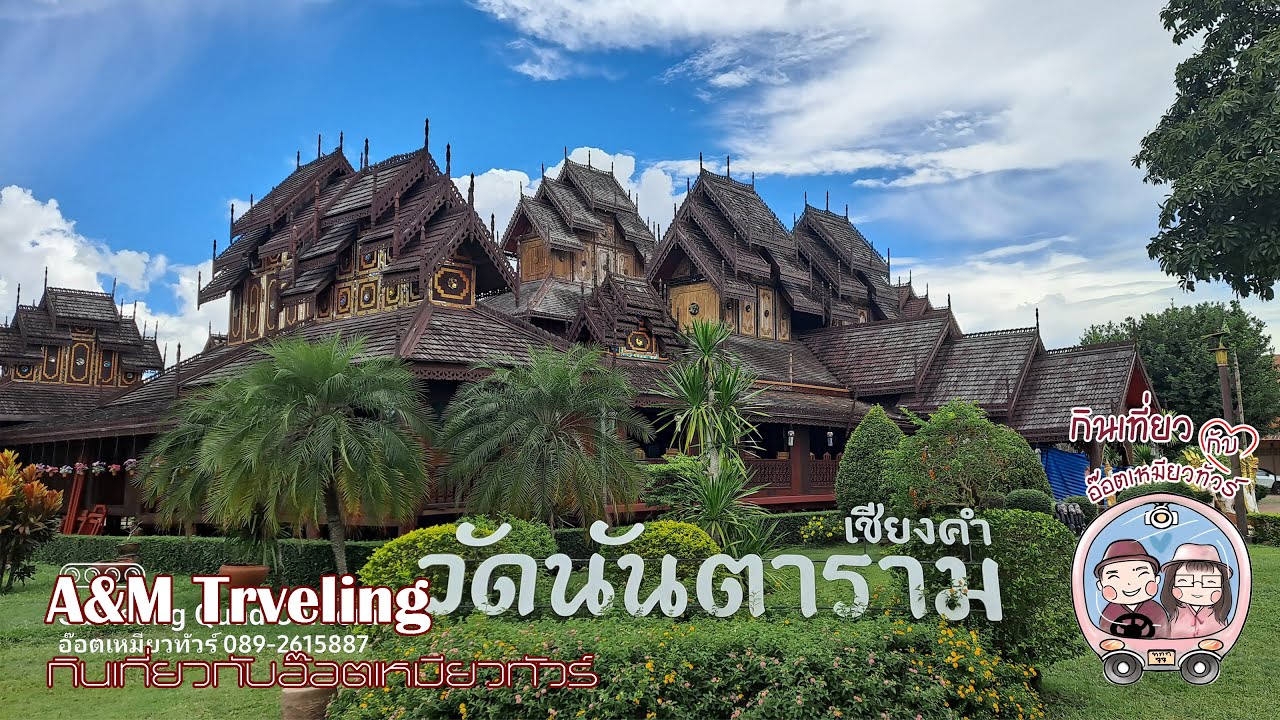
 Click to Access the Navigation Map GPS
Wat Nantaram Map
Recommend

 Art, Culture and Heritage
 Historical Sites and Monuments(4)
 Landmarks and Memorials(4)
 Art, Craft Centres, Tradition(1)
 Museums(2)
Temple(39)
Museums(2)
Temple(39)
 Other Sacred Sites(5)
 Research and Development
 Royal Project(1)
 Suburban Living
 Village, Community(2)
 Local Market(4)
 Nature and Wildlife
 National Parks and Marine Reserves(7)
 Mountain (Doi)(2)
 Dam, Reservoir, Lake(11)
 Waterfalls(8)
 Caves(5)
 River, Canal(3)
 Other natural attractions(5)
 Travel Articles, Recipes
 Travel Review, Food Review(1)


