
lovethailand home >North Travel Attractions >Phayao Travel Attractions >Pong >Khun Khuan > Tham Yai Pha Tang Cave
TL;DR: Tham Yai Pha Tang Cave is located at Ban Pha Tang, Moo 6, Khun Khuan Subdistrict, Pong District, Phayao Province, open Daily, hours 08.00 – 16.30.

Tham Yai Pha Tang Cave
Open Days: Daily
Opening Hours: 08.00 – 16.30
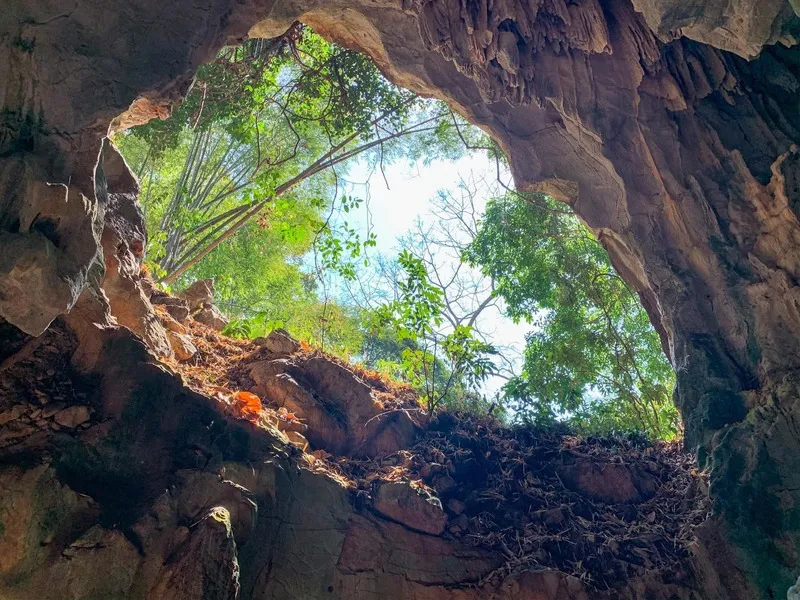
Tham Yai Pha Tang Cave, also known as Tham Pha Tang Cave, is a natural and historical cave attraction located at Ban Pha Tang, Moo 6, Khun Khuan Subdistrict, Pong District, Phayao Province. The cave lies within the Doi Phu Nang National Park area and is associated with National Park Protection Unit 1. It is located on a low hill and is known for its spacious cave chamber, beautiful stalagmites and stalactites, smaller cave passages, a large bat population, and a Buddha image connected with the period when Thai soldiers used the area as a base during anti-communist operations.
This cave is suitable for travelers who enjoy nature, light hiking, cave landscapes, and local history. The route to the cave begins in the Ban Pha Tang area of Khun Khuan Subdistrict, about 20 km from Pong District town. From the parking or access area, visitors walk uphill for about 1 km before reaching the cave entrance. The hill is not extremely steep, but visitors should wear appropriate shoes because natural trails may include soil, stones, dry leaves, and damp sections depending on the season.
The beauty of Tham Yai Pha Tang comes from several layers of experience: the low hill landscape, quiet forest surroundings, a wide cave chamber, limestone formations, and the gradual shift from daylight at the cave mouth to the darker interior. Entering the cave gives visitors a sense of stepping into a different natural world shaped by water, minerals, darkness, and geological time.
Inside the cave, stalagmites and stalactites appear along the walls and ceiling. These formations were created slowly as mineral-rich water passed through limestone and deposited calcium carbonate over long periods. Some formations hang from the ceiling, some rise from the floor, and some create curtain-like shapes. Because these formations are fragile and take a very long time to develop, visitors should admire them visually without touching, climbing, writing on, or breaking any part of the cave.
One of the most distinctive aspects of Tham Yai Pha Tang is the Buddha image inside the cave. Local information connects this Buddha image with Thai soldiers who once used the area as a base during the struggle against communist insurgents. This gives the cave more than natural value. It also carries historical memory, reflecting the lives, beliefs, and morale of people who once operated in this mountainous region.
The historical dimension of Ban Pha Tang and the surrounding hills adds depth to the visit. Forests, caves, and mountain areas in this region were once connected with security operations and conflict-era movement. Today, the cave is a natural attraction, but the Buddha image and local stories preserve the memory of that period. Visiting the cave is therefore an opportunity to see both natural beauty and local historical traces in the same place.
The cave is also home to many bats. Bats are an important part of cave ecosystems because they help control insects and contribute to natural cycles in forest environments. Local people have traditionally collected bat guano for sale or agricultural use, showing the relationship between the community and cave resources. However, any use of cave resources should avoid excessive disturbance to the bats and their habitat.
Visitors should behave carefully around bats. Loud noise, strong lights directed at bat colonies, and close approaches to roosting areas should be avoided. A cave with wildlife should be visited quietly and respectfully so that people can experience nature without disturbing the animals that depend on the cave environment.
Tham Yai Pha Tang includes a spacious chamber and several smaller cave passages. Some local sources mention smaller cave sections with names such as Tham Lek Than Sawan, Tham Lek Pha Tang, Tham Lek Thep Sathit, Tham Lek Than Hima, and Tham Lek Wan Prawet. These details suggest that the cave is more complex than a simple short passage. For safety, visitors should explore with park officers or local guides rather than walking deep into the cave alone.
Proper lighting is essential. Although natural light reaches the cave entrance, it becomes darker quickly inside. Visitors should bring a reliable flashlight or headlamp, backup light, and spare batteries. A phone light should not be the only light source because it may not be bright enough and can drain the battery quickly. Cave floors may be damp, uneven, dusty, or covered with bat guano in some areas, so closed shoes with good grip are recommended.
Tham Yai Pha Tang is best experienced as a conservation-based natural attraction, not as an unplanned adventure. Visitors should contact Doi Phu Nang National Park officers or ask local residents before visiting, especially during the rainy season when the uphill path can be slippery and the cave environment may be more humid. Traveling with someone familiar with the route improves both safety and understanding of the cave’s natural and historical features.
The surrounding Ban Pha Tang area offers a rural mountain atmosphere. The journey to the cave passes local communities, farmland, hills, and forested terrain. This makes the visit meaningful beyond the cave itself. Travelers can observe the landscape of inland Phayao and experience a quieter rural route away from more crowded destinations.
Getting There is most convenient by private car or hired local transport. From Pong District town, travel toward Khun Khuan Subdistrict and Ban Pha Tang, about 20 km away. From the access area, walk uphill for about 1 km to the cave entrance. Visitors coming from Mueang Phayao should allow enough travel time because the distance is significant and some local roads require careful driving.
Drivers should check the route in advance and ask Doi Phu Nang National Park officers, local authorities, or Ban Pha Tang residents for current road conditions. Mobile signal may be unstable in some mountain areas, so saving an offline map is useful. Visitors should travel during daylight and avoid starting the cave walk late in the day.
Travelers without private vehicles can first reach Pong District town, then arrange local transport to Ban Pha Tang and the cave access point. Return transportation should be arranged in advance because the cave is not located along a frequent public transport route. This is especially important for small groups or travelers who plan to spend several hours in the area.
The best time to visit is in the morning or before noon. This allows enough time to walk uphill, explore safely, rest, and return before evening. The rainy season brings greener forest scenery but also more slippery trails. The dry season is easier for walking, but visitors should bring enough drinking water.
Recommended items include a main flashlight, backup light, spare batteries, non-slip closed shoes, drinking water, snacks, personal medication, a trash bag, a mask or cloth for dust and guano odor, and a fully charged phone. Visitors who want to go deeper into the cave should travel with a local guide or park officer and should not separate from the group.
Because the cave contains many bats, some areas may have odor or accumulated guano. Visitors with allergies, respiratory conditions, or sensitivity to dust should prepare accordingly and avoid staying too long in poorly ventilated areas. Bat guano should not be touched directly, and visitors should wash their hands after leaving the cave area.
From a nature-learning perspective, Tham Yai Pha Tang helps visitors understand the relationship between limestone hills, cave formations, bats, and local community use. The stalagmites and stalactites show geological processes, the bats show a living cave ecosystem, and the Buddha image reflects a historical layer of the site. These features make the cave more meaningful than a simple scenic stop.
Visitors should avoid damaging the cave environment. Writing on cave walls, collecting stones, breaking formations, making loud noise, leaving trash, or using fire inside the cave should never be done. Cave environments recover very slowly, and some formations may have taken hundreds or thousands of years to form. Responsible visitors should enter quietly, observe carefully, and leave no trace.
Nearby destinations that can be combined with Tham Yai Pha Tang include Doi Phu Nang National Park, Than Sawan Waterfall, Tad Pu Kheng Waterfall, Huai Ton Phueng Waterfall, Pong District town, and the Chiang Muan Dinosaur area. A one-day trip should focus mainly on the cave and nearby spots, while a two-day route allows more time to explore nature attractions in Pong and Chiang Muan without rushing.
For food and accommodation, Pong District town is a practical base because it has more restaurants, cafes, lodging, and basic services than Ban Pha Tang itself. Visitors who want to stay closer to nature can also ask Doi Phu Nang National Park about accommodation or camping areas in advance. Staying in Pong makes it easier to start the cave visit in the morning.
Tham Yai Pha Tang has strong potential as a conservation-oriented attraction because it combines natural cave scenery, local history, wildlife habitat, and community memory. With proper care, clear visitor guidance, and respect for bats and cave formations, the cave can remain a valuable learning site for Pong District. Development should protect its natural atmosphere rather than turning it into an overly commercialized attraction.
Overall, Tham Yai Pha Tang is one of the notable cave attractions of Phayao. Located on a low hill in Ban Pha Tang, Khun Khuan Subdistrict, it offers a wide cave chamber, beautiful limestone formations, a historical Buddha image, many bats, and a quiet mountain setting. With preparation, local guidance, and respect for nature, this cave can provide a memorable experience for travelers who want to see a deeper and quieter side of Phayao Province.
| Name | Tham Yai Pha Tang / Tham Pha Tang Cave |
| Location | Ban Pha Tang, Moo 6, Khun Khuan Subdistrict, Pong District, Phayao Province |
| Address | Ban Pha Tang, Moo 6, Khun Khuan Subdistrict, Pong District, Phayao 56140, within Doi Phu Nang National Park area |
| Highlights | A low-hill cave with a historical Buddha image, beautiful stalagmites and stalactites, spacious cave chamber, smaller cave passages, and many bats |
| Distinctive Features | Natural limestone cave with a wide chamber, cave formations, ferns, bat habitat, and several smaller internal passages |
| History / Importance | The cave contains a Buddha image associated with Thai soldiers who used the area as a base during anti-communist operations, giving the cave both natural and local historical value |
| Travel Information | From Pong District town, travel to Ban Pha Tang in Khun Khuan Subdistrict, about 20 km away. From the access area, visitors walk uphill for about 1 km to reach the cave entrance. Private car or hired local transport is recommended |
| Current Status | A natural attraction in Doi Phu Nang National Park area and National Park Protection Unit 1 area. Visitors should contact park officers before visiting |
| Open Days | Daily |
| Opening Hours | 08.00 – 16.30 |
| Facilities | Uphill trail to the cave, parking area near the access point, and visitor information through Doi Phu Nang National Park. Visitors should bring flashlights, non-slip shoes, drinking water, and personal supplies |
| Main Areas / Zones | Cave entrance, main chamber, Buddha image inside the cave, stalagmite and stalactite areas, smaller cave passages, bat habitat, and uphill access trail |
| Caretaker | Doi Phu Nang National Park, Department of National Parks, Wildlife and Plant Conservation, with National Park Protection Unit 1 and Ban Pha Tang community |
| Main Contact Number | 095-690-0605, 054-476-302 |
| Official Website / Official Page | Doi Phu Nang National Park Official Facebook Page |
| Nearby Tourist Attractions | 1. Ban Pha Tang Community, same area 2. National Park Protection Unit 1, about 2 km 3. Than Sawan Waterfall, about 23 km 4. Doi Phu Nang National Park, about 25 km 5. Pong District Town, about 20 km 6. Chiang Muan Dinosaur Area / Kaeng Luang Dinosaur Forest Park, about 45 km |
| Nearby Restaurants | 1. Local Restaurants In Ban Pha Tang, about 1 km 2. Local Restaurants In Khun Khuan Subdistrict, about 7 km 3. Hom Nua Restaurant, Pong District, about 20 km, Tel. 063-676-0895 4. Phu Phiang Dao Phayao, about 22 km 5. Rim Yom Cafe, about 22 km 6. Restaurants In Pong District Town, about 20 km |
| Nearby Accommodations | 1. Doi Phu Nang National Park Accommodation And Camping Area, about 25 km, Tel. 095-690-0605, 054-476-302 2. Inbhirom Resort, Pong District, about 20 km, Tel. 061-935-4922 3. Nongporn Resort, Pong District, about 22 km, Tel. 089-484-8757 4. Accommodations In Pong District Town, about 20 km 5. Accommodations Along The Phu Langka Route, about 50 km |
Frequently Asked Questions (FAQ)
Q: Where is Tham Yai Pha Tang Cave located?
A: Tham Yai Pha Tang Cave is located at Ban Pha Tang, Moo 6, Khun Khuan Subdistrict, Pong District, Phayao Province, within the Doi Phu Nang National Park area.
Q: What makes Tham Yai Pha Tang Cave special?
A: It is a low-hill cave with a spacious chamber, beautiful stalagmites and stalactites, a historical Buddha image, and a large bat population.
Q: How far is the walk to Tham Yai Pha Tang Cave?
A: Visitors walk uphill for about 1 km from the access area to the cave entrance. The trail is not very steep, but proper walking shoes are recommended.
Q: What can visitors see inside the cave?
A: Visitors can see a Buddha image, limestone formations, smaller cave passages, a natural cave chamber, and many bats living inside the cave.
Q: Who is Tham Yai Pha Tang Cave suitable for?
A: It is suitable for nature lovers, cave explorers, travelers interested in local history, and visitors who enjoy quieter, less crowded attractions.
Q: What should visitors prepare before visiting?
A: Visitors should bring a flashlight, backup light, non-slip shoes, drinking water, a mask or cloth for dust and guano odor, a trash bag, and should contact park officers or local residents before visiting.
Q: How do visitors get to Tham Yai Pha Tang Cave?
A: From Pong District town, travel to Khun Khuan Subdistrict and Ban Pha Tang, about 20 km away, then walk uphill for about 1 km to the cave entrance.
Q: What nearby places can be visited with Tham Yai Pha Tang Cave?
A: Nearby places include Ban Pha Tang, National Park Protection Unit 1, Than Sawan Waterfall, Doi Phu Nang National Park, Pong District town, and the Chiang Muan Dinosaur area.
 Category: ●Nature and Wildlife
 Group: ●Caves
Last Update : 4 MonthAgo
 Last Update : 4 MonthAgo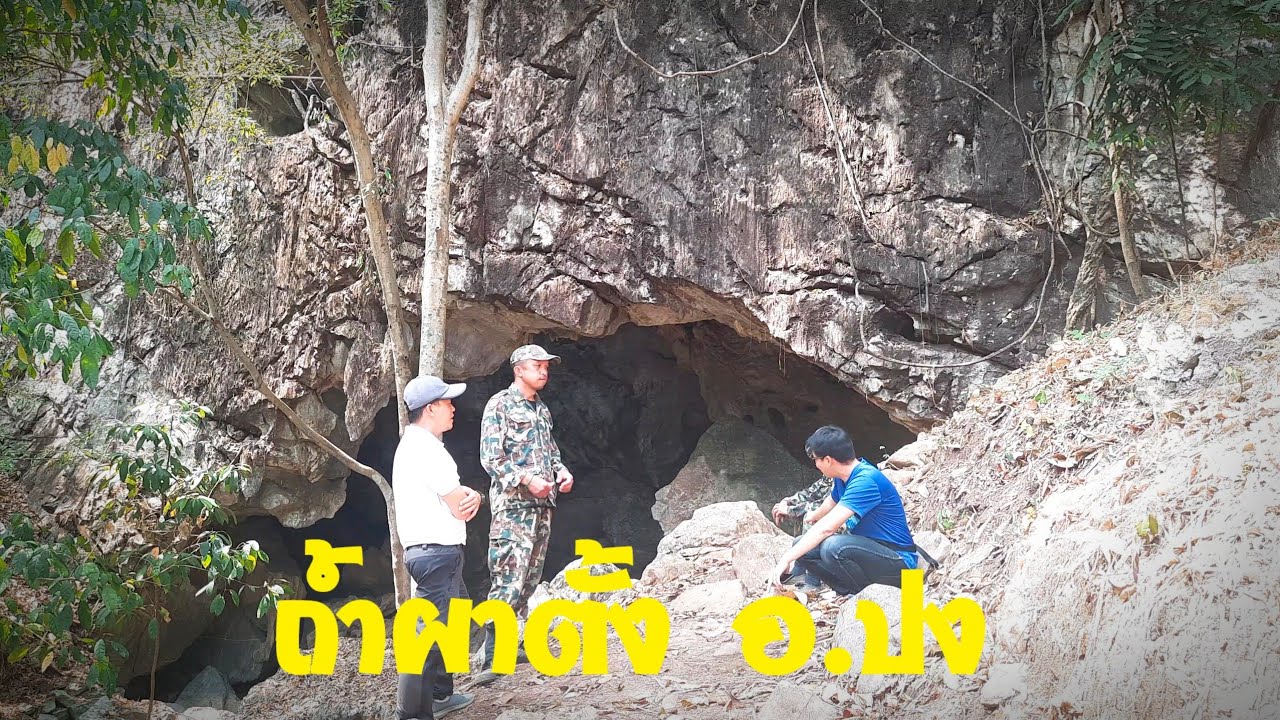
 Click to Access the Navigation Map GPS
Tham Yai Pha Tang Cave Map
Recommend

 Art, Culture and Heritage
 Historical Sites and Monuments(4)
 Landmarks and Memorials(4)
 Art, Craft Centres, Tradition(1)
 Museums(2)
 Places of Worship
 Temple(39)
 Other Sacred Sites(5)
 Research and Development
 Royal Project(1)
 Suburban Living
 Village, Community(2)
 Local Market(4)
 National Parks and Marine Reserves(6)
 Mountain (Doi)(2)
 Dam, Reservoir, Lake(11)
 Waterfalls(8)
Caves(5)
Waterfalls(8)
Caves(5)
 River, Canal(3)
 Other natural attractions(5)


