
lovethailand home >South Travel Attractions >Phang Nga Travel Attractions >Thai Mueang >Thai Mueang > Phang Nga Coastal Aquaculture Research and Develop..
TL;DR: Phang Nga Coastal Aquaculture Research and Development Center is located at Thai Mueang Subdistrict, Thai Mueang District, Phang Nga Province, open Daily, hours 08.30 – 16.30.

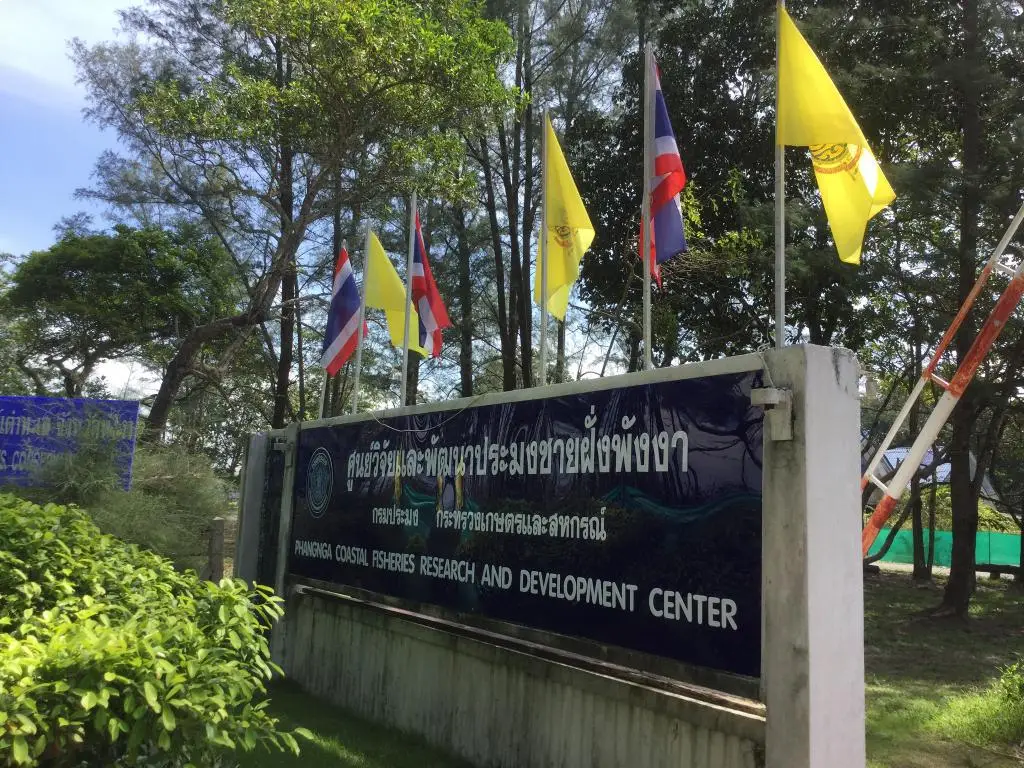
Phang Nga Coastal Aquaculture Research and Development Center
Open Days: Daily
Opening Hours: 08.30 – 16.30
Phang Nga Coastal Aquaculture Research and Development Center, also known by many travelers as Phang Nga Coastal Fisheries Research and Development Center, is located at 164 Moo 9, Thai Mueang Subdistrict, Thai Mueang District, Phang Nga Province. It is a Department of Fisheries research center focused on coastal aquaculture, animal breeding, quality inspection, aquaculture standards, and public education. Visitors and study groups can learn about clownfish, seabass, spotted Babylon shells, oysters, shrimp, sea turtle conservation, and coastal aquaculture systems, making it suitable for families, schools, students, farmers, and travelers interested in marine conservation and fisheries science.
Phang Nga Coastal Aquaculture Research and Development Center is an important coastal fisheries learning site in Thai Mueang District, Phang Nga Province. It is located along the coastal road near Thai Mueang Beach, about 4 km from Thai Mueang town. The surrounding area has a calm coastal atmosphere and is closely connected with Thai Mueang Beach, a well-known area associated with sea turtle conservation. For this reason, the center is not only a government research facility but also a meaningful place for travelers who want to understand how coastal aquaculture, marine animal conservation, and fisheries science support the wider Andaman coastal ecosystem.
The center’s current official Thai name refers to coastal aquaculture research and development, under the Coastal Aquaculture Research and Development Division of the Department of Fisheries, Ministry of Agriculture and Cooperatives. The older or more familiar travel name, Phang Nga Coastal Fisheries Research and Development Center, is still widely used by visitors. The center combines research, breeding, experimentation, quality testing, knowledge transfer, and conservation-related work. It is therefore best presented as an educational and scientific attraction rather than a conventional sightseeing stop.
The center was established in 1985. Its original purpose was related to breeding blood cockles, oysters, and shrimp. Over time, its work expanded into research and development of economically important coastal aquaculture species. The center now supports coastal fishing communities, aquaculture farmers, seafood production, food safety, farm standards, and the sustainable use of marine and coastal resources.
The site covers about 97 rai, 2 ngan, and 96.2 square wah. Within the center are aquaculture ponds, breeding facilities, laboratory-related areas, educational spaces, study-visit areas, and facilities used for coastal animal culture and demonstration. Visitors can see how a fisheries research facility works in practice, from aquatic animal breeding and nursing to water management, disease inspection, quality control, and knowledge transfer to schools, farmers, and the public.
One of the center’s core roles is research and development of coastal aquaculture species with economic value. These include marine shrimp, oysters, blood cockles, seabass, red snapper, sea cucumber, and other species connected with southern coastal economies. This work is important not only for academic research but also for farmers and aquaculture operators who need reliable knowledge to reduce disease risk, manage production, improve quality, and increase the safety of seafood for consumers.
Food safety and standards are another major part of the center’s importance. Its work is associated with raw material quality checks, antibiotic residue testing, viral infection analysis by PCR, inspection of production sites under GAP and CoC standards, and certification of coastal aquaculture production processes for consumer and environmental safety. These topics help visitors understand that safe seafood depends on science, monitoring, responsible production, and professional inspection systems.
For general visitors, the center is interesting because it allows people to learn about coastal aquatic animals up close. Species often mentioned in connection with visits include clownfish, seabass, green sea turtles, hawksbill turtles, pufferfish, giant grouper, giant clams, scallops, and abalone. Some are economically important species, some are linked to conservation, and others help children understand marine biodiversity more easily. Seeing these animals in a research center is different from visiting a commercial aquarium because the displays are connected to real breeding, conservation, and fisheries work.
Clownfish are especially engaging for children and families because of their color and association with coral reef ecosystems. Learning about clownfish breeding can lead to broader understanding of ornamental marine fish culture, reducing pressure on wild populations, and creating economic value through controlled aquaculture. Seabass and red snapper, meanwhile, help explain the importance of food fish culture in coastal economies and seafood markets.
Shellfish such as oysters, blood cockles, spotted Babylon shells, giant clams, scallops, and abalone reflect another side of coastal aquaculture. These species are linked with water quality, production-site safety, consumer health, and coastal ecological balance. Giant clams also carry conservation significance because of their relationship with coral reef systems. Presenting these species correctly helps visitors see the connection between small aquatic animals and the health of the wider marine environment.
Green sea turtles and hawksbill turtles connect the center strongly with the Thai Mueang coast. Thai Mueang Beach is associated with sea turtle conservation activities and annual conservation events, and there have been reports of sea turtle nesting activity along the wider coast. Learning about sea turtles at the center helps visitors understand that turtle conservation is not only about releasing young turtles into the sea. It also involves clean beaches, safe nesting areas, reduced marine waste, monitoring, and cooperation among government agencies and local communities.
Thai Mueang Beach near the center plays an important role in turtle conservation identity. Phang Nga Province holds sea turtle conservation events at Thai Mueang Beach, and the area is linked with monitoring of turtle nesting traces. Connecting the center with Thai Mueang Beach gives visitors a fuller understanding of the local marine environment: the center explains aquatic animal knowledge, while the beach shows the real coastal habitat that must be protected.
The center is suitable for school groups, university students, teachers, families, farmers, and travelers interested in coastal fisheries. It helps visitors understand that aquaculture is not simply about keeping fish in ponds. It involves broodstock selection, larval care, water management, disease testing, quality standards, certification, and knowledge transfer to communities and businesses. A visit here can therefore add educational value to a Thai Mueang or Phang Nga coastal itinerary.
The center has a history of welcoming teachers, students, farmers, and official groups for learning activities. Topics include clownfish culture, seabass culture, spotted Babylon shell culture, and sea turtle conservation. Group visits should be arranged in advance so staff can prepare the schedule, route, and explanation level according to the size and purpose of the group. Advance contact is also useful because the center is an active government research facility with official duties, fieldwork, and technical work that may affect visit arrangements.
For families, the center is useful because children can see real marine animals and connect them with clear conservation messages. Parents can explain seafood safety, sea turtle protection, coastal ecosystems, and the role of research more easily when children see fish, turtles, shellfish, and aquaculture ponds in person. This gives a Phang Nga trip more depth than a beach-only itinerary.
For farmers and aquaculture learners, the center is important because it connects research with practical production. GAP and CoC concepts help explain production standards, disease risk reduction, residue control, and responsible farm management. The center’s work therefore contributes to local economies and seafood quality, not only to tourism or education. Behind safe seafood are researchers, laboratories, farmers, inspection systems, and continuous technical support.
Another important dimension is the conservation and development of rare or valuable coastal aquatic species. Breeding and propagation work can help reduce pressure on wild resources when done properly. Advances in aquaculture can support both economic use and conservation goals by making production more reliable and reducing dependence on direct harvesting from nature.
The center’s location along the Thai Mueang coastal road makes it easy to combine with nearby attractions. Visitors can plan a route that includes the research center, Thai Mueang Beach, the Sea Turtle Conservation Event area, Khao Lampi-Hat Thai Mueang National Park, Lam Pi Waterfall, and local restaurants in Thai Mueang. This type of itinerary is ideal for travelers who want nature, learning, and a less crowded coastal experience.
Thai Mueang Beach is the most natural nearby stop after visiting the center. The beach is long, calm, and closely associated with sea turtle conservation. Walking along the beach after learning about turtles and coastal animals helps visitors connect research knowledge with the actual habitat. Visitors should keep the beach clean, avoid disturbing turtle monitoring areas, and follow posted guidance from local or national park authorities.
Khao Lampi-Hat Thai Mueang National Park is another useful nearby destination. It includes beach areas, beach forest, rainforest, waterfalls, and national park accommodation. Combining the research center with the national park gives visitors both marine science and natural habitat experience in the same day. This is especially suitable for families and educational groups.
Travel to the center is straightforward by private car. From Thai Mueang town, follow the coastal road toward the center at 164 Moo 9, about 4 km away. From Phang Nga town or Phuket, use Highway 4 toward Thai Mueang, then continue to the coastal road. Having a private car or rental car is the most convenient option because visitors can combine the center with Thai Mueang Beach, Khao Lampi-Hat Thai Mueang National Park, local restaurants, and nearby accommodation.
Visitors using public transport can get to Thai Mueang and continue by local taxi or hired transport. Public transport along the beach road is less frequent than in urban areas, so planning ahead is recommended. Groups should arrange transport clearly because study visits often need a coordinated arrival time and advance communication with the center.
Visitors should dress politely because the center is a government facility. Comfortable walking shoes are recommended. Guests should avoid making loud noise, tapping tanks, feeding aquatic animals without permission, touching research equipment, or entering working areas without staff guidance. School groups should be divided into manageable groups and supervised by teachers to avoid disturbing research operations or aquatic animals.
Useful items include a hat or umbrella for walking between buildings, drinking water, a notebook, a camera or phone for approved photo areas, and prepared questions. Groups interested in specific topics such as clownfish breeding, sea turtle conservation, aquatic animal disease testing, or farm standards should prepare questions in advance to make the visit more productive.
A small family or traveler group can usually spend about 1 to 2 hours at the center. A school or technical study group may need 2 to 3 hours or a schedule arranged by staff. After the visit, travelers can continue to Thai Mueang Beach, the turtle conservation area, Lam Pi Waterfall, or local restaurants. A half-day program can therefore combine marine learning, coastal scenery, and local food in one route.
The center’s greatest value is that it makes marine conservation practical and visible. Visitors do not only see a beautiful coastline; they see the work behind sustainable coastal fisheries, aquatic animal breeding, quality inspection, youth education, and farmer support. This helps people understand that protecting the sea involves researchers, farmers, consumers, schools, communities, and government systems working together.
For Phang Nga travel content, the center should be presented as a science-and-conservation learning attraction, not merely a passing stop. It completes the story of Thai Mueang: a coast associated with sea turtle nesting, a community conservation tradition, and a fisheries research center that teaches about marine animals and coastal aquaculture. This gives the district a stronger identity as a place for coastal learning, not just quiet beaches.
In summary, Phang Nga Coastal Aquaculture Research and Development Center is a worthwhile stop for families, school groups, students, farmers, and travelers who want to understand the sea beyond scenery. Its strengths are real aquatic animals, breeding ponds, research work, aquaculture standards, and connection with Thai Mueang Beach’s turtle conservation identity. Visitors should contact the center in advance for group visits and combine the trip with Thai Mueang Beach, Khao Lampi-Hat Thai Mueang National Park, and local restaurants for a complete educational coastal route.
| Name | Phang Nga Coastal Aquaculture Research And Development Center / Phang Nga Coastal Fisheries Research And Development Center |
| Location | Thai Mueang Subdistrict, Thai Mueang District, Phang Nga Province |
| Address | 164 Moo 9, Thai Mueang Subdistrict, Thai Mueang District, Phang Nga 82120, Thailand |
| Place Type | Government coastal aquaculture research facility under the Department of Fisheries and an educational learning site for study groups and conservation-focused visitors |
| Highlights | Aquatic animal breeding ponds, clownfish, seabass, green sea turtles, hawksbill turtles, giant clams, scallops, abalone, coastal fisheries research, and sea turtle conservation learning |
| History / Significance | Established in 1985 for breeding blood cockles, oysters, and shrimp before developing into a coastal aquaculture research center covering research, standards, conservation, and knowledge transfer |
| Area | Approximately 97 rai, 2 ngan, 96.2 square wah |
| Distinctive Features | A learning site connecting coastal fisheries science, aquaculture research, seafood safety, sea turtle conservation, and Thai Mueang coastal tourism |
| Travel Information | From Thai Mueang town, follow the coastal road toward Thai Mueang Beach for about 4 km. From Phang Nga town or Phuket, use Highway 4 toward Thai Mueang, then continue to the coastal road. |
| Current Status | An active government research center under the Department of Fisheries, with continuing public announcements and official activities |
| Open Days | Daily |
| Opening Hours | 08.30 – 16.30 |
| Facilities / Learning Areas | Breeding ponds, working aquaculture areas, laboratory-related areas, study-visit spaces, aquatic animal learning areas, and coastal aquaculture education zones |
| Main Areas / Topics To See | Aquatic animal breeding zone, ornamental marine fish zone, economic aquatic species zone, sea turtle learning zone, aquaculture research zone, and quality/standards learning topics |
| Caretaker | Department of Fisheries, Ministry of Agriculture and Cooperatives, through the Coastal Aquaculture Research and Development Division |
| Center Director | Mr. Samart Dechsathit |
| Main Contact Number | 065-048-7015 |
| Inspection Unit Contact | 065-048-7028 |
| phangnga_crdc@yahoo.com | |
| Nearby Tourist Attractions | 1. Thai Mueang Beach, about 1 km 2. Sea Turtle Conservation Event Area / Lan Tao, about 1 km 3. Khao Lampi-Hat Thai Mueang National Park, about 2 km 4. Lam Pi Waterfall, about 18 km 5. Thap Lamu Pier, about 20 km |
| Nearby Restaurants | 1. Local Restaurants Around Thai Mueang Beach, about 1–3 km 2. Ruekhoodrae, about 8 km, Tel. 096-636-3388 3. Thai Mueang Phuket Local Restaurant, about 8 km, Tel. 062-556-9265 4. Isan Rimhad Khao Lak, about 20 km, Tel. 082-595-3953 5. Restaurants In Thai Mueang Town, about 4–8 km |
| Nearby Accommodations | 1. Khao Lampi-Hat Thai Mueang National Park Accommodation, about 2 km, Tel. 076-410-360 2. Makai NAP, about 6 km, Tel. 095-451-4742 3. Thai Mueang Resort, about 7 km, Tel. 076-571-151 4. Thai Mueang Camping, about 15 km, Tel. 084-060-1818 5. Khao Lak / Lam Kaen Accommodation Zone, about 20–30 km |
Frequently Asked Questions (FAQ)
Q: Where is Phang Nga Coastal Fisheries Research and Development Center located?
A: It is located at 164 Moo 9, Thai Mueang Subdistrict, Thai Mueang District, Phang Nga Province, along the coastal road near Thai Mueang Beach, about 4 km from Thai Mueang town.
Q: What are the opening hours?
A: The center is listed as open daily from 08.30 to 16.30. Study groups should contact the center in advance to coordinate staff, timing, and visit areas.
Q: What can visitors learn inside the center?
A: Visitors can learn about coastal aquaculture, breeding ponds, clownfish, seabass, spotted Babylon shells, oysters, shrimp, sea turtles, and coastal aquaculture production standards.
Q: Is the center suitable for children and school groups?
A: Yes. It is suitable for children, school groups, and families because visitors can see real aquatic animals and learn about marine conservation in a practical setting.
Q: Is there an entrance fee?
A: No current official public entrance-fee notice was found for general visitors. Travelers and study groups should contact the center directly before visiting.
Q: Should visitors contact the center before going?
A: Yes. Advance contact is recommended, especially for school groups, university groups, farmers, or study visits that require staff explanation or access to specific learning areas.
Q: What nearby places can be visited on the same trip?
A: Nearby places include Thai Mueang Beach, the sea turtle conservation event area, Khao Lampi-Hat Thai Mueang National Park, Lam Pi Waterfall, and Thap Lamu Pier.
Q: What should visitors be careful about inside the center?
A: Visitors should dress politely, avoid loud noise, not touch tanks or equipment without permission, not feed aquatic animals, and follow staff guidance throughout the visit.
Tel : 076432212-4
 Tel : 076432212-4
Fax : 076571008
 Fax : 076571008
 Category: ●Nature and Wildlife
 Group: ●National Parks and Marine Reserves
Last Update : 1 MonthAgo
 Last Update : 1 MonthAgo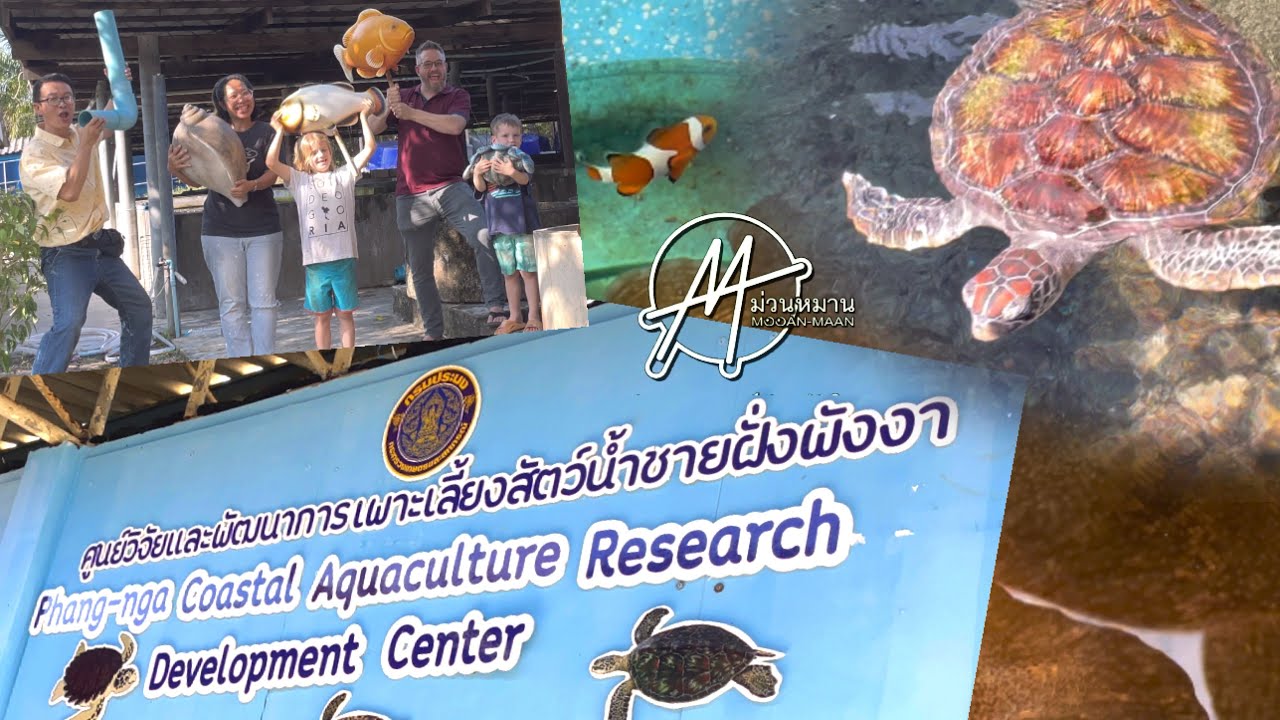
 Click to Access the Navigation Map GPS
Phang Nga Coastal Aquaculture Research and Development Center Map
Recommend

 Art, Culture and Heritage
 Historical Sites and Monuments(2)
 Landmarks and Memorials(6)
 Art, Craft Centres, Tradition(3)
 Places of Worship
 Temple(18)
 Other Sacred Sites(8)
 Suburban Living
 Village, Community(3)
National Parks and Marine Reserves(12)
Village, Community(3)
National Parks and Marine Reserves(12)
 Mountain (Doi)(8)
 Waterfalls(21)
 Hot Springs(2)
 Caves(12)
 River, Canal(4)
 Bays and Beaches(28)
 Islands(11)
 Other natural attractions(7)
 Entertainment and Agricultural
 Animal camps and shows(2)
 Farms, Parks and Ecotourism(2)
 Outdoor and Adventure Activities(3)
 Travel Articles, Recipes
 Southern Food Menu, Southern Food Recipes(1)


