
lovethailand home >South Travel Attractions >Narathiwat Travel Attractions >Su Khirin >Phu Khao Thong > To Mo Gold Mine
TL;DR: To Mo Gold Mine is located at Ban To Mo, Phukhao Thong Subdistrict, Sukhirin District, Narathiwat Province, open Daily, hours 08:00–17:00.

To Mo Gold Mine
Open Days: Daily
Opening Hours: 08:00–17:00
To Mo Gold Mine, also known as the To Mo Gold Mine Museum, is located around Ban To Mo in Phukhao Thong Subdistrict, Sukhirin District, Narathiwat Province. It is one of the most historically significant cultural destinations in southernmost Thailand. The old gold-mining area lies in a dense rainforest valley close to the Thailand-Malaysia border, approximately 800 meters from the boundary. Local people refer to the surrounding mountains as Khao To Mo and Khao Licho, part of the Su-ngai Kolok mountain range. This humid forested landscape gives birth to Licho Stream, a tributary of the upper Sai Buri River, where tiny gold particles were carried down from the mountains and deposited in the streambed.
The To Mo mining area is no longer an active industrial gold mine. Today, it functions as a community-based historical attraction and learning site. Visitors can learn about the old mine, ore-transport tunnels, former worker residences, gold-panning tools, rafting points, and the living tradition of gold panning that continues in the Phukhao Thong community. The importance of the site does not come from a large modern museum building, but from its authentic connection with forest, water, labor, migration, mining technology, and local memory.
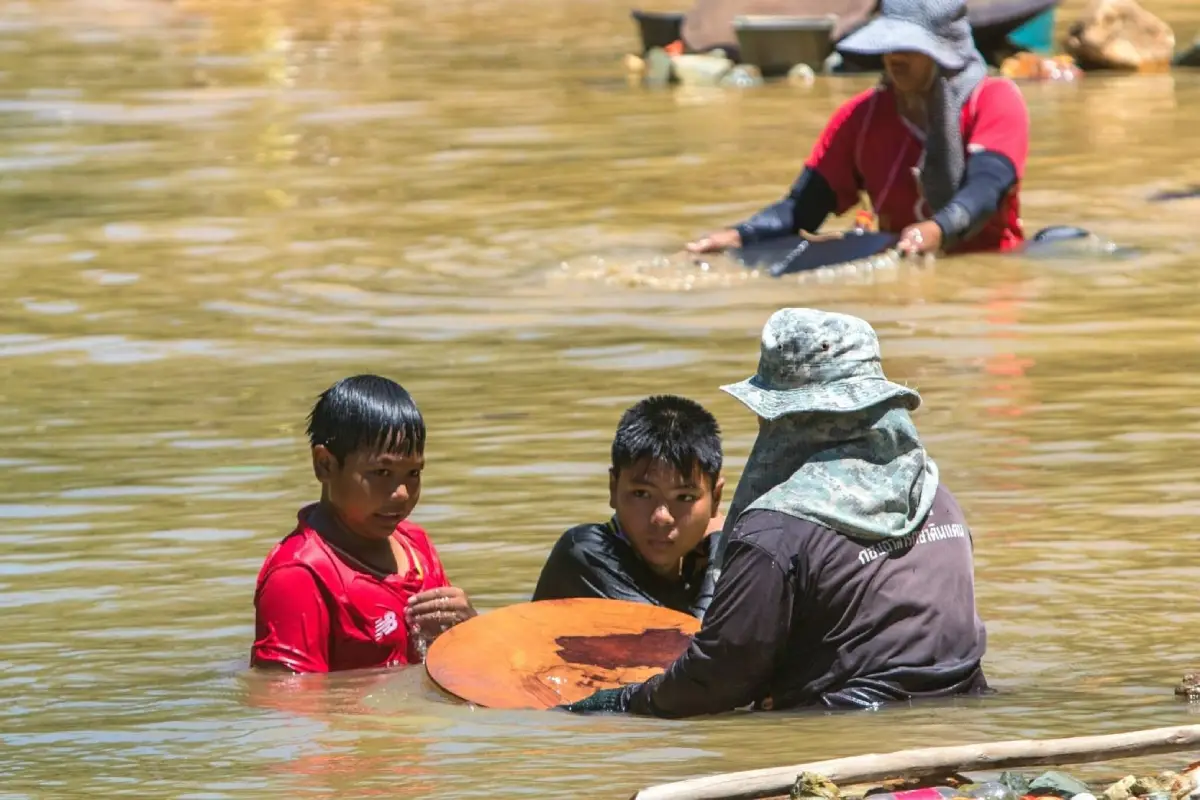
The geography of To Mo is central to its story. The gold-bearing area is set within a humid rainforest valley with large trees, streams, and mountain slopes. During the rainy season, water from Khao To Mo and Khao Licho flows down with force, carrying small particles of gold, sand, stone, and sediment into the stream system. Villagers traditionally used a wooden pan-like tool called a liang to separate gold particles from sand and gravel. This simple tool represents a highly skilled local practice that links people directly with the mountain and the river.
Traditional gold panning at Ban To Mo is both a livelihood practice and a cultural memory. The method looks simple, but it requires experience, patience, and sharp observation. Villagers scoop sand and sediment from the stream into the liang, add water, and gently swirl the pan so that lighter materials wash away. Heavier minerals and tiny gold particles remain at the bottom. The gold pieces may be very small, yet they carry deep historical and emotional value because they come from the same mountain system that made To Mo famous.
The early history of gold seeking in To Mo began with local panning along the streams. Later, a Chinese trader named Hiu Sin Chio, active in the Thailand-Malaysia border area, brought a group of about 40 to 50 people into the area to pan for gold from Ban Kalubi upstream toward the Malaysian border. They discovered that the closer they moved toward the headwaters, the more gold appeared in the bottom of the liang. As the news spread, large numbers of fortune seekers came to To Mo. Local accounts describe a period when more than a thousand people entered the area and some gold panners could find one to two salueng of gold per day.
When the discovery became widely known, the Thai authorities entrusted Afat, the son of Hiu Sin Chio, with protecting government interests and collecting taxes from people who came to search for gold. Afat became an influential figure in the To Mo mining society and was later granted the title Luang Wiset Suwanphum. He was the father of Chatchai Wisetsuwanphum, better known by the pen name Phanom Thian, the author of the famous Thai adventure novel Phet Phra Uma. The remote forests, gold mines, and frontier atmosphere of To Mo became part of the imaginative world behind one of Thailand’s best-known adventure literatures.
The industrial phase of To Mo began around the early 1930s. British operators reportedly attempted to install mining machinery but did not achieve lasting success. In 1932, the French company Societe d’Or de Litcho explored Khao To Mo and Khao Licho and found rich gold-bearing deposits with high-quality ore. The company obtained a 20-year concession from the Thai government and transformed the area from a traditional panning zone into a more systematic mine. Western mining technology, tunnels, small rail systems, ore-crushing facilities, and organized labor entered the forested border valley.
During its active period, To Mo became a busy mining community. Laborers from different areas moved into the forest valley to work in blasting, ore collection, cart transport, crushing, milling, and gold extraction. Structures such as worker houses, offices, ore-processing buildings, tunnels, and transport routes appeared in what had previously been deep forest. The mine was therefore not only a mineral site; it was an industrial and social landscape that reshaped the remote mountains of Sukhirin for a time.
World War II brought major change to the mine. The French operators left, and the mine later came under Thai government management for a period. However, wartime shortages, equipment problems, and instability made operations difficult. The mine eventually closed, leaving behind tunnels, buildings, machinery traces, and memories of a once-prosperous gold-mining settlement. The old mine then entered a long period as an abandoned historical landscape.
After the mine closed, the To Mo area remained historically and politically significant. Later, Phukhao Thong became part of a state-supported settlement area, and many residents from northeastern Thailand moved into the district. This gave the community a distinctive cultural identity: an Isan cultural presence within Narathiwat’s deep south. Today, Phukhao Thong is known not only for gold but also for community tourism, farming, the Bun Bang Fai rocket festival, local crafts, and the continued practice of gold panning.
The To Mo Gold Mine Museum is a good starting point for understanding the area. Exhibits introduce the history of the mine, old photographs, mining tools, gold-panning equipment, and stories connected with the workers and the community. The museum helps visitors understand that To Mo is not only about gold as a precious metal, but also about geology, mining engineering, labor history, migration, borderland politics, and local belief.
The wider site can be understood through several zones: the museum and exhibition area, the old ore-transport tunnel zone, the former worker residence and office area, the Licho Stream and gold-panning zone, the upper Sai Buri rafting route, Wat To Mo and its handicraft center, and the Phukhao Thong community zone. A meaningful visit should treat the area as a route rather than a single viewpoint, because each zone adds another layer to the story of To Mo.
Suitable activities include visiting the museum, learning about Luang Wiset Suwanphum, seeing old mining tunnels, observing traditional gold-panning tools, joining a community-guided gold-panning experience, rafting along the upper Sai Buri River, visiting Wat To Mo, stopping at Wat Phra That Phukhao Thong, and watching the mist over the surrounding hills when weather conditions are suitable. This destination is best for travelers interested in history, culture, local life, and nature-based learning.
Gold panning remains part of local life for some villagers. It is no longer industrial mining, but a supplementary livelihood after farming or rubber tapping. Villagers enter streams with traditional tools and pan for tiny gold particles left in the sediment. Travelers who want to see or try gold panning should arrange the activity through the community. This ensures safety, respects local livelihoods, and prevents unnecessary disturbance to the stream environment.
Rafting on the upper Sai Buri River is another activity closely connected with To Mo. The rafting route in Phukhao Thong begins around Ban To Mo and continues toward the Ban Ai Pa Jo model farm area, covering about 7 kilometers and taking roughly 2 hours by kayak. Along the way, visitors can experience the lush headwater landscape and may see villagers panning for gold in parts of the route. Rafting should be arranged with the community in advance because safety depends on water level, weather, equipment, and local guidance.
Wat To Mo is an important nearby place to include in the same trip. Located in Ban To Mo, the temple was established as a spiritual center for the Phukhao Thong community. The area is also linked with handicraft activities such as silk weaving, yan lipao basketry, carving, and other local crafts. Visiting the temple and craft center shows that Phukhao Thong is not only a former gold-mining area, but also a community with religious, cultural, and economic life.
Wat Phra That Phukhao Thong and the Phason mist viewpoint add another dimension to the trip. The temple is surrounded by mountains and forest, offering a peaceful atmosphere for merit-making, meditation, and landscape viewing. When weather conditions are favorable, mist drifts across the mountains, creating one of the most memorable natural scenes in Sukhirin. Combining the mine, temple, and viewpoint gives travelers a full picture of Phukhao Thong’s history, community, and natural environment.
Getting There requires a private car, rental car, or locally arranged transport. Travelers can take the Su-ngai Kolok – Waeng – Sukhirin – Ban To Mo route along Highway 4207, or travel from Narathiwat town toward Sukhirin District and continue to Phukhao Thong Subdistrict. Once in Ban To Mo, the To Mo Gold Mine Museum or Phukhao Thong community tourism contact point should be used as the local reference point. Visitors who plan to enter tunnels, see gold-panning areas, or join rafting activities should arrange a local guide in advance.
The best time to visit is from morning to afternoon. The area is mountainous and forested, so visitors should avoid traveling through remote sections after dark. Rainy-season visits can be meaningful because the streams are closely connected with the movement of sediment and gold particles, but travelers must be more careful about strong water, slippery roads, flash floods, and changing weather. Cooler periods after rain may be good for mist-viewing and forest scenery.
Visitors should not enter abandoned mine tunnels or forested ruins without permission and guidance. The area contains old structures, slippery ground, streams, and forest conditions that require caution. Do not remove rocks, ore, or natural materials from the site. Responsible travel helps preserve To Mo as a historical learning landscape for future generations.
To Mo Gold Mine is one of Narathiwat’s most layered destinations. It is a former gold mine, a rainforest headwater landscape, a community gold-panning site, an Isan cultural settlement in the deep south, and a place connected with Thai literary imagination. Visiting To Mo is not simply about seeing an abandoned mine. It is about entering a story of mountains, gold, labor, migration, rivers, and community resilience in one of the most distinctive corners of southern Thailand.
| Name | To Mo Gold Mine / To Mo Gold Mine Museum |
| Location | Ban To Mo, Phukhao Thong Subdistrict, Sukhirin District, Narathiwat Province |
| Address | Ban To Mo, Phukhao Thong Subdistrict, Sukhirin District, Narathiwat 96190, Thailand |
| Reference Coordinates | Ban To Mo Area: About 5.80155878800756, 101.7130297422409 |
| Highlights | Old rainforest gold mine, ore-transport tunnels, former worker residences, gold-panning sites, upper Sai Buri rafting route, and community museum |
| History / Context | To Mo was a major historical gold-mining area. It began with traditional gold panning, developed into a foreign-concession mine, closed during the wartime period, and now serves as a historical and community-learning site. |
| Name Origin | Named after Khao To Mo and Ban To Mo, the old gold-bearing area in present-day Phukhao Thong Subdistrict |
| Distinctive Features | A humid rainforest valley near the Thailand-Malaysia border, linked with Licho Stream, the upper Sai Buri River, old mining tunnels, and traditional gold panning |
| Travel Information | Use the Su-ngai Kolok – Waeng – Sukhirin – Ban To Mo route on Highway 4207, or travel from Narathiwat town toward Sukhirin and continue to Phukhao Thong Subdistrict |
| Current Status | The old industrial mine is closed. The area is open as a historical attraction, community museum, and gold-panning learning route. |
| Open Days | Daily |
| Opening Hours | 08:00–17:00 |
| Fees | General community museum access is not fee-focused; guided gold-panning, rafting, or local-guide services follow community rates. |
| Facilities | Gold mine museum, community contact point, selected parking areas, local routes, gold-panning demonstration tools, local guides, and community homestays |
| Main Areas / Zones | Museum zone, old ore-transport tunnel zone, former residence and office zone, Licho Stream zone, gold-panning zone, upper Sai Buri rafting zone, Wat To Mo zone, and Phukhao Thong community zone |
| Local Agency | Phukhao Thong Subdistrict Administrative Organization, Tel. 073-709-725 to 6 |
| Nearby Tourist Attractions | 1. Wat To Mo, About 1–3 km 2. Ban To Mo Royal Folk Arts And Crafts Center, About 1–3 km 3. Ban To Mo Gold-Panning Area, About 1–5 km 4. Upper Sai Buri Rafting Route, Ban To Mo – Ban Ai Pa Jo, About 1–7 km 5. Wat Phra That Phukhao Thong, About 20–25 km 6. Phason Mist Viewpoint, About 20–30 km 7. Sukhirin Magnetic Hill, About 30–40 km |
| Nearby / Route Restaurants And Cafés | 1. Golden Mountain Coffee Sukhirin, About 20–25 km, Tel. 096-249-9328 2. Zab Phan Mok Sukhirin, About 20–25 km, Tel. 061-879-6993 3. KAPA Si Sakhon, About 55–65 km, Tel. 083-397-4626 4. Kanah & Red Coffee Rueso, About 60–70 km, Tel. 089-511-3246 5. Rarek Nara 2559, Mueang Narathiwat, About 100–120 km, Tel. 095-795-7203 |
| Nearby / Route Accommodations | 1. Ban Suan Kru Nit Homestay, Phukhao Thong, About 1–5 km, Tel. 081-959-0940 2. Pha Nub Dao Sukhirin, About 20–30 km, Tel. 063-584-8300 3. The Imperial Narathiwat Hotel, Mueang Narathiwat, About 100–120 km, Tel. 073-515-041 4. Tanyong Hotel Narathiwat, Mueang Narathiwat, About 100–120 km, Tel. 073-511-477 5. Paksina Resort, Mueang Narathiwat, About 100–120 km, Tel. 073-811-500 |
Frequently Asked Questions (FAQ)
Q: Where is To Mo Gold Mine located?
A: To Mo Gold Mine is located around Ban To Mo, Phukhao Thong Subdistrict, Sukhirin District, Narathiwat Province, close to the Thailand-Malaysia border and within the mountain-forest landscape of southern Narathiwat.
Q: Is To Mo Gold Mine still operating as an industrial mine?
A: No. The old industrial mine is closed. The area is now visited as a historical attraction, community museum, gold-panning learning site, and nature-based tourism route.
Q: What are the opening hours of To Mo Gold Mine Museum?
A: The museum is open daily from 08:00 to 17:00. Visitors who want to enter old tunnels, see gold-panning sites, or join rafting activities should arrange community guidance in advance.
Q: What makes To Mo Gold Mine special?
A: Its main appeal is the combination of an old rainforest gold mine, ore-transport tunnels, the story of Luang Wiset Suwanphum, traditional gold panning with a wooden liang, and the upper Sai Buri River headwater landscape.
Q: Does traditional gold panning still exist in Ban To Mo?
A: Yes. Some villagers still pan for small gold particles in local streams as a supplementary livelihood. Travelers can learn about this practice through the Phukhao Thong community tourism network.
Q: How do travelers get to To Mo Gold Mine?
A: Travelers can take the Su-ngai Kolok – Waeng – Sukhirin – Ban To Mo route on Highway 4207, or travel from Narathiwat town toward Sukhirin District and continue to Phukhao Thong Subdistrict.
Q: What nearby attractions can be combined with To Mo Gold Mine?
A: Nearby places include Wat To Mo, Ban To Mo Royal Folk Arts and Crafts Center, the local gold-panning area, the upper Sai Buri rafting route, Wat Phra That Phukhao Thong, Phason mist viewpoint, and Sukhirin Magnetic Hill.
Q: What should visitors be careful about?
A: Visitors should use local guidance, avoid entering old tunnels or forested ruins alone, watch for slippery ground and flash floods, avoid removing minerals or stones, and respect community areas.
 Category: ●Nature and Wildlife
 Group: ●Other natural attractions
Last Update : 3 WeekAgo
 Last Update : 3 WeekAgo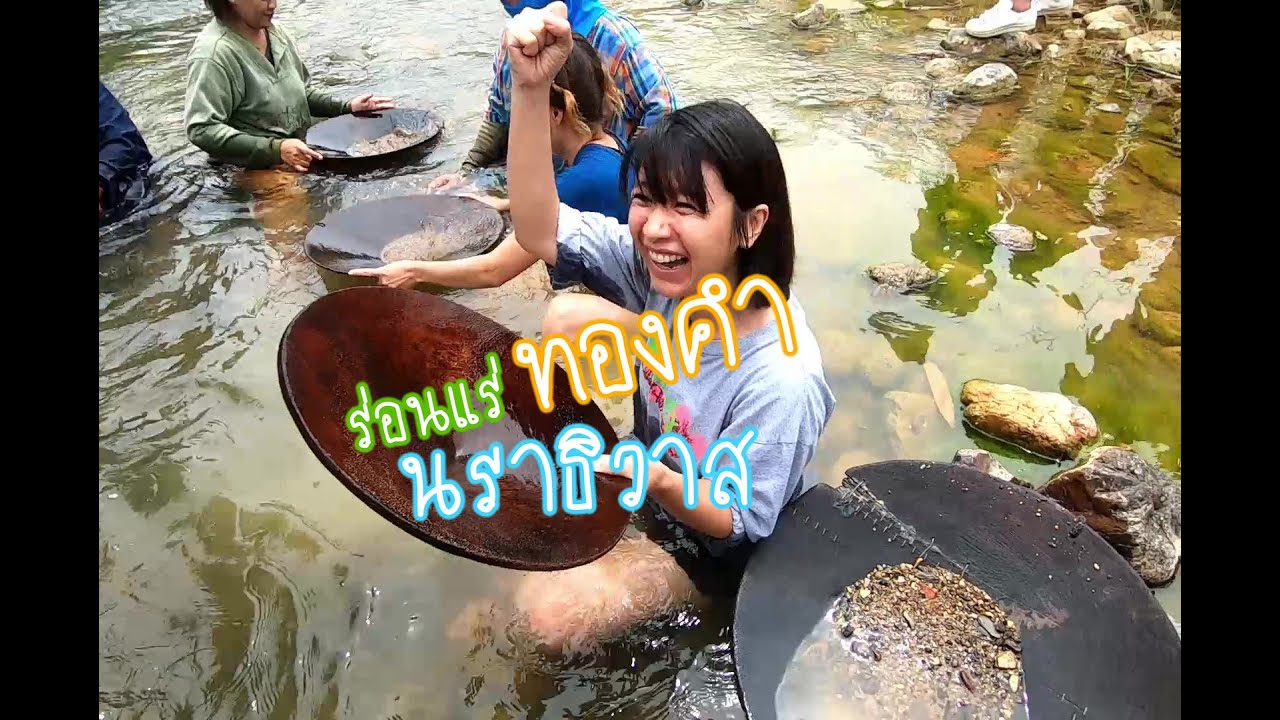
 Click to Access the Navigation Map GPS
 Art, Culture and Heritage
 Landmarks and Memorials(8)
 Royal Palace(1)
 Art, Craft Centres, Tradition(7)
 Museums(4)
 Art Gallery(1)
 Places of Worship
 Temple(16)
 Mosque(23)
 Other Sacred Sites(4)
 Research and Development
 Royal Project(1)
 Suburban Living
 Village, Community(9)
 Local Market(1)
 National Parks and Marine Reserves(5)
 Mountain (Doi)(2)
 Dam, Reservoir, Lake(2)
 Waterfalls(16)
 River, Canal(3)
 Bays and Beaches(5)
 Islands(1)
Other natural attractions(4)
Islands(1)
Other natural attractions(4)
 Entertainment and Agricultural
 Stadium(1)
 Farms, Parks and Ecotourism(7)
 Shopping
 Shopping and Night Market(1)
 Travel Articles, Recipes
 Travel Review, Food Review(1)


