
lovethailand home >South Travel Attractions >Nakhon Si Thammarat Travel Attractions >Pak Phanang >Laem Talumphuk > Royal Commemorative Museum for Pak Phanang Basin D..
TL;DR: Royal Commemorative Museum for Pak Phanang Basin Development is located at 61/1 Moo 5, Hu Long Subdistrict, Pak Phanang District, Nakhon Si Thammarat 80140, Thailand, open Monday – Friday, hours 08.30 – 16.30.
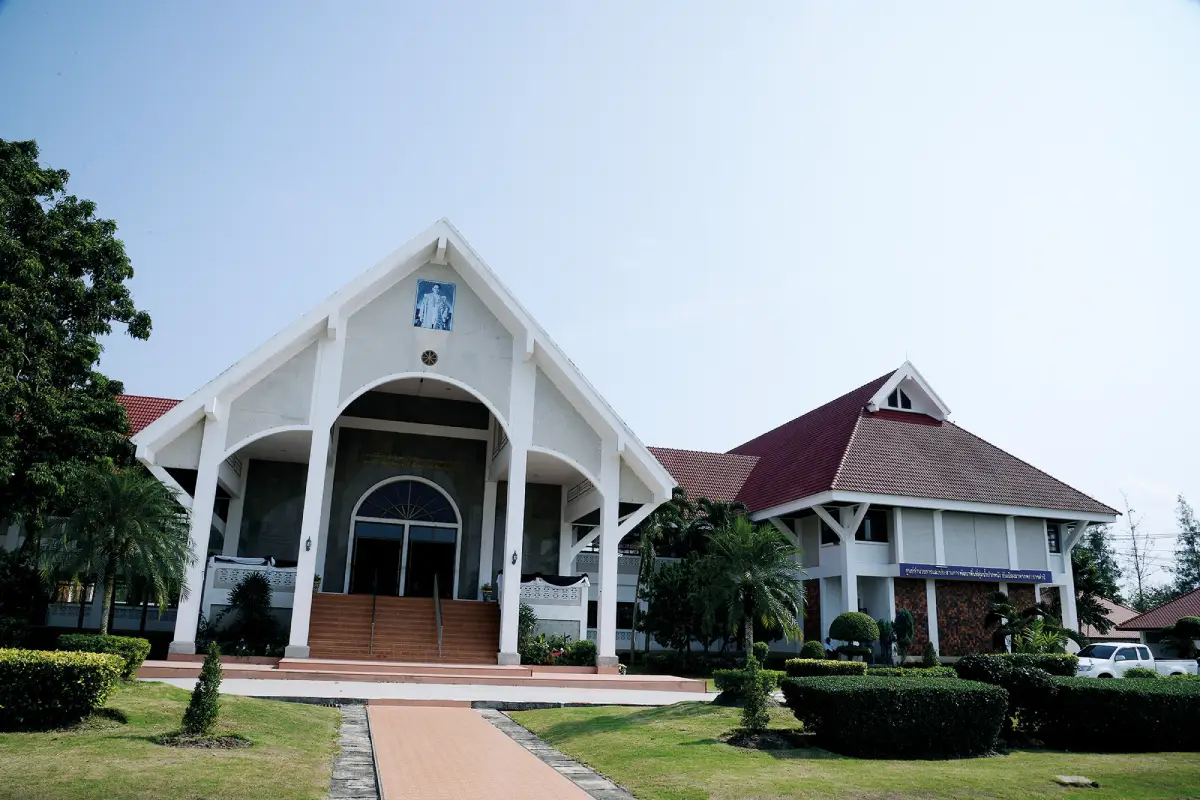
Royal Commemorative Museum for Pak Phanang Basin Development
Open Days: Monday – Friday
Opening Hours: 08.30 – 16.30
The Royal Commemorative Museum for Pak Phanang Basin Development is an important learning center in Pak Phanang District, Nakhon Si Thammarat Province. It is located at 61/1 Moo 5, Hu Long Subdistrict, Pak Phanang District, within the operational area of the Pak Phanang Basin Development Project under Royal Initiative. The museum was established to honor His Majesty King Bhumibol Adulyadej, King Rama IX, on the occasion of the 50th anniversary of His accession to the throne, and to present the story of the Pak Phanang Basin in a clear and systematic way. Its exhibitions explain the basin from its prosperous past as a rice-trading port to the serious environmental, agricultural, and social problems that later affected the area, and finally to the royal-initiated development approach that helped restore the basin and improve people’s quality of life.
This museum is suitable for travelers who want to understand Pak Phanang beyond riverside scenery, seafood, or a visit to the large water gate. Inside the museum, visitors learn why the Pak Phanang Basin was once one of the most important agricultural and trading areas in Southern Thailand, why Pak Phanang became famous for rice, and why the same area later faced severe problems such as saltwater intrusion, freshwater shortage, flooding, acid sulfate soil, saline soil, falling rice prices, the expansion of shrimp farming, and changes in transportation routes. A visit here gives travelers a complete background of Pak Phanang as a historical town, an irrigation landscape, an agricultural area, a fishing community, and a major case study of royal-initiated development in Thailand.
The Pak Phanang Basin is important geographically, economically, and culturally. It covers areas connected with Nakhon Si Thammarat, Phatthalung, and Songkhla, with the Pak Phanang River and its waterways forming the heart of local life. Communities in the basin have long depended on water for rice cultivation, orchards, fishing, transportation, and trade. In the past, Pak Phanang grew from the fertility of its lowland river system and its convenient water routes. Rice grown in the basin became an important product and helped connect Pak Phanang with markets inside and outside the country. The museum helps visitors understand that a river basin is not only a geographical feature, but a living system that connects water, soil, livelihoods, community memory, and regional development.
The origin of the museum is directly linked with the Pak Phanang Basin Development Project under Royal Initiative. His Majesty King Rama IX gave royal guidance for relevant agencies to solve problems in the area, restore natural conditions, and improve the quality of life of local people. The Royal Thai Army was one of the agencies that responded to the royal initiative and took part in the development work. As 1996 marked the 50th anniversary of His Majesty’s reign, the Army initiated the construction of a royal commemorative museum building. The building was intended as a tribute to the King, a royal working space during visits to the area, and a museum that would explain the development of the Pak Phanang Basin and the royal vision behind the project.
The building was designed by the Fine Arts Department with architectural features adapted from Southern Thai local styles, including a hip roof form. The interior was arranged for several functions: a royal working room, a private royal room, a conference room, a permanent exhibition hall, a temporary exhibition area, and workspaces for staff. This makes the building more than a conventional museum. It is a royal commemorative building designed for both official work and public education. It serves students, researchers, government officers, local residents, and visitors who want to understand basin-wide development through water management, agriculture, land use, environmental restoration, and community improvement.
The royal working room and the private royal room are among the most meaningful parts of the building. The private royal room was arranged as a space for rest during royal work in the area and decorated with wall paintings reflecting the arts, culture, and traditions of Nakhon Si Thammarat. These rooms help visitors understand that the Pak Phanang Basin Development Project was not a distant policy. It was a real area where His Majesty King Rama IX followed the problems closely and offered development guidance based on actual conditions. The focus was always on people’s livelihoods, the landscape, and practical solutions that matched the local environment.
The permanent exhibition is divided into 6 main sections, arranged in sequence so that visitors can follow the development story step by step. Section 1 presents the past of the Pak Phanang Basin and the former prosperity of Pak Phanang town. Section 2 explains the problems that occurred within the project area. Section 3 analyzes the causes of those problems. Section 4 presents the royal benevolence of His Majesty King Rama IX toward the project area. Section 5 explains the implementation plan of the Pak Phanang Basin Development Project under Royal Initiative. Section 6 presents the results after project implementation and other important royal-initiated projects in Southern Thailand.
Section 1 takes visitors back to the prosperous period of Pak Phanang. The town was once one of the most important ports in Southern Thailand and a center for collecting and trading high-quality rice from the lowland river basin. The exhibition uses narration, recreated port scenes, images of trading boats, and historical references to show how lively Pak Phanang once was. Beginning with this prosperous past is important because it shows that Pak Phanang had strong natural and economic foundations before later environmental and social changes created complex problems.
Section 2 explains the problems that gradually affected the project area. As transportation shifted from waterways to roads, Pak Phanang’s old role as a river-based trading town declined. Falling rice prices weakened the agricultural economy. People moved into forested upstream areas, damaging watershed forests. Shrimp farming expanded and changed land use patterns. These changes affected water systems, soil quality, local livelihoods, and community stability. This section helps visitors understand that the basin’s problems did not come from one single cause. They resulted from many connected changes in economy, land use, water management, and society.
Section 3 examines the causes of major problems in the Pak Phanang Basin, especially freshwater shortage and saltwater intrusion. Because the basin is a lowland area close to the sea, water must be managed carefully. If saltwater moves too far upstream, rice fields, orchards, freshwater sources, and daily life are affected. If drainage is insufficient, floods occur. If there is not enough freshwater in the dry season, agriculture suffers. Other issues include acid sulfate soil, saline soil, wastewater from shrimp farms, conflicts between rice farming and shrimp farming, and social impacts on local communities. The exhibition uses maps, charts, video, light, and sound to explain these relationships clearly.
Section 4 presents the royal benevolence of His Majesty King Rama IX toward the Pak Phanang Basin. The exhibition explains His Majesty’s concern for the people and the royal guidance given to government agencies on several occasions. His Majesty understood that the basin covered a wide and interconnected area. Solving only one local point would not be enough. The whole basin had to be planned as a system, including freshwater storage, saltwater control, flood drainage, agriculture, forestry, land use, livelihoods, and quality of life. Visitors can see the principle of integrated development based on real geography and real human needs.
Section 5 explains the implementation plan of the Pak Phanang Basin Development Project under Royal Initiative. It covers the background of the project, its objectives, irrigation development, agricultural improvement, forestry, water management, administration, coordination among agencies, and project timelines. This section shows that basin development requires more than building a water gate or digging canals. It depends on engineering knowledge, local understanding, long-term planning, monitoring, and cooperation among many agencies and communities. The project had to respond to both urgent needs and long-term environmental management.
Section 6 presents the results after project implementation and introduces other important royal-initiated projects in Southern Thailand. This final section helps visitors understand the effects of development on the basin, including relief from saltwater intrusion, improved freshwater storage, reduced flood damage, agricultural recovery, and better quality of life for local people. It shows how an area that had faced serious decline could become a model of integrated area-based development, connecting water, soil, forest, livelihoods, communities, and state administration.
The Uthokawiphat Prasit Water Gate is closely connected with the museum and the entire Pak Phanang Basin Development Project. Its royal-bestowed name refers to the successful separation and management of freshwater and saltwater. The water gate helps prevent saltwater from moving upstream into the Pak Phanang River and helps store freshwater above the gate for use in the basin. Its importance is not only its large engineering structure, but its role as the heart of a water management system that affects farmers, orchard owners, fishing communities, riverside settlements, and the ecosystem of the basin.
Visiting the museum together with the water gate makes the experience more complete. Inside the museum, visitors learn about the problems, causes, royal initiative, and development plan. Outside, near the project area, they can see the actual river, water control structures, lowland landscape, and the relationship between freshwater, saltwater, agriculture, and settlement. This makes the museum especially valuable for students, study groups, researchers, and visitors interested in irrigation, agriculture, environmental management, and sustainable development.
The museum also has a multipurpose conference room and a temporary exhibition area used for official meetings, special exhibitions, and activities organized by government agencies, private organizations, and local communities. The continued use of the museum as a meeting and coordination venue shows that it is not only a place for remembering the past. It remains connected with current and future planning for the Pak Phanang Basin. In this sense, the museum continues to function as a living institutional space for knowledge, consultation, and development coordination.
Getting There from Nakhon Si Thammarat city is convenient by road. Travelers should follow the route toward Pak Phanang District, then continue toward Hu Long Subdistrict and the Uthokawiphat Prasit Water Gate area. The museum is located within the coordination and development project area of the Pak Phanang Basin. By private car, the journey from Nakhon Si Thammarat city generally takes about 40-50 minutes, depending on traffic and route conditions. Private cars, school vans, official study-visit vans, and local hired vehicles are suitable for reaching the museum.
The museum’s regular opening days are Monday to Friday from 08.30 to 16.30. Admission is free. Saturday and Sunday are regular closing days, but group visits can be arranged by prior coordination. Groups should contact the museum in advance at 0 7551 7933, 0 7551 7534, or 0 7541 6127, especially if they require staff assistance, organized explanations, or use of the meeting facilities. This is particularly important for schools, universities, government agencies, and study groups focusing on water management or rural development.
General visitors should allow at least 1-2 hours for the museum. Those who plan to combine the visit with the water gate, Pak Phanang riverside area, the old town, bird’s nest houses, local restaurants, or Laem Talumphuk should allow at least half a day. Pak Phanang offers a combination of river scenery, irrigation infrastructure, fishing culture, seafood, community life, and historical memory. Starting at the museum helps travelers understand the meaning behind the surrounding attractions rather than seeing them as separate sightseeing points.
The atmosphere of the museum is calm and educational. Visitors should follow the exhibition sequence from the prosperous past of Pak Phanang to the problems, causes, royal initiative, development plan, and results. This sequence allows the story to unfold logically. Skipping directly to individual displays may reduce the understanding of how water, land, economy, agriculture, and society are connected. Reading the exhibition texts and following the multimedia displays helps visitors see that the Pak Phanang Basin Development Project was designed as an integrated solution, not a single isolated construction project.
For international visitors, the museum provides a clear introduction to Thai royal-initiated development in the context of water, agriculture, and rural communities. Pak Phanang may not be as widely known as Thailand’s major tourist cities, but it offers a valuable case study in basin management. The museum shows how a lowland area affected by freshwater shortage, saltwater intrusion, flooding, soil problems, and livelihood changes could be addressed through integrated planning. Visitors interested in sustainable development, irrigation, community resilience, and environmental restoration will find this museum especially meaningful.
The Royal Commemorative Museum for Pak Phanang Basin Development therefore deserves a place in any learning-based itinerary in Nakhon Si Thammarat. It completes the story of Pak Phanang by connecting the past prosperity of a river port, the decline caused by environmental and economic change, the importance of water management, and the royal vision that guided restoration of the basin. A visit here is not only a visit to a museum building. It is a journey into the relationship between people, water, land, agriculture, state planning, and long-term development in one of Southern Thailand’s most important river basins.
| Name | The Royal Commemorative Museum for Pak Phanang Basin Development |
| Location | 61/1 Moo 5, Hu Long Subdistrict, Pak Phanang District, Nakhon Si Thammarat 80140, Thailand |
| Address | The Royal Commemorative Museum for Pak Phanang Basin Development, Pak Phanang Basin Development Coordination Center under Royal Initiative, Hu Long Subdistrict, Pak Phanang District, Nakhon Si Thammarat 80140, Thailand |
| Highlights | A royal commemorative museum explaining the Pak Phanang Basin Development Project under Royal Initiative, with royal working rooms, a conference room, permanent exhibitions, and displays on freshwater shortage, saltwater intrusion, flooding, acid sulfate soil, saline soil, and community livelihood improvement |
| History | Built in 1996 on the occasion of the 50th anniversary of His Majesty King Rama IX’s accession to the throne, as a tribute to the King and as a museum explaining the royal-initiated development of the Pak Phanang Basin |
| Name Origin | The name reflects the museum’s role as a royal commemorative building dedicated to the development of the Pak Phanang Basin under the royal initiative of His Majesty King Rama IX. |
| Distinctive Features | An applied Southern Thai architectural building with a hip roof, designed by the Fine Arts Department, containing royal working spaces, permanent exhibitions, a multipurpose conference room, a temporary exhibition area, and staff workspaces |
| Travel Information | From Nakhon Si Thammarat city, travel toward Pak Phanang District, continue to Hu Long Subdistrict and the Uthokawiphat Prasit Water Gate area. The museum is located within the Pak Phanang Basin Development Project area. Private cars, school vans, official study-visit vans, and local hired vehicles are suitable. |
| Current Status | Open and operating as a learning center, meeting venue, and coordination space connected with the Pak Phanang Basin Development Project |
| Open Days | Monday – Friday; closed on Saturday and Sunday, with group visits available by prior coordination |
| Opening Hours | 08.30 – 16.30 |
| Fees | Free Admission |
| Facilities | Royal working room, private royal room, multipurpose conference room, permanent exhibition hall, temporary exhibition area, staff workspaces, and surrounding project area of the Pak Phanang Basin Development Project |
| Main Areas / Zones | 1. Royal Working Room 2. Private Royal Room 3. Multipurpose Conference Room 4. Temporary Exhibition Area 5. Staff Workspace 6. Exhibition Section 1: The Past And Former Prosperity Of Pak Phanang 7. Exhibition Section 2: Problems In The Project Area 8. Exhibition Section 3: Causes Of Problems, Including Freshwater Shortage, Saltwater Intrusion, Acid Sulfate Soil, Saline Soil, And Flooding 9. Exhibition Section 4: Royal Benevolence Of His Majesty King Rama IX Toward The Project Area 10. Exhibition Section 5: Implementation Plan Of The Pak Phanang Basin Development Project Under Royal Initiative 11. Exhibition Section 6: Project Results And Important Royal-Initiated Projects In Southern Thailand |
| Caretaker | Pak Phanang Basin Development Coordination Center under Royal Initiative, Regional Irrigation Office 15, Royal Irrigation Department, Ministry of Agriculture and Cooperatives |
| Main Contact Number | 0 7551 7933, 0 7551 7534, 0 7541 6127 |
| Fax | 0 7541 6128 |
| Nearby Tourist Attractions | 1. Uthokawiphat Prasit Water Gate, about 500 m 2. Pak Phanang Basin Development Coordination Center, about 500 m 3. Pak Phanang Riverfront, about 8 km 4. Pak Phanang Floating Market / Old Town Area, about 8 km 5. Pak Phanang Bird’s Nest Houses, about 8 km 6. Pak Phanang River Bridge, about 9 km 7. Laem Talumphuk, about 24 km 8. Wat Phra Mahathat Woramahawihan, about 35 km |
| Nearby Restaurants | 1. Khrua Mueang Nang Seafood, Pak Phanang Hotel, about 8 km, Tel. 075-517016 2. Satang Restaurant Pak Phanang, about 8 km, Tel. 075-518-250 3. Sai Jai At Pak Phanang, about 8 km, Tel. 097-354-8965, 081-535-8490 4. Chao Lay Homestay Restaurant At Pak Phanang, about 11 km, Tel. 089-813-1032 5. Chao Lay Homestay At Pak Phanang Cafe Zone, about 11 km, Tel. 075-518-789, 080-596-8189 6. Loe Cha Cha Chak Pak Phanang, about 8 km, Tel. 089-673-6026 |
| Nearby Accommodations | 1. Pakphanang Village, about 10 km, Tel. 095-246-8222 2. Chao Lay Homestay At Pak Phanang, about 11 km, Tel. 075-518-789, 080-596-8189 3. Baan Argong Homestay Pakphanang, about 11 km, Tel. 095-165-1495 4. Olivia Resort Pak Phanang West, about 10 km, Tel. 075-370-869 5. Pak Phanang Dormitory Near Wat Bang Thuat, about 11 km, Tel. 089-699-9976 6. The Plug Hotel At i-Biz Avenue, Mueang Nakhon Si Thammarat, about 35 km, Tel. 061-623-6555 |
Frequently Asked Questions (FAQ)
Q: Where is the Royal Commemorative Museum for Pak Phanang Basin Development located?
A: It is located at 61/1 Moo 5, Hu Long Subdistrict, Pak Phanang District, Nakhon Si Thammarat 80140, within the Pak Phanang Basin Development Coordination Center under Royal Initiative.
Q: What days is the museum open?
A: The museum is open from Monday to Friday. It is closed on Saturday and Sunday, but group visits can be arranged by prior coordination.
Q: What are the opening hours?
A: The museum is open from 08.30 to 16.30.
Q: Is there an admission fee?
A: Admission is free.
Q: What are the main highlights inside the museum?
A: Highlights include the royal working room, the private royal room, the multipurpose conference room, and 6 permanent exhibition sections explaining the past of Pak Phanang, basin problems, causes of water and soil issues, royal benevolence, development plans, and project results.
Q: How long should visitors spend at the museum?
A: Visitors should allow at least 1-2 hours for the museum, or half a day if they also plan to visit the Uthokawiphat Prasit Water Gate and nearby Pak Phanang attractions.
Q: How can groups arrange a visit?
A: Groups can contact the museum in advance at 0 7551 7933, 0 7551 7534, or 0 7541 6127 to coordinate the visit and staff support.
Q: What nearby attractions can be combined with the museum?
A: Nearby attractions include the Uthokawiphat Prasit Water Gate, Pak Phanang Riverfront, Pak Phanang Floating Market and old town area, bird’s nest houses, Pak Phanang River Bridge, Laem Talumphuk, and Wat Phra Mahathat Woramahawihan.
Tel : 075517933, 075517534
 Tel : 075517933, 075517534
 Category: ●Art, Culture and Heritage
 Group: ●Museums
Last Update : 2 MonthAgo
 Last Update : 2 MonthAgo
 Click to Access the Navigation Map GPS
Royal Commemorative Museum for Pak Phanang Basin Development Map
Recommend

 Historical Sites and Monuments(9)
 Landmarks and Memorials(9)
 Royal Palace(1)
 Art, Craft Centres, Tradition(12)
Museums(5)
Art, Craft Centres, Tradition(12)
Museums(5)
 Educational Places
 Educational Gardens, Farm(2)
 Places of Worship
 Temple(44)
 Mosque(2)
 Other Sacred Sites(17)
 Research and Development
 Royal Project(2)
 Suburban Living
 Village, Community(8)
 Local Market(1)
 Floating Market(1)
 Nature and Wildlife
 National Parks and Marine Reserves(6)
 Mountain (Doi)(11)
 Dam, Reservoir, Lake(10)
 Waterfalls(43)
 Hot Springs(1)
 Caves(13)
 River, Canal(3)
 Bays and Beaches(29)
 Islands(2)
 Other natural attractions(3)
 Entertainment and Agricultural
 Farms, Parks and Ecotourism(3)
 Outdoor and Adventure Activities(4)
 Travel Articles, Recipes
 Travel Review, Food Review(3)
 Southern Food Menu, Southern Food Recipes(18)


