
lovethailand home >North Travel Attractions >Nan Travel Attractions >Tha Wang Pha >Rim > Wat Sirithada (Wat Na Tao)
TL;DR: Wat Sirithada (Wat Na Tao) is located at Ban Na Tao, Moo 3, Rim Subdistrict, Tha Wang Pha District, Nan Province, hours 08:00 – 17:00.
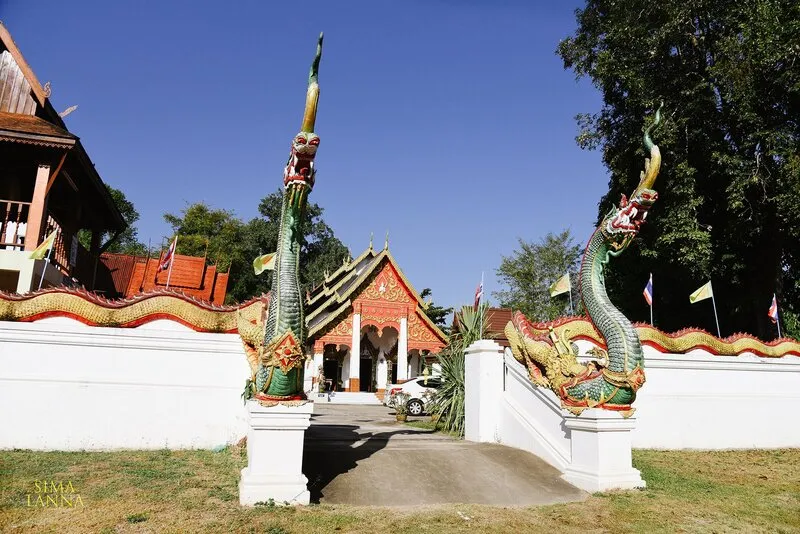
Wat Sirithada (Wat Na Tao)
Open Days: Daily
Opening Hours: 08:00 – 17:00
Wat Siri Thada (Wat Na Tao) is located in Ban Na Tao, Moo 3, Rim Subdistrict, Tha Wang Pha District, Nan Province. It is an old temple of the Ban Na Tao community and holds significance as a village religious site, a local historical learning place, and a site preserving Nan’s traditional Buddhist art. The temple’s main highlight is the reclining Buddha image, also known locally as Luang Pho Non, which is enshrined as the principal Buddha image inside the ordination hall. The image faces east, a distinctive feature that sets Wat Siri Thada apart from many temples in Nan, where the principal Buddha image is often seated in the Subduing Mara or meditation posture. This temple is therefore suitable for visitors who wish to pay respect to a reclining Buddha, appreciate an old community temple, learn about local history, and follow a cultural temple route in Tha Wang Pha District.
Wat Siri Thada is a public temple under the Mahanikaya order. Local villagers originally called it “Wat Na Tao” after Ban Na Tao, the village where it is located. Later, the temple was renamed “Wat Siri Thada” after Phra Khru Phrom Siri Thada, the ecclesiastical chief of the Pua district, who played an important role in leading local villagers to build the reclining Buddha image and the viharn for the reclining Buddha. The temple is therefore not only a place for religious practice, but also evidence of cooperation among monks, community leaders, and villagers in the past who worked together to make the temple the spiritual center of the village.
The history of Wat Siri Thada is closely connected with the Ban Na Tao community. Local records state that the temple was established in 1673 by Khruba Uttara and Saen Luang Sunan Chaiyasali, a community leader, together with local villagers. The temple’s former name directly reflects its relationship with the village, as village temples in the past were commonly called after the communities where they stood. Over time, the temple continued to develop into an important center of faith in Rim Subdistrict and received its royal boundary marker in 1935, an important confirmation of its formal status in Buddhism.
The most memorable feature of Wat Siri Thada is the reclining Buddha image, or Luang Pho Non, which serves as the principal Buddha image inside the ordination hall. The image is graceful, with a gentle smiling face that conveys peace, calmness, and compassion. Visitors who come to pay respect often feel the temple’s simple and quiet atmosphere, different from large tourist temples with heavy crowds. The reclining Buddha posture is associated with the Buddha’s final passing into Parinirvana, symbolizing peace, detachment, and reflection on the impermanence of life.
The reclining Buddha image inside Wat Siri Thada faces east, an important detail to observe when entering the ordination hall. The east is the direction of the first light of the day and is often associated with auspicious meaning in many traditional beliefs. Combined with the Buddha image’s gentle smile and serene posture, the reclining Buddha of Wat Na Tao has become a distinctive and memorable image for visitors.
Inside the ordination hall, there are also mural paintings depicting the Vessantara Jataka, an important Buddhist story about the Bodhisattva’s perfection of generosity. These murals are valuable not only as decoration for a sacred building but also as visual teachings that help people in the community understand Buddhist principles through narrative art. The presence of murals inside the temple reflects how Wat Siri Thada once served as a place of learning for monks, novices, and villagers who came to make merit, listen to sermons, or join religious activities.
The Vessantara Jataka is one of the most familiar Buddhist birth stories among Thai and Lanna people because it relates to generosity, sacrifice, and the accumulation of merit. The narrative paintings inside the ordination hall help viewers understand these moral teachings more easily, especially in the past when many people could not read Buddhist scriptures or religious books by themselves. The murals therefore functioned like a large book written across the temple walls, making Buddhist teachings directly accessible to the community.
In addition to the reclining Buddha image and mural paintings, Wat Siri Thada also has an old scripture hall decorated with beautiful patterns. A scripture hall, or Ho Tham, is an important element of Lanna temple culture because it was used to preserve Buddhist scriptures, palm-leaf manuscripts, religious texts, and other sacred documents. Its importance is not limited to architecture; it is also connected to the preservation of knowledge and Buddhist teachings within the community. A temple with an old scripture hall therefore often reflects its role as a local center of learning.
The overall appearance of Wat Siri Thada gives a sense of simplicity and community, rather than the atmosphere of a large tourist attraction. This is the temple’s essential charm. Visitors can experience the genuine atmosphere of a rural temple in Nan, where the compound is peaceful, unhurried, and suitable for respectful walking and observation. Travelers interested in old temples and local art should spend at least 30 minutes here to appreciate the reclining Buddha, mural paintings, and scripture hall in detail.
Ban Na Tao is a community in Rim Subdistrict, Tha Wang Pha District, an area known for its rural lifestyle and local cultural character in Nan Province. A visit to Wat Siri Thada can therefore be naturally combined with a trip through Tha Wang Pha, especially for travelers who enjoy old temples, community temples, and peaceful cultural sites that are less crowded than major attractions in Nan town.
Wat Siri Thada is ideal for travelers looking for a quiet place to pay respect to the Buddha and learn about local history. It is not a place focused on many activities or commercial facilities, but rather a temple valued for faith, simplicity, and the continuity of community culture. Those interested in mural paintings, Buddhist art, and the history of temples in Nan will find that this temple has more details to appreciate than may first appear.
When entering the ordination hall area, visitors should maintain a calm and respectful manner because the space is still used for religious activities by the community. Visitors should dress modestly, remove shoes where required, avoid loud conversations, and refrain from touching the Buddha image or mural paintings. Photography should be done carefully, and flash photography should be avoided near the murals in order to help preserve the artwork.
Another point of interest is that Wat Siri Thada forms part of a cultural temple route in Tha Wang Pha District. Travelers can connect a visit here with Wat Nong Bua, Wat Sri Mongkol, or Tai Lue community learning sites nearby. One possible route is to begin by paying respect at Wat Siri Thada, then continue to see mural paintings and Tai Lue culture in Tha Wang Pha and Pua. This route is suitable for visitors who prefer slow travel and deeper cultural learning.
Getting There From Nan town, travel toward Tha Wang Pha District, then continue into Rim Subdistrict and Ban Na Tao. The temple is located in Ban Na Tao, Moo 3. Traveling by private car is the most convenient option because it allows visitors to stop at several nearby attractions in the same day. For a cultural route, allow enough time to pay respect to the Buddha, visit the ordination hall, and walk around the temple grounds.
The best time to visit is in the morning or late afternoon, when the weather is more comfortable and suitable for a quiet temple visit. For those who wish to photograph the temple grounds and surrounding community, morning light provides a softer atmosphere and reveals the details of the area well. However, when visiting inside the ordination hall, visitors should prioritize calmness and respect for the sacred space over photography.
Historically, Wat Siri Thada is an example of a temple that reflects the growth of a local community in Tha Wang Pha District. The change of name from Wat Na Tao to Wat Siri Thada reflects the relationship between the temple and the monk who helped develop it. At the same time, the original name remains in the memory of villagers and visitors. Using the combined name “Wat Siri Thada (Wat Na Tao)” therefore preserves both the official name and the local name familiar to the community.
In terms of Buddhist art, the reclining Buddha image at Wat Siri Thada is an identity that makes the temple different from others along the same route. The image’s gentle face and calm posture allow visitors to feel a sense of inner peace. Paying respect to the reclining Buddha is therefore not only about asking for blessings, but also about reflecting on Buddhist teachings concerning mindfulness and letting go.
Culturally, the temple continues to serve as a gathering place for the people of Ban Na Tao. Religious activities throughout the year, including Buddhist holy days, important Buddhist festivals, merit-making events, and community rituals, help maintain the relationship between people and the temple. Wat Siri Thada is therefore more than a tourist site; it is a living community space cared for jointly by monks and villagers.
Visitors planning a trip to Wat Siri Thada should arrange their route in advance, especially if they wish to continue to Wat Nong Bua, Wat Sri Mongkol, or Pua District. Having a private car makes the journey easier and allows convenient stops for photography or meals in Tha Wang Pha District. The area around the temple is not a busy commercial tourist zone, so visitors should prepare drinking water and manage their travel time appropriately.
In summary, Wat Siri Thada, or Wat Na Tao, is an old temple with religious, historical, and artistic value. Its reclining Buddha image inside the ordination hall, Vessantara Jataka murals, old scripture hall, and history closely tied to the local community make it a worthwhile stop when traveling through Tha Wang Pha District, Nan Province. It is especially suitable for visitors who want to explore temples in greater depth, absorb the local atmosphere, and learn about community history through a living religious site.
| Name | Wat Siri Thada (Wat Na Tao) |
| Location | Ban Na Tao, Moo 3, Rim Subdistrict, Tha Wang Pha District, Nan Province |
| Address | 42 Moo 3, Rim Subdistrict, Tha Wang Pha District, Nan 55140, Thailand |
| Highlights | The reclining Buddha image, or Luang Pho Non, inside the ordination hall, Vessantara Jataka murals, and an old scripture hall |
| History / Period | Established in 1673 by Khruba Uttara and Saen Luang Sunan Chaiyasali together with local villagers; received its royal boundary marker in 1935 |
| Name Origin | Originally called Wat Na Tao after the village name, later renamed Wat Siri Thada after Phra Khru Phrom Siri Thada, the ecclesiastical chief of Pua district |
| Distinctive Features | The principal Buddha image is a reclining Buddha facing east, with a gentle smiling face and deep importance to the local community |
| Travel Information | Travel from Nan town toward Tha Wang Pha District, then continue into Rim Subdistrict and Ban Na Tao; private car is the most convenient option |
| Current Status | A public temple under the Mahanikaya order and an active community temple of Ban Na Tao |
| Main Areas / Zones | Ordination hall, reclining Buddha image, Vessantara Jataka murals, and old scripture hall |
| Abbot / Caretaker | Phra Khru Uppatham Nanthakan (Saman) |
| Main Contact Number | 054-755-317 |
| Nearby Tourist Attractions | 1. Wat Nong Bua, about 9 km 2. Ban Nong Bua Tai Lue Village, about 9 km 3. Wat Sri Mongkol (Kong), about 12 km 4. Wat Phra That Chom Nang, about 13 km 5. Cocoa Valley, about 18 km |
| Nearby Restaurants | 1. Pla Sod Tha Wang Pha Restaurant, about 5 km, Tel. 054-755-136, 089-208-5953 2. Baan Im Suk, about 6 km, Tel. 085-029-6461, 085-711-8900, 065-914-2987 3. Cocoa Valley Cafe, about 18 km, Tel. 097-186-6116, 086-333-0099 4. Huanam Mushroom Farm, about 22 km, Tel. 081-005-1533 5. King Pho, about 9 km |
| Nearby Accommodations | 1. Nan Napa Resort, about 5 km, Tel. 098-748-8106, 054-050-029 2. White Chill Resort, about 7 km, Tel. 092-335-2499, 094-991-5998 3. Chill Loft Homestay Tha Wang Pha, about 8 km, Tel. 095-546-2965 4. Chaika Nanan Farmstay, about 9 km 5. Coconut Resort Nan, about 12 km, Tel. 081-979-7961 |
Frequently Asked Questions (FAQ)
Q: Where is Wat Siri Thada (Wat Na Tao) located?
A: Wat Siri Thada, also known as Wat Na Tao, is located in Ban Na Tao, Moo 3, Rim Subdistrict, Tha Wang Pha District, Nan Province.
Q: What is the main highlight of Wat Siri Thada?
A: The main highlight is the reclining Buddha image, or Luang Pho Non, enshrined as the principal Buddha image inside the ordination hall and facing east.
Q: When was Wat Siri Thada established?
A: Wat Siri Thada was established in 1673 and received its royal boundary marker in 1935.
Q: Why is Wat Siri Thada also called Wat Na Tao?
A: It was originally called Wat Na Tao after Ban Na Tao village, before being renamed Wat Siri Thada after Phra Khru Phrom Siri Thada.
Q: What can visitors see inside Wat Siri Thada?
A: Visitors can see the reclining Buddha image, Vessantara Jataka murals, and an old scripture hall that reflects Nan’s local craftsmanship.
Q: Who is the abbot of Wat Siri Thada?
A: The abbot of Wat Siri Thada is Phra Khru Uppatham Nanthakan (Saman).
Q: How can travelers get to Wat Siri Thada?
A: Travelers can go from Nan town toward Tha Wang Pha District, then continue into Rim Subdistrict and Ban Na Tao. Traveling by private car is the most convenient option.
 Category: ●Places of Worship
 Group: ●Temple
Last Update : 5 MonthAgo
 Last Update : 5 MonthAgo
 Click to Access the Navigation Map GPS
Wat Sirithada (Wat Na Tao) Map
Recommend

 Art, Culture and Heritage
 Landmarks and Memorials(6)
 Art, Craft Centres, Tradition(6)
 Museums(4)
 Historic Homes and Cities(1)
 Art Gallery(1)
 Educational Places
 Educational Gardens, Farm(1)
Temple(68)
Educational Gardens, Farm(1)
Temple(68)
 Church(1)
 Other Sacred Sites(18)
 Research and Development
 Royal Project(2)
 Suburban Living
 Village, Community(13)
 Local Market(1)
 Nature and Wildlife
 National Parks and Marine Reserves(9)
 Mountain (Doi)(6)
 Dam, Reservoir, Lake(16)
 Waterfalls(28)
 Hot Springs(1)
 Caves(11)
 River, Canal(5)
 Other natural attractions(10)
 Entertainment and Agricultural
 Farms, Parks and Ecotourism(4)
 Outdoor and Adventure Activities(2)


