
lovethailand home >North Travel Attractions >Nan Travel Attractions >Na Noi >Si Sa Ket > Wat Phra That Sisaket
TL;DR: Wat Phra That Sisaket is located at Sisaket Subdistrict, Na Noi District, Nan Province, hours 08.00 - 17.00. Highlights include Phra That Sisaket stupa, white sacred relic, 7 crystal stones, and the history of temple reconstruction after floods.

Wat Phra That Sisaket
Opening days: Daily
Opening hours: 08.00 - 17.00
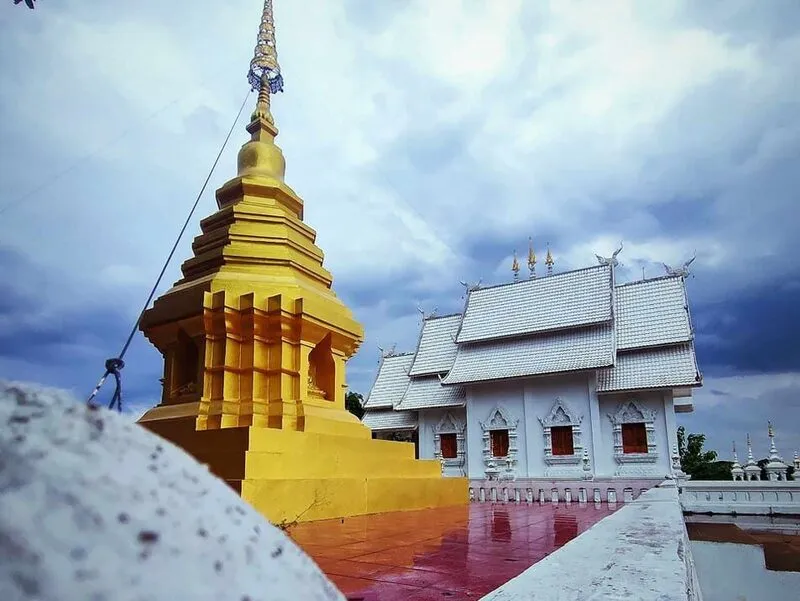
Wat Phra That Sisaket is located in Sisaket Subdistrict, Na Noi District, Nan Province. It is one of the most important sacred sites for the people of Na Noi, with a long history rooted in local faith and community memory. The temple is especially known for Phra That Sisaket, a revered stupa associated with sacred relics, miraculous crystal stones, and the story of villagers who repeatedly rebuilt their temple after destructive floods. Today, the temple stands as a symbol of faith, perseverance, and cultural continuity in the Sisaket community.
Although there is no clear written evidence confirming the exact year when Wat Phra That Sisaket was first established, oral accounts from elders in the community consistently describe it as an ancient temple. Local tradition also connects the original stupa with the Mon or Burmese people who once came into the area and built a sacred monument there. This background gives the temple an important historical dimension, reflecting the movement of people, Buddhist belief, and cultural influence across northern Thailand.
The original Wat Phra That Sisaket was located on the bank of the Haeng River in the old Sisaket area, opposite Ban Ko Mok Ko. The former temple compound contained a stupa, a viharn, a large bronze principal Buddha image measuring 4 sok across the lap, and residences for monks and novices. These features show that the old temple was once a complete and important Buddhist site for the local community.
A major flood caused by several days of continuous heavy rain changed the history of the temple dramatically. The floodwaters destroyed the temple and all its structures, sweeping them away and submerging them. Villagers tried to search for the principal Buddha image and other ancient objects, but they could not be found. Only small traces of ruins remained as evidence of the former temple. This disaster became a shared memory of the community and marked the beginning of a new effort to revive the sacred site.
Driven by deep faith, the villagers rebuilt the temple to the east of the original location. They constructed a new brick-and-mortar principal Buddha image measuring 4 sok across the lap and built a bamboo-and-hardwood fence known as “pratu bong” to prevent cattle and buffaloes from entering the temple grounds. This detail reflects local wisdom and rural life in the past, when villagers used available materials and collective labor to protect their sacred space.
However, the rebuilt temple faced another great flood. The river changed its course and eroded the temple grounds until the ordination hall and principal Buddha image collapsed into the water. After this second disaster, the villagers decided to dismantle the stupa and preserve important sacred objects, including a jar containing relics and precious crystal stones. These were carried up to the mountain area near Ban Sisaket for safekeeping.
After the repeated flooding, some villagers migrated to Chiang Rai Province and nearby areas because they feared the same disaster would happen again. Yet the faith in the relics and the old temple never disappeared. Later, Luang Pho Pheng, also known as Phra Suyasatharo, led a group of villagers back to rebuild houses and a new temple on the hillside. They kept the original name, Wat Phra That Sisaket, in order to continue the faith and memory of the former sacred site.
After the new temple was completed, Luang Pho Pheng opened the preserved jar and found a white relic about the size of a little finger, shaped like a small shell. The jar also contained 7 crystal stones in different colors: black Maha Nil, green Kiao Hua Pet, dark red Kaew Ko, cloudy white Mok Mung Mueang, clear white, and 2 yellow stones. The green crystal was especially remarkable because, according to local belief, when wrapped in cotton it emitted a green radiance. This story became one of the most important elements of the temple’s sacred identity.
The relic found in the jar is traditionally believed to be associated with Phra Arahant Kaccayana, one of the important disciples in Buddhism. This belief gives Phra That Sisaket deep spiritual meaning. The stupa is not merely an architectural structure but a sacred place where villagers believe a holy relic is enshrined. For the people of Na Noi, the relic represents protection, merit, and the continuity of Buddhist faith.
Around 1937, Luang Pho Pheng and the villagers built the present stupa to enshrine the relic. Mr. Wong Norin, a skilled craftsman from Mueang Li Subdistrict, supervised the construction. The work took about 2 years to complete. The present Phra That Sisaket is therefore the result of the combined devotion of monks, local artisans, and villagers who wanted to preserve the community’s most important sacred site for future generations.
Today, Wat Phra That Sisaket remains a respected place of worship for the people of Na Noi and visitors who travel through the district. Pilgrims come to pay respect to the stupa, make merit, and learn about the temple’s history of floods, relocation, relic preservation, and reconstruction. This continuity of faith gives the temple value not only as a religious site but also as a local historical landmark.
The temple is also associated with the tradition of bathing Phra That Sisaket, a community ritual held to honor the stupa and preserve local Buddhist faith. This tradition brings villagers and devotees together for merit-making and reminds younger generations of the temple’s history, sacred relics, and the collective effort of their ancestors to protect the site.
Getting There Travelers can reach Wat Phra That Sisaket from Na Noi town by driving into Sisaket Subdistrict. A private car is the most convenient option, as the temple can be combined with nearby attractions such as Wat Sri Mongkol Na Noi, Sao Din Na Noi, Kok Suea, Si Nan National Park, Doi Samoe Dao, and Pha Hua Sing. Visitors should use GPS navigation and check local roads before traveling.
The temple is suitable for visitors interested in ancient temples, Buddhist stupas, sacred relics, local legends, and cultural routes in Na Noi District. The atmosphere is quiet and respectful rather than commercial. Visitors should take time to pay respect to the stupa, understand its history, and appreciate the role of the temple as a spiritual center of the Sisaket community.
Visitors should dress modestly, speak quietly, and behave respectfully within the temple grounds. If a local ceremony is taking place, visitors should give space to monks and villagers. Photography should be done politely, and sacred structures should not be climbed or touched inappropriately. This helps preserve both the dignity and the sacred atmosphere of the temple.
In summary, Wat Phra That Sisaket is an important sacred site in Na Noi District, Nan Province. Its story reflects natural disaster, migration, preservation of relics, reconstruction, and enduring community faith. Phra That Sisaket is not only a place for worship but also a cultural heritage site that deserves to be preserved for future generations to study and revere.
| Name | Wat Phra That Sisaket |
| Location | Sisaket Subdistrict, Na Noi District, Nan Province |
| Highlights | Phra That Sisaket stupa, white sacred relic, 7 crystal stones, and the history of temple reconstruction after floods |
| History / Period | An old sacred site of the Sisaket community; originally located by the Haeng River, later rebuilt on the hillside; the present stupa was built around 1937 and took about 2 years to complete |
| Name Origin | Named after the Sisaket community and the sacred stupa that serves as the main religious monument of the area |
| Distinctive Features | A temple associated with sacred relics, miraculous crystal stones, floods, relocation, and strong community faith |
| Travel Information | Travel from Na Noi town into Sisaket Subdistrict; private car and GPS navigation are recommended |
| Current Status | A revered temple and sacred stupa site respected by the people of Na Noi |
| Open Days | Daily |
| Opening Hours | Not Officially Specified |
| Main Areas / Zones | Phra That Sisaket stupa, relic worship area, hillside temple grounds, and area for the Phra That bathing tradition |
| Abbot / Caretaker | Phra Palat Seksan Thanavuttho / Phra Khru Sunthon Nanthakan |
| Nearby Tourist Attractions | 1. Wat Sri Mongkol Na Noi, about 6 km 2. Sao Din Na Noi, about 8 km 3. Kok Suea, about 9 km 4. Si Nan National Park, about 18 km 5. Doi Samoe Dao, about 28 km |
| Nearby Restaurants | 1. Huen Hang Tor Coffee Nan, about 6 km 2. Ban Tai Lue Coffee Na Noi, about 7 km 3. Local Restaurants in Na Noi Town, about 8 km 4. Restaurants near Sao Din Na Noi, about 8 km 5. Restaurants near Si Nan National Park, about 18 km |
| Nearby Accommodations | 1. Nanoi Resort, about 8 km 2. Ouidee Resort, about 9 km 3. Huen Fai Mae Jampee, about 10 km 4. Doi Samoe Dao Hostel, about 25 km 5. Baan Suan Den Homestay, about 28 km |
Frequently Asked Questions (FAQ)
Q: Where is Wat Phra That Sisaket located?
A: Wat Phra That Sisaket is located in Sisaket Subdistrict, Na Noi District, Nan Province.
Q: What is Wat Phra That Sisaket known for?
A: It is known for Phra That Sisaket stupa, a white sacred relic, 7 crystal stones, and its story of reconstruction after destructive floods.
Q: Where was the original temple located?
A: The original temple was located on the bank of the Haeng River in the old Sisaket area, opposite Ban Ko Mok Ko.
Q: Who rebuilt Wat Phra That Sisaket?
A: Luang Pho Pheng, also known as Phra Suyasatharo, led villagers to rebuild the temple on the hillside.
Q: When was the present Phra That Sisaket stupa built?
A: Around 1937, Luang Pho Pheng and local villagers built the present stupa to enshrine the sacred relic, and the construction took about 2 years.
Q: How can travelers get to Wat Phra That Sisaket?
A: Travelers can drive from Na Noi town into Sisaket Subdistrict. A private car with GPS navigation is the most convenient option, and the visit can be combined with Sao Din Na Noi, Si Nan National Park, and Doi Samoe Dao.
 Category: ●Places of Worship
 Group: ●Temple
Last Update : 5 MonthAgo
 Last Update : 5 MonthAgo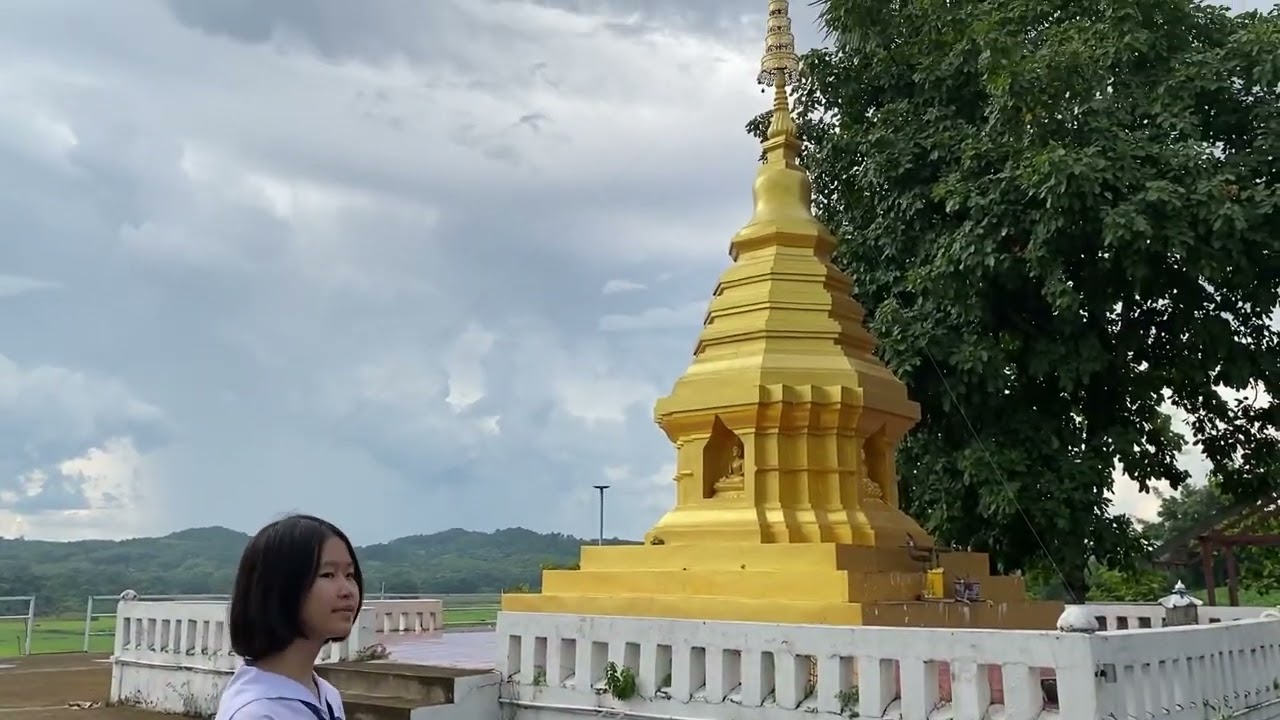
 Click to Access the Navigation Map GPS
Wat Phra That Sisaket Map
Recommend

 Art, Culture and Heritage
 Landmarks and Memorials(6)
 Art, Craft Centres, Tradition(6)
 Museums(4)
 Historic Homes and Cities(1)
 Art Gallery(1)
 Educational Places
 Educational Gardens, Farm(1)
Temple(68)
Educational Gardens, Farm(1)
Temple(68)
 Church(1)
 Other Sacred Sites(18)
 Research and Development
 Royal Project(2)
 Suburban Living
 Village, Community(13)
 Local Market(1)
 Nature and Wildlife
 National Parks and Marine Reserves(9)
 Mountain (Doi)(6)
 Dam, Reservoir, Lake(16)
 Waterfalls(28)
 Hot Springs(1)
 Caves(11)
 River, Canal(5)
 Other natural attractions(10)
 Entertainment and Agricultural
 Farms, Parks and Ecotourism(4)
 Outdoor and Adventure Activities(2)


