
lovethailand home >North Travel Attractions >Nan Travel Attractions >Pua >Won Nakhon > Wat Rong Ngae
TL;DR: Wat Rong Ngae is located at Woranakhon Subdistrict, Pua District, Nan Province, Thailand, open Daily, hours Open during regular temple visiting hours.
Wat Rong Ngae
Open Days: Daily
Opening Hours: Open during regular temple visiting hours
Wat Rong Ngae is located at No. 7, Woranakhon Subdistrict, Pua District, Nan Province. It is a historic community temple under the Mahanikaya sect and one of the most meaningful cultural temples in Pua. The temple is strongly connected with Tai Lue heritage, old Nan craftsmanship, local Buddhist rituals, and the migration history of people from the Sipsongpanna region to northern Nan. For travelers who want to understand Pua beyond scenic rice fields and mountain views, Wat Rong Ngae offers a rich encounter with history, faith, architecture, and community memory.
The temple is believed to have been founded around 1767 under the leadership of Chao Luang Thep Phaya Len, also known as Chao Chang Phueak Nga Khiao. According to local history, the community originally came from Mueang Lin, a Tai Lue settlement within the Sipsongpanna region. Mueang Lin was ruled by Phaya Saen Mueang Kaeo, but war and invasion forced the people to leave. Chao Luang Thep Phaya Len, together with four military leaders named Thao Kaeo Pan Mueang, Thao Wanna, Thao Lek Fai, and Thao Toe, gathered the people and moved southward until they reached the fertile area near Lam Nam Long Ngae.
The stream area was rich and suitable for settlement, so the migrating community built a new village there. The name Long Ngae came from ngae trees that grew near the stream, whose fruit resembled small oranges. Over time, the name changed in local pronunciation from Long Ngae to Rong Ngae. When the temple was established, it adopted the village name. This makes the name Wat Rong Ngae more than a geographical label; it preserves the story of landscape, plants, migration, and Tai Lue identity in Pua District.
Wat Rong Ngae is important because it shows how temples functioned as the spiritual and social centers of northern communities. The founding of the temple was closely tied to the founding of the village. For the Tai Lue people who settled in this area, the temple became a place for worship, ceremonies, education, moral guidance, and community gathering. It helped preserve language, belief, ritual practice, and artistic identity after migration. This historical layer is one of the reasons Wat Rong Ngae remains valuable as a living cultural site rather than only an old religious building.
The temple received its royal boundary designation on January 10, 1927. This confirmed its religious status for important monastic ceremonies. Today, Wat Rong Ngae is recognized as an old temple of Nan and a cultural attraction in Pua District. Its value comes not only from age but also from the survival of important architectural and ritual objects, especially the old viharn, the principal Buddha image, the ancient dhamma pulpit, and the rare sattaphan ritual candle stand.
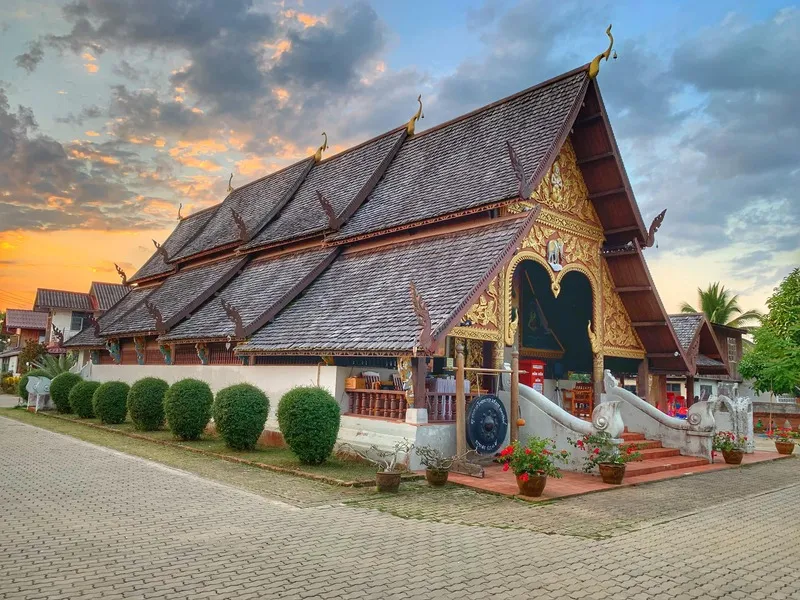
The viharn of Wat Rong Ngae is the temple’s main architectural highlight. It is a fine example of local Nan-style architecture with strong Tai Lue influence. The roof has 3 tiers and 2 layered sections, giving the building a graceful yet modest appearance. The wooden structural system is locally known as “ma tang mai,” in which beams are placed on side columns without a central row of posts. This creates an open interior and allows visitors to see the principal Buddha image clearly from the entrance.
The roof was traditionally covered with wooden shingles, reflecting the knowledge of local builders who used materials suited to the climate and environment of Nan. The gable is decorated with delicate woodcarving in floral and plant motifs. The roof-supporting brackets, known as thua hu chang, are carved with figures of deities, giants, and humans. These details express the symbolic world of Buddhist art, where sacred beings, protective figures, and human devotion coexist within one religious space.
Inside the viharn, round columns are decorated with gold patterns over a red background. The combination of red and gold gives the interior a dignified and sacred atmosphere. When natural light enters the viharn, the old woodwork, gilded details, and religious objects become especially beautiful. Visitors should take time to observe the details slowly because the temple’s charm is found in craftsmanship rather than scale. Wat Rong Ngae is not a large monumental temple, but it is rich in refined local artistry.
The principal Buddha image inside the viharn is in the subduing Mara posture. Its full name is “Si Sawat Siri Wisuttha Wiwa Mangkhalā Sawatsati Aphiwantanop Phra Rattana Okasa Masa Du.” The image was created through the faith of Pho Thao Phrom, his wife Nang Utadi, their relatives in the Samphantha Wong family, and villagers from Rong Ngae and nearby communities. The group invited Khru Ba Intha, the abbot of Wat Hia in Pua, to preside over the ceremony together with 8 other monks, making a total of 9 monks.
The construction of the principal Buddha image was accompanied by Buddhist chanting, auspicious prayers, and participation from local leaders and villagers. The consecration ceremony was completed on March 24, 1928. This history shows that the Buddha image is not only a sacred object but also a symbol of collective faith. It represents the devotion of monks, elders, families, and the wider community who worked together to create a spiritual center for Wat Rong Ngae.
Another important object in the temple is the ancient dhamma pulpit, or thammat ek. This pulpit is an old-style structure without a roof and was used for the Mahachat sermon ceremony. It is believed to have been created around the same period as the viharn. The pulpit has an octagonal shape and combines plaster and wood. The lower base is decorated with stucco vine patterns, animal motifs, and colored glass, while the upper wooden section is painted with celestial figures and delicate decorative designs.
The butterfly motif on the pulpit is especially admired for its beauty. The dhamma pulpit is important because it reflects the role of Wat Rong Ngae as a place for sermons, religious learning, and merit-making. In northern Buddhist tradition, the Mahachat sermon is not only a religious recitation but also a community event that brings villagers together through preparation, offering, listening to the Dharma, and preserving Buddhist stories. The pulpit therefore carries both artistic and ritual value.
Wat Rong Ngae also preserves a rare ritual object called sattaphan, locally known as “bandai kaeo” or the crystal ladder. It is used during the Mahachat sermon ceremony on Loy Krathong, the full moon day of the 12th lunar month. During the ceremony, the sattaphan is placed in front of the principal Buddha image. Villagers place silver ritual plaques known as chang choi ma choi, decorated with images of elephants, horses, gongs, drums, and auspicious symbols, on top of it and light 7 candles to honor the Triple Gem.
In Lanna Buddhist belief, sattaphan functions as a ritual candle stand for worshiping the principal Buddha image, a viharn, an ubosot, or a stupa. Many sattaphan pieces are made from wood and carved with animals, plants, or naga motifs. Some are lacquered, gilded, and decorated with colored glass. The 7 candle holders are associated with the 7 mountain ranges surrounding Mount Meru: Yugandhara, Isindhara, Karavika, Nemindhara, Sudassana, Vinantaka, and Assakanna. This makes the sattaphan a symbolic representation of the Buddhist cosmos.
The sattaphan at Wat Rong Ngae is particularly significant because it has a stair-like form about 1 meter wide. It is associated with Phrae and Nan craftsmanship and is considered Tai Lue in style. Candle holders are placed along both sides of the stair structure, 3 on each side, with 1 more at the rear center, totaling 7. This type of sattaphan is now rarely seen. Examples survive in only a few places, including Wat Luang Museum in Phrae, Wat Nong Daeng in Chiang Klang District of Nan, and Wat Rong Ngae in Pua District.
When viewed together, the viharn, principal Buddha image, dhamma pulpit, and sattaphan make Wat Rong Ngae an important site for studying Tai Lue and Nan cultural heritage. The temple does not rely on grandeur; instead, its value lies in continuity, craftsmanship, ritual meaning, and community memory. Every object inside the temple has a role in telling the story of migration, faith, Buddhist teaching, artistic skill, and the relationship between the temple and the local people.
The atmosphere of Wat Rong Ngae is calm, modest, and suitable for slow cultural travel. Visitors can walk around the temple respectfully, admire the old wooden viharn, observe the carved gable, roof brackets, gilded round columns, principal Buddha image, dhamma pulpit, and sattaphan, and then explore the nearby community. The experience is best appreciated by travelers who enjoy temples with historical depth rather than only famous photo spots.
Wat Rong Ngae is also well placed for a cultural route around Pua District. Nearby attractions include Wiang Woranakhon Ancient City Wall, Wat Prang, Wat Phra That Beng Sakat, Cocoa Valley, Wat Phuket, and routes leading toward Doi Phu Kha. Travelers can combine the temple with other historic sites, local restaurants, cafés, and countryside accommodations. This makes Wat Rong Ngae a useful anchor point for understanding Pua through history, religion, Tai Lue culture, agriculture, and mountain scenery.
Getting There is easiest by private car, rental car, or local hired vehicle. From central Pua, visitors can drive to Woranakhon Subdistrict within a short distance. Travelers coming from Nan town should follow the main road toward Pua District and continue to Ban Rong Ngae. Public transport is limited for moving between cultural sites in Pua, so a private vehicle is the most convenient option for combining Wat Rong Ngae with nearby temples, restaurants, and accommodations.
The best time to visit is in the morning or late afternoon when the weather is more comfortable and the light is suitable for appreciating the wooden viharn. During the rainy season and early cool season, Pua is especially green, with beautiful mountain scenery surrounding the district. Visitors should drive carefully when roads are wet and allow extra time if combining the temple with Doi Phu Kha or countryside viewpoints.
Visitors should dress respectfully, keep quiet inside the viharn, and avoid touching old religious objects. Flash photography should be avoided near delicate old woodwork, gilded decoration, and ritual objects. If a ceremony is taking place, visitors should observe respectfully and ask before taking close-up photographs. Wat Rong Ngae is still an active community temple, so mindful behavior helps preserve both its sacred atmosphere and its cultural value.
For travelers interested in art and history, it is worth learning about the temple before visiting. Knowing the stories of Mueang Lin, Sipsongpanna, Chao Luang Thep Phaya Len, Lam Nam Long Ngae, the ma tang mai viharn structure, the dhamma pulpit, and the sattaphan will make the visit more meaningful. Wat Rong Ngae allows visitors to see Nan not only as a province of mountains and rice fields, but also as a landscape of migration, craftsmanship, Buddhist devotion, and Tai Lue memory.
A good visit to Wat Rong Ngae should allow at least 45 minutes to 1 hour. Travelers who enjoy architecture, photography, or detailed cultural study may want to spend longer. After visiting the temple, it is practical to continue to Wat Phra That Beng Sakat, Wat Prang, or local restaurants in Pua, then stay overnight in a nearby resort or homestay. This creates a balanced itinerary of temple worship, art appreciation, local food, and northern countryside relaxation.
Wat Rong Ngae deserves a place on any cultural itinerary in Pua District. Its old viharn reveals the craftsmanship of Nan builders, its Buddha image expresses the shared faith of the community, its dhamma pulpit preserves the tradition of Buddhist sermons, and its sattaphan reflects Lanna cosmology and Tai Lue ritual art. Together, these elements make Wat Rong Ngae a living cultural site with depth, dignity, and lasting value for Nan Province.
| Name | Wat Rong Ngae |
| Location | Woranakhon Subdistrict, Pua District, Nan Province, Thailand |
| Address | No. 7, Woranakhon Subdistrict, Pua District, Nan Province |
| Temple Type | Community Temple Under The Mahanikaya Sect |
| Highlights | Old Nan-Style Viharn, Tai Lue Art, Ancient Dhamma Pulpit, Sattaphan Ritual Candle Stand, And Principal Buddha Image In The Subduing Mara Posture |
| History | Believed To Have Been Founded Around 1767 And Received Its Royal Boundary Designation On January 10, 1927 |
| Name Origin | The Name Comes From Lam Nam Long Ngae, A Stream Associated With Local Ngae Trees; The Village Name Later Became Ban Rong Ngae And Was Used As The Temple Name |
| Distinctive Features | Three-Tiered Viharn Roof, Traditional Ma Tang Mai Wooden Structure, Carved Floral Gable, And Roof Brackets Carved With Deities, Giants, And Human Figures |
| Main Areas / Zones | Viharn, Principal Buddha Image, Ancient Dhamma Pulpit, Sattaphan Ritual Object, And Community Ritual Space |
| Related Tradition / Ritual | Mahachat Sermon Ceremony During Loy Krathong, On The Full Moon Day Of The 12th Lunar Month, Using The Sattaphan As A Ritual Candle Stand In Front Of The Principal Buddha Image |
| Travel Information | Accessible By Private Car, Rental Car, Or Local Hired Vehicle From Central Pua To Woranakhon Subdistrict; Easily Combined With Wat Phra That Beng Sakat, Wat Prang, Wiang Woranakhon Ancient City Wall, And Other Attractions In Pua |
| Current Status | Active Buddhist Temple And Cultural Attraction In Pua District, Nan Province |
| Open Days | Daily |
| Opening Hours | Open During Regular Temple Visiting Hours |
| Abbot / Caretaker | Phra Khru Phisut Worakhun (Sa-ngop Sirichanto) |
| Main Contact Number | 089-9648345 |
| Nearby Tourist Attractions | 1. Wiang Woranakhon Ancient City Wall 2 km 2. Wat Prang 2 km 3. Wat Phra That Beng Sakat 3 km 4. Cocoa Valley 3 km, Tel. 063-7911619 5. Wat Phuket 8 km |
| Nearby Restaurants | 1. Krua Linda 2 km, Tel. 086-9165227 2. Little La Cuisine 3 km, Tel. 091-8010889 3. Chomphu Phu Kha Restaurant 3 km, Tel. 089-7008973 4. Beung Pua Cafe' & Beds 4 km, Tel. 081-9794421 5. Tai Khua Krua Mueang 8 km |
| Nearby Accommodations | 1. Pua Panorama Resort 2 km, Tel. 081-5766659 2. Pawinsin Gallery And Resort 2 km, Tel. 063-6916923 3. Go High O 2 km, Tel. 093-2190087 4. Cocoa Valley Resort 3 km, Tel. 063-7911619 5. Pua De View Boutique Resort 3 km |
Frequently Asked Questions (FAQ)
Q: Where Is Wat Rong Ngae Located?
A: Wat Rong Ngae Is Located At No. 7, Woranakhon Subdistrict, Pua District, Nan Province, Thailand.
Q: Why Is Wat Rong Ngae Important?
A: Wat Rong Ngae Is Important For Its Tai Lue Cultural History, Old Nan-Style Viharn, Ancient Dhamma Pulpit, Rare Sattaphan Ritual Object, And Role As A Historic Community Temple In Pua.
Q: What Is The Main Highlight Of Wat Rong Ngae?
A: The Main Highlight Is The Old Viharn With A Three-Tiered Roof, Traditional Ma Tang Mai Wooden Structure, Carved Floral Gable, Gilded Red Columns, And Roof Brackets Carved With Symbolic Figures.
Q: What Is The Sattaphan At Wat Rong Ngae?
A: The Sattaphan, Locally Called Bandai Kaeo Or Crystal Ladder, Is A Rare Ritual Candle Stand Used During The Mahachat Sermon Ceremony On Loy Krathong.
Q: Is Wat Rong Ngae Suitable For Foreign Travelers?
A: Yes. It Is Suitable For Travelers Interested In Quiet Temples, Buddhist Art, Tai Lue Heritage, Local Architecture, And Cultural Routes Around Pua District.
Q: How Can Visitors Get To Wat Rong Ngae?
A: Visitors Can Travel By Private Car, Rental Car, Or Local Hired Vehicle From Central Pua To Woranakhon Subdistrict. Travelers From Nan Town Should Drive Toward Pua District And Continue To Ban Rong Ngae.
Q: How Should Visitors Dress At Wat Rong Ngae?
A: Visitors Should Dress Respectfully, Keep Quiet Inside The Viharn, Avoid Touching Old Religious Objects, And Avoid Using Flash Near Delicate Old Artwork.
 Category: ●Places of Worship
 Group: ●Temple
Last Update : 5 MonthAgo
 Last Update : 5 MonthAgo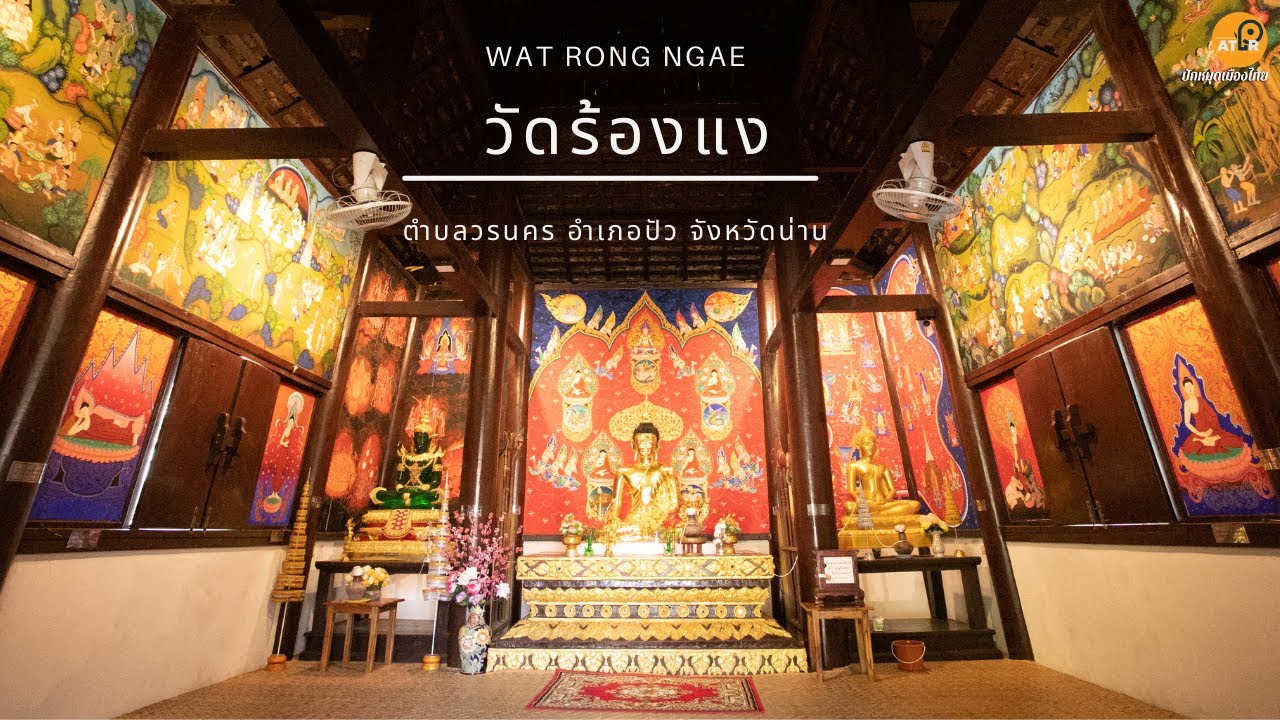
 Click to Access the Navigation Map GPS
Wat Rong Ngae Map
Recommend

 Art, Culture and Heritage
 Landmarks and Memorials(6)
 Art, Craft Centres, Tradition(6)
 Museums(4)
 Historic Homes and Cities(1)
 Art Gallery(1)
 Educational Places
 Educational Gardens, Farm(1)
Temple(68)
Educational Gardens, Farm(1)
Temple(68)
 Church(1)
 Other Sacred Sites(18)
 Research and Development
 Royal Project(2)
 Suburban Living
 Village, Community(13)
 Local Market(1)
 Nature and Wildlife
 National Parks and Marine Reserves(9)
 Mountain (Doi)(6)
 Dam, Reservoir, Lake(16)
 Waterfalls(28)
 Hot Springs(1)
 Caves(11)
 River, Canal(5)
 Other natural attractions(10)
 Entertainment and Agricultural
 Farms, Parks and Ecotourism(4)
 Outdoor and Adventure Activities(2)


