
lovethailand home >Northeastern Travel Attractions >Yasothon Travel Attractions >Kham Khuan Kaeo >Song Pueai > Ban Song Pueai Historical Site
TL;DR: Ban Song Pueai Historical Site is located at Ban Song Pueai, Song Pueai Subdistrict, Kham Khuean Kaeo District, Yasothon Province, open Daily, hours 08.00 – 17.00.
Ban Song Pueai Historical Site
Open Days: Daily
Opening Hours: 08.00 – 17.00
Ban Song Pueai Historical Site in Yasothon Province is a major cultural and archaeological destination in Kham Khuean Kaeo District. It includes Wat Song Pueai, a large brick-and-plaster Buddha image, a stupa containing soil from the 4 Buddhist holy places in India, a replica Buddha footprint, a local antiquities museum, and the ancient city remains of Dong Mueang Toei. The site is open daily, has no admission fee, and is suitable for travelers interested in archaeology, Buddhist heritage, Khmer-period history, Dvaravati culture, and local Isan identity.
Ban Song Pueai Historical Site in Yasothon Province is one of the most valuable cultural destinations in the lower northeastern region of Thailand. Located in Song Pueai Subdistrict, Kham Khuean Kaeo District, the site is about 25 kilometers from Yasothon city along Highway 23, the Yasothon – Kham Khuean Kaeo – Ubon Ratchathani route. It is not a single isolated ruin, but a cluster of religious, historical, and archaeological places that together reveal the long development of a local community in the Chi River basin. Visitors can explore Wat Song Pueai, the large Buddha image, the stupa containing soil from the Buddhist holy places, the replica Buddha footprint, the antiquities museum, and the ancient city of Dong Mueang Toei.
A visit to Ban Song Pueai is a journey through several layers of history. The present-day temple reflects the continuing faith of the local community, while the ancient city remains at Dong Mueang Toei preserve evidence of older religious traditions linked to Brahmanism, Shaivism, Dvaravati culture, Chenla influence, and early Khmer civilization. This combination makes the site especially meaningful for travelers who want to understand Yasothon beyond its modern identity. It shows that this province has deep cultural roots connected with settlement, agriculture, sacred architecture, inscriptions, Buddhist devotion, and regional historical networks.
Wat Song Pueai is the spiritual center of the area. Inside the temple’s ordination hall is a large Buddha image that serves as the principal Buddha of the temple. The image has a lap width of about 3 meters and a height of about 8 meters. It was made from brick and plaster and is more than 200 years old. For local residents, this Buddha image is not only an old religious sculpture but also a sacred presence that anchors the faith of the community. Visitors usually begin their trip here by paying respect before continuing to other important places within and around the temple.
Another important monument is the stupa containing soil from the 4 great Buddhist holy places. The original stupa was already more than 200 years old, and in 1955 it was rebuilt and enlarged with funding from Field Marshal Plaek Phibunsongkhram. Phra Palat Khian Ammaphan brought soil from the 4 sacred places in India associated with the life of the Buddha: the place of birth, the place of enlightenment, the place of the first sermon, and the place of passing into final Nirvana. This stupa therefore connects a small rural community in Yasothon with the wider sacred geography of Buddhism.
The replica Buddha footprint at Wat Song Pueai was also commissioned by Field Marshal Plaek Phibunsongkhram and his wife. Every year during Songkran, local people gather to pour water over the footprint as part of a merit-making and blessing ritual. This annual practice gives the site an active religious role. Ban Song Pueai is not only a place to observe old structures; it is a living religious landscape where villagers continue to perform rituals, make merit, and preserve local traditions through the temple calendar.
The Antiquities Museum of Ban Song Pueai helps visitors understand the historical depth of the area. The museum collects objects discovered or recovered from the old city of Dong Mueang Toei, an ancient settlement associated with the Khmer period. Important items mentioned in local accounts include a stone bed believed to be connected with a local ruler and inscriptions thought to be written in ancient Khmer script. These objects make the museum a useful bridge between the temple area and the archaeological site, allowing visitors to connect sacred spaces, artifacts, and the ancient settlement pattern.
Dong Mueang Toei Ancient City lies to the south of Ban Song Pueai village, about 1 kilometer from the village and about 7 kilometers from Kham Khuean Kaeo District center. It is an ancient settlement on a slightly irregular oval mound surrounded by a moat and embankment. The settlement measures approximately 650 meters along the northeast-southwest axis and about 450 to 540 meters along the northwest-southeast axis. The moat is about 100 meters wide on average. Although many sections of the moat have become shallow or changed through later land use, traces remain visible in places such as Nong Pu Ta, Nong I Tu, and Nong Fak Nam.
Dong Mueang Toei is an important ancient community in the lower Chi River basin. Archaeological evidence shows that the area was occupied from the late prehistoric period, around 2,500 years ago, through later historical periods. Findings include pottery fragments associated with the Thung Kula Rong Hai cultural zone, Dvaravati and Khmer pottery, iron slag, tools, and evidence of repeated land use. These remains show the development of a farming community that later became connected to wider religious and political networks in the region.
The form of the ancient city reveals how early communities understood and managed their environment. Dong Mueang Toei was situated on a low river terrace near the Chi River, Lam Chi Long, Nong Fak Nam, and several other natural water sources. The surrounding landscape was suitable for rice cultivation and settlement. The moat and embankment did more than mark the boundary of the city; they also related to water management, protection from seasonal flooding, and the symbolic definition of sacred space within the settlement.
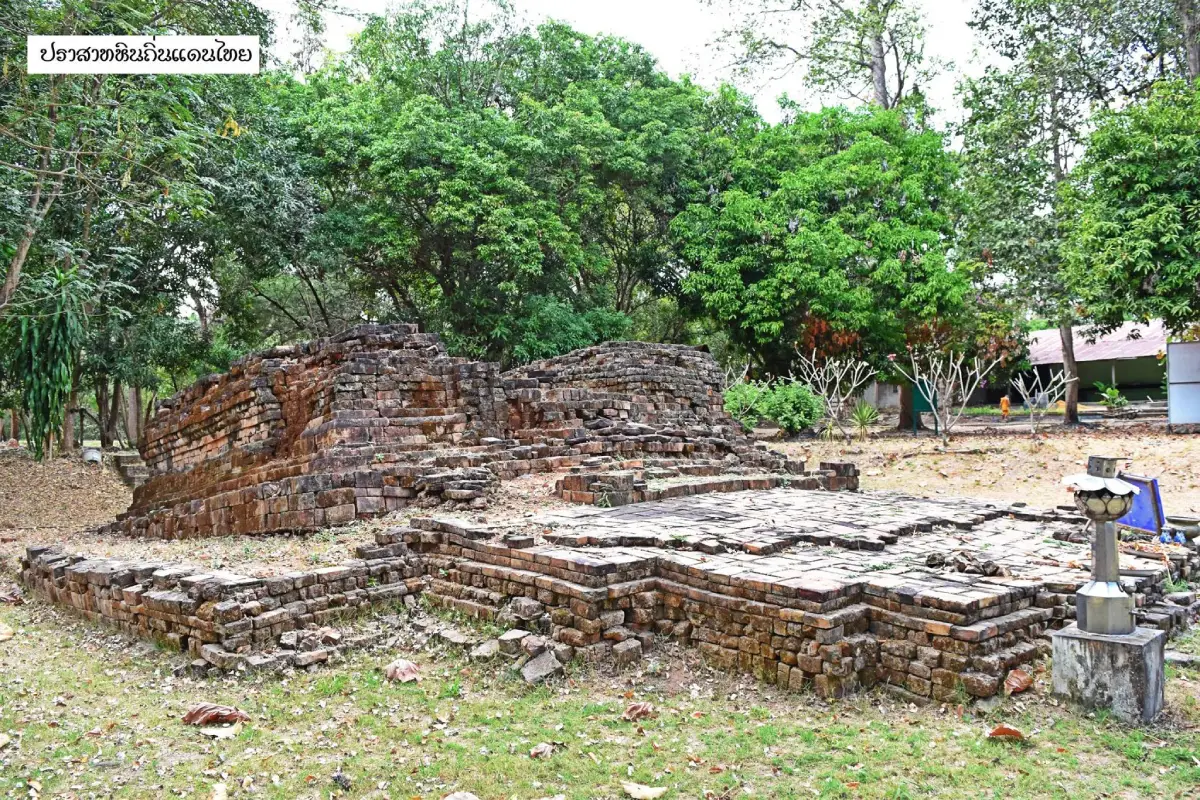
The main ancient structure at Dong Mueang Toei was built of brick and sandstone. It is a rectangular brick religious structure, about 1.7 meters high, with 2 base tiers, an eastern staircase, and a brick platform in front. A walkway extends from the front of the structure for about 28 meters, and the area around the monument contains brick paving. These architectural remains are important because they represent an early phase of religious architecture influenced by Indian Gupta and post-Gupta traditions, transmitted through Southeast Asian cultural networks.
The Dong Mueang Toei inscription is one of the strongest pieces of historical evidence from the site. It is a sandstone inscription written in Pallava script and Sanskrit, dating to around the 12th Buddhist century. The inscription refers to elite figures and the dedication of a sacred linga, linking the site to a Shaivite religious tradition. This evidence places Dong Mueang Toei within the cultural world of Chenla and early Khmer influence, showing that the area was part of a broader network of ritual, political, and artistic exchange in the Mun and Chi river basins.
The name associated with the ancient city includes Dong Mueang Toei, Mueang Boran Dong Mueang Toei, Don Mueang Toei, and Sankhapura. These names reflect different ways of understanding the same cultural landscape: as an ancient city, a sacred area, a forested archaeological zone, and a place remembered by the local community. Its association with Chenla culture is especially important because it demonstrates the spread of religious and political influence into northeastern Thailand during the early historical period.
Although the ruins at Dong Mueang Toei have deteriorated over time, the layout and character of the ancient city can still be understood. Visitors can see traces of the old settlement, moat, embankment, water features, brick remains, and sacred areas. The site is now surrounded by forest, a monastic area, agricultural land, and local community spaces. This setting gives Dong Mueang Toei a quiet and authentic atmosphere. It is not a highly commercialized tourist attraction, but a living cultural landscape where ancient heritage continues to share space with present-day rural life.
For travelers, Ban Song Pueai is best explored as a half-day or full-day cultural route. Begin at Wat Song Pueai by paying respect to the large Buddha image, the stupa, and the replica Buddha footprint. Continue to the Antiquities Museum to understand the objects and local stories connected with Dong Mueang Toei. Then proceed to the ancient city area to observe the moat, embankment, brick ruins, and former sacred space. This order allows visitors to move from living Buddhist faith to museum interpretation and finally to the deeper archaeological landscape.
The atmosphere of Ban Song Pueai is calm and rural. The route passes through local villages, rice fields, agricultural land, and community roads. Visitors should walk slowly and observe the details of the landscape. The value of the site is not based only on large structures, but on the relationship between the earth mound, the old moat, brick fragments, sacred remains, temple spaces, local stories, and everyday village life. Morning and late afternoon are the most pleasant times to visit because the light is softer and the weather is more comfortable for walking.
Visitors should treat Ban Song Pueai as both a sacred temple area and an archaeological site. Dress respectfully when entering the temple, avoid climbing on ancient structures, do not move bricks, stones, sema stones, or archaeological fragments, and do not leave rubbish in the area. Respectful travel helps protect the site and supports the local community in preserving its cultural heritage for future generations.
Getting There from Yasothon city is straightforward. Take Highway 23 on the Yasothon – Kham Khuean Kaeo – Ubon Ratchathani route toward Kham Khuean Kaeo District for about 20 to 25 kilometers. Then turn into Ban Song Pueai following local signs for about 6.7 to 10 kilometers. The route is suitable for private cars, rental cars, and local hired vehicles. Travelers who want to visit Wat Song Pueai, the antiquities museum, and Dong Mueang Toei should allow at least 2 to 3 hours.
Ban Song Pueai can also be combined with other Yasothon attractions in the same trip, including Phra That Kong Khao Noi, Phaya Thaen Public Park, the Toad Museum, Wat Mahathat, and the old Ban Sing Tha community. For travelers continuing along the Kham Khuean Kaeo route, nearby local temples and rural communities add further cultural interest. Ban Song Pueai is therefore an excellent main stop for a historical trip in Yasothon or as part of a broader cultural itinerary in northeastern Thailand.
In summary, Ban Song Pueai Historical Site brings together Buddhist devotion, archaeology, local museum collections, ancient urban planning, inscriptions, Khmer-period history, and rural Isan identity. The large Buddha image and replica Buddha footprint reflect living faith. The stupa containing soil from the 4 Buddhist holy places links the community to the sacred geography of Buddhism. The antiquities museum preserves objects from the ancient city. Dong Mueang Toei reveals the deeper history of settlement, religion, and political-cultural connection in the Chi River basin. This makes Ban Song Pueai one of the most rewarding historical destinations in Yasothon Province.
| Name | Ban Song Pueai Historical Site |
| Related Names | Wat Song Pueai, Wat Ban Song Pueai, Dong Mueang Toei, Dong Mueang Toei Ancient City, Don Mueang Toei, Sankhapura, Ban Song Pueai Antiquities Museum |
| Location | Ban Song Pueai, Song Pueai Subdistrict, Kham Khuean Kaeo District, Yasothon Province |
| Address | Song Pueai Subdistrict, Kham Khuean Kaeo District, Yasothon Province 35110, Thailand |
| Coordinates | Ban Song Pueai Archaeological Site: 15.644884483, 104.254178736 Dong Mueang Toei Ancient Community: 15.639465, 104.256903 |
| Highlights | Large Buddha image at Wat Song Pueai, stupa containing soil from the 4 Buddhist holy places, replica Buddha footprint, local antiquities museum, and Dong Mueang Toei Ancient City |
| History | Late prehistoric period around 2,500 years ago through the Dvaravati period, Chenla influence, early Khmer culture, and later settlement during the 20th to 22nd Buddhist centuries |
| Key Evidence | Thung Kula Rong Hai-style pottery, Dvaravati and Khmer pottery fragments, iron slag, brick religious structures, Pallava-script Sanskrit inscription, stone inscription, stone bed, and moat-and-embankment remains |
| Name Origin | The name Ban Song Pueai is connected with the local village, while Dong Mueang Toei refers to the ancient city south of the village. The name Sankhapura is associated with the interpretation of this ancient city within the Chenla cultural network. |
| Distinctive Features | Oval ancient settlement with moat and embankment, about 650 meters long and 450 to 540 meters wide, with an average moat width of about 100 meters and a brick religious structure facing east |
| Main Areas / Zones | 1. Wat Song Pueai And Ordination Hall With The Large Buddha Image 2. Stupa Containing Soil From The 4 Buddhist Holy Places 3. Replica Buddha Footprint 4. Ban Song Pueai Antiquities Museum 5. Dong Mueang Toei Ancient City 6. Moat, Embankment, Nong Pu Ta, Nong I Tu, And Nong Fak Nam 7. Dong Mueang Toei Monastic Area And Ancient Sacred Site |
| Caretaker | Fine Arts Department, Dong Mueang Toei Monastic Community, Song Pueai Subdistrict Administrative Organization, And Yasothon Local Natural And Cultural Environment Conservation Unit |
| Abbot Of Wat Song Pueai | Phra Athikan Wanchai Dhammaviro |
| Travel Information | From Yasothon city, take Highway 23 on the Yasothon – Kham Khuean Kaeo – Ubon Ratchathani route for about 20 to 25 km, then turn into Ban Song Pueai for about 6.7 to 10 km following local signs. |
| Current Status | Open to visitors as a historical attraction, religious site, and archaeological learning area in Kham Khuean Kaeo District, Yasothon Province |
| Open Days | Daily |
| Opening Hours | 08.00 – 17.00 |
| Fees | No Admission Fee |
| Facilities | Temple parking area, worship area, restrooms within the temple area, local community roads, restaurants and cafés in Kham Khuean Kaeo District, and accommodations in Yasothon city |
| Main Contact Number | Yasothon Local Natural And Cultural Environment Conservation Unit Tel. 0-4571-1655-6 |
| Official Website / Official Page | Song Pueai Subdistrict Administrative Organization: songpuai.go.th |
| Nearby Tourist Attractions | 1. Dong Mueang Toei Ancient City, about 1 km 2. Ban Song Pueai Antiquities Museum, about 1 km 3. Large Buddha Image At Wat Song Pueai, within the same area 4. Replica Buddha Footprint At Wat Song Pueai, within the same area 5. Phra That Kong Khao Noi, about 20 km 6. Phaya Thaen Public Park And Toad Museum, about 25 km 7. Wat Mahathat Yasothon, about 25 km 8. Ban Sing Tha Old Community, about 25 km |
| Nearby Restaurants | 1. Krua Khun Pond Kham Khuean Kaeo, about 8 km, Tel. 085-023-2708 2. Krua Kan Eng Kham Khuean Kaeo, about 8 km, Tel. 094-857-0422 3. Kai Yang Luem Mai Long / Opposite PTT Kham Khuean Kaeo, about 8 km, Tel. 088-635-8355 4. Marucha Kham Khuean Kaeo Branch, about 8 km, Tel. 064-816-1816 5. KAO NA Coffee Yasothon, Phon Than Subdistrict, about 14 km, Tel. 083-805-4169 |
| Nearby Accommodations | 1. Chang Yai Jai Dee Hotel Yasothon, about 25 km, Tel. 045-711-123 2. The Zen Hotel Yasothon, about 26 km, Tel. 045-711-455 3. B.M. Grand Hotel, about 27 km, Tel. 045-712-333 4. JP Emerald Hotel, about 27 km, Tel. 045-714-456 5. The Green Park Grand Yasothon, about 28 km, Tel. 045-714-700-4 |
Frequently Asked Questions (FAQ)
Q: Where is Ban Song Pueai Historical Site located?
A: It is located at Ban Song Pueai, Song Pueai Subdistrict, Kham Khuean Kaeo District, Yasothon Province, about 25 km from Yasothon city along Highway 23.
Q: What are the opening days and hours?
A: The site is open daily from 08.00 to 17.00.
Q: Is there an admission fee?
A: No. Visitors can explore Wat Song Pueai, the antiquities museum, and the Dong Mueang Toei ancient city area without an admission fee.
Q: What are the main highlights of Ban Song Pueai?
A: The main highlights are the large Buddha image, the stupa containing soil from the 4 Buddhist holy places, the replica Buddha footprint, the antiquities museum, and Dong Mueang Toei Ancient City.
Q: Why is Dong Mueang Toei historically important?
A: Dong Mueang Toei preserves evidence from the late prehistoric period through Dvaravati, Chenla, and early Khmer cultural phases. It includes a moat, embankment, brick religious structure, Pallava-script inscription, and multi-period archaeological remains.
Q: Who is the abbot of Wat Song Pueai?
A: The abbot of Wat Song Pueai is Phra Athikan Wanchai Dhammaviro.
Q: How can travelers get there from Yasothon city?
A: Take Highway 23 toward Kham Khuean Kaeo District, then turn into Ban Song Pueai following local signs. The route is suitable for private cars, rental cars, and local hired vehicles.
Q: What nearby attractions can be visited on the same trip?
A: Travelers can combine the visit with Phra That Kong Khao Noi, Phaya Thaen Public Park, the Toad Museum, Wat Mahathat Yasothon, and Ban Sing Tha Old Community.
 Category: ●Art, Culture and Heritage
 Group: ●Historical Sites and Monuments
Last Update : 2 MonthAgo
 Last Update : 2 MonthAgo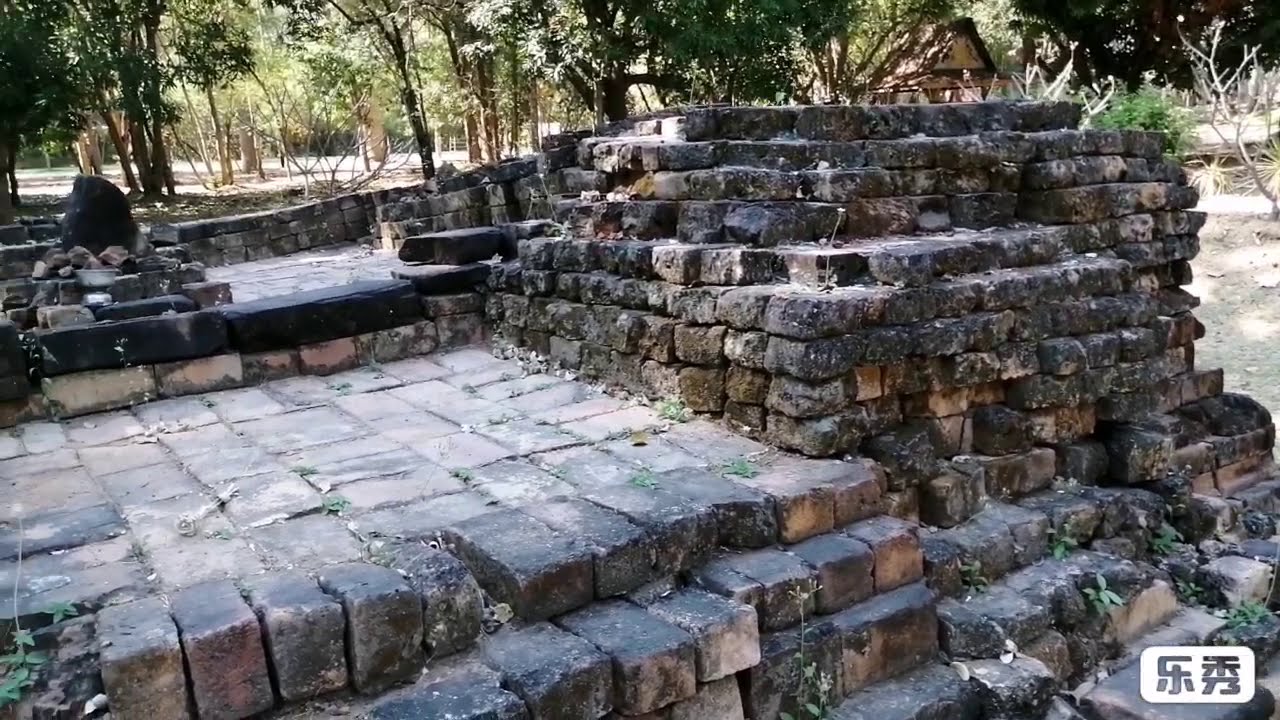
 Click to Access the Navigation Map GPS
Ban Song Pueai Historical Site Map
 Historical Sites and Monuments(6)
 Landmarks and Memorials(1)
 Art, Craft Centres, Tradition(4)
 Museums(1)
 Historic Homes and Cities(1)
 Places of Worship
 Temple(22)
 Church(1)
 Other Sacred Sites(9)
 Research and Development
 Royal Project(2)
 Suburban Living
 Village, Community(3)
 Local Market(1)
 Nature and Wildlife
 National Parks and Marine Reserves(2)
 Mountain (Doi)(2)
 Dam, Reservoir, Lake(7)
 River, Canal(2)
 Bays and Beaches(1)
 Other natural attractions(2)
 Entertainment and Agricultural
 Farms, Parks and Ecotourism(1)


