
lovethailand home >Northeastern Travel Attractions >Yasothon Travel Attractions >Loeng Nok Tha >Bung Kha > Bun Khun LanTradition
TL;DR: Bun Khun LanTradition, open Held once a year after the rice harvest season, generally during the second, hours Festival activities follow the annual programme, generally from morning until.
Bun Khun LanTradition
Open Days: Held once a year after the rice harvest season, generally during the second lunar month of the Isan calendar, around January – February, according to each district and community’s official schedule.
Opening Hours: Festival activities follow the annual programme, generally from morning until evening.
Bun Khun Lan, also known as Bun Kum Khao Yai or the Rice Spirit Blessing Festival, is an important Isan tradition held after the rice harvest. The word “khun” means to increase or multiply, while “lan” refers to the threshing ground. After rice has been harvested and threshed, farmers pile the paddy into a high mound, perform Buddhist merit-making, hold a bai si rice spirit blessing ceremony, thank Mae Phosop, ask forgiveness from Mae Thorani, and invite the spirit of rice into the granary. In Yasothon Province, the tradition is especially visible in Kut Chum District through the Bun Khun Lan, Organic Rice Legend, Yasothon Cultural Way Festival. The event features rice-spike castles, rice spirit rituals, old oxcart processions, folk performances, Isan agricultural competitions, organic rice exhibitions, local food, OTOP products, and community-based cultural activities.
Bun Khun Lan is one of the most meaningful rice-related traditions of the Isan region. It is rooted in the relationship between people, rice fields, threshing grounds, granaries, Mae Phosop, Mae Thorani, Buddhist merit-making, and community cooperation. The festival takes place after the harvest, when the rice has been cut, threshed, gathered, and prepared for storage. Farmers hold the ceremony to thank the rice, ask for forgiveness from the earth, bless the rice spirit, and pray that the household will have enough rice and prosperity throughout the year.
The term Bun Khun Lan carries a clear cultural meaning. Bun refers to merit-making. Khun means increase, growth, or multiplication. Lan means the threshing ground where rice is processed after harvest. When the threshed paddy is piled into a tall mound on the threshing ground, the act is called khun lan. The rice mound therefore becomes a symbol of abundance, family security, and the reward of a full season of work in the fields.
Within the Hit Sip Song, the 12-month traditional ritual cycle of the Isan people, Bun Khun Lan belongs to the second lunar month, commonly corresponding to January or February. However, the exact timing varies by community because each household and village completes the harvest at a different time. In traditional practice, the day chosen for moving the rice into the granary often becomes the day of Bun Khun Lan. The main principle is to bless the rice before it is stored, so that it will remain auspicious, abundant, and beneficial to the household.
The tradition combines Buddhism, the belief in Mae Phosop, reverence for Mae Thorani, local guardian spirits, ancestors, and agricultural gratitude. Isan farmers understand rice as more than a crop. Rice has spirit, merit, life, and value. Planting, harvesting, threshing, and storing rice all depend on rain, soil, water, labour, animals, tools, and sacred protection. After receiving the harvest, people therefore hold a ceremony of gratitude, apology, blessing, and renewal.
Before threshing begins, farmers traditionally perform a ritual to move Mae Thorani away from the threshing ground and inform Mae Phosop. This is because threshing involves stepping on the ground, moving bundles of rice, using tools, and separating grains from stalks. The owner of the field asks permission and expresses respect. Ritual items may include khun leaves, yo leaves, tobacco, buffalo or cattle horns, betel nut, eggs, flowers, incense, candles, water, and other auspicious objects. Together, these items represent the rice spirit.
Khun leaves and yo leaves are especially meaningful. Khun suggests support, increase, and prosperity, while yo suggests elevation and praise. Placing these leaves in the ritual is a way of expressing the wish that the rice, household, and livelihood will rise and multiply. This symbolic language shows the subtle depth of Isan agricultural culture, where plants, words, and ritual action work together to express hope.
After the ritual objects are prepared, some are placed in a rice container or bamboo sticky-rice basket, while water and buffalo horns remain outside. The ritual set is placed in front of the rice stack. The field owner makes a prayer, asks Mae Thorani to move from the threshing ground, and tells Mae Phosop not to be alarmed when the rice is threshed. This moment reflects humility. Even though rice is grown through human labour, farmers still treat it as something worthy of respect and care.
The first bundle of rice is then pulled from the base of the stack and threshed as an auspicious beginning. The straw from this first threshing is wrapped around the rice basket and tied together. A sharpened wooden stake is inserted, and a ta laeo woven ritual symbol is attached together with a bundle of rice from the sacred first field area known in Isan belief as na ta haek. This set is placed back on the rice stack, marking the completion of the preliminary ritual before the full threshing begins.
Na ta haek is significant in Isan rice-field belief. It is the first or sacred point of the field, associated with guardian spirits and the well-being of the crop. Bringing rice from this place into the ritual connects the field, the threshing ground, and the rice spirit. The rice from the sacred starting point of the field becomes a symbolic center of the whole harvest.
After threshing is completed, the rice is piled into a high and beautiful mound for the bai si rice spirit blessing ceremony. Banana trees, sugarcane stalks, and ta laeo symbols are placed at the four corners of the rice mound. The rice spirit set is placed on the top, and sacred thread is wound around the mound and connected to a Buddha image. In this way, the threshing ground becomes a temporary sacred space where rice, Buddhism, household prosperity, and agricultural belief are joined together.
The Buddhist ceremony is a central part of Bun Khun Lan. Monks are invited to chant, receive food offerings, bless the rice, and sprinkle holy water over the rice mound, the hosts, the participants, cattle, buffaloes, and farming tools. This brings Buddhist merit into the agricultural ritual. It also shows a defining feature of Isan culture: Buddhism and local belief are not separate systems but work together within community life.
After the Buddhist ceremony, the bai si rice spirit blessing takes place. A ritual specialist or respected elder calls the spirit of the rice to remain with the rice mound, the household, and the granary. The blessing asks that the rice not be lost, wasted, or depleted, and that the family have enough food, good prices, and prosperity. Through this ceremony, rice becomes more than grain. It becomes a living presence connected with family security and community well-being.
When the rice spirit blessing is completed, the rice is carried into the granary. Before doing so, the owner places khun leaves and yo leaves on every granary post as an auspicious sign. The rice spirit and Mae Phosop are invited to enter the granary. Moving the rice into storage is therefore not merely a practical task. It is the ceremonial completion of the harvest season and the formal welcoming of abundance into the household.
Bun Khun Lan also strengthens community relationships. In the past, harvesting, threshing, and moving rice into the granary required help from relatives and neighbours. On the merit-making day, family members and neighbours gathered, cooked food, listened to monks, received blessings, and helped with the work. The festival therefore functioned as both a sacred ritual and a social event of generosity, cooperation, and shared hope.
Modern agriculture has changed many aspects of rice production. Combine harvesters, mechanical threshers, fast transport, and market-based rice sales have reduced the role of traditional threshing grounds and household granaries in some communities. Yet Bun Khun Lan remains meaningful because it reminds younger generations of the value of rice, the labour of farmers, and the relationship between agriculture and culture. Many communities have adapted the ritual into village, district, or provincial events by gathering rice into a large communal mound or rice-spike castle.
Yasothon Province is one of the places where Bun Khun Lan remains especially visible. Kut Chum District holds the Bun Khun Lan, Organic Rice Legend, Yasothon Cultural Way Festival, which highlights Yasothon’s identity as an organic agriculture province and a center of Isan cultural life. The festival combines the rice spirit ritual with cultural performances, folk competitions, processions, OTOP products, organic farming exhibitions, and community participation.
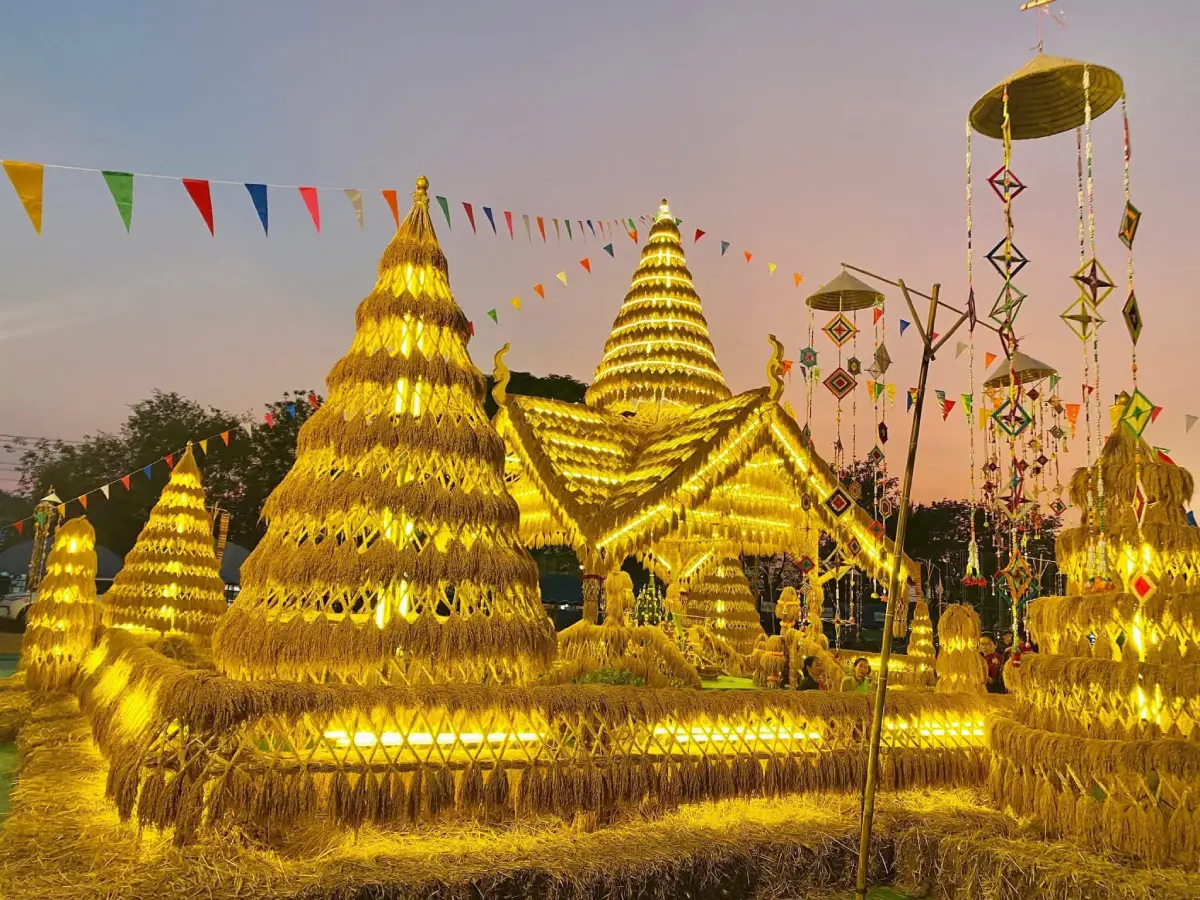
The signature feature of the Kut Chum festival is the large rice-spike castle made from countless golden rice stalks contributed by farmers and community members. This structure is both an offering and a work of community art. It represents the harvest, faith, unity, and pride of local farmers. When visitors see the rice-spike castle standing at the center of the event, they immediately understand that rice is the heart of the tradition.
Activities at the Kut Chum festival include the bai si rice spirit ceremony, ancient oxcart processions, worship dance for Mae Phosop, long-drum contests, Thai fabric fashion displays, folk singing contests, rice-threshing competitions, rice-pounding competitions, rice-cooking competitions, khanom chin noodle-making competitions, som tam performance contests, organic rice exhibitions, local food stalls, cultural products, and OTOP sales. These activities turn the festival into a broad cultural learning experience.
Linking Bun Khun Lan with organic rice is highly meaningful in Yasothon. The province has a strong reputation for organic agriculture and quality rice. The festival therefore is not simply a nostalgic recreation of the past. It shows that rice remains both a cultural asset and an economic resource. Farmers are not only food producers; they are also carriers of cultural memory, ecological knowledge, and community identity.
For visitors, Bun Khun Lan should be experienced slowly. Many details in the ceremony carry symbolic meaning: khun leaves, yo leaves, ta laeo, rice baskets, banana trees, sugarcane stalks, sacred thread, rice mounds, and rice-spike castles. These are not decorative objects only. They represent a worldview in which rice, land, water, ancestors, Buddhism, and community prosperity are connected.
The best time to attend the festival is from morning to evening. Morning is suitable for observing Buddhist and rice-spirit ceremonies, while the evening is good for cultural performances, stage activities, illuminated displays, food stalls, and community products. Visitors interested in organic agriculture should allow time to explore exhibitions and speak with local farmers. Those who want to see processions or competitions should check the annual programme in advance.
The main provincial event in Yasothon is held around the grounds in front of Kut Chum District Office. The area accommodates the main stage, rice-spike castle, contest spaces, procession routes, organic product zones, food stalls, and official community activities. From Yasothon city, Kut Chum is about 40 kilometers away and can be reached by private car, rental car, or local hired transport. Visitors should allow extra travel time on major event days.
Respectful behaviour is important because Bun Khun Lan is a merit-making and rice blessing ceremony. Visitors should not climb on the rice-spike castle, take rice stalks or ritual objects without permission, interrupt Buddhist or bai si ceremonies, or stand in the way of processions. Photography is generally possible in public areas, but it should be done respectfully, especially during prayers, offerings, and spirit-calling rituals.
Bun Khun Lan is suitable for students, cultural travelers, researchers, photographers, food travelers, and anyone interested in organic farming. The festival reveals the full cultural cycle of rice: field, harvest, threshing ground, rice mound, merit-making, granary, market, and community identity. It allows visitors to see that rice is not only food but also history, faith, economy, and social memory.
For international visitors, Bun Khun Lan offers a deep view of Isan life. It combines Buddhism, belief in Mae Phosop, rice spirit blessing, organic farming, folk music, local food, Thai textiles, and community celebration. This is a different side of Thailand from major beach or city destinations. It is a living cultural event rooted in real agricultural life.
Visitors should plan accommodation and transport in advance, especially when the festival is held over several days. Kut Chum has local resorts and small accommodations, while Yasothon city offers more hotel options. Staying in Kut Chum provides easier access to the festival, while staying in Yasothon city allows travelers to combine the event with Wiman Phaya Thaen, the Toad Museum, Wat Mahathat, Ban Sing Tha Old Community, and Phra That Kong Khao Noi.
Bun Khun Lan is also held in other districts of Yasothon, including Loeng Nok Tha, where the tradition is connected with local ethnic culture and community identity. This shows that Bun Khun Lan is not limited to one location. It is a flexible Isan tradition that each community shapes according to its own agricultural calendar, local identity, and cultural strengths. Some places emphasize the rice spirit ritual, some emphasize the rice-spike castle, and others focus on processions and cultural shows. The shared core remains gratitude to rice and the wish for abundance.
In summary, Bun Khun Lan is one of the clearest expressions of gratitude toward rice and nature in Isan culture. A grain of rice is not seen merely as agricultural produce. It is life, labour, the gift of the land, family security, and the center of community memory. The Yasothon Bun Khun Lan festival, especially in Kut Chum District, presents rice as food, faith, organic economy, cultural heritage, and living community wisdom.
| Name | Bun Khun Lan |
| Related Names | Bun Kum Khao Yai, Bun Khun Khao, Bun Khun Lan, Second Lunar-Month Merit Festival, Rice Spirit Blessing Ceremony, Organic Rice Legend, Yasothon Cultural Way Festival |
| Main Area In Yasothon | Grounds in front of Kut Chum District Office, Kut Chum District, Yasothon Province, and rice-farming temples and communities across Yasothon |
| Reference Address | Kut Chum District Office, Kut Chum Subdistrict, Kut Chum District, Yasothon Province 35140, Thailand |
| Festival Period | After the rice harvest, during the second lunar month of the Isan calendar, generally around January – February. Exact dates depend on the official schedule of each district and community. |
| Current Status | Still held as an important annual tradition of Yasothon Province. In 2026, Kut Chum District held the Bun Khun Lan, Organic Rice Legend, Yasothon Cultural Way Festival from 16 – 18 January 2026, with the opening ceremony at the grounds in front of Kut Chum District Office. |
| Highlights | Bai si rice spirit blessing, rice-spike castle, paddy merit mound, ancient oxcart procession, worship dance for Mae Phosop, rice-threshing competition, rice-pounding competition, rice-cooking competition, khanom chin noodle-making competition, som tam performance contest, long-drum contest, Thai fabric display, organic rice exhibition, and OTOP products |
| History / Significance | An Isan Hit Sip Song tradition held after the harvest to thank Mae Phosop, ask forgiveness from Mae Thorani, bless the rice spirit, and pray that the rice stored in the granary will increase and support the household throughout the year. |
| Distinctive Features | A rice-centered merit-making ceremony that connects the threshing ground, Buddhist ritual, rice spirit belief, granary storage, and Yasothon’s organic farming identity. |
| Main Areas / Zones | 1. Rice-Spike Castle And Paddy Merit Mound Area 2. Bai Si Rice Spirit Blessing Area 3. Main Stage And Cultural Performance Area 4. Ancient Oxcart Procession Route 5. Isan Farming Competition Area, Including Rice Threshing, Rice Pounding, Rice Cooking, And Khanom Chin Noodle Making 6. Organic Rice And Agricultural Knowledge Exhibition Zone 7. OTOP, Cultural Product, And Organic Farm Product Zone 8. Local Food And Community Activity Zone |
| Caretaker / Organizer | Yasothon Province, Kut Chum District, Yasothon Provincial Public Relations Office, Kut Chum District Community Development Office, local administrative organizations, organic farming networks, temple communities, local communities, and related public agencies |
| Travel Information | From Yasothon city, travel to Kut Chum District by private car, rental car, or local hired vehicle. The main event area is around the grounds in front of Kut Chum District Office, about 40 km from Yasothon city. Allow extra travel time on major festival days. |
| Open Days | Held once a year after the rice harvest according to the official schedule of the district, province, and host communities. |
| Opening Hours | Festival activities follow the annual programme, generally from morning until evening. |
| Admission Fee | No Admission Fee For The Main Public Festival Area; Personal Expenses Apply For Food, Souvenirs, OTOP Products, And Voluntary Merit-Making |
| Facilities | Main stage, activity ground, food zone, organic farm product zone, parking areas announced by organizers, restaurants in Kut Chum District, local accommodations in Kut Chum, and additional hotels in Yasothon city |
| Main Contact Number | Yasothon Provincial Office Tel. 0-4571-2722 Kut Chum Phatthana Municipality Tel. 045-789158 Kut Chum Subdistrict Administrative Organization Tel. 0-4597-9758 |
| Official Website / Official Page | Yasothon Provincial Website, Yasothon Provincial Public Relations Office, Kut Chum District And Local Administrative Organization Websites, And Kut Chum District Community Development Office Channels |
| Nearby Tourist Attractions | 1. Grounds In Front Of Kut Chum District Office, within the same area 2. Phu Tham Sim, Ban Thong Samrit, about 15 km 3. Phu Hin Pun / Wat Phu Hin Pun, about 18 km 4. St. Michael’s Church, Ban Songyae, about 25 km 5. Wiman Phaya Thaen And The Toad Museum, about 40 km 6. Wat Mahathat Yasothon, about 40 km 7. Ban Sing Tha Old Community, about 40 km 8. Phra That Kong Khao Noi, about 45 km |
| Nearby Restaurants | 1. Lap Kut Chum Yasothon, about 1 km, Tel. 084-271-7442 2. Lap Ped Yasothon Kut Chum, about 1 km, Tel. 064-745-0659 3. Yaso Lap Kut Chum, about 1 km, Tel. 091-761-0384, 092-348-0290 4. Shabu Nai Phon Cha Nom Kae Dam, about 1 km, Tel. 085-492-0665 5. Noodle Shop Luk Chin Kut Chum Yasothon, about 2 km, Tel. 082-164-3459 6. Ta Nai Khai Luk Chin Kut Chum, about 2 km, Tel. 098-640-8742 |
| Nearby Accommodations | 1. Sabai Sabai Resort Kut Chum, about 1 km, Tel. 093-394-4224 2. Yostawee Resort Kut Chum, about 2 km, Tel. 085-748-5932 3. Peangdin Resort Kut Chum, about 2 km, Tel. 088-480-5802 4. Kut Chum Resort, about 2 km, Tel. 045-789-333 5. Sot Chaeng Resort, about 4 km, Tel. 061-497-7465 6. Dream & Drew Grand Resort, about 4 km, Tel. 045-789-530 |
Frequently Asked Questions (FAQ)
Q: What is Bun Khun Lan?
A: Bun Khun Lan is an Isan rice spirit blessing tradition held after the harvest to thank Mae Phosop, ask forgiveness from Mae Thorani, bless the rice, and pray for abundance.
Q: When is Bun Khun Lan held?
A: It is generally held during the second lunar month of the Isan calendar, around January to February, after harvesting and threshing are completed. Exact dates vary by community and annual official schedule.
Q: Where is the main Bun Khun Lan festival in Yasothon held?
A: A major provincial event is held around the grounds in front of Kut Chum District Office under the Bun Khun Lan, Organic Rice Legend, Yasothon Cultural Way Festival. Local versions are also held in rice-farming temples and communities.
Q: Is there an admission fee?
A: No. The main public festival area has no admission fee. Personal expenses apply for food, souvenirs, OTOP products, and voluntary merit-making.
Q: What does the rice spirit blessing mean?
A: The rice spirit blessing invites the spirit of rice to remain with the rice mound, the household, and the granary. It expresses gratitude to rice and asks for abundance, prosperity, and food security.
Q: What are the highlights of the Kut Chum Bun Khun Lan festival?
A: Highlights include the rice-spike castle, paddy merit mound, bai si rice blessing, old oxcart procession, worship dance for Mae Phosop, Isan farming competitions, organic rice exhibitions, and local cultural products.
Q: How should visitors prepare?
A: Visitors should check the annual schedule, dress respectfully, allow extra travel time, avoid disturbing ceremonies, never take rice stalks or ritual objects without permission, and respect the local community.
Q: What nearby attractions can be visited on the same trip?
A: Nearby places include Phu Tham Sim, Phu Hin Pun, St. Michael’s Church Ban Songyae, Wiman Phaya Thaen, Wat Mahathat Yasothon, Ban Sing Tha Old Community, and Phra That Kong Khao Noi.
 Category: ●Art, Culture and Heritage
 Group: ●Art, Craft Centres, Tradition
Last Update : 1 MonthAgo
 Last Update : 1 MonthAgo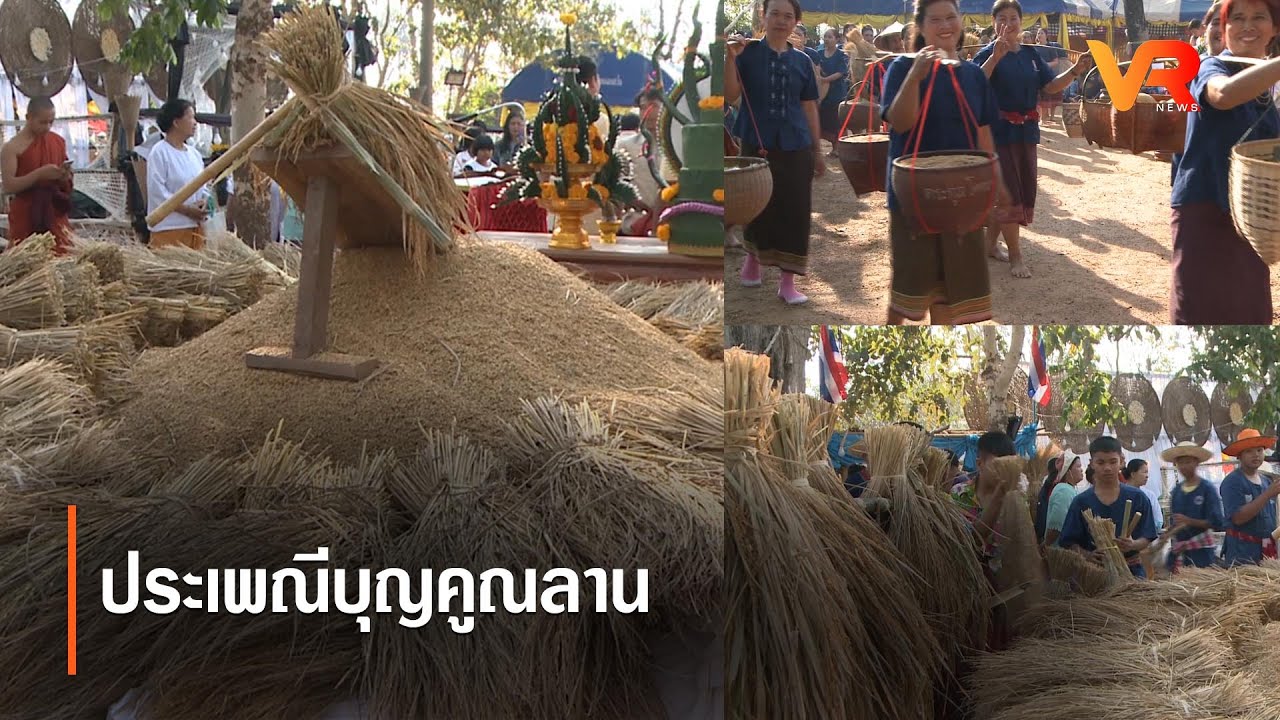

 Historical Sites and Monuments(6)
 Landmarks and Memorials(1)
Art, Craft Centres, Tradition(4)
Landmarks and Memorials(1)
Art, Craft Centres, Tradition(4)
 Museums(1)
 Historic Homes and Cities(1)
 Places of Worship
 Temple(22)
 Church(1)
 Other Sacred Sites(9)
 Research and Development
 Royal Project(2)
 Suburban Living
 Village, Community(3)
 Local Market(1)
 Nature and Wildlife
 National Parks and Marine Reserves(2)
 Mountain (Doi)(2)
 Dam, Reservoir, Lake(7)
 River, Canal(2)
 Bays and Beaches(1)
 Other natural attractions(2)
 Entertainment and Agricultural
 Farms, Parks and Ecotourism(1)


