
lovethailand home >Northeastern Travel Attractions >Ubon Ratchathani Travel Attractions >Muang Ubon Ratchathani >Rai Noi > Wat Ban Tam Yae
TL;DR: Wat Ban Tam Yae is located at Ban Tam Yae, Moo 1, Rai Noi Subdistrict, Mueang Ubon Ratchathani District, Ubon Ratchathani Province, open Daily, hours 08.00 – 17.00.
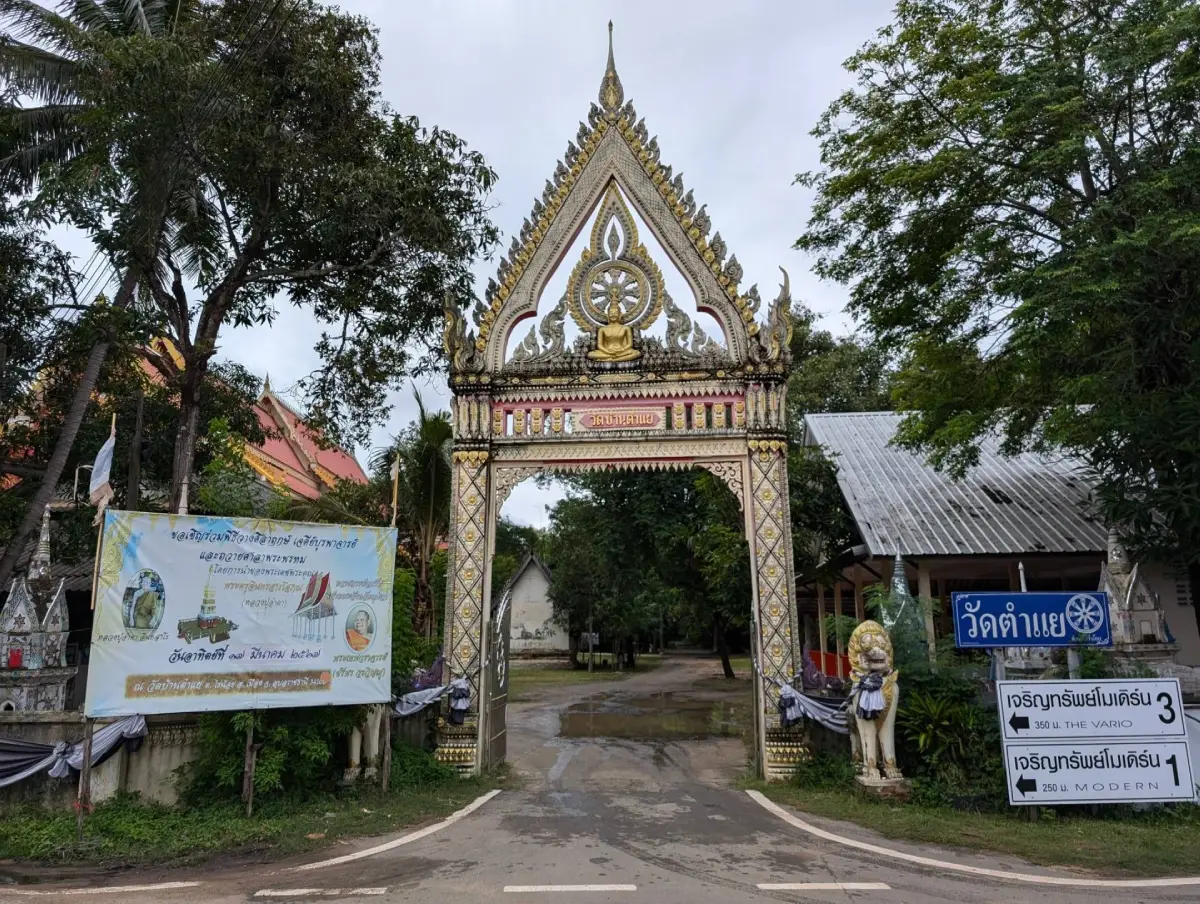
Wat Ban Tam Yae
Open Days: Daily
Opening Hours: 08.00 – 17.00
Wat Ban Tam Yae in Ubon Ratchathani, also known simply as Wat Tam Yae, is a historic community temple in Ban Tam Yae, Moo 1, Rai Noi Subdistrict, Mueang Ubon Ratchathani District. Located north of central Ubon Ratchathani and accessible from Chayangkun Road and Chayangkun Soi 42, the temple is important for both religious devotion and cultural heritage. Its most valuable architectural feature is the old sim, or traditional Isan ordination hall, which has been registered as a national historic site by the Fine Arts Department. The temple is also known for its large shrine of Thao Maha Phrom, where local worshippers and visitors come to pay respect and ask for blessings. For international travelers, Wat Ban Tam Yae is a meaningful place to understand small-scale Isan Buddhist architecture, local craftsmanship, community faith, and the continued role of a village temple within modern Ubon Ratchathani.
The temple has a quieter atmosphere than many major temples in the centre of Ubon Ratchathani. It stands within the local community of Ban Tam Yae and still functions as an active Buddhist temple. Visitors can see worship areas, merit-making spaces, a sermon hall, a pond with fish, newer temple buildings, and the old sim that has been conserved as a historic monument. This combination makes Wat Ban Tam Yae especially valuable. It is not a preserved ruin separated from daily life, but a living temple where old architecture, present-day worship, and community activities continue together.
The old sim is the heart of Wat Ban Tam Yae. It was built in 1874, according to the Tai Noi inscription above the entrance. The inscription records that Ya Khru Tha, monks, novices, laymen and laywomen took part in its construction. This makes the building historically significant because it preserves both architecture and written evidence of community participation. The sim is therefore not only an old structure; it is a historical document in built form. It records the cooperation between the monastic community and local villagers in the religious life of Ubon Ratchathani during the Rattanakosin period.
The Fine Arts Department registered the historic area of Wat Ban Tam Yae as a national historic site on 12 September 1997. The registered historic area covers about 1 rai, 1 ngan and 69.28 square wah. Later, the sim was restored by the Fine Arts Department to strengthen the structure and preserve its original character as much as possible. Further conservation work was also recorded in later years. Because many small vernacular ordination halls in northeastern Thailand have disappeared, been replaced, or heavily altered, the old sim of Wat Ban Tam Yae is especially important as a surviving example of local Isan Buddhist architecture.
Architecturally, the sim is a compact vernacular Isan building made of brick and stucco. It has a rectangular plan divided into three bays and faces east, as is common in Buddhist architecture. The front has an open porch with a low solid railing, and there is only one stairway leading to the entrance. The side walls each have one window, while the rear wall is solid. The building uses a simple gabled roof and a small but dignified form. Its scale allows visitors to study details closely. From a distance it appears simple, but from close range its base, wooden roof ornaments, carved brackets, and inscription reveal a high level of local craftsmanship.
The base of the sim is a local Isan-Lan Xang style base, often described as a form of the aeokhan or lotus-related base. It consists of layered mouldings, inverted and upright lotus forms, and gently curving lines that lift the building slightly above the ground. The base does not make the sim look monumental. Instead, it gives the small building sacred dignity and visual balance. This is one of the strengths of Isan vernacular architecture: modest buildings can still carry strong religious meaning through proportion, form and symbolic detail.
The roof decoration is one of the most attractive parts of the old sim. The gabled roof includes carved wooden elements such as the cho fa-like finial, bai raka, hang hong, bargeboards and brackets. The finial resembles central Thai temple architecture but curves more strongly in a local style. The bargeboard reflects Lao influence, while the bai raka shows connection with central Thai forms. These mixed elements demonstrate how local builders in Ubon Ratchathani adapted several artistic traditions into a small community ordination hall. The result is not a copy of one style, but a distinctly local Buddhist building.
The carved wooden brackets are especially important. They are shaped as winged naga figures, with the serpent body curving gracefully, the head below and the tail rising upward into decorative scrolls. In Buddhist belief, the naga is a guardian of the Buddha and the Dhamma. When naga-shaped brackets support the building, they are not only decorative and structural. They also express sacred protection. The winged naga brackets at Wat Ban Tam Yae show the skill of local woodcarvers and preserve a visual language that once appeared widely in Isan temple architecture.
The wooden gable uses a vertical plank pattern associated with local Isan design. The doors and windows are plain wooden panels without excessive decoration, but flower motifs are carved on important parts of the door and window fittings. This restraint gives the building a calm character. The craftsmen did not cover every surface with ornament. Instead, they placed detail where it mattered most: the roof, brackets, front area, entrance and inscription. This balance between simplicity and refinement is one of the reasons the sim remains beautiful despite its small size.
Inside the sim is a brick-and-stucco Buddha image in the subduing Mara posture, enshrined within an arched frame. The interior walls no longer preserve mural paintings, although older information suggests that paintings once existed. The absence of murals today draws attention to the structure, the Buddha image, the inscription and the exterior details. The building should therefore be appreciated both as a worship space and as an architectural object. It is a place where religion, craftsmanship, writing and community memory meet.
Another major point of devotion at Wat Ban Tam Yae is the large Thao Maha Phrom shrine. Many visitors come to the temple to pay respect to the four-faced Brahma image and ask for blessings related to success, work, finance, health, family peace, opportunity and good fortune. The shrine adds a living devotional dimension to the temple. Visitors do not come only to study the historic sim. They also come to worship, make merit, and participate in local religious belief. This makes the temple active and relevant to present-day worshippers.
Those who pay respect at the Thao Maha Phrom shrine usually walk around and worship all four faces according to local practice. Each face is often associated with a different dimension of life, depending on the devotee’s intention. Visitors should worship respectfully, avoid blocking the walkway, and place offerings only in the proper area. Because this is one of the temple’s active worship zones, it is best to move calmly and allow other devotees enough space to complete their prayers.
Other areas within the temple include the sermon hall, large Buddha images, a fish pond, community merit-making areas, monk residences, and shaded temple grounds. The archaeological record notes that there is a large Buddha image in the sermon hall area and a pond where visitors can make merit by feeding fish. These areas show that Wat Ban Tam Yae is not only a historic-site destination. It remains a living community temple where people come for ordinary merit-making, worship, ceremony and quiet reflection.
Wat Ban Tam Yae is also valuable as an educational site. It allows students, travelers and architecture enthusiasts to study Isan vernacular Buddhist architecture in a real setting. The sim can be compared with other old ordination halls in Ubon Ratchathani, such as the old sim at Wat Chaeng, to understand shared features and local variations. Its base, gabled roof, naga brackets, wooden gable, inscription and east-facing plan all provide clear examples of regional temple design. For people interested in conservation, the temple is also a good example of how a small historic building can remain within an active religious compound.
A proper visit should begin with a slow walk around the exterior of the old sim. Start from the front to observe the porch, stairway, entrance, roofline and inscription. Then move along the sides to see the windows and carved naga brackets. After walking around the building, return to the front and observe the proportions of the whole structure. If the interior is open, enter quietly, remove shoes, and avoid touching walls or old materials. The sim is small, but it rewards careful observation. Its value becomes clearer when seen slowly.
Because the old sim is a registered historic site, visitors should be careful around the building. Do not touch the inscription, carved wood, doors, windows, walls, roof elements or any historic components. Moisture, hand contact and physical pressure can damage old materials over time. Photography should be done respectfully from proper areas. Do not lean against the building, climb on the structure, move loose pieces, or place personal belongings on historic surfaces. Respectful behaviour helps protect the building for future generations.
Getting to Wat Ban Tam Yae is convenient from Ubon Ratchathani city. From Chayangkun Road, use Chayangkun Soi 42 and continue for about 2.5 kilometres to reach the temple. The temple is approximately 6 to 8 kilometres from the city centre, depending on the starting point, and normally takes about 15 to 25 minutes by car. Travelers can use private cars, taxis, local hired vehicles or ride-hailing services. Because the temple is located in a local community area, visitors should drive carefully along the smaller roads near the village.
The best times to visit are morning and late afternoon. Morning is suitable for worship and a quiet visit to the Thao Maha Phrom shrine. Late afternoon gives better light for observing the old sim and photographing the exterior. Visitors who want to see the sim, worship at the Brahma shrine, make merit, and walk around the temple should allow about 45 minutes to 1.5 hours. The temple can also be combined with nearby attractions in the Rai Noi and northern Ubon Ratchathani area, including Wat Sa Prasan Suk, Wat Phra That Nong Bua, Ban Kan Lueang Archaeological Open Museum, Ubon Ratchathani Zoo and Nong Bua Public Park.
Wat Ban Tam Yae is open daily from 08.00 to 17.00, and admission is free. Visitors can worship, make merit, see the old sim, pay respect at the Thao Maha Phrom shrine, and walk around the temple grounds without purchasing a ticket. As with all Buddhist temples, modest dress and respectful behaviour are expected. Visitors should speak softly, avoid disturbing monks and worshippers, and follow the temple’s instructions, especially around the historic sim and active worship areas.
For international travelers, Wat Ban Tam Yae is an excellent place to understand Isan vernacular Buddhist architecture. The temple shows that Buddhist art in northeastern Thailand is not expressed only through large stupas, royal temples or famous monuments. It also survives in small community ordination halls built through local faith. The Tai Noi inscription, winged naga brackets, local base form, simple plan and east-facing orientation all help explain how Buddhist architecture was adapted to the community level in Ubon Ratchathani.
Overall, Wat Ban Tam Yae is a meaningful cultural stop for travelers who want to see a quieter and more local side of Ubon Ratchathani. The old sim is the architectural heart of the temple. The Thao Maha Phrom shrine is the active devotional centre for many worshippers. The temple grounds show the everyday life of a Buddhist community. Its location in Rai Noi makes it easy to combine with other temples and attractions in northern Ubon Ratchathani. A visit here is not only about seeing an old building. It is an encounter with local craftsmanship, sacred belief, community memory and the living Buddhist culture of Ubon Ratchathani.
| Name | Wat Ban Tam Yae / Wat Tam Yae, Ubon Ratchathani |
| Location | Ban Tam Yae, Moo 1, Rai Noi Subdistrict, Mueang Ubon Ratchathani District, Ubon Ratchathani Province |
| Address | 54 Moo 1, Ban Tam Yae, Rai Noi, Mueang Ubon Ratchathani, Ubon Ratchathani 34000, Thailand |
| Coordinates | 15.268756, 104.865604 |
| Highlights | The Old Sim Registered As A National Historic Site, Carved Wooden Winged Naga Brackets, Tai Noi Inscription, Brick-And-Stucco Buddha Image In An Arched Frame, And The Large Thao Maha Phrom Shrine |
| History | The old sim was built in 1874 according to the Tai Noi inscription above the entrance. The historic area was registered as a national historic site on 12 September 1997. |
| Historic Site Area | Approximately 1 rai, 1 ngan and 69.28 square wah |
| Name Origin | The name is connected with Ban Tam Yae, a local community in Rai Noi Subdistrict, north of Ubon Ratchathani city. |
| Distinctive Features | A compact brick-and-stucco Isan sim with a three-bay rectangular plan, east-facing orientation, front porch, single entrance stairway, one window on each side, local base form and carved wooden winged naga brackets |
| Travel Information | From Chayangkun Road, use Chayangkun Soi 42 and continue for about 2.5 km to the temple. It is about 6 – 8 km from central Ubon Ratchathani and normally takes around 15 – 25 minutes by car. |
| Current Status | Open To Visitors And Still Used As An Active Buddhist Temple In Ban Tam Yae Community, With Merit-Making Areas And A Conserved Historic Sim |
| Open Days | Daily |
| Opening Hours | 08.00 – 17.00 |
| Fees | Free Admission |
| Facilities | Parking Area, Restrooms, Worship Areas, Merit-Making Courtyard, Sermon Hall, Fish Pond, Walkway Around The Historic Sim And Thao Maha Phrom Shrine Area |
| Main Areas / Zones | Old Sim / Historic Ordination Hall Tai Noi Inscription Above The Entrance Brick-And-Stucco Buddha Image In An Arched Frame Carved Wooden Winged Naga Brackets Large Thao Maha Phrom Shrine Large Buddha Image Near The Sermon Hall Fish Pond And Merit-Making Area Temple Courtyard And Community Worship Areas |
| Caretaker | Wat Ban Tam Yae, The Mahanikaya Monastic Community, Ban Tam Yae Community And The Fine Arts Department For Registered Historic Components |
| Abbot | Phra Khru Si Rattanakhun |
| Historic Abbot Mentioned In The Inscription | Ya Khru Tha, the abbot named in the Tai Noi inscription connected with the construction of the sim in 1874 |
| Main Contact Number | 085-087-0491 |
| Visitor Note | The old sim is a registered historic site. Visitors should avoid touching inscriptions, carved woodwork, walls, doors, windows or any historic components, and should follow temple signs and instructions. |
| Nearby Tourist Attractions | 1. Wat Sa Prasan Suk / Wat Ban Na Mueang, About 4 km 2. Wat Phra That Nong Bua, About 4 km 3. Ban Kan Lueang Archaeological Open Museum, About 4 km 4. Nong Bua Public Park, About 4.5 km 5. Ubon Ratchathani Zoo, About 5 km 6. Huai Muang Park, About 6 km 7. Central Ubon, About 7 km 8. Thung Si Mueang, About 8 km |
| Nearby Restaurants | 1. Khun Su Kitchen, Chayangkun 42, About 2.5 km, Tel. 086-640-0731 2. Stewed Noodles Rai Noi Market, About 3 km, Tel. 064-678-3519 3. Mustache Coffee, Ban Na Mueang Intersection Branch, About 4 km, Tel. 090-269-7655 4. Yum Krua Zab Lert Ros Ban Na Mueang, About 4.5 km, Tel. 091-830-4125 5. On Seafood Restaurant, About 5 km, Tel. 081-939-1028 6. Backyard Kitchen Rai Noi, About 5 km, Tel. 081-204-5091 7. So Rich The Bistro, About 6 km, Tel. 087-277-7111, 081-790-3814 |
| Nearby Accommodations | 1. B2 Ubon Boutique & Budget Hotel, About 5 km, Tel. 1328, 052-009-161, 088-263-2897 2. B2 Ubon Premier Hotel, About 6 km, Tel. 1328, 052-009-161, 088-263-2897 3. B2 Ubon Airport Premier Hotel, About 7 km, Tel. 1328, 052-009-161, 088-263-2897 4. Preme Village, About 7 km, Tel. 093-498-3224 5. Wangnong Resort, About 7 km, Tel. 094-291-5419 6. Sunee Grand Hotel & Convention Center, About 8 km, Tel. 045-352-900 7. V Hotel Ubon, About 8 km, Tel. 097-334-4480 |
Frequently Asked Questions (FAQ)
Q: Where is Wat Ban Tam Yae located?
A: Wat Ban Tam Yae is located at Ban Tam Yae, Moo 1, Rai Noi Subdistrict, Mueang Ubon Ratchathani District, Ubon Ratchathani Province, north of the city centre and accessible from Chayangkun Soi 42.
Q: What are the opening hours of Wat Ban Tam Yae?
A: The temple is open daily from 08.00 to 17.00.
Q: Is there an admission fee?
A: No. Admission to Wat Ban Tam Yae is free.
Q: What is Wat Ban Tam Yae famous for?
A: The temple is famous for its old Isan sim registered as a national historic site, carved wooden winged naga brackets, Tai Noi inscription and large Thao Maha Phrom shrine.
Q: When was the old sim of Wat Ban Tam Yae built?
A: The old sim was built in 1874 according to the Tai Noi inscription above the entrance.
Q: Who is the abbot of Wat Ban Tam Yae?
A: The abbot of Wat Ban Tam Yae is Phra Khru Si Rattanakhun.
Q: How do travelers get to Wat Ban Tam Yae?
A: From Chayangkun Road, use Chayangkun Soi 42 and continue for about 2.5 km to the temple. From central Ubon Ratchathani, the drive usually takes around 15 to 25 minutes.
Q: What nearby attractions can be visited after Wat Ban Tam Yae?
A: Nearby attractions include Wat Sa Prasan Suk, Wat Phra That Nong Bua, Ban Kan Lueang Archaeological Open Museum, Nong Bua Public Park, Ubon Ratchathani Zoo, Huai Muang Park and Thung Si Mueang.
 Category: ●Places of Worship
 Group: ●Temple
Last Update : 3 WeekAgo
 Last Update : 3 WeekAgo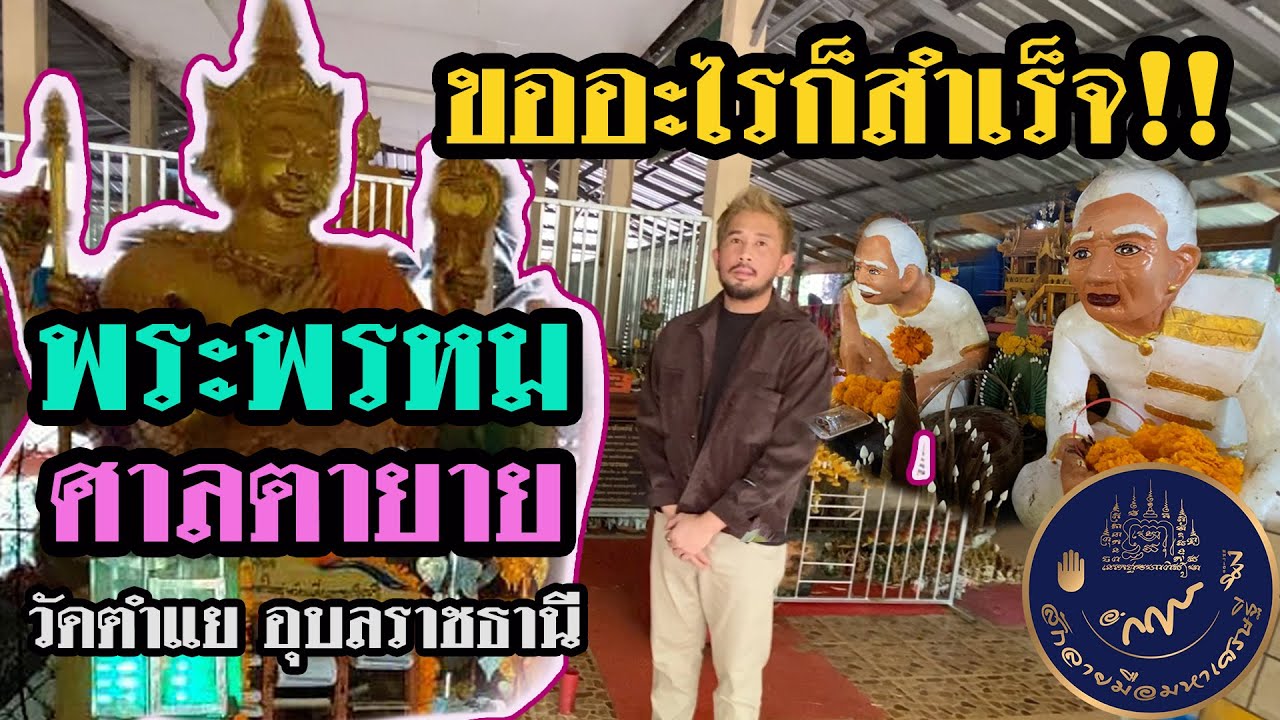
 Click to Access the Navigation Map GPS
Wat Ban Tam Yae Map
Recommend

 Art, Culture and Heritage
 Historical Sites and Monuments(5)
 Landmarks and Memorials(2)
 Royal Palace(1)
 Art, Craft Centres, Tradition(7)
 Museums(3)
Temple(37)
Museums(3)
Temple(37)
 Other Sacred Sites(4)
 Research and Development
 Royal Project(2)
 Suburban Living
 Village, Community(2)
 Local Market(4)
 Nature and Wildlife
 National Parks and Marine Reserves(5)
 Mountain (Doi)(6)
 Dam, Reservoir, Lake(8)
 Waterfalls(12)
 Hot Springs(1)
 Caves(2)
 River, Canal(11)
 Bays and Beaches(8)
 Islands(2)
 Other natural attractions(6)
 Entertainment and Agricultural
 Zoos and Aquariums(1)
 Animal camps and shows(1)
 Farms, Parks and Ecotourism(1)


