
lovethailand home >Northeastern Travel Attractions >Surin Travel Attractions >Kap Choeng >Dan > Khmer-Surin Wedding Tradition
TL;DR: Khmer-Surin Wedding Tradition, open The Saen Kar wedding ceremony is a family ritual scheduled according to, hours The wedding ritual usually takes 2 – 3 days according to each family’s.
Khmer-Surin Wedding Tradition
Open Days: The Saen Kar wedding ceremony is a family ritual scheduled according to auspicious timing and family readiness. It can be held throughout the year, except during Buddhist Lent and the 5th lunar month or April according to local custom; Surin National Museum, the cultural learning reference point, is open Wednesday – Sunday and on public holidays
Opening Hours: The wedding ritual usually takes 2 – 3 days according to each family’s schedule; Surin National Museum is open from 09.00 – 16.00
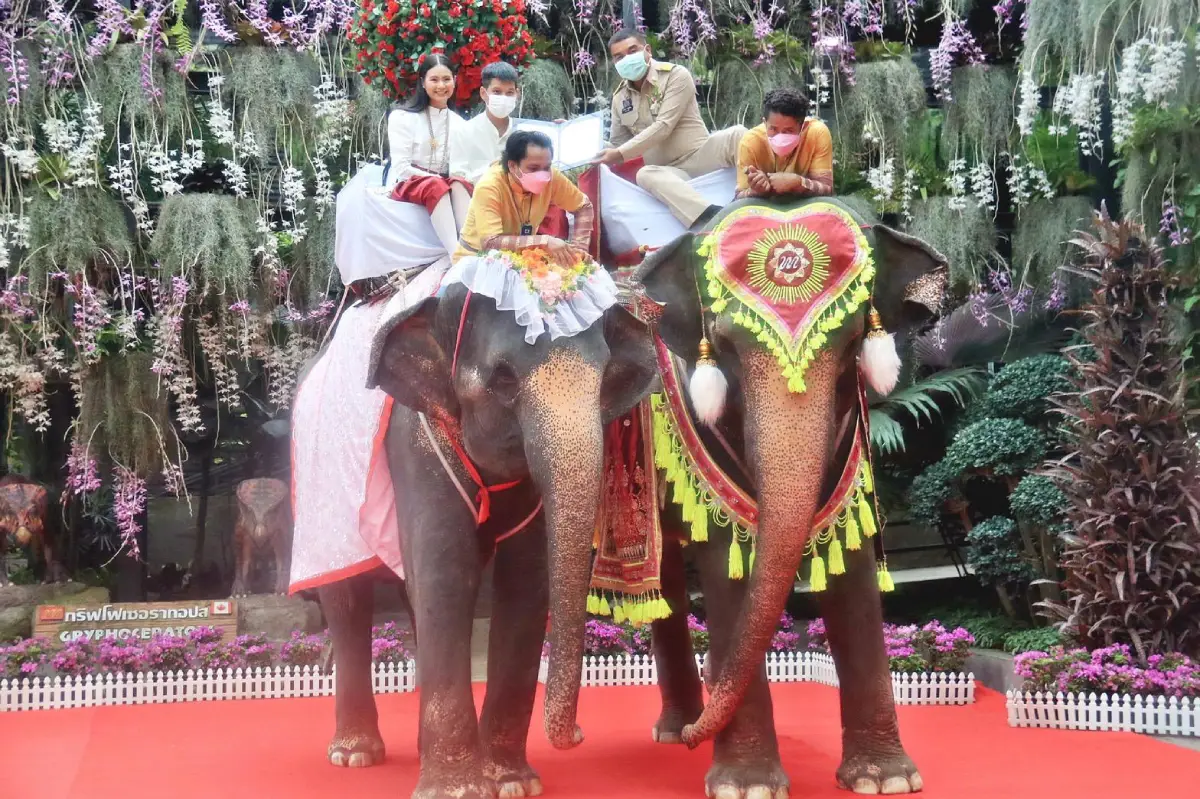
The Khmer-Surin wedding tradition, locally known as Saen Kar, is one of the most meaningful life-cycle ceremonies among Thai people of Khmer descent in Surin Province. It is not simply a wedding celebration, but a complete cultural rite that joins two families, honors parents and elders, invokes ancestral spirits, calls back the couple’s spiritual essence, and prepares the bride and groom for the responsibilities of married life. Through this ceremony, marriage becomes a sacred transition from youth into household life, family duty, and the continuation of the lineage.
For Khmer-Surin communities, marriage is one of the most important traditions in a person’s life because it marks the creation of a new family, the continuation of the ancestral line, and the public acceptance of a couple by both families. The sacredness of the ceremony does not depend on luxury or display. It comes from the ritual sequence, the symbolic objects, the presence of parents and elders, the role of the ritual master, and the acknowledgment of ancestors who remain part of the family’s spiritual world.
The term “Saen Kar” refers to the Khmer-Surin wedding ceremony. Traditionally, the ceremony lasts 2 – 3 days and is divided into the gathering or preparation day, the main wedding day, and the sending-off day. The wedding can be arranged throughout the year according to auspicious timing and family readiness, except during Buddhist Lent and the 5th lunar month or April according to local custom. Choosing the wedding date is therefore not only a matter of convenience, but also a matter of ritual suitability, family agreement, and cultural belief.
The structure of Saen Kar shows that marriage in Khmer-Surin culture is not a private event for two individuals alone. Although young people today have more freedom to choose their partners, once a couple has decided to marry, the man’s parents visit the woman’s family to build familiarity and respect. After that, respected elders or matchmakers from the man’s side are sent to formally negotiate. This stage is called “Sur,” meaning engagement or betrothal, and it is the first formal step in turning a romantic relationship into a socially recognized union.
The Sur ceremony begins with polite negotiation. The man’s side brings 1 bottle of liquor, 1 tray of betel nut and betel leaves, and 1 pair of candles to the woman’s house. These items symbolize intention, respect, and the opening of formal discussion. The woman’s family then states the bride price according to what is considered appropriate. Once both families agree, the wedding date is set and preparations begin.
Before the wedding day, the bride’s side prepares important household items such as bedding, mattresses, pillows, and sam-ma cloths used for paying respect to elders. These objects are not merely domestic goods. They symbolize the bride’s readiness to enter a new household, respect the groom’s family, and take on the role of a responsible wife within the traditional household structure. Female relatives and elders help prepare these items, while the bride traditionally remains inside the house before the main wedding day to preserve propriety and auspiciousness.
The groom’s side prepares dried betel nut for guests, the bai sri arrangement for blessing the bride, and “cham-nay,” meaning fresh food, vegetables, rice, meat, and other items requested by the bride’s family for use during the ceremony. The groom’s family also prepares the bride price and wedding procession items. These preparations show the groom’s responsibility and ability to support the new family.
One day before the main wedding ceremony, the groom’s side sends the procession of supplies to the bride’s house. This preparation day is known as Chun Cham-nay, or the day before the wedding. Relatives gather, food is prepared, the ceremonial pavilion is arranged, and ritual objects are checked. If an unfavorable omen occurs, the wedding may be postponed to protect the couple’s good fortune.
The main wedding day is called Ngai Saen, and it takes place at the bride’s house. A ritual master, known as an achan, leads the ceremony. This person controls the ritual sequence, chants blessings, calls the couple’s khwan or vital spirit, performs ancestral offerings, and guides the bride and groom through each important stage. The achan is trusted because he must understand the correct words, symbols, ritual objects, and order of the ceremony.
One of the central ritual objects is the bai sri or bai srei, accompanied by flowers, candles, sticky rice bundles, bananas, sweets, and sacred threads called maw chong dai. The bai sri symbolizes auspiciousness, blessing, and the calling of the couple’s spirit. The sacred thread represents protection, good wishes, and the support of relatives and elders.
The ceremonial pavilion is a key space in Saen Kar. At its center is a decorated pillar with banana plants, sugarcane, and flowers for making offerings to sacred beings. A ritual object called patual is hung near the top of the pillar. The patual is one of the most distinctive symbols in the Khmer-Surin wedding pavilion because it connects the ceremony with auspiciousness, fertility, love, and the community’s inherited beliefs.
The seating area for the couple is known as bon chor krab. It consists of a mattress and pillows arranged toward the patual. Around the area are ritual objects such as trays, betel nut, banana-leaf cones, flowers, silk cloth, money, cooked rice balls, boiled eggs, sacred water, and other items. These objects support the acts of prostration, ancestral offering, spirit calling, blessing, and acceptance by the families.
The khan mak procession is one of the most lively parts of the ceremony. Local musicians or a traditional ensemble lead the procession, followed by the bai sri tray, ancestral offerings, sweets, the bride price, and betel nut trays. The procession is more than the carrying of wedding items. It publicly shows that the groom’s side is entering the marriage in accordance with accepted tradition.
When the procession reaches the bride’s house, the bride’s relatives welcome the groom’s party and lead them into the ceremonial pavilion. After everyone is seated, the bride is formally brought out. She gives betel nut and betel leaves to the groom, symbolizing welcome, acceptance, and the beginning of the formal marriage rite.
The groom’s elders then present “heb” and “thong,” trays used for betel nut, to the bride’s parents. The bride’s parents open the cloth bundle and take betel nut to eat. This small action carries strong cultural weight because it publicly confirms the bride’s family’s acceptance of the marriage proposal and allows the ceremony to continue.
The Chor Krab ritual is another important stage. The bride and groom sit on the prepared mattress, prostrate before the ritual master, and place their hands face down on a lime container over the pillow. The groom places his hand over the bride’s hand. This posture expresses the couple’s shared entry into the ritual order before they receive blessings, spirit calling, and wrist-tying.
The ancestral offering is one of the spiritual cores of Saen Kar. The ritual master lights candles and invites ancestral spirits to receive the offerings. Elders pour water and liquor onto the offerings before they are taken away. This act shows that marriage is not only a matter for the living. Ancestors must also be informed, honored, and invited to bless the couple because they remain part of the family’s spiritual foundation.
The spirit-calling ceremony is solemn and deeply meaningful. The ritual master chants blessings and rolls sacred thread over the back of the couple’s hands, symbolically removing misfortune. The thread is then thrown away. The couple is told to turn their palms upward, and this time the groom’s hand is underneath. Relatives support the groom’s elbows with their hands, symbolizing family support for the couple’s future.
The ritual master rolls sacred thread around the couple’s wrists 19 times while turning the thread inward. Guests respond together with the chant “Mo…Yoe…” After that, the ritual master rises and makes offerings to the deities at the patual while the people respond, “Je…Yong…Je Peng…Yong…Peng.” He then feeds each member of the couple a bite of ritual food. Guests come forward to tie the couple’s wrists, offer blessings, give money or gifts, and share the wedding feast.
After the main ceremony at the bride’s house, the bride is sent to the groom’s house. The bride carries water, the groom carries firewood, and relatives carry bedding, pillows, and respect cloths. The procession asks for passage with betel nut along the way. When they reach the groom’s house, the groom receives the water and firewood, then links fingers with the bride and leads her up into the house. The bride carrying water and the groom carrying firewood symbolize shared labor, household duty, and the beginning of domestic life.
Before the couple enters the groom’s house, the groom’s relatives wash their feet with turmeric water. The couple steps onto a basket containing unhusked rice, liquor, white cloth, and an axe. These objects symbolize abundance, stability, purity, and the ability to build a secure household. Once inside, the bride is given turmeric water and an old rice pot to wash, symbolizing her acceptance of the role of housekeeper and caretaker of the family hearth.
The bride then presents bedding and pillows to the groom’s parents as a sign of respect and formal entry into the new family. She also performs a bathing ritual for the groom’s parents. After lighting candles and paying respect, she uses the water she carried from her own house to bathe them, then gives them sam-ma cloths to change into. This stage emphasizes gratitude, humility, and the bride’s willingness to honor her husband’s parents as her own elders.
The bride also pays respect to the groom’s relatives and presents sam-ma cloths to them. In return, relatives give money or gifts to welcome her into the family. This exchange creates social acceptance, emotional warmth, and a new bond between the bride and the groom’s kin group.
The ritual of paying respect to the groom is called phla kan loh. The bride presents a sarong, a round-neck white shirt, and 2 shoulder cloths. The groom gives her a gift after changing clothes. The bride then serves sweets, fruit, water, and liquor. This stage reflects mutual honor and the formal recognition of the husband-wife relationship within the extended family setting.
Saen Kar also includes a form of symbolic fortune-telling through food. A meal is prepared for the bride and groom to feed each other. If one takes rice before side dishes, it is interpreted as a sign of thrift and careful household management. If one takes side dishes first, elders may gently remind the couple to avoid extravagance and practice saving. This moment uses playfulness to teach practical family values.
Several symbolic objects make Saen Kar especially meaningful. The patual is one of the most important symbols in the ceremonial pavilion because it links the wedding with deities, auspiciousness, fertility, and love. The turtle in the procession represents fertility, long life, and stability. The tanyu pakam, an ancestral offering, is indispensable because the ceremony places strong emphasis on remembering and honoring those who have passed away.
The depth of the Khmer-Surin wedding tradition lies in the fact that love is never separated from family and ancestry. The couple’s love is accepted through parents, elders, relatives, the ritual master, and ancestral spirits. The ceremony is not merely an announcement that 2 people love each other. It places their relationship within the kinship system and spiritual world of the community.
Today, Saen Kar has adapted to modern life. Many families shorten certain parts of the ceremony to suit time, budget, and the availability of relatives. Still, the essential elements remain: engagement, the khan mak procession, wrist-tying, spirit calling, respect for elders, sending off the bride, and remembrance of ancestors. This adaptation allows the tradition to remain alive while preserving its cultural core.
For travelers and cultural learners, it is important to understand that Saen Kar is a private family ceremony, not a public show that can be visited every day. Attending an actual ceremony requires permission from the host family and community. Those who wish to study Khmer-Surin culture more broadly can begin at Surin National Museum, which presents the province’s history, ethnography, and cultural heritage, including the Khmer community in Surin.
Surin National Museum is located at 214 Surin – Chong Chom Road, Chaniang Subdistrict, Mueang Surin District, Surin Province. It is an appropriate reference point for learning the background of the Khmer-Surin wedding tradition because the museum presents natural history, archaeology, Surin history, ethnography, and outstanding cultural heritage such as silk weaving, silverwork, music, folk performance, and ethnic ways of life in the province.
Getting There to Surin National Museum is convenient from Surin city. Follow Surin – Chong Chom Road toward Chaniang Subdistrict for about 5 – 7 km from the city center. The museum can be reached by private car, hired local transport, or rental car. Travelers who wish to learn about Khmer-Surin culture in local communities should plan ahead and contact local authorities or community knowledge holders because Saen Kar is a family-based ritual rather than a daily public tourist activity.
Respectful behavior is essential when learning about or attending Saen Kar. Visitors should dress modestly, respect the host family, avoid interrupting the ritual, never touch offerings or ritual objects without permission, ask before photographing important moments, and avoid making insensitive comments about local beliefs. If invited to attend, follow the guidance of the host, ritual master, and elders because many stages carry deep emotional and spiritual meaning for the family.
The Khmer-Surin wedding tradition is therefore a rich cultural heritage that reveals the family life of lower northeastern Thailand. From choosing a partner and formal engagement to wedding preparation, ancestral offerings, spirit calling, wrist-tying, respect for elders, sending off the bride, and entering the groom’s house, every stage carries symbolic and social meaning. Saen Kar joins 2 people, 2 families, living relatives, and ancestors into one complete ritual world.
The beauty of Saen Kar lies in its detail and warmth. Every ritual object has meaning. Every spoken phrase carries weight. Every gesture of the bride and groom communicates with family and community. This tradition is a powerful example of how Khmer-Surin people preserve gratitude, belief, and family dignity in living practice. Even as modern weddings change, the heart of Saen Kar remains rooted in family, love, fertility, responsibility, and respect for ancestors.
| Name | Khmer-Surin Wedding Tradition / Saen Kar Ceremony |
| Main Area | Thai-Khmer communities in Surin Province, especially lower-Isan communities that preserve traditional family rituals |
| Cultural Learning Reference Point | Surin National Museum, 214 Surin – Chong Chom Road, Moo 13, Chaniang Subdistrict, Mueang Surin District, Surin Province 32000 |
| Highlights | Sur engagement, Chun Cham-nay preparation day, Ngai Saen wedding day, Khan Mak procession, Chor Krab, ancestral offerings, spirit calling, wrist-tying, sending off the bride, and entering the groom’s house |
| History | A long-preserved family and community wedding rite of Thai people of Khmer descent in Surin, combining beliefs in khwan, ancestors, deities, and fertility |
| Name Origin | “Saen Kar” is the Khmer-Surin term for the traditional wedding ceremony involving family rituals, offerings, and spirit calling |
| Distinctive Features | The ceremony usually lasts 2 – 3 days and emphasizes parents, elders, ancestral spirits, ritual blessing, and the acceptance of the couple by both families |
| Travel Information | Surin National Museum can be reached from Surin city by following Surin – Chong Chom Road toward Chaniang Subdistrict, about 5 – 7 km from the city center |
| Current Status | Still practiced as a family ceremony among Thai-Khmer communities in Surin, with some families adapting the sequence while preserving key elements such as engagement, spirit calling, respect for elders, and ancestral remembrance |
| Main Ceremony Period | Scheduled by each family according to auspicious timing and readiness, except during Buddhist Lent and the 5th lunar month or April according to local custom |
| Opening Hours | Saen Kar is a family ceremony arranged by the host family; Surin National Museum is open Wednesday – Sunday and on public holidays from 09.00 – 16.00 |
| Fees | Saen Kar is a private family ceremony with no tourist admission fee; Surin National Museum has no admission fee |
| Facilities | Surin National Museum provides exhibition rooms, cultural learning displays, parking, and official contact information for visitors interested in Surin cultural heritage |
| Main Areas / Zones | 1. Sur Engagement Area 2. Chun Cham-nay Preparation Area 3. Ceremonial Pavilion And Patual 4. Bon Chor Krab Seating Area For The Couple 5. Ancestral Offering And Tanyu Pakam Area 6. Spirit-Calling And Wrist-Tying Area 7. Bride-Sending Procession And Groom’s House Entry Area |
| Caretaker / Related People | The host families, ritual master, matchmakers, elders, community knowledge holders, and the Fine Arts Department as the caretaker of Surin National Museum, the cultural learning reference point |
| Main Contact Number | Surin National Museum, Tel. 044-513-272, 044-513-274 |
| Official Website / Official Page | https://www.finearts.go.th/surinmuseum |
| Nearby Tourist Attractions | 1. Surin National Museum, about 0 km, Tel. 044-513-272, 044-513-274 2. Wat Burapharam, about 6 km 3. Surin City Pillar Shrine, about 6 km 4. Huai Saneng Reservoir, about 8 km 5. Ban Tha Sawang Silk Weaving Village, about 17 km |
| Nearby Restaurants | 1. Sawasdee Surin, about 6 km, Tel. 085-637-7707 2. Mozern Restaurant Surin, about 5 km, Tel. 084-995-6492 3. Seoul Bar - Cafe & Bistro Surin, about 7 km 4. Phet Prasat Phochana, Prasat District, about 35 km, Tel. 044-551-166 5. Nong Beer Restaurant, Prasat District, about 36 km, Tel. 081-760-7317 |
| Nearby Accommodations | 1. Slive Hotel Surin, about 5 km, Tel. 044-060-322, 044-060-323 2. Thong Tarin Hotel, about 6 km, Tel. 044-514-281, 085-300-8858 3. Maneerote Hotel Surin, about 7 km, Tel. 044-514-569 4. Sorin Boutique Hotel, about 7 km, Tel. 044-060-188 5. Martina Hotel Surin, about 8 km, Tel. 044-713-555, 044-713-655 |
Frequently Asked Questions (FAQ)
Q: What is the Khmer-Surin wedding tradition or Saen Kar?
A: Saen Kar is the traditional wedding ceremony of Thai people of Khmer descent in Surin. It includes engagement, preparation day, wedding day, ancestral offerings, spirit calling, wrist-tying, sending off the bride, and entering the groom’s house.
Q: When can Saen Kar be held?
A: Saen Kar can be held throughout the year according to auspicious timing and family readiness, except during Buddhist Lent and the 5th lunar month or April according to local custom.
Q: How many days does Saen Kar usually take?
A: It usually takes about 2 – 3 days, including the preparation day, the main wedding day, and the day when the bride is sent to the groom’s house.
Q: What does Sur mean in the Khmer-Surin wedding tradition?
A: Sur means engagement or formal betrothal. The groom’s elders bring liquor, betel nut and betel leaves, and candles to the bride’s house to negotiate the marriage.
Q: Why is the patual important in Saen Kar?
A: The patual is an important ritual symbol hung in the ceremonial pavilion. It represents auspiciousness, deities, love, fertility, and the blessing of the couple’s married life.
Q: What is the meaning of ancestral offerings in Saen Kar?
A: Ancestral offerings inform and honor departed ancestors, inviting them to receive the offerings and bless the bride and groom as they begin family life.
Q: Can travelers attend a Saen Kar ceremony?
A: Saen Kar is a private family ceremony. Attendance requires permission from the host family and community. Travelers can learn about Surin culture at Surin National Museum.
Q: When is Surin National Museum open?
A: Surin National Museum is open Wednesday – Sunday and on public holidays from 09.00 to 16.00. Admission is free.
 Category: ●Art, Culture and Heritage
 Group: ●Art, Craft Centres, Tradition
Last Update : 2 MonthAgo
 Last Update : 2 MonthAgo
Recommend

 Historical Sites and Monuments(11)
 Landmarks and Memorials(2)
Art, Craft Centres, Tradition(5)
Landmarks and Memorials(2)
Art, Craft Centres, Tradition(5)
 Museums(1)
 Places of Worship
 Temple(15)
 Other Sacred Sites(1)
 Suburban Living
 Village, Community(9)
 Local Market(1)
 Nature and Wildlife
 National Parks and Marine Reserves(2)
 Mountain (Doi)(2)
 Dam, Reservoir, Lake(6)
 Waterfalls(1)
 River, Canal(2)
 Other natural attractions(4)
 Entertainment and Agricultural
 Farms, Parks and Ecotourism(2)


