
lovethailand home >Northeastern Travel Attractions >Surin Travel Attractions >Bua Chet >Charat > Tri Khiri Waterfall
TL;DR: Tri Khiri Waterfall is located at Khao Sala area, Ban Charat, Moo 8, Charat Subdistrict, Bua Ched District, Surin Province, open Daily, hours 08.00 – 17.00.

Tri Khiri Waterfall
Open Days: Daily
Opening Hours: 08.00 – 17.00
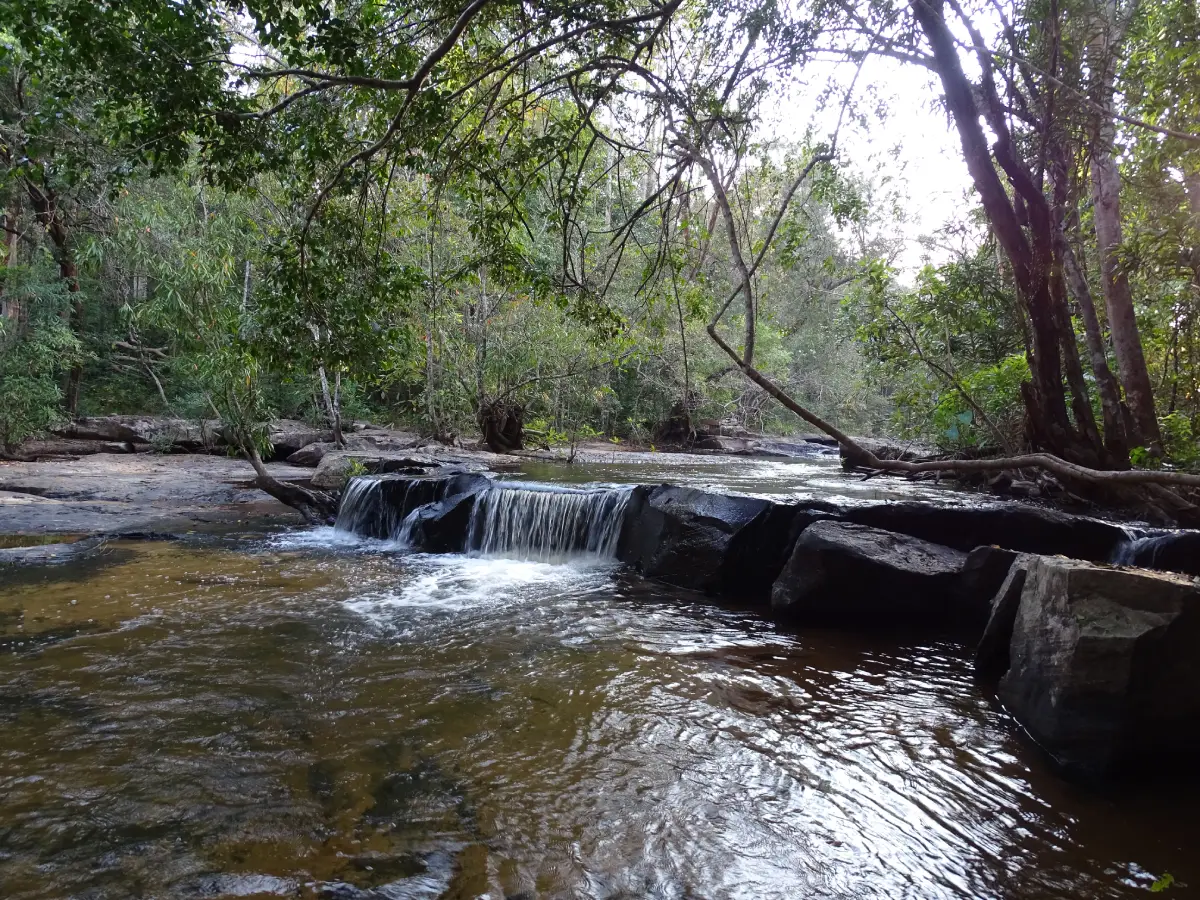
Tri Khiri Waterfall in Surin is a small natural waterfall located in the Khao Sala area of Ban Charat, Moo 8, Charat Subdistrict, Bua Ched District, Surin Province. It is not a large or dramatic waterfall, but it is a meaningful natural attraction for travelers who want to experience forest scenery, sandstone formations, a quiet stream, and the lesser-known natural side of southern Surin. The waterfall is about 1.50 – 2 meters high and about 10 meters wide, with the strongest water flow during the rainy season through March each year.
Tri Khiri Waterfall is best understood as a peaceful forest waterfall rather than a highly developed tourist site. Its charm comes from the combination of sandstone slabs, flowing water, shaded forest, and the calm atmosphere of Khao Sala. Travelers who visit this site will see a modest waterfall formed by Huai Charat, a natural stream that flows through the forest before dropping over sandstone and continuing toward Ban Charat Reservoir. This connection between mountain, forest, stream, waterfall, and reservoir gives the area strong ecological and local value.
The original local name of the waterfall was associated with “Thamo Bak,” referring to broken or fractured stone. The later name “Tri Khiri” reflects the landscape of 3 mountains in the Phanom Dong Rak range: Khao Chat, Khao Nop, and Khao Phanom Yao. In Thai, “tri” means 3 and “khiri” means mountain, making the name closely connected to the geography of the Khao Sala area.
The geological character of Tri Khiri Waterfall is one of its most interesting features. The waterfall is formed on sandstone with natural joints and fractures. Over time, the flow of Huai Charat has shaped the rock surface and created a low waterfall step. For visitors interested in nature, the rock surface is not only a background for photographs; it is part of the story of how the waterfall was formed. The site can serve as a small outdoor classroom for understanding stream erosion, sandstone structure, and forest-water relationships.
Because the waterfall is relatively low, it is suitable for gentle nature walks, photography, and quiet relaxation rather than strenuous adventure. During the rainy season and the months that follow, the water spreads over the rock surface and creates a refreshing atmosphere. The surrounding forest adds shade and a sense of seclusion, making the area feel more like a local forest trail than a commercial attraction.
The best time to visit Tri Khiri Waterfall is from the rainy season through March. During this period, the stream carries more water, the forest is green, and the waterfall looks livelier. In the dry season, the water volume naturally decreases, but the area still remains valuable for visitors who enjoy forest landscapes, sandstone formations, and quiet rural scenery.
Visitors should plan to arrive during daylight hours because reaching the waterfall involves a short walk through a natural area. From the route near Wat Khao Sala Atulathanacharo, travelers continue on foot for about 1 km to reach the waterfall. Proper walking shoes are important, especially when the rock surface is wet. Although the waterfall is not high, sandstone can become slippery after rain, and travelers should move carefully around the stream.
The atmosphere around Tri Khiri Waterfall is quiet and natural. Visitors should not expect the facilities of an urban tourist attraction directly at the waterfall. Instead, they should expect forest paths, a stream, rock surfaces, and a calm environment. This is part of the appeal of the site. It is ideal for travelers who prefer simple nature experiences and who are willing to respect the environment while visiting.
The wider Khao Sala and Ban Charat area is connected to Huai Thap Than-Huai Samran Wildlife Sanctuary, an important protected forest landscape in southern Surin. Because of this conservation context, responsible travel is essential. Visitors should keep the area clean, take all trash back with them, avoid loud noise, stay on suitable paths, and avoid disturbing plants and wildlife.
After the water flows through Tri Khiri Waterfall, Huai Charat continues toward Ban Charat Reservoir. This makes the area suitable for a half-day or full-day nature route. Travelers can combine Wat Khao Sala Atulathanacharo, Tri Khiri Waterfall, Ban Charat Reservoir, Pha Nang Khoi viewpoint, and other nearby natural sites in Bua Ched District. This route offers a richer experience than visiting the waterfall alone.
Ban Charat Reservoir is one of the key nearby places that supports tourism in the area. It offers open scenery, local rafting experiences, camping areas, toilets, electricity, and community-based safety support. Travelers who want a more relaxed visit can spend time at the reservoir after walking to the waterfall. The reservoir is also a good place to enjoy the evening atmosphere after exploring Khao Sala.
Wat Khao Sala Atulathanacharo is another important place on the same route. The temple is located in the Khao Sala area and serves as both a religious site and a gateway to nearby natural attractions. Visitors can stop for Buddhist worship, enjoy the peaceful temple environment, and continue toward Tri Khiri Waterfall. The combination of temple, forest, viewpoint, and waterfall gives this route a distinctive identity.
Pha Nang Khoi is also located in the Khao Sala area and is known as a viewpoint overlooking Ban Charat Reservoir, the surrounding forest, and the Phanom Dong Rak landscape. It is a worthwhile stop for visitors who want a broader view of the terrain after visiting the waterfall. This makes the journey more complete, especially for travelers interested in both natural scenery and local cultural sites.
The Charat and Bua Ched area also has a strong rural atmosphere, with forests, reservoirs, fruit orchards, and local communities along the travel route. For visitors who enjoy slow travel, this area offers a different side of Surin Province. It shows that Surin is not only known for elephants, silk, Khmer ruins, and jasmine rice, but also for forests, streams, reservoirs, and borderland landscapes in the south of the province.
Getting There is most convenient by private car or rental car. From Bua Ched District, follow Highway 2124 toward Ban Charat, then turn toward Wat Khao Sala Atulathanacharo. From there, continue on foot for about 1 km to reach the waterfall area. Travelers starting from Surin city should allow enough travel time, as Bua Ched is farther from the main urban area than central tourist attractions.
Public transportation directly to the waterfall is limited. Foreign travelers should use a rental car, private driver, or local transport arranged in advance. Having private transport also makes it easier to combine the waterfall with Wat Khao Sala Atulathanacharo, Ban Charat Reservoir, Pha Nang Khoi viewpoint, and nearby restaurants or accommodations in Bua Ched and Sangkha.
Before entering the waterfall area, visitors should prepare drinking water, light snacks, insect repellent, a hat, a trash bag, and suitable walking shoes. Facilities at the waterfall itself are limited because it is a natural forest site. Travelers who need toilets, food, or a more comfortable rest area should use the facilities near Ban Charat Reservoir, Wat Khao Sala, or Bua Ched town before entering the walking route.
Tri Khiri Waterfall is also suitable for photography. The best subjects include the stream, sandstone surface, shaded forest, and water flowing over the low rock step. Morning or late afternoon light is usually more pleasant for photography. During the rainy season, visitors should protect cameras and phones from moisture and avoid stepping on fragile streamside plants while taking photos.
The waterfall has educational value for students and nature enthusiasts. It shows how a natural stream can shape sandstone over time, how small waterfalls form along rock fractures, and how local water systems connect mountains, forests, waterfalls, and reservoirs. These details make Tri Khiri Waterfall more valuable than its physical size might suggest.
For families with children or older travelers, the walking section should be considered carefully. The waterfall itself is low, but the natural path and wet rocks require caution. Visitors who prefer easier access can enjoy Ban Charat Reservoir, Wat Khao Sala, or nearby viewpoints, while more active travelers continue to the waterfall on foot.
Travelers should avoid entering the stream during heavy rain or when water levels rise. Forest waterfalls can change quickly after rainfall. Safety depends on weather conditions, responsible movement around rocks, and attention to local advice. Visiting during daylight hours is the best option.
Tri Khiri Waterfall does not charge an admission fee. Travelers should still prepare for transport costs, food, fuel, rental car fees, or other local activities such as rafting or camping around Ban Charat Reservoir. This makes the site suitable for budget-friendly nature travel, especially for visitors who already plan to explore Bua Ched District.
Compared with major tourist attractions in Surin, Tri Khiri Waterfall is better suited to travelers looking for a quieter and more local experience. It is not designed for mass tourism. Its strength lies in its natural setting, the connection with Khao Sala, the stream, the reservoir, and the surrounding community. Visitors who appreciate these details will find the trip more rewarding.
A good visit should allow at least half a day. Travelers can begin in the morning at Wat Khao Sala Atulathanacharo, continue to Tri Khiri Waterfall, have lunch in Bua Ched or nearby areas, and spend the afternoon at Ban Charat Reservoir or Pha Nang Khoi viewpoint. This route avoids rushing and reduces the risk of walking in the forest too late in the day.
For foreign travelers, Tri Khiri Waterfall offers an experience beyond the usual tourist trail in Thailand. It requires more planning than a city attraction, but it rewards visitors with a quiet forest atmosphere, local scenery, and a deeper view of Surin’s southern landscape. Offline maps, private transport, and daylight travel are strongly practical for this route.
Visitors should respect the natural and community character of the area. Do not leave trash, do not wash food containers or use chemicals in the stream, do not write on rocks, and do not remove plants, stones, or natural materials from the site. Responsible behavior helps preserve Tri Khiri Waterfall as a clean and meaningful destination for local residents and future travelers.
In summary, Tri Khiri Waterfall in Surin is a small but significant natural attraction. Its value comes from sandstone geology, Huai Charat stream, Khao Sala forest, nearby Wat Khao Sala Atulathanacharo, and Ban Charat Reservoir. Travelers who visit between the rainy season and March will see the waterfall at its liveliest. Those who approach the place with patience and respect will experience one of the quieter natural corners of Bua Ched District.
| Name | Tri Khiri Waterfall, Surin |
| Location | Khao Sala area, Ban Charat, Moo 8, Charat Subdistrict, Bua Ched District, Surin Province |
| Address | Ban Charat, Moo 8, Charat Subdistrict, Bua Ched District, Surin 32230, Thailand |
| Coordinates | 15.298632, 103.910419 |
| Highlights | Small natural sandstone waterfall, about 1.50 – 2 meters high and about 10 meters wide, with stronger water flow from the rainy season through March |
| History | Formerly associated with the local name Thamo Bak, referring to broken or fractured stone. The name Tri Khiri reflects 3 mountains in the Phanom Dong Rak range: Khao Chat, Khao Nop, and Khao Phanom Yao. |
| Name Origin | “Tri” means 3 and “Khiri” means mountain, referring to the mountain landscape connected with Khao Sala and the Phanom Dong Rak range. |
| Distinctive Features | A low waterfall created by Huai Charat flowing across fractured sandstone before continuing toward Ban Charat Reservoir |
| Travel Information | From Bua Ched District, take Highway 2124 toward Ban Charat, turn toward Wat Khao Sala Atulathanacharo, then walk about 1 km to the waterfall area. |
| Current Status | Open to visitors as a natural attraction in the Khao Sala and Ban Charat area |
| Open Days | Daily |
| Opening Hours | 08.00 – 17.00 |
| Fees | No admission fee |
| Facilities | Facilities at the waterfall are limited. Ban Charat Reservoir nearby has toilets, electricity, camping areas, and lakeside rest areas. |
| Main Areas / Zones | 1. Sandstone waterfall and rock terrace 2. Huai Charat stream 3. Walking route from the Wat Khao Sala Atulathanacharo area 4. Khao Sala forest area 5. Ban Charat Reservoir tourism area connected with the waterfall route |
| Caretaker / Related Authorities | Local tourism facilities in Ban Charat and Khao Sala are supported by Charat local authorities. The forest area is connected with Huai Thap Than-Huai Samran Wildlife Sanctuary. Wat Khao Sala Atulathanacharo is led by Phra Thammawatchirayan Koson as abbot. |
| Main Contact Number | 084-833-2117 Surin Provincial Office of Tourism and Sports Tel. 044-515-832 |
| Official Website / Official Page | Surin Provincial Office of Tourism and Sports |
| Nearby Tourist Attractions | 1. Wat Khao Sala Atulathanacharo, 1 km 2. Ban Charat Reservoir, 8 km 3. Pha Nang Khoi Viewpoint, 9 km 4. Tham Suea Waterfall, 14 km 5. Kinnaree Waterfall, 16 km 6. Bua Ched District Center, 24 km |
| Nearby Restaurants | 1. Pornpen Restaurant, 24 km, Tel. 044-579-114 2. Jungle Cafe Lotus Express Bua Ched, 24 km, Tel. 095-332-3078 3. Channiyom Tapim Branch, 28 km, Tel. 095-657-8835 4. Maneesangkha Hotel Restaurant, 47 km, Tel. 081-669-8111, 091-887-0666 5. Kuay Tiew Ped Sangkha, 50 km, Tel. 095-942-8386 6. Muat Ya Restaurant Sangkha, 50 km, Tel. 081-579-3898, 082-369-1196, 087-253-4019 |
| Nearby Accommodations | 1. Charat Rim Nam Homestay, 7 km, Tel. 087-258-1667 2. Rai Rung Saeng Resort, 25 km, Tel. 095-385-6070, 083-257-8527 3. Moei Resort, 28 km, Tel. 080-466-3080 4. 289 HOME & RESORT, 43 km, Tel. 094-282-3246, 099-328-9289 5. Malinee Hotel, 47 km, Tel. 093-358-5066 6. Maneesangkha Hotel, 48 km, Tel. 081-669-8111, 091-887-0666 |
Frequently Asked Questions (FAQ)
Q: Where is Tri Khiri Waterfall located?
A: Tri Khiri Waterfall is located in the Khao Sala area of Ban Charat, Moo 8, Charat Subdistrict, Bua Ched District, Surin Province.
Q: What are the opening days and hours of Tri Khiri Waterfall?
A: Tri Khiri Waterfall is open daily from 08.00 to 17.00.
Q: Is there an admission fee for Tri Khiri Waterfall?
A: No. There is no admission fee for visiting Tri Khiri Waterfall.
Q: When is the best time to visit Tri Khiri Waterfall?
A: The best time to visit is from the rainy season through March, when the water flow is stronger and the surrounding forest is greener.
Q: How high is Tri Khiri Waterfall?
A: Tri Khiri Waterfall is a low sandstone waterfall about 1.50 – 2 meters high and about 10 meters wide.
Q: How can travelers get to Tri Khiri Waterfall?
A: From Bua Ched District, follow Highway 2124 toward Ban Charat, turn toward Wat Khao Sala Atulathanacharo, and walk about 1 km to reach the waterfall.
Q: What should visitors prepare before visiting Tri Khiri Waterfall?
A: Visitors should bring drinking water, insect repellent, suitable walking shoes, a trash bag, and travel during daylight hours for safety.
Q: What attractions can be visited together with Tri Khiri Waterfall?
A: Travelers can combine the waterfall with Wat Khao Sala Atulathanacharo, Ban Charat Reservoir, Pha Nang Khoi Viewpoint, Tham Suea Waterfall, Kinnaree Waterfall, and other attractions in Bua Ched District.
 Category: ●Nature and Wildlife
 Group: ●Waterfalls
Last Update : 2 MonthAgo
 Last Update : 2 MonthAgo
 Click to Access the Navigation Map GPS
Tri Khiri Waterfall Map
Recommend

 Art, Culture and Heritage
 Historical Sites and Monuments(11)
 Landmarks and Memorials(2)
 Art, Craft Centres, Tradition(5)
 Museums(1)
 Places of Worship
 Temple(15)
 Other Sacred Sites(1)
 Suburban Living
 Village, Community(9)
 Local Market(1)
 National Parks and Marine Reserves(2)
 Mountain (Doi)(2)
 Dam, Reservoir, Lake(6)
Waterfalls(1)
Dam, Reservoir, Lake(6)
Waterfalls(1)
 River, Canal(2)
 Other natural attractions(4)
 Entertainment and Agricultural
 Farms, Parks and Ecotourism(2)


