
lovethailand home >Northeastern Travel Attractions >Surin Travel Attractions >Muang Surin >Na Bua > Wat Phanom Silaram (Khao Sawai)
TL;DR: Wat Phanom Silaram (Khao Sawai) is located at Na Bua Subdistrict, Mueang Surin District, Surin Province 32000, open Daily, hours Wat Phanom Silaram is open from 08.00 – 17.00; Phanom Sawai Forest Park is open.
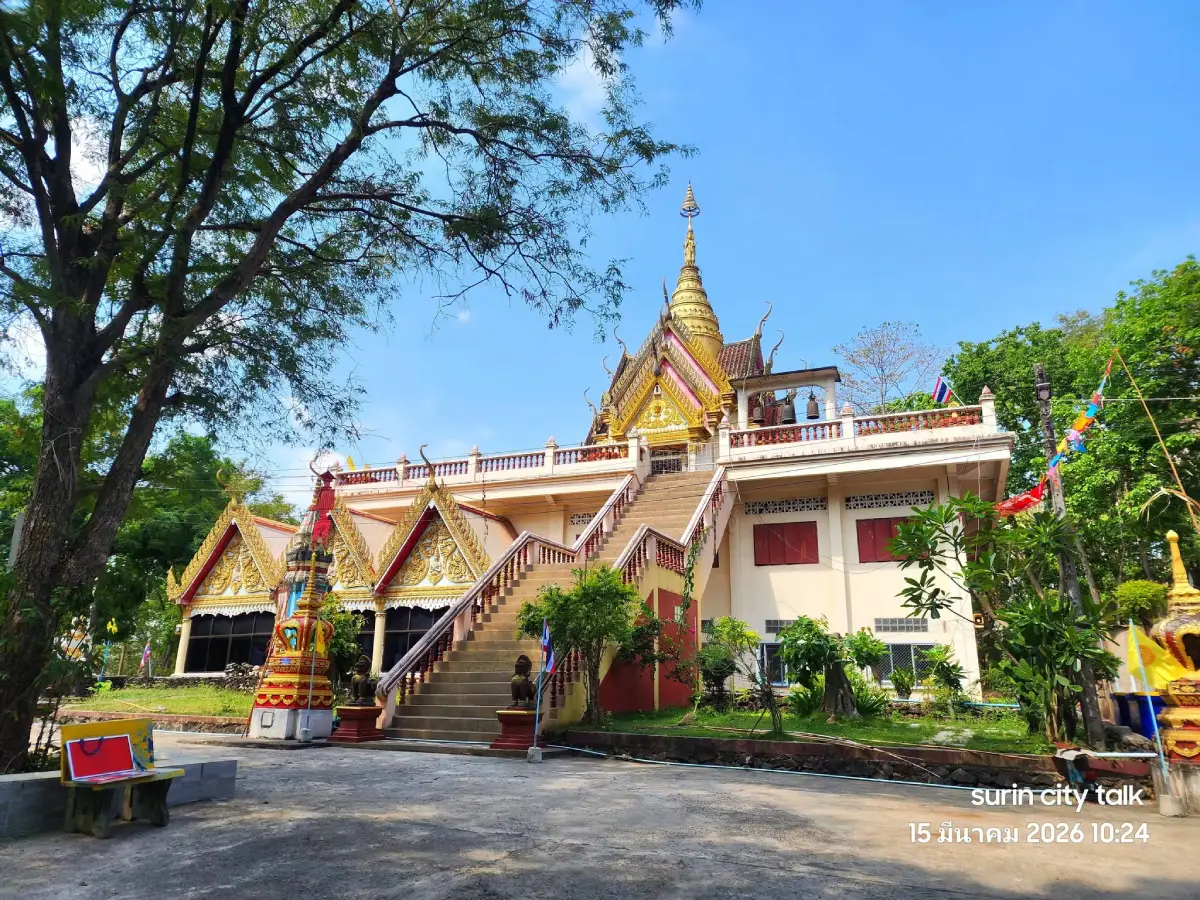
Wat Phanom Silaram (Khao Sawai)
Open Days: Daily
Opening Hours: Wat Phanom Silaram is open from 08.00 – 17.00; Phanom Sawai Forest Park is open from 08.30 – 16.30
Wat Phanom Silaram (Khao Sawai) in Surin is an important Buddhist temple located on Phanom Sawai Hill in Na Bua Subdistrict, Mueang Surin District, Surin Province. The temple stands within the sacred landscape of Khao Sawai, a group of low volcanic hills that has long been connected with pilgrimage, meditation practice, local belief, and the cultural identity of Surin. Founded in 1929, Wat Phanom Silaram covers about 72 rai and is located on an old extinct volcanic hill surrounded by dry forest, stone platforms, ancient ponds, sacred monuments, and important Buddhist sites.
The significance of Wat Phanom Silaram goes far beyond its scenic hilltop setting. It is closely associated with Luang Pu Dun Atulo, one of Surin’s most respected meditation masters. According to the temple history, Luang Pu Dun discovered an abandoned temple on Khao Sawai and developed it into a small monastic dwelling for meditation practice. He later appointed Luang Pu Suan Saradhammo as abbot, and Luang Pu Suan became the monk who initiated the development of permanent religious structures within the temple. This origin story gives Wat Phanom Silaram a strong spiritual character rooted in meditation, simplicity, and local devotion.
The name “Phanom Silaram” reflects the landscape itself. “Phanom” means mountain, “sila” means stone, and “aram” means monastery or temple. The name therefore suggests a temple on a rocky mountain, which matches the physical character of Khao Sawai. The hill is part of an old volcanic landscape with stone surfaces, laterite soil, forest paths, and natural rock formations. Visitors can feel that the beauty of the temple is not limited to its buildings. It comes from the way the monastery is set among stone, forest, wind, and the stillness of a hill suitable for contemplation.
Khao Sawai consists of 3 peaks: Phanom Krol, also known as Khao Khok; Phanom Proh, or the male hill; and Phanom Srai, or the female hill. Phanom Krol is associated with the stupa of Luang Pu Dun Atulo. Phanom Proh is the location of Phra Phuttha Surin Mongkhon, the large white Buddha image in the blessing posture. Phanom Srai is closely connected with Wat Phanom Silaram and other sacred points of the hill. To local people, the 3 peaks form one sacred landscape rather than separate tourist spots.
The geography of Khao Sawai gives Wat Phanom Silaram a distinctive atmosphere. The hill is not extremely high, but it rises clearly from the surrounding plains of Surin. The area contains open stone ground, dry dipterocarp forest, ancient ponds, and routes connecting many sacred places. This makes the visit feel like a gentle pilgrimage rather than a simple sightseeing stop. The climb and the walk through the sacred landscape allow visitors to experience Buddhism, nature, and local belief together.
Luang Pu Dun Atulo played a central role in restoring the site from an abandoned temple into a place of practice. His connection with Khao Sawai reflects the tradition of meditation monks who sought quiet places for contemplation, away from city noise and worldly distraction. The small kuti he developed for practice became the seed of the restored temple. For this reason, Wat Phanom Silaram is not only a place for worship, but also a site linked with the discipline and simplicity of the Thai forest meditation tradition.
After Luang Pu Dun appointed Luang Pu Suan Saradhammo as abbot, the temple gradually developed into a more permanent religious site. Luang Pu Suan initiated the construction and improvement of important temple structures, making it possible for local devotees and visitors to come for merit-making, worship, and religious activities. His role is remembered as part of the sacred history of Khao Sawai and is one reason why Luang Pu Suan is included among the important sacred figures worshipped in the hill area.
Today, Wat Phanom Silaram is a local Buddhist temple in Na Bua Subdistrict, Mueang Surin District, with Phra Athikan Sanit Kusolajitto serving as abbot. The temple remains open for worship, merit-making, and cultural visits. It also connects naturally with the wider Phanom Sawai Forest Park route, allowing visitors to continue to other sacred sites, including the large Buddha image, the replica Buddha footprint, the Luang Pu Dun Stupa, the black Buddha image, the Guan Yin Shrine, the sacred turtle, and the sacred pond.
Khao Sawai is also known for the annual Khao Sawai Climbing Tradition, held every year on the 1st waxing moon day of the 5th lunar month. Local people regard this day as an old traditional day of rest and a lunar New Year observance. Families and communities climb the hill to worship sacred places, ask for blessings, and begin the period before Songkran with a renewed sense of faith. The tradition keeps Khao Sawai alive as a cultural landscape and makes Wat Phanom Silaram part of Surin’s living pilgrimage route.
The sacred route of Khao Sawai is often described through 9 important sacred places. These include Phra Phuttha Surin Mongkhon, the replica Buddha footprint, the relics of Luang Pu Dun Atulo, the black Buddha image, Luang Pu Suan, Prasat Hin Phanom Sawai, the Guan Yin Shrine, the sacred turtle, and the sacred pond. Paying respect to all 9 sacred places is believed by local people to bring auspiciousness and blessings. The route brings together Buddhism, local belief, teacher lineage, water symbolism, animal symbolism, and archaeological memory.
Phra Phuttha Surin Mongkhon on Phanom Proh, the male hill, is one of the most visible landmarks of Khao Sawai. The large white Buddha image in the blessing posture stands prominently above the landscape and is one of the most recognized symbols of the hill. Visitors climb the stairway and ring the bells along the route for good fortune. The sound of bells echoing through the forest is one of the most memorable experiences at Phanom Sawai and has become an important part of the pilgrimage atmosphere.
The stupa of Luang Pu Dun Atulo on Phanom Krol, or Khao Khok, is another deeply respected point. Devotees of the meditation tradition often come to pay respect here because Luang Pu Dun is one of the most important monks associated with Surin. His stupa gives the hill a strong spiritual depth, connecting the physical landscape with the memory of a meditation master whose teachings continue to influence Buddhist practitioners.
The replica Buddha footprint is another important object of worship in the Khao Sawai area. It is associated with the Atthamuk Pavilion, which was built by the Buddhist Association of Surin Province as a memorial for the 200th anniversary of the founding of Bangkok in the Rattanakosin period. Construction began on 15 December 1981 and was completed on 15 July 1982. This pavilion gives the hill both local religious meaning and a connection with a wider national historical commemoration.
The black Buddha image is a distinctive sacred point in the Khao Sawai route. Its visual character contrasts with the large white Phra Phuttha Surin Mongkhon, adding depth and variety to the pilgrimage route. Visitors often include the black Buddha image in their worship sequence together with the large Buddha, the Buddha footprint, and the Luang Pu Dun Stupa.
Luang Pu Suan Saradhammo, also known in local memory as Phra Khru Phanom Silakhun, is central to the development of Wat Phanom Silaram. As the abbot appointed after Luang Pu Dun restored the abandoned temple, he helped shape the site into a functioning monastery. Remembering Luang Pu Suan is therefore an act of honoring the monk who continued the religious work of the hill and developed the temple for future generations.
Prasat Hin Phanom Sawai gives the area an archaeological dimension. Although many visitors think of Khao Sawai primarily as a Buddhist pilgrimage hill, the stone sanctuary shows that Surin has deeper historical layers connected with ancient Khmer culture and religious sites of lower northeastern Thailand. This makes a visit to Wat Phanom Silaram valuable for travelers interested not only in Buddhism but also in archaeology and regional cultural history.
The Guan Yin Shrine on Khao Sawai shows the coexistence of different forms of faith within one sacred landscape. Many visitors stop to pay respect and ask for blessings related to compassion, peace, and protection. The presence of the shrine together with Buddha images, a stupa, a replica footprint, a sacred turtle, and a sacred pond shows that Khao Sawai is a layered place of devotion that reflects the real faith practices of local people.
The sacred turtle and sacred pond connect Khao Sawai with local beliefs about water, longevity, stability, and fertility. The turtle is a symbol of long life, endurance, and steadiness, while water represents coolness, abundance, and life-giving power. In a dry forest hill landscape, sacred ponds hold both ecological and spiritual value. Visitors should treat these areas with care, avoid littering, and keep the atmosphere peaceful.
In terms of nature, Wat Phanom Silaram lies within the Phanom Sawai Forest Park area, which covers about 1,975 rai. The forest is mainly dry dipterocarp forest on shallow soil and stone ground. Trees include teng, rang, hiang, phluang, daeng, makha mong, phayung, and other local species. During some seasons, wildflowers and local plants appear along the forest route. The visit therefore combines temple worship with the distinctive natural character of lower-Isan dry forest.
Visitors should allow enough time for the site. Those who want to see only Wat Phanom Silaram and its immediate surroundings may spend about 1 – 2 hours. Those who wish to visit the large Buddha image, Luang Pu Dun Stupa, the replica Buddha footprint, Atthamuk Pavilion, and all 9 sacred places should allow 3 – 4 hours. A half-day visit is the most practical way to experience the temple and the hill without rushing.
A good visiting route begins at the entrance and service area of the forest park, then continues to Phra Phuttha Surin Mongkhon on Phanom Proh. After that, visitors can continue to the sacred points on Phanom Krol, including the Luang Pu Dun Stupa and Atthamuk Pavilion, before visiting Wat Phanom Silaram on the Phanom Srai side. This order helps visitors understand the relationship among the 3 peaks and see how the temple fits within the wider sacred landscape of Khao Sawai.
During the annual Khao Sawai Climbing Tradition, the area becomes especially lively. Cultural processions, rituals honoring Phanom Sawai, ceremonial dances, bell-ringing, worship of the sacred places, and community activities fill the hill with devotion. This is the best time for visitors who want to see living local culture, but travel time, parking, and walking routes should be planned carefully because many people attend the event.
Because Wat Phanom Silaram is a temple and the surrounding area is a sacred forest park, visitors should dress modestly, speak quietly near religious areas, avoid climbing on sacred structures, avoid touching Buddha images or ritual objects inappropriately, and never leave waste in the forest. Respect for both religion and nature is essential here. The most meaningful visit is one that honors the temple, the local community, and the forest environment together.
Getting There from Surin city is straightforward. Take Highway 214 on the Surin – Prasat route for about 14 km to Ban Kanop, then turn onto the Ban Kanop – Ban Sawai road for about 6 km. The total distance from Surin city is about 20 – 22 km, and the journey usually takes about 25 – 35 minutes by car. Private cars, rental cars, and chartered vans are the most convenient options.
Wat Phanom Silaram itself has no direct admission fee, but the Phanom Sawai Forest Park area charges entrance fees according to visitor and vehicle categories. Thai children are 10 baht, Thai adults are 20 baht, foreign children are 50 baht, and foreign adults are 100 baht. Vehicle fees include 20 baht for motorcycles, 30 baht for 4-wheel cars, 100 baht for 6-wheel vehicles, and 200 baht for vehicles larger than 6 wheels up to 10 wheels. Visitors should carry small cash for convenience.
Restaurants and accommodation are most convenient in Surin city because the hill area is primarily a temple, forest park, and sacred site. A practical plan is to visit Wat Phanom Silaram and Khao Sawai in the morning or early afternoon, then return to Surin city for meals, hotels, and additional attractions such as Wat Burapharam, Surin City Pillar Shrine, Surin National Museum, and Ban Tha Sawang Silk Weaving Village.
Wat Phanom Silaram is suitable for Buddhist pilgrims, travelers interested in Luang Pu Dun Atulo and Luang Pu Suan Saradhammo, visitors who enjoy temple walks in natural settings, students, families, and international travelers who want to understand the relationship between mountain landscapes, forest temples, local belief, and pilgrimage traditions in lower northeastern Thailand. Its strength lies in the combination of spiritual history, hilltop setting, and living community faith.
For international visitors, Wat Phanom Silaram explains Surin beyond its familiar images of elephants, silk, and Khmer ruins. It shows how local faith is rooted in a real landscape. People climb the hill to worship, ring bells, honor revered monks, and connect with forest nature. The temple, the old volcanic hill, the meditation lineage, the white Buddha image, the stupa, the replica footprint, and the sacred pond together reveal a rich cultural world that is deeply meaningful to Surin people.
Wat Phanom Silaram (Khao Sawai) is therefore an essential destination for anyone who wants to experience the religious and natural identity of Surin in one place. The temple began from an abandoned hilltop monastery restored by Luang Pu Dun Atulo, developed by Luang Pu Suan Saradhammo, and now continues under the care of Phra Athikan Sanit Kusolajitto. Surrounded by the 3 peaks of Khao Sawai, sacred monuments, forest paths, and the annual Khao Sawai Climbing Tradition, the temple remains one of the most meaningful spiritual landscapes in Surin Province.
| Name | Wat Phanom Silaram (Khao Sawai), Surin |
| Location | Na Bua Subdistrict, Mueang Surin District, Surin Province 32000 |
| Address | Wat Phanom Silaram is located on Phanom Sawai Hill, Na Bua Subdistrict, Mueang Surin District, Surin Province 32000, within the Khao Sawai and Phanom Sawai Forest Park area, about 20 – 22 km from Surin city |
| Highlights | A hilltop temple connected with Luang Pu Dun Atulo and Luang Pu Suan Saradhammo, an old volcanic hill meditation site, the 9 sacred places route, Luang Pu Dun Stupa, Phra Phuttha Surin Mongkhon, and the annual Khao Sawai Climbing Tradition |
| History | Founded in 1929 and covering about 72 rai, the temple began from an abandoned hilltop monastery discovered and restored by Luang Pu Dun Atulo, who developed a small kuti for meditation practice before appointing Luang Pu Suan Saradhammo as abbot to develop permanent temple structures |
| Name Origin | “Phanom Silaram” refers to a monastery on a rocky hill, matching the old volcanic and stone landscape of Khao Sawai |
| Distinctive Features | A temple on Phanom Sawai Hill within a 3-peak sacred landscape: Phanom Krol or Khao Khok, Phanom Proh or the male hill, and Phanom Srai or the female hill, combining temples, Buddha images, a stupa, sacred ponds, dry forest, stone platforms, and pilgrimage routes |
| Travel Information | From Surin city, take Highway 214 on the Surin – Prasat route for about 14 km to Ban Kanop, then turn onto the Ban Kanop – Ban Sawai road for about 6 km; total distance is about 20 – 22 km |
| Current Status | Open for worship, merit-making, temple visits, and tourism together with the Phanom Sawai Forest Park area |
| Open Days | Daily |
| Opening Hours | Wat Phanom Silaram is open from 08.00 – 17.00; Phanom Sawai Forest Park is open from 08.30 – 16.30 |
| Fees | Wat Phanom Silaram has no direct admission fee Phanom Sawai Forest Park Fees: Thai Children 10 Baht, Thai Adults 20 Baht, Foreign Children 50 Baht, Foreign Adults 100 Baht Vehicle Fees: Motorcycle 20 Baht, 4-Wheel Car 30 Baht, 6-Wheel Vehicle 100 Baht, Larger Vehicle Up To 10 Wheels 200 Baht |
| Facilities | Parking area, hill stairways and paths, pavilions, Buddha image and stupa worship points, temple area, toilets, natural walking paths, forest park service points, and viewpoints according to site conditions |
| Main Areas / Zones | 1. Wat Phanom Silaram On Khao Sawai 2. Kuti And Meditation Area Connected With Luang Pu Dun Atulo 3. Phanom Krol Or Khao Khok, Luang Pu Dun Atulo Stupa Area 4. Phanom Proh Or Male Hill, Phra Phuttha Surin Mongkhon Area 5. Phanom Srai Or Female Hill, Temple And Sacred Worship Area 6. Atthamuk Pavilion And Replica Buddha Footprint 7. Prasat Hin Phanom Sawai 8. Guan Yin Shrine, Sacred Turtle, And Sacred Pond 9. Dry Dipterocarp Forest, Stone Platforms, And Nature Walk Area |
| Important Rituals / Traditions | The Khao Sawai Climbing Tradition is held every year on the 1st waxing moon day of the 5th lunar month, with hill climbing, bell-ringing, rituals honoring Phanom Sawai, ceremonial dance, and worship of the 9 sacred places for auspiciousness |
| Abbot / Caretaker | Wat Phanom Silaram is led by Phra Athikan Sanit Kusolajitto The Phanom Sawai Forest Park area is managed by local forestry and natural-resource authorities |
| Main Contact Number | Phanom Sawai Forest Park, Tel. 088-357-5699 Tourism Authority of Thailand, Surin Office, Tel. 044-514-447 to 8 |
| Nearby Tourist Attractions | 1. Phra Phuttha Surin Mongkhon, about 1 km 2. Luang Pu Dun Atulo Stupa, about 1 km 3. Huai Saneng Reservoir, about 15 km 4. Surin National Museum, about 17 km, Tel. 044-513-272, 044-513-274 5. Ban Tha Sawang Silk Weaving Village, about 18 km 6. Wat Burapharam Royal Temple, about 21 km 7. Surin City Pillar Shrine, about 22 km |
| Nearby Restaurants | 1. Craft Cafe Surin, about 17 km, Tel. 095-605-4281 2. Just A Little Surin, about 17 km, Tel. 064-789-8864 3. Mozern Restaurant Surin, about 17 km, Tel. 084-995-6492 4. Sawasdee Surin, about 18 km, Tel. 085-637-7707 5. Seoul Bar - Cafe & Bistro Surin, about 18 km, Tel. 080-959-7942 6. Chertom Surin, about 18 km, Tel. 098-997-7916 |
| Nearby Accommodations | 1. Martina Hotel Surin, about 16 km, Tel. 044-713-555, 044-713-655, 086-469-6545 2. Thong Tarin Hotel, about 18 km, Tel. 044-514-281, 085-300-8858 3. The Wood Surin, about 18 km, Tel. 063-023-7999 4. KT Knight Hotel, about 18 km, Tel. 093-454-7007 5. Maneerote Hotel Surin, about 19 km, Tel. 044-514-569 6. HOP INN Surin, about 20 km, Tel. 02-080-2222 |
Frequently Asked Questions (FAQ)
Q: Where Is Wat Phanom Silaram Located?
A: Wat Phanom Silaram is located on Phanom Sawai Hill in Na Bua Subdistrict, Mueang Surin District, Surin Province, about 20 – 22 km from Surin city.
Q: When Is Wat Phanom Silaram Open?
A: Wat Phanom Silaram is open daily from 08.00 to 17.00. Phanom Sawai Forest Park is open daily from 08.30 to 16.30.
Q: Is There An Admission Fee?
A: Wat Phanom Silaram has no direct admission fee, but Phanom Sawai Forest Park charges fees according to visitor and vehicle categories.
Q: How Is Wat Phanom Silaram Connected With Luang Pu Dun Atulo?
A: Luang Pu Dun Atulo discovered an abandoned temple on Khao Sawai and developed a small kuti for meditation practice before appointing Luang Pu Suan Saradhammo as abbot.
Q: Who Is The Current Abbot Of Wat Phanom Silaram?
A: Phra Athikan Sanit Kusolajitto is the abbot of Wat Phanom Silaram.
Q: How Many Peaks Does Khao Sawai Have?
A: Khao Sawai has 3 peaks: Phanom Krol or Khao Khok, Phanom Proh or the male hill, and Phanom Srai or the female hill.
Q: When Is The Khao Sawai Climbing Tradition Held?
A: It is held every year on the 1st waxing moon day of the 5th lunar month, when local people climb the hill to worship sacred places and ask for blessings.
Q: What Should Visitors Prepare Before Going?
A: Visitors should dress modestly, wear comfortable walking shoes, bring drinking water, a hat or umbrella, and visit in the morning or early afternoon to allow enough time for worship and walking around Khao Sawai.
 Category: ●Places of Worship
 Group: ●Temple
Last Update : 2 MonthAgo
 Last Update : 2 MonthAgo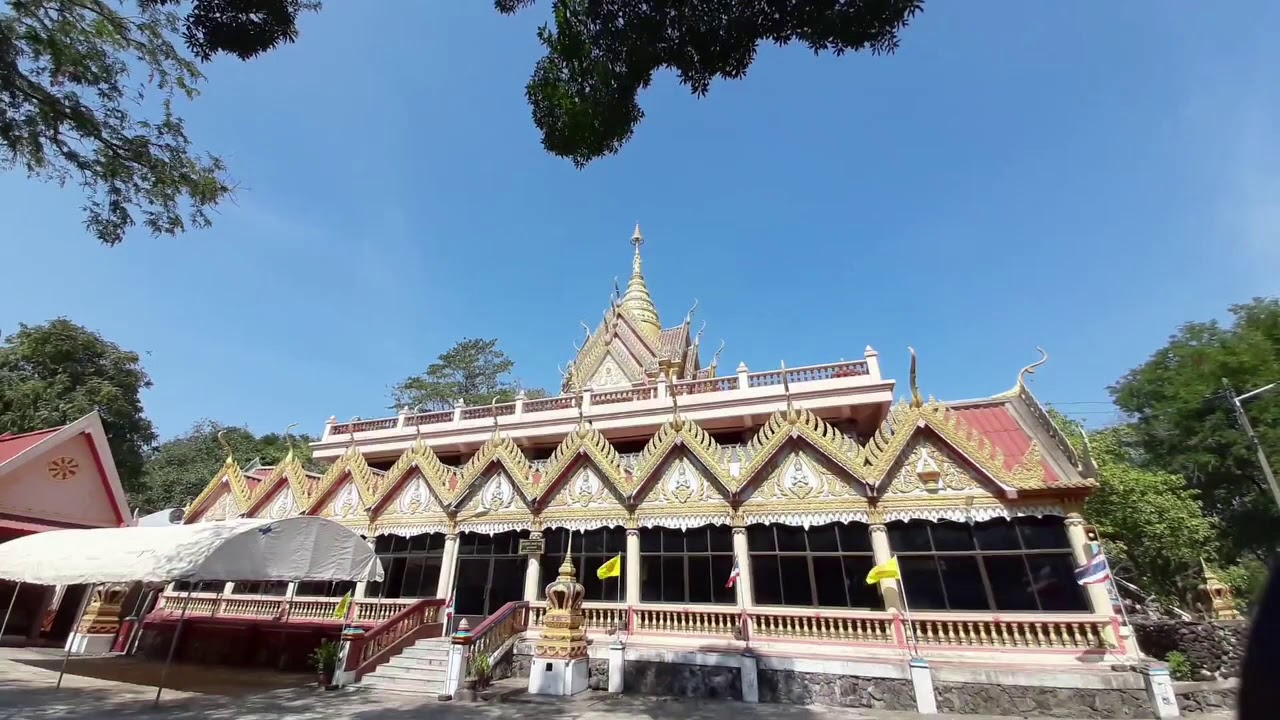
 Click to Access the Navigation Map GPS
Wat Phanom Silaram (Khao Sawai) Map
Recommend

 Art, Culture and Heritage
 Historical Sites and Monuments(11)
 Landmarks and Memorials(2)
 Art, Craft Centres, Tradition(5)
 Museums(1)
Temple(15)
Museums(1)
Temple(15)
 Other Sacred Sites(1)
 Suburban Living
 Village, Community(9)
 Local Market(1)
 Nature and Wildlife
 National Parks and Marine Reserves(2)
 Mountain (Doi)(2)
 Dam, Reservoir, Lake(6)
 Waterfalls(1)
 River, Canal(2)
 Other natural attractions(4)
 Entertainment and Agricultural
 Farms, Parks and Ecotourism(2)


