
lovethailand home >Northeastern Travel Attractions >Surin Travel Attractions >Sang Kha >Ban Chan > Prasat Sang Silpchai (Prasat Ban Chan)
TL;DR: Prasat Sang Silpchai (Prasat Ban Chan) is located at Moo 1, Ban Chan Subdistrict, Sangkha District, Surin Province, open Daily, hours 08.00 – 17.00.
Prasat Sang Silpchai (Prasat Ban Chan)
Open Days: Daily
Opening Hours: 08.00 – 17.00
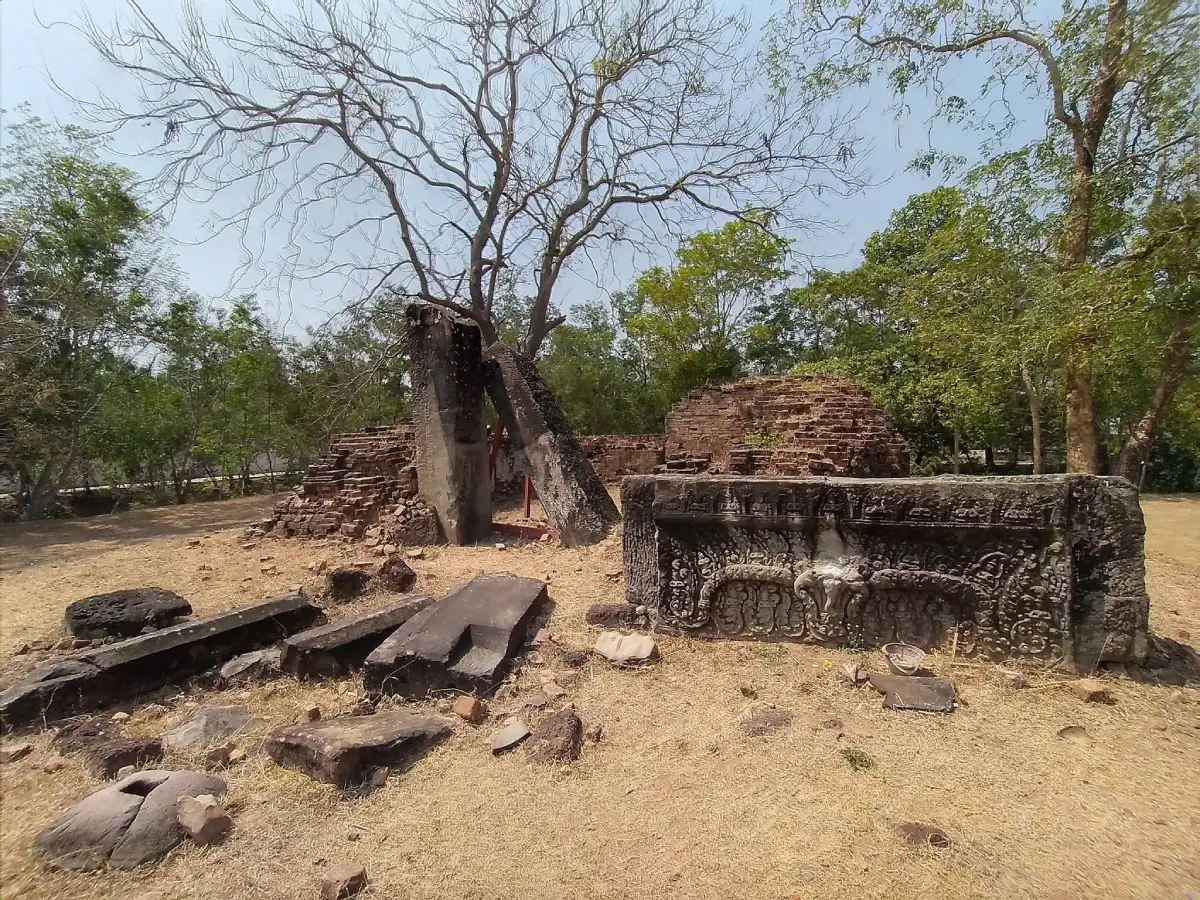
Prasat Sang Silpchai, also known as Prasat Ban Chan, is an important ancient Khmer sanctuary in Sangkha District, Surin Province. Located in Moo 1, Ban Chan Subdistrict, west of the Ban Chan Subdistrict Administrative Organization office, this historic site is distinguished by a single brick sanctuary standing on a raised earthen mound, a horseshoe-shaped or U-shaped moat, and a remarkable lintel carved with Indra riding the three-headed elephant Erawan. For travelers interested in Khmer art, archaeological landscapes, and the lesser-known heritage routes of Southern Isan, this sanctuary offers a quiet yet deeply meaningful encounter with Surin’s ancient past.
Prasat Sang Silpchai is more than a small ruin in a rural community. It represents one of the important traces of ancient Khmer cultural presence in the Sangkha area, a district historically connected with the Phanom Dong Rak mountain range, natural passes between present-day Thailand and Cambodia, and a network of Khmer sanctuaries scattered across Southern Isan. The remaining structure is a single brick sanctuary with a square plan and indented corners, built on an elevated base. Although the upper sections and roof have collapsed over time, parts of the sanctum, walls, and eastern doorway still remain visible, allowing visitors to understand the original architectural layout.
One of the first elements visitors notice is the landscape setting. The sanctuary stands on a large raised mound, separating the sacred space from the surrounding village area. This elevated placement was not merely practical; it also reflected the symbolic role of Khmer sanctuaries as sacred centers. Around the mound is a moat shaped like a horseshoe or the letter U, creating a clear boundary between everyday space and ritual space. The relationship between the sanctuary, the raised ground, the entrance, and the water system shows that the ancient builders carefully designed both the monument and its surrounding landscape.
The lintel of Indra riding Erawan is the artistic heart of Prasat Sang Silpchai. In Khmer architecture, a lintel is the carved stone beam placed above a doorway, often carrying images of gods, sacred stories, floral motifs, and symbolic patterns. The lintel at Prasat Ban Chan is especially notable for its central image of Indra on the elephant Erawan, accompanied by garland motifs, scrolling foliage, and 10 devotional figures placed within arched niches. These details make the lintel not only visually striking but also historically valuable, as its style links the sanctuary to the Koh Ker period of ancient Khmer art, around the 15th Buddhist century.
Indra is a major deity in Hindu tradition, associated with the sky, rain, thunder, protection, and royal power. Erawan, the celestial elephant, is his divine mount. The image of Indra riding Erawan on the lintel therefore expresses auspiciousness, fertility, protection, and the connection between the world of humans and the world of the gods. When this image appears on a Khmer sanctuary in Southern Isan, it also reflects how religious ideas, agricultural life, artistic language, and local settlement patterns were intertwined. Looking closely at the lintel allows visitors to see how ancient artisans communicated sacred meaning through stone carving.
The name “Prasat Sang Silpchai” is connected with local legend and the cultural identity of Ban Chan Subdistrict. The area’s local slogan refers to an ancient town, organic rice, old traditions, and the legend of Sang Silpchai, showing how the sanctuary has become part of community memory. The alternative name, Prasat Ban Chan, comes from the village where the monument is located. Together, these names reveal that the site is not only an archaeological object but also a living cultural landmark shaped by local stories, place names, community pride, and the historical imagination of the people of Ban Chan.
Within the broader archaeological context of Surin, Prasat Ban Chan belongs to the province’s important group of ancient Khmer sites. Surin is home to several Khmer monuments, including Prasat Phum Pon, Prasat Yai Ngao, Prasat Sikhoraphum, Prasat Ta Muean Thom, and Prasat Ta Khwai. Prasat Sang Silpchai is distinctive because of the early Khmer artistic character of its lintel and the way its landscape features remain readable on the ground. Although the sanctuary is no longer complete, the surviving elements still provide valuable evidence for understanding the development of early Khmer religious architecture in the territory of present-day Thailand.
The east-facing entrance is another important feature. In Indian-influenced religious architecture, the east is associated with sunrise, renewal, prosperity, and sacred orientation. Many Khmer sanctuaries were designed with their principal entrance facing east, creating a ritual approach toward the sanctum. At Prasat Sang Silpchai, the eastern doorway allows visitors to read the building according to this traditional spatial logic. Understanding the orientation of the sanctuary turns a simple visit into a deeper act of interpretation, where architecture, belief, and landscape come together.
The main building material is brick, a common material in early Khmer sanctuaries before the later widespread use of sandstone and laterite in larger monumental complexes. Brick construction required advanced technical skill, including the preparation of the bricks, precise bonding, and the shaping of the structure. Even though the upper part of the sanctuary has collapsed, the remaining brickwork still conveys the scale and importance of the original monument. Compared with large sandstone temples, the brick texture gives Prasat Sang Silpchai a quieter and more intimate character, while preserving a powerful sense of antiquity.
The moat surrounding the sanctuary should not be overlooked. Water in Khmer sacred architecture carried symbolic meaning related to purity, boundary-making, and cosmic geography. A moat separated the sacred compound from ordinary space and helped structure the process of approaching the monument. Visitors should therefore spend time observing not only the central brick sanctuary but also the mound, the entrance area, the shape of the surrounding moat, and the relationship between the monument and the village landscape. These features are all part of the historical evidence preserved at the site.
The atmosphere of Prasat Sang Silpchai differs from that of large, heavily visited archaeological parks. It remains part of a local community and retains a peaceful, uncommercialized character. Visitors can walk slowly around the site, study the brickwork, photograph the lintel and doorway, and experience the rhythm of village life around the monument. This quiet atmosphere is one of the sanctuary’s greatest strengths. It allows travelers to encounter history not as something isolated from daily life, but as something still embedded within the memory and identity of the local people.
For travelers interested in Khmer art, the best way to explore the site is to begin with the overall landscape, then move toward the structure and its decorative elements. Look first at the raised mound and moat, then examine the east-facing doorway and the lintel. Pay attention to the garland patterns, scrolling foliage, devotional figures, and the central figure of Indra on Erawan. These details help place the sanctuary within the Koh Ker artistic tradition and make the site valuable for understanding the evolution of Khmer art before the more widely known Angkor Wat and Bayon periods.
Prasat Sang Silpchai is also a suitable educational destination for students, cultural travelers, and anyone interested in archaeology. The site can be used to understand ancient architectural planning, the symbolism of lintels, the role of Hindu imagery, and the importance of water features in sacred landscapes. Visiting the place in person provides a level of understanding that cannot be gained from photographs alone. The size of the mound, the position of the doorway, the texture of the brickwork, and the quietness of the surrounding community all contribute to the experience.
Ban Chan Subdistrict has a clear local identity shaped by organic agriculture, old traditions, ancient Khmer heritage, and the legend of Sang Silpchai. A visit to the sanctuary is therefore not only about seeing ruins but also about understanding a Southern Isan community with layered cultural roots. Surin Province itself is home to Thai, Khmer, Kui, and Lao cultural influences, and this mixture can be felt in place names, festivals, local stories, and historical monuments. Prasat Sang Silpchai is one of the places where these layers become visible.
The best time to visit is in the morning or late afternoon, when the light is softer and the heat is less intense. This timing also helps reveal the texture of the brick and stone carving more clearly. During the rainy season, the surrounding area becomes greener and more atmospheric, while the cool season is ideal for travelers planning a broader archaeological route in Sangkha District. A general visit takes about 30 minutes to 1 hour, but travelers who enjoy photography or archaeological details may want to spend more time walking around the mound, moat, and sanctuary.
Getting There is most convenient by private car. From Surin town, drive toward Sangkha District, then continue along the Sangkha – Chong Chom route or Provincial Highway 2283 toward Ban Chan Subdistrict. Ban Chan is about 14 km from the Sangkha District Office, and the sanctuary is located west of the Ban Chan Subdistrict Administrative Organization office. A private car or hired vehicle is recommended, especially for travelers planning to combine Prasat Sang Silpchai with Prasat Yai Ngao, Prasat Phum Pon, or Chong Chom Border Market in a one-day trip.
Travelers arriving from other provinces can first reach Surin by car, bus, or train, then continue to Sangkha District and arrange local transport to Ban Chan. Because the sanctuary is located in a village rather than a large commercial tourist area, having private transport allows better flexibility. This is especially useful for visitors who want to explore several Khmer heritage sites in one route, including Prasat Yai Ngao in Ban Chop, Prasat Phum Pon in Dom Subdistrict, and the border trade area at Chong Chom.
Visitors should treat the site with care. Do not climb on the ancient structure, do not touch or move bricks and stone fragments, do not write on the walls or doorway, and do not take any objects from the site. Prasat Sang Silpchai is a valuable archaeological monument, and responsible travel helps preserve it for future generations. Visitors should also keep the area clean and respect the local community around the monument.
A one-day cultural route in Sangkha District can begin at Prasat Sang Silpchai, continue to Prasat Yai Ngao, then proceed to Prasat Phum Pon, one of Thailand’s oldest surviving Khmer sanctuaries. Travelers can end the day with a meal in Sangkha town or continue toward Chong Chom Border Market. This route is ideal for those who want to understand different phases of Khmer art and the importance of Surin as a heritage province in Southern Isan.
What makes Prasat Sang Silpchai worth visiting is the balance between historical importance and local authenticity. The sanctuary has not been transformed into a large commercial tourist site, yet it contains a major artistic highlight in the form of the Indra-on-Erawan lintel. It offers a quiet, thoughtful travel experience and reveals a side of Surin that is rich in ancient memory, artistic value, and community identity. For foreign travelers seeking meaningful cultural travel beyond the most familiar destinations, this sanctuary is a strong addition to any Surin itinerary.
Overall, Prasat Sang Silpchai or Prasat Ban Chan is one of the most meaningful learning destinations in Sangkha District. Although the structure survives only in parts, the evidence that remains is historically powerful: the brick sanctuary, the elevated mound, the surrounding moat, the east-facing entrance, and the large lintel carved with Indra riding Erawan. Together, they make the site far more than a photo stop. It is a doorway into the ancient Khmer world, the cultural landscape of Southern Isan, and the living memory of Ban Chan community.
| Name | Prasat Sang Silpchai, also known as Prasat Ban Chan |
| Location | Moo 1, Ban Chan Subdistrict, Sangkha District, Surin Province |
| Address | Ban Chan Village, Moo 1, Ban Chan Subdistrict, Sangkha District, Surin 32150, Thailand |
| Coordinates | 14.566014, 103.741815 |
| Highlights | A lintel carved with Indra riding Erawan, a single brick sanctuary on a raised mound, and a horseshoe-shaped or U-shaped moat |
| History / Period | Ancient Khmer art in the Koh Ker style, around the middle to late 15th Buddhist century |
| Name Origin | The name Sang Silpchai is connected with local legend and Ban Chan’s cultural identity, while Prasat Ban Chan refers to the village where the sanctuary is located |
| Distinctive Features | A single brick sanctuary with a square plan and indented corners, built on a high base with its main entrance facing east |
| Key Evidence | A large carved lintel showing Indra riding Erawan, garland motifs, scrolling foliage, and 10 devotional figures within arched niches |
| Travel Information | From Surin town, travel toward Sangkha District and continue on the Sangkha – Chong Chom route or Provincial Highway 2283 to Ban Chan Subdistrict. The sanctuary is west of the Ban Chan Subdistrict Administrative Organization office |
| Current Status | Open to visitors and recognized as an important local Khmer heritage site in Ban Chan Subdistrict |
| Open Days | Daily |
| Opening Hours | 08.00 – 17.00 |
| Main Areas / Zones | 1. Ancient mound and sanctuary base 2. Eastern doorway 3. Indra-on-Erawan lintel 4. Horseshoe-shaped or U-shaped moat 5. Viewing area and entrance space |
| Caretaker / Coordinating Agencies | Ban Chan Subdistrict Administrative Organization and Surin National Museum, Fine Arts Department |
| Main Contact Number | Ban Chan Subdistrict Administrative Organization Tel. 044-558565 Surin National Museum Tel. 044-513274 |
| Official Website / Official Page | www.banjarn.go.th |
| Part 2: Nearby Attractions, Restaurants, And Accommodations | The following options help travelers plan a route through Sangkha District and nearby areas. Distances are approximate road distances |
| Nearby Tourist Attractions | 1. Prasat Yai Ngao, about 18 km 2. Prasat Phum Pon, about 24 km 3. Chong Chom Border Market, about 33 km 4. Surin National Museum, about 63 km 5. Surin City Pillar Shrine, about 66 km |
| Nearby Restaurants | 1. Muat Ya Sangkha Restaurant, about 14 km, Tel. 081-579-3898, 082-369-1196 2. Jungle Cafe Sangkha Surin, about 15 km, Tel. 090-597-9692 3. Isan Shabu Sangkha, about 15 km, Tel. 090-906-4833, 090-197-5228 4. Sabai Sangkha, about 15 km, Tel. 092-547-8992 5. Maneesangkha Hotel Restaurant, about 17 km, Tel. 081-669-8111, 091-887-0666 6. Krua Nat Phop Sangkha, about 15 km, Tel. 064-636-6661 |
| Nearby Accommodations | 1. Rachawadee Resort Sangkha, about 15 km, Tel. 081-075-2148 2. Maneesangkha Hotel, about 17 km, Tel. 081-669-8111, 091-887-0666 3. Phasawat Resort, about 18 km, Tel. 098-536-8173 4. Lom Rak Resort, about 17 km, Tel. 090-597-4588 5. Nonglak Kung Phao Resort, about 15 km, Tel. 082-366-9417 |
Frequently Asked Questions (FAQ)
Q: Where is Prasat Sang Silpchai located?
A: Prasat Sang Silpchai, also known as Prasat Ban Chan, is located in Moo 1, Ban Chan Subdistrict, Sangkha District, Surin Province, west of the Ban Chan Subdistrict Administrative Organization office.
Q: What are the opening days and hours?
A: The sanctuary is open daily from 08.00 to 17.00.
Q: What is the main highlight of Prasat Sang Silpchai?
A: The main highlight is the large lintel carved with Indra riding the elephant Erawan, accompanied by garland motifs, scrolling foliage, and 10 devotional figures in arched niches.
Q: How old is Prasat Sang Silpchai?
A: The sanctuary belongs to the ancient Khmer Koh Ker artistic style, around the middle to late 15th Buddhist century.
Q: How can travelers get to Prasat Sang Silpchai?
A: From Surin town, travel toward Sangkha District, then continue on the Sangkha – Chong Chom route or Provincial Highway 2283 to Ban Chan Subdistrict. The sanctuary is west of the Ban Chan Subdistrict Administrative Organization office.
Q: How much time should travelers spend at the site?
A: A general visit takes about 30 minutes to 1 hour. Travelers interested in photography, architecture, or archaeology may want to spend more than 1 hour exploring the mound, lintel, and moat.
Q: What nearby places can be added to the same route?
A: Travelers can continue to Prasat Yai Ngao, Prasat Phum Pon, Chong Chom Border Market, Surin National Museum, and Surin City Pillar Shrine.
Q: What should visitors avoid when visiting the sanctuary?
A: Visitors should not climb on the ancient structure, touch or move bricks and stone fragments, write on the monument, or leave rubbish in the area.
 Category: ●Art, Culture and Heritage
 Group: ●Historical Sites and Monuments
Last Update : 2 MonthAgo
 Last Update : 2 MonthAgo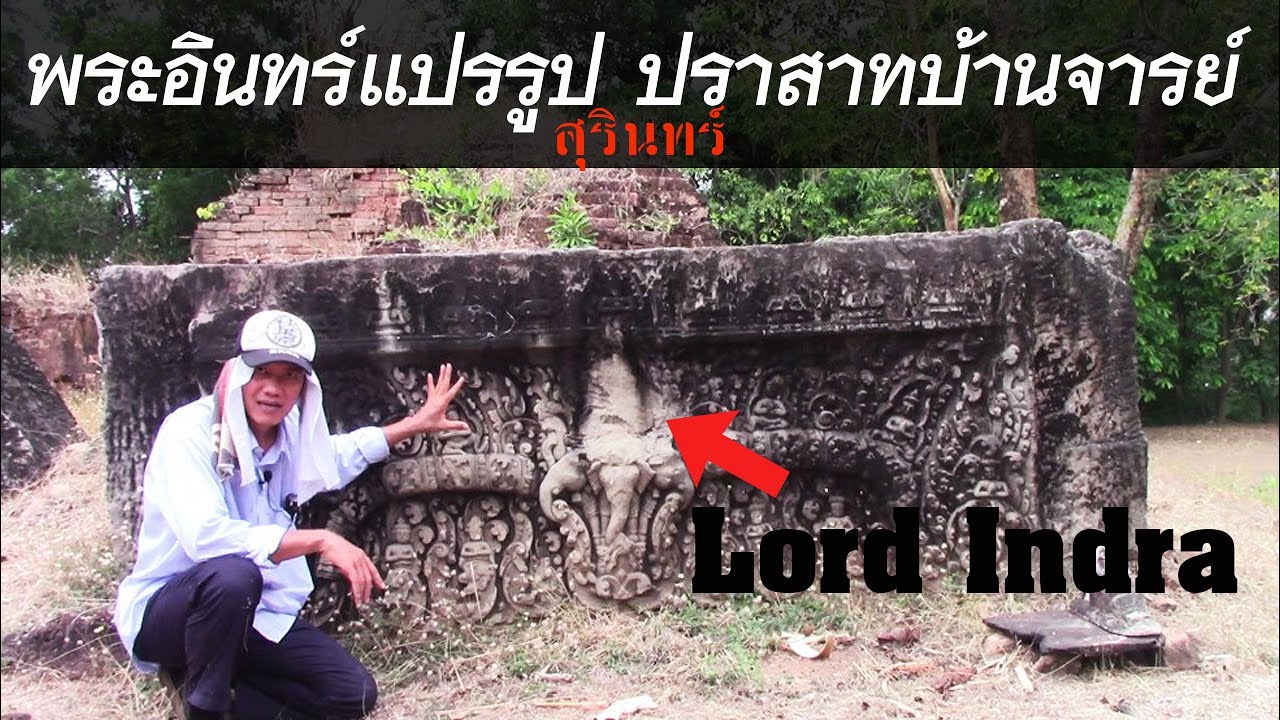
 Click to Access the Navigation Map GPS
Prasat Sang Silpchai (Prasat Ban Chan) Map
Recommend
 Historical Sites and Monuments(11)
 Landmarks and Memorials(2)
 Art, Craft Centres, Tradition(5)
 Museums(1)
 Places of Worship
 Temple(15)
 Other Sacred Sites(1)
 Suburban Living
 Village, Community(9)
 Local Market(1)
 Nature and Wildlife
 National Parks and Marine Reserves(2)
 Mountain (Doi)(2)
 Dam, Reservoir, Lake(6)
 Waterfalls(1)
 River, Canal(2)
 Other natural attractions(4)
 Entertainment and Agricultural
 Farms, Parks and Ecotourism(2)


