
lovethailand home >Northeastern Travel Attractions >Surin Travel Attractions >Tha Tum >Kra Pho > Wang Thalu
TL;DR: Wang Thalu is located at Confluence of the Mun River and Chi River, Ban Ta Klang area, Krapho Subdistrict, Tha Tum District, Surin Province, open Daily, hours 08.00 – 17.00.
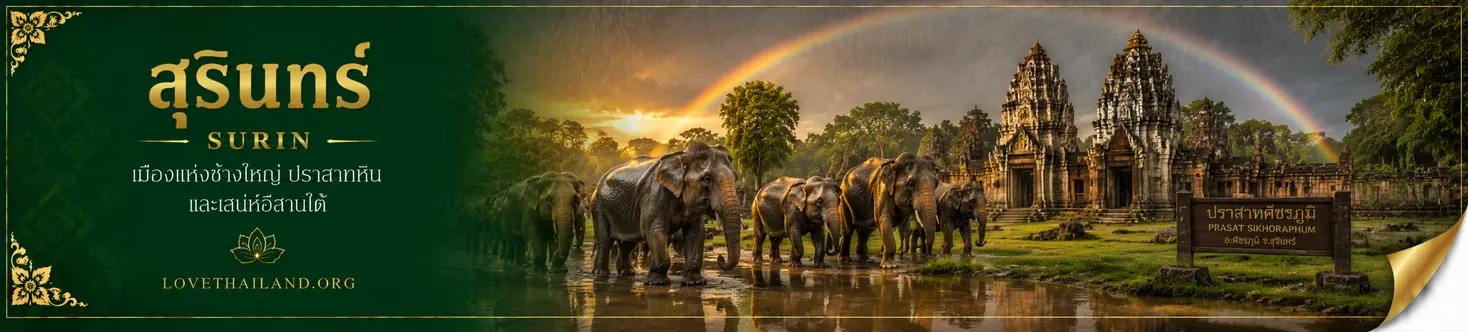
Wang Thalu
Open Days: Daily
Opening Hours: 08.00 – 17.00
Wang Thalu in Surin is a natural and cultural riverside attraction in Tha Tum District, Surin Province. It is located around Ban Ta Klang, Krapho Subdistrict, where the Mun River and the Chi River meet before the water continues toward the lower basin and eventually the Mekong River. The site is known for water-based tourism activities, peaceful scenery along both rivers, riverside forest, the confluence of 2 major northeastern rivers, the elephant-raising culture of the Kui community, and the memorable sight of elephants bathing in the river in the evening. Wang Thalu is more than a riverside viewpoint; it is a living cultural landscape where nature, community, belief, and Surin’s elephant heritage meet.
Wang Thalu is suitable for travelers who want to see a deeper side of Surin beyond the provincial city or the annual elephant festival. The site is close to Ban Ta Klang Elephant Village and the Elephant Study Center, an area famous for the everyday relationship between people and elephants. A visit to Wang Thalu gives travelers a combined experience of river scenery, local forest, village routes, and elephant culture. It is therefore valuable for visitors interested in nature, local community life, cultural history, and the traditional elephant knowledge of Surin Province.
The defining feature of Wang Thalu is its location at the confluence of the Chi River and the Mun River. Both rivers have shaped the geography and livelihood of northeastern Thailand for generations. At Wang Thalu, the meeting of the 2 rivers creates a wide and meaningful waterscape. Visitors can see open water, riverside forest, riverbanks, and a natural setting that is ideal for resting, photography, and community-based water activities.
The name “Wang Thalu” reflects the character of a deep river pool or a natural water passage that connects through the landscape. In the context of Ban Ta Klang, the name is more than a geographical description. It is connected with local memory, the sacred Pu Ta Wang Thalu shrine, and stories of elephant-related rituals in the past. The site therefore has both natural and spiritual significance.
One of the most important cultural elements at Wang Thalu is the Pu Ta Wang Thalu shrine. Local elephant communities respect this sacred place and believe that Pu Ta Wang Thalu protects both people and elephants from danger, bringing safety, prosperity, and good fortune. When villagers succeed in an important matter or survive danger, they may return to the shrine with offerings. This belief gives Wang Thalu the identity of both a natural attraction and a living cultural place, not merely a scenic riverbank.
In the past, Wang Thalu was associated with the Buat Nak Chang ceremony, an elephant-related ordination ritual of Ban Ta Klang and nearby villages. The ritual reflected the deep relationship between people and elephants in Kui society. Although Wang Thalu is no longer used for this ceremony in the same way today, the memory and meaning of the place remain present in community stories and local identity.
The relationship between Wang Thalu and Ban Ta Klang is central to understanding the place. Ban Ta Klang is one of Thailand’s most famous elephant villages, where people and elephants live together as part of daily life. Elephants here are not understood only as animals for performance or tourism. They are part of families, community identity, and inherited elephant knowledge. Visiting Wang Thalu helps travelers see how rivers and elephants are connected in real local life.
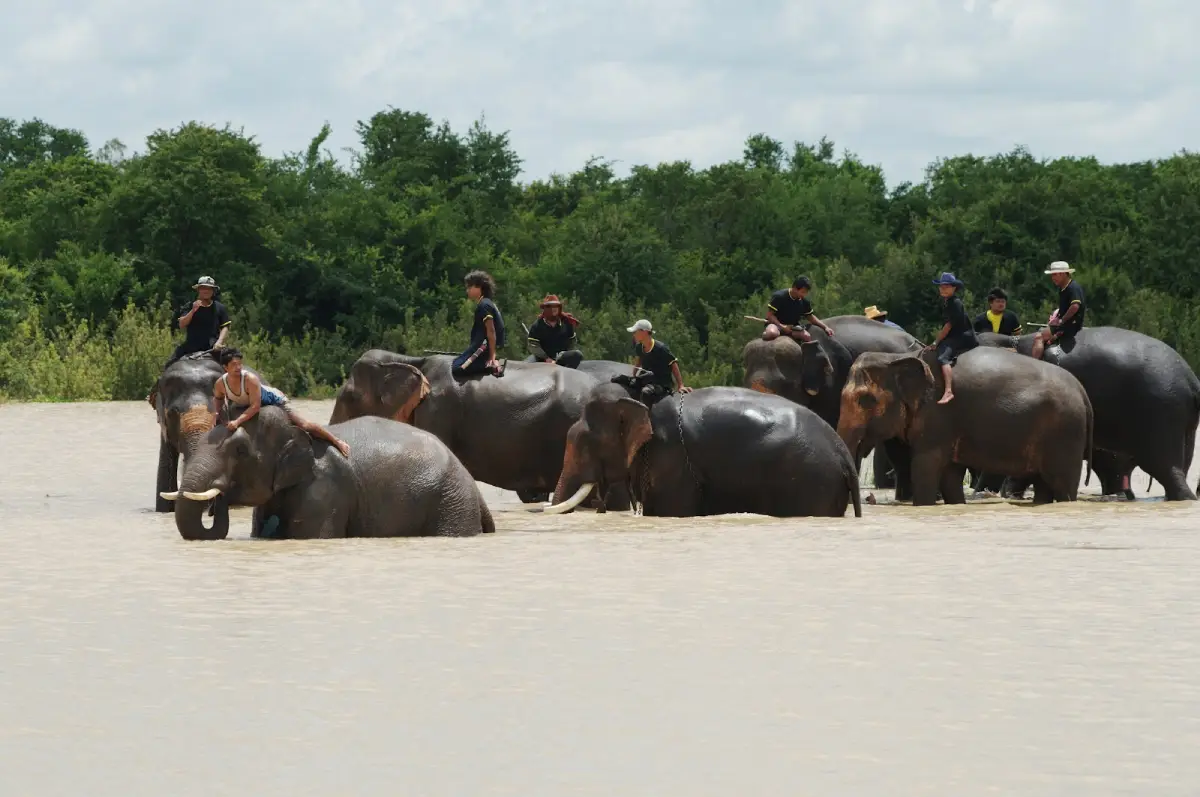
The activity that attracts many visitors to Wang Thalu is the chance to enjoy the river landscape and see elephants bathing in the water during the late afternoon or evening. The image of elephants walking from the village toward the river, surrounded by forest and flowing water, gives Wang Thalu a distinctive atmosphere. It is not a staged urban attraction but a scene rooted in the life of Ban Ta Klang.
Water-based tourism at Wang Thalu allows visitors to experience the landscape from a different angle. From the river, travelers can see riverside forest, the flow of water, the broad meeting point of the Chi and Mun Rivers, and the natural environment that surrounds the community. This experience is ideal for those who want slow, relaxed, local travel in southern Isan.
Wang Thalu changes with the seasons. When the water level is high, the rivers appear broad, full, and powerful. When the water level drops, more of the banks, soil, sand, and riverside vegetation become visible. This seasonal character gives the site life and movement. Nature lovers can see how the place responds to water level, wind, sunlight, and seasonal change.
The best time to visit Wang Thalu is in the morning or late afternoon, with the late afternoon being especially atmospheric. The air becomes cooler, the river light softens, and visitors may see elephants bathing near the river. Midday can be hot, so many travelers visit the Elephant Study Center or Ban Ta Klang earlier in the day and continue to Wang Thalu toward the evening.
The area around Wang Thalu has ecological value. The riverside forest supports local plants and wildlife, while the meeting of 2 rivers creates a richer natural setting than a typical riverbank. For careful observers, the site offers details such as water movement, riverbank plants, birds, sand, and the way local people and elephants use the river environment.
Geographically, Wang Thalu is linked with Tha Tum District in Surin Province, Chumphon Buri District in Surin Province, and Satuek District in Buriram Province. This makes the area a meeting point not only of rivers but also of communities and travel routes. The place reflects the wider river basin that supports many districts in southern Isan.
Wang Thalu is a strong example of riverside culture in an elephant community. The river is not only a place for rest. It is connected with ritual, belief, elephant care, movement, and community memory. At Wang Thalu, nature and culture are not separated; they exist together in the same landscape.
A visit to Wang Thalu should be combined with the Elephant Study Center and Ban Ta Klang Elephant Village. These sites are close to each other and explain one another. At the Elephant Study Center, visitors learn about elephant history, mahout life, the Kui community, and the bond between humans and elephants. At Wang Thalu, they then see how this relationship appears in the river landscape.
The Elephant Study Center is the main learning center for elephant culture in Ban Ta Klang. It presents stories of Thai elephants, traditional elephant-catching tools, mahout practices, and the history of the local elephant community. The center helps visitors understand that elephants in Surin are not only symbols of the province but living beings connected with families, belief, and local livelihood.
Elephant World is another important site in the same cultural landscape. Developed from the concept of bringing elephants back to their homeland and creating a proper environment for people and elephants to live together, Elephant World is located in Ban Ta Klang, Krapho Subdistrict, Tha Tum District. Visitors interested in elephant conservation and community life can connect Elephant World, the Elephant Study Center, Ban Ta Klang, and Wang Thalu in one meaningful route.
Wang Thalu is suitable for many types of travelers. Families can use the area to teach children about rivers, elephants, and local culture. Photographers can capture river scenery, forest, elephants, and late-afternoon light. Thai travelers interested in community culture can see the relationship between belief and daily life. Foreign travelers can experience a real southern Isan cultural landscape that differs from highly commercial elephant attractions.
For photography, Wang Thalu is ideal for wide river views, the river confluence, riverside forest, elephant bathing, and documentary-style community images. Late afternoon provides the best light. Visitors should keep a respectful distance from elephants and mahouts, avoid disturbing the animals, and avoid loud behavior near the river.
Responsible tourism is essential at Wang Thalu because the site is simultaneously a natural area, a sacred place, and a community landscape. Visitors should keep the rivers clean, avoid leaving plastic or food waste, avoid chemicals near the water, and respect shrine areas. Following local guidance helps preserve Wang Thalu as a meaningful destination for future visitors.
Water activities at Wang Thalu should be done with local operators and proper safety practices. Visitors should wear life jackets when using boats, watch children and older travelers carefully, and avoid river activity during strong currents or unsuitable weather. Even when the river appears calm, natural rivers can change with season and rainfall.
The most convenient way to reach Wang Thalu is by private car, rental car, or car with driver. From Surin city, travel toward Tha Tum District and Ban Ta Klang in Krapho Subdistrict. From the Elephant Study Center or Ban Ta Klang Elephant Village, follow the road toward Wat Chaeng Sawang, pass the temple, and continue for about 3 km to reach Wang Thalu. This route is suitable for a day trip from Surin city or for an overnight stay in Tha Tum.
Getting There from Surin city involves traveling to Tha Tum District, then continuing to Krapho Subdistrict and Ban Ta Klang Elephant Village. Wang Thalu is about 3 km from the Elephant Study Center. The route follows the road toward Wat Chaeng Sawang, passes the temple, and continues to the riverside area. Private transport is the most practical option because public transportation does not provide convenient direct access to the river point.
A half-day trip can begin at the Elephant Study Center in the morning, followed by lunch at a restaurant in Tha Tum or near Ban Ta Klang. In the afternoon, continue to Wang Thalu to see the confluence of the Chi and Mun Rivers. Staying until the late afternoon gives visitors the best chance to enjoy soft light, river atmosphere, and the cultural scene of elephants near the water.
For a full-day route, travelers can add nearby attractions such as Prasat Nang Bua Tum, Wat Phra Phutthabat Phanom Din, the Mun River in Tha Tum, or Thung Kula Lake. This route combines nature, culture, religion, local history, and elephant heritage in one trip. It is suitable for travelers who want to understand Surin beyond a single attraction.
For foreign travelers, Wang Thalu offers a meaningful view of the relationship between Thai communities, elephants, and rivers. It is not a zoo and not merely an elephant performance area. It is a cultural riverside landscape where the village, elephants, shrine, river, forest, and local belief exist together. This makes the place especially valuable for visitors seeking a more authentic rural experience.
The atmosphere of Wang Thalu in the evening is one of its strongest qualities. The heat fades, the river becomes calm, and the light reflects softly on the water. The riverside forest casts shadows over the surface, and the sight of elephants and mahouts near the river brings the landscape to life. Travelers interested in documentary photography and community life will find this setting especially powerful.
Visitors should also remember that Wang Thalu is a sacred place for the local elephant community. Areas around the Pu Ta Wang Thalu shrine should be treated respectfully. Offerings should not be touched, shrine spaces should not be used casually as photo props, and visitors should behave appropriately around ritual or sacred areas.
Main visitor facilities are found around the Elephant Study Center, Ban Ta Klang Elephant Village, and Tha Tum town. Wang Thalu itself is a natural riverside area, so travelers should prepare drinking water, hats, insect repellent, comfortable walking shoes, cameras, and a trash bag. Families with children should pay close attention near the riverbank, water activity areas, and elephant routes.
Restaurants suitable for a Wang Thalu trip are mostly in Tha Tum District or along the route near Ban Ta Klang. Options include Nakhao Cafe&Restaurant, Tha Tum Pochana, Camomile Cafe’@Tha Tum, Sweetheart@Tha Tum, Krua Khun Kea Tha Tum, and local roadside restaurants. The riverside point itself is not a dense restaurant zone, so planning meals before or after the visit is practical.
Accommodation near Wang Thalu includes local homestays at Ban Ta Klang for travelers who want to stay close to the elephant community, Srithongkul Riverside Hotel for those who prefer a riverside stay in Tha Tum, Banlang Hotel Resort & Swimmingpool, NP View Resort, and Phawinee Resort. Staying in Tha Tum is convenient for travelers who want access to food, fuel, and nearby attractions.
Wang Thalu is not a place to rush through. Its value lies in the relationship between river and life. Sitting by the water, watching the river, noticing the forest, listening to community stories, and seeing elephants in their riverside context are the details that make the trip meaningful. Visitors who stay long enough will understand why this place matters to Ban Ta Klang.
For travelers interested in history and culture, Wang Thalu connects several layers of meaning: the geography of the Chi and Mun Rivers, the Pu Ta shrine, the old Buat Nak Chang ceremony, the Kui elephant-raising tradition, and the development of community-based tourism in Ban Ta Klang. A single place can therefore offer relaxation, learning, and cultural photography at the same time.
Overall, Wang Thalu is one of the most distinctive places in Surin because it brings together elephants, river culture, community, belief, forest, and water. Travelers visiting Wang Thalu will see that Surin’s beauty is not limited to elephant shows or Khmer ruins. It also lives in the riverside landscape that has supported the people and elephants of Ban Ta Klang for generations.
Wang Thalu should be included as a key stop on a Tha Tum travel route. A well-balanced itinerary begins with the Elephant Study Center, continues to Wang Thalu for river scenery and water activities, and ends with local food or an overnight stay in Tha Tum. This route gives visitors knowledge, scenery, and a direct connection to the real cultural landscape of Surin.
In summary, Wang Thalu in Surin is the meeting point of the Mun River and the Chi River, with strong natural beauty and deep cultural meaning. It is a water-based attraction, an elephant bathing area, a sacred place for the elephant community, and a learning site for the life of Ban Ta Klang. For the best experience, visit in the afternoon or early evening, combine it with the Elephant Study Center and Ban Ta Klang Elephant Village, and approach the place with respect for nature, community, and local belief.
| Name | Wang Thalu, Surin |
| Location | Confluence of the Mun River and Chi River, Ban Ta Klang area, Krapho Subdistrict, Tha Tum District, Surin Province |
| Address | Krapho Subdistrict, Tha Tum District, Surin 32120, Thailand |
| Coordinates | 15.291175443091719, 103.50133031055239 |
| Highlights | The meeting point of the Mun River and Chi River, water-based tourism, riverside nature, and elephant bathing scenery in the late afternoon |
| History | Formerly associated with the Buat Nak Chang ceremony of Ban Ta Klang and nearby villages; now a riverside natural and cultural tourism site of Surin’s elephant community |
| Name Origin | The name Wang Thalu refers to a deep river pool or natural water passage, fitting its location where the Chi River and Mun River meet. |
| Distinctive Features | A riverside landscape with forest, broad water, a river confluence, Pu Ta Wang Thalu shrine, and routes connected with Ban Ta Klang Elephant Village |
| Travel Information | From the Elephant Study Center at Ban Ta Klang, follow the route toward Wat Chaeng Sawang, pass the temple, and continue about 3 km to Wang Thalu. Private car, rental car, or car with driver is recommended. |
| Current Status | Open to visitors as a water-based tourism site and a natural-cultural learning area of Ban Ta Klang |
| Open Days | Daily |
| Opening Hours | 08.00 – 17.00 |
| Facilities | Riverside viewpoint, water activity area, local community routes near Ban Ta Klang, nearby Elephant Study Center, and restaurants and accommodations in Tha Tum District |
| Main Areas / Zones | 1. Mun River and Chi River confluence 2. Water tourism activity area 3. Elephant bathing riverside area 4. Pu Ta Wang Thalu shrine 5. Riverside forest and nature area 6. Route connected with the Elephant Study Center at Ban Ta Klang |
| Caretaker / Related Authorities | Elephant Study Center, Ban Ta Klang Elephant Village, Surin Provincial Administrative Organization, and Krapho community in Tha Tum District |
| Main Contact Number | Elephant Study Center / Ban Ta Klang Elephant Village Tel. 044-145-050 |
| Official Website / Official Page | Elephant Study Center, Ban Ta Klang Elephant Village / Surin Provincial Administrative Organization |
| Nearby Tourist Attractions | 1. Elephant Study Center, Ban Ta Klang Elephant Village, 3 km 2. Elephant World Surin, 4 km 3. Wat Chaeng Sawang, Ban Ta Klang, 3 km 4. Pu Ta Wang Thalu Shrine, 0 km 5. Prasat Nang Bua Tum, 25 km 6. Wat Phra Phutthabat Phanom Din, 31 km 7. Mun River, Tha Tum District, 27 km 8. Thung Kula Lake, 40 km |
| Nearby Restaurants | 1. Nakhao Cafe&Restaurant, 25 km, Tel. 093-348-5884 2. Tha Tum Pochana, 28 km, Tel. 044-591-039, 083-382-8880 3. Camomile Cafe’@Tha Tum, 28 km, Tel. 094-894-5500, 064-582-5642 4. Sweetheart@Tha Tum, 28 km, Tel. 098-098-9808 5. Krua Khun Kea Tha Tum, 29 km, Tel. 084-832-1680, 092-504-7919 6. PunThai Coffee PTF Tha Tum, 30 km, Tel. 091-545-9859 |
| Nearby Accommodations | 1. Ban Ta Klang Homestay, 3 km 2. Srithongkul Riverside Hotel, 28 km 3. Banlang Hotel Resort & Swimmingpool, 28 km, Tel. 093-572-7231 4. NP View Resort, 29 km, Tel. 089-579-0156 5. Phawinee Resort, 29 km, Tel. 044-591-188 6. Baan Rai Chomchan Resort, 30 km, Tel. 044-591-033 |
Frequently Asked Questions (FAQ)
Q: Where is Wang Thalu in Surin located?
A: Wang Thalu is located around Ban Ta Klang, Krapho Subdistrict, Tha Tum District, Surin Province, at the confluence of the Mun River and Chi River.
Q: What are the opening hours of Wang Thalu?
A: Wang Thalu is open daily from 08.00 to 17.00.
Q: What makes Wang Thalu interesting?
A: Highlights include water-based tourism, riverside nature, the meeting point of 2 major rivers, Pu Ta Wang Thalu shrine, and the sight of elephants bathing in the river in the late afternoon.
Q: How is Wang Thalu connected with Ban Ta Klang Elephant Village?
A: Wang Thalu is about 3 km from the Elephant Study Center and Ban Ta Klang Elephant Village. It is connected with elephant culture, local belief, and the old Buat Nak Chang ceremony.
Q: When is the best time to visit Wang Thalu?
A: The late afternoon is the best time because the weather is cooler, the riverside light is beautiful, and the elephant-river atmosphere is most visible.
Q: How can travelers get to Wang Thalu?
A: From the Elephant Study Center at Ban Ta Klang, follow the road toward Wat Chaeng Sawang, pass the temple, and continue about 3 km to Wang Thalu. Private transport is the most convenient option.
Q: What nearby attractions can be combined with Wang Thalu?
A: Nearby attractions include the Elephant Study Center, Ban Ta Klang Elephant Village, Elephant World Surin, Wat Chaeng Sawang, Prasat Nang Bua Tum, and Wat Phra Phutthabat Phanom Din.
Q: Is Wang Thalu suitable for foreign travelers?
A: Yes. It is suitable for foreign travelers who want to experience riverside nature, Surin elephant culture, the Kui community, and a real cultural landscape connected with water and elephants.
 Category: ●Nature and Wildlife
 Group: ●Other natural attractions
Last Update : 2 MonthAgo
 Last Update : 2 MonthAgo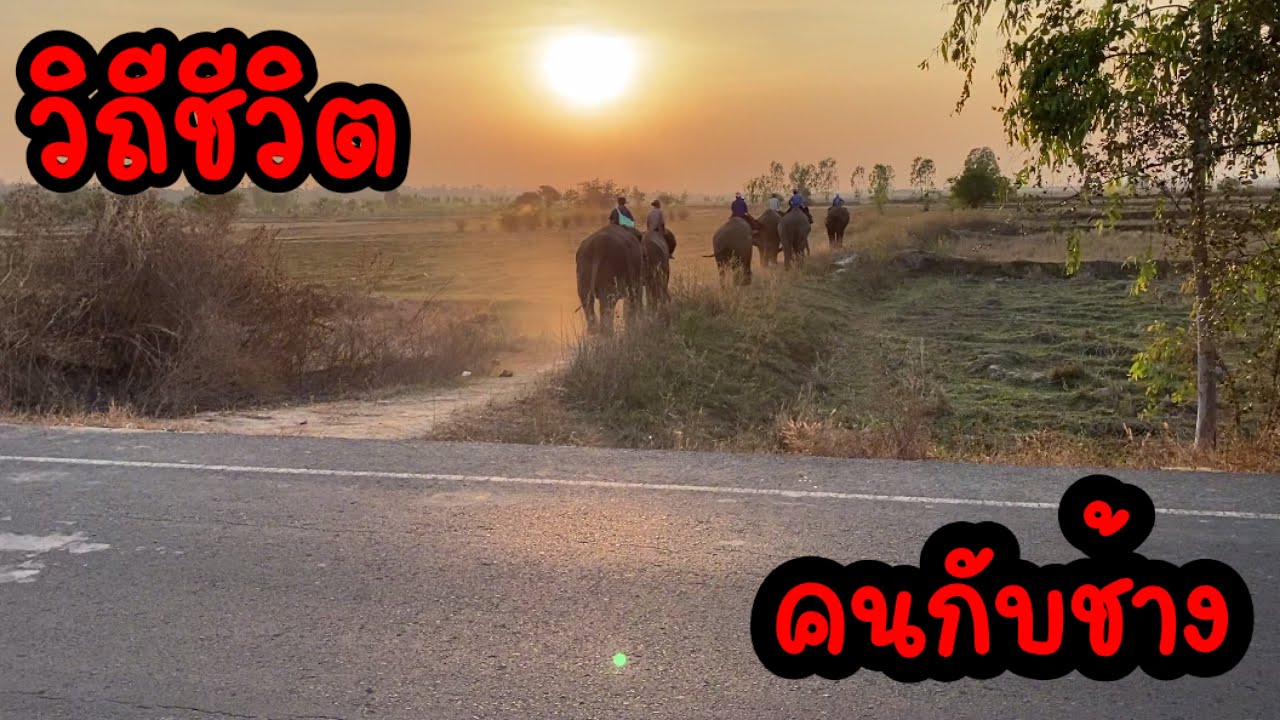
 Click to Access the Navigation Map GPS
Wang Thalu Map
Recommend

 Art, Culture and Heritage
 Historical Sites and Monuments(11)
 Landmarks and Memorials(2)
 Art, Craft Centres, Tradition(5)
 Museums(1)
 Places of Worship
 Temple(15)
 Other Sacred Sites(1)
 Suburban Living
 Village, Community(9)
 Local Market(1)
 National Parks and Marine Reserves(2)
 Mountain (Doi)(2)
 Dam, Reservoir, Lake(6)
 Waterfalls(1)
 River, Canal(2)
Other natural attractions(4)
River, Canal(2)
Other natural attractions(4)
 Entertainment and Agricultural
 Farms, Parks and Ecotourism(2)


