
lovethailand home >Northeastern Travel Attractions >Surin Travel Attractions >Muang Surin >Nai Muang > Wat Sala Loi
TL;DR: Wat Sala Loi is located at 490 Lak Mueang Road, Nai Mueang Subdistrict, Mueang Surin District, Surin Province 32000, open Daily, hours 08.00 – 17.00.
Wat Sala Loi
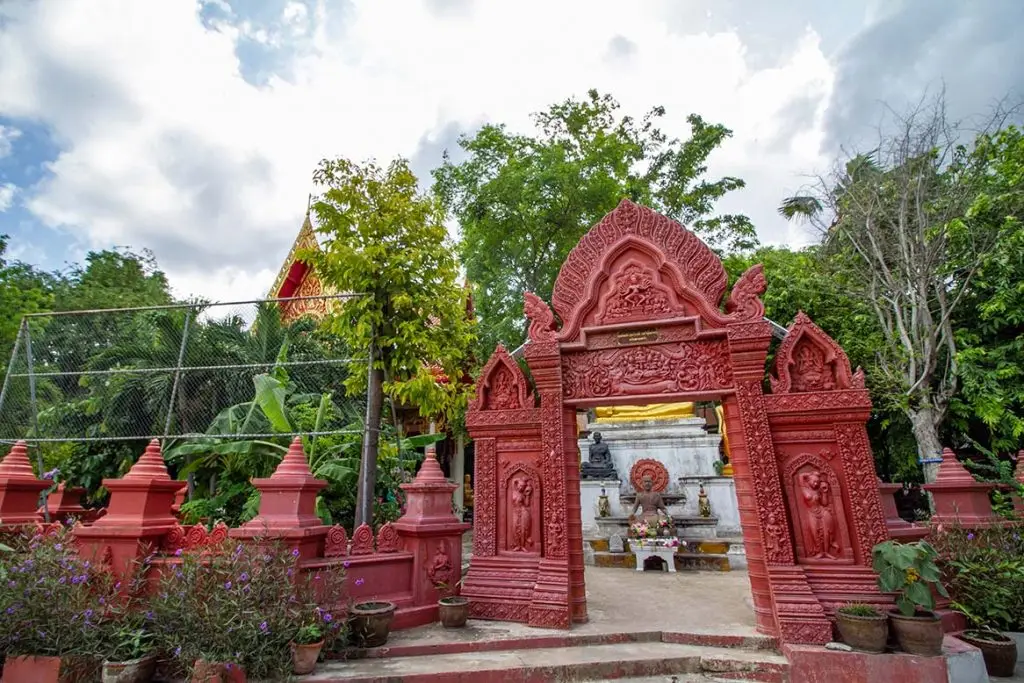
Open Days: Daily
Opening Hours: 08.00 – 17.00
Wat Sala Loi Surin is an important royal temple in the city of Surin. Located at 490 Lak Mueang Road, Nai Mueang Subdistrict, Mueang Surin District, Surin Province, the temple is deeply connected with Buddhist practice, monastic education, provincial religious ceremonies, and the daily spiritual life of local people. It is one of the key temples for visitors who want to understand Surin not only through elephants, silk, and Khmer heritage, but also through the living Buddhist culture of the city.
Wat Sala Loi is more than a temple for occasional worship. It is a functioning Buddhist institution with a long history, a royal temple status, an educational role, and a strong connection to the Sangha administration of Surin Province. The temple is known for its monastic education, its role as a provincial meditation practice center, and its ability to serve the community through religious ceremonies, merit-making, Dhamma learning, and public Buddhist activities.
The temple is situated in the old urban area of Surin, within the eastern side of the outer city wall. Its land covers 12 rai, 3 ngan, and 83 square wah. The temple’s northern boundary connects with Wiphat Anuson Road, its eastern side with Thetsaban 4 Road, and its western side with Thetsaban 2 Road. This location reflects the close relationship between the temple and the city. Schools, local communities, public institutions, markets, and important urban routes surround the temple, making it an active part of everyday city life.
The area around Wat Sala Loi is historically associated with the old local landscape of Surin. In local memory, land to the east of the temple was connected with the area known in Khmer-influenced local language as “Wiang Weng,” meaning a long field. This surrounding landscape once formed part of the agricultural and residential zones of Surin. Today, the changing cityscape around the temple still preserves traces of old Surin through roads, schools, public buildings, and community names.
Wat Sala Loi was formally established in 1899. It received its royal boundary for the ordination hall in 1936, with the designated area measuring 20 meters wide and 40 meters long. The temple was later recognized as a model development temple by the Department of Religious Affairs in 1989 and as an outstanding model development temple in 1990. On 10 July 1990, Wat Sala Loi was graciously elevated to the status of a third-class royal temple of ordinary type. This status confirms the temple’s importance in both local Buddhist life and the official religious landscape of Surin.
The name “Sala Loi” is distinctive and well known among the people of Surin. Although the full historical explanation of the name is not completely recorded in every detail, the name has long appeared in temple records, local cultural sources, and the memory of the city. For local residents, Wat Sala Loi is recognized as a royal temple with major roles in religious education, ceremonies, meditation practice, and the spiritual identity of the old city area.
The main sacred image of the temple is Phra Phuttha Chin Ban Chon, an important Buddha image enshrined within the temple compound. Worshippers come to pay respect, make merit, offer candles and flowers, listen to sermons, and take part in Buddhist activities. The image functions as a spiritual center for those who visit the temple, especially during Buddhist holy days and major religious occasions when local people gather for merit-making and chanting.
The temple structures show the role of Wat Sala Loi as a large and active urban temple. The ordination hall measures 6 meters wide and 18 meters long. The sermon hall measures 16 meters wide and 32 meters long and was built in 1992. The temple also includes 10 monks’ residences, a multipurpose hall measuring 18 meters wide and 26 meters long, and 2 funeral halls. These buildings allow the temple to support ordinations, chanting, funerary rites, public ceremonies, Dhamma learning, meditation activities, and community merit-making.
Wat Sala Loi has a distinguished role in Buddhist education. Its Dhamma school was opened in 1947, the Pali study section in 1949, the general Buddhist monastic education section in 1981, the Sunday Buddhist study center in 1980, and the early childhood center in the temple in 1990. This sequence shows that the temple has served as a place of learning for monks, novices, children, youth, and the wider community for many decades.
The temple’s educational role is one of its strongest identities. Local sources have long associated Wat Sala Loi with Buddhist learning and monastic education in Surin. At the same time, the current official information of Mahachulalongkornrajavidyalaya University, Surin Campus, lists its main present campus at 305 Ban Khok Phra Phoe, Moo 8, Huai Saneng area, Nok Mueang Subdistrict, Mueang Surin District. Therefore, Wat Sala Loi is best understood today as a historic royal temple and major monastic education center, while the official main campus of MCU Surin is now located separately outside the city center.
Wat Sala Loi is also registered as the first provincial meditation practice center of Surin according to a resolution of the Sangha Supreme Council on 21 April 2008. This role makes the temple important not only for study and ceremony, but also for mental cultivation and Buddhist practice. Its location in the city allows local residents, students, government officers, and travelers to access a calm religious space without leaving the urban area.
The list of past abbots recorded in the temple history reflects the continuity of monastic leadership at Wat Sala Loi. Earlier abbots include Phra Yung, Phra Khema, Phra Mi, Phra Khru Thammathat Wimon, Phra Khru Wiphatcha Kalyanatham, Phra Maha Suraphong Temiyo, and Phra Ratchawisutthi Methee. In the present period, the latest verified information identifies Phra Khru Palat Suwat Udomkhun (Bunchop Punnasadaro) as Acting Abbot of Wat Sala Loi Royal Temple and an important monastic figure in Surin Province.
As a royal temple, Wat Sala Loi plays an important role in provincial Buddhist ceremonies. It is used for chanting ceremonies, merit-making, public Buddhist events, ceremonies connected with national occasions, and funerary rites involving the provincial Sangha. The temple therefore functions at 2 levels at once: it is a neighborhood temple for daily religious life and a provincial temple for formal Buddhist and public ceremonies.
The main areas inside the temple include the ordination hall, the area where Phra Phuttha Chin Ban Chon is enshrined, the sermon hall, the multipurpose hall, the funeral halls, the monks’ residences, and the religious education areas. Together, these zones support monastic rituals, public worship, Dhamma teaching, educational programs, community merit-making, and meditation practice. This makes Wat Sala Loi a complete temple environment rather than a small sightseeing stop.
The ordination hall is the ceremonial heart of the temple. It is used for important monastic acts, ordinations, and Sangha ceremonies. Visitors should enter this area respectfully, keep their voices low, avoid disturbing ceremonies, and take photographs only in a proper manner. Even though the temple is open to visitors, it remains an active sacred place for monks and lay Buddhists.
The sermon hall is an important gathering space for laypeople. It hosts Dhamma talks, merit-making, meetings, funerary rites, and religious activities involving the local community. Many families in Surin have used the temple for important life events, from ordinary merit-making to memorial ceremonies. In this way, Wat Sala Loi remains directly connected with the emotional and social life of local residents.
The multipurpose hall and funeral halls show the temple’s role as a place of community support. Temples in Thailand often serve people at all stages of life, including times of joy, grief, remembrance, and spiritual reflection. Wat Sala Loi continues this role by providing spaces for ceremonies, chanting, and merit-making that bring monks and laypeople together.
The monks’ residences and monastic area are used by monks and novices for daily life, study, and religious duties. Visitors should clearly distinguish between public areas and private monastic areas. Entering monks’ residential zones without permission, taking intrusive photographs, or making noise is inappropriate. Respect for boundaries helps preserve the dignity and calm of the temple.
The Buddhist education role of Wat Sala Loi deserves special attention. Its Dhamma and Pali education helped create generations of monks and novices with knowledge of Buddhist doctrine, Vinaya discipline, and scriptural study. Its Sunday Buddhist study center and early childhood center also show the temple’s role in serving the wider public. This educational foundation makes Wat Sala Loi one of the significant religious learning spaces in Surin.
Wat Sala Loi is also connected with the provincial Sangha administration. Several monks associated with the temple have held important religious positions in Surin. This gives the temple a wider significance beyond its immediate neighborhood. It has helped support Buddhist education, religious dissemination, meditation practice, ceremonies, and coordination between the Sangha and government agencies in the province.
A meaningful visit to Wat Sala Loi usually begins with paying respect to the main Buddha image, making merit, and spending time quietly in the temple compound. Visitors may offer flowers, candles, incense, or Sangha Dana according to their faith. On Buddhist holy days, the atmosphere becomes more active as local people come to make merit, listen to Dhamma, and join chanting. Those interested in meditation or study activities should contact the temple or relevant local Buddhist authorities for current schedules.
Wat Sala Loi is suitable for many types of visitors: Buddhist pilgrims, cultural travelers, students, researchers, people interested in royal temples, and international visitors who want to understand Buddhist life in lower northeastern Thailand. The temple is easy to reach because it is located in Surin city, near Surin City Pillar Shrine, Wat Burapharam, the Phraya Surin Phakdi Si Narong Changwang Monument, hotels, restaurants, and important city routes.
Getting There to Wat Sala Loi is convenient from anywhere in Surin city. From Surin Railway Station, Surin City Pillar Shrine, or the central city area, visitors can reach the temple by private car, local hired vehicle, three-wheeled transport, or motorcycle taxi. The temple is located in Nai Mueang Subdistrict near Lak Mueang Road and connects easily with the city’s old community area, schools, and public offices.
Travelers using private cars should allow extra time on Buddhist holy days, major Buddhist festivals, or days when the temple hosts ceremonies, because the temple is located in a busy central area. Morning visits are especially suitable for worship and quiet viewing. Afternoon visits can be combined with nearby places such as Surin City Pillar Shrine, Wat Burapharam, and Surin National Museum.
There is no admission fee to enter Wat Sala Loi. Visitors may enter the temple to pay respect, make merit, and visit important areas during opening hours. It is useful to carry small cash for voluntary donations, flowers, candles, or merit-making. Donations should be made through proper temple donation points to keep the visit orderly and respectful.
Proper temple etiquette is important. Visitors should dress modestly, keep their shoulders covered, wear appropriate trousers or skirts, speak quietly, avoid touching sacred objects without permission, remove shoes before entering religious buildings, and avoid entering monastic areas. International visitors should learn basic Thai temple manners before visiting so that their experience is respectful to both monks and local worshippers.
Wat Sala Loi can be included in a city cultural route. A good route may begin at Wat Sala Loi, continue to Surin City Pillar Shrine, Wat Burapharam, and the Phraya Surin Phakdi Si Narong Changwang Monument, then extend to Surin National Museum, Huai Saneng Reservoir, or Ban Tha Sawang Silk Weaving Village. This route allows visitors to see Buddhism, city history, provincial symbols, and local cultural heritage in one trip.
For local people, Wat Sala Loi has long been connected with everyday religious life. People come for merit-making, Buddhist holy days, Dhamma listening, funerary rites, family ceremonies, youth Buddhist learning, and moments when they need peace of mind. The temple serves as a sacred place, a learning place, a meditation place, and a community space at the same time.
For international travelers, Wat Sala Loi opens another window into Surin. The province is famous for elephants, silk, and Khmer ruins, but this temple shows the living Buddhist structure of the city: royal temple status, monastic education, meditation practice, Sangha administration, and community faith. A visit helps foreign readers and travelers understand that Surin’s cultural identity is not limited to heritage sites, but continues in the daily religious practices of its people.
Wat Sala Loi Surin is therefore an important destination for anyone who wants to understand Surin city in depth. It combines age, royal temple status, monastic education, meditation practice, community ceremonies, and local devotion in one place. Visitors can pay respect, make merit, learn the history of the temple, and experience the calm atmosphere of a royal temple that continues to serve Surin’s Buddhist community today.
The charm of Wat Sala Loi lies in its balance between city life and sacred calm. Outside the temple are roads, schools, communities, hotels, and restaurants. Inside the temple are Buddhist images, monks, sermon halls, meditation spaces, and the quiet rhythm of worship. This contrast makes Wat Sala Loi a special spiritual space in Surin city: a place where visitors can pause, reflect, and reconnect with the religious and cultural roots of the province.
| Name | Wat Sala Loi Surin / Wat Sala Loi Royal Temple |
| Location | 490 Lak Mueang Road, Nai Mueang Subdistrict, Mueang Surin District, Surin Province 32000 |
| Address | Wat Sala Loi Royal Temple, 490 Lak Mueang Road, Nai Mueang Subdistrict, Mueang Surin District, Surin Province 32000 |
| Highlights | A third-class royal temple, Phra Phuttha Chin Ban Chon, monastic education, the first provincial meditation practice center of Surin, and an important Buddhist temple in the old city area |
| History | Established in 1899, received its royal boundary in 1936, recognized as a model development temple in 1989, recognized as an outstanding model development temple in 1990, and elevated to a third-class royal temple of ordinary type on 10 July 1990 |
| Name Origin | “Sala Loi” is the long-recognized name of this old Surin city temple, known locally as an important royal temple for worship, Buddhist education, and community religious life |
| Distinctive Features | A Mahā Nikāya royal temple covering 12 rai, 3 ngan, and 83 square wah, with Phra Phuttha Chin Ban Chon as an important Buddha image and full facilities for worship, monastic education, and meditation practice |
| Travel Information | From Surin Railway Station, Surin City Pillar Shrine, or the central city area, visitors can reach the temple by private car, hired local vehicle, three-wheeled transport, or motorcycle taxi |
| Current Status | Open for worship, merit-making, and religious activities. It is a royal temple and the first provincial meditation practice center of Surin |
| Open Days | Daily |
| Opening Hours | 08.00 – 17.00 |
| Fees | No Admission Fee |
| Facilities | Ordination hall, sermon hall, monks’ residences, multipurpose hall, funeral halls, merit-making area, meditation practice area, toilets, and parking according to available city temple space |
| Main Areas / Zones | 1. Ordination Hall, 6 Meters Wide And 18 Meters Long 2. Sermon Hall, 16 Meters Wide And 32 Meters Long, Built In 1992 3. Phra Phuttha Chin Ban Chon Worship Area 4. Multipurpose Hall, 18 Meters Wide And 26 Meters Long 5. Two Funeral Halls 6. Ten Monks’ Residences 7. Monastic Education Area 8. Provincial Meditation Practice Center Area |
| Important Rituals / Traditions | Merit-making on Buddhist holy days, Dhamma listening, Sangha Dana offering, candlelight processions on major Buddhist days, chanting ceremonies, funerary merit-making, and meditation activities of the Surin Sangha |
| Abbot / Caretaker | Phra Khru Palat Suwat Udomkhun (Bunchop Punnasadaro), Acting Abbot of Wat Sala Loi Royal Temple; the temple belongs to the Mahā Nikāya order and is under local Sangha and Surin Provincial Office of Buddhism supervision |
| Information Contact Number | Surin Provincial Office of Buddhism, Tel. 044-514-607 to 8 |
| Official Information Source | Surin Provincial Office of Buddhism: https://srn.onab.go.th |
| Nearby Tourist Attractions | 1. Surin City Pillar Shrine, about 1 km 2. Wat Burapharam Royal Temple, about 1 km 3. Phraya Surin Phakdi Si Narong Changwang Monument, about 2 km 4. Surin National Museum, about 7 km, Tel. 044-513-272, 044-513-274 5. Huai Saneng Reservoir, about 8 km 6. Ban Tha Sawang Silk Weaving Village, about 17 km |
| Nearby Restaurants | 1. Tao Bin Surin Changwang Monument Branch, about 2 km, Tel. 097-964-5588, 062-224-8283 2. Sawasdee Surin, about 2 km, Tel. 085-637-7707 3. Seoul Bar - Cafe & Bistro Surin, about 2 km, Tel. 080-959-7942 4. Mozern Restaurant Surin, about 4 km, Tel. 084-995-6492 5. Chertom Surin, about 4 km, Tel. 098-997-7916 |
| Nearby Accommodations | 1. The Wood Surin, about 1 km, Tel. 063-023-7999 2. KT Knight Hotel, about 1 km, Tel. 093-454-7007 3. Thong Tarin Hotel, about 1 km, Tel. 044-514-281, 085-300-8858 4. Maneerote Hotel Surin, about 2 km, Tel. 044-514-569 5. The Gun Hotel, about 2 km, Tel. 088-123-0456 6. HOP INN Surin, about 2 km, Tel. 02-080-2222 |
Frequently Asked Questions (FAQ)
Q: Where Is Wat Sala Loi Surin Located?
A: Wat Sala Loi is located at 490 Lak Mueang Road, Nai Mueang Subdistrict, Mueang Surin District, Surin Province 32000, in the central city area of Surin.
Q: When Is Wat Sala Loi Open?
A: Wat Sala Loi is open daily from 08.00 to 17.00.
Q: Is There An Admission Fee?
A: No. Wat Sala Loi has no admission fee. Visitors may enter to worship, make merit, and visit important areas during opening hours.
Q: Why Is Wat Sala Loi Important?
A: Wat Sala Loi is a third-class royal temple, an old city temple of Surin, home to Phra Phuttha Chin Ban Chon, a long-standing center of monastic education, and the first provincial meditation practice center of Surin.
Q: Who Currently Oversees Wat Sala Loi?
A: Phra Khru Palat Suwat Udomkhun (Bunchop Punnasadaro) is the Acting Abbot of Wat Sala Loi Royal Temple.
Q: How Is Wat Sala Loi Connected With Buddhist Education?
A: The temple has long supported Dhamma study, Pali study, general monastic education, Sunday Buddhist education, and early childhood learning within the temple, making it an important Buddhist education center in Surin.
Q: What Nearby Places Can Be Visited With Wat Sala Loi?
A: Nearby places include Surin City Pillar Shrine, Wat Burapharam, Phraya Surin Phakdi Si Narong Changwang Monument, Surin National Museum, Huai Saneng Reservoir, and Ban Tha Sawang Silk Weaving Village.
Q: What Should Visitors Wear To Wat Sala Loi?
A: Visitors should dress modestly, keep shoulders covered, wear appropriate trousers or skirts, speak quietly, remove shoes before entering religious buildings, and follow temple etiquette.
 Category: ●Places of Worship
 Group: ●Temple
Last Update : 2 MonthAgo
 Last Update : 2 MonthAgo
 Click to Access the Navigation Map GPS
Wat Sala Loi Map
Recommend

 Art, Culture and Heritage
 Historical Sites and Monuments(11)
 Landmarks and Memorials(2)
 Art, Craft Centres, Tradition(5)
 Museums(1)
Temple(15)
Museums(1)
Temple(15)
 Other Sacred Sites(1)
 Suburban Living
 Village, Community(9)
 Local Market(1)
 Nature and Wildlife
 National Parks and Marine Reserves(2)
 Mountain (Doi)(2)
 Dam, Reservoir, Lake(6)
 Waterfalls(1)
 River, Canal(2)
 Other natural attractions(4)
 Entertainment and Agricultural
 Farms, Parks and Ecotourism(2)


