
lovethailand home >Northeastern Travel Attractions >Surin Travel Attractions >Lam Duon >Chok Nuea > Surin Two-Needle Pine Conservation Area
TL;DR: Surin Two-Needle Pine Conservation Area is located at Ban Nong Khu, Chok Nuea Subdistrict, Lamduan District, Surin Province, with a related research station area in Thap Than Subdistrict, open Daily, hours 08.30 – 16.30.

Surin Two-Needle Pine Conservation Area
Open Days: Daily
Opening Hours: 08.30 – 16.30
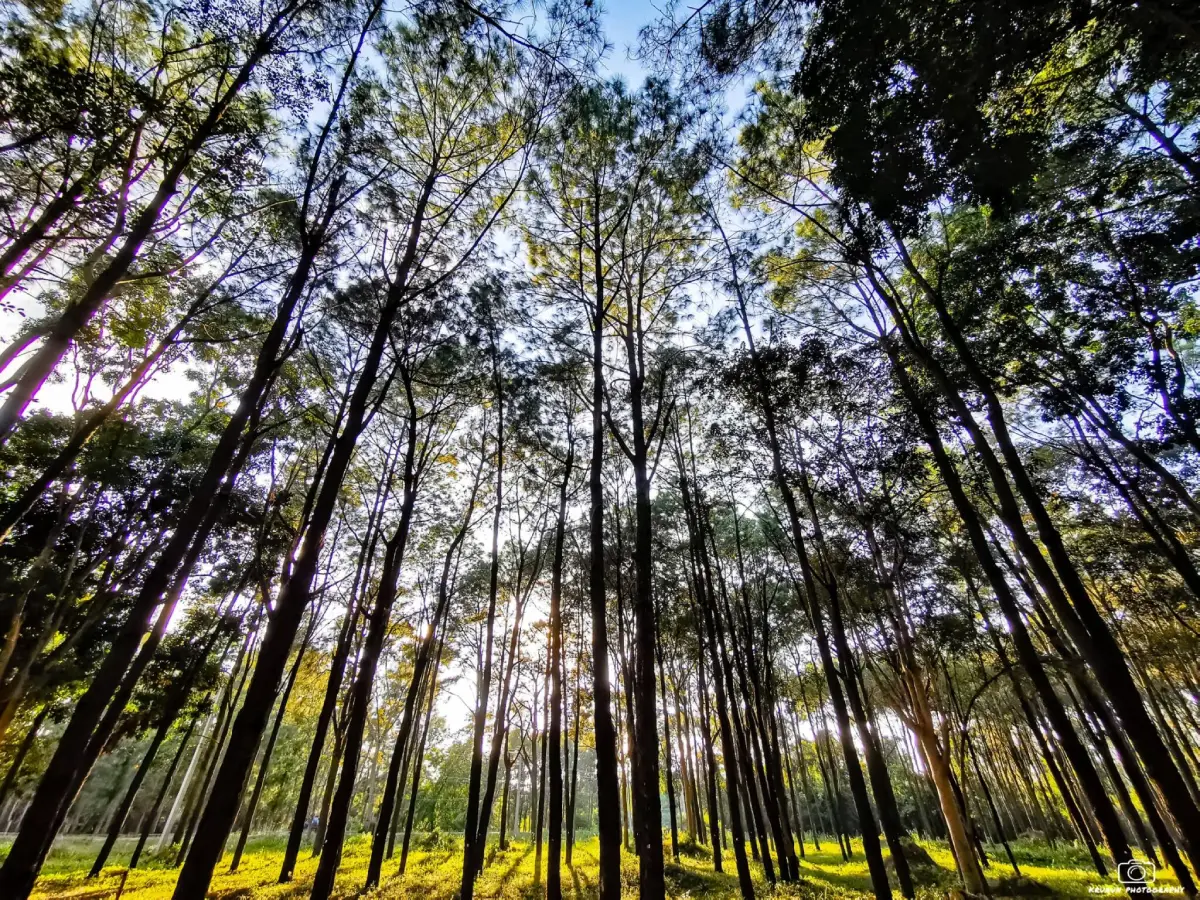
Surin Two-Needle Pine Conservation Area, also known locally as the Nong Khu pine forest and connected with Nong Khu Silvicultural Research Station, is one of the most distinctive nature-based attractions in Surin Province. Its main identity is a rare stand of two-needle pine growing on flat land, a landscape that differs from the common image of pine forests usually associated with mountains or high elevations. This makes the site important not only as a quiet recreational area but also as a living natural classroom for forest conservation, pine genetics, and the ecology of Thailand’s lower northeastern region.
The conservation area is located around Ban Nong Khu in Chok Nuea Subdistrict, Lamduan District, Surin Province, and is linked with Nong Khu Silvicultural Research Station in the nearby Thap Than area of Sangkha District. It lies along the Surin – Sangkha route, Highway 2077, about 35 km from downtown Surin. The landscape is defined by two-needle pine trees growing together with dry dipterocarp forest on lowland terrain. The result is a peaceful, open, and visually unusual forest setting that works well for slow walks, nature study, photography, and a quiet break from the city.
The area commonly known as the two-needle pine conservation site covers around 625 rai in the original tourism description and forms part of the wider forest research and conservation context of Nong Khu. Its importance lies in the quality and uniqueness of the two-needle pine population. The site is also associated with Thai – Danish cooperation in forest tree improvement and conservation, which gives it a stronger scientific meaning than an ordinary forest recreation area. For travelers who want to understand Surin beyond temples, silk, elephants, and Khmer ruins, this forest offers another side of the province.
Two-needle pine, scientifically known as Pinus merkusii, is a tropical pine species with long slender needles arranged in pairs. The tree normally has a straight trunk, dark brown to blackish bark, and resin in the cracks of the bark. In Thailand, two-needle pine is often associated with higher and drier terrain, but the Nong Khu pine forest is especially valuable because it demonstrates how this pine species can grow in a lowland environment. This makes the area important for studying adaptation, distribution, growth, and genetic traits of pine trees under different environmental conditions.
Upon entering the area, visitors immediately notice the atmosphere of an open forest rather than a dense tropical jungle. The wind moving through the pine crowns, the scent of dry leaves, the filtered sunlight, and the texture of the forest floor create a simple but memorable experience. The rows and clusters of pine trees are especially attractive in the morning and late afternoon, when the light is soft and the shadows stretch across the ground. The site is suitable for travelers who prefer calm nature rather than crowded attractions.
In addition to the two-needle pine trees, the surrounding forest includes native dry dipterocarp species typical of southern Isan. Trees such as teng, rang, hiang, phluang, phayom, krabok, krabak, and other drought-tolerant local species appear in and around the forest. This combination of pine and dry dipterocarp vegetation gives the site ecological diversity and makes it useful for learning about lowland dry forests, seasonal forest systems, and plant adaptation in northeastern Thailand.
The wildlife found around Nong Khu pine forest is mostly small and well suited to the open woodland environment. Squirrels, flying squirrels, wild rabbits, doves, coucals, mynas, Asian koels, butterflies, and other small animals can be seen in the area depending on season and time of day. Visitors who walk quietly in the morning have a better chance of noticing birds and small wildlife. This is not a dramatic wilderness trekking destination, but it is a meaningful site for observing a gentle forest ecosystem close to rural communities.
The name Nong Khu is connected with local settlement and the lowland environment of the area, where ponds, wet patches, agricultural land, and forest have long existed together. The pine forest is therefore not separate from community life. It is linked with local people, forest products, conservation work, and everyday awareness of natural resources. In the past, forests in this region supported rural communities through firewood, edible plants, mushrooms, bamboo shoots, herbs, and seasonal forest products. Today, the key role of the site is conservation, research, education, and nature-based recreation.
Nong Khu Silvicultural Research Station serves as a field unit for forest research and conservation. Its work relates to silviculture, forest tree improvement, conservation of genetic resources, and public knowledge about forest ecosystems. Because of this, visitors should approach the area as a learning site rather than a commercial tourist garden. The forest is valuable because it preserves a rare lowland pine landscape while also supporting research and community awareness about native tree species.
One of the strengths of the area is its natural and understated atmosphere. It is quiet, open, and not heavily built up. Travelers who enjoy simple nature will appreciate the texture of the forest, the straight lines of pine trunks, the contrast between pine needles and dry dipterocarp leaves, and the spacious feeling of the lowland woodland. The destination is suitable for families, students, nature photographers, casual visitors, and anyone interested in the ecology of southern Isan.
The best time to visit is in the morning or late afternoon, when the temperature is more comfortable and the light is suitable for photography. The cool season is the easiest period for walking. During the rainy season, the area becomes greener and fresher, although some lowland sections may be damp or muddy. The hot season reveals the dry and open character of the forest clearly, but visitors should bring drinking water and avoid walking during the hottest part of the day.
Recommended activities include walking along the nature route, observing the pine trees, studying the differences between pine and dry dipterocarp species, taking photographs, listening to birds, and spending time quietly in the forest. Loud activities, littering, collecting plants, picking mushrooms, or removing natural materials from the area should be avoided. This is a conservation and research area, and respectful behavior helps preserve the forest for future visitors.
For photography, the conservation area offers several attractive perspectives: tall pine trunks rising from flat ground, pine needles scattered on the forest floor, filtered sunlight through the canopy, and simple walking scenes through open woodland. Unlike mountain pine forests, Nong Khu has the distinctive background of the Isan lowlands. This gives photographs a calm rural quality and makes the site visually different from many other pine destinations in Thailand.
From an educational perspective, this forest is useful for explaining gymnosperms, tropical pines, lowland dry forest, plant adaptation, and the relationship between forests and rural communities. Two-needle pine does not reproduce through flowers in the same way as flowering plants; it produces cones and naked seeds. Seeing this plant in an actual forest setting helps students and visitors understand that Thailand’s forests are highly diverse and include specialized ecosystems beyond evergreen forests and mountain landscapes.
The Ban Nong Khu and Lamduan area also works well as a stop along the Surin – Sangkha route. Travelers driving from Surin city can visit the pine forest as a quiet nature stop, continue for lunch in Lamduan District, and then either travel onward toward Sangkha or return to Surin city for cultural attractions. This makes the site practical for a one-day route combining nature, local food, rural scenery, and urban accommodation.
Getting There is most convenient by private car or hired local transport. From downtown Surin, take Highway 2077 on the Surin – Sangkha route toward Lamduan District. The distance is about 35 km. The site is around Ban Nong Khu, Chok Nuea Subdistrict, Lamduan District, and is associated with Nong Khu Silvicultural Research Station in the nearby area. Travelers without a private vehicle should arrange local transport from Surin city in advance, as public transport may not provide direct and flexible access to the forest entrance.
Upon arrival, visitors should park only in appropriate areas and avoid driving into forest or research zones without permission. Comfortable walking shoes, sun protection, drinking water, and light clothing are recommended. Visitors should not remove plants, cones, mushrooms, bark, or any natural materials from the forest. These simple practices help protect a rare conservation site and maintain the quality of the experience for future travelers.
A good visit usually takes 1 – 2 hours. This allows enough time to walk through the pine area, take photographs, observe the forest structure, and understand why the place is important. Afterward, travelers can eat in Lamduan District or return to Surin city to visit Surin National Museum, Wat Burapharam, Surin City Pillar Shrine, or the city center. This route gives travelers a balanced experience of nature, local culture, and provincial life.
Surin Two-Needle Pine Conservation Area deserves attention because it brings together rare tree genetics, local forest ecology, field research, rural community context, and a peaceful natural landscape. It is not a large entertainment-style attraction; its value lies in quiet observation, scientific importance, and the unusual beauty of lowland pine forest. For travelers looking for a deeper and more natural view of Surin Province, Nong Khu pine forest is one of the most distinctive places to include in the itinerary.
For international visitors, this site offers a meaningful opportunity to see a lesser-known side of Thailand’s biodiversity. Surin is often associated with elephants, silk, Khmer cultural heritage, and annual festivals, but the Nong Khu pine forest shows that the province also contains valuable natural landscapes. A visit here helps travelers understand that northeastern Thailand has specialized forest ecosystems that are quiet, scientifically important, and closely connected with local communities.
| Name | Surin Two-Needle Pine Conservation Area / Nong Khu Silvicultural Research Station |
| Location | Ban Nong Khu, Chok Nuea Subdistrict, Lamduan District, Surin Province, with a related research station area in Thap Than Subdistrict, Sangkha District, Surin Province |
| Address | Ban Nong Khu, Chok Nuea Subdistrict, Lamduan District, Surin 32220, Thailand |
| Highlights | Lowland two-needle pine forest, pine conservation and research area, nature study route, peaceful open woodland, and a local recreation site of Surin Province |
| History | An important conservation and research area for two-needle pine, associated with Thai – Danish cooperation in pine improvement and forest tree conservation |
| Name Origin | The name Nong Khu is connected with the local Ban Nong Khu community and the lowland environment of ponds, wetland areas, and pine forest. |
| Distinctive Features | Two-needle pine growing on flat land mixed with dry dipterocarp forest and native southern Isan trees such as teng, rang, hiang, phluang, phayom, krabok, and krabak |
| Travel Information | From downtown Surin, take Highway 2077 on the Surin – Sangkha route toward Lamduan District. The distance is about 35 km. Private car or hired local transport is the most convenient option. |
| Current Status | Open to visitors and remains an active conservation, research, and nature recreation area in Surin Province |
| Open Days | Daily |
| Opening Hours | 08.30 – 16.30 |
| Facilities | Entrance area, parking space, walking and nature study route, rest area, and forest tree learning area |
| Main Areas / Zones | 1. Two-Needle Pine Zone 2. Dry Dipterocarp Forest Zone 3. Nature Study Route 4. Forest Research And Conservation Area 5. Nature Rest And Photography Area 6. Ban Nong Khu Community And Nearby Local Market Area |
| Caretaker | Ms. Sunisa Sriwiraphan, Forestry Technical Officer, Acting Head Of Nong Khu Silvicultural Research Station |
| Main Contact Number | 089-3091674 |
| Nearby Tourist Attractions | 1. Prasat Tapiang Tia, Lamduan District, about 12 km 2. Ban Lamduan Chedi, or Prasat Yai Gram, about 14 km 3. Lamduan District Community Area, about 14 km 4. Phanom Sawai Forest Park, about 30 km 5. Surin National Museum, about 34 km 6. Surin City Pillar Shrine And Downtown Surin, about 36 km |
| Nearby Restaurants | 1. Mub Phochana Lamduan, about 14 km, Tel. 086-8667869 2. Im Aroi Buffet Khao Kaeng And A La Carte, about 14 km, Tel. 096-8670047 3. 9th Corner Coffee&Drink Lamduan, about 15 km, Tel. 098-5985919 4. BIG BITE Restaurant, Thong Tarin Hotel, about 36 km, Tel. 088-1032383 5. MAPLE Restaurant, Thong Tarin Hotel, about 36 km, Tel. 083-4077418 |
| Nearby Accommodations | 1. Thong Tarin Hotel Surin, about 36 km, Tel. 044-514281 ext. 8, 085-3008858 2. Maneerote Hotel Surin, about 35 km, Tel. 044-514569 3. Sorin Boutique Hotel, about 36 km, Tel. 044-060188 4. Slive Hotel Surin, about 37 km, Tel. 044-060322, 044-060323 5. The Gun Hotel Surin, about 36 km, Tel. 088-1230456 |
Frequently Asked Questions (FAQ)
Q: Where is Surin Two-Needle Pine Conservation Area located?
A: It is located around Ban Nong Khu, Chok Nuea Subdistrict, Lamduan District, Surin Province, and is associated with Nong Khu Silvicultural Research Station near Thap Than Subdistrict, Sangkha District, along the Surin – Sangkha route.
Q: What are the opening hours?
A: The area is open daily from 08.30 to 16.30.
Q: What makes this conservation area special?
A: Its main highlight is a lowland stand of two-needle pine growing together with dry dipterocarp forest, making it an important conservation and research site in Surin Province.
Q: How do travelers get there from Surin city?
A: Take Highway 2077 on the Surin – Sangkha route toward Lamduan District. The distance from downtown Surin is about 35 km, and private car or hired local transport is the most convenient option.
Q: Who is this place suitable for?
A: It is suitable for nature lovers, families, students, photographers, and travelers interested in forest ecology, native trees, and the lowland landscapes of southern Isan.
Q: What is the best time to visit?
A: Morning and late afternoon are the best times because the weather is more comfortable and the light is good for photography. The cool season is the most pleasant period for walking.
Q: Are there restaurants and hotels nearby?
A: Restaurants are available in Lamduan District and Surin city. Most hotels are located in downtown Surin, about 35 – 37 km from the conservation area.
Q: What nearby attractions can be combined with this trip?
A: Travelers can continue to Prasat Tapiang Tia, Ban Lamduan Chedi, Phanom Sawai Forest Park, Surin National Museum, Surin City Pillar Shrine, and downtown Surin.
 Category: ●Nature and Wildlife
 Group: ●National Parks and Marine Reserves
Last Update : 2 MonthAgo
 Last Update : 2 MonthAgo
 Click to Access the Navigation Map GPS
Surin Two-Needle Pine Conservation Area Map
Recommend

 Art, Culture and Heritage
 Historical Sites and Monuments(11)
 Landmarks and Memorials(2)
 Art, Craft Centres, Tradition(5)
 Museums(1)
 Places of Worship
 Temple(15)
 Other Sacred Sites(1)
 Suburban Living
 Village, Community(9)
 Local Market(1)
National Parks and Marine Reserves(2)
Local Market(1)
National Parks and Marine Reserves(2)
 Mountain (Doi)(2)
 Dam, Reservoir, Lake(6)
 Waterfalls(1)
 River, Canal(2)
 Other natural attractions(4)
 Entertainment and Agricultural
 Farms, Parks and Ecotourism(2)


