
lovethailand home >Northeastern Travel Attractions >Surin Travel Attractions >Muang Surin >Nai Muang > Phraya Surin Phakdi Si Narong Changwang (Pum) Monu..
TL;DR: Phraya Surin Phakdi Si Narong Changwang (Pum) Monument is located at Nai Mueang Subdistrict, Mueang Surin District, Surin Province, open Daily, hours 24 Hours.
Phraya Surin Phakdi Si Narong Changwang (Pum) Monument
Open Days: Daily
Opening Hours: 24 Hours
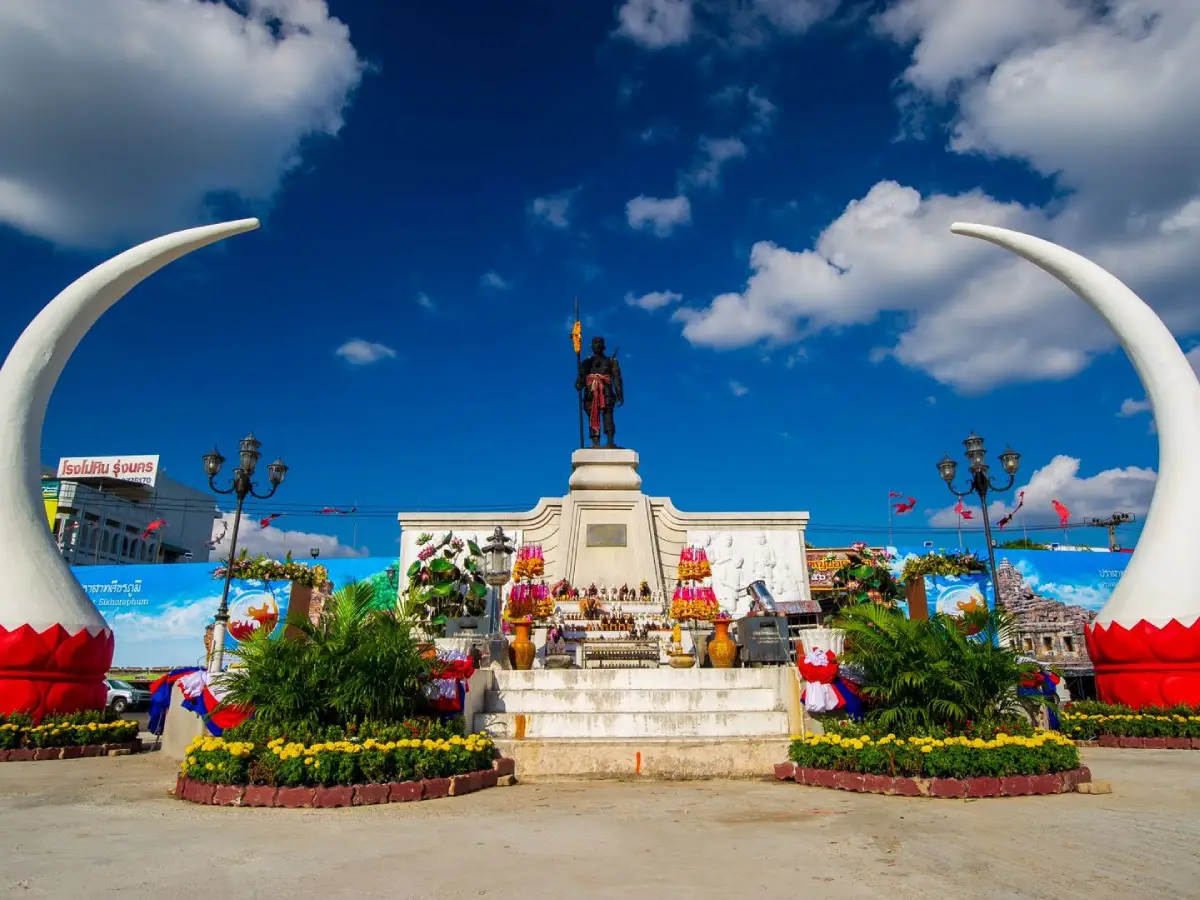
The Phraya Surin Phakdi Si Narong Changwang (Pum) Monument is one of the most important landmarks in Surin Province. It was built to commemorate the first founder of Surin, a figure of great importance in the province’s local history and civic identity. The monument stands at the southern entrance to Surin city, in Nai Mueang Subdistrict, Mueang Surin District, on the Krung Si Nok Road and Surin-Prasat route. This area is historically associated with the inner city wall of old Surin. The dark-bronze brass statue is 2.2 metres high. The right hand holds an elephant goad, while a pair of swords is carried across the back. These features present the image of a leader, warrior, elephant handler, and founder whose legacy remains central to the spirit of Surin.
The monument is one of the first major landmarks seen by travelers entering Surin from the south. Its location is not only a traffic landmark, but also a place of historical memory. Standing near the former inner wall area of old Surin, the monument connects the old city with the modern urban landscape. Visitors passing this point are not simply seeing a statue. They are entering a symbolic gateway that reflects the foundation of Surin and the historical consciousness of its people.
Phraya Surin Phakdi Si Narong Changwang, also known as Pum and respectfully remembered by local people as Changwang, is honoured as the founder and first ruler of Surin. His story is tied to leadership, settlement, governance, and the formation of Surin as a structured local community. He represents not only a historical ruler, but also the qualities of courage, responsibility, and the ability to lead people toward a stable civic life. For the people of Surin, his monument is a place where history becomes visible in the heart of the city.
The history of Phraya Surin Phakdi Si Narong Changwang is closely connected with the indigenous communities of Southern Isan, especially groups known for elephant capture, elephant training, and elephant handling. Surin is widely known as a city of elephants, not only because elephants have long been present in the province, but because local communities developed deep knowledge of living and working with them. The elephant goad held in the statue’s right hand is therefore a powerful symbol. It represents mastery in handling war elephants and connects the founder of the city directly with Surin’s elephant heritage.
The statue is cast in brass with a dark-bronze finish and stands 2.2 metres tall. Its upright posture gives a strong impression of dignity, firmness, and readiness to protect the city. The elephant goad in the right hand reflects elephant-handling skill, while the paired swords on the back represent martial courage and readiness for defence. Together, these elements make the monument more than a portrait of one person. It is a sculptural expression of history, warfare, elephant culture, governance, and the founding identity of Surin.
The base and surrounding area of the monument function as a ceremonial and devotional space. Visitors often see garlands, flowers, candles, incense, small elephant figures, and other offerings placed at the base. These offerings show the continuing respect that local people have for Phraya Surin Phakdi Si Narong Changwang as the ancestor of the city. Many residents come to pay respects before important moments in life, such as travel, work, examinations, business, or family events. This daily devotional life keeps the monument closely connected with the living community.
The monument was officially inaugurated on 13 April 1985. This date is meaningful because it falls during Songkran, the Thai New Year period, when many people return to their hometowns. The timing connects the monument with gratitude, remembrance, family reunion, and respect for ancestors. Since then, 13 April has remained an important date for the people of Surin, as public ceremonies are held to honour Phraya Surin Phakdi Si Narong Changwang and his contribution to the founding of the city.
The annual memorial ceremony for Phraya Surin Phakdi Si Narong Changwang and the merit-making ceremony for the land are held at the monument ceremonial area. The event includes Buddhist rites, wreath laying, fresh garland offerings, speeches of tribute, and public activities that express respect for the city founder. These ceremonies show that the monument is not only a photo spot or a road landmark. It is an active civic ritual space where provincial authorities, local government, public agencies, and residents gather in honour of Surin’s historical roots.
The monument carries meaning on several levels. It is a memorial to the founder of the city. It is a sacred place of respect for local people. It is a visual symbol of Surin as a city of elephants. It is also a historic urban marker linking the southern gateway with the old city area. These layers make the Phraya Surin Phakdi Si Narong Changwang Monument more than an ordinary public statue. It is history, faith, identity, and civic memory standing in one place.
The monument is easy to access from many points in Surin town. It is close to Surin Railway Station, Surin City Pillar Shrine, Wat Burapharam, local markets, and central accommodation areas. Travelers beginning their visit in the city can use the monument as a starting point for understanding Surin before continuing to other attractions such as Surin National Museum, Ban Tha Sawang Silk Weaving Village, or Khmer historical sites in other districts. Starting at the monument gives the journey a clear historical context from the beginning.
Surin City Pillar Shrine, located not far from the monument, adds another layer of meaning to the city route. The City Pillar Shrine represents the auspicious spiritual center of Surin, while the Phraya Surin Phakdi Si Narong Changwang Monument represents remembrance of the founder. When visited together, the two sites reveal how Surin preserves both sacred urban belief and historical memory. They form an important pair of landmarks for understanding the symbolic heart of the city.
Wat Burapharam Royal Monastery is another important nearby site. It is one of Surin’s most respected temples and houses Luang Pho Phra Chi, a sacred Buddha image deeply revered by local people. A city route linking the monument, the City Pillar Shrine, and Wat Burapharam allows visitors to experience history, faith, and old-town atmosphere within a short distance. This route is suitable for a half-day visit or as an introduction before traveling to other parts of the province.
The monument is also connected with Wihan Phra Phuttha Surin Phakdi, a shrine created as a place of worship and remembrance associated with the founder of Surin. This connection shows that reverence for Phraya Surin Phakdi Si Narong Changwang extends beyond the statue itself. His memory is preserved in religious, civic, and charitable contexts. The founder’s legacy therefore continues through public monuments, Buddhist spaces, and community activities.
For local people, the monument has deep emotional significance. Many residents grew up seeing the statue at the entrance to the city, watching annual ceremonies, and seeing offerings placed at the base throughout the year. The monument marks arrival in Surin and expresses continuity between past and present. It is both a landmark and a point of belonging, reminding residents of the city’s founder and the roots of their community.
For Thai travelers, the monument gives concrete meaning to Surin’s identity as a city of elephants. The elephant goad and paired swords are not decorative details. They speak of elephant-handling skill, warrior courage, and leadership. Visiting the monument allows travelers to understand Surin through the figure who represents the founding of the city before moving on to learn about elephant culture, silk weaving, local traditions, and Khmer heritage across the province.
For foreign travelers, the monument is a useful starting point for understanding Surin as a province with a distinct identity in Southern Isan. The statue of the city founder, the elephant-war symbolism, and the location at the city entrance tell the story clearly through visual language. The figure holding an elephant goad and carrying paired swords represents the relationship between leadership, defence, elephant culture, and the development of Surin as a historic city.
The sculpture itself is notable for its simplicity and strength. The dark-bronze surface gives the statue a solemn and dignified appearance. The upright posture suggests readiness and protection. The elephant goad and paired swords add symbolic depth, combining elephant knowledge and martial identity. Even when seen from a distance, the statue is visually memorable and immediately recognizable as one of Surin’s defining landmarks.
The large elephant-tusk elements around the monument reinforce the identity of Surin as a province strongly associated with elephants. The tusks frame the statue and create a powerful visual composition. They also connect the figure of the city founder with the broader elephant culture of Surin. For visitors taking photographs, this setting clearly communicates the character of the province and creates one of the most recognizable images of the city.
In daily urban life, the monument functions as a landmark, meeting point, place of worship, and route reference. Many shops, restaurants, markets, and small businesses are located nearby, making the area active throughout the day. Although the monument stands close to a busy road, local respect gives the space a sacred and civic atmosphere. It remains a place where daily movement and historical reverence coexist naturally.
The monument is open every day and has no admission fee. As a public city landmark, it is suitable for paying respects, taking photographs, and beginning a visit to Surin. A general visit does not take long, but the value of the place lies in its historical and emotional meaning. Visitors can observe the statue, the base, the offerings, the elephant-tusk composition, and the surrounding city setting to understand why this figure remains so important to Surin.
Because the monument is located near a main traffic route and on a road island area, visitors need to move carefully when approaching it. Many visitors park in suitable areas nearby and walk to the ceremonial area. Flower garlands and offerings are commonly available around the monument area, and there are many small food stalls and restaurants close by. This makes the monument part of the real urban life of Surin, not an isolated tourist attraction.
Morning and late afternoon are especially good times for photographs and worship. Softer light brings out the details of the dark-bronze statue, the monument base, and the elephant-tusk elements. The temperature is also more comfortable than at midday. At night, the monument remains visually striking with city lights and surrounding traffic, giving a different atmosphere from daytime. Visitors interested in urban landmark photography can capture meaningful images at different times of day.
Songkran is the most meaningful period for the monument. The annual memorial ceremony for Phraya Surin Phakdi Si Narong Changwang and the merit-making ceremony for the land are connected with this period. Families returning home, local officials, residents, and visitors gather at the monument to honour the founder of the city. Buddhist rites, wreath laying, garland offerings, and tribute ceremonies fill the space with remembrance, gratitude, and civic pride.
Ritual performances and commemorative activities at the monument show the vitality of Surin’s local culture. When people gather in traditional clothing, perform ritual dances, lay wreaths, and pay public respect, the monument becomes a living cultural space. It is not frozen in the past. It continues to shape present-day identity through annual ceremonies and shared memory. The participation of local people confirms that local history remains powerful in Surin’s civic life.
As a learning site, the monument is an excellent starting point for exploring old Surin. From here, visitors can continue to the old city wall and moat area, Surin City Pillar Shrine, Wat Burapharam, Wihan Phra Phuttha Surin Phakdi, and Surin National Museum. Each place adds a different perspective: city foundation, sacred belief, Buddhist heritage, local memory, archaeology, ethnic history, and elephant culture. Together, they form a compact and meaningful city heritage route.
In terms of provincial identity, the monument acts as a gateway of meaning. Visitors see the city founder before entering the inner city area. They see the elephant goad, the swords, the former city wall area, the ceremonial space, and the elephant-related visual elements. These details explain Surin more clearly than words alone. The monument makes the ideas of elephant city, historic city, and cultural city visible in a single public space.
The area around the monument is also convenient for food and short city walks. Surin has many local restaurants, noodle shops, cafés, hotel restaurants, and evening food areas within a short distance. Visitors can pay respects, take photographs, eat nearby, then continue to the City Pillar Shrine, Wat Burapharam, the railway station area, or the national museum. This makes the monument a practical and meaningful stop for both short visits and longer city routes.
Accommodation near the monument ranges from small hotels and residences to established city hotels. Staying in Nai Mueang makes it easy to reach the monument, Surin City Pillar Shrine, Wat Burapharam, night markets, railway station, cafés, and restaurants. Several hotels are located within a few hundred metres to a few kilometres of the monument, allowing travelers to move around the city conveniently and reduce travel time between key sites.
The monument is also valuable for young visitors and students. It shows that local history is not only found in books. It exists in the actual urban space: in a statue, an elephant goad, paired swords, the former city wall location, and the annual public ceremony. Visiting this place helps connect historical knowledge with real surroundings and gives a concrete sense of how a city grows from leadership, settlement, community, and shared memory.
For those interested in sculpture and public art, the monument offers several details worth observing: the 2.2-metre height, the dark-bronze finish, the upright pose, the elephant goad, the paired swords, the monument base, and the relationship between the statue and the surrounding elephant-tusk elements. Although it is not an ancient monument, its power lies in transforming a historical figure into a public symbol that people can encounter every day.
Overall, the Phraya Surin Phakdi Si Narong Changwang (Pum) Monument brings together the major meanings of Surin in one place. It represents the founder of the city, elephant heritage, warrior courage, community reverence, the old city landscape, annual public ritual, and the living identity of modern Surin. Open daily with no admission fee, it is one of the best places to begin understanding the province. Through this monument, visitors can see how Surin became a city known for elephants, silk, Khmer heritage, and strong Southern Isan culture.
| Name | Phraya Surin Phakdi Si Narong Changwang (Pum) Monument |
| Location | Nai Mueang Subdistrict, Mueang Surin District, Surin Province |
| Address | Krung Si Nok Road, southern entrance to Surin city, Nai Mueang Subdistrict, Mueang Surin District, Surin 32000, Thailand |
| Highlights | A 2.2-metre dark-bronze brass statue of Surin’s first city founder, holding an elephant goad and carrying paired swords on the back |
| History / Period | Built as a memorial to Phraya Surin Phakdi Si Narong Changwang, the first founder of Surin, and officially inaugurated on 13 April 1985 |
| Distinctive Features | A public monument at the southern entrance of Surin city, located in an area formerly associated with the inner city wall of old Surin |
| Symbolic Meaning | The elephant goad represents mastery in handling war elephants and Surin’s elephant identity. The paired swords represent warrior courage and the strength of the city founder |
| Annual Ceremony | The annual memorial ceremony for Phraya Surin Phakdi Si Narong Changwang and the merit-making ceremony for the land are held at the monument ceremonial area around 13 April each year |
| Travel Information | Located in Surin town near Krung Si Nok Road, the Surin-Prasat route, Surin City Pillar Shrine, Wat Burapharam, and Surin Railway Station. Accessible by private car, local transport, and city routes |
| Current Status | Open for worship and photography as a public city landmark and still used as a ceremonial site for provincial annual events |
| Open Days | Daily |
| Opening Hours | 24 Hours |
| Fees | No Admission Fee |
| Main Areas / Zones | 1. Statue of Phraya Surin Phakdi Si Narong Changwang 2. Monument base and offering area 3. Elephant-tusk elements and surrounding sculpture 4. Annual ceremonial space 5. Landmark photo area at the southern entrance to Surin city |
| Caretaker / Coordinating Agencies | Surin Municipality, Surin Province, Surin Provincial Administrative Organization, and agencies involved in the annual ceremony |
| Main Contact Number | Surin Municipality Tel. 044-511117, 044-511272 Tourism Authority of Thailand, Surin Office Tel. 044-514447 |
| Visitor Note | The monument is located near a main traffic route. Visitors should approach the area carefully when crossing roads or moving around the monument |
| Part 2: Nearby Attractions, Restaurants, And Accommodations | The following options help travelers plan a route in Surin town. Distances are approximate road distances |
| Nearby Tourist Attractions | 1. Old Inner City Wall And Moat Area, about 300 m 2. Surin City Pillar Shrine, about 700 m 3. Wat Burapharam Royal Monastery, about 800 m 4. Wihan Phra Phuttha Surin Phakdi, about 900 m 5. Surin Railway Station, about 1.5 km 6. Surin National Museum, about 4.4 km, Tel. 044-513274 7. Ban Tha Sawang Silk Weaving Village, about 8.1 km |
| Nearby Restaurants | 1. Jum Nua Yok Kheng, Changwang Market, about 100 m, Tel. 098-187-7980 2. Tao Bin Surin, Changwang Monument Branch, about 50 m, Tel. 097-964-5588, 062-224-8283 3. Sydney Grilled Surin, about 1 km, Tel. 063-289-7964, 044-519570 4. Craft Cafe, about 1.7 km, Tel. 095-605-4281 5. SATI Coffee Roaster Surin, about 1.9 km, Tel. 085-567-7104 6. Thong Tarin Hotel Restaurant, about 1.4 km, Tel. 044-514281, 044-514282, 044-514283 |
| Nearby Accommodations | 1. The Grace Residence, about 300 m, Tel. 044-512164, 095-605-9350 2. The Wood Surin, about 1.1 km, Tel. 063-023-7999 3. Thong Tarin Hotel, about 1.4 km, Tel. 044-514281, 085-300-8858 4. Maneerote Hotel, about 1.1 km, Tel. 044-514569 5. Surin Majestic Hotel, about 1.1 km, Tel. 044-713980 6. Seven Bee Boutique Hotel - Surin, about 2.1 km, Tel. 089-355-5777 |
Frequently Asked Questions (FAQ)
Q: Where is the Phraya Surin Phakdi Si Narong Changwang (Pum) Monument located?
A: The monument is located in Nai Mueang Subdistrict, Mueang Surin District, Surin Province, at the southern entrance to Surin city near Krung Si Nok Road and the Surin-Prasat route.
Q: What are the opening days and hours?
A: The monument is open daily for 24 hours because it is a public landmark in Surin town.
Q: Is there an admission fee?
A: There is no admission fee. Visitors can pay respects and take photographs free of charge.
Q: Why is Phraya Surin Phakdi Si Narong Changwang important?
A: He is honoured as the first founder of Surin and one of the most important figures in the province’s local history.
Q: What do the elephant goad and paired swords mean?
A: The elephant goad represents skill in handling war elephants and Surin’s elephant identity. The paired swords represent warrior courage and the strength of the city founder.
Q: When was the monument officially inaugurated?
A: The monument was officially inaugurated on 13 April 1985.
Q: Is there an annual ceremony at the monument?
A: Yes. The annual memorial ceremony for Phraya Surin Phakdi Si Narong Changwang and the merit-making ceremony for the land are held at the monument ceremonial area around 13 April each year.
Q: What nearby attractions can be visited from the monument?
A: Nearby attractions include the old inner city wall and moat area, Surin City Pillar Shrine, Wat Burapharam, Wihan Phra Phuttha Surin Phakdi, Surin Railway Station, and Surin National Museum.
 Category: ●Art, Culture and Heritage
 Group: ●Landmarks and Memorials
Last Update : 2 MonthAgo
 Last Update : 2 MonthAgo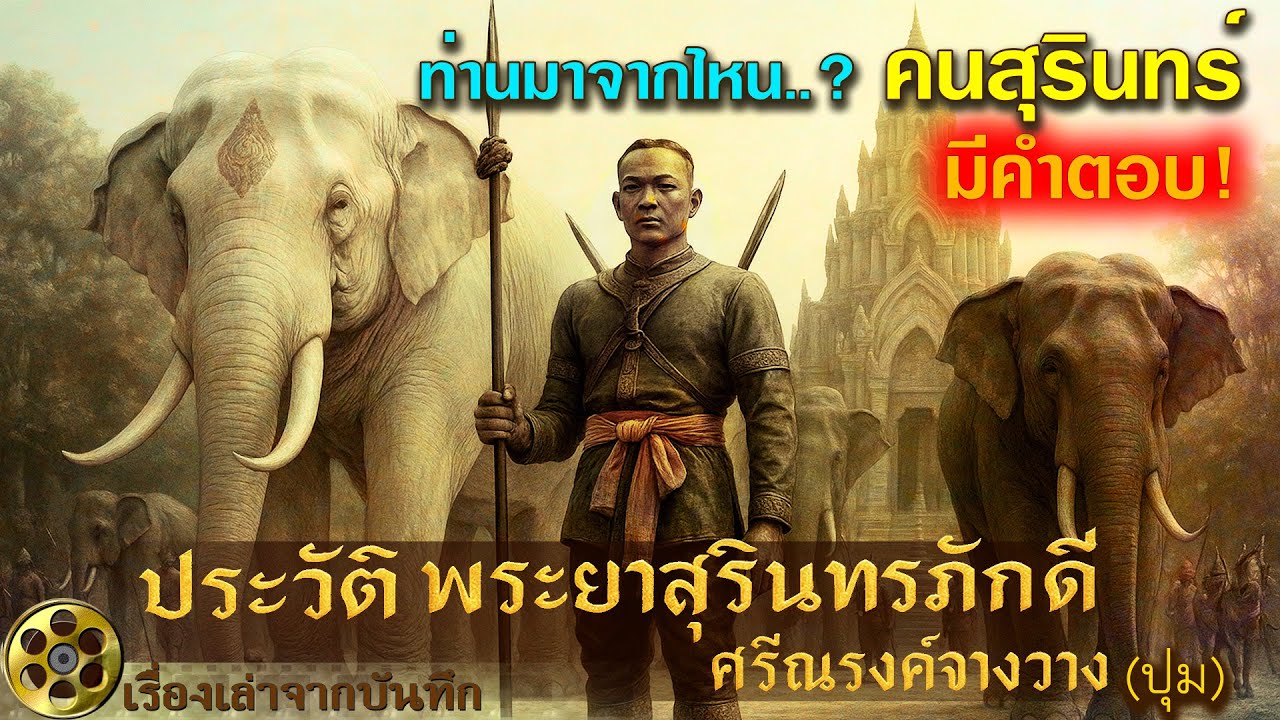
 Click to Access the Navigation Map GPS
Phraya Surin Phakdi Si Narong Changwang (Pum) Monument Map
Recommend

 Historical Sites and Monuments(11)
Landmarks and Memorials(2)
Historical Sites and Monuments(11)
Landmarks and Memorials(2)
 Art, Craft Centres, Tradition(5)
 Museums(1)
 Places of Worship
 Temple(15)
 Other Sacred Sites(1)
 Suburban Living
 Village, Community(9)
 Local Market(1)
 Nature and Wildlife
 National Parks and Marine Reserves(2)
 Mountain (Doi)(2)
 Dam, Reservoir, Lake(6)
 Waterfalls(1)
 River, Canal(2)
 Other natural attractions(4)
 Entertainment and Agricultural
 Farms, Parks and Ecotourism(2)


