
lovethailand home >Northeastern Travel Attractions >Surin Travel Attractions >Muang Surin >Nai Muang > Surin City Pillar Shrine
TL;DR: Surin City Pillar Shrine is located at Lak Mueang Road, Nai Mueang Subdistrict, Mueang Surin District, Surin Province 32000, open Daily, hours 07.00 – 18.30.

Surin City Pillar Shrine
Open Days: Daily
Opening Hours: 07.00 – 18.30
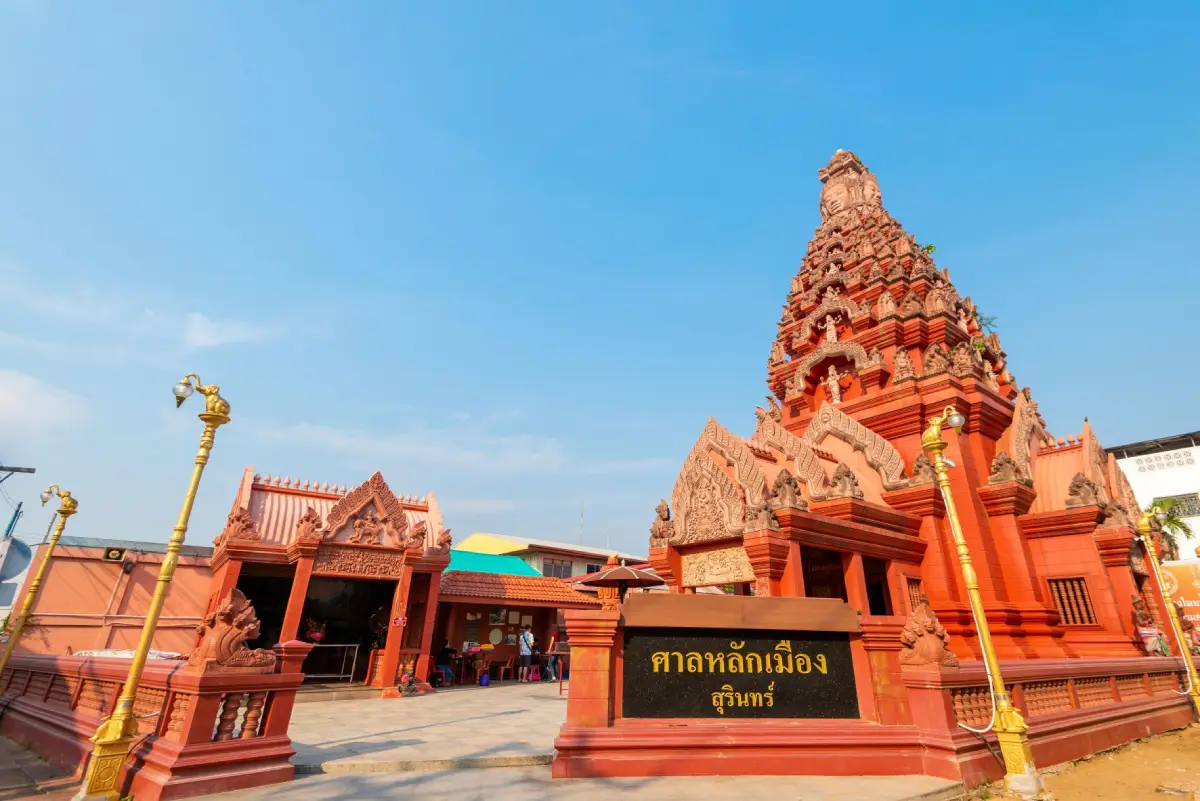
Surin City Pillar Shrine is one of the most important sacred landmarks in Surin Province. Located on Lak Mueang Road in Nai Mueang Subdistrict, Mueang Surin District, the shrine stands in the historic urban core of Surin and serves as a spiritual symbol of the city. Local residents and visitors come here to pay respect, ask for blessings, and connect with the cultural identity of the province. With its striking red-brick appearance, tall shrine structure, intricate decorative details, and central location, Surin City Pillar Shrine is both a sacred place of worship and an important cultural attraction in the heart of Surin city.
The shrine is located about 500 meters west of the former Surin Provincial Hall, placing it close to government areas, local markets, temples, restaurants, hotels, and the old commercial district. This central position reflects the symbolic role of a city pillar shrine in Thai culture. It is not only a place where people come to worship, but also a spiritual anchor of the city. For travelers, the shrine is a convenient starting point for exploring Surin’s historic center, including Wat Burapharam, Wat Klang Surin, the railway station area, local restaurants, and nearby hotels.
In Thai tradition, a city pillar represents stability, protection, and the spiritual foundation of a town or province. Many important Thai cities have a city pillar shrine, and local people often regard it as a guardian point of the city. Surin City Pillar Shrine carries this meaning strongly. It represents the shared faith of the people, the continuity of the city, and the symbolic protection of the province. For this reason, the shrine is respected by local residents, government officials, and visitors who come to pay homage before important journeys, work, ceremonies, or personal milestones.
Before the present shrine was built, this place had already been regarded as a sacred shrine of Surin, even though it did not yet contain the formal city pillar. Local people had worshipped the site for a long time, and its sacred status developed from continuous public faith. When the shrine was later rebuilt and the city pillar was officially installed, the older local devotion did not disappear. Instead, it became part of the new identity of the shrine as the official city pillar shrine of Surin Province.
In 1968, the Fine Arts Department designed the new Surin City Pillar Shrine. The city pillar itself was made from chaiyaphruek wood donated by Prasit Maneekan from Sai Yok District, Kanchanaburi Province. The pillar is 3 meters high and measures 1 meter in circumference. Chaiyaphruek wood carries auspicious meaning in Thai culture, and its use for the city pillar reinforces the idea of prosperity, strength, and good fortune for the province.
Before being installed in Surin, the city pillar received royal grace during the reign of King Bhumibol Adulyadej. His Majesty anointed the pillar at Chitralada Villa, Dusit Palace, on 21 August 1972 before it was sent to Surin Province. This event added deep royal and spiritual significance to the pillar. For the people of Surin, the city pillar is therefore not only a local sacred object, but also one connected with royal blessing and auspiciousness.
The ceremony to raise the city pillar and celebrate the shrine was held on 15 March 1974. This ceremony formally completed the status of Surin City Pillar Shrine as the spiritual pillar of the province. Government officials, community leaders, and local residents joined together to honor the city pillar. The event united civic authority, local faith, tradition, and public devotion in one important moment. Since then, the shrine has continued to be a major place of worship for the people of Surin.
The architecture of Surin City Pillar Shrine is one of its strongest visual features. The shrine is known for its red-brick color, tall spire, carved decorative details, and local artistic character. The design evokes the cultural atmosphere of lower northeastern Thailand, where Thai, Khmer, Kui, Lao, and Isan influences have long existed together. Surin Province is known for elephants, silk, Khmer-style ruins, and diverse ethnic communities. The shrine’s architectural language reflects this broader cultural identity.
The red-brick color gives the shrine a dignified and memorable appearance. Under morning or late-afternoon light, the structure becomes especially striking. Decorative details on the gables, rooflines, and tower create a strong sense of sacred space. Visitors who come for worship often also appreciate the shrine as a cultural and architectural landmark. It is one of the most photogenic religious-cultural structures in Surin city, but it should always be approached with respect because it remains an active sacred site.
The city pillar is enshrined inside the shrine and is the spiritual heart of the place. Visitors commonly bring flowers, incense, candles, garlands, or other offerings according to Thai custom. Many people ask for blessings related to stability in life, work, family, travel, success, and protection. The most important part of worship is not the size of the offering, but sincerity, respect, and a calm mind.
The surrounding courtyard supports worship, ceremonies, and public gatherings. It allows people to pay respect, prepare offerings, take photographs from outside, and join annual ceremonies when held. During certain festivals, the shrine area may be decorated with lighting or ceremonial elements, making it attractive both during the day and in the evening. Even when decorated, the shrine retains its status as a sacred civic place.
The annual celebration of Surin City Pillar Shrine is one of the important ceremonial events of the province. Provincial authorities, Surin Municipality, community representatives, and residents gather to pay respect to the city pillar and pray for the well-being of the city. This annual ritual is not merely an official event. It expresses the living relationship between the city, its people, and the sacred pillar that symbolizes stability and protection.
Beyond annual ceremonies, the shrine is also visited on personal occasions. People come before beginning new work, starting a journey, moving into the province, taking examinations, opening a business, or returning to give thanks after success. This shows that the shrine is part of everyday faith, not only a place for formal ceremonies. Its meaning exists both at the provincial level and in the personal lives of individuals.
Within the shrine area, visitors may also encounter inscriptions and historical objects that add cultural depth to the site. The inscription associated with Surin City Pillar Shrine reflects the region’s older historical layers and local heritage. Although some inscriptions are incomplete, they help visitors understand that the shrine area is connected with long-standing cultural memory. A meaningful visit should include observation of the pillar, the shrine structure, architectural details, and historical elements around the site.
Surin City Pillar Shrine is an excellent starting point for a city walk or cultural route in Surin. After paying respect at the shrine, visitors can continue to Wat Burapharam, one of the important temples of the province, or visit the Phraya Surin Phakdi Si Narong Changwang monument. The railway station area, local markets, cafés, and restaurants are also nearby. This makes the shrine a practical and meaningful first stop in the city.
For travelers interested in history, the shrine helps explain Surin as a city. Surin is known for elephants, silk, Khmer ruins, Kui culture, Lao-Isan culture, and a strong local identity. The city pillar shrine gathers these layers into one symbolic place. It represents the city as a shared home, protected by a sacred pillar and supported by the faith of its people.
A typical visit takes about 20 to 45 minutes. This is enough time to pay respect, observe the architecture, take photographs respectfully from outside, and walk through the surrounding area. During annual ceremonies or major festivals, visitors should allow more time because crowds, ceremonial activities, and traffic changes may occur around Lak Mueang Road.
Visitors should dress modestly and behave respectfully. Although the shrine is not a temple, it is a sacred civic site. Visitors should avoid loud behavior, inappropriate posing, climbing on structures, touching restricted areas, or placing items in improper locations. Respectful conduct preserves the dignity of the shrine and allows visitors to experience its cultural meaning properly.
Getting to Surin City Pillar Shrine is easy because it is located in the city center. Visitors can travel by private car, motorcycle, local transport, or on foot from nearby hotels and landmarks. From Surin Railway Station, the shrine can be reached quickly by local transport. Those staying in central Surin may be able to walk or take a short ride. Drivers should plan parking carefully during festivals and public ceremonies.
Getting There from the former Surin Provincial Hall area is simple: travel about 500 meters west toward Lak Mueang Road. From Surin Railway Station, head toward the city center and Lak Mueang Road. The short urban distance makes the shrine suitable for walking routes, city sightseeing, and half-day cultural itineraries in central Surin.
There is no admission fee for general worship and ordinary visits. Visitors may bring their own offerings or purchase offerings from nearby vendors according to convenience. Donations should be made only at designated points. Worship at a city pillar shrine does not require elaborate offerings. Respect, sincerity, and calmness are the essential parts of the visit.
Facilities around the shrine are typical of a central-city sacred site. Visitors will find a worship courtyard, offering points, walking areas, exterior photography areas, and nearby urban services such as restaurants, cafés, hotels, shops, local transport, and markets. Because the shrine is in central Surin, it is easier to access than many attractions outside the city.
The surrounding area has many dining options, including Vietnamese food, Thai restaurants, local eateries, cafés, hotel restaurants, and market-area food shops. Visitors can pay respect at the shrine in the morning, have lunch in the city, and continue to Surin National Museum or Ban Tha Sawang silk-weaving village in the afternoon. This route combines faith, history, food, and local culture in one day.
Accommodation near the shrine includes budget hotels, boutique hotels, city hotels, and larger hotels. Staying near Lak Mueang Road, Sirirat Road, Thetsaban Bamrung Road, or the railway station area makes it easy to visit the shrine, Wat Burapharam, local markets, restaurants, and transport points. Central Surin is also a practical base for continuing to Sikhoraphum Sanctuary, the elephant village area, and other provincial attractions.
For international visitors, Surin City Pillar Shrine provides a clear introduction to Thai civic spirituality. A city pillar shrine shows that Thai people often understand a city not only as an administrative area, but as a living place with a spiritual center, guardian force, and shared identity. Paying respect at the shrine helps visitors understand how faith, place, government, and community are connected in Thai culture.
The shrine also reflects Surin’s diverse identity as a lower northeastern city. Surin is shaped by Thai, Khmer, Kui, Lao, and Isan cultures, together with elephants, silk, and ancient ruins. The city pillar shrine acts as a symbolic center that gathers these identities into one civic sacred space. Visitors who begin their journey here will better understand the cultural depth of Surin before exploring the rest of the province.
Overall, Surin City Pillar Shrine deserves a place in any central Surin itinerary. It is easy to reach, requires only a short visit, and offers strong historical, architectural, spiritual, and cultural value. Starting a trip here gives travelers a grounded understanding of Surin as a city with a sacred pillar, local identity, and long-standing public faith.
In summary, Surin City Pillar Shrine is the sacred city shrine of Surin Province. Located on Lak Mueang Road in Mueang Surin District, it was once a sacred shrine without a formal city pillar. In 1968, the Fine Arts Department designed the new shrine. The city pillar was made from chaiyaphruek wood donated from Sai Yok District, Kanchanaburi Province. The pillar is 3 meters high and 1 meter in circumference. It received royal blessing during the reign of King Bhumibol Adulyadej and was formally raised and celebrated on 15 March 1974. Today, the shrine remains open daily for worship, blessings, architectural appreciation, and cultural visits in the heart of Surin city.
| Name | Surin City Pillar Shrine / San Lak Mueang Surin |
| Location | Lak Mueang Road, Nai Mueang Subdistrict, Mueang Surin District, Surin Province 32000 |
| Address | Surin City Pillar Shrine, Lak Mueang Road, Nai Mueang Subdistrict, Mueang Surin District, Surin Province 32000, about 500 meters west of the former Surin Provincial Hall |
| Highlights | Sacred city pillar shrine of Surin, chaiyaphruek wooden city pillar, striking red-brick architecture, lower-Isan artistic character, annual city pillar celebration, and convenient central-city location |
| History | The original site was a sacred shrine without a formal city pillar. In 1968, the Fine Arts Department designed the new shrine. The city pillar received royal blessing during the reign of King Bhumibol Adulyadej and was formally raised with a celebration ceremony on 15 March 1974 |
| Name Origin | The name refers to the city pillar enshrined inside the shrine, symbolizing the spiritual foundation, stability, and protection of Surin Province |
| Distinctive Features | Red-brick shrine building with a tall sacred structure, detailed decorative motifs, a 3-meter-high chaiyaphruek wooden pillar measuring 1 meter in circumference, and a public worship courtyard |
| Travel Information | Located in central Surin on Lak Mueang Road. Visitors can arrive by private car, motorcycle, local transport, or on foot from nearby hotels, markets, and city landmarks |
| Current Status | Open for worship, blessings, architectural viewing, and participation in important provincial ceremonies. It remains a sacred landmark of Surin Province |
| Open Days | Daily |
| Opening Hours | 07.00 – 18.30 |
| Fees | No Admission Fee For General Worship And Ordinary Visits. Donations May Be Made According To Faith |
| Facilities | Worship courtyard, offering area, walking paths, exterior photography area, nearby city parking, restaurants, cafés, hotels, shops, markets, and central-city services |
| Main Areas / Zones | 1. Red-Brick City Pillar Shrine Building 2. Chaiyaphruek Wooden City Pillar Area 3. Worship Courtyard And Offering Area 4. City Pillar Ceremony And Annual Celebration Area 5. Exterior Architecture And Photography Area 6. Inscription And Historical Object Area 7. Festival Lighting Area 8. Walking Connection To The Old City And Nearby Landmarks |
| Important Sacred Objects | Chaiyaphruek wooden city pillar, 3 meters high and 1 meter in circumference; shrine building; Surin City Pillar inscription; and public worship area of the province |
| Important Rituals / Traditions | City pillar worship, city pillar offering rituals, annual Surin City Pillar Shrine celebration, personal blessing visits, and city ceremonial activities during selected festivals |
| Caretaker / Related Authority | Surin Province and Surin Municipality are the local authorities connected with the city area and important ceremonies at the shrine |
| Local Information Contact | Surin Municipality, Tel. 044-511-117, 044-511-272 |
| Nearby Tourist Attractions | 1. Wat Klang Surin, about 200 m 2. Wat Burapharam Royal Temple, about 800 m 3. Surin Railway Station And City Market Area, about 1 km 4. Phraya Surin Phakdi Si Narong Changwang Monument, about 1.5 km 5. Surin City Health Park / 80th Birthday Anniversary Park, about 2 km 6. Surin National Museum, about 5 km, Tel. 044-513-272, 044-513-274 7. Ban Tha Sawang Silk-Weaving Village, about 10 km |
| Nearby Restaurants | 1. Kon Khmer Namnueng Surin, about 800 m, Tel. 083-385-5599, 086-497-7958 2. Starbeam Restaurant, about 1 km, Tel. 044-519-629, 086-877-4447 3. Sawasdee Restaurant On Thanasan Road, about 1.2 km, Tel. 094-663-5241 4. Hello Surin On Sirirat Road, about 1.3 km, Tel. 085-637-7707 5. Big Bite Restaurant At Thong Tarin Hotel, about 1.4 km, Tel. 088-103-2383 6. Restaurants And Cafés Around Surin Railway Station, about 1 km |
| Nearby Accommodations | 1. HOP INN Surin, about 450 m, Tel. 065-518-9784 2. Maneerote Hotel Surin, about 480 m, Tel. 044-514-569 3. The Lion Residence, about 700 m, Tel. 044-062-502, 089-717-6961 4. Sorin Boutique Hotel, about 750 m, Tel. 044-060-188 5. Fortune Mansion Surin, about 2 km, Tel. 044-060-398, 084-554-5290 6. Slive Hotel Surin, about 2 km, Tel. 044-060-322, 044-060-323 7. The Wood Surin, about 1.2 km, Tel. 063-023-7999 8. Thong Tarin Hotel, about 1.4 km, Tel. 044-514-281, 085-300-8858 |
Frequently Asked Questions (FAQ)
Q: Where Is Surin City Pillar Shrine Located?
A: Surin City Pillar Shrine is located on Lak Mueang Road, Nai Mueang Subdistrict, Mueang Surin District, Surin Province 32000, about 500 meters west of the former Surin Provincial Hall.
Q: When Is Surin City Pillar Shrine Open?
A: Surin City Pillar Shrine is open daily from 07.00 to 18.30.
Q: Is There An Admission Fee?
A: No. There is no admission fee for general worship and ordinary visits. Visitors may donate according to their faith.
Q: What Wood Is The Surin City Pillar Made From?
A: The Surin city pillar is made from chaiyaphruek wood donated from Sai Yok District, Kanchanaburi Province. It is 3 meters high and 1 meter in circumference.
Q: When Was The Surin City Pillar Raised?
A: The city pillar was formally raised and celebrated on 15 March 1974.
Q: What Is The Main Highlight Of Surin City Pillar Shrine?
A: The main highlights are its role as the sacred city shrine of Surin, the chaiyaphruek wooden city pillar, the striking red-brick architecture, lower-Isan artistic character, and convenient location in the city center.
Q: What Nearby Places Can Be Visited With Surin City Pillar Shrine?
A: Nearby places include Wat Klang Surin, Wat Burapharam Royal Temple, Surin Railway Station, Phraya Surin Phakdi Si Narong Changwang Monument, Surin National Museum, and Ban Tha Sawang Silk-Weaving Village.
Q: What Should Visitors Wear To Surin City Pillar Shrine?
A: Visitors should dress modestly, speak quietly, avoid climbing or touching inappropriate parts of the shrine, and pay respect with proper conduct toward this sacred civic place.
 Category: ●Places of Worship
 Group: ●Other Sacred Sites
Last Update : 2 MonthAgo
 Last Update : 2 MonthAgo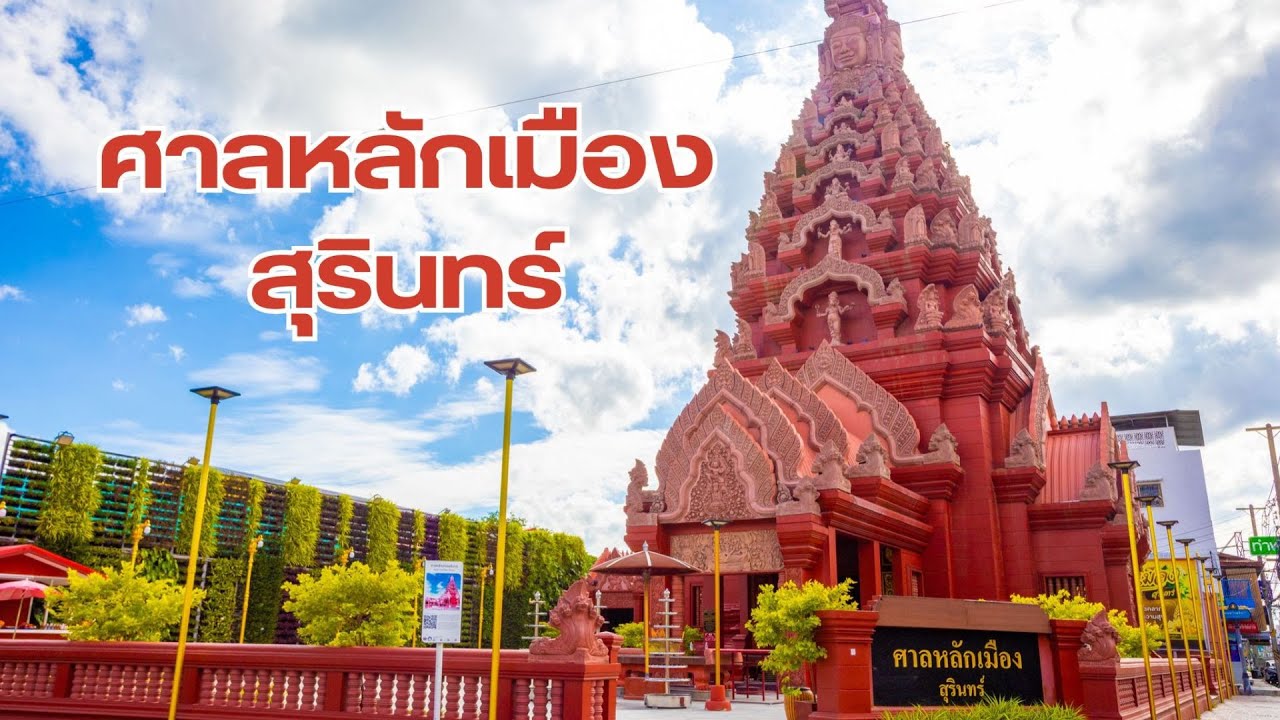
 Click to Access the Navigation Map GPS
Surin City Pillar Shrine Map
Recommend

 Art, Culture and Heritage
 Historical Sites and Monuments(11)
 Landmarks and Memorials(2)
 Art, Craft Centres, Tradition(5)
 Museums(1)
 Temple(15)
Other Sacred Sites(1)
Temple(15)
Other Sacred Sites(1)
 Suburban Living
 Village, Community(9)
 Local Market(1)
 Nature and Wildlife
 National Parks and Marine Reserves(2)
 Mountain (Doi)(2)
 Dam, Reservoir, Lake(6)
 Waterfalls(1)
 River, Canal(2)
 Other natural attractions(4)
 Entertainment and Agricultural
 Farms, Parks and Ecotourism(2)


