
lovethailand home >Northeastern Travel Attractions >Si Sa Ket Travel Attractions >Khun Han >Phran > Wat Ban Phran (Wat Suphan Rat)
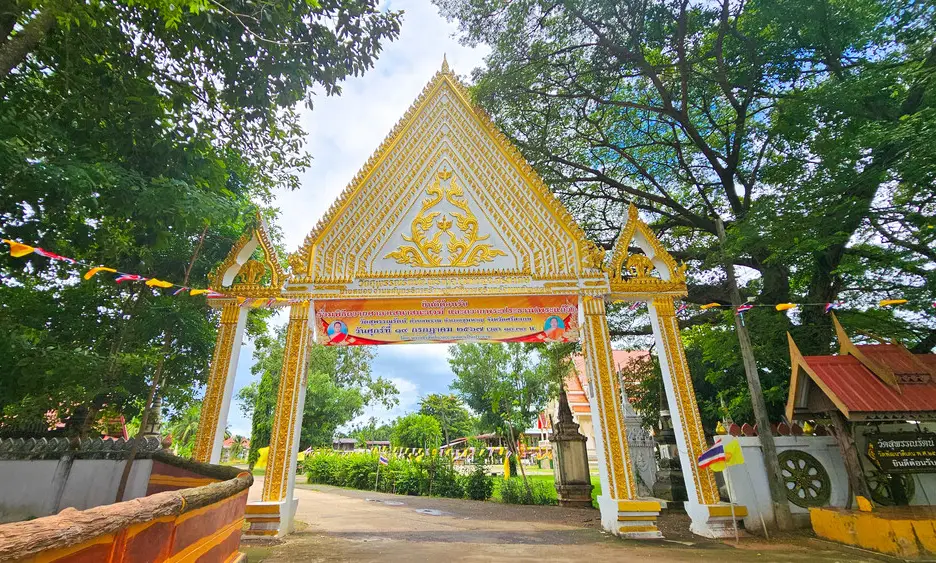
TL;DR: Wat Ban Phran (Wat Suphan Rat) is located at Ban Phran, Phran Subdistrict, Khun Han District, Si Sa Ket Province 33150, Thailand, open Daily, hours 08.00 - 17.00.

Wat Ban Phran (Wat Suphan Rat)
Open Days: Daily
Opening Hours: 08.00 - 17.00
Wat Ban Phran, also known as Wat Suphannarat, Si Sa Ket, is an old Buddhist temple in Phran Subdistrict, Khun Han District, Si Sa Ket Province. It stands in Ban Phran, a Lower Isan community shaped by Khmer-speaking local culture, Theravada Buddhism, ancestor rituals, and the artistic legacy of ancient Khmer civilization. The temple is a spiritual center for the people of Phran Subdistrict and serves several surrounding villages. It is especially important as a place for local merit-making and for the Khmer-Thai ancestral festival known as San Don Ta, a tradition that expresses gratitude to ancestors and strengthens the connection between living family members and those who have passed away.
The significance of Wat Suphannarat is not limited to its role as a village temple. It is also an important place for preserving the Narayana Reclining On Ananta lintel of Wat Ban Phran, a Baphuon-period sandstone lintel of high artistic value. The carving shows the Hindu deity Vishnu, or Narayana, reclining on the serpent Ananta in the cosmic ocean. This theme belongs to ancient Khmer religious art and reflects the sacred world of Hindu belief before the area became part of the later Buddhist communities of Lower Isan. Because the lintel is preserved inside a living Buddhist temple, Wat Ban Phran is both a place of worship and a local learning site for Khmer art history.
Wat Ban Phran remains a living temple. Villagers come here to make merit, listen to Dhamma, join robe-offering ceremonies, support community activities, and take part in annual religious events. The temple brings together monks, elders, children, youth, village leaders, families, and local residents from several villages in Phran Subdistrict. During major communal events, Wat Ban Phran becomes a central space where faith, memory, food, ritual, and family ties meet. This is why the temple’s value cannot be understood only through its buildings; it must also be understood through the people who continue to use and care for it.
Phran Subdistrict belongs to the cultural landscape of Lower Isan, where Thai, Khmer, Lao, and local traditions have long interacted. In this region, local language, ritual vocabulary, temple practices, and community memory often preserve traces of Khmer cultural identity. Wat Suphannarat is deeply connected with this setting. It is a Buddhist temple, but it also preserves a Khmer-period lintel and serves a community that continues to practice San Don Ta. The temple therefore shows how Buddhism, ancient Khmer art, and Khmer-Thai ancestral traditions remain connected in daily life.
The Narayana lintel is the most important cultural object associated with the temple. In Hindu cosmology, Narayana or Vishnu reclines upon Ananta, the cosmic serpent, in the ocean of creation. This image symbolizes preservation, cosmic order, and the divine power that sustains the universe. In ancient Khmer architecture, such lintels were placed above doorways of sanctuaries and helped define sacred space. The lintel at Wat Ban Phran therefore connects the temple with a much older religious landscape that existed before the current village temple.
The lintel originally came from Prasat Phu Fai, an ancient Khmer site in Khun Han District. Prasat Phu Fai preserves traces of brick, laterite, stone architectural elements, and ruined sanctuary bases. The Narayana lintel now kept at Wat Suphannarat is one of the key pieces linking Ban Phran with Phu Fai and the wider network of ancient Khmer sanctuaries in Lower Isan. Although the original sanctuary no longer stands in complete form, the preserved lintel allows visitors to understand the artistic and religious importance of the site.
The former abbot Phra Khru Wibun Thamma Wathi played a central role in preserving the lintel. He brought the lintel from Prasat Phu Fai to Wat Ban Phran so that it could be protected and cared for by the local community. Today, it is kept on the veranda of the abbot’s residence known as Kuti Wibunwet, built in 1996. This act of preservation turned Wat Suphannarat into a community heritage site. It also allowed villagers of Phran Subdistrict to become guardians of an important piece of Khmer art connected with their own landscape.
The Baphuon-period style of the lintel can be seen through its balanced composition, clear carving, and detailed treatment of the central deity, serpent, attendants, and decorative motifs. Even after many centuries, the carving still communicates the skill of ancient artisans. For visitors, this is a rare chance to observe Khmer art in a village temple setting. The lintel should be viewed carefully and respectfully, because it is not only an old stone carving but also a cultural object that contains religious, artistic, and local historical meaning.
The presence of a Hindu lintel inside a Buddhist temple is not unusual in Lower Isan. Many areas of Si Sa Ket once belonged to Hindu or Mahayana Buddhist cultural landscapes under Khmer influence. Over time, these places were incorporated into Theravada Buddhist communities. Wat Suphannarat clearly shows this layered history. The Narayana lintel preserves the earlier Khmer-Hindu past, while the monks, ceremonies, and living temple practices represent the present Buddhist life of the community.
Today, Wat Suphannarat is a local Buddhist temple under the Mahanikaya order. The current abbot is Phra Athikan Sukho Katapunyo. He oversees the temple together with resident monks, Ban Phran community, Phran Subdistrict community, and local agencies in Khun Han District. The temple has resident monks, supports Buddhist practice, and continues to serve the community through merit-making, ceremonies, and local festivals. Its role includes both religious care and the protection of the important Narayana lintel.
Phra Athikan Sukho Katapunyo has a strong connection with the Phran area. This makes the temple’s present leadership closely tied to the local community. A village temple such as Wat Suphannarat must care for religious activities, monastic buildings, worship spaces, visiting devotees, and cultural heritage. Preserving the Narayana lintel adds another level of responsibility, because the temple must also serve as a keeper of ancient art. This responsibility is shared by monks, villagers, and local cultural agencies.
Within the temple grounds, there are several areas of worship and remembrance. These include the Narayana lintel area at Kuti Wibunwet, the ordination and worship area, the monument or pavilion honoring past teachers, the statue of important monastic figures, a golden chedi enshrining relics or remains of Phra Thep Woramuni, a Thao Wessuwan shrine, and community merit-making spaces. Together, these areas show that Wat Suphannarat has several layers: a working Buddhist temple, a place of monastic memory, a community ritual space, and a place for preserving Khmer art.
The pavilion honoring past teachers reflects the community’s gratitude toward monks who shaped the temple. Thai village temples are not sustained by buildings alone. They are sustained by generations of monks, teachers, donors, and villagers who continue religious practice. Memorial spaces for past teachers help visitors understand the continuity of the temple. They remind the community that present faith grows from the work of earlier generations.
The golden chedi connected with Phra Thep Woramuni is another important point of reverence. In Thai Buddhist culture, a chedi is both a religious symbol and a space of remembrance. Its golden appearance creates a sense of brightness, devotion, and dignity. Visitors should approach such areas quietly and respectfully, because they are not ordinary monuments but sacred markers of memory, merit, and monastic heritage.
The Thao Wessuwan shrine reflects another living layer of contemporary Thai Buddhist devotion. Thao Wessuwan is one of the Four Heavenly Kings and is widely respected as a protector figure. His presence at Wat Suphannarat gives devotees a place to pray for protection and peace of mind. This should be understood within the broader temple context, where protective belief, Buddhist merit-making, and respect for sacred space coexist.
The most important local tradition associated with Wat Ban Phran is San Don Ta, also known as the Khmer Sart festival. In Khmer-Thai culture, “san” means offering or ritual presentation, while “don ta” refers to grandparents or ancestors. The tradition is a time for descendants to make offerings, dedicate merit, and remember deceased relatives and forebears. For Khmer-speaking communities in Lower Isan, San Don Ta is one of the strongest expressions of gratitude, lineage, and family continuity.
When Wat Ban Phran hosts San Don Ta activities for Phran Subdistrict, the temple links household ritual with temple merit-making. At home, families prepare food and offerings for ancestors. At the temple, villagers make merit, listen to Dhamma, offer food to monks, and dedicate merit to the deceased. In this way, the temple becomes a central space of remembrance. The festival connects family memory with Buddhist practice and gives the community a shared time to honor those who came before.
San Don Ta also reveals the social structure of Ban Phran. It brings together people of different generations. Elders teach younger family members about ancestors. Children learn ritual manners, family names, food preparation, and temple etiquette. Families reunite, and the temple becomes the shared space of the subdistrict. The tradition is not simply a ceremony of offerings; it is a cultural system that preserves kinship, language, memory, and respect across generations.
The combination of the Narayana lintel and San Don Ta makes Wat Suphannarat especially meaningful. The lintel represents the ancient Khmer artistic past. San Don Ta represents the living Khmer-Thai ancestral tradition. The monks and temple activities represent present-day Theravada Buddhist practice. These layers meet in one place. A visitor who walks into the temple can therefore encounter ancient Hindu-Khmer art, local Buddhist worship, and living ancestral culture together.
Visitors interested in art history should take time to observe the lintel carefully. A good way to view it is to first look at the full composition, then observe the reclining deity, the serpent, attendant figures, decorative bands, and carved details. The lintel should be understood as a complete religious image, not simply as a decorative stone. Its composition expresses ancient ideas about the universe, divinity, and sacred space in Khmer civilization.
Because the lintel is an important cultural object, visitors should behave carefully. They should not touch, knock, scratch, climb on, or place objects on the stone surface. Photography should be done respectfully and without disturbing the abbot’s residence or monastic activity. When monks or caretakers are present, visitors should ask politely before entering private or semi-private areas. Such behavior helps protect the object and respects the temple that preserves it.
Wat Ban Phran also provides a good starting point for understanding the wider cultural geography of Khun Han District. The area connects with Prasat Phu Fai, Wat Pa Maha Chedi Kaew or the Million Bottle Temple, Samrong Kiat Waterfall, Huai Chan Waterfall, Wat Phrai Phatthana and the Luang Pu Suang memorial route, Pha Ya Kupri Viewpoint, and Pha Mo I Daeng at Khao Phra Wihan National Park. A visit to Wat Suphannarat can therefore be part of a route that combines Khmer art, Buddhist faith, local culture, and mountain-edge nature.
Getting There is most convenient by private car. From Si Sa Ket city, travel toward Khun Han District through Phayu and Phrai Bueng, then continue to Phran Subdistrict. The road distance from Si Sa Ket city is about 70 to 80 kilometers. From Khun Han town, the temple is about 18 to 20 kilometers away. Travelers who use public transport should get off in Khun Han town and continue by local vehicle to Ban Phran.
From Khun Han town, travel toward Phran Subdistrict and Ban Phran using local roads. The temple is located inside the community and can be reached with navigation using the lintel coordinates. Visitors should allow enough time because some roads pass through village and agricultural areas. Upon arrival, vehicles should be parked in areas arranged by the temple or community, and visitors should enter the temple quietly and respectfully.
The best time to visit is in the morning or late afternoon before closing. Morning is peaceful and suitable for worship and close observation of the lintel. Late afternoon is convenient for continuing to other attractions in Khun Han District. Visitors who want to experience community life should come during major merit-making events or the San Don Ta period, when the temple clearly shows its role as a center of family memory, ancestor respect, and communal Buddhist practice.
There is no fixed tourist admission fee at Wat Ban Phran. Visitors may enter during opening hours to pay respect, make merit, and see the public areas of the temple. Donations, flowers, candles, incense, garlands, and merit-making offerings are voluntary according to personal faith. This keeps the temple open to local residents, pilgrims, students, cultural travelers, and international visitors interested in Khmer art and Lower Isan heritage.
Proper etiquette is essential because Wat Suphannarat is both a living Buddhist temple and a community heritage site. Visitors should dress modestly, keep quiet, remove shoes where required, avoid disturbing monks, avoid climbing on buildings, avoid touching ancient objects without permission, avoid moving anything, avoid littering, and speak respectfully with local people. Such conduct preserves the sacred atmosphere and respects the community that protects the temple and its heritage.
For international visitors, Wat Ban Phran is a strong introduction to Lower Isan. It presents a living Buddhist temple, a Khmer-Thai ancestral tradition, and an ancient Khmer lintel of high artistic value. The Narayana lintel opens a path into the Hindu-Khmer past, while San Don Ta explains the continuing importance of ancestors and family memory in the present community. Wat Suphannarat is therefore a place where the past and the present meet clearly and meaningfully.
Wat Ban Phran is more than a subdistrict temple. It is a place where Buddhism, Khmer local culture, ancient Khmer art, San Don Ta, and the cooperation of Phran Subdistrict villages come together. The Narayana lintel is evidence of a deep artistic past. The temple’s merit-making activities are evidence of living faith. A visit here is a journey into a quieter but culturally powerful side of Khun Han, where art, faith, memory, and community remain closely connected.
Travelers who want to understand Si Sa Ket beyond the better-known temples and stone sanctuaries should give Wat Suphannarat enough time. It is not a temple famous for grand scale. Its importance lies in depth. One lintel tells the story of Prasat Phu Fai, Baphuon art, Narayana reclining on Ananta, and community preservation. The temple itself tells the story of merit-making across several villages, San Don Ta, and the continuation of Buddhist faith in a Khmer-speaking local community. Wat Ban Phran is therefore a quiet, meaningful, and culturally rich destination in Si Sa Ket Province.
| Place Name | Wat Ban Phran / Wat Suphannarat, Si Sa Ket |
| Related Names | Wat Suphannarat (Phran), Wat Ban Phran, Narayana Reclining On Ananta Lintel Of Wat Ban Phran, Kuti Wibunwet, Khmer Sart Festival, San Don Ta |
| Place Type | Local Buddhist Temple, Mahanikaya Monastery, Khmer Art Learning Site, Heritage Conservation Site, And Community Merit-Making Center Of Phran Subdistrict |
| Location | Ban Phran, Phran Subdistrict, Khun Han District, Si Sa Ket Province 33150, Thailand |
| Coordinates Of The Narayana Lintel | 14.6063773539, 104.492257112 |
| Distance From Key Points | About 18 - 20 km from Khun Han town and about 70 - 80 km from Si Sa Ket city by road |
| Significance | An old temple of Phran Subdistrict, a communal merit-making center for several villages, a place associated with San Don Ta, and the preservation site of the Baphuon-style Narayana Reclining On Ananta lintel |
| Historical Summary | Wat Suphannarat is an old community temple of Phran Subdistrict. The former abbot Phra Khru Wibun Thamma Wathi brought the Narayana lintel from Prasat Phu Fai to the temple for preservation, giving the temple an important role in both Buddhist worship and Khmer art conservation. |
| Main Ancient Object | The Narayana Reclining On Ananta lintel of Wat Ban Phran, a Baphuon-period sandstone lintel with clear and beautiful carving. It originally came from Prasat Phu Fai and is now preserved on the veranda of Kuti Wibunwet. |
| Meaning Of The Lintel | The image shows Narayana or Vishnu reclining upon the serpent Ananta in the cosmic ocean, symbolizing preservation, cosmic order, and the sacred artistic world of ancient Khmer civilization. |
| Main Local Tradition | San Don Ta, or the Khmer Sart festival, an ancestral offering and merit-making tradition of Khmer-Thai communities in Phran Subdistrict |
| Important Historical Figure | Phra Khru Wibun Thamma Wathi, former abbot of Wat Ban Phran, who played a key role in bringing the Narayana lintel from Prasat Phu Fai to Wat Suphannarat for preservation |
| Abbot / Caretaker | Phra Athikan Sukho Katapunyo, Abbot Of Wat Suphannarat, together with resident monks, Ban Phran community, Phran Subdistrict community, and local agencies in Khun Han District |
| Current Status | Active Buddhist temple and local cultural learning site where visitors can pay respect, make merit, join community traditions, and see the Narayana lintel during opening hours |
| Open Days | Daily |
| Opening Hours | 08.00 - 17.00 |
| Admission Fee | Free Admission. Donations, flowers, candles, incense, garlands, and merit-making offerings are voluntary according to personal faith. |
| Main Areas / Zones | 1. Kuti Wibunwet And Narayana Lintel Preservation Zone 2. Ordination And Principal Buddha Worship Zone 3. Pavilion Honoring Than Pho Phra Mongkhon Sophit Phrommasaro 4. Statue Zone Of Important Monastic Teachers 5. Golden Chedi Enshrining Remains Of Phra Thep Woramuni 6. Thao Wessuwan Shrine Zone 7. Temple Hall And Merit-Making Courtyard Zone 8. San Don Ta And Phran Subdistrict Merit-Making Zone 9. Khmer Art And Prasat Phu Fai Heritage Learning Zone 10. Monks’ Residence And Monastic Area |
| Facilities | Temple courtyard, worship areas, halls, Narayana lintel viewing point, parking areas arranged by the temple or community, and basic services in Phran Subdistrict |
| Related Contact | Khun Han District Office, Tel. 045-679-035 Khun Han Subdistrict Municipality, Tel. 045-679-227 Si Sa Ket Provincial Office Of Buddhism, Tel. 045-622645 Si Sa Ket Natural And Cultural Environment Conservation Unit, Tel. 045-612611, 065-121-4049 |
| Travel Information | From Si Sa Ket city, travel toward Khun Han District through Phayu and Phrai Bueng, then continue to Phran Subdistrict. The distance is about 70 - 80 km by road. From Khun Han town, the temple is about 18 - 20 km away. Private car, van, or hired local transport is recommended. |
| Visitor Etiquette | Dress modestly, keep quiet, do not touch the lintel or ancient objects without permission, do not climb on buildings or monastic residences, do not disturb monks, do not photograph private monastic areas without permission, and keep the temple clean. |
| Nearby Tourist Attractions | 1. Prasat Phu Fai, about 8 km 2. Ban Phran Community / Phran Subdistrict, about 0 km 3. Wat Pa Maha Chedi Kaew / Million Bottle Temple, about 20 km, Tel. 084-524-3770 4. Khun Han Town, about 18 - 20 km 5. Samrong Kiat Waterfall / Namtok Pisat, about 25 km, Tel. 063-565-9399 6. Huai Chan Waterfall / Kanthrom Waterfall, about 28 km 7. Wat Phrai Phatthana / Luang Pu Suang Memorial, about 38 km, Tel. 099-625-3859 8. Pha Ya Kupri Viewpoint, about 42 km 9. Pha Mo I Daeng / Khao Phra Wihan National Park, about 55 km 10. Si Sa Ket City, about 70 - 80 km |
| Nearby Restaurants | 1. Pongsin Resort & Restaurant, Phran Subdistrict, about 8 km, Tel. 088-375-5199 2. BJ Coffee House, Khun Han, about 18 km, Tel. 098-214-6024 3. Cho Cher Coffee & Bakery, Khun Han, about 18 km, Tel. 091-014-0622 4. MOMOCHA Taiwanese Bubble Tea Khun Han, about 18 km, Tel. 064-959-0476, 062-441-9235 5. Indy Coffee Bar & Restaurant, Khun Han, about 19 km, Tel. 099-069-5889 6. Pornsawan Cafe, Khun Han, about 20 km, Tel. 063-497-7625, 088-192-3166 |
| Nearby Accommodations | 1. Pongsin Resort & Restaurant, Phran Subdistrict, about 8 km, Tel. 088-375-5199 2. Peace Pool Resort, Khun Han, about 18 km, Tel. 081-879-5822 3. Rerawadi Resort & Spa, Khun Han, about 18 km, Tel. 087-128-0095 4. Cheyenne Resort, Khukhan, about 42 km, Tel. 085-024-4829, 045-966-585 5. Bansuansrisuparb Hotel, Khukhan, about 46 km, Tel. 087-245-9125, 080-240-7090 6. B2 Sisaket Boutique & Budget Hotel, Mueang Si Sa Ket, about 75 km, Tel. 052-009-161, 088-263-2897 |
Frequently Asked Questions (FAQ)
Q: Where is Wat Ban Phran or Wat Suphannarat located?
A: Wat Ban Phran, also known as Wat Suphannarat, is located in Ban Phran, Phran Subdistrict, Khun Han District, Si Sa Ket Province. It is an old temple of Phran Subdistrict and a communal merit-making center for several local villages.
Q: What are the opening days and hours?
A: The temple is open daily from 08.00 to 17.00. Visitors can pay respect, make merit, see the Narayana Reclining On Ananta lintel, and learn about local traditions during these hours.
Q: Is there an admission fee?
A: There is no fixed tourist admission fee. Donations, flowers, candles, incense, garlands, and merit-making offerings are voluntary according to personal faith.
Q: Why is the Narayana lintel at Wat Ban Phran important?
A: The Narayana Reclining On Ananta lintel is a Baphuon-period sandstone carving originally from Prasat Phu Fai. It shows Narayana or Vishnu reclining on the serpent Ananta and is an important example of Khmer art in Khun Han District.
Q: Who is the current abbot of Wat Suphannarat?
A: The current abbot is Phra Athikan Sukho Katapunyo, who oversees the temple together with resident monks, Ban Phran community, Phran Subdistrict community, and local agencies in Khun Han District.
Q: What is San Don Ta at Wat Ban Phran?
A: San Don Ta is the Khmer Sart ancestral festival of Khmer-Thai communities. It involves offerings and merit-making for deceased relatives and ancestors. Wat Ban Phran serves as a communal temple space for this tradition in Phran Subdistrict.
Q: What are the main highlights inside Wat Ban Phran?
A: Main highlights include the Narayana lintel at Kuti Wibunwet, the pavilion honoring monastic teachers, statues of important monks, the golden chedi connected with Phra Thep Woramuni, the Thao Wessuwan shrine, and the community merit-making areas.
Q: How can visitors get to Wat Ban Phran?
A: From Si Sa Ket city, travel toward Khun Han District through Phayu and Phrai Bueng, then continue to Phran Subdistrict. The distance is about 70 - 80 km by road. From Khun Han town, the temple is about 18 - 20 km away. Private car or hired local transport is the most convenient option.
 Category: ●Places of Worship
 Group: ●Temple
Last Update : 3 WeekAgo
 Last Update : 3 WeekAgo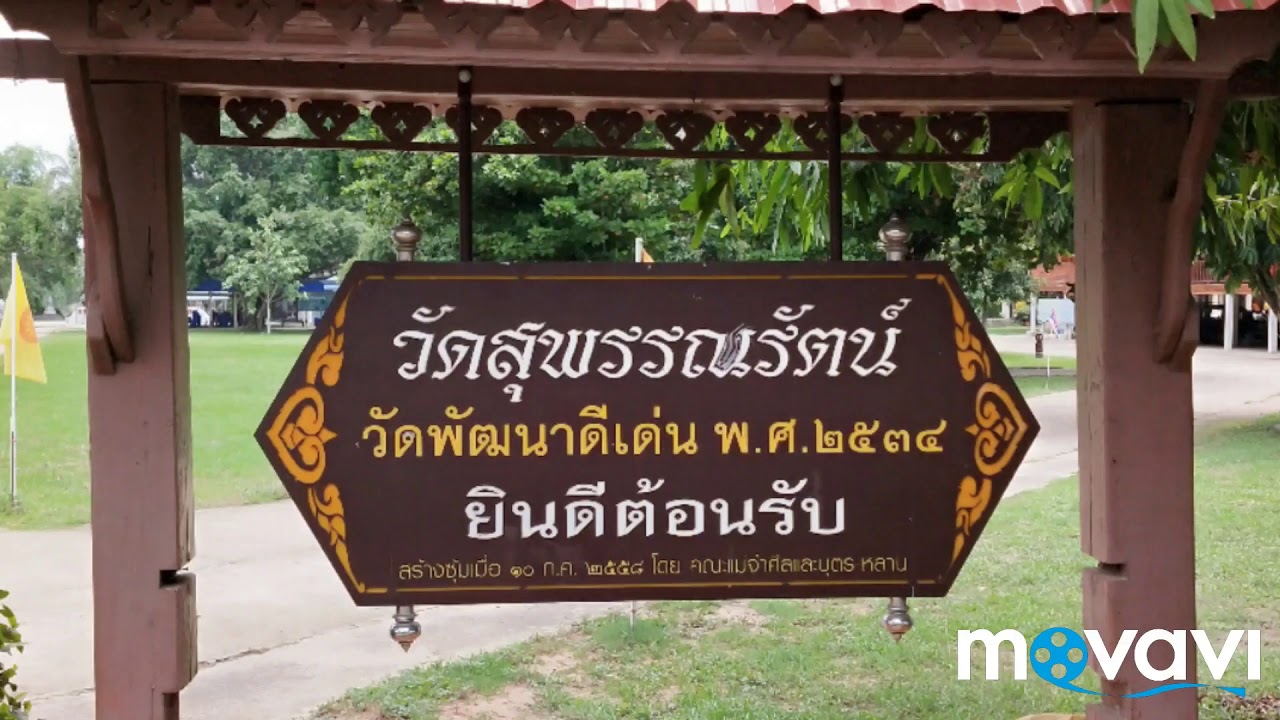
 Click to Access the Navigation Map GPS
Wat Ban Phran (Wat Suphan Rat) Map

 Art, Culture and Heritage
 Historical Sites and Monuments(12)
 Landmarks and Memorials(1)
 Art, Craft Centres, Tradition(8)
Temple(13)
Art, Craft Centres, Tradition(8)
Temple(13)
 Other Sacred Sites(3)
 Suburban Living
 Village, Community(2)
 Nature and Wildlife
 National Parks and Marine Reserves(2)
 Dam, Reservoir, Lake(7)
 Waterfalls(5)
 River, Canal(5)
 Bays and Beaches(2)
 Entertainment and Agricultural
 Zoos and Aquariums(1)
 Farms, Parks and Ecotourism(3)


