
lovethailand home >Northeastern Travel Attractions >Si Sa Ket Travel Attractions >Phai Bung >Prasat Yoe > Wat Prasat Yoe
TL;DR: Wat Prasat Yoe is located at Prasat Yoe Subdistrict, Phrai Bueng District, Si Sa Ket Province 33180, Thailand, open Daily, hours 08.00 - 17.00.
Wat Prasat Yoe
Open Days: Daily
Opening Hours: 08.00 - 17.00
Wat Prasat Yoe, Si Sa Ket refers to an important Buddhist and cultural temple group in Ban Prasat Yoe, Prasat Yoe Subdistrict, Phrai Bueng District, Si Sa Ket Province. The community has two main temples: Wat Prasat Yoe Nuea and Wat Prasat Yoe Tai. Together, they represent Buddhist faith, the heritage of the Yoe ethnic community, Khmer-influenced architecture, and the memory of Luang Pho Mum Inthapanyo, one of the most respected monks associated with Si Sa Ket. For international visitors, this is one of the most meaningful cultural destinations in Lower Northeastern Thailand because it combines a living village temple, an ancient Khmer sanctuary, local ethnicity, and monastic history in one place.
Ban Prasat Yoe is an old Yoe community with more than two centuries of local history. The Yoe people in this area have preserved a distinctive cultural identity through language, belief, ritual, and village life. The community is also known for the remains of an ancient Khmer sanctuary located in the village. This means that the area carries two major layers of heritage: the ancient Khmer religious landscape and the later Yoe Buddhist settlement. Wat Prasat Yoe therefore should not be seen simply as a temple. It is a cultural landscape where archaeology, community memory, Buddhism, and local identity remain closely connected.
The name “Prasat Yoe” itself explains the identity of the place. “Prasat” refers to an ancient sanctuary or temple structure, especially one connected with Khmer civilization. “Yoe” refers to the Yoe ethnic group that settled and developed the village. The name therefore preserves both the archaeological and ethnic meanings of the community. When visitors come to Wat Prasat Yoe Nuea and Wat Prasat Yoe Tai, they are entering a village where the past is not separated from daily life. The ancient sanctuary, the temples, the monks, and the villagers all form one living heritage setting.
Wat Prasat Yoe Nuea is the most historically prominent temple in the community. It is a local Buddhist temple under the Mahanikaya order and has long been a spiritual center for the people of Ban Prasat Yoe Nuea. The temple is especially associated with Luang Pho Mum Inthapanyo, also known by his ecclesiastical title Phra Khru Prasat Khanthakhun. Within the temple grounds, visitors can find worship areas, sacred structures, a stupa, a That Phanom-style chedi, the Phor Por Ror hall, and the remains of the ancient Prasat Yoe sanctuary.
Wat Prasat Yoe Tai is another important temple in the same community. It serves the Buddhist life of the village and remains part of the wider religious landscape of Ban Prasat Yoe. The existence of two temples in one old village shows the strength and continuity of Buddhist faith in the community. These temples have long supported merit-making, Buddhist ceremonies, local traditions, and the spiritual life of the Yoe people.
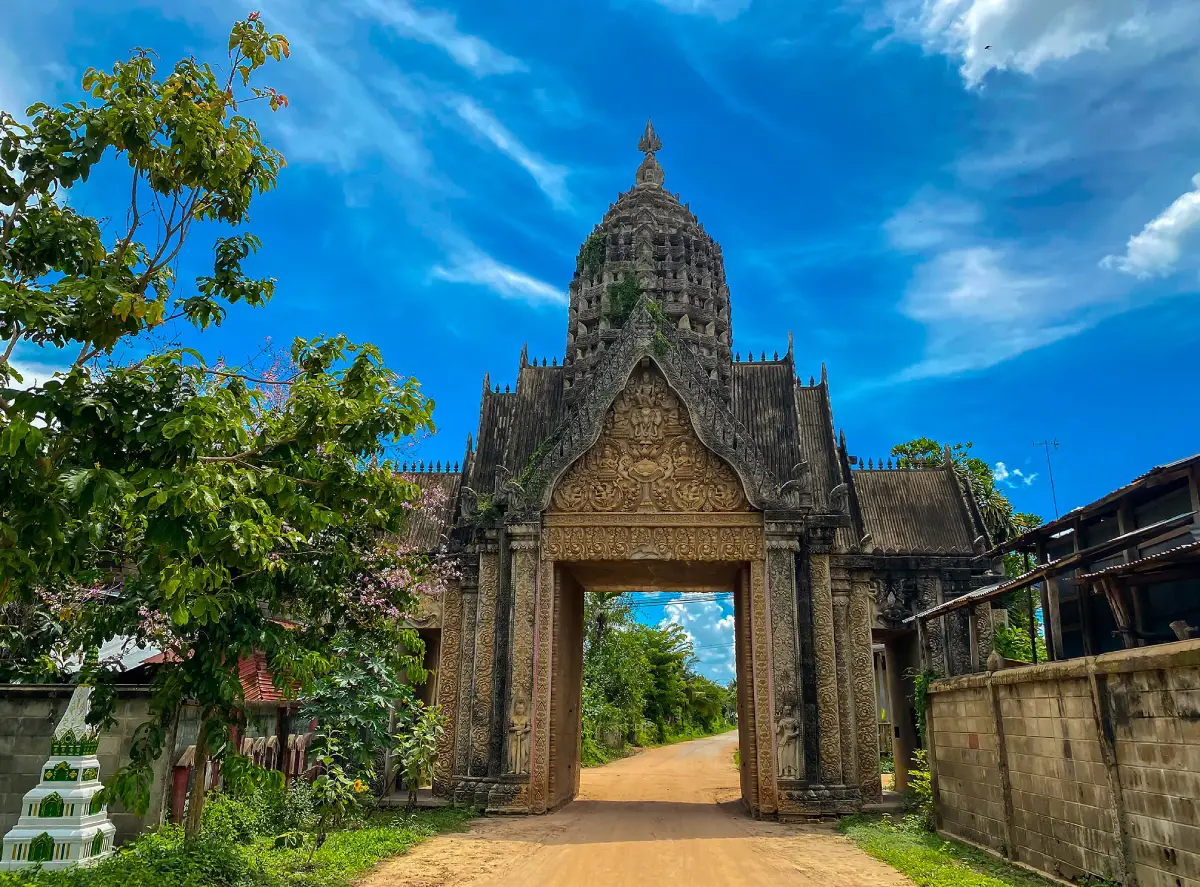
The ancient sanctuary inside the Wat Prasat Yoe Nuea area gives the temple exceptional historical depth. The remains of Prasat Yoe, also understood as an ancient arogyasala or hospital chapel, include brick debris, laterite, sandstone doorframes, and carved sandstone lintels. Although the structure is now damaged, the remaining elements still show the religious and artistic character of Khmer civilization. This makes the temple a valuable archaeological and cultural site, not only a place of worship.
Prasat Yoe is connected with the ancient Khmer network of religious and public-service structures, particularly the type of arogyasala associated with the reign of King Jayavarman VII. Such structures were built as sacred and functional places along important routes and settlements in the Khmer world. The remains at Prasat Yoe therefore indicate that this village area once formed part of a wider cultural and movement network in Lower Isan. For visitors, this is one of the clearest ways to understand how the present-day village is connected with a much older regional history.
The ancient structure was once a single brick sanctuary on a laterite base. It had large sandstone doorframes and important carved lintels. Today, the sanctuary has collapsed into a mound of bricks and stone elements, but the eastern entrance remains visible. One lintel shows a figure seated above a kala face, while another depicts Indra riding the three-headed elephant Erawan. These details are important because they preserve the artistic vocabulary of Khmer religious architecture and allow visitors to see the sacred symbolism of the old sanctuary even in its ruined state.
Wat Prasat Yoe Nuea is also historically important to Si Sa Ket Province because it was the first temple in the province to receive a private royal Kathin offering from King Bhumibol Adulyadej and Queen Sirikit. Their Majesties visited the temple to pay respect to Luang Pho Mum and offered the royal Kathin there. This event became a major moment in the memory of local people and gave the temple a special place in the provincial history of Si Sa Ket.
The Phor Por Ror hall at Wat Prasat Yoe Nuea is another meaningful structure. It is connected with royal support and the memory of the royal visit. For the people of Si Sa Ket and Ban Prasat Yoe, the hall is not just a building. It represents gratitude, royal benevolence, and the recognition of a rural temple whose spiritual importance reached beyond the village. This gives the temple a rare combination of local devotion and provincial historical significance.
Luang Pho Mum Inthapanyo is the most important figure associated with Wat Prasat Yoe Nuea. He was born in the Bunyo family in 1886. His parents were farmers, and his childhood was closely connected with temple life. He studied Thai, Khmer-Thai, Khmer-Lao, and Khmer scripts under monastic teachers. At the age of 12, he became a novice monk and devoted himself to study, chanting, and monastic discipline. His early life reveals the role of temples as centers of learning before modern schooling became widely available in rural areas.
At the age of 20, he was ordained as a monk at Wat Prasat Yoe Nuea and received the Pali name Inthapanyo. He studied Buddhist scripture, meditation, Khmer writing, Pali, sacred formulas, yantra traditions, and local knowledge. His learning was not kept for personal prestige. It became part of his service to the community, allowing him to advise villagers, offer moral guidance, and become a spiritual refuge for people in hardship.
Luang Pho Mum was known for his simple, restrained, quiet, and compassionate way of life. He spoke little, lived modestly, and practiced meditation seriously. These qualities made people trust him deeply. In the past, traveling to Wat Prasat Yoe Nuea was difficult, but devotees still came from many places to meet him. His reputation spread from Ban Prasat Yoe to Si Sa Ket, Lower Isan, and beyond because people believed in his kindness, discipline, and spiritual power.
His forest-monk practice was another important part of his life. He traveled on long dhutanga journeys through forests, mountains, and sacred places in Thailand and neighboring regions. His routes included Khukhan, Prachin Buri, Kabin Buri, the Dong Phaya Fai mountain range, Saraburi, Ayutthaya, Suphan Buri, Lop Buri, Phetchabun, Loei, Lan Xang, Vientiane, Thakhek, Savannakhet, Champasak, and parts of Cambodia. These journeys allowed him to practice meditation in remote places and learn from many respected teachers.
During his travels, he studied with Khmer monks, herbal-medicine specialists, and revered spiritual teachers in the Mekong region. He also sought out Somdet Lun of Champasak, a highly respected monk in the Lao cultural world. These experiences shaped Luang Pho Mum into a monk with wide knowledge, strong discipline, and deep meditative practice. His reputation later came from this combination of Dhamma, meditation, compassion, and traditional knowledge.
When Luang Pho Mum returned to Ban Prasat Yoe, villagers invited him to reside permanently at Wat Prasat Yoe Nuea after the previous abbot had passed away and the temple had been without a stable abbot. He accepted the invitation and became the abbot of Wat Prasat Yoe Nuea. He later served as ecclesiastical head of Prasat Yoe Subdistrict and as a preceptor for ordination in the area. His role was therefore both spiritual and administrative.
While living at the temple, Luang Pho Mum regularly practiced walking meditation, seated meditation, and reviewed the teachings and knowledge he had learned. Even when many people visited him, he maintained a simple life. His quietness and discipline became part of his identity. People respected him not because of display or luxury, but because of his steady practice, compassion, and moral authority.
Luang Pho Mum also played an important role in education. When officials saw that education in Khukhan was still limited, he was invited to teach monks. He taught for about 15 years, helping raise the level of monastic learning in the area. This role shows that Wat Prasat Yoe Nuea was not only a sacred temple but also a local center of literacy, Buddhist learning, and knowledge transmission.
In 1949, Luang Pho Mum officially became abbot of Wat Prasat Yoe Nuea. In 1951, he became a preceptor, and in 1956 he received the ecclesiastical title Phra Khru Prasat Khanthakhun. Throughout his life, he guided monks, supported Buddhist education, helped local schools, developed temple activities, and provided spiritual support to villagers. His influence went far beyond the physical temple grounds.
His reputation became widely known during the period when American military personnel were stationed in parts of Lower Isan. Some soldiers heard of Luang Pho Mum, came to pay respect to him, and received sacred objects from him. They reportedly called him “Dad,” reflecting personal affection and respect. This story shows that his reputation crossed language and cultural boundaries. People from very different backgrounds felt connected to his kindness and protective presence.
Luang Pho Mum’s amulets and sacred objects remain well known among devotees. They include early medals, oval medals, shield-shaped medals, the famous Papa Mum medal, powder amulets, Phra Pidta, rings, takrut, yantra cloth, blessed balm, and other ritual objects. These objects are remembered as being consecrated through Khmer-style ritual methods and are respected by followers for blessing, loving-kindness, protection, and confidence according to personal faith.
Luang Pho Mum passed away in 1979 at the age of 93, after 73 years in the monkhood. His memory remains strong. Wat Prasat Yoe Nuea is therefore a meaningful place for devotees who want to pay respect to his legacy, see the temple where he lived, and learn about a monk who served Buddhism, education, and society in Si Sa Ket for many decades.
Architecturally, Wat Prasat Yoe Nuea reflects a blend of Khmer influence and later Buddhist temple development. Visitors can see Khmer-related elements in the ancient sanctuary remains, entrance forms, and decorative references. At the same time, the Buddhist temple structures, stupa, That Phanom-style chedi, and worship halls represent the living Buddhist faith of the community. The temple therefore shows how ancient sacred space can be continued and reinterpreted by later Buddhist generations.
The That Phanom-style chedi in the temple is important because this architectural form is widely respected in the Mekong and Isan Buddhist world. Its presence at Wat Prasat Yoe Nuea shows that the temple is not only influenced by Khmer heritage but also connected to Lan Xang and Mekong-region Buddhist culture. The result is a layered temple landscape where Khmer, Yoe, Isan, and Buddhist identities meet.
Both Wat Prasat Yoe Nuea and Wat Prasat Yoe Tai remain important to the daily life of the local community. Villagers use the temples for merit-making, Buddhist holy days, local ceremonies, Dhamma listening, and community gatherings. The temples connect elders and young people, monks and villagers, ethnic memory and Buddhist practice. This is why the temples remain living institutions rather than static historical sites.
The Yoe cultural context makes the visit even more meaningful. The Yoe people preserve their own language, beliefs, rituals, and community memory. A visit to Wat Prasat Yoe is therefore best understood together with the village. The temples were built and maintained by a community that is Buddhist while also carrying the memory of ancestors, local rituals, and distinct ethnic identity.
Wat Prasat Yoe Nuea is an excellent place for those interested in the history of Si Sa Ket. In one area, visitors encounter an ancient Khmer sanctuary, a Buddhist temple, Yoe ethnic culture, the legacy of Luang Pho Mum, and the memory of a royal Kathin offering by King Rama IX. This combination makes the temple one of the most culturally layered places in Phrai Bueng District.
Getting There is straightforward by private car. From Si Sa Ket city, travel toward Phrai Bueng District and continue to Prasat Yoe Subdistrict. The distance from Si Sa Ket city is about 40 to 45 kilometers by road, while the distance from Phrai Bueng town is about 7 to 9 kilometers. Wat Prasat Yoe Nuea and Wat Prasat Yoe Tai are very close to each other, so visitors can see both temples in the same trip. Those using public transport should get off in Phrai Bueng town and continue by local transport.
The best time to visit is in the morning or late afternoon before closing. Morning is suitable for worship and a quiet walk around the temple. Afternoon light is good for observing the gateway, chedi, sandstone remains, and village atmosphere. Visitors should take photographs respectfully, avoid disturbing worshippers, and avoid climbing or touching ancient stone or brick remains. Every fragment is part of the community’s cultural heritage.
Visitors should dress modestly, keep quiet in worship areas, remove shoes where required, avoid entering monks’ private areas, avoid touching sacred objects without permission, and never move bricks, sandstone pieces, or archaeological remains. Respect for both the temple and the Yoe community is essential because this place is simultaneously a religious site, an archaeological site, and a living village heritage area.
There is no fixed tourist admission fee for Wat Prasat Yoe. Visitors may enter during opening hours to pay respect, make merit, study the ancient sanctuary remains, and learn about Luang Pho Mum. Donations, flowers, garlands, candles, and other merit-making offerings are voluntary according to personal faith.
Wat Prasat Yoe can be combined with nearby attractions such as Wat Phrai Bueng and Phra That Phrai Bueng, Nong Ped Nam Phrai Bueng wetland, Wat Siriam Phuttaram, Khukhan old-town sites, Wat Khian Burapharam, and the city route of Si Sa Ket. Visitors who begin at Ban Prasat Yoe will gain a strong understanding of Yoe culture and Luang Pho Mum before continuing to other religious and historical places in the province.
For international travelers, Wat Prasat Yoe Nuea provides a clear introduction to Lower Isan. It presents ethnic culture, Buddhist devotion, Khmer archaeology, Mekong-region religious influence, and the memory of a revered monk in one village. It shows that Si Sa Ket is not only a province of Khmer stone sanctuaries or city temples. It is also a province of living villages where faith, history, and identity remain deeply connected.
Wat Prasat Yoe is therefore a multi-layered destination. The first layer is Buddhist faith. The second is Yoe ethnic culture. The third is the Khmer sanctuary and ancient arogyasala. The fourth is the life and legacy of Luang Pho Mum Inthapanyo. The fifth is the provincial memory of the royal Kathin offering in the reign of King Rama IX. Together, these layers make Wat Prasat Yoe Nuea and Wat Prasat Yoe Tai essential places for understanding the cultural heritage of Si Sa Ket.
| Place Name | Wat Prasat Yoe, Si Sa Ket / Wat Prasat Yoe Nuea - Wat Prasat Yoe Tai |
| Related Names | Ban Prasat Yoe, Wat Prasat Yoe Nuea, Wat Prasat Yoe Tai, Luang Pho Mum Wat Prasat Yoe Nuea, Prasat Yoe, Ancient Arogyasala Of Prasat Yoe |
| Place Type | Local Buddhist Temples, Faith-Based Cultural Attraction, Ancient Khmer Sanctuary Site, Yoe Ethnic Community Learning Area, And Local Historical Landscape In Phrai Bueng District |
| Location | Prasat Yoe Subdistrict, Phrai Bueng District, Si Sa Ket Province 33180, Thailand |
| Wat Prasat Yoe Nuea Coordinates | 14.83057, 104.37070 |
| Distance From Key Points | About 7 - 9 km from Phrai Bueng town and about 40 - 45 km from Si Sa Ket city by road |
| Significance | An important temple group of the Yoe community, consisting of Wat Prasat Yoe Nuea and Wat Prasat Yoe Tai, with ancient Khmer remains and a direct connection with Luang Pho Mum Inthapanyo |
| Historical Summary | Ban Prasat Yoe is an old Yoe community with more than 200 years of local history. The village contains ancient Khmer remains and two main temples. Wat Prasat Yoe Nuea became especially prominent under Luang Pho Mum and is one of the most historically important temples in Phrai Bueng District. |
| Main Ancient Site | Prasat Yoe, an ancient arogyasala within the Wat Prasat Yoe Nuea area, preserving brick remains, laterite, sandstone doorframes, and carved sandstone lintels |
| Important Figure | Phra Khru Prasat Khanthakhun, known as Luang Pho Mum Inthapanyo, former abbot of Wat Prasat Yoe Nuea and one of the most respected monks of Si Sa Ket |
| Main Highlights | 1. Luang Pho Mum worship area 2. Principal Buddha image of Wat Prasat Yoe Nuea 3. Stupa 4. That Phanom-style chedi 5. Phor Por Ror Hall 6. Prasat Yoe / Ancient Arogyasala 7. Sandstone doorframes and carved lintels 8. Wat Prasat Yoe Tai and the surrounding Yoe community |
| Abbots / Caretakers | Wat Prasat Yoe Nuea: Phra Maha Chan Dee Panyawachiro, Abbot Wat Prasat Yoe Tai: Phra Khru Wisut Sila Kon, Abbot Maintained together with resident monks, Ban Prasat Yoe community, Phrai Bueng District, and related local agencies |
| Current Status | Active Buddhist temple group and cultural learning area where visitors can pay respect, make merit, learn about Luang Pho Mum, see ancient Khmer remains, and experience Yoe community heritage |
| Open Days | Daily |
| Opening Hours | 08.00 - 17.00 |
| Admission Fee | Free Admission. Donations, flowers, garlands, candles, and merit-making offerings are voluntary according to personal faith. |
| Main Areas / Zones | 1. Wat Prasat Yoe Nuea Zone 2. Wat Prasat Yoe Tai Zone 3. Luang Pho Mum Worship Zone 4. Phor Por Ror Hall Zone 5. Stupa And That Phanom-Style Chedi Zone 6. Prasat Yoe / Ancient Arogyasala Zone 7. Sandstone Doorframe And Lintel Zone 8. Ban Prasat Yoe Community Zone 9. Yoe Ethnic Culture Learning Zone 10. Merit-Making And Community Activity Zone |
| Facilities | Temple courtyards, worship areas, halls, parking areas inside or near the temples, walking areas around the ancient remains, and basic community services in Prasat Yoe Subdistrict |
| Related Contact | Phrai Bueng Municipality, Tel. 045-675-112, 093-324-7466 Phrai Bueng District Office, Tel. 045-675-093 Si Sa Ket Provincial Office Of Buddhism, Tel. 045-622645 |
| Travel Information | From Si Sa Ket city, travel toward Phrai Bueng District and continue to Prasat Yoe Subdistrict, about 40 - 45 km by road. From Phrai Bueng town, the village is about 7 - 9 km away. Private car or hired local transport is the most convenient option. |
| Visitor Etiquette | Dress modestly, keep quiet in worship areas, do not climb or touch ancient sanctuary remains, sandstone doorframes, lintels, or archaeological objects, do not move bricks or stones, respect monks and villagers, and keep the temple and community area clean. |
| Nearby Tourist Attractions | 1. Wat Prasat Yoe Tai, about 0.4 km 2. Prasat Yoe / Ancient Arogyasala, inside Wat Prasat Yoe Nuea, about 0 km 3. Ban Prasat Yoe Community, about 0 km 4. Wat Phrai Bueng / Phra That Phrai Bueng, about 8 km 5. Nong Ped Nam Phrai Bueng, about 9 km 6. Wat Ban Samrong Phlan, about 10 km 7. Wat Siriam Phuttaram, about 13 km 8. Khukhan City Pillar Shrine, about 28 km 9. Wat Khian Burapharam, Khukhan, about 29 km 10. Si Sa Ket City, about 42 km |
| Nearby Restaurants | 1. Mi Mor Shabu & Grill Phrai Bueng, about 8 km, Tel. 088-114-2610 2. Ban Ahan Phrai Bueng, about 8 km, Tel. 082-598-1336 3. Waffle Dessert Shop Phrai Bueng, about 8 km, Tel. 090-245-2614 4. Loft House Café Khukhan, about 29 km, Tel. 086-364-9492 5. El Fante Cafe / Zab Nua Khukhan, about 30 km, Tel. 094-557-0578 6. Jeab Taban Tam Khukhan, about 30 km, Tel. 061-034-9564 |
| Nearby Accommodations | 1. Cheyenne Resort Khukhan, about 29 km, Tel. 085-024-4829 2. Bansuansrisuparb Hotel Khukhan, about 31 km, Tel. 087-245-9125, 080-240-7090 3. Rana Resort Khukhan, about 32 km, Tel. 083-798-7353 4. Sawatdee Resort Khukhan, about 34 km, Tel. 086-450-1840 5. Prompiman Hotel, Mueang Si Sa Ket, about 42 km, Tel. 045-612-667, 045-612-696, 045-612-150 6. B2 Sisaket Boutique & Budget Hotel, about 43 km, Tel. 052-009-161, 088-263-2897 |
Frequently Asked Questions (FAQ)
Q: Where is Wat Prasat Yoe located?
A: Wat Prasat Yoe is located in Prasat Yoe Subdistrict, Phrai Bueng District, Si Sa Ket Province. The community has two main temples: Wat Prasat Yoe Nuea and Wat Prasat Yoe Tai, both located in the old Yoe ethnic village of Ban Prasat Yoe.
Q: What are the opening days and hours?
A: The temple and community area are open daily from 08.00 to 17.00. Visitors can pay respect, make merit, see ancient remains, and learn about Luang Pho Mum during these hours.
Q: Is there an admission fee?
A: There is no fixed tourist admission fee. Donations, flowers, garlands, candles, and merit-making offerings are voluntary according to personal faith.
Q: Who was Luang Pho Mum Inthapanyo?
A: Luang Pho Mum Inthapanyo, also known as Phra Khru Prasat Khanthakhun, was the former abbot of Wat Prasat Yoe Nuea. He was a respected monk known for his simple life, discipline, meditation practice, compassion, and deep influence on Buddhist life in Si Sa Ket.
Q: Who are the current abbots of Wat Prasat Yoe Nuea and Wat Prasat Yoe Tai?
A: Wat Prasat Yoe Nuea is led by Phra Maha Chan Dee Panyawachiro, and Wat Prasat Yoe Tai is led by Phra Khru Wisut Sila Kon. Both temples are supported by resident monks and the Ban Prasat Yoe community.
Q: What are the main highlights of Wat Prasat Yoe Nuea?
A: The main highlights include the Luang Pho Mum worship area, stupa, That Phanom-style chedi, Phor Por Ror Hall, and the ancient Prasat Yoe or arogyasala remains, including sandstone doorframes and carved lintels.
Q: How can visitors get to Wat Prasat Yoe?
A: From Si Sa Ket city, travel toward Phrai Bueng District and continue to Prasat Yoe Subdistrict, about 40 - 45 km by road. From Phrai Bueng town, the village is about 7 - 9 km away. Private car or hired local transport is the most convenient option.
Q: How should visitors behave at the temple?
A: Visitors should dress modestly, keep quiet, avoid touching or climbing ancient sanctuary remains, never move bricks or stones, respect monks and villagers, and keep the temple and community area clean.
 Category: ●Places of Worship
 Group: ●Temple
Last Update : 2 MonthAgo
 Last Update : 2 MonthAgo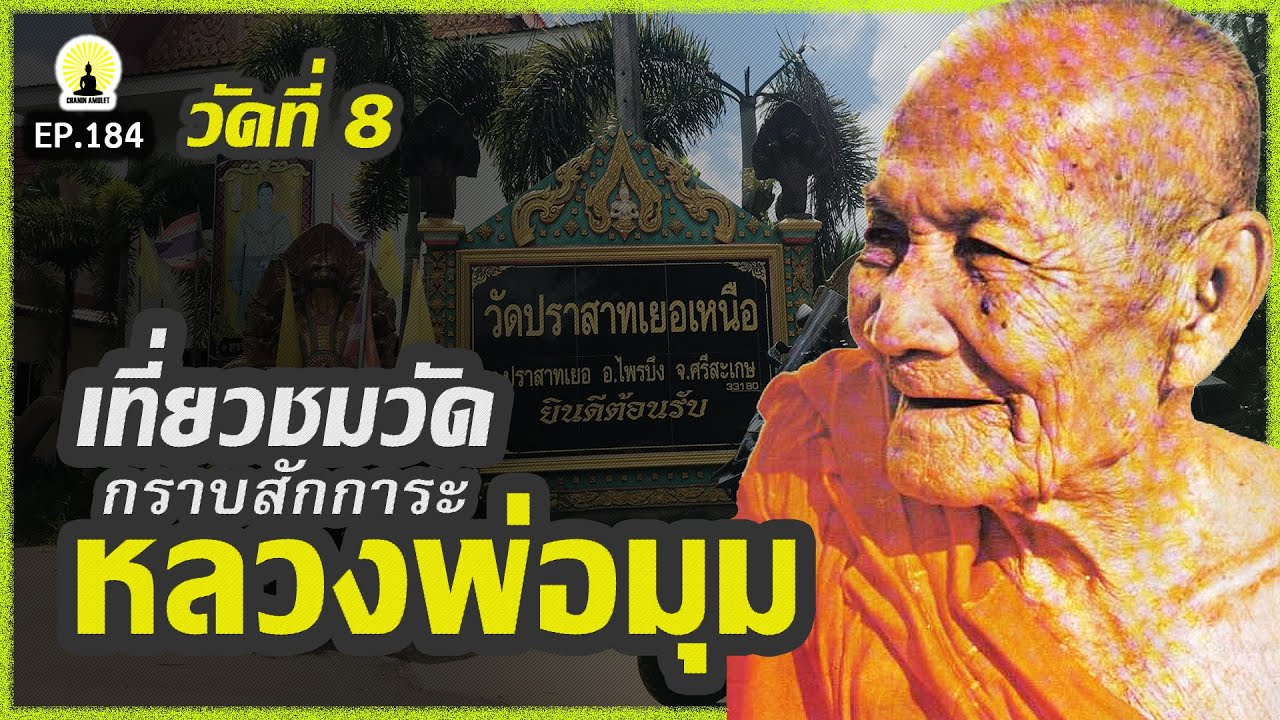
 Click to Access the Navigation Map GPS
 Art, Culture and Heritage
 Historical Sites and Monuments(12)
 Landmarks and Memorials(1)
 Art, Craft Centres, Tradition(8)
Temple(13)
Art, Craft Centres, Tradition(8)
Temple(13)
 Other Sacred Sites(3)
 Suburban Living
 Village, Community(2)
 Nature and Wildlife
 National Parks and Marine Reserves(2)
 Dam, Reservoir, Lake(7)
 Waterfalls(5)
 River, Canal(5)
 Bays and Beaches(2)
 Entertainment and Agricultural
 Zoos and Aquariums(1)
 Farms, Parks and Ecotourism(3)


