
lovethailand home >Northeastern Travel Attractions >Sakon Nakhon Travel Attractions >Muang Sakon Nakhon >Phang Khwang > Annual Spirit-Feeding Tradition
TL;DR: Annual Spirit-Feeding Tradition, Sakon Nakhon attractions : Art, Culture and Heritage, Art, Craft Centres, Tradition.
Annual Spirit-Feeding Tradition
Open Days: Held Annually During Lunar Months 4 - 5, Approximately March - April, According To The Community Schedule
Opening Hours: According To The Ritual Schedule Set By The Female Ritual Master, Mo Yao, And The Luk Kaeo Group; The Main Ritual Usually Lasts About 2 Days
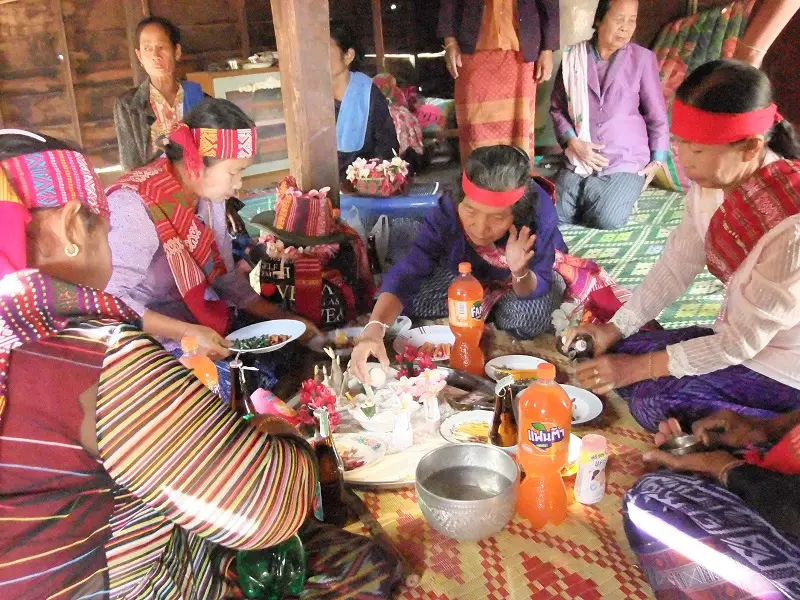
The Annual Spirit-Feeding Tradition, Known As Saeng Sanam Or Saeng Sanam Pracham Kamo, is an important folk ritual preserved among ethnic communities in Sakon Nakhon Province, especially among Tai So communities and groups that continue to maintain beliefs in ancestral spirits, nature spirits, and the healing ritual known as yao. The tradition is held each year during lunar months 4 - 5, roughly around March - April, when the hot season arrives and wild flowers begin to bloom. This seasonal timing is significant because forest flowers, especially champa flowers, are gathered and used to decorate the ritual post, honor the ritual master, and create the sacred atmosphere of the ceremonial ground.
For foreign travelers, Saeng Sanam should be understood as a living community ritual rather than a staged performance. It is not a regular tourist attraction with daily opening hours. It is a sacred annual ceremony organized by the ritual master, former patients, families, and local community members. The ritual combines healing, spirit veneration, gratitude to the female ritual master, communal gathering, music, dance, divination, offerings, and symbolic release of misfortune. It reflects a traditional worldview in which illness, spirit power, the human body, community, and nature are closely connected.
The name “Saeng Sanam” or “Saeng Sanam” refers to entering or opening the ritual field. The term “Pracham Kamo” is associated with a particular ritual group and the followers who return each year to honor their ritual lineage. Participants known as “Luk Kaeo” are people who have previously received healing through the yao ritual, or people who have deep faith in the ritual master. After a person has been healed or spiritually helped by the female ritual master or Mo Yao, the person returns annually to join the spirit-feeding ceremony, pay respect to the ritual master, and strengthen the bond between patient, healer, spirit, and community.
The importance of this tradition can be understood on several levels. The first level is health according to traditional belief. In this worldview, spirits can cause illness or emotional suffering. These spirits may include ancestral spirits, water spirits, forest spirits, field spirits, sky spirits, and other unseen powers connected with the natural environment. Healing is therefore not understood only as a physical process. It also involves the mind, the family, the community, the spirits, and the wider environment. The annual ceremony helps prevent spirits from disturbing the body again and restores confidence to those who once experienced illness.
The second level is gratitude toward the female ritual master or Mo Yao. The ritual master is not simply a performer. She is a person of ritual knowledge who understands chants, offerings, spirit invitation, divination, ritual movement, healing gestures, and the proper order of the ceremony. When a sick person is treated through yao and later recovers, the patient and family regard the ritual master with deep respect. Returning to the annual ceremony is therefore an act of gratitude, loyalty, and continued ritual relationship.
The third level is ethnic and cultural identity. Saeng Sanam reflects the worldview of communities in the Upper Northeast that traditionally lived close to forests, fields, water sources, and agricultural land. Rice farming, forest gathering, animal raising, and village settlement all depended on nature. Because daily life was deeply tied to the environment, beliefs in nature spirits formed an important way of explaining illness, misfortune, and balance in life. The ritual preserves this older cultural knowledge and shows how communities understood health before modern medicine became dominant.
An important community connected with this tradition is Ban Kut Hu, Moo 16, Phothi Phaisan Subdistrict, Kusuman District, Sakon Nakhon Province. Ban Kut Hu is a Tai So community with strong historical and cultural roots. Kusuman District is also known for Tai So heritage. The So Cultural Center in Kusuman preserves tools, ornaments, ritual materials, objects related to local rulers, ancestral items, religious objects, spirit beliefs, and traditional ways of life. Understanding Saeng Sanam together with the wider Tai So cultural context helps visitors see the ritual as part of a larger ethnic heritage rather than an isolated ceremony.
The ritual normally lasts about 2 days. Before the ceremony begins, members of the Luk Kaeo group meet to choose the date, contact the ritual master, prepare money for ritual expenses, arrange food, organize music, and gather offerings. The ritual site is often a wide open space in the village or at the house of the Mo Yao. The area must be large enough for the ritual master, participants, offerings, musical instruments, resting space, and dancing around the central ritual post.
The temporary ritual pavilion, called tup tham pham or a ritual shelter, is one of the most important physical elements of the ceremony. Villagers build it simply using local materials such as wood, thatch, canvas, umbrellas, or modern tents. One side of the pavilion is often shielded with wooden boards or metal sheets so that ritual objects can be placed in a protected and orderly space. In many communities today, a long tent-like shelter is used for convenience, while still preserving the symbolic function of the older pavilion.
The central post of the ritual ground is another key feature. It serves as the symbolic center for dancing and ritual movement. The post is decorated with forest flowers such as rang flowers, jik flowers, and especially champa flowers. Champa flowers are often strung into garlands and hung around the central post or a large umbrella. The use of flowers links the ceremony to the season and to the natural environment. Because the ceremony is held when flowers bloom, the ritual ground becomes both sacred and visually expressive.
Water is also important in the ritual space. Around the central post, there may be water jars, basins, or containers filled with water. This water is used like blessed water: to cool the face, to sprinkle the ritual master and participants, and to take part in symbolic acts of cleansing and releasing misfortune. In some communities, banana-stem boats or bull-faced ritual trays are made to carry away bad luck and send spirits back to their proper place. Water therefore functions as a cooling, cleansing, and transitional element within the ceremony.
Each Luk Kaeo prepares ritual objects. These often include 1 pillow, a khan 5 offering set with 5 candles and 5 flower bundles, ritual money, and objects used in divination. Depending on the ritual lineage, items may include a sword, rice grains, a chicken egg, coins, a sarong, silk cloth, khan 8, a bai si-style arrangement, a comb, powder, mirror, perfume, scented water, white cloth, and other offerings. These objects carry ritual meaning and help connect the participant with the teacher, the spirits, and the healing lineage.
Before midday on the ritual day, the Mo Yao dresses for the ceremony and enters the pavilion with the Luk Kaeo participants. The participants sit with hands pressed together in respect to the teacher. The ritual master invites the spirits to enter her body. When the spirit arrives, her body may shake or move in a way understood by participants as spirit possession. After this, the ritual master performs divination to determine whether it is the proper time to begin inviting other spirits to receive the annual offering.
Divination may involve placing coins on the fingers or balancing a chicken egg on the palm. If the object does not fall, it means the time is right to begin the ritual. If it falls, the ritual master waits and repeats the divination until the sign is suitable. This step shows that the ceremony follows spiritual timing rather than ordinary clock time. The ritual begins only when the ritual master receives a sign that the spirits accept the moment.
Once the ceremony begins, the ritual master chants or sings to invite spirits to acknowledge the annual spirit-feeding ceremony. The sound of the khaen, drums, or local music then supports the movement of the ritual. The ritual master and the Luk Kaeo dance around the central post. This dance is not entertainment in the usual sense. Within the belief system of the participants, the movements express the presence, will, or enjoyment of the spirits. The dance is therefore both joyful and sacred.
The ritual continues through periods of dancing, resting, eating, spirit communication, and further dance. During the night and into the next day, the participants spend time receiving blessings, being spiritually cleansed, and strengthening their bodies and minds according to traditional belief. In the past, live khaen players and drummers were often essential to the ceremony. In some communities today, recorded music or sound systems may be used for convenience, but the role of rhythm remains central to the atmosphere of the ritual.
At the end of the ceremony, another divination is performed to ask for permission to close the ritual. A bull-faced tray or banana-stem boat may be made to carry away misfortune and return spirits to their original place. The symbolic sending away of bad fortune is a crucial closing act. It marks the removal of illness, disorder, or harmful influences from the body and community. In some places, sacred thread is tied around wrists or placed on children as a blessing. After the ceremony is completed, the Luk Kaeo return home and the Mo Yao returns to her own residence.
The core meaning of Saeng Sanam is healing within a traditional belief system. The ritual reflects an integrated view of health that includes body, mind, family, community, ancestors, nature, spirits, and ritual knowledge. Even today, when modern healthcare is the main form of medical treatment, Saeng Sanam remains meaningful as a ritual of emotional support, spiritual reassurance, and social connection. It gives former patients a chance to gather, remember the help they received, and reaffirm their relationship with the ritual master.
As intangible cultural heritage, Saeng Sanam preserves knowledge that is transmitted through practice rather than written texts. The knowledge exists in the body of the ritual master, the sound of chants, the rhythm of music, the arrangement of offerings, the structure of the ritual ground, and the repeated annual gathering of participants. Younger people learn by watching, helping, preparing flowers, observing the ritual master, and gradually understanding the meaning of each act. This makes the tradition a living form of cultural education.
Visitors who wish to observe Saeng Sanam should do so with respect. This is not a staged tourist show, but a sacred community ritual. Visitors should contact community leaders, local authorities, or the ritual host before attending. They should dress politely, avoid entering the ritual area without permission, avoid disturbing the offerings, keep a respectful distance from the ritual master and Luk Kaeo, and ask before taking photographs or videos. Respectful observation allows outsiders to learn without damaging the dignity of the ceremony.
Travelers who want a broader understanding of the tradition can visit the So Cultural Center in Kusuman District. The center preserves objects related to Tai So ancestors, local rulers, tools, ornaments, religious practices, spirit beliefs, customs, and daily life. Visiting the center before learning about Saeng Sanam helps foreign travelers understand the cultural language of the community. The ritual then becomes easier to interpret as part of a wider Tai So heritage.
Getting There to Ban Kut Hu in Phothi Phaisan Subdistrict, Kusuman District, Sakon Nakhon Province is most convenient by private car or rental car. From Sakon Nakhon city, travelers can use Nittayo Road or Highway 22 toward Kusuman District, then continue into Phothi Phaisan Subdistrict and Ban Kut Hu. The distance from Sakon Nakhon city to Kusuman is about 35 - 40 km, and Ban Kut Hu is about 14 km from Kusuman town. Visitors should confirm the ceremony date and coordinate with local contacts before traveling because the ritual is held annually according to the community schedule.
Kusuman District has a strong Tai So cultural background. Besides Ban Kut Hu, visitors can explore the So Cultural Center, the sacred Pu Mahesak site, old Tai So communities, and local agricultural landscapes. Those who want to extend the trip can continue toward Sakon Nakhon city to visit Wat Phra That Choeng Chum Worawihan, Sakon Nakhon City Gate, Nong Han Lake, and Sakon Nakhon Museum. These places help connect the ritual with the broader history and culture of the province.
Food and accommodation should be planned in advance. Ban Kut Hu and Phothi Phaisan are rural community areas, so restaurants and accommodations are fewer than in Sakon Nakhon city. Travelers can use restaurants in Kusuman District, along Nittayo Road, or return to the city for more options. Some resorts and daily accommodations are available in Kusuman, while Sakon Nakhon city offers more hotels, restaurants, transport services, and access to the airport.
The Annual Spirit-Feeding Tradition or Saeng Sanam Pracham Kamo is a valuable cultural heritage for anyone interested in anthropology, folk healing, ethnic identity, and community-based ritual. Its beauty lies not only in music, flowers, and dance, but in the meaning behind each act: gratitude, healing, spirit respect, emotional restoration, and social continuity. It is a tradition that reveals how communities in the Upper Northeast have understood illness, memory, nature, and human relationships for generations.
For foreign travelers, the most important attitude is respect. Saeng Sanam is a ritual with owners, believers, and living meaning. It should not be approached as something strange or exotic, but as a serious cultural practice that continues to support people emotionally and spiritually. Observed properly, it offers a rare insight into Sakon Nakhon beyond temples and landscapes, revealing a deeper layer of local belief, healing, and ethnic heritage that still survives in rural Isan communities today.
| Tradition Name | Annual Spirit-Feeding Tradition / Saeng Sanam Pracham Kamo / Tai So Saeng Sanam |
| Location | Tai So community areas in Kusuman District, Sakon Nakhon Province, with an important documented site at Ban Kut Hu, Moo 16, Phothi Phaisan Subdistrict, Kusuman District |
| Address | Ban Kut Hu, Moo 16, Phothi Phaisan Subdistrict, Kusuman District, Sakon Nakhon 47210, Thailand |
| Coordinates | 17.40115, 104.34991 |
| Highlights | Annual spirit-feeding ritual involving Luk Kaeo participants, female ritual masters, Mo Yao, a temporary pavilion, central ritual post, khaen music, dance, offerings, divination, flowers, and symbolic release of misfortune |
| History / Importance | A folk healing and spirit-veneration tradition practiced by communities that believe spirits can cause illness. The ceremony strengthens health, prevents spirit disturbance, and expresses gratitude to the ritual master who once healed the patient |
| Name Origin | “Saeng Sanam” refers to entering or opening the ritual field, while “Pracham Kamo” refers to the annual ritual gathering of the Luk Kaeo group and ritual lineage |
| Distinctive Features | A ritual shelter, central flower-decorated post, champa garlands, ritual dance, spirit invitation, divination using coins and eggs, offerings, water containers, and banana-stem boats or ritual trays for releasing misfortune |
| Travel Information | From Sakon Nakhon city, take Nittayo Road or Highway 22 toward Kusuman District, then continue to Phothi Phaisan Subdistrict and Ban Kut Hu. Visitors should coordinate with the local community before attending |
| Current Status | Still practiced in some communities of Sakon Nakhon and the Upper Northeast according to annual community and ritual-lineage schedules |
| Festival Period | Lunar Months 4 - 5, Approximately March - April Every Year |
| Ritual Duration | Usually About 2 Days, Covering Pavilion Preparation, Offerings, Spirit Invitation, Dance, Divination, Healing Gestures, And Releasing Misfortune |
| Fees | No Standard Tourist Admission Fee. Luk Kaeo Participants Contribute Ritual Expenses According To The Ritual Group And Female Ritual Master |
| Facilities | Temporary Ritual Pavilion, Ritual Ground, Offering Area, Dance Area, Local Music Or Sound System, And Community Space |
| Main Areas / Zones | Temporary Ritual Pavilion Central Ritual Post Luk Kaeo Offering Area Female Ritual Master / Mo Yao Ritual Area Dance Area Around The Central Post Water Jar Or Basin Area Banana-Stem Boat Or Ritual Tray Area For Releasing Misfortune |
| Caretaker / Ritual Leaders | Female Ritual Master Or Mo Yao, Luk Kaeo Group, Community Leaders, And The Host Community |
| Related Local Authority | Phothi Phaisan Subdistrict Administrative Organization Tel. 0-4270-4604 |
| Visitor Guidelines | Dress Respectfully, Coordinate With The Community Before Visiting, Do Not Disturb Offerings Or Ritual Leaders, Avoid Photographing Sensitive Ritual Moments Without Permission, And Keep A Respectful Distance From The Central Ritual Area |
| Nearby Tourist Attractions | 1. So Cultural Center, Kusuman District, About 14 km 2. Pu Mahesak Sacred Site, Kusuman District, About 14 km 3. Tai So Kusuman Community, About 15 km 4. Phra That Narai Cheng Weng, About 36 km 5. Sakon Nakhon City Gate And Ruam Jai Thai Square, About 40 km 6. Wat Phra That Choeng Chum Worawihan, About 42 km |
| Nearby Restaurants | 1. Ban Khanom Chin Sen Suai, Ban Phothi Phaisan, About 4 km, Tel. 085-741-6410, 084-789-2789 2. PunThai Coffee Nittayo Road, Kusuman, About 14 km, Tel. 092-280-5943 3. Kratha Thong Restaurant, Kusuman, About 14 km, Tel. 079-467-839 4. Café Amazon PTT Pratu Mueang, About 40 km, Tel. 084-031-4920 5. MK Restaurants Lotus Sakon Nakhon, About 40 km, Tel. 042-722-645 |
| Nearby Accommodations | 1. Na Pho Resort, Kusuman District, About 16 km, Tel. 087-225-4288 2. AJ Resort, Kusuman District, About 16 km, Tel. 087-150-9565 3. Ban Sap Watthana Resort, Kusuman District, About 18 km, Tel. 087-213-4718 4. Hop Inn Sakon Nakhon, About 40 km, Tel. 042-716-399 5. The Majestic Sakon Nakhon Hotel, About 42 km, Tel. 042-733-771 |
Frequently Asked Questions (FAQ)
Q: What is the Annual Spirit-Feeding Tradition or Saeng Sanam Pracham Kamo?
A: It is an annual spirit-feeding and teacher-honoring ritual for Luk Kaeo participants who have been healed through the yao ritual. It supports emotional and spiritual well-being, honors the ritual master, and releases harmful influences according to local belief.
Q: When is Saeng Sanam held?
A: It is held during lunar months 4 - 5, approximately March - April, according to the schedule set by the ritual master and the local Luk Kaeo group.
Q: Where is the tradition practiced in Sakon Nakhon?
A: An important documented site is Ban Kut Hu, Moo 16, Phothi Phaisan Subdistrict, Kusuman District, Sakon Nakhon Province. Similar spirit-feeding rituals are also found in some communities of Sakon Nakhon and the Upper Northeast.
Q: Who is the female ritual master or Mo Yao?
A: The female ritual master or Mo Yao is the person who leads the ritual, chants, invites spirits, performs divination, prepares the ritual order, and spiritually supports the Luk Kaeo participants.
Q: Who are the Luk Kaeo participants?
A: Luk Kaeo are people who have previously received healing through the yao ritual or who have faith in the ritual master and return annually to honor the teacher and take part in the spirit-feeding ceremony.
Q: How long does the ritual last?
A: The ritual usually lasts about 2 days and includes pavilion preparation, offerings, spirit invitation, ritual dancing, divination, healing gestures, and releasing misfortune.
Q: Can tourists observe the ceremony?
A: Visitors may observe only with community permission. They should coordinate in advance, dress respectfully, avoid disturbing the ritual, and ask before taking photographs or videos.
Q: What places can visitors see nearby?
A: Nearby places include the So Cultural Center in Kusuman, Pu Mahesak Sacred Site, Tai So Kusuman community, Phra That Narai Cheng Weng, Sakon Nakhon City Gate, and Wat Phra That Choeng Chum Worawihan.
 Category: ●Art, Culture and Heritage
 Group: ●Art, Craft Centres, Tradition
Last Update : 2 MonthAgo
 Last Update : 2 MonthAgo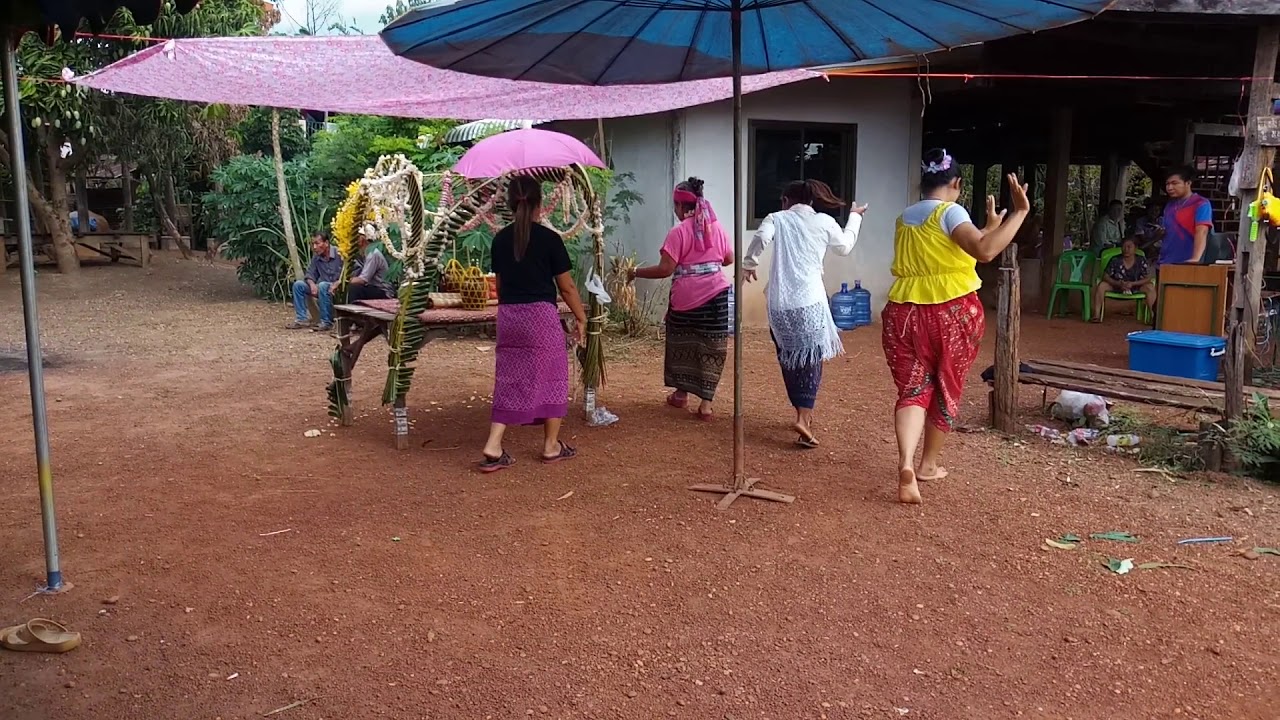

 Historical Sites and Monuments(9)
 Landmarks and Memorials(2)
 Royal Palace(1)
Art, Craft Centres, Tradition(8)
Royal Palace(1)
Art, Craft Centres, Tradition(8)
 Museums(3)
 Educational Places
 Educational Gardens, Farm(2)
 Places of Worship
 Temple(18)
 Church(2)
 Other Sacred Sites(4)
 Research and Development
 Royal Project(3)
 Suburban Living
 Village, Community(7)
 Nature and Wildlife
 National Parks and Marine Reserves(4)
 Mountain (Doi)(3)
 Dam, Reservoir, Lake(14)
 Waterfalls(4)
 Caves(4)
 River, Canal(9)
 Bays and Beaches(1)
 Islands(1)
 Other natural attractions(5)
 Entertainment and Agricultural
 Zoos and Aquariums(1)
 Farms, Parks and Ecotourism(4)
 Outdoor and Adventure Activities(1)


